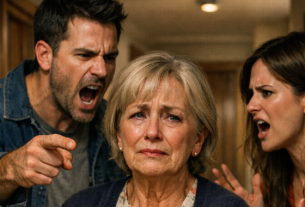
“When your son has a home of his own, he can hand out keys however he likes,” the daughter-in-law put her mother-in-law in her place.
At 7:12 on Saturday morning, a key slid into the front door lock. Elena jolted awake on the couch, where she had fallen asleep the night before while watching a series — she and Andrei weren’t expecting anyone. A second later, a brisk voice rang out from the hallway:
“I decided not to call! You two sleep till noon anyway!”
In the doorway stood Zinaida Arkadyevna, her mother-in-law, wearing a dark blue coat and carrying bags from Pyaterochka. In her right hand she held a container of cutlets; in her left, a bunch of dill and parsley.
Elena felt a wave of outrage rising inside her. She definitely had not given her mother-in-law a key to the apartment.
“Mom?” Andrei appeared in the bedroom doorway, rubbing his eyes. “How did you get in?”
“With a key, of course! You gave it to me, don’t you remember?”
It turned out Andrei had made a spare copy three weeks earlier — “just in case, if Mom ever needed it.”
His mother walked into the apartment, threw open the living room curtains, and began looking around.
“Good Lord, there’s dust on your TV again! And that ficus is completely dried up. Lenochka, what do you even do all day? Never mind, I’ll fix everything now.”
Elena and Andrei had met a year and a half earlier at evening Spanish classes. She worked as a UX designer at an IT company — an independent, calm thirty-two-year-old woman. He was a senior accountant at a construction firm — a gentle, slightly shy thirty-five-year-old man with a long-held dream of opening his own coffee shop.
After the first class, they happened to leave together. Andrei gallantly held the door open, and Elena smiled.
“Thanks. What do you think of the teacher?”
“She’s very energetic,” he laughed. “I could barely keep up with taking notes.”
They grew close during walks through Moscow after class, long conversations about traveling through Latin America, and their shared sense of humor. Three months later they started dating, and another six months after that, Andrei proposed.
Elena already had her own two-room apartment in a new building in Khodynka, which she had bought with a mortgage three years before meeting Andrei. It was bright, with panoramic windows and a modern renovation. Andrei lived with his mother, Zinaida Arkadyevna, in an old Stalin-era apartment in Sokolniki — the very apartment where he had grown up.
After their modest wedding, Andrei moved in with his wife. The move was accompanied by a heavy scene: Zinaida Arkadyevna silently folded his shirts into a suitcase, dabbing at her tears with a handkerchief every few moments.
“Mom, come on,” Andrei said, putting his arm around her shoulders. “I’m not moving to the other side of the world.”
“I know, I know,” she sighed heavily. “It’s just that the house will feel so empty without you.”
During the first months after the wedding, Zinaida Arkadyevna behaved tactfully. She called before visiting, asking whether it was a good time to stop by. She brought homemade cabbage pies and apple charlotte. She praised the apartment:
“What a bright kitchen you have! And the sofa is so comfortable. Andryusha is lucky to have such a wife.”
But little by little, her tone began to change. Casual remarks started slipping out:
“Of course, it’s nice when the wife has her own apartment. But a man should feel like the master of the house.”
Then came hints about grandchildren:
“Marina from the third entrance already has her second one. What are you two waiting for?”
And constant comparisons:
“Svetlana from the fifth floor — her husband did all the renovations himself. Our Andryusha was never taught to use tools, that’s my fault.”
Six months later, the subject of keys came up. At first it was framed as a joke over tea:
“Well, Klavdia Petrovna has keys to her son’s place — so convenient! She can come by whenever she wants and help.”
Then it became more insistent:
“What if something happens to you? How would I know? How would I get in?”
Andrei, feeling guilty toward his mother for having “left her all alone,” secretly made a duplicate set of keys.
Elena had started noticing strange things a month earlier. When she came home from work, she would find tiny changes: a book on the coffee table was lying differently than it had in the morning, the sofa cushions were fluffed up in another way. At first she blamed it on exhaustion and absentmindedness.
But one evening the picture became clear. Elena came home from the office earlier than usual and discovered that someone had obviously been in the apartment. The kitchen cabinets gleamed from being wiped down, the laundry had been taken off the drying rack and folded into neat “proper” stacks, and the containers in the refrigerator were lined up by size.
On the dining table lay a note written in neat, schoolteacher-like handwriting:
“Lenochka, I tidied up a little. Don’t be upset. — Z.A.”
Elena sank into a chair. In her own apartment, she suddenly felt like a guest. A stranger had touched her things, moved them around as she pleased, and decided what was “right.”
When Andrei came home from work, she met him in the kitchen.
“Your mother was here today.”
“Really?” He took off his jacket without looking at his wife. “She probably brought something.”
“Andrei, she cleaned. In her own way. Did you give her keys?”
He froze, then slowly turned around.
“Lena… yes, I did. A month ago.”
“Without my knowledge? To my apartment?”
Andrei sat down across from her and took her hands in his.
“Try to understand — she raised me alone. My father left when I was six. Mom worked two jobs, denied herself everything, just so I’d have enough. I can’t say no to her. She’ll be hurt.”
“And you don’t care that I’ll be hurt?… Continued just below in the first comment.”
On Saturday at 7:12 a.m., a key slid into the door lock. Elena jumped up from the couch, where she had fallen asleep the night before while watching a TV series — she and Andrei weren’t expecting anyone. A second later, a cheerful voice was already ringing out from the hallway:
“I decided not to call! You two sleep till noon anyway!”
There stood Zinaida Arkadyevna, her mother-in-law, in a dark blue coat and carrying grocery bags from Pyaterochka. In her right hand she held a container of cutlets, and in her left, a bunch of dill and parsley.
Elena felt a wave of outrage rising inside her. She most certainly had not given her mother-in-law a key to the apartment.
“Mom?” Andrei appeared in the bedroom doorway, rubbing his eyes. “How did you get in?”
“With a key, of course! You gave me one, remember?”
It turned out that Andrei had made a spare copy three weeks earlier — “just in case, if Mom ever needed it.”
His mother walked into the apartment, flung open the curtains in the living room, and began looking around.
“Good Lord, there’s dust on the TV again! And the ficus is completely dried out. Lenochka, what do you even do all day? Never mind, I’ll fix everything now.”
Elena and Andrei had met a year and a half earlier at evening Spanish classes. She worked as a UX designer at an IT company — an independent, calm thirty-two-year-old woman. He was a senior accountant at a construction firm — a gentle, slightly shy thirty-five-year-old man who had long dreamed of opening his own coffee shop.
After the first class, they happened to leave together. Andrei gallantly held the door for her, and Elena smiled.
“Thank you. What do you think of the teacher?”
“She’s very energetic,” he laughed. “I could barely keep up with taking notes.”
They grew close through walks around Moscow after class, long conversations about traveling in Latin America, and a shared sense of humor. Three months later they started dating, and another six months after that, Andrei proposed.
Elena already had her own two-room apartment in a new building in Khodynka, bought with a mortgage three years before she met Andrei. It was bright, with panoramic windows and a modern renovation. Andrei had been living with his mother — Zinaida Arkadyevna — in an old Stalin-era apartment in Sokolniki, the very place where he had grown up.
After their modest wedding, Andrei moved in with his wife. The move was accompanied by a heavy scene: Zinaida Arkadyevna silently folded his shirts into a suitcase, occasionally wiping away tears with a handkerchief.
“Mom, come on,” Andrei said, hugging her shoulders. “It’s not like I’m moving to the ends of the earth.”
“I know, I know,” she sighed heavily. “It’s just that the house will feel empty without you.”
During the first months after the wedding, Zinaida Arkadyevna behaved tactfully. She called before visiting, asked whether it was a good time to stop by. She brought homemade cabbage pies and apple charlotte. She praised the apartment:
“What a bright kitchen you have! And the sofa is so comfortable. Andryusha is lucky to have such a wife.”
But little by little, her tone began to change. There were offhand remarks:
“Well, of course it’s nice when the wife has her own apartment. But a man should feel like the master of the house.”
Then came hints about grandchildren:
“Marina from the third entrance has already had her second one. So what are you two waiting for?”
And constant comparisons:
“Svetlana from the fifth floor had her husband do all the renovations himself. But our Andryusha was never taught how to use tools — that’s my fault.”
Six months later, the subject of keys came up. At first as a joke over tea:
“Klavdia Petrovna has keys to her son’s place — so convenient! She can come by whenever she wants and help.”
Then more insistently:
“What if something happens to you? How would I know? How would I get in?”
Andrei, feeling guilty toward his mother for “leaving her alone,” secretly made a duplicate set of keys.
Elena began noticing odd things a month earlier. Coming home from work, she would find little changes: a book on the coffee table lying differently than it had that morning, the couch cushions fluffed up in another way. At first she blamed it on tiredness and inattention.
But one evening everything became obvious. Elena came home from the office earlier than usual and discovered that someone had clearly been in the apartment. The kitchen cabinets gleamed from being wiped down, the laundry had been taken off the drying rack and folded into neat “proper” stacks, and the containers in the fridge were arranged by size.
On the dining table lay a note written in neat, schoolteacher handwriting:
“Lenochka, I tidied up a little. Don’t be upset. — Z.A.”
Elena sank into a chair. In her own apartment, she suddenly felt like a guest. A stranger had been touching her things, rearranging them at will, deciding what was “proper.”
When Andrei came home from work, she met him in the kitchen.
“Your mother was here today.”
“Yes?” He took off his jacket without looking at his wife. “She probably dropped something off.”
“Andrei, she cleaned. In her own way. Did you give her keys?”
He froze, then slowly turned around.
“Lena… yes, I did. A month ago.”
“Without telling me? To my apartment?”
Andrei sat down across from her and took her hands in his.
“Try to understand — she raised me on her own. My father left when I was six. Mom worked two jobs, saved on everything, just to make sure I had enough. I can’t refuse her — she’ll be hurt.”
“And it doesn’t matter to you that I’ll be hurt?”
“It does matter! But Mom… she doesn’t mean any harm. She just wants to help.”
Elena looked at her husband carefully. In his eyes she saw fear — fear of hurting his mother, fear of being a “bad son,” fear of losing her love. And then she understood: the problem wasn’t the keys. The problem was that Andrei had never truly grown up, never fully separated, never really started his own life.
Something inside her snapped. She was no longer going to stay silent and endure it.
“Andrei,” she said firmly, “either you take the keys back from your mother, or we need to have a very serious conversation about our future.”
On Sunday they were invited to a family dinner at Zinaida Arkadyevna’s. The table was overflowing with food: stuffed peppers, Mimosa salad, herring under a fur coat. The hand-embroidered tablecloth that the mother-in-law only brought out on holidays. The family china.
“Eat, eat,” Zinaida Arkadyevna fussed. “Andryusha, want me to give you some more?”
The conversation flowed lazily: work, weather, neighbors. And then, between the salad and the main course, the mother-in-law said:
“I was thinking… I should have a permanent set of keys to your apartment. So I can come by when you’re not home. Cook something, tidy up. Young people are always busy.”
Elena calmly set down her fork.
“Zinaida Arkadyevna, we’re not ready for that.”
Her mother-in-law smiled, but there was a chill in her eyes.
“Is that because the apartment is yours? So, Andrei, does that mean you’re just a tenant in your wife’s home now?”
A heavy pause fell over the table. Andrei was silent, staring at his plate.
Then Elena spoke clearly:
“When Andrei has a place of his own, he’ll be able to do whatever he wants with the keys. For now, this is my property, and I’m not comfortable with anyone coming in without asking.”
Zinaida Arkadyevna’s face flushed dark red.
“Oh, I see! So I’m ‘anyone’ now? Not your mother-in-law, not your husband’s mother, just ‘anyone’?”
“Mom, Lena didn’t mean it like that…” Andrei tried to cut in.
“Oh, that’s exactly what she meant!” his mother snapped, rising from the table. “You’re tearing my son away from his family! Turning him against his own mother!”
Tears, accusations, a bedroom door slammed shut. Andrei looked helplessly from the closed door to his wife. For the first time, he truly saw how a mother’s love could destroy his own family.
After that difficult dinner, silence reigned at home. For two days Elena and Andrei barely spoke, exchanging only the necessary words. On the third evening, Andrei couldn’t take it anymore.
“Lena, this can’t go on. I’ll talk to Mom.”
“Are you sure?” she asked, looking at him doubtfully.
“Yes. I should have done it a long time ago.”
On Saturday morning he went to his mother’s alone. The apartment he had known since childhood smelled of valerian drops and baked apples — his mother always baked them when she was nervous. On the dresser, as always, stood his photographs: first grade, graduation, university. In every one, a happy boy, then a young man who had never learned what boundaries were.
Zinaida Arkadyevna sat in an armchair wrapped in a blanket.
“So, you came? Alone?”
“Mom, we need to talk.” Andrei sat down across from her. “I love you very much. You raised me, gave me an education, sacrificed everything for me. But I have my own family now. Lena and I need personal space.”
“So I’m unnecessary now?” Her eyes filled with tears.
“No, Mom. You’re not unnecessary. You’re my mother, and that will never change. But there won’t be any more keys to our apartment. You can only come by if we agree on it beforehand.”
Zinaida Arkadyevna began to cry.
“I’ll be completely alone! You’re abandoning me!”
“I’m not abandoning you,” Andrei said, taking her hands. “I’m always nearby, twenty minutes away. But my wife has the right to feel like the mistress of her own home.”
It was a painful but honest conversation. The first one in many years.
Three months passed. The first weeks were difficult — Zinaida Arkadyevna was offended and sometimes wouldn’t answer calls for two days at a time. But gradually, the ice began to melt.
Now she called ahead:
“Andryusha, I want to bring you some jam on Wednesday. Will you be home in the evening?”
“Of course, Mom. Come by at seven, and we’ll have dinner together.”
On Sundays, they began visiting her themselves. Andrei fixed a leaky faucet, set up the new TV they had given her for her birthday. Elena helped sort through old вещи stored on the mezzanine shelves.
The young couple’s apartment changed too. Elena no longer found things moved around, no longer felt someone else’s presence. The home became their fortress again, their private space.
One day over tea, Zinaida Arkadyevna awkwardly said:
“Lenochka, back then… I went too far. I was just afraid that Andryusha would forget about me. That I’d become unnecessary.”
“Zinaida Arkadyevna, you’re his mother. You will always matter to him,” Elena replied gently.
“I was used to having him always nearby. And when he moved out… there was such emptiness. I thought at least with the keys I’d still feel connected.”
Andrei hugged his mother.
“Mom, love isn’t measured by the number of keys or how often we visit. It’s measured by sincerity and respect.”
“I understand that now,” she nodded. “You’re grown adults. And I kept trying to see you as a little boy.”
Their relationship became calmer and more honest. Without manipulation, without intrusion, without resentment.
A year later, on an April evening, Elena and Andrei were finishing a small renovation in the entryway. The main change was a new front door with an electronic lock — now there was no need to worry about duplicate keys.
“It turned out beautifully,” Andrei said, hugging his wife from behind.
“Yes, it feels fresh. And the door is secure.”
The intercom buzzed, interrupting their conversation.
“It’s me, can I come up?” came Zinaida Arkadyevna’s voice.
“Of course, Mom, come on up!” Andrei answered.
His mother entered carrying a baking tray covered with a towel.
“I baked your favorite cherry pie. Thought I’d come make you happy.”
“Thank you so much!” Elena smiled sincerely. “We were just about to have tea.”
The three of them sat in the kitchen, laughing over a story about the neighbor’s cat, discussing plans for the May holidays.
“Maybe we should all go together to my parents’ dacha?” Elena suggested. “They’ve been inviting us for a long time.”
“With pleasure!” her mother-in-law replied. “Just let me know in advance, and I’ll make my signature salad.”
Elena looked at the scene before her and thought: boundaries had not destroyed their family. On the contrary — they had made it healthier, more mature, more honest. Everyone had their own space, and because of that, there was only more love.
“What are you thinking about?” Andrei asked.
“That everything is good,” she replied. “Truly good.”
Outside, the sun was setting, filling the kitchen with warm light. An ordinary spring evening in an ordinary Moscow family that had learned the most important thing of all — to respect one another.