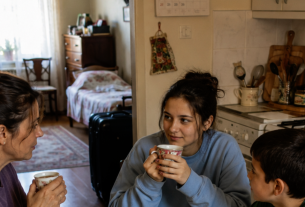
“Mom, you gave my brother more than three million rubles, and now you’re demanding alimony from me?” the daughter protested.
“Did you get the letter?” her brother’s calm voice sounded on the phone as if he were asking about the weather.
Anna Viktorovna Lazareva was standing at the threshold of her apartment, still wearing her coat. In her right hand she held her phone, and in her left, a court notice. Five minutes earlier, Anna had returned from work after a long day in the accounting department of a construction company. She had taken a stack of advertising flyers and a thick official envelope from the mailbox. She opened it right there by the door.
Inside was something she had never expected to see. Her mother, Lidiya Pavlovna, had sued her. The demand was alimony for the support of an elderly parent. The amount was thirty-five thousand rubles per month.
“Sergey, did you know?” Anna’s voice trembled.
“Mom warned me yesterday,” her brother replied. “She said it was your duty.”
Anna slowly lowered herself onto the little stool in the hallway, still in her coat and hat.
“Why me?” Anna finally took off her coat and walked into the kitchen, switching off the kettle. “You have three children and a big apartment. I have a one-room place on the outskirts of town.”
“Anya, you know how hard things are for us with the mortgage,” Sergey sighed. “Olga is on maternity leave with the youngest. Mom understands that.”
Anna sat down at the kitchen table, studying the notice. Thirty-five thousand was more than half her salary.
“She understands…” Anna repeated. “And when I was saving up for my apartment while working two jobs, did she understand that too?”
“Don’t start again.”
“I’m not starting, Seryozha. I’m just remembering.”
And she really was remembering. How, in childhood, their mother used to say, “Seryozhenka needs a new bicycle, he’s a boy, he should be playing sports. And you, Anya, can walk—it’s good for your figure.”
How in tenth grade she had spent nights altering one of her mother’s old skirts into a dress for graduation. Meanwhile, Sergey got a suit for fifteen thousand, because “a man should look respectable.” And to her they said, “You’re our little craftswoman, you can handle it yourself.”
“Do you remember how I worked in a stationery store during the summer?” Anna asked. “So I could buy my own textbooks?”
“So what? Everyone had part-time jobs.”
“Everyone except you. You were away at hockey training camp then. Which cost twenty thousand, by the way.”
“Mom believed in my athletic talent!”
“And not in my academic talent? I got into Moscow State University on a scholarship, Sergey. And Mom said, ‘Well done, you can live in the dorm—you’re smart.’”
Sergey was silent. Anna went on:
“When you got married, Mom gave you two million seven hundred thousand for the down payment. Two million seven hundred thousand, Seryozha! And when I came to ask for at least a hundred thousand as a loan for my studio apartment, she said…”
“‘You’re alone, it’s easier for you,’” Sergey finished. “I remember.”
“Exactly. For me, everything was always ‘easier.’ Easier to study without tutors. Easier to live in a dorm. Easier to save up for an apartment on my own. And now, apparently, it’s easier for me to pay alimony too.”
“Anya, Mom is getting old. She needs help.”
“I do help her! I go to see her every weekend, haul groceries, take her to doctors. Last month I gave her half my bonus for her dental treatment. When was the last time you even stopped by to see her?”
“I have children, Anya. The youngest is only a year old.”
“You always have a reason,” Anna said, rubbing her temples tiredly. “In childhood it was hockey, in youth it was studying, and now it’s children. And I never have reasons. Because I’m alone.”
After talking to her brother, Anna sat in the kitchen for a long time. Then she took out a notebook and a calculator. For the first time in all these years, she decided to calculate everything exactly.
“All right,” she muttered as she wrote. “Two million seven hundred for the mortgage. Then every month Mom gave them twenty to thirty thousand ‘for the children.’ That’s about nine hundred thousand over three years. A washing machine as a gift for eighty thousand. A refrigerator for seventy. Children’s furniture…”
The numbers added up to a sum that made her dizzy. Sergey had received more than three and a half million rubles from their mother over the past few years.
“And me?” Anna leaned back in her chair. “What did I get?… Continued just below in the first comment.”
“Did you get the letter?” her brother’s calm voice sounded over the phone as if he were asking about the weather.
Anna Viktorovna Lazareva stood in the doorway of her apartment without taking off her coat. In her right hand she held the phone, in her left a court notice. Five minutes earlier, Anna had returned from work after a long day in the accounting department of a construction firm. She had taken a stack of advertising flyers and a thick official envelope out of the mailbox. She opened it right there by the door.
Inside was something she had never expected to see. Her mother, Lidiya Pavlovna, had sued her. The demand was alimony for the support of an elderly parent. The amount was thirty-five thousand rubles a month.
“Sergey, did you know?” Anna’s voice trembled.
“Mom told me yesterday,” her brother replied. “She said it was your duty.”
Anna slowly lowered herself onto the little stool in the hallway, still wearing her coat and hat.
“Why me?” Anna finally took off her coat and walked into the kitchen, switching off the kettle. “You have three children and a big apartment. I have a one-room place on the outskirts.”
“Anya, you know how hard things are for us with the mortgage,” Sergey sighed. “Olga is on maternity leave with the youngest. Mom understands that.”
Anna sat down at the kitchen table, staring at the notice. Thirty-five thousand was more than half her salary.
“She understands…” Anna repeated. “And when I was saving for my apartment while working two jobs, did she understand that too?”
“Don’t start again.”
“I’m not starting, Seryozha. I’m just remembering.”
And she truly was remembering. How in childhood their mother had said, “Seryozhenka needs a new bicycle. He’s a boy, he should be doing sports. And you, Anya, can walk—it’s good for your figure.”
How in tenth grade she had sat up at night sewing an old skirt of her mother’s into a dress for graduation. Meanwhile, Sergey was bought a suit for fifteen thousand—“a man should look respectable.” And to her they said, “You’re our little craftswoman, you can manage on your own.”
“Do you remember how I worked in the stationery store that summer?” Anna asked. “So I could buy my own textbooks?”
“So what? Everyone worked.”
“Everyone except you. You were away at hockey camp at the time. For twenty thousand, by the way.”
“Mom believed in my athletic talent!”
“And not in my academic talent? I got into Moscow State University on a state-funded place, Seryozha. And Mom said, ‘Well done, you’ll live in the dorm, you’re smart.’”
Sergey was silent. Anna continued:
“When you got married, Mom gave you two million seven hundred thousand for the down payment. Two million seven hundred thousand, Seryozha! And when I came to ask for at least a hundred thousand as a loan for my studio apartment, she said…”
“‘You’re alone, it’s easier for you,’” Sergey finished. “I remember.”
“Exactly. It was always ‘easier’ for me. Easier to study without tutors. Easier to live in a dorm. Easier to save up for an apartment by myself. And now, apparently, it’s easier for me to pay alimony too.”
“Anya, Mom is getting old. She needs help.”
“I do help her! Every weekend I go there, carry groceries, drive her to doctors. Last month I gave half my bonus for her dental treatment. When was the last time you even visited her?”
“I have kids, Anya. The youngest is only one.”
“You always have a reason,” Anna said, rubbing her temples wearily. “When we were children, it was hockey. In youth, studies. Now it’s the kids. And I never have a reason. I’m alone, after all.”
After the conversation with her brother, Anna sat in the kitchen for a long time. Then she took out a notebook and a calculator. For the first time in all these years, she decided to calculate everything exactly.
“So,” she muttered as she wrote, “two million seven hundred for the mortgage. Then every month Mom gave them twenty to thirty thousand ‘for the children.’ That’s about nine hundred thousand over three years. A washing machine worth eighty thousand as a gift. A refrigerator for seventy. Children’s furniture…”
The numbers added up to a sum that made her dizzy. More than three and a half million rubles Sergey had received from their mother over the past years.
“And me?” Anna leaned back in her chair. “What did I get?”
She remembered how, during her student years, she had lived on instant noodles, saving on everything. How she wore the same old coat for four winters in a row. How she denied herself vacations, putting aside every kopek.
“You’re strong, you’ll manage,” her mother always said. “Not like little Seryozhenka—he needs support.”
That night Anna barely slept. She lay in her small but honestly earned apartment and, for the first time, allowed herself to admit the truth: in this family, she had always been the backup option. The one from whom help was expected, but to whom it was never offered in return.
The next morning, instead of going to work, Anna went to a lawyer. Vladimir Andreyevich Kovalyov, an elderly attorney with a neat gray beard, studied the documents carefully.
“Interesting case,” he said, stroking his beard. “A mother demands alimony from her daughter while having provided substantial financial support to her younger son. Is there proof of that support?”
“Only words. She gave him everything in cash or transferred it to Olga, my brother’s wife.”
“I see. And is your help to your mother documented?”
“I have receipts for medicine. And bank transfers for the dental treatment.”
Vladimir Andreyevich nodded.
“You know, Anna Viktorovna, I’ve handled family cases for thirty years. And I’ll tell you honestly—sometimes court is the only way to put everything in its proper place. Not to punish relatives, but to restore justice.”
“I don’t want to go to war with my mother…”
“And does she want to go to war with you?” the lawyer tapped the notice with his finger. “She is the one who went to court first. You are only defending yourself.”
Anna nodded silently. A strange feeling was rising in her chest—a mixture of resentment, anger, and unexpected relief. For the first time in her life, she was ready to stand up for herself.
Preparing for the trial became for Anna a strange journey through her own past. She methodically gathered evidence, and each new discovery seemed to lift the veil on what had once seemed like ordinary family life.
In her old phone she found messages from her mother from five years earlier. Anna reread them sitting at the kitchen table:
“Anyechka, sorry, I won’t be able to help with the down payment. Seryozha’s car broke down, we have to bail him out.”
“Daughter, you understand, the grandchildren need it more. You’re young, you’ll earn it.”
“Don’t be offended, but it’s harder for Olechka with three children than for you alone.”
That same evening Anna went up to the third floor to see her neighbor. Raisa Stepanovna, a plump woman of about seventy, gladly invited her in for tea.
“Of course I remember,” she nodded, pouring tea into porcelain cups with little roses. “Lidiya Pavlovna often came by. She was always talking about Seryozha—how successful he was, what lovely children he had. And about you…” the neighbor sighed, “about you she said, ‘My Anka is tough, she doesn’t need help. Sergey is the one who’ll support me in old age, and Anna will manage somehow—she’s used to it.’”
“Support you in old age?” Anna nearly choked on her tea.
“Yes. She used to say he’d be the one to provide for her when she got old. And that you’d get by anyway—you’re alone, without a family.”
Two days later, her mother called. Anna was sorting documents for court.
“How could you!” Lidiya Pavlovna’s voice trembled with anger. “Dragging your own mother into court! I raised you, I stayed up nights with you!”
“Mom, you’re the one who sued me,” Anna reminded her calmly.
“That’s different! I need help! And what are you doing? Digging through the past, questioning neighbors! Raisa told me everything!”
“I’m just gathering facts.”
“What facts? I gave you life! I gave birth to you, I raised you!”
Anna paused, then said what she had never before dared to say:
“And to Sergey—you gave money. Millions, Mom. And to me—you gave life and the right to take care of myself from the age of sixteen.”
“You’re ungrateful!”
“No, Mom. I’m just honest. See you in court.”
Anna hung up. Her hands were not shaking. For the first time in many years, she felt free of the burden of constant guilt for being a “not good enough daughter.”
The day of the trial was overcast. Fine rain tapped against the windows of the district courthouse, providing a fitting backdrop for a family drama.
In the hallway Anna saw her brother first. Sergey paced nervously back and forth across the tiled floor, glancing at his watch every few moments. Nearby, on a bench, sat his wife Olga, bent over her phone. When she saw Anna, she looked up and gave her sister-in-law an unfriendly stare.
“Happy now?” she threw at her. “You’re tearing the family apart.”
Anna did not answer. She walked past and sat down on a bench by the opposite wall. A few minutes later Lidiya Pavlovna appeared, accompanied by a friend. Their mother turned away demonstratively, but Anna saw how her hands trembled as she clutched her handbag.
Vladimir Andreyevich appeared at exactly ten, as promised.
“Ready?” he asked quietly.
Anna nodded.
In the courtroom, Judge Maria Sergeyevna Rudenko, a woman in her fifties with attentive brown eyes, first listened to the plaintiff’s representative. Her mother’s elderly lawyer spoke of the pensioner’s difficult circumstances, her tiny pension of fifteen thousand rubles, her illnesses, and her need for expensive medicine.
“My client devoted her whole life to her children,” he declaimed. “And now, in old age, she has been left without support. Her daughter, despite having a stable income, refuses to help.”
When it was Vladimir Andreyevich’s turn, he calmly laid a stack of documents on the table.
“Your Honor, here are bank statements confirming regular transfers of money from Lidiya Pavlovna Lazareva to her daughter-in-law, Olga Lazareva. The total amount over three years is nine hundred and twelve thousand rubles. There is also witness testimony regarding a one-time payment of two million seven hundred thousand rubles to her son for the purchase of an apartment.”
Silence fell over the courtroom. The judge studied the documents carefully.
“Lidiya Pavlovna,” she addressed the mother, “do you confirm that you gave your son more than three million rubles?”
The mother was silent for a moment, then said quietly:
“He has a family… Three children…”
“I understand that. But at the same time, you are demanding alimony from your daughter, to whom, judging by the documents, you did not provide comparable assistance?”
“She’s alone… It’s easier for her…”
The judge turned to Sergey.
“Your monthly income?”
Sergey shifted from foot to foot.
“Around… around one hundred and thirty thousand.”
“So twice as much as your sister’s?”
“But I have a family!” he blurted out.
“A family to whom your mother has already given millions of rubles,” the judge noted calmly. “Whereas from the daughter, who herself is barely making ends meet and who was never helped financially, she demands support.”
Maria Sergeyevna looked through the documents once more, then raised her head.
“The court cannot ignore the obvious inequality in the distribution of financial support between the children. If Lidiya Pavlovna deliberately invested all her resources in one child, it is logical to assume that this child should bear responsibility for her support.”
She paused, looking directly at the mother.
“The claim is denied.”
The bang of the gavel sounded like a final chord. Anna closed her eyes, feeling an invisible burden fall from her shoulders—a burden she had carried for so many years.
After the gavel fell, it was as though everyone woke from a trance. Lidiya Pavlovna sobbed and pressed a handkerchief to her eyes. Sergey jumped to his feet, his face red with anger. In the courthouse corridor, barely had the courtroom door closed behind them when he lunged at his sister.
“You humiliated Mom!” he shouted, paying no attention to the people passing by. “You made our family a laughingstock!”
Anna calmly buttoned her coat, looking her brother straight in the eye.
“No, Seryozha. I simply stopped paying for everyone—for your apartment, for your peace of mind, for Mom’s love for you.”
“You’re selfish!”
“Maybe. But I’m selfish in a fair way.”
Olga tugged at her husband’s sleeve.
“Let’s go, Seryozha. There’s no point…”
“And are you satisfied?” Lidiya Pavlovna came up to her daughter, her voice trembling. “Dragging your own mother through the courts!”
“Mom, I’ll repeat it one last time—you sued me. I only defended myself.”
Anna turned and walked toward the exit. Behind her she could hear her mother sobbing and her brother shouting angrily, but she did not turn around.
Three months later Sergey called her. His voice sounded tired.
“We rented out Mom’s apartment. It brings in fifty thousand a month. We give it to her.”
“Good.”
“She moved in with us.”
“I see.”
“Anya…” he hesitated, “maybe you could at least visit her sometimes?”
“No, Seryozha. That’s your choice and your responsibility now.”
A month later Olga called.
“Anna, this is unbearable! She’s unhappy with everything! The children are too noisy, I don’t cook right, Sergey doesn’t give her enough attention!”
“I’m sorry to hear that,” Anna answered dryly.
“You don’t understand! There are six of us in a three-room apartment now! The children are losing it, and the youngest doesn’t sleep properly anymore!”
“Olga, you’re adults. You made your choice. Live with it.”
A year later Anna’s life had changed beyond recognition. Her small apartment was being renovated—not just cosmetically, as she had once planned, but for real, with a new layout and new furniture. Helping her was Dmitry Kravtsov, an engineer from the neighboring building, whom she had met in a hardware store when they were both choosing paint for their walls.
“Hold it straighter,” Dmitry laughed, helping her assemble a new wardrobe. “Otherwise it’ll turn out like the Leaning Tower of Pisa.”
“I’m trying!” Anna laughed too, for the first time in a long while feeling genuinely happy.
At that moment the phone rang. The screen showed the name Olga.
“Hello,” Anna said, putting it on speaker while continuing to hold the shelf.
“Anna…” her sister-in-law’s voice sounded exhausted. “I was wrong back then. In court. Forgive me.”
“What happened?”
“Your mother… it’s a nightmare. She demands attention twenty-four hours a day. She criticizes everything—how I cook, how I raise the children, how I dress. Sergey stays at work as long as possible just to avoid being at home.”
Anna listened silently.
“Maybe…” Olga hesitated, “maybe you could take her for at least a couple of months? Just so we can get some rest?”
Anna looked out the window. In the yard, children were building a snowman, their joyful shouts carrying even through the closed windows. She thought about how a year earlier she had stood at that same window, crying from hurt and injustice. Now everything was different.
“No, Olya.”
“But Anna…”
“Everyone has to live with the consequences of their decisions. You received Mom’s millions—you received Mom along with them. That’s fair.”
“You’re cruel!”
“No. I’m free.”
Outside, snow was falling, covering the city with a white blanket. Life went on—a new life, without old debts, without the constant sense of guilt and the need to make herself convenient for everyone. Simply a life in which Anna had finally chosen herself.