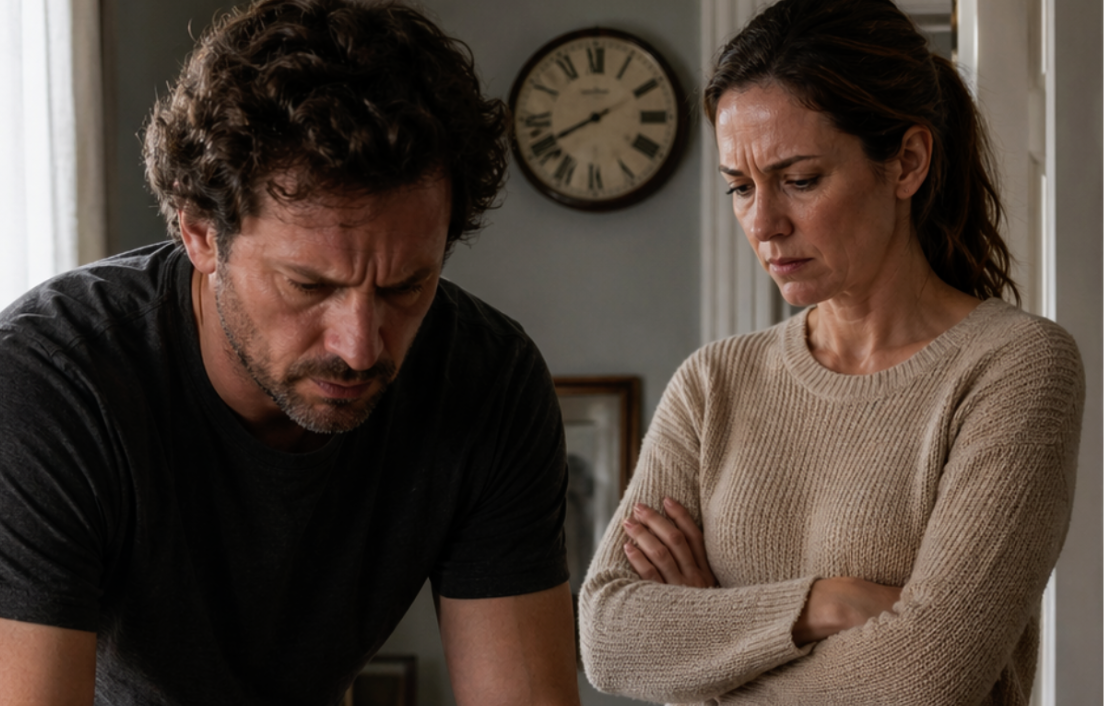
“There Will Be No Money, Don’t Even Dream of It,” I Said to My Husband When He Started Searching Through the Drawers for My Savings
November twilight settled over the city early, and every time Elena came home from work, she caught herself thinking that the day had barely even begun. The bus crawled through traffic, rain drizzled outside the window, blurring the streetlights into dull patches of light. Elena sat by the window, mentally going through her list of tasks: stop by the store, make dinner, check the utility bills. The usual routine, one she had long grown used to.
Artyom met her at home—already changed into his house clothes, phone in hand. They greeted each other with a nod, Elena kicked off her shoes and went into the kitchen. Her husband stayed in the room, buried in his screen. Evenings like this happened often: each of them busy with their own thing, not much conversation, but no conflict either. A quiet, measured life that suited them both.
Elena had always known how to plan. Even when she was young, she had learned to put aside a little at a time, not waste money on nonsense, and keep finances under control. Several years earlier, she had started keeping a small box for herself—an ordinary cardboard shoe box, completely unremarkable. She put cash in it: a thousand here, two thousand there. Without obsession, without strict limits, just whenever there was something left over. She kept the box in the dresser, among old documents and certificates, where Artyom never looked. The goal was simple—a vacation. A real, long one, somewhere by the sea or in the mountains, where she could breathe out and forget about work.
Artyom knew about the savings in general terms, but he never asked for details. There was money in the family; their salaries were enough for all necessities, and they never argued about expenses. Elena managed the budget, and Artyom did not object. Everything worked like clockwork.
But in recent weeks, something had changed. Artyom had become nervous. They were small things, but Elena noticed them. Sometimes he would leave the house without fastening his jacket; other times he would come back and stand for a long while in the hallway, staring at one spot. When Elena asked whether everything was all right, he brushed her off: tired, work, nothing serious. He hid his eyes and changed the subject. Elena decided not to press. If it was something important, he would tell her himself.
One evening, Artyom’s phone rang. He answered and went out into the hallway, but his mother-in-law’s voice was so loud that Elena heard every word, even though she had no desire to eavesdrop.
“You’re my son! You’re obligated to help! I took out a loan, the interest is choking me!” Tatyana Petrovna wailed. “I thought I’d manage, but now I have nothing to pay with! You understand I can’t handle this alone!”
Artyom mumbled something in reply, but Elena could not make out the words. The tone, however, was clear—guilty, apologetic. The conversation lasted about fifteen minutes, and all that time Elena sat in the kitchen, listening to her mother-in-law’s lamentations.
When Artyom returned, his face was gloomy. He sat down at the table, stared at his phone, then suddenly placed it face down.
“What happened?” Elena asked, although she already had a guess.
“Mom,” Artyom replied shortly. “Money problems.”
“What kind of problems?”
“She took out a loan. For a television. Now she can’t make the payments.”
Elena nodded silently. Tatyana Petrovna loved showing off new purchases. First she replaced the refrigerator, then ordered a sofa, then had a carpet delivered. At the same time, she lived alone on a small pension, but she could never resist buying things. Apparently, this time she had overestimated her abilities.
“How much is she asking for?” Elena clarified.
Artyom grimaced.
“She isn’t asking. She’s hinting. Says she can’t cope, says a son should help.”
“And are you going to?”
Her husband shrugged.
“I don’t know. I need to think. Everything is under control.”
The conversation ended there. Artyom went into the room, and Elena stayed behind to wash the dishes. An unpleasant premonition scraped inside her, but Elena brushed it aside. Maybe Artyom really would find some solution that did not involve their shared money.
The following days confirmed her anxiety. Artyom walked around the apartment restless and distracted. Several times Elena caught her husband near the dresser where the documents were kept. Artyom pretended he was looking for some paper, but his gaze was vacant, his hands mechanically sorting through folders.
“What are you looking for?” Elena asked one day.
“Huh? Oh, nothing, I wanted to find a certificate,” Artyom muttered and hurriedly closed the drawer.
Elena said nothing. There was definitely no certificate there. But there was the box with the savings, neatly hidden beneath a stack of old receipts.
A couple of days later, Tatyana Petrovna called again. This time Artyom spoke more quietly, but the tension in his voice was clearly audible. When he finished, he sat on the sofa and remained silent for a long time, gripping the phone in his hands.
“Your mother again?” Elena asked carefully.
“Yes. She says the bank is threatening penalties. The debt needs to be paid off.”
“Artyom, that’s her problem. She took out the loan herself, so let her deal with it herself.”
Her husband raised his eyes, and something defensive flashed in them.
“She’s my mother. I can’t just turn my back on her.”
“No one is asking you to turn your back on her. But helping with someone else’s money is not an option either.”
Artyom frowned.
“Someone else’s? We’re family.”
“Family is you and me. Your mother took out a loan without consulting anyone. Why should we be the ones to pay for it now?”
Artyom did not answer. He got up and went into the bedroom, slamming the door. Elena remained in the kitchen, feeling anxiety growing in her chest. The conversation was clearly not over.
Several more days passed. Artyom became even more withdrawn, barely spoke, and answered questions in single words. Elena saw that her husband was torn, that he was thinking something over, but she kept silent. She waited for him to speak on his own.
And then one evening, when Elena came home from work and went to change clothes, she froze in the bedroom doorway. Artyom was kneeling in front of an open dresser drawer, and in his hands was that very box. Cardboard, plain, but for Elena, it was a symbol of stability and future plans.
Artyom did not even notice that his wife had entered. He opened the lid, looked inside, and his face twisted—whether from relief or determination. Elena stood in the doorway without moving. Inside her, a wave of resolve rose—cold and solid as ice.
“What are you doing?” Elena’s voice sounded even, not raised, but Artyom flinched and spun around sharply.
The box fell from his hands, and several bills slipped onto the floor. Artyom nervously picked them up, trying to shove them back inside.
“I… I was just looking,” he forced out, avoiding her gaze.
“Looking,” Elena repeated. “At my money. The money I put aside for several years.”
“Well, technically, it’s our money…”
“No. It’s mine. I saved it, I planned what to spend it on. And you knew that perfectly well.”
Artyom rose from his knees, clutching the box in his hands.
“Elena, listen. Mom is really in trouble. The bank is demanding repayment, otherwise the case will go to court. I can’t just stand by and watch them ruin her!”
To be continued just below in the first comment.
“How much is she asking for?” Elena clarified.
November twilight descended on the city early, and every time Elena came home from work, she caught herself thinking that the day seemed as if it had never really begun. The bus crawled through traffic, and outside the window a fine rain drizzled down, blurring the streetlights into dull smudges. Elena sat by the window, mentally going through her list of errands: stop by the store, make dinner, check the utility bills. The usual routine, one she had long since grown used to.
At home, Artyom met her already changed into house clothes, phone in hand. They greeted each other with a nod. Elena kicked off her shoes and went into the kitchen. Her husband stayed in the room, buried in his screen. Evenings like this happened often: each of them busy with their own things, few conversations, but no conflicts either. A quiet, measured life that suited them both.
Elena had always known how to plan. Even when she was young, she had learned to save little by little, not waste money on nonsense, and keep finances under control. Several years earlier, she had started keeping a small box for herself—an ordinary cardboard shoebox, nothing remarkable. She put cash into it: a thousand here, two thousand there. No fanaticism, no harsh restrictions, just whenever there was a little extra left over. She kept the box in a dresser, among old documents and certificates, where Artyom never looked.
The goal was simple: a vacation. A real, long one, somewhere by the sea or in the mountains, where she could breathe out and forget about work.
Artyom knew about the savings in general terms, but he never asked for details. There was enough money in the family. Their salaries covered everything necessary, and they never argued about spending. Elena managed the budget; Artyom did not object. Everything worked like clockwork.
But in recent weeks, something had changed. Artyom had become nervous. They were small things, but Elena noticed them. Sometimes he left the house without buttoning his jacket. Sometimes he came home and stood in the hallway for a long time, staring at one spot. When Elena asked if everything was all right, he brushed it off: tired, work, nothing serious. He avoided her eyes and changed the subject.
Elena decided not to push. If it was something important, he would tell her himself.
One evening, Artyom’s phone rang. Her husband answered and went out into the hallway, but his mother-in-law’s voice was so loud that Elena heard every word without even wanting to eavesdrop.
“You’re my son! You’re obligated to help! I took out a loan, and the interest is suffocating me!” Tatyana Petrovna wailed. “I thought I could handle it, but now I have nothing to pay with! You understand I can’t manage this alone!”
Artyom muttered something in response, but Elena could not make out the words. The tone, however, was clear—guilty, defensive. The conversation lasted about fifteen minutes, and all that time Elena sat in the kitchen, listening to her mother-in-law’s lamenting.
When Artyom came back, his face was gloomy. He sat down at the table, stared at his phone, then abruptly placed it face down.
“What happened?” Elena asked, though she already had a guess.
“Mom,” Artyom answered shortly. “Money problems.”
“What kind of problems?”
“She took out a loan. For a television. Now she can’t pay it back.”
Elena nodded silently. Tatyana Petrovna loved showing off new purchases. First she replaced the refrigerator, then she ordered a sofa, then a rug was delivered. At the same time, she lived alone on a small pension, but she could not restrain herself from buying things. Apparently, this time she had overestimated her abilities.
Artyom grimaced.
“How much is she asking for?” Elena clarified.
“She isn’t asking. She’s hinting. Saying she can’t cope, that a son should help.”
“And are you going to?”
Her husband shrugged.
“I don’t know. I need to think. Everything is under control.”
The conversation ended there. Artyom went into the room, and Elena stayed behind to wash the dishes. An unpleasant premonition scratched inside her, but she pushed it away. Maybe Artyom really would find some solution that did not involve their shared money.
The following days confirmed her anxiety. Artyom wandered around the apartment restless and distracted. Several times, Elena caught him by the dresser where the documents were kept. Artyom pretended to be looking for some paper, but his gaze was absent, and his hands mechanically shuffled through the folders.
“What are you looking for?” Elena asked one day.
“Hm? Nothing, just wanted to find a certificate,” Artyom muttered and quickly shut the drawer.
Elena said nothing. There was no certificate there, that much was certain. But there was the box with the savings, carefully hidden under a stack of old receipts.
A couple of days later, Tatyana Petrovna called again. This time, Artyom spoke more quietly, but the tension in his voice was obvious. When he finished, he sat down on the sofa and remained silent for a long time, gripping the phone in his hands.
“Your mother again?” Elena asked cautiously.
“Yes. She says the bank is threatening penalties. The debt needs to be paid off.”
“Artyom, that’s her problem. She took out the loan herself, so she should deal with it herself.”
Her husband raised his eyes, and something defensive flashed in them.
“She’s my mother. I can’t just turn my back on her.”
“Nobody is asking you to turn your back on her. But helping with someone else’s money isn’t an option either.”
Artyom frowned.
“Someone else’s? We’re family.”
“Family is you and me. Your mother took out a loan without consulting anyone. Why should we be the ones to pay for it now?”
Artyom did not answer. He stood up and went into the bedroom, slamming the door. Elena remained in the kitchen, feeling anxiety rising in her chest. The conversation was clearly not over.
Several more days passed. Artyom became even more withdrawn. He barely spoke and answered questions in single words. Elena saw that her husband was torn, thinking something over, but she kept silent. She waited for him to speak first.
Then one evening, when Elena came home from work and went to change clothes, she froze on the threshold of the bedroom. Artyom was kneeling in front of the open dresser drawer, and in his hands was that very box. Cardboard, plain, unremarkable—but for Elena, it was a symbol of stability and future plans.
Artyom did not even notice that his wife had entered. He opened the lid, looked inside, and his face twisted—either with relief or determination. Elena stood in the doorway without moving. A wave of resolve rose inside her, cold and hard as ice.
“What are you doing?” Elena’s voice sounded even, not raised, but Artyom flinched and spun around sharply. The box fell from his hands, and several bills slipped onto the floor. Artyom frantically grabbed them, trying to stuff them back inside.
“I… I was just looking,” her husband forced out, avoiding her gaze.
“Looking,” Elena repeated. “At my money. The money I’ve been saving for several years.”
“Well, technically, it’s our money…”
“No. It’s mine. I saved it, I planned what to spend it on. And you knew that perfectly well.”
Artyom rose from his knees, clutching the box in his hands.
“Elena, listen. Mom really is in trouble. The bank is demanding repayment, otherwise the case will go to court. I can’t just watch them ruin her!”
“And I can’t just watch you go through my things without asking,” Elena cut him off. “If you wanted to help your mother, you should have talked to me, discussed it. Not rummaged through drawers like a thief.”
Artyom’s face reddened.
“I’m not a thief! I just thought you would understand! Mom is in need, and we have money!”
“I have money. Mine. And your mother will not get it.”
Artyom clenched his fists.
“Are you serious? My mother is in trouble, and you’re refusing?”
“Your mother got herself into debt. No one forced her to buy a television on credit. She could have made do with the old one, but she wanted a new one, bigger. Now let her clean up her own mess.”
“That’s cruel!”
“That’s fair.” Elena held out her hand. “Give me the box.”
Artyom hesitated, looking first at his wife, then at the money in his hands. It was clear that inside him, the desire to help his mother was battling with fear of a final rupture. At last, he stepped forward and reluctantly handed over the box.
Elena took it, checked the contents. Everything was there. She closed the lid, put it back into the dresser, and slammed the drawer shut.
“Tomorrow call your mother and tell her there will be no money. Let her go to the bank and arrange a restructuring. Or sell that damned television if she can’t pay.”
“You don’t understand!” Artyom’s voice broke into a shout. “She’s my mother! She has nowhere to turn!”
“I understand perfectly. But I will not rescue her with my savings. Don’t even dream of it.”
Artyom stood there, breathing heavily, and Elena saw resentment, anger, and confusion flickering in his eyes. But there was nothing more to say. Elena turned and left the bedroom, closing the door firmly behind her.
The rest of the evening passed in silence. Artyom locked himself in the room, while Elena sat in the kitchen, drinking tea and looking out the window. Her soul felt heavy, but her decision was firm. Boundaries had been violated, trust had been undermined. And now she had to figure out what to do next.
Half an hour later, the bedroom door opened. Artyom came out, his face tense, his eyes shifting. He stopped in the kitchen doorway and shoved his hands into his pockets.
“Listen, maybe we shouldn’t be so hasty?” her husband began cautiously. “Let’s talk calmly.”
Elena set down her cup and looked directly at him.
“What is there to talk about? You went through my things without permission. You were going to take my money to pay off your mother’s debts. What is there to discuss?”
“I wasn’t going to take it,” Artyom tried to justify himself. “I just wanted to see how much was there. To understand whether we could help.”
“We?” Elena smirked. “Artyom, you’ve been unemployed for two months. What exactly do you have to do with my savings?”
Her husband flinched as if he had been slapped.
“I’m not unemployed! I’m looking! Those are different things!”
“The result is the same. You’re not bringing money into the family. But you’re demanding that I give my savings to your mother, who got into debt through her own stupidity.”
Artyom clenched his fists.
“Don’t talk about my mother like that!”
“Why not? It’s true. Tatyana Petrovna bought a television on credit when she could have used the old one. No one forced her. Now let her deal with it herself.”
“You’re cruel!”
Elena stood up and came closer. Her voice remained calm, but every word carried weight.
“There will be no money. Don’t even dream of it. I saved for us, not for your mother and her debts. And if you think you can take it without asking, you’re mistaken.”
Artyom stood with his mouth open, unable to find words. Then he straightened, trying to look dignified.
“Fine. Good. I understand everything. So that’s how it is.”
“What does that mean?” Elena clarified.
“It means I can’t count on you. I’ll find a solution myself.”
Her husband turned and went back into the bedroom, closing the door a little more quietly than he had slammed it last time. Elena remained standing in the kitchen. Inside, she felt strangely empty. Not anger, not resentment—just exhaustion. Exhaustion from constant demands, from boundaries being erased, from her labor and plans being treated as something taken for granted.
Elena took the box from the dresser and carried it into the living room, hiding it in the bookcase behind thick encyclopedia volumes. Artyom never looked there—reading was not his strong suit.
The night was restless. Elena went to bed, but through the thin walls she heard Artyom walking around the room, moving things, opening wardrobes. Then the phone rang. Her husband spoke quietly, but individual phrases slipped through the door.
“Mom, I’ll come… Yes, temporarily… No, she won’t give it… I don’t know, we’ll figure it out…”
Elena closed her eyes. So that was how it was. Artyom had already made his decision. All that remained was to wait for morning.
Elena woke early, out of habit. She went into the kitchen and discovered that Artyom was gone. The bedroom was empty, and some of his things had disappeared from the wardrobe. On the table lay a note, short and dry: “Went to Mom’s. I’ll sort out the debts. We’ll talk later.”
Elena crumpled the paper and threw it into the trash. No emotions. Only relief. No need to pretend anymore that everything was fine. No need to explain the obvious. Artyom had made his choice, and that choice had been predictable.
She sat at the table and poured herself coffee. Outside the window, a gray November dawn was beginning, wet trees swaying in the wind. Elena took out her phone and opened the banking app. The money in the box would have to be counted and transferred to an account. Keeping cash at home was a risk—now that was clearer than ever.
By evening, all the money was on a card, protected by a password and additional authentication. Elena set up notifications for every transaction. No more surprises. The lesson had been learned.
Several days passed. Artyom did not call or write. Elena lived her usual life: work, home, shopping. Strangely, without her husband, the apartment seemed more spacious, the air cleaner. No need to cook for two, no need to clean up after someone, no need to listen to complaints about the injustice of the world.
A week later, Elena made an appointment with a lawyer. She explained the situation briefly and to the point. The lawyer listened and nodded.
“No shared property?”
“No. The apartment is mine, bought before marriage. No car. The deposits are only mine.”
“Children?”
“No.”
“Then everything is simple. We’ll file for divorce through the court, since your spouse will not appear voluntarily at the registry office. The process will take a couple of months, but the outcome is predictable.”
Elena signed the agreement and made the advance payment. She left the office with a light heart. The decision had been made; the rest was a technical matter.
Several days later, Artyom called. His voice sounded tired, but without the former arrogance.
“Elena, hi. How are you?”
“Fine.”
“Listen, I’ve been thinking… Maybe I should come back? We could try again?”
“No.”
“Why no right away? Let’s discuss it!”
“There is nothing to discuss. You chose your mother and her problems. I chose myself. The divorce papers have been filed.”
Artyom was silent for several seconds.
“Are you serious?”
“Absolutely. The court hearing is in a month. You don’t have to come; they’ll divorce us in your absence.”
“You… you can’t just do that!”
“I can. And I am. Goodbye, Artyom.”
Elena hung up. Her hands were not shaking, her voice had not broken. Inside, she was calm. The decision was right, and no persuasion would change the situation.
Artyom did not call again. The court hearing passed quickly. Her husband did not appear and filed no objections. The judge read out the decision: the marriage was dissolved, property was not to be divided, and the parties had no obligations to each other. Elena signed the documents, received a copy of the ruling, and left the courthouse.
Outside, a fine rain was falling. Elena raised the collar of her jacket and walked toward the bus stop. A bus drove past, splashing water. An ordinary day, ordinary weather. Only life was different now.
That evening, Elena sat in the kitchen with a cup of tea. She opened the bank app and looked at the balance. The savings were intact. No one was reaching for them, demanding them, manipulating her. Only her own plans and her own decisions.
The vacation could wait. Something else was more important now—peace and confidence that her labor would not go toward someone else’s debts, that her boundaries would not be violated, that she could breathe freely.
Elena stood and went to the window. The city shimmered with lights; cars hummed somewhere in the distance. Life went on. Without Artyom, without his demands, without Tatyana Petrovna and her endless problems.
She returned to the room and opened the bookcase. There, behind the encyclopedias, the box still stood—empty now, but a reminder of how important it was to protect what was hers. Elena took out the box, looked at it, then carefully folded it and put it away on the mezzanine. She would not need it anymore.
She closed the cabinet door. Her soul felt strangely calm. The money had remained with her—as had her self-respect. That very feeling that cannot be bought, cannot be taken away, and can only be lost by one’s own hand. But Elena had not lost it.
She went to bed early. Tomorrow would be a new day, a new week. Ahead were work, plans, maybe even that very vacation she had dreamed about. But not with Artyom. And not for anyone else. For herself.
Sleep came quickly, without anxious thoughts. Outside the window, the wind rustled, and somewhere in the distance a dog barked. Ordinary city sounds, familiar and soothing.
In the morning, Elena woke rested. She brewed coffee and opened the window to let in fresh air. November was coming to an end; soon there would be winter, snow, and New Year holidays. She could take a few days off and go somewhere. Alone. And it would be wonderful.
Her phone vibrated—a message from a colleague. They were suggesting a joint trip to a ski resort. Elena smiled. Why not? She had the money, she would find the time, and the company was good.
She replied with her agreement. Then she closed her phone and finished her coffee. Life was getting better. Slowly, but surely. Without drama, without scandals, without people who saw her only as a source for solving their problems.
Elena looked at the clock. It was time to get ready for work. An ordinary day, ordinary tasks. But now every day belonged only to her.