Anna leaned back in her business-class seat and closed her eyes. The plane was coming in to land, and in half an hour she would be in her hometown, which she hadn’t seen for six months. Six months of exhausting work, negotiations, reports, and sleepless nights over balance sheets. But the result had been worth it. Last month she had been promoted to senior economist, and now she supervised three departments at once.
Her phone vibrated with a message from her mother: “Annushka, you haven’t forgotten, have you? We’re waiting for you for lunch. Dad bought your favorite fish.”
Anna smiled. It had been so long since she had eaten her mother’s baked trout. In Moscow, everything was different: restaurants, delivery, corporate lunches. But home… home was something real.
Or so she thought.
The apartment greeted her with a familiar smell — a mixture of her mother’s perfume, her father’s tobacco, and that special warmth that only home seemed to have. Her mother rushed to hug her. Her father came out of the room with a newspaper in his hands and smiled in a restrained, masculine way.
“Well, career woman, worked yourself to death?” he said, looking her over. “You’ve lost weight. You need to eat better.”
“Dad, I don’t have time for three meals a day,” Anna said, taking off her coat and walking into the kitchen.
Her younger sister, Liza, was already setting the table. Twenty-two years old, shoulder-length blond hair, bright manicure, and a kind of careless beauty that came to her effortlessly. Liza had worked here and there — as a sales assistant in a boutique, then as an administrator in a beauty salon, then nowhere at all, because she was “finding herself,” as she liked to say.
“Hi, business lady,” Liza said with a smile, though Anna caught something sharp in it. “How’s your office plankton life?”
“Fine,” Anna answered shortly and sat down at the table.
Lunch passed with the usual conversations. Her mother asked about work. Her father inserted comments about how “a woman should start thinking about family, not just money.” Liza talked about another suitor, some Maxim, who was “very promising and had his own business.”
Anna listened half-heartedly, already looking forward to lying down on her old bed after lunch and simply sleeping without an alarm clock. But her parents were clearly gathering courage for some important conversation — she could tell from the glances they exchanged.
Finally, when the tea had been drunk and the cake eaten, her father cleared his throat and folded his hands on the table.
“Anya, we need to have a serious talk with you.”
Anna’s heart skipped. Was someone sick? Did they need money? She automatically began calculating how much she could transfer this month without damaging her savings.
“Your mother and I have been thinking,” her father continued, “and we’ve decided to transfer all the property to Liza.”
It was as if the air had been knocked out of her lungs.
“What do you mean?” Anna looked at her parents in confusion.
“The apartment, the dacha, the garage — everything will go to Liza,” her mother said softly, almost apologetically. “You see, Anechka, you are independent and successful. You have your own life. You can buy yourself an apartment. But Liza needs support.”
“Support?” Anna’s voice sounded duller than she intended. “For eight years, I transferred money to you every month. I paid the utilities, bought Dad’s medicine, sent money for Liza’s courses, which she quit after a week. I…”
“Annushka, don’t speak like that,” her father frowned. “You understand that Liza needs to settle down. She needs to get married, and without a dowry, who will take her?”
“A dowry?!” Anna almost laughed at the absurdity of it. “Are we living in the twenty-first century or the nineteenth?”
“Don’t be rude to your father,” her mother said, frowning. “You simply don’t understand. Liza must have an apartment so she can find a decent fiancé. And you… well, you’ll manage anyway.”
“I’ll manage,” Anna repeated like an echo. “I always manage. And Liza can do nothing, but now she has an apartment.”
“Don’t exaggerate,” her father interrupted. “Liza works.”
“Where?” Anna turned to her sister, who was looking at her phone, pretending the conversation had nothing to do with her. “Liza, where are you working now?”
“At a photo studio as an administrator,” she answered without looking up. “And by the way, the money isn’t bad.”
“The money isn’t bad,” Anna repeated, feeling something dark and heavy boiling inside her. “And who paid for the bathroom renovation last year? Who bought our parents a new refrigerator? Who sent money for the vacation in Crimea?”
“We didn’t ask you,” her mother said quietly.
Those words hurt more than anything else.
“You didn’t ask,” Anna said slowly. “Right. You just hinted. Complained. Told me how hard things were. And I, fool that I was, thought it was family. That I was supposed to help.”
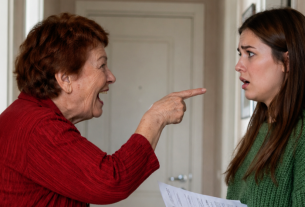
“You are supposed to respect your parents,” her father slammed his fist on the table. “We gave you life, raised you, educated you. And now what, you’re going to count money?”
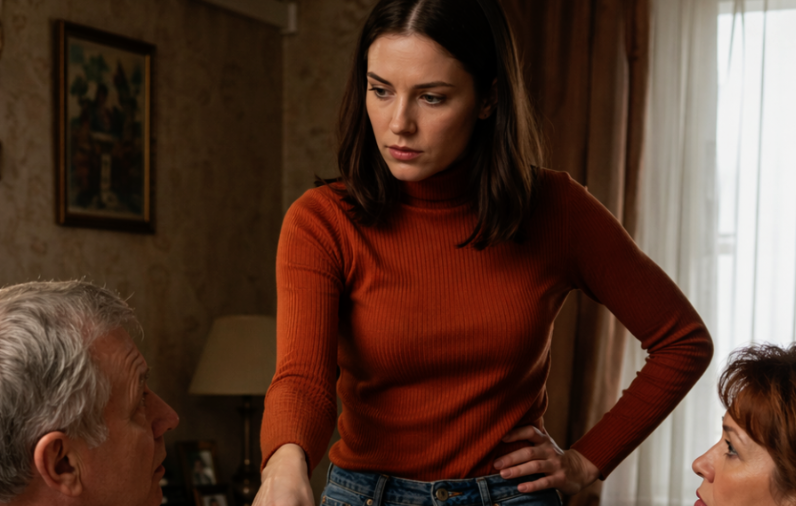
“I won’t,” Anna said, standing up from the table. “I won’t do anything anymore. You know what? Do whatever you want. Transfer everything to Liza. Give her the moon from the sky if you want.”
“That’s right, you understand,” her mother exhaled with relief. “And also, Anechka, we wanted to ask you… We need to renovate the apartment. The wallpaper is terribly old, and the linoleum has swollen. Could you…”
“What?” Anna turned around. “Are you joking?”
“Well, Liza has only just started working, she doesn’t have money,” her mother began speaking faster. “And the apartment is hers now, so it needs to be put in order. We estimated that one hundred and fifty thousand should be enough. You can do that, can’t you?”
The world turned upside down.
Anna looked at her parents — these people she had loved all her life, for whom she had worked herself to exhaustion, denied herself everything. And all she saw in their eyes was calculation. Cold, cynical calculation.
“You left the apartment to my sister,” her voice sounded strangely calm. “So let her solve your problems.”
Silence fell. Her father frowned. Her mother opened her mouth, but Anna raised her hand.
“All these years I was your cash cow. I sent money, helped, thought it was normal to take care of family. And you… you just used me. And you didn’t even try to hide it.”
“How can you say that!” her mother cried indignantly. “Ungrateful!”
“Ungrateful?” Anna smirked. “I’m ungrateful? Me, the one who supported this family for eight years? Fine. Then let your grateful daughter support you now. She has everything now, after all — the apartment, the dacha, and the garage.”
Liza finally tore herself away from her phone.
“Are you serious? You’re making this whole scene over some apartment? God, you’re so mercenary. You always make a mountain out of a molehill. By the way, it’s embarrassing to even bring a guy to that apartment. It’s all in your Soviet-style taste. Floral wallpaper, linoleum… Ugh. Everything needs to be redone.”
“Then redo it,” Anna said, heading to the room to pack her things. “With your own money.”
“Where are you going?” her father rose from the table. “We haven’t finished this conversation.”
“Oh, we have,” Anna said, shoving clothes into her bag. “I won’t give you another kopeck. If you want renovations, ask Liza. She’s your heiress now.”
“Anna, don’t be childish,” her mother tried to take her hand, but Anna pulled away. “We didn’t want to hurt you. It’s just that Liza really needs it more…”
“Because I’m ugly, right?” Anna turned around. “Because I won’t find a man with or without an apartment? That’s what you always hinted at. That Liza is the beauty, and I’m just a gray mouse. That men line up for her, while no one needs me with my character.”
“Well…” her mother faltered. “That’s not exactly what we meant…”
“That is exactly what you meant,” Anna zipped up her bag. “You know what? You’re right. I don’t need anyone. And I don’t need you anymore either. Live however you want. But without my money.”
“Who do you think you are?” her father exploded. “We raised you, gave our whole lives to you, and now you’re abandoning us over some apartment?”
“Over respect,” Anna said, taking her bag. “The respect you don’t have for me and never did.”
She left the room. Her parents and Liza were standing in the hallway, blocking the way to the door.
“If you leave, don’t come back,” her father said. “We don’t need a daughter like you.”
“Likewise,” Anna said, putting on her coat.
“You’ll regret it,” her mother sobbed. “You’ll end up alone. Who needs you? Ugly, angry. No one will marry you, you’ll see. But Liza…”
“Liza is wonderful, I know,” Anna opened the door. “Good luck to you. And give Liza my regards — let her start earning money for her renovation.”
She stepped out and closed the door behind her. Only when she reached the first floor did Anna allow herself to stop and exhale. Her hands were shaking, her vision blurred. But inside, there was a strange relief. As if she had thrown off a heavy backpack she had been carrying for many years.
Her phone vibrated. A message from Dmitry, the financial director of their company:
“How did the trip go? Were your parents happy to see you?”
Anna looked at the screen and suddenly smiled. Dmitry. Smart, calm, reliable. They had been dating for four months, and with him everything was so easy, so simple. No strain, no games. Just two adults who felt good together.
A week ago, he had proposed to her. Quietly, without pomp, over a glass of wine in their favorite restaurant.
“I want you to be with me. Not because it’s expected, but because I can no longer imagine my life without you. Marry me.”
And she had said yes. Without thinking, without weighing anything — simply yes.
“Not very well. I’ll tell you when we meet. I’m coming back.”
“I’m waiting. I love you.”
Anna put her phone away and walked out of the building. A cold wind struck her face, but she didn’t even flinch. She called a taxi and went to the airport.
She would never return to this city again. There was nothing holding her there anymore.
They had their wedding in December. A small ceremony in a countryside hotel, around thirty guests — colleagues, friends, Dmitry’s parents. Everything was elegant and expensive: a dress from a well-known designer, bouquets of peonies in December, live music, champagne.
“Don’t you want to invite your parents?” Dmitry asked a week before the wedding.
They were lying in bed, and Anna was pressed against his shoulder.
“No,” she answered simply.
“Okay,” he kissed the top of her head. “I just want you to have no regrets.”
“I don’t,” Anna lifted her head and looked into his eyes. “You know, for a long time I thought family was sacred. That parents are always right, that you must endure, forgive, help. But then I understood: family isn’t those who gave birth to you. Family is those who love you. Truly. Not for money, not for convenience. They simply love you.”
“I love you,” Dmitry said seriously. “And I will love you when you are successful, and when you are exhausted, and when you are angry at the whole world. I will always love you.”
“I know,” Anna smiled. “That’s why I’m marrying you.”
The wedding passed like a fairy tale. Anna in a snow-white dress, Dmitry in a flawless suit, happy faces of the guests, congratulations, toasts. His mother, a kind woman with gentle eyes, hugged Anna after the ceremony.
“Thank you for making my son happy. I haven’t seen him like this in a long time.”
“He makes me happy,” Anna said, feeling a lump rise in her throat.
In the evening, when the guests had left, they stood on the balcony of their room and looked at the snow-covered forest.
“What are you thinking about?” Dmitry asked, wrapping his arms around her shoulders.
“That I’m happy,” Anna leaned against him. “Truly happy. For the first time in my life.”
“Then my mission is complete,” he kissed her temple.
Anna’s phone vibrated. She took it out and saw a message from an unknown number:
“Anna, this is Liza. Mom is in the hospital. Dad needs money for surgery. You have to help, you’re their daughter.”
Anna looked at the screen, then at Dmitry.
“Family?” he asked.
“Former family,” Anna deleted the message and put the phone away. “Now I have a different family. A real one.”
He silently held her tighter. Outside the window, snow fell softly and quietly, covering the world with a white blanket. Somewhere out there, in another city, other people were once again trying to dump their problems onto her. But she was no longer that naive girl who believed it was her duty to solve other people’s problems.
She had built her life. Her family. Her happiness.
And she would not allow anyone to destroy it.
Six months passed. Anna sat in her new office — spacious, with panoramic windows overlooking the Moscow River. On her desk stood a framed photo: she and Dmitry at their wedding, happy and in love.
Her secretary looked into the office.
“Anna Sergeyevna, you have a visitor. She says she’s your sister.”
Anna raised her head. Her heart skipped for a second, but she composed herself.
“Tell her I’m busy.”
“She says it’s urgent. About your parents.”
Anna was silent for a moment, then nodded.
“Fine. Five minutes.”
Liza entered the office — older-looking, with dull eyes, wearing a cheap jacket. Almost nothing remained of her former beauty — only exhaustion, disappointment, something gray and lost.
“Hi,” Liza stopped by the door.
“Hello,” Anna said without standing. “What do you need?”
“Mom died,” Liza said in a doomed, emotionless way. “Two months ago. Dad has completely fallen apart. The apartment is in terrible condition, it needs repairs. We need money for…”
“Stop,” Anna raised her hand. “Why did you come?”
“For help,” Liza looked up. “I know we were wrong. I know we hurt you. But you’re my sister. You can’t…”
“I can,” Anna leaned back in her chair. “You’re the heiress. You have the apartment, the dacha, the garage. So solve the problems yourself.”
“I can’t,” Liza’s voice trembled. “I don’t know how. I never really worked. Maxim left me when he found out the apartment was mortgaged by our parents and wasn’t actually mine. I… I’m alone. Dad can’t get out of bed. And I’m scared.”
Anna looked at her sister and felt nothing. No pity, no anger. Just emptiness.
“You know, Liza,” she said at last, “I was scared too. When I came to Moscow with one suitcase and ten thousand rubles in my pocket. When I worked fourteen hours a day just to rent a room. When I slept four hours a night so I could get my degree and find a decent job. I was scared every day. But I managed. Because I had no choice.”
“Then help me,” Liza took a step forward. “I’ll learn, I’ll try…”
“Too late,” Anna stood up. “You made your choice. You decided that I was only useful to you as a source of money. And Liza was the beauty, everything would fall into her hands by itself. Well, now you have the result.”
“But we’re family…”
“No,” Anna said firmly. “We are not family. You proved that to me yourselves. My family is my husband. And our future child.”
Liza froze.
“You’re pregnant?”
“Yes,” Anna placed a hand on her still-flat stomach. “Three months. And I will give this child everything. Love, care, education. I will teach them to respect themselves and never allow others to use them. As for you… I’m sorry, but I have my own life. And I’m not going to waste it on people who only saw me as a wallet.”
“So you won’t help?” Liza asked in a lifeless voice.
“No,” Anna walked to the door and opened it. “Goodbye, Liza. I hope you learn to manage on your own. It’s a useful skill.”
Liza left, and Anna closed the door. She sat back down at her desk, placed her hands on the tabletop, and exhaled.
A message from Dmitry arrived on her phone:
“How are you, my love? Maybe we can have lunch together? I want to see you.”
Anna smiled and typed a reply:
“Okay. Come over. I missed you.”
She looked out the window — at the city, the river, the endless sky. Somewhere back in the past remained the girl who thought she owed everyone. The girl who believed love was measured by sacrifice.
But that girl had grown up. And she had learned to tell love from manipulation. Family from obligation. Happiness from duty.
And now she had everything. Real love, a real family, a real life.
As for those who had once betrayed her, let them learn to manage on their own.
Their choice — their consequences.