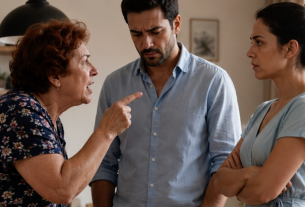
“You have to register my mother here,” my husband said in a tone as if I owed him something.
Grandma died in a cold November when Alla was thirty-three. She had been ill for a long time—stage four lung cancer. The doctors said it right away: it was incurable, only pain relief remained. Every evening after work, Alla sat by her bedside, held her dry, warm hand, and listened to her quiet voice.
“I’m leaving the apartment to you,” Grandma said a week before her death. “The documents are in the dresser, in the bottom drawer. The will is there too. Everything is in your name.”
“Grandma, don’t say that,” Alla said, brushing away a tear.
“What do you mean, don’t say it?” the old woman smiled weakly. “Facts are facts. I’ll be gone soon. And you’ll stay. With a roof over your head. Don’t lose it, my dear granddaughter.”
A week later, Grandma died in her sleep. Quietly, without suffering. Alla found her in the morning when she came by with groceries. She was lying on her back, her face peaceful. As if she were asleep.
The funeral, the paperwork, the notary—it all blurred into a fog. Alla did what had to be done mechanically, without thinking. Only a month later, when she received the certificate of inheritance rights, did it truly sink in: the apartment was hers now. A two-room Stalin-era apartment in an old building in the city center, with high ceilings and parquet floors. Grandma had lived there her whole life. Alla had grown up within those walls—her parents worked late, so they left their daughter with Grandma. Every evening, every weekend. The apartment had become her second home. And now it was her first and only one.
Alla met Timofey two years after her grandmother’s death. He was a coworker from the logistics department. Tall, thin, soft-spoken, with an attentive gaze. They met outside the office building—Alla had simply stepped out to get some air, tired of the stuffy office. Timofey was sitting on a bench, looking out at the street.
“Tired?” he asked when he noticed her.
“No. It’s just stuffy in there.”
“I get it,” Timofey nodded. “Same for us. The air conditioner’s broken.”
They got to talking. Then they met again in the cafeteria. Then Timofey walked Alla to the metro. A month later, they officially started dating.
Timofey seemed perfect. Calm, reasonable, without ambition or dramatic emotional outbursts. After the loud, turbulent relationship she had had with her ex-boyfriend, he felt like a breath of fresh air. He didn’t demand constant attention, didn’t get jealous, didn’t make scenes. He was simply there. Quietly, unobtrusively, reliably.
A year later, Timofey proposed. No kneeling, no ring in a champagne glass. He simply asked one evening in the kitchen:
“Alla, let’s get married.”
“Let’s,” Alla agreed without hesitation.
They registered the marriage on an ordinary weekday. Their witnesses were coworkers. No banquet, they just had lunch at a café, the four of them. Timofey moved into his wife’s apartment—before that he had been renting a room on the outskirts, and living there would have been inconvenient. Alla agreed, but made one thing clear right away:
“The apartment is mine. I inherited it from my grandmother. You live here, but the property is not joint.”
“I understand,” Timofey nodded. “I’m not claiming it.”
“And you won’t register here for now either,” Alla added. “This is my territory.”
“Okay,” her husband agreed easily. “The main thing is that we’re together.” “Okay,” her husband agreed easily. “The main thing is that we’re together.”
The first years passed peacefully. Timofey worked, came home, watched TV. He didn’t insist on rearranging furniture, didn’t offer advice on how to redecorate. The apartment remained just as it had been in Grandma’s time—old furniture, faded wallpaper, worn parquet floors. Alla didn’t want to change anything. Every object held a memory.
Elvira Pavlovna, Timofey’s mother, lived in a regional town three hours from the capital. It was a small town with little work and miserable wages. She worked as a librarian, earned next to nothing, and lived in a one-room apartment. She visited her son once every two months and stayed for a week.
Alla barely remembered the first visit from her mother-in-law. Elvira Pavlovna arrived with an enormous bag full of jars of jam and pickles. She looked around the apartment and pursed her lips.
“Everything’s rather old. It ought to be updated.”
“I like it this way,” Alla replied politely.
“It’s improper for young people to live among old junk,” her mother-in-law shook her head. “You should furnish it in a modern style.”
Alla kept silent. She wasn’t about to explain to an outsider about her grandmother, about memory, about how every worn mark in these walls was precious to her.
Elvira Pavlovna stayed overnight. Alla made up the sofa in the living room for her. Her mother-in-law went to bed late and got up early. By breakfast, she had already set the table and cooked porridge.
“What, you don’t feed your husband?” she asked when Alla came into the kitchen.
“I do,” Alla frowned. “It’s just that Tima likes fried eggs, not porridge.”
“Porridge is healthier,” Elvira Pavlovna said, placing a plate in front of her son. “You have to eat properly.”
Timofey ate the porridge in silence, without objecting. Alla looked at her husband, waiting for him to say something—something like, I’m used to fried eggs, Mom, thanks. But Timofey said nothing. He chewed and stared at his plate.
For a week, her mother-in-law lived in the apartment as if she were the mistress of the house. She cooked, cleaned, gave advice. Alla endured it and counted the days until her departure. When Elvira Pavlovna finally left, she breathed a sigh of relief.
“Your mother stays a long time,” she remarked to her husband that evening.
“She’s bored at home,” Timofey shrugged. “She lives alone.”
“I understand, but a week is a lot.”
“Alla, she’s my mother,” her husband frowned. “It’s not like she comes often.”
“Once every two months,” Alla corrected. “That’s not so rare.”
“So what?” Timofey didn’t see the problem. “Does she bother you?”
“She doesn’t bother me,” Alla backed off. “I’m just used to quiet.”
“Then put up with it,” her husband said, turning back to the television.
Alla said nothing. She didn’t feel like arguing.
Elvira Pavlovna kept coming regularly. Every time with bags, jars, and advice. She talked about the neighbors, about work, about how hard life in the provinces was.
“The pension is tiny, the salary is ridiculous,” her mother-in-law complained over tea. “Prices are like Moscow, but there’s no money.”
“It must be hard,” Alla agreed politely.
“Very,” Elvira Pavlovna sighed. “A neighbor’s son moved to Moscow and took his mother in with him. They live together. She helps with the grandchildren and around the house.”
“That’s nice,” Alla nodded, not understanding where this was going.
“And another neighbor registered his mother in Moscow,” her mother-in-law went on. “Now she has Moscow registration. She can get a higher pension and various benefits.”
“I see,” Alla said, pouring herself some tea.
“That’s what I’m thinking,” Elvira Pavlovna looked at her daughter-in-law intently. “It’s nice when children take care of their parents.”
Alla stayed silent. She understood the hint, but pretended she didn’t.
Timofey started talking about his mother more often. He didn’t complain openly, but he kept mentioning her problems.
“Mom went to the hospital. She had to get in line at five in the morning.”
“Why?” Alla asked while making dinner.
“She needed to see a specialist. There are very few appointment slots. Whoever gets there first gets on the list.”
“That’s awful,” Alla shook her head.
“That’s what I’m saying,” Timofey sighed. “In Moscow there are no such problems. You book online and show up.”
“With Moscow registration,” Alla clarified.
“Well, yes,” her husband nodded. “It’s harder without local registration, though still possible.”
Alla sliced vegetables in silence. She understood where the conversation was heading. But he still didn’t say it directly.
A month later, Timofey brought it up again:
“Mom got her pension. Ten thousand. For the whole month.”
“That’s not much,” Alla agreed.
“Not much at all,” her husband nodded. “A Moscow pension is twice as high.”
“But to get a Moscow pension, you need Moscow registration,” Alla set down the knife and looked at her husband. “Which your mother doesn’t have.”
“That’s the problem,” Timofey looked away.
“So what are you suggesting?” Alla asked directly…
Grandmother died in a bitterly cold November, when Alla was thirty-three. She had been ill for a long time—stage-four lung cancer. The doctors had warned them right away: it was incurable, only pain relief was possible. Every evening after work, Alla sat by her bedside, holding her dry, warm hand and listening to her quiet voice.
“I’m leaving the apartment to you,” her grandmother said a week before she died. “The papers are in the dresser, bottom drawer. The will is there. Everything goes to you.”
“Grandma, don’t say that,” Alla said, wiping away a tear.
“What do you mean, don’t say it?” the old woman smiled weakly. “Facts are facts. I’ll be gone soon. And you’ll stay behind. With a roof over your head. Don’t lose it, my dear.”
A week later, her grandmother died in her sleep. Quietly, without suffering. Alla found her in the morning when she came by with groceries. She was lying on her back, her face peaceful. As if she were simply asleep.
The funeral, the paperwork, the notary—everything blurred together in a fog. Alla did what had to be done mechanically, without thinking. Only a month later, when she received the certificate of inheritance, did it truly sink in: the apartment was now hers. A two-room Stalin-era flat in an old building in the city center, with high ceilings and parquet floors. Her grandmother had lived there all her life. Alla had grown up within those walls—her parents worked late, so they would leave their daughter with Grandma. Every evening, every weekend. The apartment had become her second home. And now it was her first and only one.
Alla met Timofey two years after her grandmother’s death. He was a coworker from the logistics department. Tall, thin, soft-spoken, with an attentive gaze. They first met outside the office building—Alla had simply stepped out for some air, tired of the stuffy office. Timofey was sitting on a bench, looking out at the street.
“Tired?” he asked when he noticed her.
“No. It’s just stuffy in there.”
“I get it,” Timofey nodded. “Same in our department. The air conditioner is broken.”
They started talking. Then they ran into each other again in the cafeteria. Then Timofey walked Alla to the metro. A month later, they officially started dating.
Timofey seemed perfect. Calm, level-headed, without ambition or dramatic displays of emotion. After the noisy relationship she had had with her ex-boyfriend, he felt like a breath of fresh air. He did not demand constant attention, did not get jealous, did not make scenes. He was simply there. Quietly, unobtrusively, reliably.
A year later, Timofey proposed. No kneeling, no ring in a champagne glass. He simply asked one evening in the kitchen:
“Alla, let’s get married.”
“Let’s,” Alla agreed without hesitation. They registered the marriage on an ordinary weekday. Their witnesses were coworkers. No banquet—just the four of them having lunch at a café. Timofey moved into his wife’s apartment—before that, he had been renting a room on the outskirts, and living there would have been inconvenient. Alla agreed, but made one thing clear from the start:
“The apartment is mine. I inherited it from my grandmother. You live here, but the property is not shared.”
“Understood,” Timofey nodded. “I’m not claiming anything.”
“And you’re not going to register here for now either,” Alla added. “This is my territory.”
“Fine,” her husband agreed easily. “What matters is that we’re together.”
The first years passed quietly. Timofey worked, came home, watched television. He did not demand rearrangements, did not interfere with advice about decorating. The apartment remained just as it had been in Grandma’s day—old furniture, faded wallpaper, worn parquet floors. Alla did not want to change anything. Every object held a memory.
Elvira Pavlovna, Timofey’s mother, lived in a regional town three hours from the capital. The town was small, there was little work, and the salaries were miserable. She worked as a librarian, earned next to nothing, and lived in a one-room apartment. She came to visit her son every two months and stayed for a week.
Alla remembered the first visit from her mother-in-law only vaguely. Elvira Pavlovna arrived with an enormous bag full of jars of jam and pickles. She looked around the apartment and pursed her lips.
“Everything looks rather old. It could use some updating.”
“I like it this way,” Alla replied politely.
“It’s improper for young people to live among old junk,” her mother-in-law said, shaking her head. “You should furnish it in a modern way.”
Alla said nothing. She was not about to explain to an outsider about her grandmother, about memory, about how every worn mark in those walls was dear to her.
Elvira Pavlovna stayed the night. Alla made up the couch for her in the living room. Her mother-in-law went to bed late and got up early. By breakfast, she had already set the table and cooked porridge.
“What, don’t you feed your husband?” she asked when Alla came into the kitchen.
“I do,” Alla frowned. “It’s just that Tima likes scrambled eggs, not porridge.”
“Porridge is healthier,” Elvira Pavlovna said, setting a bowl in front of her son. “You have to eat properly.”
Timofey ate the porridge in silence, without objecting. Alla looked at her husband, waiting for him to say something—something like, I’m used to scrambled eggs, Mom, thank you. But Timofey said nothing. He chewed and stared down at his plate.
For a week, her mother-in-law lived in the apartment as if she were the mistress of the house. She cooked, cleaned, gave advice. Alla endured it and counted the days until her departure. When Elvira Pavlovna finally left, she breathed a sigh of relief.
“Your mother stays a long time,” she remarked to her husband that evening.
“She gets bored at home,” Timofey shrugged. “She lives alone.”
“I understand, but a week is a lot.”
“Alla, she’s my mother,” her husband frowned. “And she doesn’t come that often.”
“Every two months,” Alla corrected him. “That’s not exactly rare.”
“So what?” Timofey did not see the problem. “Does she bother you?”
“She doesn’t bother me,” Alla backed off. “I’m just used to peace and quiet.”
“Then be patient,” her husband said, turning back to the television.
Alla stayed silent. She did not feel like arguing.
Elvira Pavlovna kept coming regularly. Each time with bags, jars, and advice. She talked about neighbors, work, and how hard life was in the provinces.
“The pension is tiny, the salary is laughable,” her mother-in-law complained over tea. “Prices are like they are in Moscow, but there’s no money.”
“It must be hard,” Alla agreed politely.
“It is,” Elvira Pavlovna sighed. “My neighbor’s son moved to Moscow, for example. He took his mother in with him. They live together now. She looks after the grandchildren and helps around the house.”
“That’s nice,” Alla nodded, not understanding where this was going.
“And another neighbor registered his mother in Moscow,” her mother-in-law continued. “Now she has Moscow registration. She can get a higher pension and all sorts of benefits.”
“I see,” Alla said, pouring herself some tea.
“That’s why I think,” Elvira Pavlovna said, looking closely at her daughter-in-law, “it’s wonderful when children take care of their parents.”
Alla said nothing. She understood the hint, but pretended she did not.
Timofey began bringing up his mother more often. He did not complain openly, but he mentioned her problems.
“Mom went to the hospital. She had to stand in line from five in the morning.”
“Why?” Alla asked while making dinner.
“She needs to see a specialist. There are very few appointments. Whoever comes first gets in.”
“That’s rough,” Alla said, shaking her head.
“Exactly,” Timofey sighed. “In Moscow, you don’t have those problems. You book online and show up.”
“With Moscow registration,” Alla clarified.
“Well, yes,” her husband nodded. “Without local registration it’s harder, though still possible.”
Alla chopped vegetables in silence. She understood where the conversation was heading. But he still did not say it outright.
A month later, Timofey brought it up again.
“Mom got her pension. Ten thousand rubles. For the whole month.”
“That’s not much,” Alla agreed.
“It’s very little,” her husband nodded. “A Moscow pension is twice that.”
“But to get a Moscow pension, you need Moscow registration,” Alla said, setting down the knife and looking at him. “Which your mother doesn’t have.”
“That’s the problem,” Timofey said, looking away.
“And what are you suggesting?” Alla asked directly.
“I’m not suggesting anything yet,” her husband shrugged. “I’m just saying.”
But this “just saying” went on and on. Every week there was a new story about Elvira Pavlovna’s difficulties. Medicines were expensive, utility bills had gone up, her wages had been delayed. Alla listened, nodded, but offered nothing. She waited for her husband to say what he really wanted.
Half a year passed. Timofey became irritable. He snapped over little things, slammed doors, went out for walks without explaining where he was going. Alla felt the tension but said nothing. She did not want to start the conversation first.
Elvira Pavlovna came again. This time she stayed for two weeks. Alla tried to hint to her husband that this was too long, but Timofey did not react.
“Mom is resting. Let her stay.”
“Two weeks is not a visit anymore, it’s practically a move,” Alla objected.
“Don’t exaggerate,” her husband waved her off.
Elvira Pavlovna sat in the kitchen, drinking tea and talking about people she knew.
“You remember Lidiya Petrovna, the one I told you about? The one who works at the library? Well, her daughter moved to St. Petersburg and registered her there. Now Lidiya Petrovna goes there every month and gets a higher pension.”
“Good for her,” Alla replied shortly.
“Very good,” her mother-in-law nodded. “Her daughter is a good woman. She takes care of her mother.”
Alla got up and left the kitchen. She did not want to continue the conversation.
That evening Timofey came into the bedroom. Alla was lying on the bed reading a book.
“Alla, we need to talk.”
“About what?” his wife asked without looking up from the page.
“About Mom.”
“What about your mother?” Alla closed the book and looked at her husband.
“It’s hard for her to live in the region,” Timofey said, sitting down on the edge of the bed. “She has little money, poor medical care, and no prospects.”
“And what are you suggesting?” Alla already knew the answer, but she wanted to hear it out loud.
“That we register her here,” Timofey said quickly. “In your apartment. Just formally, on paper. Mom will still live in her own place, but she’ll be able to come more often. And she’ll get a higher pension.”
“No,” Alla answered immediately.
“Why not?” her husband frowned.
“Because it’s my apartment. And I don’t want anyone registered here.”
“Alla, she’s my mother,” Timofey raised his voice. “Not some random stranger.”
“She’s a stranger to me,” Alla straightened up. “I barely know her. I see her once every two months.”
“But she’s my mother!” her husband stood up. “And she needs help!”
“Then help her financially,” Alla suggested. “Send her money every month. Or invite her to live here for good, if that’s what you want.”
“Live here?” Timofey did not understand. “But there’s not enough room.”
“If you register her, that won’t create more space,” Alla pointed out logically.
“But registration is just a formality,” her husband faltered. “Mom will stay where she is.”
“Then why does she need Moscow registration?” Alla would not back down. “To get a higher pension? That’s fraud.”
“That’s not fraud,” Timofey frowned. “It’s using available opportunities.”
“Call it whatever you want,” Alla said, lying back down and picking up her book. “My answer is no.”
“Alla,” her husband came closer. “I’m asking you. Help my mother.”
“I’m not stopping you from helping her,” his wife said without looking up. “Help her all you want. With your money, with your effort. But I’m not giving her registration.”
“You have to,” Timofey suddenly said in a different tone. Hard. Commanding.
Alla slowly put the book down and looked at her husband.
“What?”
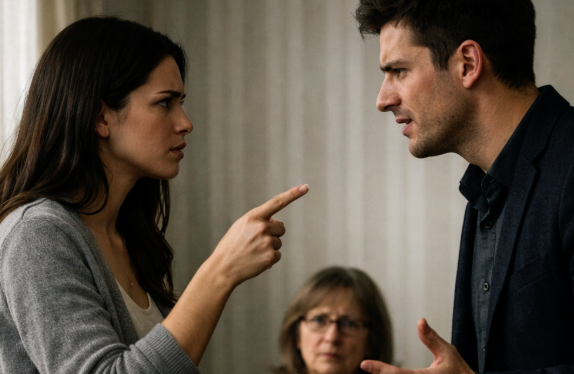
“You have to register my mother here,” Timofey repeated in a tone as if Alla owed him. “I’m your husband. She’s my mother. You are obliged to help my family.”
Silence fell. Alla stared at her husband, unable to believe what she had just heard. Obliged? She was obliged?
“I’m not obliged to anyone,” she said slowly.
“You are,” Timofey insisted. “We’re married. That means you have to support my family.”
“My family is me,” Alla got up from the bed. “You live in my apartment. With my permission. And you have no right to demand that someone else be registered here.”
“I do have that right,” her husband stepped forward. “Because I’m your husband!”
“A husband who contributed nothing to this apartment,” Alla did not retreat. “Who didn’t pay a mortgage, didn’t do repairs, didn’t buy furniture. You just live here for free.”
“I’m your husband!” Timofey raised his voice. “That’s supposed to mean something!”
“It does,” Alla nodded. “But it doesn’t give you the right to command my property.”
“Your property,” her husband smirked. “Everything is only yours. I have no rights to anything.”
“You have the right to live here,” Alla corrected him. “As long as I allow it.”
“As long as you allow it?” Timofey gave his wife a long look. “So you can throw me out whenever you want?”
“I can,” Alla answered honestly. “If you violate my boundaries.”
“What boundaries?” her husband did not understand. “We’re a family!”
“A family with boundaries,” Alla clarified. “I told you that six years ago. This is my apartment. My rules. You agreed to that then.”
“I thought we’d grow closer over time,” Timofey lowered his head. “I thought you’d stop dividing everything into yours and mine.”
“I didn’t,” Alla shook her head. “And I won’t. The apartment came from my grandmother. It’s my inheritance. My memory. My fortress.”
“Fortress?” her husband laughed. “Against whom? Me?”
“Against everyone,” Alla said firmly. “Anyone who tries to take what is mine.”
“I’m not trying to take anything,” Timofey objected. “I’m asking you to help my mother.”
“By registering her in my apartment against my will,” Alla added. “That’s not a request. That’s a demand.”
“So what if it is?” her husband finally snapped. “You’re supposed to help my family!”
“Why?” Alla asked directly.
“Because you’re my wife!”
“That’s not a reason,” Alla shook her head. “Wife does not mean powerless. It does not mean obliged to fulfill every demand.”
“So you’re refusing?” Timofey asked angrily.
“Yes,” Alla nodded. “I am refusing. And don’t try to pressure me. It won’t work.”
“You’re selfish,” her husband hissed through his teeth. “Just an ordinary selfish woman.”
“Maybe,” Alla shrugged. “But at least I’m honest.”
Timofey turned and left the bedroom, slamming the door behind him. Alla remained standing in the middle of the room, feeling her hands tremble. In six years of marriage, it was the first time her husband had raised his voice at her. The first time he had called her selfish. The first time he had demanded rather than asked.
The next few days passed in cold silence. Timofey did not speak to his wife. He came home, ate dinner in silence, went to bed with his back turned to the wall. Elvira Pavlovna had left, but the atmosphere remained heavy.
A week later, Timofey brought it up again. One evening while Alla was washing dishes.
“Have you thought about it?”
“About what?” his wife did not turn around.
“About registering Mom.”
“No,” Alla answered shortly. “And I’m not going to.”
“Why are you so heartless?” Timofey came up behind her. “Don’t you feel sorry for an elderly woman?”
“I do,” Alla dried her hands. “Just not enough to sacrifice my apartment.”
“No one is asking you to sacrifice anything,” her husband objected. “Just to register her.”
“Registration is not just a piece of paper,” Alla turned to face him. “It gives a person the right to live there. It gives them the ability to say at any moment: I’m registered here, I have the right to stay.”
“Mom would never use it like that,” Timofey assured her.
“How do you know?” Alla crossed her arms. “People change. Situations change.”
“My mother isn’t like that,” her husband said, offended.
“I don’t know what your mother is like,” Alla said honestly. “I barely know her. And I’m not going to trust her.”
“So you don’t trust me?” Timofey asked.
“Not in this matter,” Alla answered firmly.
Her husband fell silent. Then he spun around sharply and went into the room. Alla heard cabinet doors slamming, bags rustling. She came out into the hallway. Timofey was standing there with a travel bag, packing his things.
“What are you doing?”
“I’m leaving,” her husband said without looking up.
“Where to?”
“To Mom’s. Back to the region.”
“For good?” Alla asked calmly.
“I don’t know,” Timofey shrugged. “I’ll think things over there.”
“All right,” Alla nodded. “Think.”
Her husband finished packing, zipped the bag, put on his jacket, and took his keys.
“So you’re not going to change your mind?” he asked at the door.
“No,” Alla answered.
“Even if I leave?”
“Even then,” his wife confirmed.
Timofey looked at Alla for a long moment. Opened his mouth, then closed it again. Turned around and left. The door shut quietly behind him.
Alla remained standing in the hallway, listening to the silence. Six years of marriage had ended with a single conversation. Over registration. Over the fact that her husband had decided his wishes mattered more than her boundaries.
The first night, Alla did not sleep. She lay there staring at the ceiling, thinking. Had she done the right thing? Maybe she should have given in. Registered Elvira Pavlovna, calmed her husband down. But every time she thought about it, something inside her tightened. No. The apartment had come from Grandma. It was sacred. No outsider would ever be registered there.
Timofey called three days later. His voice was cold and formal.
“Mom says you’re selfish.”
“Let her say it,” Alla answered calmly.
“I think so too,” her husband added. “A normal wife would help the family.”
“A normal husband wouldn’t demand the impossible,” Alla shot back.
“It’s not impossible,” Timofey raised his voice. “It’s basic help!”
“Maybe basic for you,” Alla objected. “For me, it’s a violation of my boundaries.”
“So your boundaries matter more than family?” her husband asked.
“My family is me,” Alla repeated. “You stopped being family the moment you started demanding instead of asking.”
“So that’s it,” Timofey concluded. “Divorce?”
“Probably,” Alla nodded, though he could not see her.
“Fine,” her husband’s voice grew even colder. “I’ll file the papers this week.”
“Go ahead,” Alla said, and hung up.
She sat down on the couch, wrapped her arms around her knees. Divorce. Alone again. The apartment was hers alone again. Just as it had been from the very beginning.
A month later, a court summons arrived. Alla came, signed the papers. Timofey sat at the other end of the courtroom, not looking in her direction. Beside him sat Elvira Pavlovna, clutching her bag on her lap, glaring at her former daughter-in-law with hatred.
The judge read out the decision. The marriage was dissolved. The property would not be divided, since the apartment had belonged to Alla before the marriage. Timofey did not object. He signed away any claims.
They came out of the courtroom at the same time and crossed paths in the corridor. Elvira Pavlovna stepped forward.
“You ruined my son’s life.”
“Your son ruined his own life,” Alla answered calmly. “The moment he decided his desires were more important than my boundaries.”
“What boundaries?” her mother-in-law snorted. “That’s called greed.”
“Call it whatever you like,” Alla shrugged. “I don’t care.”
“You’ll end up alone,” Elvira Pavlovna said spitefully. “Without a husband, without a family.”
“But with my apartment,” Alla smiled. “And with my dignity.”
She turned and walked toward the exit. She could hear her mother-in-law hissing angrily behind her, but she did not look back. She stepped outside and breathed in the cold air. Free. Once again.
At home, Alla walked through the rooms. Quiet. Empty. Only her and the walls. Grandma’s walls, preserving memory. Alla ran her hand over the worn wallpaper, the old dresser, the faded curtains. Everything was in its place. No one had invaded. No one had violated it.
Did it hurt? Yes. Was she lonely? Absolutely. But did Alla regret her decision? No. Not for a single second.
A year passed. Alla continued living alone. Work, home, books, the occasional meeting with friends. A quiet, steady life. No drama, no demands, no attempts to violate her boundaries.
Sometimes she thought about Timofey. Had he remarried? Had he found somewhere to register his mother? Or was Elvira Pavlovna still in her little regional town, cursing her former daughter-in-law? Her son was probably supporting her now.
But it did not matter. That was their life. Their choice. Alla had her own. The apartment, the memory, the silence. And no regret over the marriage she had lost. Because a husband who demands that you violate your boundaries is not worth holding on to. Better to remain alone, but with yourself, than to be in a pair and lose yourself.
Alla walked to the window and looked out at the evening city. Lights, cars, people. Somewhere out there lived Timofey. Somewhere out there lived Elvira Pavlovna. But that was no longer her story.
Her story was here. Within these walls. With her grandmother’s memory. With personal boundaries. With the right to say no.
And that was the only story that mattered.