— Sveta, maybe you should answer the phone after all? It’s ringing for the third time, — Vera asked quietly, looking up from the cutting board where carrots lay in neat cubes. — What if it’s something urgent?
Svetlana, lazily sipping lemonade through a straw, did not even turn her head toward her phone, which was vibrating on the edge of the garden table. She was half-reclining in a wicker chair, turning her face toward the rays of the evening sun, and looked like the very image of serenity.
— Vera, what could possibly be urgent? It’s Lenka from work again, probably whining that some report doesn’t add up. I’m on vacation, — her voice sounded soft and drawn-out, like molasses. — I came here to breathe, not to solve other people’s problems. You yourself told me, “Rest, regain your strength.” So that’s what I’m doing.
— I did say that, of course, — Vera sighed, trying to make the sigh unnoticeable. She carefully brushed the orange crumbs from her hands and came closer, sitting down on the edge of the wooden bench. — It’s just that Pasha called half an hour ago and said he’d be late. I thought maybe it was him calling you since I was busy.
— Pashka? Oh, come on, why would he call me? He knows I’m relaxing here. Listen, Vera, do we have anything cold besides lemonade? Maybe there’s some ice cream left from last time? I don’t think the kids finished it all.
— There is some left. I’ll bring it now. — Vera stood up, feeling the familiar heaviness in her legs. She smiled at her sister-in-law, sincerely hoping she would appreciate the care. — But I’ll need help with dinner a little later. The chicken is big, it needs to be cut up, and my wrist is aching. Will you help?
Svetlana opened one eye slightly and looked at Vera with mild, almost childlike surprise.
— Oh, Verchik, I’d be happy to, honestly. But I just got my manicure redone before the trip. If I start handling raw meat now, it’ll all get stained, the polish will go cloudy. You’re the handy one in our family, you do everything so skillfully. And I can… well, I can decorate the salad with greens when everything is ready. Deal?
Vera froze for a second. Something warm stirred inside her — the hope that Sveta simply had not thought about it, that she had just blurted it out without meaning any harm. After all, she was the younger one; she had been spoiled. She just needed it explained to her.
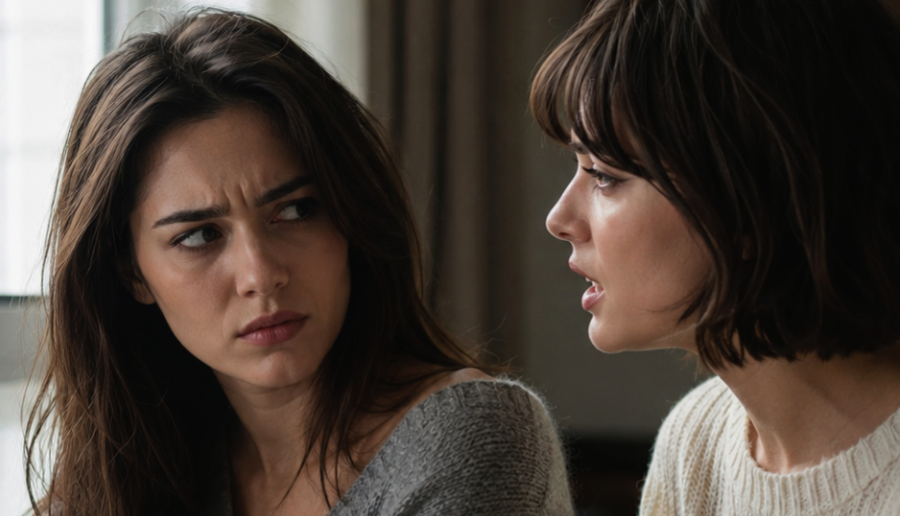
— Sveta, it’s not about skill. I’m just tired. I’ve been in the garden since morning, then laundry, and now dinner. I simply need another pair of hands. You can protect your manicure with gloves. I’ll give you new thick ones. Please.
Svetlana finally sat up, adjusting the strap of her sundress. Something resembling sympathy flashed in her eyes, but it immediately turned into a condescending smile.
— Vera, you stress yourself out too much. This is the country house, nature. Why all these complicated dinners? You could just boil some dumplings. I’m not asking for culinary masterpieces. I’m not picky at all. And gloves… latex dries out the skin on my hands afterward. Why don’t you just do it quickly yourself, huh? Then we’ll watch a movie together. I downloaded such a great one!
Vera looked at her sister-in-law. There was no rudeness in her words, only a soft, impenetrable padding of selfishness.
— All right, — Vera said quietly. — I’ll do it myself. Rest, Sveta. Regain your strength.
That summer had turned out scorching, thick as honey. The air shimmered above the asphalt, and here, outside the city, it smelled of heated pine needles and dusty grass. Vera and Pavel’s house stood on a hill, large and solid, covered with light-colored siding. They had built it for a long time, investing every spare penny, denying themselves trips to the sea so their children would have a place to run barefoot through the grass.
Pavel, Vera’s husband, was a man of action. He rarely chattered for nothing and rarely complained. His job, which involved adjusting complex industrial optics, required enormous focus and patience. He came home exhausted but happy because of the silence. And every summer, that silence was disturbed.
Svetlana appeared like a migratory bird, knowing the season exactly. July was her month. She arrived lightly, with a small rolling suitcase that contained only swimsuits, light dresses, and suntan lotions.
In the early years, Vera had been glad. Pasha did not have many relatives, and she wanted the family to be large and close-knit. She set tables, laid out the best linens, and baked blueberry pies, which Sveta adored. But over time, the joy grew thin, turning first into habit, and then into a dull irritation that Vera carefully hid.
That morning, when Vera left on errands for the district center, Sveta and the children stayed in the house — seven-year-old Misha and five-year-old Katya. Pavel was at work. Vera left a full refrigerator, a pot of soup on the stove, and detailed instructions: feed them at one, do not let them out into the hot sun without hats.
She returned earlier than planned — her errands were resolved quickly. The car rolled smoothly into the yard, its tires crunching over the gravel. Vera got out, anticipating the coolness of the house, but the silence seemed strange to her. Too hollow.
She went inside. In the kitchen, the untouched pot of soup stood on the table. Beside it was an empty pizza box with a greasy stain on the tablecloth. The television was on in the living room, showing some series, but no one was there.
Vera went out to the backyard. Svetlana was lying in the hammock, wearing headphones, eyes closed, rhythmically swinging one foot.
— Sveta! — Vera called loudly.
Her sister-in-law did not hear. Vera came closer and touched her shoulder. Svetlana flinched, pulled off the headphones, and opened her eyes wide.
— Oh, you’re back already? That was quick.
— Where are the children? — Vera’s voice trembled.
— The children? — Svetlana lazily looked around. — They were running around here somewhere. They were playing hide-and-seek. I told them, “Play quietly, Aunt Sveta is meditating.”
Vera felt everything inside her turn cold. The gate was open. She rushed toward the exit, her heart pounding somewhere in her throat. She ran out onto the road. Empty. She ran toward the lake — the slope there was steep, the clay slippery.
— Misha! Katya! — she shouted until her voice broke.
She found them ten minutes later at the neighbors’ house, three houses away. Old Uncle Kolya, the neighbor, was giving them water from the well.
— Vera, why aren’t you watching the little ones? — he said reproachfully, shaking his head. — They were heading toward the highway, and I intercepted them. They said Auntie was sleeping, and they went to look for their mother.
Vera pressed the children to herself, feeling her hands tremble. There were no tears. Only a hollow emptiness that was rapidly filling with something hard and sharp.
She brought the children home, washed their faces, gave them apples, and put cartoons on. Then she went out onto the veranda. Svetlana was no longer lying in the hammock; she was sitting at the table eating grapes.
— Found them? Well, thank God, — she said, spitting a seed into her fist. — I told you they wouldn’t go far. They’re lively kids, yours. By the way, you didn’t put the soup in the fridge. I think it went sour. It’s hot, you know.
Vera looked at her and no longer recognized the person she had welcomed here for years. Sitting before her was not a relative, not a close person, but some strange, indifferent creature consuming life in chunks.
— You didn’t feed them the soup? — Vera asked very quietly.
— Oh, they didn’t want it. They whined, “We don’t want soup, we want pizza.” So I ordered some. I didn’t mind. By the way, you owe me for the pizza. I didn’t have cash for the courier, so I had to transfer from my credit card, and there was a fee.
Vera was silent. She looked at Svetlana’s tanned face, at her calm, expressionless eyes, and felt the very string that had held her together all these years snap inside her. Her patience had run out.
A week later, Pavel was offered an urgent business trip to the regional center where Svetlana lived. Vera decided to go with him. The office required her personal presence to sign documents for a land deal — they had long planned to expand their plot. There was no one to leave the children with; the grandmothers were ill, the nanny had gone away. They decided to take them along. Pavel called his sister.
— Hi, Sveta. We’re coming to you with the whole clan for a couple of days. We need to handle some documents and show the kids the city. Will you take us in?
There was a pause on the line, then Svetlana’s cheerful voice rang out:
— Of course! What are you talking about, Pash! Come! I’ve missed you so much. I haven’t seen you in the city in ages. The embankment tour is on me!
They drove for four hours. The heat was unbearable, and the car’s air conditioner could barely cope. The children were tired and fussy. Katya fell asleep only as they approached the city.
Svetlana lived in a Stalin-era apartment building, in a spacious three-room apartment she had received from her ex-husband in the divorce. High ceilings, thick walls — coolness.
Pavel rang the doorbell. The door did not open right away. Svetlana stood there in a silk robe, with wet hair, as if she had just come out of the shower.
— Oh, you’re already here! — she put on a show of joy, but her eyes remained cold. — Come in, of course. Just be quiet, I have a terrible headache. A migraine.
They entered. The apartment smelled of perfume and leather. Glossy magazines were scattered across the sofa in the living room.
— Would you like tea? — Sveta asked, without offering them a seat.
— Sure, if it’s not too much trouble. We’ve been on the road, we’re thirsty, — Pavel set the bags down in the hallway. — And where can we settle in? The children could use an hour of sleep.
Svetlana froze with the kettle in her hands.
— Sleep? Pash, here’s the thing… — she lowered her voice, making a mournful face. — I completely forgot that early tomorrow morning I have… an inspection. Gas workers are coming; they’ll be replacing pipes. There’ll be so much noise, dust, dirt. It’s absolutely impossible for you with the children. I thought you’d just have some tea and go to a hotel.
Vera slowly took off her sunglasses. She saw the corner of her husband’s mouth twitch.
— To a hotel? — Pavel asked again. — Sveta, we agreed. You said, “Come.” I asked, “Will you take us in?” You said, “Yes.”
— Well, I did take you in! — Svetlana spread her hands, nearly spilling the water. — Here, I’m pouring tea. But staying overnight… Pash, think for yourself. Children, noise, commotion. I have my routine; I’m used to sleeping in silence. And your Katya probably asks for water at night. And anyway, what, you don’t have money for a hotel? You’re building a house, you’re not poor.
Vera stepped forward. She had not planned a scandal. She simply wanted to look Svetlana in the eye.
— So when you come to us for a month, live with everything provided, the children don’t bother you? Our routine doesn’t bother you?
Svetlana snorted, turning away toward the window.
— You invite me yourselves. I don’t impose. And anyway, Vera, don’t count other people’s money or other people’s hospitality. This is my home. My rules. If you don’t like it, the door is over there.
Pavel exhaled sharply. He took Vera’s hand and squeezed her fingers.
— Let’s go, — he said dully. — We won’t interfere with your “routine.”
They left the entrance in silence. Pavel slammed the trunk shut forcefully as they loaded the things back in. The car was stuffy.
— To Anton’s? — Vera asked. Anton was Pavel’s cousin; he lived modestly in a two-room apartment with his wife and mother-in-law, but he was always glad to see relatives.
— To Anton’s, — Pavel nodded. — There’s nowhere else.
The relationship snapped like a rotten rope. Pavel simply crossed his sister out of his life. Vera did not insist on reconciliation — it became easier for her to breathe. Summer was ending, autumn arrived, bringing rain and the need to prepare for winter.
Svetlana reappeared in October. First came likes on social media under photos of the children. Then a “casual” message in a messenger app: “How are you? I saw the forecast, you have frosts there. Hope you’re not freezing.” Pavel did not answer. Neither did Vera.
But Svetlana was not the type to understand hints. Or she was simply used to getting away with everything.
The call came on a Saturday morning. Pavel picked up and turned on the speakerphone.
— Pashka, hi! — Svetlana’s voice rang as if nothing had happened. — Listen, here’s the thing… I’ve decided to start renovations. Major ones. Tearing down walls, replacing floors. It’s impossible to live in all that dust. So I thought I’d come to you for a month or so. While the crew does all the dirty work. I’ll breathe some fresh air, spend time with my nephews and niece. You don’t mind, do you?
Pavel sat at the table, turning a coffee cup in his hands. His face was calm, almost stone-like.
— No, Sveta, — he said evenly. — We do mind.
— What do you mean? — his sister-in-law’s voice trembled with genuine surprise. — Pash, what’s wrong with you? Still offended about that time? Come on, don’t be a grouch. It just didn’t work out then; I had a migraine, you know that. I’m your sister! I have no one else!
— You have an apartment. You have money for renovations. You have friends you vacation with in Turkey. You don’t have us.
— You… you’re just shameless! — Svetlana screeched. — I came to you for so many years, I put my soul into it! I brought gifts for the children! — That was a lie, Vera knew it for certain. — And now, when I need help, you’re throwing me out onto the street? Vera, did you turn him against me? Give her the phone! I know you’re nearby!
Vera came up to the phone. She did not feel anger. Only cold, crystal-clear contempt.
— I’m here, Sveta. There was no need to turn anyone against you. You did it all yourself. This house is closed to guests. Especially to those who confuse a home with a free hotel, and relatives with servants.
— You filthy village trash! — Svetlana screamed so loudly that the speaker crackled. — Who do you think you are?! A freeloader! If it weren’t for Pasha…
Pavel ended the call. And blocked the number.
— That’s it, — he said. — Enough.
But it was not the end.
Two days later, in the evening, when it had already grown dark, a car honked at the gate. Vera looked out the window. A taxi was standing there, and beside it stood Svetlana with two huge suitcases. She decisively opened the small gate — the lock had been acting up, and they still had not managed to fix it — and headed toward the house.
Pavel came out onto the porch. Vera stood behind him, throwing a shawl over her shoulders.
— Open up! — Svetlana shouted, climbing the steps. She was red-faced, disheveled, and furious. — You have no right! This is my parents’ house! They started building it! — That was a half-truth: their father had indeed laid the foundation, but he had abandoned the construction twenty years earlier; Pavel had built everything else. — I have the right to live here!
She tried to push Pavel aside to get to the door. Pavel stood like a rock.
— Leave, Sveta. The taxi is waiting for you.
— I’m not leaving! — she grabbed the door handle. — I’m registered here! — Another lie; she had checked herself out ten years earlier because of her husband’s apartment. — I’ll call the police! I’ll say you’re beating me!
And then Vera could not take it anymore. She stepped out from behind her husband. Her calm vanished. Only the fury of a female protecting her den remained. She stepped toward Svetlana and yanked her hand away from the door.
— You! — Vera shouted, looking straight into her sister-in-law’s crazed eyes. — You are going to get into that taxi right now and go back to your perfect life! You are nobody here! You’re a parasite who sucked our strength for years! You nearly got my children killed by leaving them alone! You spat in our faces when we asked for help! And now you dare to demand something?
Svetlana was stunned. She had never seen Vera like this. She tried to swing her handbag, but Vera caught her wrist. Strong fingers, accustomed to garden work, squeezed like an iron trap.
— Don’t you dare, — Vera hissed in her face. — One more move, and I’ll throw you down these stairs. I won’t care that you’re a woman. I’ll toss you out of here like a mangy kitten. Out!
Vera shoved her away. Svetlana stumbled, waved her arms, and awkwardly sat down on the step. The suitcase standing beside her wobbled and rolled down with a crash, gaping open and spilling a pile of lace underwear and cosmetic bags onto the gravel.
Svetlana sat on the steps with her mouth open. Her perfect world had collapsed after colliding with a reality where she was no longer welcome.
— Pick up your rags and get out, — Pavel said. His voice was terrifying.
Svetlana silently began crawling over the gravel, sobbing as she gathered her things. She shoved them into the suitcase any which way, breaking her nails and smearing mascara across her face. The taxi driver, who had been watching the scene, did not even get out to help.
When the car disappeared around the bend, Pavel embraced Vera. She was trembling, but not from the cold — from the adrenaline slowly leaving her blood.
Six months passed. The winter turned out snowy and beautiful. They celebrated New Year’s with true friends, with Anton and his family. There was not a word or trace of Svetlana.
In March, Pavel received a call from an unfamiliar number. It was Svetlana’s neighbor from the city apartment.
— Pavel Sergeyevich? This is Igor, your sister’s downstairs neighbor. Could you come? There’s a situation… a bad one.
Pavel went alone. He returned late in the evening, darker than a storm cloud. Vera was waiting for him with dinner.
— What happened? — she asked, placing a plate in front of him.
— Svetlana is in the hospital. The renovations she started… she hired some cheap day laborers. She wanted to save money and touch the load-bearing walls to “expand the space.” So they did. The floors couldn’t hold. Part of the ceiling collapsed right on top of her. Not fatally, thank God, but there are many fractures. Her leg, ribs, collarbone.
Vera sat down beside him.
— And what now?
— Now comes the most interesting part. — Pavel smirked, but the smile came out crooked. — The downstairs neighbors filed a lawsuit against her; the damage there is enormous. The apartment is destroyed, and no one can live there. The workers ran off without a trace. She didn’t sign a contract so she wouldn’t have to pay taxes. She has no insurance. No money left either — she poured everything into materials.
— Did she ask for help? — Vera asked.
— She did. She cried, begged me to take her to our place when she’s discharged. Says she has nowhere to go. The apartment has been sealed, debts are strangling her.
Vera was silent, looking at her hands.
— And what did you answer?
Pavel raised his eyes to his wife. There was pain in them, but there was no longer any doubt.
— I said I would help find a good rehabilitation center. A state one. I’ll pay for the initial medications. But I won’t bring her into our house. And I won’t give money to repair other people’s apartments. She had everything, Vera. An apartment, health, relatives who loved her. She broke it all herself. With her own hands. Now let her learn to build again. Or live among the ruins.
Vera nodded and placed her palm over her husband’s hand.
A month later, they learned that Svetlana had been forced to sell their parents’ dacha, the very one that had stood abandoned for many years and which she had also claimed, even though she never went there. That money went toward covering part of the debt to the neighbors. She had to live in a dormitory room that social services assigned to her during her recovery.
One day, Vera saw her from a distance in the city. Svetlana was sitting on a bench in the park, leaning on a cane. She looked ten years older. There were no friends or admirers beside her. She was feeding pigeons stale bread and muttering something under her breath.
Vera did not approach. She turned around and walked to her car, where her husband and children were waiting for her. Waiting to go home, where it smelled of pies, where there was always hot soup on the table, and where love was measured not by money or convenience, but by care and respect.