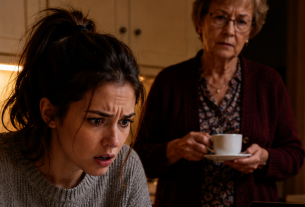
“You can’t refuse my mother. She’s already promised the relatives!” Valera exclaimed indignantly, pushing away his empty plate with the remains of cottage-cheese casserole and crossing his arms over his chest in displeasure.
Elena slowly wiped the kitchen table with a damp sponge, trying not to look at her brother-in-law. She was thirty-eight years old and owned a small workshop that made home textiles. All day long, she cut heavy curtains, selected shades of velvet for restaurant interiors, and worked at her sewing machine until she could barely feel her shoulders by evening.
Her husband, Pavel, worked as an elevator electromechanic. He was dependable and calm, with hands permanently roughened by metal and grease, but he had an incredibly kind heart.
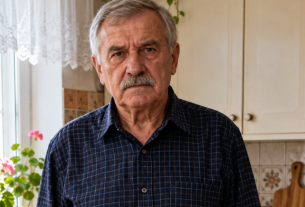
Valera, Pavel’s older brother, was his complete opposite. At forty-two, he had already changed jobs a dozen times, always blaming his dismissals on incompetent bosses or jealous coworkers. He was currently listed as a development manager at some dubious company and earned next to nothing, yet carried himself as though he owned a controlling stake in an oil corporation.
Elena sighed and tossed the sponge into the sink.
“Valera, I didn’t promise anyone anything,” she replied evenly. “I bought that apartment before I married Pasha. I paid the mortgage for five years. I gave up vacations and wore the same winter boots for three seasons. Pasha and I renovated it ourselves. We hung wallpaper at night and laid the laminate flooring with our own hands. I fixed it up so I could rent it out and afford new industrial equipment for my workshop. I’m not letting some distant relative’s daughter live there for free.”
“How can you not understand?” Valera raised his voice, throwing up his hands theatrically. “Dasha was accepted into a university in our city. She didn’t get a place in the dormitory! Well, technically she did, but there are cockroaches and only one shower for the entire floor. Aunt Zoya is panicking. Mom swore that the girl could stay in your apartment. Your studio is sitting empty anyway! Would it really kill you?”
Pavel, who had been silently repairing an electrical outlet beside the refrigerator, put down his screwdriver, stood up, and approached the table. He wiped his hands on a dry cloth and gave his brother a hard look.
“It isn’t sitting empty, Valera. We were planning to put up a rental listing this week,” Pavel said. “And Lena is right. The apartment belongs to her. If Aunt Zoya wants comfort for her daughter, she can rent her a place at the market rate. Why should my wife financially support someone else’s child?”
“Someone else’s child?” Valera widened his eyes, portraying profound shock. “She’s family! Aunt Zoya helped Mom so much when Dad was sick! Mom has already decided everything. You’re obligated to be understanding.”
“Then Mom can let Dasha stay in her own three-room apartment,” Pavel snapped. “The conversation is over. Finished your tea? We’re going to rest. Lena has a difficult order tomorrow.”
Valera’s face turned purple. He jumped up so abruptly that he nearly knocked over his mug and headed into the hallway. He spent a long time noisily putting on his shoes while muttering about greed and the absence of family loyalty, then slammed the front door behind him.
A heavy silence hung in the entryway. Elena approached her husband and rested her forehead against his shoulder, which smelled of laundry detergent and the faintest trace of machine oil. Pavel embraced her and gently stroked her back.
“Don’t let it bother you, Lenochka,” he said softly. “I’ll speak to my mother myself. Nobody is moving into your studio without your permission.”
Zinaida Petrovna, Pavel and Valera’s mother, was a domineering woman accustomed to having everything happen according to her plans. After spending her entire career in the district administration, she had retained her commanding tone and unshakable certainty that she was always right.
Valera, her eldest son, had always been her favorite. His debts, failed marriages, and laziness were endlessly forgiven. Pavel, meanwhile, was assigned the role of the perpetual debtor who was expected to understand, make concessions, and help.
The following day, Elena was in her workshop cutting an enormous piece of thick green blackout fabric when the bell above the entrance jingled. Zinaida Petrovna stood in the doorway. Beside her, a nineteen-year-old girl in an excessively short jacket shifted impatiently from one foot to the other, a dissatisfied expression on her face. Two enormous plastic suitcases stood beside them.
Elena lowered her heavy tailor’s shears onto the cutting table. An unpleasant feeling of foreboding rose in her chest.
“Hello, dear Lenochka,” her mother-in-law began in a sugary voice as she approached. “We came straight here from the train station. This is Dashenka. Can you imagine? A pipe burst in the dormitory and flooded the place. The poor girl literally has nowhere to sleep. I called Pasha, but he isn’t answering. He must be inside an elevator shaft.”
“Zinaida Petrovna, we explained everything to Valera yesterday,” Elena said, trying to remain calm even though anger was beginning to boil inside her. “I’m renting out the apartment. I need the money to pay for a new overlock machine.”
Her mother-in-law theatrically pressed both hands to her chest, tears glistening in her eyes.
“Lenochka, surely you don’t expect me to throw her out onto the street! My hallway is being renovated, and the smell of paint makes it impossible to breathe. Valerochka’s room is tiny. Let the girl stay there for just one month! One month! During that time, Zoya will find the money and rent her a decent room. I swear on my health that Dasha will be gone in thirty days. And naturally, she will pay the utility bills. That goes without saying.”
At that moment, Dasha pulled an electronic cigarette from her pocket, turned it over in her hands, and sighed loudly, making it clear how bored she was to be standing among rolls of fabric.
Elena was incredibly tired. Her lower back hurt, she still had another four hours of work ahead of her, and she had no emotional strength left to argue with her mother-in-law’s tears. Her old habit of avoiding open conflict took over.
She decided that one month would not make much difference and would at least preserve the peace.
“Exactly one month, Zinaida Petrovna,” Elena said sternly, taking a spare set of keys from her handbag. “And every utility bill must be paid in full. I’ll come to inspect the apartment exactly thirty days from now.”
Her mother-in-law immediately brightened, showered Elena with expressions of gratitude, seized the keys, and hurried Dasha and her suitcases toward the exit.
That evening, Pavel scolded Elena for a long time. He said she was too kind, that his relatives would inevitably take advantage of her, and that one month would gradually turn into six.
Elena reassured him, insisting that everything was under control.
But one month passed.
Then another two weeks.
November arrived, covering the city in dirty, slushy snow. Elena worked herself to exhaustion, trying to save enough money for the equipment, but without the rental income, she was falling disastrously short.
Then the utility bills for the studio arrived in the mailbox.
When Elena opened them, she gasped. The water and electricity meters showed unbelievable consumption. The total utility charge was almost seven thousand rubles.
Elena called Dasha. No one answered.
She called her mother-in-law.
“Zinaida Petrovna, it has been a month and two weeks. When is Dasha moving out? And I need her to pay the utility bills. The amount is enormous.”
“Oh, Lenochka, why are you starting this?” her mother-in-law dismissed her over the phone. “The girl’s exams are coming up. How can she move now? And as for the bills, you’re a grown woman with your own business. What difference could such a tiny amount possibly make to you? Zoya is going through a difficult time and can’t send any money. Be patient until New Year’s.”
Elena placed the phone on the table, feeling genuine anger flare inside her.
She realized that Pavel had been completely right. They were shamelessly exploiting her and manipulating her through guilt.
On Friday morning, while Pavel was away on a difficult emergency call to replace the burned-out motor of a freight elevator in a high-rise building, Elena received a call from the head of the homeowners’ association responsible for the building where the studio was located.
“Elena Viktorovna? Good afternoon. Your tenant is flooding the neighbors downstairs. We’ve been knocking, but no one is opening the door. If you aren’t here within an hour, we’ll call the police and have the door forced open.”
Elena abandoned her work, called a taxi, and rushed across the city. Her heart pounded in her throat. All she could picture was her recent renovation, the new wallpaper, and the expensive laminate flooring.
She unlocked the door with her own key and nearly choked on the damp, stale air.
Water covered the hallway floor. The sound of running water came from the bathroom. Dasha was sitting in the kitchen wearing headphones and staring at her laptop screen, completely unaware of what was happening.
It turned out that a cheap washing-machine hose had come loose after Dasha had decided, for some reason, to twist and adjust it herself.
Elena shut off the water and made the girl pick up cloths and wipe up the puddles. The laminate flooring in the hallway had already begun to creak unpleasantly.
After the downstairs neighbors left, having written a statement confirming that Elena would compensate them for cosmetic repairs to their ceiling, Elena sank onto a kitchen stool. Her hands were trembling from the stress.
“Pack your things,” she told Dasha quietly but firmly. “Your month ended a long time ago. You’re leaving today. Before you go, you will pay the water and electricity bills and cover the damage to the neighbors.”
Dasha, who had been lazily wiping the floor, suddenly straightened. An expression of extreme indignation appeared on her face.
“Are you out of your mind?” the girl snapped. “What month are you talking about? I paid six months in advance! And I’m not paying for the neighbors’ repairs! For the amount you charge, you could at least have installed decent plumbing!”
For a moment, Elena stopped breathing. She blinked, trying to process what she had heard.
“What money are you talking about? You’re living here for free at Zinaida Petrovna’s request.”
Dasha snorted, pulled an expensive smartphone from the pocket of her jeans, and began tapping rapidly on the screen with her long fingernails.
“For free? Yes, of course. My mother transfers thirty thousand rubles to Valera’s bank card every month! Zinaida Petrovna told us you had agreed to let me stay only for that amount because the apartment had been newly renovated and you wanted to make money from it. My mother took out loans so I could live somewhere decent!”
Dasha thrust the phone directly in front of Elena’s face.
The banking application displayed a history of transfers. On the first day of every month, exactly thirty thousand rubles had been sent to Valera’s account with the note: “For Zinaida Petrovna, payment for Dasha’s apartment.”
There were payments for September, October, and November.
Ninety thousand rubles.
Everything became clear immediately. Every detail fell into place, revealing a precise and disgusting scheme.
Behind Elena’s back, Valera and Zinaida Petrovna had been renting out Elena’s apartment and collecting a substantial amount of money for it—considerably more than the market rate in that neighborhood.
Meanwhile, they had been telling Elena stories about an impoverished relative and exploiting her sympathy, even forcing her to cover the utility costs herself.
Elena took out her phone and calmly photographed the transfer receipts displayed on Dasha’s screen. Dasha did not object. She was equally confused by what had happened.
“Pack your things, Dasha. I’m not joking,” Elena said, her voice turning icy. “You were deceived, and so was I. But you will not stay here any longer. Call your mother, tell her to make Valera return her money, and find somewhere else to live. You have two hours.”
Elena left the apartment, went downstairs, and sat on a bench beside the entrance.
She called Pavel.
After listening to her disjointed account, Pavel swore under his breath.
“I’m on my way. Meet me at your workshop. This evening, we’re paying my mother a visit.”
His voice sounded so hard that, for a moment, Elena felt frightened.
At seven o’clock that evening, Elena and Pavel stood outside Zinaida Petrovna’s door. They knew Valera was there as well because his battered car was parked in the courtyard.
Pavel unlocked the door with his own key.
The apartment smelled of fried fish and old furniture. Zinaida Petrovna was bustling around the stove, while Valera sat at the kitchen table scrolling through social media with one leg crossed over the other.
When she saw her younger son and daughter-in-law, Zinaida Petrovna beamed.
“Oh, Pashunya, Lenochka! What brings you here? I’ve just fried some pollock. Sit down and have dinner!”
Pavel did not remove his coat.
He walked into the kitchen, pulled a folded sheet of paper from the inside pocket of his jacket, and threw it onto the table in front of Valera. Elena had printed the photographs of the bank transfers from Dasha’s phone.
“Keep eating, Valera. Enjoy your meal,” Pavel said, his face pale with rage. “Then explain how it happened that you’ve been renting out my wife’s apartment for thirty thousand rubles a month while we’ve been paying the utility bills for that rude young brat.”
Valera lowered his eyes to the printout.
His jaw dropped slightly. He turned pale, his eyes darting nervously as he searched for support from his mother.
Zinaida Petrovna wiped her hands on her apron, approached the table, and looked at the paper.
“You’ve been going through someone else’s phone?” his mother exclaimed, instinctively launching an attack. “What right do you have?”
“What right?” Pavel slammed his fist onto the table, making the plates inside the cupboard rattle. “You stole money from us! You deceived Lena, made her look like a heartless witch in front of the relatives, forced us to pay for the water and electricity, and profited from property that didn’t belong to you! Valera, have you completely lost your conscience? Isn’t forty years long enough for you to learn how to earn your own money?”
Valera shrank into his chair.
“Pasha, try to understand. I have child-support payments, and my car needs repairs. Mom said you two were already doing well. Lena gets plenty of orders, and you work constantly. But I needed help. We’re family! All we did was redistribute resources. Aunt Zoya would have paid rent anyway, so why should the money go to strangers instead of relatives?”
“Because the apartment isn’t yours!” Elena exclaimed, stepping forward. “You didn’t simply rent it out. You lied to my face and manipulated me through pity. Because of your tenant, my laminate flooring has swollen, and now I have to pay for repairs to the neighbors’ apartment. Do you understand that what you did is fraud?”
Zinaida Petrovna clutched her chest and lowered herself onto a stool, breathing heavily.
“Just like in that old film Garage! People lose all trace of humanity over a few square meters!” she cried tragically, raising her eyes toward the ceiling. “You’re ready to send your own mother to prison over a few pennies! I was trying to help you! I thought some extra money would benefit the family! Valera is struggling and all alone, while the two of you are living in luxury! You have no compassion and no mercy!”
“Stop performing, Mom,” Pavel interrupted in an icy voice. “You were only trying to help your favorite son. You’ve never cared about Lena or me. Now listen carefully. We threw Dasha out. She’s sitting at the train station with her luggage, waiting for her mother. Aunt Zoya already knows that you were charging her one and a half times the market rate.”
Valera swallowed nervously, realizing that an enormous scandal with his aunt was unavoidable.
“And now for the most important part,” Pavel continued, leaning toward his brother. “You have exactly twenty-four hours to transfer ninety thousand rubles to Lena’s bank card. That will cover the apartment’s wear and tear, the utility bills, and the repairs to the neighbors’ ceiling. Pray that the amount is enough. If the money hasn’t arrived by tomorrow evening, Lena and I are going to the police and filing a formal complaint. We have evidence.”
“Pasha, fear God! Where is Valera supposed to find that kind of money?” Zinaida Petrovna shrieked, instantly forgetting about her supposed heart attack.
“He can take out a loan. He can sell his phone or his car. I don’t care. You’ve crossed every possible boundary. Come on, Lena. There’s nothing more for us to do here.”
They turned around and left the apartment, abandoning his mother’s outraged cries and his brother’s stunned silence behind them.
Several months later, Elena and Pavel’s lives had settled into a peaceful and happy rhythm.
The threat of going to the police worked perfectly. The day after the confrontation, Valera transferred the required amount through gritted teeth. It turned out that he had secretly taken out a high-interest short-term loan to repay them.
The scandal with Aunt Zoya spread throughout their large extended family. Zinaida Petrovna was forced to explain herself to numerous aunts and uncles, who quickly understood who the true victim was and who had been a calculating manipulator.
Elena repaired the plumbing and reached an agreement with the downstairs neighbors, paying them a modest amount of compensation. She then rented the studio through a reputable real-estate agency to a quiet married couple who worked as programmers.
The rental payments began arriving regularly.
Before long, Elena’s workshop had a brand-new industrial overlock machine, its metal surfaces shining—the machine she had dreamed of for so long. Her work became faster, the number of orders doubled, and the pain in her back began to subside.
Pavel completely cut off contact with his brother.
Zinaida Petrovna tried calling several times. She complained about her health, hinted that Valera could not afford his loan payments, and asked for help. But Pavel remained unmoved.
He politely but firmly replied that everyone had their own life and their own problems, then ended the call.
Her old manipulation and tears no longer worked.
Pavel had learned to protect his real family—his wife.
One cold February evening, Elena sat in the kitchen of their apartment, sipping hot thyme tea. Pavel was standing at the stove, preparing his signature pilaf in a cast-iron kazan. The house smelled of cumin, meat, and warmth.
Elena looked at her husband’s broad back and felt a deep, all-encompassing sense of peace.
She was no longer afraid of offending relatives by refusing them. She was no longer afraid of appearing like a bad person in her mother-in-law’s eyes.
She had understood that genuine kindness did not mean agreeing to everything and that self-respect was the foundation upon which a happy life was built.
Her confidence grew, and she began carrying herself more proudly. She learned to say a firm no to anyone who tried to take advantage of her.
Most importantly, she knew that she had someone standing behind her who would always support her, protect her interests, and never allow anyone to exploit their hard work and kindness for selfish purposes.
“Pasha,” she called, setting aside her empty cup. “Why don’t we go to Karelia during the May holidays? We could rent a cabin beside a lake, walk through the forest, and go fishing. We’ve already saved enough from the rental income.”
Pavel turned around, wiping his hands on a towel, and his face lit up with a broad, warm smile.
“Excellent idea, Lenochka. Just a cabin and silence. And no relatives within a hundred kilometers.”
Elena laughed, and her laughter was filled with genuine happiness and anticipation of a joyful future in which there would be no place for other people’s schemes and deceit.
The experience had been bitter, but it had allowed them to remove toxic relationships from their lives and finally breathe freely.
Life went on, and now it was entirely in their own hands.