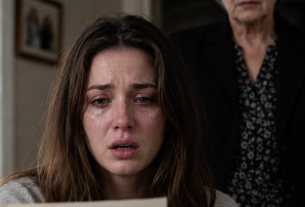
— Do you seriously think that after the divorce I’m still going to deal with the insurance for your car myself? — Elena asked, pulling the phone away from her ear.
— There’s nothing complicated about it. Open the app, choose a company, and pay for everything, — Pavel replied in a tone as though he were reminding her about something they had agreed on long ago.
— Then open it yourself.
— Lena, you’ve always handled this.
— Exactly. I did.
— And what has changed now?
Elena looked at the divorce certificate she had not yet put away in the drawer of her desk.
— Almost everything, Pavel.
She ended the call without waiting for another instruction and silenced her phone.
Outside the open window, warm August rain rustled. Large drops struck the metal windowsill, and water ran down the glass in uneven streams. The apartment smelled of freshly ground coffee and the wood from the new shelving unit Elena had assembled the day before.
It was quiet here.
No one was asking where the phone charger was, even though it was in its usual place. No one was announcing half an hour before the insurance company closed that the policy expired that day. No one was urgently asking her to find a receipt, make a doctor’s appointment for a relative, or figure out why a banking app wasn’t working.
After eight years of marriage, the silence did not feel empty to Elena. It felt like a rare luxury.
She had made the decision to divorce on her own. It had not happened after some explosive argument or because of one particularly hurtful incident. There was no single event she could circle with a red marker and call the beginning of the end.
The marriage had simply worn down gradually.
Year after year, Pavel became increasingly confident that he had the right to control her time. Elena had to explain every decision she made for herself in such detail that it felt as though she were asking permission from a strict committee.
She wanted to spend Saturday at home — why hadn’t she gone to visit his mother?
She bought a convenient vacuum cleaner for the apartment — why had she chosen it without him?
She made an appointment at a time that suited her — why hadn’t she consulted him first?
At the same time, Pavel had absolutely no interest in how many things his wife handled every day without discussion or reminders. He only noticed the organization of family life when something did not happen according to his plans.
They had met nine years earlier at a mutual friend’s birthday party. At the time, Pavel worked repairing industrial equipment. He spoke confidently, joked easily, and knew how to give the impression that life with him would never be boring.
Elena worked as an administrator at a large diagnostic center. Her job required precision: doctors’ schedules, patient inquiries, contracts with organizations, unexpected inspections. She was accustomed to dealing with matters before the last minute and keeping important documents in order.
A few months after they met, Pavel suggested that they move in together. Elena already owned a one-bedroom apartment that she had bought before meeting him, but it was on the other side of the city. It was more convenient for Pavel to rent a place near his job, so after a brief discussion they moved into a rented two-bedroom apartment.
Elena kept her own property. She had never hidden the fact that the apartment belonged to her, and Pavel knew that perfectly well.
A year later, they went to the registry office together and officially married. They had no children. Nor had they accumulated any major jointly owned property: they lived in a rented apartment, each kept their premarital possessions, and Pavel had owned his car before the wedding.
During the first few years, Elena was not bothered by the fact that she handled most of the household organization.
It really was easier for her to submit utility meter readings on time, check when the insurance expired, make service appointments, and order whatever was needed. Pavel thanked her, put an arm around her shoulders, and said that without her he would have been completely lost among his own paperwork.
At first, it sounded like recognition of her abilities.
Later, it became a convenient excuse for his inaction.
Pavel stopped even trying to remember important dates. He did not check notifications, ignored letters, forgot passwords, and could leave envelopes unopened for months if they bore the name of some official organization.
— You understand this stuff better anyway, — he would say, handing another document to Elena.
And she would sort it out.
When his bank card was about to expire, Elena found information about how to have it reissued. When Pavel needed a certificate, she found out the opening hours of the appropriate office. When his mother, Valentina Stepanovna, needed a doctor’s appointment, Pavel immediately gave her his wife’s number.
— Lena will do it faster.
And Elena really did do it faster.
No one ever asked whether she had time for it.
Gradually, the list of her responsibilities became almost endless.
She monitored the rent and utility payments, kept copies of contracts, made shopping lists, arranged repairs, ordered medication for her mother-in-law, reminded Pavel about family occasions, and chose gifts for his relatives.
Pavel gladly accepted the results.
He liked the fact that everything appeared in the house on time, documents could be found within a minute, and problems were solved before they had the chance to become inconvenient.
But if Elena forgot one of his requests just once, Pavel reacted with surprise as though she had violated some important agreement.
— I told you to call the repairman.
— Why didn’t you call him yourself?
— You usually deal with things like that.
The word “usually” gradually came to mean everything Pavel did not want to do.
One August evening, Elena came home after a difficult day at work and saw three envelopes on the kitchen table.
— What are these? — she asked.
Pavel was lying on the couch watching a sports recap.
— Deal with them, please. There’s something from the insurance company and the bank.
— Did you open them?
— No.
— Why not?
— You’ll understand them better anyway.
Elena took off her shoes, walked into the room, and placed the envelopes beside her husband.
— Open them and read them.
Pavel sat up irritably.
— Is it really that difficult for you?
— I’m tired of it.
— Tired of what exactly?
She looked around the room. Pavel’s jacket was lying over an armchair. Beside it was the packaging from a new car part. An empty mug stood on the coffee table because he had not bothered to carry it into the kitchen.
— Of being the only adult in this marriage.
Pavel smirked, assuming she was exaggerating.
— Here you go again, making a big deal over a few pieces of paper.
The conversation went nowhere. He opened one envelope, read the first line, and called Elena over again.
She helped him that time.
Not because she was weak. The deadline for responding was only two days away, and the consequences would have affected their shared household anyway.
But that evening, Elena saw clearly for the first time just how comfortably Pavel had arranged his life.
He was not helpless.
At work, he independently handled complicated equipment, read technical diagrams, communicated with clients, and supervised a small team.
Yet at home he suddenly could not find a payment button or read a one-page letter.
The problem was not inability.
Pavel simply knew that his wife would do everything for him.
The final two years of their marriage became a succession of similar situations. Elena tried to divide responsibilities, but her husband agreed only in words.
They made a list of tasks. Pavel forgot to look at it.
They agreed that each of them would handle their own documents. A week later, he was leaving a folder for her again.
Elena asked him at least to deal with matters concerning his own mother. Valentina Stepanovna still called her daughter-in-law rather than her son.
— Pavlik is busy, and you organize everything so quickly.
Elena began saying no more often.
That made Pavel angry.
— Why create a problem when you could just help?
— Because this isn’t occasional help. You’ve dumped your entire life onto me.
— That’s a bit dramatic.
— But accurate.
He waved her off. A couple of days later, he would bring her another problem as though the previous conversation had never happened.
The final straw was the apartment lease.
The landlord had warned them in advance that the lease needed to be renewed. Pavel read the message but did not reply. Elena only found out two days before the agreement expired, when the landlord called her personally.
She arranged a meeting, prepared the documents, and told her husband what time he needed to be home.
Pavel arrived almost an hour late.
— I stopped by to see a friend, — he explained as he entered the apartment.
The landlord was already preparing to leave.
After the lease was signed, Pavel asked irritably:
— Why couldn’t you have done it without me?
Elena stared at him for several seconds, unable to believe he had actually said that aloud.
— Because the lease is in both our names.
— You could have handled it.
— Of course. I always handle everything.
There was no hurt or complaint in her voice. Pavel heard only a calm statement and failed to understand that her decision had already been made.
A few days later, Elena told him she wanted a divorce.
At first, Pavel laughed.
— Because of the lease?
— Not because of the lease. Because of eight years in which I’ve been responsible for both of us and then had to explain to you why I was tired.
He did not believe her even when she started preparing the divorce papers.
Since they had no children and no property dispute, the marriage could be dissolved through the registry office. Elena began the process herself: she found out the procedure, made the appointment, and told Pavel the date when they needed to submit the application together.
Even then, he relied on her.
— Remind me the day before, — Pavel asked.
— Put it in your phone.
— Is it really so hard for you to send me a message?
Elena silently showed him the date on the screen and never brought up the subject again.
On the appointed day, Pavel did show up. Until the very end, he behaved as though his wife were putting on some dramatic performance that would end after a month of living separately.
— You’ll change your mind, — he said outside the registry office.
Elena frowned and looked carefully at her soon-to-be ex-husband.
— I asked you for years to change the way you treated me. It’s too late now to discuss whether I’ll change my mind.
They submitted the application together. After the required waiting period, they returned to the registry office and received their divorce documents.
Afterward, Elena collected her personal belongings from the rented apartment and returned to the apartment she owned. It had remained hers all those years. Shortly before moving back, she had fixed it up, replaced a faulty faucet, ordered a new mattress, and checked the appliances.
Pavel remained in the rented two-bedroom apartment. The landlord agreed to put the lease solely in his name.
Elena took her documents, clothes, dishes, and several pieces of furniture she had bought for herself. Everything else was divided without argument.
Pavel watched her pack with remarkable calm.
— Are you leaving the microwave?
— It’s yours. You bought it before we were married.
— What about the vacuum cleaner?
— Mine. I’m taking it.
— Fine. I’ll order one for myself later.
He spoke with such confidence that it seemed he expected Elena to return soon and resume dealing with everything.
That evening after she left, Pavel met some friends. Sitting in a café, he talked about the divorce almost mockingly.
— Nothing important is going to change. She’ll calm down. If I need help with documents, she’ll still do it. Lena likes things organized. She won’t be able to stand seeing something left unfinished.
Their mutual friends said nothing. Some of them knew Elena well and doubted Pavel understood the situation correctly.
The first call came three days later.
— Where’s the insurance contract? — he asked without even saying hello.
— In your folder with the car documents.
— Which one?
— Pavel, you have exactly one folder containing the car documents.
— I don’t see it.
— Then look more carefully.
— Can you come over?
— No.
He clearly had not expected that answer.
— It’s not far for you.
— I’m not coming over to search for your papers.
— Fine, at least tell me where you put them.
— On the top shelf of the hallway closet. I showed you before I moved out.
Pavel muttered something irritably and hung up.
The next day, he called again.
The banking app required an update, and he could not find the correct section.
— Call customer support, — Elena advised him.
— A robot answers.
— Wait until you’re connected to an employee.
— You could explain it in two minutes.
— I can’t. I don’t use your app.
— You used to.
— You used to hand me your phone and ask me to do everything for you. Now you’ll do it yourself.
Pavel fell silent.
— Are you deliberately being this cold?
— I’m calmly answering your question. Contact the bank.
Elena ended the call and continued assembling her shelving unit.
Another day later, her former husband asked her to pay for his insurance. Then he demanded that she find the contact details for an auto repair shop. After that he informed her that Valentina Stepanovna needed an appointment with a neurologist.
Every call began differently but quickly turned into an instruction.
— Find out which dates are available.
— See where it would be best to go.
— Fill out the form. You’ll do it faster.
Pavel was not asking for help.
He was still handing out assignments.
Elena answered with the same calm phrases every time.
— No.
— I don’t handle that anymore.
— Deal with it yourself.
She gave no explanations.
For eight years, she had been forced to justify her right to control her own time. She had no intention of continuing those discussions after the divorce.
Pavel became increasingly angry.
One evening he called and immediately began speaking irritably.
— Because of you, I missed the insurance payment deadline.
Elena put her book aside.
— How exactly is that because of me?
— You always reminded me.
— The notification was sent to you.
— You knew I might forget.
— It’s your car and your insurance.
— You could at least have sent me a message.
— I could have. But I wasn’t obligated to.
— Normal people remain on decent terms after a divorce.
— Being on decent terms doesn’t mean providing free personal service.
Pavel exhaled loudly.
— You twist everything around.
— No. I’m calling things what they are for the first time.
After that conversation, he did not call for two days.
On the third day, he came in person.
It was a Saturday morning in August. Elena was returning from the store when she noticed Pavel near the entrance to her building. He was standing beside his car with a thick blue folder tucked under his arm.
When he saw his former wife, he walked toward her.
— Finally. I called you.
— My phone was in my bag.
— We urgently need to sort out some documents.
— I don’t need to sort out anything.
Pavel grimaced.
— Don’t start. There’s an insurance contract here, apartment papers, a notice from the bank, and my mother’s documents. We need to figure out what has to be sent where.
— The apartment lease is now solely in your name. Why should anyone else be looking at those papers?
— Because you know the contract.
— Read it.
— Lena, it’s a lot of pages.
— You know how to read.
Several passersby glanced at them. Pavel immediately lowered his voice.
— Let’s go upstairs and calmly sort everything out.
— No.
— I drove across the entire city.
— Of your own accord.
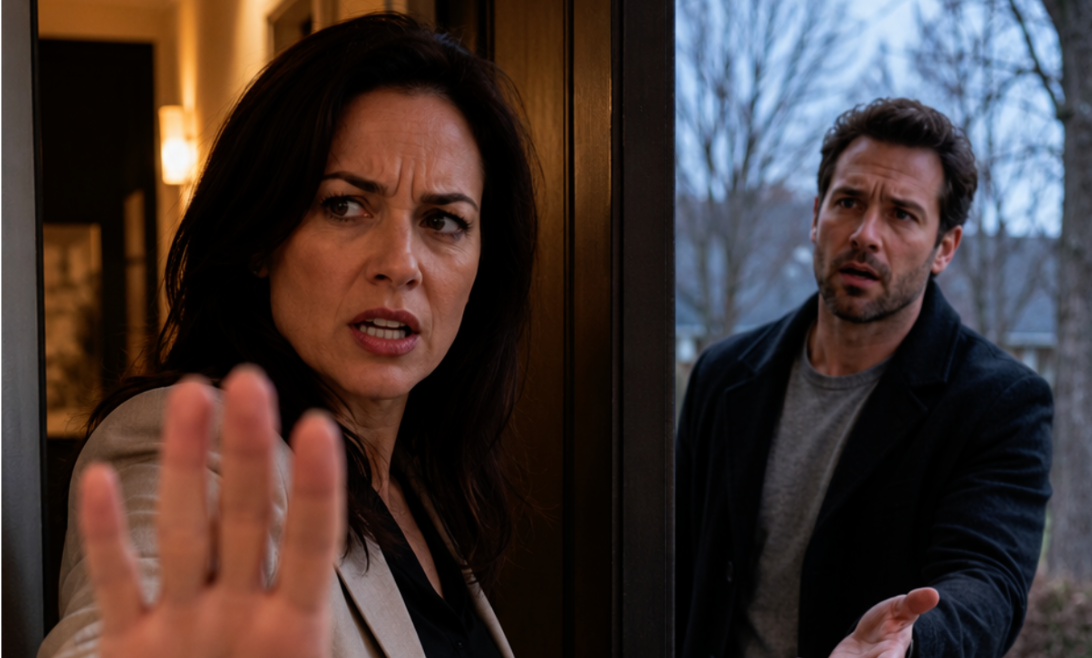
Elena unlocked the building entrance, but Pavel stepped after her. She stopped, blocking his way.
— I didn’t invite you.
— We lived together for eight years, and now you can’t let me in for half an hour?
— No, I can’t.
— Afraid I’ll stay too long?
Elena stared at him. Pavel tried to smile, but the expression on her face made him abandon the mockery.
— I don’t want you entering my apartment. That is enough.
She stepped back outside so that the conversation would not continue beside the open door.
Pavel held the folder out to her.
— At least take it. Look through it tonight and call me.
Elena accepted the folder. He visibly relaxed, assuming he had gotten his way.
She opened the top section. Inside were unopened envelopes, a copy of the lease, insurance papers, a bank printout, and Valentina Stepanovna’s examination results.
Some of the envelopes had not even been opened.
— Have you read these documents? — Elena asked.
— That’s why I brought them to you.
She closed the folder and handed it back.
— No.
For a moment he did not even reach for it.
— What do you mean, “no”?
— Exactly what I said. Take it.
— I need to get all of this sorted out by Monday.
— Then you have today and tomorrow.
— I don’t know where to start.
— Open the envelopes.
— Are you making fun of me?
— Not at all.
Pavel took the folder, pressed it against his chest, and shook his head.
— I don’t recognize you anymore.
— You were never particularly interested in who I was. You were satisfied as long as I solved your problems.
— I trusted you.
— No. You dumped everything you didn’t want to do onto me.
— I worked, you know.
— So did I. And after work, I handled my own affairs, your affairs, and your mother’s requests.
— It always came easily to you.
— Easy doesn’t mean free and endless.
Pavel tapped his fingers against the folder.
— You did all this for so many years. You could still help now out of habit.
Elena tilted her head slightly and studied her former husband. He genuinely did not understand why the old arrangement had ceased to exist.
— That habit ended the day our marriage ended. You no longer have a free personal assistant.
— So you’re refusing on principle?
— I’m refusing because it makes sense.
— And what if I fill something out incorrectly?
— Then you’ll correct it.
— You really don’t care?
— You’re responsible for your life. I’m responsible for mine.
Pavel stepped backward.
— Divorce is just an entry in some documents.
— Maybe it was convenient for you to think of it that way. But separate apartments also mean separate responsibilities.
— You could at least help me for the first little while.
— The “first little while” lasted eight years.
Pavel tightened his grip on the folder handle.
— I get it. You didn’t have to give me a lecture.
— And you didn’t have to show up unannounced and bring me your responsibilities.
He spun around sharply, walked to his car, and threw the folder onto the passenger seat. The door slammed so loudly that sparrows flew from a nearby tree.
Elena waited until the car had driven out of the courtyard before entering the building.
Her hands were trembling slightly from the tension. She placed the groceries on a cabinet, slowly clenched and unclenched her fingers several times, and then began putting everything away.
In the past, after a conversation like that, she would have replayed every sentence repeatedly, wondering whether she had sounded too harsh.
Now there was nothing to analyze.
Pavel had come looking for the same service he had grown accustomed to.
She had refused.
A few days later, Valentina Stepanovna called.
Elena saw the name on the screen and initially did not want to answer. Eventually, she accepted the call.
— Hello, Lenochka. I need to submit an application to the clinic and attach my examination results. Pavlik said you know how to do it.
— Hello, Valentina Stepanovna. Please ask Pavel.
— He’s busy.
— Then he can choose a convenient time.
— You always helped me.
— I used to be your son’s wife, and I took on far too many of his responsibilities.
— Is it really so difficult to help an elderly person?
Elena ran her palm over the table, brushing away a few crumbs left from breakfast.
— If what you need is help, Pavel should arrange it. He’s your son.
— I’m used to asking you.
— Then you’ll have to change that habit now.
— Are you angry with us?
— No. I’m simply no longer responsible for your documents or appointments.
Her former mother-in-law fell silent. Apparently, she had expected excuses or a promise that Elena would come over later.
— So you won’t help at all?
— I’ve already told you who to ask.
— Pavel?
— Yes.
— You can never get anything from him.
— Then you should tell him that instead of calling me.
Elena politely said goodbye and ended the call.
That evening, Pavel sent her a long message. He accused her of dragging his mother into their disagreements and punishing other people for their failed marriage.
Elena read the message once.
“Your mother asked me to help with her documents. I told her to contact you. That isn’t punishment. It’s a normal division of responsibility.”
That ended the correspondence.
The first few weeks genuinely were difficult for Pavel.
Not because the tasks were complicated, but because he was accustomed to noticing them only at the last moment.
He arranged the insurance after calling customer support. An employee explained which information to enter and where to confirm payment.
He figured out the rental agreement by reading several sections and asking the landlord about one clause he did not understand.
He restored access to the banking app in twenty minutes.
He made his mother’s doctor’s appointment through the clinic reception desk. He had to call twice and locate the referral among her documents, but by evening everything was arranged.
It turned out there was no special science involved in any of these tasks.
All that was required was opening a letter, reading the instructions, asking the appropriate specialist a question, and not waiting for Elena to appear and solve everything.
Several times, out of habit, Pavel dialed her number but stopped before the call connected. After the incident with the folder, he understood that his former wife was not going to change her mind.
At first, he told his friends that Elena was deliberately trying to prove how independent she was.
— She wants to show that she can manage perfectly well without me.
Eventually, one of his friends could no longer keep quiet.
— She was managing perfectly well before. From everything you’ve told us, she was managing for you too.
Pavel frowned.
— Don’t exaggerate.
— This is the third time this week you’ve asked how to pay for something through an app. I doubt she was exaggerating.
Pavel did not like that conversation.
But arguing was difficult.
He began noticing little things he had previously considered part of the natural order of life.
Food did not appear in the refrigerator by itself. No one checked document deadlines. Towels did not magically move from the laundry into the closet. His mother regularly had requests that required time, phone calls, and trips across town.
For the first time, Pavel heard Valentina Stepanovna complain:
— You could deal with these things faster. Lena never made me wait.
— Lena isn’t here anymore, — he snapped.
And immediately realized how accurately those words described his new life.
Elena had not died, disappeared, or moved to another country. She lived in the same city, went to work, met friends, and answered calls from their mutual acquaintances.
But she truly was no longer part of Pavel’s life.
There was no longer anyone to hand an unopened envelope to.
There was no longer anyone who would remember a deadline before he did.
There was no longer anyone who would listen to an order, object to it, but still carry out the request because otherwise their shared affairs would suffer.
Meanwhile, in her own apartment, Elena began creating the life she had postponed for years.
She did not make any dramatic changes or try to prove anything to anyone. She simply arranged her space in the way that was most comfortable for her. She bought an office chair, sorted through old boxes, and cleared the balcony of things that had been stored there for no reason.
In the mornings, she no longer checked whether Pavel urgently needed anything. In the evenings, she no longer opened someone else’s letters or made lists for his mother.
At first, the newly freed time seemed strangely long. Elena could calmly cook dinner, walk through an August park, or watch a movie without being interrupted by another question from her husband.
One day, she realized that several days had passed without her thinking about Pavel at all.
The realization brought not sadness, but relief.
Her former husband tried twice more to restore the old arrangement.
First, he sent her a photograph of a notice and asked what he was supposed to do with it.
Elena replied:
“Read it.”
Then he asked her to remind him of the date of his mother’s doctor’s appointment.
“Put it in your calendar.”
No more messages like that arrived.
Several months passed.
In November, mutual friends gathered for the birthday of the same friend at whose party Elena and Pavel had met nine years earlier.
Elena did not attend. She had other plans.
Pavel came alone and acted confidently until the conversation turned to everyday responsibilities.
Someone complained about having to deal with insurance paperwork.
Unexpectedly, Pavel said:
— Actually, there’s nothing complicated about it. The main thing is not to put it off.
One of his friends laughed.
— Well, look at you. You used to hand every bill straight to Elena.
Pavel did not answer immediately. He turned a glass of water in his hand and then set it on the table.
— There were a lot of things I didn’t notice back then.
— Such as?
— How much she did every single day.
The group fell quiet. No one had expected Pavel to admit that.
— While Lena was there, it seemed to me that documents, appointments, shopping, and all the organization just happened by themselves. I thought she simply enjoyed taking care of those things.
— And now?
— Now I understand that she took care of them because I didn’t.
He said it without his usual mocking tone.
After the divorce, Pavel learned to read contracts, keep track of deadlines, plan expenses, communicate with the bank, and help his mother on his own.
He did not become a different person in a single week, but his former carelessness had become far too inconvenient to continue defending.
Elena learned about that conversation by accident. A mutual acquaintance repeated her former husband’s words to her.
— Can you imagine? He finally admitted how much you carried on your shoulders.
Elena buttoned her coat and calmly shrugged.
— Good. I’m glad he understands.
— Don’t you want to say something to him?
— Why?
— At least hear him say it to you personally.
— I don’t need his acknowledgment to know what happened.
She said goodbye to her acquaintance and stepped outside.
The cool air struck her face. Elena adjusted her collar and headed toward the bus stop without looking back.
Pavel had been certain that the divorce would change only the paperwork and his wife’s address.
He had assumed that at the first phone call, she would continue paying, arranging, scheduling, and reminding him of everything.
In his mind, the official stamp disappeared, while the comfortable arrangement remained exactly the same.
But together with the marriage ended all the responsibilities he had spent years treating as privileges.
Elena no longer apologized for her decisions or defended her right to control her own time.
And Pavel finally learned how to live without the personal assistant he had become accustomed to calling his wife.