I gave my husband the keys to my car exactly eighteen days ago. I’m ashamed to admit it, but I simply wanted to buy myself a little peace at home and avoid endless arguments in the kitchen. I believed I was making a compromise for the good of the family, but in reality, with my own hands, I had let such brazen entitlement into my home that it nearly cost me a large sum of money—and my faith in my own marriage.
“Lyuba, come on, let’s think about this logically,” Oleg persuaded me that evening as he stirred his tea. “You drive your Duster twice a week. To the shopping center and to your sister’s country house. The car just sits in the yard losing value. And I have to get all the way across town on two buses. Why don’t I drive it to work? I’ll pay for the gas and maintenance—everything.”
My father-in-law, Nikolai Stepanovich, was sitting beside him. He had come over to visit us, as he had been doing quite often lately, and he nodded vigorously in support of his son.
“Golden words, daughter-in-law,” he boomed in his deep bass voice, which always seemed to make the dishes in the drying rack tremble slightly. “Machinery needs to be used. Your crossover just sits under the window collecting dust. A woman doesn’t need to be behind the wheel every day anyway—it only ruins your nerves in traffic. Oleg and I will check everything, change the oil. We’re family. Everything is shared.”
And I gave in.
It seemed easier to agree than to listen to another joint lecture from the two of them about the rational use of resources.
I had bought that car myself three years earlier. I had savings from selling my mother’s house in the village, and I had also taken on some evening work doing accounts for an entrepreneur I knew. Oleg hadn’t contributed a single ruble toward the purchase. He was having problems with work at the time. The car had been purchased during our marriage, although only my surname appeared on the registration documents.
For the first few days, everything went well. Oleg left in the morning and came home in the evening. He put the keys on the little cabinet in the hallway. I was happy that my husband was pleased and less tired.
But before long, the usual routine began to change.
First, the keys stopped appearing on the cabinet. Oleg started keeping them in the pocket of his jacket.
Then the car didn’t come home on Friday night.
“Where’s my Duster?” I asked, looking out the window.
“At Dad’s garage,” my husband said casually, flipping through television channels. “We decided to check the suspension. Something’s knocking on the right side. It’ll stay there until Monday. Dad and I will tinker with it over the weekend.”
That weekend, I needed to take seedlings and several heavy boxes of books to my sister. I had to call a taxi and load everything myself. Oleg didn’t even offer to help. He and his father had gone to the garage first thing in the morning.
From that day on, other people’s noises began taking over my apartment.
Nikolai Stepanovich started showing up at our place almost every evening. He and Oleg loudly discussed spare parts and tire prices and argued about carburetors and filters. Their voices filled the kitchen, hallway, and living room. The television was now permanently tuned to sports channels, with commentators droning on until late at night.
And I felt as though I had been pushed aside in my own home.
I tried talking to my husband, reminding him that the car was actually mine and that I needed to drive it too.
“Lyuba, don’t start,” Oleg would say with a grimace. “We agreed. Besides, it’s partly taken apart right now. We ordered some filters. Just wait a couple of days.”
The real discomfort began when I realized that my father-in-law no longer behaved like a guest in my home. He behaved as though he owned the place.
On Wednesday evening, I came home exhausted from work. All I wanted was to drink a cup of tea alone.
Nikolai Stepanovich was sitting in the kitchen. He was looking at his phone, and in front of him stood an open jar of my pickled tomatoes—the ones I preserved using a special recipe with mustard and garlic.
I stopped in the doorway.
Without taking his eyes off the screen, my father-in-law stuck his thick, unwashed fingers directly into the jar. He fished out a large tomato and shoved it into his mouth. Cloudy orange brine dripped heavily from his hand onto my clean linen tablecloth, leaving greasy stains.
He didn’t even try to wipe his hand on a napkin. He simply licked his fingers with a loud smacking sound and reached for another tomato.
The sight made me slightly nauseous.
Without saying a word, I picked up the napkin holder from the table, pushed it toward him, and went into the other room.
At that moment, I finally understood that my boundaries hadn’t merely been crossed—they had been trampled over in muddy boots.
And all of it was being justified with the beautiful word “family.”
On Saturday morning, I decided enough was enough.
I needed to go to the hardware store to buy paint for the balcony. I got dressed, stepped into the hallway, and said loudly:
“Oleg, give me the keys and the documents. I need to go out. If the car is at the garage, then I’ll go to the garage and pick it up.”
My husband came out of the bedroom wearing sweatpants. He looked strangely confused and began nervously tugging at the hem of his T-shirt.
Nikolai Stepanovich immediately appeared from the kitchen. He was holding a half-eaten sandwich.
“Oh, Lyubanya’s going somewhere,” my father-in-law smirked as he chewed. “But there are no keys. And there’s no car.”
“What do you mean, there’s no car?” I froze, feeling a cold clarity growing inside me. “Where is my car?”
My father-in-law exchanged a glance with Oleg.
My husband looked away.
“We sold it, Lyuba,” Nikolai Stepanovich announced loudly and proudly, taking another bite of his sandwich. “Sold it to a reseller yesterday evening. Decent guy. Transferred the money immediately.”
I looked at Oleg.
He still wouldn’t meet my eyes, instead studying the wallpaper pattern.
“Oleg, is that true? You sold my car without telling me?”
My voice sounded perfectly calm, even though my fingers were trembling.
“Come on, Lyub, what’s the big deal?” my husband muttered, finally looking at me. “We talked about how it was getting old. Dad found a great option—a seven-seater minivan. We’ll add a little money and buy it. Then we can all go out into the countryside together, go fishing. You’ll have plenty of room too. You can carry your seedlings. Why are you making a scene?”
“It’s more convenient for everyone,” my father-in-law cut in categorically. “A woman has no business dealing with all that mechanical stuff anyway. Oleg and I decided everything. The money is in my account. Tomorrow we’ll go pick up our new beauty.”
He laughed.
Loudly. Satisfied. Condescendingly.
The way adults laugh at an unreasonable child who is upset over a broken toy because she doesn’t understand grown-up matters.
I shifted my gaze to the old wooden case from a Podolsk sewing machine that stood in our hallway and served as a telephone table. A stack of advertising leaflets rested on its polished lid.
I stared at the case with its golden patterns and thought about how easily those two men had decided they had the right to dispose of my property.
Simply because they were men and supposedly “knew better.”
“Who signed the sales contract?” I asked calmly. “The car is registered in my name.”
“Oh, what difference does it make?” Nikolai Stepanovich waved me off. “Oleg scribbled something that looked like your signature. The reseller didn’t even bother checking. All he cared about was having the vehicle title in hand. We’re all family anyway. Nobody’s going to order a handwriting analysis.”
They stood in front of me, completely certain they were right—smug and convinced that I would complain for a while, cry, and eventually accept it.
Just as I had accepted the loud television.
The dirty stains on my tablecloth.
The fact that my interests always came last.
I didn’t shout.
I didn’t cry or start throwing accusations.
I simply walked over to the cabinet, picked up my phone, and dialed 112.
“Hello,” I said clearly and loudly, making sure every word echoed through the hallway. “I want to report a stolen vehicle. Yes. A white Renault Duster. License plate…”
Red blotches spread across Nikolai Stepanovich’s face.
The sandwich fell from his hand onto the rug.
Oleg lunged toward me, stretching out his hands as though he wanted to snatch the phone away.
“What the hell are you doing, you idiot?!” my father-in-law rasped, stepping toward me.
I raised my free hand, palm outward, stopping them, and continued speaking into the phone.
“No, I don’t have the keys. The vehicle belongs personally to me. I am the sole registered owner. I suspect it may have been illegally sold using forged documents. Write down my address. I’ll wait for the officers.”
I ended the call and placed the phone on the polished lid of the old sewing-machine case.
A heavy, sticky silence filled the hallway.
The only sound came from the kitchen, where the refrigerator compressor hummed steadily.
“Lyuba, have you lost your mind?” Oleg’s voice rose into a squeak. “What stolen car? That’s a criminal offense! The reseller is going to run the plate and see the car is listed as stolen—he’ll skin me alive! And the police… I signed your name! That’s document forgery!”
“Exactly,” I said, looking him straight in the eye.
“That is document forgery and the theft of someone else’s property by a group of people acting in conspiracy.”
“We’re family!” my father-in-law roared, but there was no longer any condescending confidence in his voice.
Only panic.
“Cancel the call! Call them back right now and tell them you made a mistake!”
“I won’t.”
I folded my arms across my chest.
“You decided you could sell something that belonged to me without asking. You decided my money would pay for your fishing minivan. Now you can sort it out with the police.”
They began rushing around the hallway.
With trembling fingers, Oleg tried to call the reseller, but the man was unavailable.
Nikolai Stepanovich was breathing heavily and clutching his heart, even though I knew perfectly well that he was as healthy as an ox.
All their arrogance disappeared in a single second.
The great rational planners and masters of life had transformed into two frightened boys who had been caught red-handed.
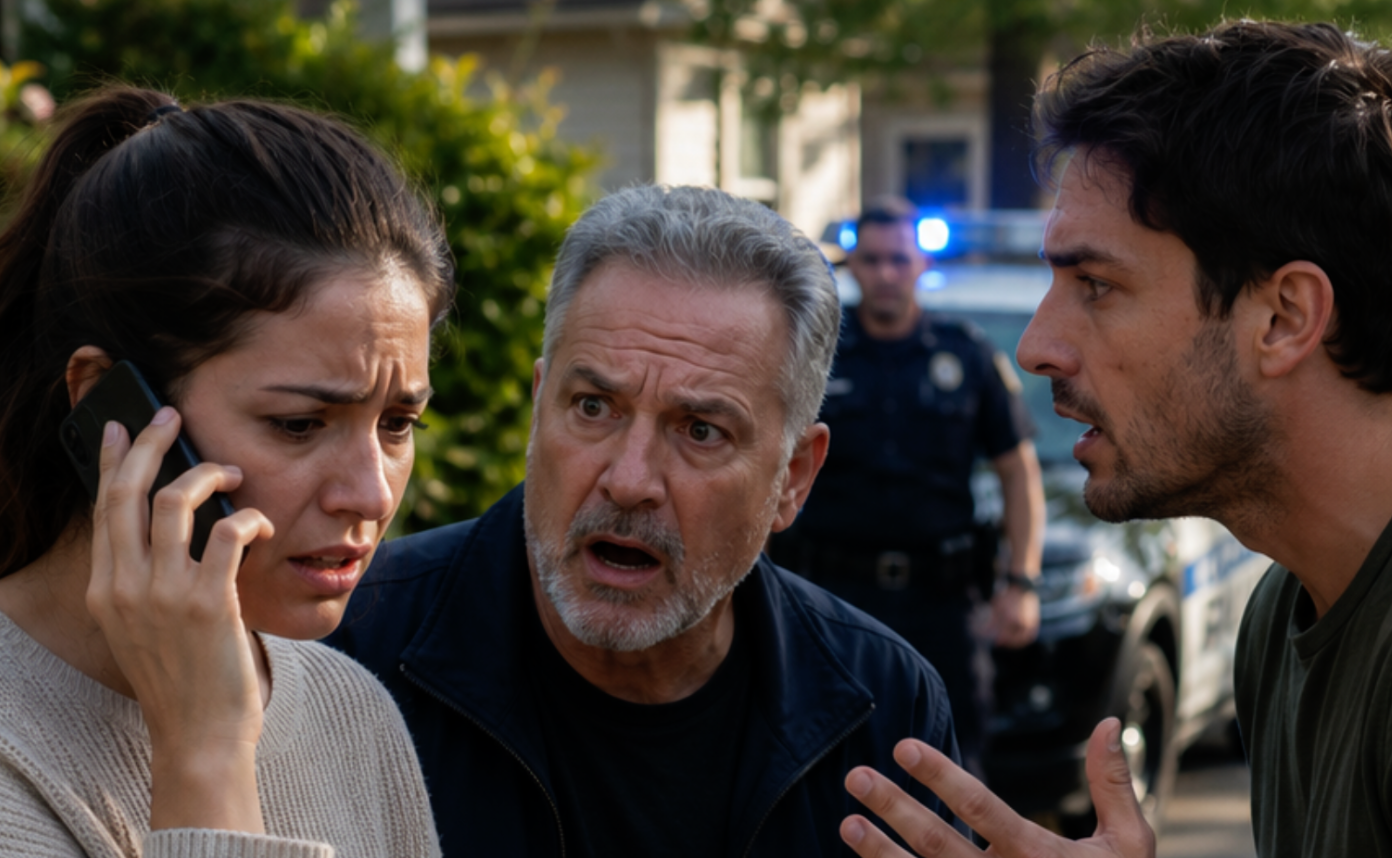
The police arrived twenty minutes later.
By that time, I had already taken the original vehicle title out of the bottom drawer of my dresser—the very document without which the car could not legally be transferred to another owner.
“So what exactly did you give the buyer?” the young police officer asked, examining my document carefully.
Oleg, pale as a sheet, sat on the ottoman staring at the floor.
“A duplicate…” he muttered. “We told the traffic police the original had been lost and got a duplicate so we could sell it.”
The patrol officer shook his head and began filling out the report.
Nikolai Stepanovich tried explaining something about the family budget and how his daughter-in-law had simply overreacted, but nobody listened to him.
The fact remained unchanged:
The car had been sold using a forged signature, without the owner’s consent.
An hour later, the buyer contacted them himself. He had been stopped at a traffic police checkpoint because the vehicle had already been entered into the stolen-car database.
The scandal was enormous.
The sale had to be canceled.
The money, which my father-in-law had already deposited into his account, had to be withdrawn immediately and returned to the furious and extremely unfriendly buyer right there at the police station.
Oleg was repeatedly questioned about forging my signature.
I got my car back from the impound lot two days later.
That same evening, I packed Oleg’s belongings into three large plaid bags and placed them in the hallway.
When my husband returned from the police station—exhausted, his face gray—he didn’t even argue.
He simply picked up the bags in silence and went to stay with his father.
Now my apartment smells of freshly brewed coffee instead of motor oil.
No one drones on about sports broadcasts in my ear.
A clean, freshly ironed linen tablecloth lies on the kitchen table.
I didn’t make a dramatic announcement about divorce. I simply filed the paperwork at the civil registry office. Fortunately, we have no children, and as it turned out, there was nothing for us to divide.
The car is parked beneath my window.
My car.
And would you have been able to keep quiet for the sake of preserving your family if they had treated you the same way?