Olga stood at the kitchen table, studying the drawings spread across a large sheet of paper held down by a cup of cold tea. In the living room, her projector hummed quietly—she was preparing for an important meeting with clients scheduled for Monday. Outside the window, Friday dusk was settling over the city, the buildings below glowing with yellow-lit windows. The apartment smelled cozy: warm bread, lemon-scented cleaner, and a faint trace of her favorite perfume. Her thirteen-year-old son, Kirill, was in his room, the muffled sounds of his console game coming through the door. Her husband, Dmitry, was working late and had promised to be home by seven.
The doorbell rang sharply, long and insistently—the way either a mail carrier with a registered letter rings or someone absolutely certain the door will be opened for them immediately. Olga flinched, put down her pencil, walked to the door, and looked through the peephole.
Three people stood shifting from foot to foot on the dimly lit landing: her sister-in-law Marina, Marina’s husband Igor, and their ten-year-old son Artyom. Marina was holding an enormous plaid bag with some greenery and the neck of a three-liter jar wrapped in tape sticking out of it. Igor carried two shopping bags, while Artyom picked at the hallway wall with his finger.
Olga froze for a second, something inside her tightening into a cold knot.
They hadn’t warned her.
They hadn’t called.
They had simply shown up on a Friday evening, when all she wanted was peace and quiet so she could prepare for her work meeting.
She took a breath, opened the door, and tried to keep her expression neutral.
“Olga, hi! We came to see you!” Marina stepped into the entryway, nearly knocking the hostess aside, and loudly kissed the air beside her cheek. “We’re staying for a week, no more! Our place flooded, and we started repairs, so we’ve got nowhere to live. You don’t mind, do you? We’re family—we’ll work it out!”
Igor, a short man with a permanently dissatisfied expression, squeezed in after her and dropped the bags straight onto the floor without even removing his shoes.
“Hi, Olga,” he grunted, looking around the hallway. “Not bad here. Pretty spacious. Artyom, take off your sneakers. Don’t embarrass your father.”
Artyom deliberately kicked his sneakers into a corner and slipped into the living room without saying a word.
Olga was still holding the door handle. A faint sour smell drifted from the bag Marina had dropped onto the bench with obvious relief. Olga noticed yellowing parsley leaves, the gray end of a piece of bologna, and the edge of a package containing something that looked suspiciously like moldy bread.
“Marina, you could at least have called,” Olga said quietly as she closed the door. “I have an important project presentation on Monday. I’m preparing for it, and the whole apartment is covered in drawings. Kirill has classes too.”
“Oh, come on. We’ll settle in and won’t bother you!” Marina waved dismissively, already taking off her coat and hanging it over Olga’s jacket. “We brought our own things, even food. Don’t worry, we’re not freeloaders. Mom sends her regards, by the way. She said you should welcome us properly, like family.”
She emphasized the last words, and Olga understood immediately: her mother-in-law, Galina Petrovna, already knew.
The old guard was assembling.
Kirill came into the hallway and frowned at the visitors.
“Hi,” he muttered, then looked questioningly at his mother.
Olga gave the slightest shake of her head: Later.
“Kirill, take Artyom into the living room and show him something,” she asked, struggling to keep her voice calm.
The boys left, while Marina was already peering possessively into the kitchen.
“Oh, it’s so clean! You live like something out of a magazine. So, show us where we should put our things. We’ll stay in the guest room, right? You’ve got a pullout sofa in there.”
“The guest room is currently my office.” Olga folded her arms. “All my models, papers, and equipment are there. I’m asking you not to touch anything and to try not to make noise at least until tomorrow afternoon.”
“Don’t worry, we’ll be quiet,” Igor chuckled as he walked into the bathroom and turned on the water. “Hey, what kind of soap is this? Must be expensive, huh?”
Olga didn’t answer.
She walked into the kitchen, took a bottle of water from the refrigerator, and drank half a glass in one gulp.
One thought pounded in her head:
A week.
They intended to live here for a week.
She knew their type. First it was “just a week,” then “three more days until the wallpaper dries,” and then suddenly it was a whole month.
And all of it would fall on her shoulders—with her groceries, her utility bills, and her nerves.
But worst of all was the feeling that their visit wasn’t accidental. Marina never came without wanting something.
Dmitry arrived soon afterward. When he saw his sister and her husband, he smiled in confusion, hugged Marina, and shook Igor’s hand.
“Well, look who’s here! Why didn’t you warn us?” he asked, kissing his wife on the temple.
Olga gave him a quick look, and Dima immediately fell silent.
“Surprise!” Marina laughed. “Brother, don’t be angry. We’re only staying a little while. Mom already knows. She said you’d be happy to have us.”
“Well, if Mom knows…” Dima spread his hands. “Olga, we’ll figure something out, right?”
“We’ll figure something out,” Olga said through clenched teeth. “Make yourselves comfortable for now. I’m going to finish my work. Do you want dinner? We have soup and cutlets.”
“Oh, we brought our own food!” Marina fussed and rushed toward the bag. “Look—homemade sausage. It’s been sitting around for a little while, but it’s fine, we can trim it. Greens from our garden, just a bit wilted. And Mom made compote and sent us a jar. Heat everything up and we’ll have a great dinner.”
Olga looked into the bag and nearly gagged.
The sausage smelled unmistakably spoiled. The greens had turned slimy, and pale flakes floated in the jar of compote.
She slowly looked at Marina, but the woman stared back with such sincere, shameless confidence in her right to bring rotten food into someone else’s home that Olga said nothing.
She merely smiled inwardly.
So you brought your own food.
Fine.
That’s what you’ll eat.
She helped prepare sleeping arrangements for the guests in the living room, moved her drawings into the bedroom, locked the door, and worked on revisions until midnight, when footsteps finally stopped in the hallway.
Dima came to bed late and whispered:
“Olga, why are you so tense? They’re family. They’ll spend a few nights here and leave.”
“Family members call and ask first, Dima,” she whispered back. “These people barged in with rotten food and expect me to lie down like a doormat for them. I have a feeling they didn’t come here for nothing. Let’s sleep. We’ll deal with it tomorrow.”
Saturday morning brought no relief.
Olga woke at seven to banging sounds from the kitchen.
Marina, wearing Olga’s apron, was frying eggs and pulling everything she could find from the refrigerator—bologna, cheese, tomatoes. Igor sat at the table scrolling through his phone and noisily slurping tea. Artyom ran through the hallway, banging on Kirill’s door.
“Good morning!” Marina sang when she saw Olga. “Don’t get up, relax. We can manage ourselves. Family style. Breakfast is almost ready.”
“I can see that,” Olga said, surveying the destruction. “But I usually prepare food for my family myself. Kirill is allergic to certain foods, so I need to keep track.”
“Oh, he won’t die,” Igor snorted. “Our Artyom eats everything, and look at him—alive and well.”
Olga clenched her teeth, poured herself coffee, and sat in the corner.
Soon a sleepy Dima appeared, followed by Kirill and Artyom.
Breakfast was noisy. Marina talked incessantly about the repairs, prices, and how greedy everyone had become these days.
Then, once the tea had been finished, she exchanged a meaningful glance with Igor and began:
“Dima, Olga, we actually need to talk to you about something serious. We didn’t come only because of the repairs. Mom wants to discuss the country house with you.”
Olga froze.
The country house was an old family property outside the city that legally belonged to her mother-in-law, Galina Petrovna. But five years earlier, Olga and Dima had invested a substantial amount of money in it. They had completely replaced the roof, installed new windows, connected gas, and rebuilt the veranda.
They had paid for everything themselves, and Olga had carefully kept every receipt.
At the time, her mother-in-law had cried with happiness and promised that the house would remain “for the children.”
That had always been understood to mean both her son and her daughter.
But now there was steel in Marina’s voice.
“We’ve been thinking,” Marina continued. “Mom is getting old, and it’s hard for her to manage alone. Artyom needs fresh air, and you have this gorgeous apartment downtown. Mom has decided to sign the country house over to me as a gift. That would be fair. You don’t really need it, but it would help us a lot. And Mom would stay with me, and I’d take care of her. You don’t object, do you?”
Silence fell.
Dima looked uncertainly at his wife.
Olga slowly placed her cup on the table.
So this was it.
This was why they had come.
“Wait, Marina,” she said quietly but very clearly. “Dima and I invested almost two million rubles in that house. The walls, the roof, the gas connection—we paid for all of it. Are you suggesting we simply hand the house over to you?”
“What do you mean, your money?” Igor snorted. “The house belongs to Mom. You helped because you’re relatives, and thanks for that. But blood is thicker than water. No offense, Olga, but you’re only the daughter-in-law. Marina is her real daughter. Who should a mother leave her house to? Her own flesh and blood, obviously. Besides, you’ve already got that apartment from your grandfather. You won’t exactly go broke.”
Olga’s vision darkened.
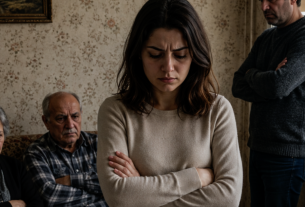
She saw Kirill clench his fists while Dima turned red and stared down at his plate.
“I’ve heard what you have to say,” Olga said, standing. “This is an important decision, and nobody makes decisions like that on the spot. Dima and I will discuss it later, privately.”
“What do you mean, privately?” Marina flared up. “We’re family!”
“Exactly. Which is why Dima and I will discuss it between ourselves,” Olga cut her off. “For now, let’s carry on. Lunch is in two hours. I’ll cook.”
She went into the bedroom, closed the door, and spent several minutes simply breathing while staring at the ceiling.
Inside, she was boiling.
So they really hadn’t come for nothing.
They had come to take property.
A shameless, calculated attack backed by manipulation from her mother-in-law.
But Olga wouldn’t be Olga if she rushed straight into open conflict. She decided to give them a chance to reconsider—and, at the same time, find out just how shameless they really were.
She served lunch at exactly two.
She set the table in the living room with a clean tablecloth and arranged the plates. Igor, Marina, and Artyom arrived with hungry anticipation in their eyes, expecting a hearty home-cooked meal.
Dima hovered nearby, sensing that something was wrong.
At his mother’s request, Kirill placed his phone face down on the sideboard shelf, aimed the camera toward the table, and started recording.
Olga ceremoniously carried in a large platter.
On it, arranged neatly in circles, lay the same foul-smelling sausage, surrounded by wilted parsley.
Next to it, she placed a plate of thinly sliced moldy bread, after trimming away the greenest parts, and the three-liter jar of cloudy compote with pale flakes still floating inside.
“Help yourselves, dear guests,” Olga said with a ringing voice, though she smiled. “I’ll serve you whatever you brought with you. No offense. A guest is honored according to what the household can provide.”
Marina, who had already started reaching for the platter, froze.
Her face first stretched in disbelief, then turned crimson.
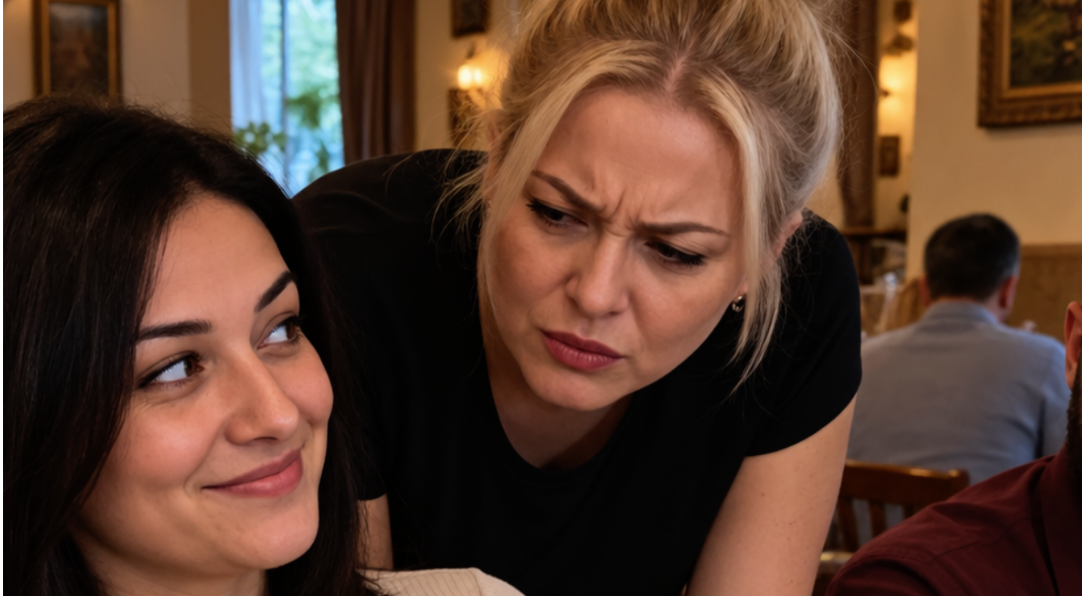
“What the hell are you doing?” she hissed. “We came to you with open hearts, and you’re serving us rotten food?”
“With open hearts?” Olga planted both hands on the table. “You showed up without calling, brought food that wasn’t fit even for the garbage, and immediately demanded that we hand over a house into which I poured my personal savings. And now you’re going to lecture me about sincerity? Respect is mutual, Marina. You give me expired garbage, I give the same thing back. As they say, we offer what we have.”
“Have you lost your damn mind?” Igor exploded, jumping to his feet. “We come here as family and she feeds us garbage? Dima, why are you sitting there? Control your wife!”
Dima looked helplessly from his sister to his wife.
“Olga, why did you have to go this far?” he muttered. “Maybe you really shouldn’t have…”
“I should have,” Olga interrupted him. “Absolutely. Because if I keep quiet now, tomorrow they’ll simply announce that I’m homeless. And you, Dima, need to decide: are you with me and your son, or with people who brought this filth into our home and consider everything we’ve worked for worthless?”
“We’re your family, and you’re an outsider!” Marina screamed. “You think because you inherited an apartment from your grandfather you’re some kind of queen? You’re nobody! Mom only tolerated you because of Dima!”
“Wonderful.” Olga nodded toward the phone. “Your words are being recorded. Along with this entire conversation. And as for the house: Dima and I paid for major renovations, and I have every receipt. If my mother-in-law decides to give the house to you, I’ll sue for reimbursement of unjust enrichment and the cost of materials and labor. And believe me, I’ll win. Do you want to live in a house with a two-million-ruble debt attached to it?”
“You’re bluffing!” Igor shouted. “You don’t have any receipts!”
“Want to find out?” Olga took a thick folder from a drawer and shook it in the air. “Everything is here: contracts, receipts, bank statements. So think carefully, dear relatives, about who you’re dealing with.”
Chaos erupted.
Marina screamed that Olga was greedy and trying to tear the family apart. Igor threatened her with every imaginable consequence. Artyom burst into tears.
Kirill stood silently beside the sideboard, making sure the recording continued.
Finally, Marina grabbed her husband by the sleeve and dragged him toward the guest room, throwing over her shoulder:
“We’ll see who has the last laugh!”
The door slammed behind them.
Olga dropped into a chair and closed her eyes.
Dima came over and sat beside her.
“Olga, I’m sorry,” he said quietly. “I didn’t think they would…”
“You rarely think when it comes to your mother and sister,” she answered wearily. “But today you need to choose. Because it’s only going to get worse.”
The rest of the day passed in oppressive silence.
The guests stayed in their room, speaking quietly among themselves. Olga’s mother-in-law called several times. Olga could hear Marina crying into the phone and twisting the story.
Toward evening, Dima approached Olga with a guilty expression.
“Olga, maybe we should just let it go? We’ll sign the house over, and they’ll leave us alone. Peace in the family is worth more than money.”
“Sit down.” Olga pointed to a chair. “Do you understand that they just tried to humiliate and rob us? And now you’re suggesting we reward them for it? Are you a husband or a doormat? If you’re on their side, pack your things and go stay with them in their rented apartment. Kirill and I will stay here and defend what’s ours.”
Dima fell silent.
At that moment, the phone rang.
The screen showed “Galina Petrovna.”
Olga switched on speakerphone and started recording.
“Olga, hello. What have you done over there? Marina is crying, her blood pressure is up. Why are you tormenting her?” Her mother-in-law’s voice sounded sugary sweet, but there was steel underneath.
“Hello, Galina Petrovna. I’m not tormenting anyone. I offered them the food they brought themselves. And they are demanding a house that Dima and I invested a lot of money in. Do you think that’s fair?”
“Olga, you have to understand: the house is mine, and I can leave it to whoever I want. You’re a smart girl, and you’ve got your grandfather’s apartment. You’ll be fine. Why do you need the country house too?”
“Because that’s where our money went. And if you decide to give the house to Marina, I’ll file a lawsuit demanding reimbursement of the entire amount, plus interest and damages. I already have a lawyer. Think carefully about whether you want your daughter to receive a house—or a lawsuit lasting several years.”
There was silence on the other end.
Then her mother-in-law said coldly:
“You’ll regret this.”
She hung up.
Dima sat there, white as a sheet.
“She’ll never forgive me,” he whispered.
“We don’t need her forgiveness,” Olga replied sharply. “We need her to respect us. Or at least be afraid to cross us.”
Olga couldn’t sleep that night.
At around two in the morning, she heard a rustling sound in the hallway.
She silently got out of bed, pulled on a robe, and looked outside.
A shadow was creeping out of the guest room.
Marina, wearing only socks, was sneaking toward the cabinet in the entryway where Olga kept important documents.
“What are you doing?” Olga asked loudly, switching on the light.
Marina jumped and dropped a folder of papers.
They were old documents relating to the apartment, which she had apparently been trying to take.
“I… I just wanted to look!” Marina stammered, her eyes darting around nervously.
The noise brought Dima running out of the bedroom and Igor, sleepy and furious, out of the guest room.
“She’s stealing our documents!” Olga shouted. “Dima, call the police.”
“What police? Are you insane?” Igor yelled, grabbing his wife by the shoulder. “This is a family matter!”
“Attempting to steal documents is a criminal matter,” Olga said firmly as she dialed. “And you, Igor, had better not threaten me.”
When the police arrived, they documented the incident: Marina had been caught attempting to take documents without the owner’s consent.
The local officer wrote a report, advised everyone to calm down and separate, and then left.
Olga issued an ultimatum.
“Tomorrow evening,” she said, looking at Igor and Marina, “I want both of you gone from this apartment. In the morning, I’m calling a locksmith to change the locks. If you are still here one minute past the deadline, I will file a formal complaint for attempted theft.”
“You’ll regret this,” Igor hissed as he backed toward the room. “We know people. Tomorrow Mom will write a will leaving everything to Marina, and you’ll be left with your useless receipts. And we’ll report you to child protection services over your son. We’ll tell them you feed him expired food. There’s even video of it! We’ll see who ends up worse off.”
The threat was specific, which made it especially disgusting.
Olga slammed the door in their faces and turned toward her husband.
“Now do you believe they’re willing to do anything?”
Dima nodded. For the first time in a long while, determination appeared in his eyes.
“I’ll call a lawyer myself tomorrow,” he said.
On Sunday morning, Marina, Igor, and Artyom hurriedly packed their belongings.
The living room was a mess: stains on the upholstery, overturned chairs, a forgotten toy.
The bag with the remains of the rotten food still stank from the corner.
Olga demonstratively offered no help.
At exactly six in the evening, the front door closed behind them.
Their curses echoed on the landing for a while, then finally faded.
Olga exhaled.
She called a locksmith, changed the locks, and installed an additional security chain.
But it was too early to relax.
A day later, her mother-in-law called and, in an icy tone, invited Olga to meet at a café in the city center—“just us women.”
Olga arrived carrying the same folder.
Galina Petrovna, a thin woman with immaculate hair, sat at a table with a cup of tea, wearing an expression of wounded dignity.
“Olga, I want to put an end to this madness,” she began. “You’re turning Dima against his mother. Marina is in the hospital with a nervous breakdown. Is that what you wanted?”
“I wanted fairness.” Olga sat opposite her. “Your daughter tried to steal my documents. Your son-in-law threatened my child. I will not tolerate that.”
“That was all emotion. You’re young and hotheaded. But the fact remains: the country house belongs to me, and I decide who gets it. I’ve decided Marina will get it. There are no other options.”
“Then listen carefully.” Olga opened the folder. “Here is a bank statement showing the payment to the roofing contractor—five hundred thousand rubles. Here is the contract for the gas connection—another three hundred thousand. Here are the receipts for the windows, veranda, and construction materials. Adjusted for inflation and interest, the total is two million one hundred thousand rubles. If you transfer the house to Marina, either she reimburses us for those expenses or I file a lawsuit. And believe me, Galina Petrovna, the court will order her to pay every last kopeck because I have documentation and witnesses. And if you try to challenge what I’m saying, another issue will be added to the case: your daughter’s false report, because I have already filed a statement with the police.”
Her mother-in-law turned pale.
She clearly hadn’t expected Olga to be so prepared.
A long silence followed.
“What do you want?” Galina Petrovna finally forced out.
“Peace and fairness. You write a will dividing the house equally between Dima and Marina, or you transfer a share to Dima proportionate to our investment. Marina and Igor sign notarized declarations giving up any claims against our property. And they provide written apologies for the slander and intrusion. Then I’ll withdraw the police complaint.”
“You’re a cruel woman,” Galina Petrovna whispered.
“No. I’m simply tired of being convenient,” Olga replied. “Think about it. You have three days.”
But Marina and Igor had no intention of surrendering.
Two days after the café meeting, child protection officers appeared at the school Kirill attended.
At Dima’s workplace, a scandal erupted after an anonymous letter accused him of supposedly renting out an apartment illegally and evading taxes.
Inspections began. He was called into the director’s office and questioned repeatedly.
Kirill came home from school in tears. He had been asked what his parents fed him and whether they mistreated him.
Olga understood.
This was now a war of destruction.
She immediately contacted a lawyer.
After reviewing the situation, he confirmed that knowingly filing a false report could carry criminal consequences.
Olga gathered all the evidence: the video recording of the lunch confrontation, the recording of Igor’s threats, the police report from the nighttime incident, screenshots of messages.
Then she filed a formal complaint requesting that Marina and Igor be held criminally responsible for knowingly making false accusations.
When Igor and Marina received summonses to appear before an investigator, their arrogance disappeared instantly.
It was established that they had indeed submitted reports to child protection services and the tax authorities using false information.
Now they themselves were facing serious criminal consequences.
When Galina Petrovna learned what was happening, she rushed to Olga’s home without being invited.
But this time, her tone was very different.
“Olga, stop this!” she begged from the doorway. “They’ll put Marina in prison! She has a son!”
“She should have thought about her son before filing a false report involving my child,” Olga replied coldly. “I’m willing to withdraw the complaint under certain conditions: you officially transfer half of the country house to Dima through a notary as compensation for the renovations, or you sign an obligation not to dispose of the property without our consent. Marina and Igor sign documents giving up any possible claims to our property and publicly apologize to my family. And they never—do you hear me?—never cross the threshold of our home again without a written invitation.”
Her mother-in-law agreed to everything.
The necessary documents were prepared in the presence of a lawyer.
Marina, red with shame and anger, arrived with Igor and muttered an apology, avoiding Olga’s and Kirill’s eyes.
Dima stood beside his wife, silent but upright.
He had finally made his choice.
That same evening, Olga prepared dinner for her family.
Only her family.
Hot cutlets with mashed potatoes, fresh vegetable salad, and apple pie.
Olga, Dima, and Kirill sat around the table.
The lighting was soft, and the city murmured beyond the windows.
“Mom, I deleted the recording from my phone,” Kirill said. “I don’t want to remember it.”
“You did the right thing.” Olga stroked his hair. “But remember the lesson: relatives are people who respect you. Everyone else is just someone who happens to share your blood.”
“I’m sorry, Olga,” Dima said, taking her hand. “I was blind.”
“The important thing is that you can see now,” she replied with a smile, though it came out sad.
When her husband and son went to watch a movie, Olga remained in the kitchen.
She took an old photo album from the cabinet, turned the pages, and found a picture of all of them together—her mother-in-law, Marina, Igor, Dima, and herself—standing at that very country house after the renovation, everyone smiling.
Back then, it had seemed that family was forever.
Olga pulled out the photograph.
She hesitated for a second.
Then she tore it in half.
Then again.
And again.
Until only a handful of scraps remained in her hands.
She dropped them into the trash and carefully washed her hands.
Later that evening, the phone rang.
Her sister-in-law’s number appeared on the screen.
Olga looked at it, pressed “Decline,” and then added the number to her blocked contacts.
The house was quiet and peaceful.
And in that silence, for the first time in a long while, Olga felt that her fortress had held.
As for the rotten gifts that had started everything, they had finished rotting in the garbage bin where they belonged.