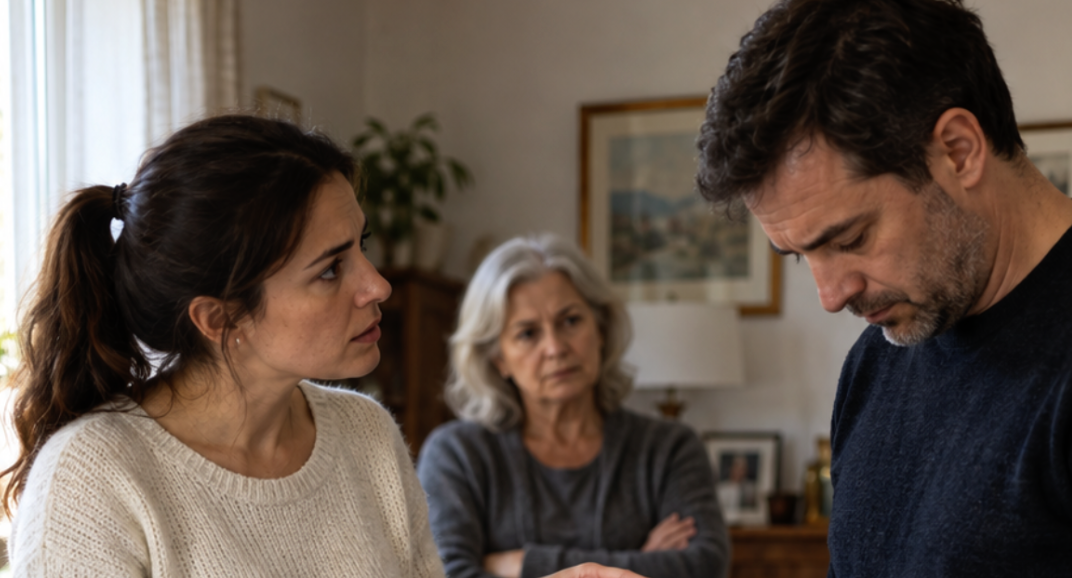
Her mother-in-law handed Marina the keys to the country house and smiled so sweetly that Marina immediately knew something was wrong.
“Here you go, dear. Since you and Kostya want to move there for the summer, make yourselves at home. I won’t be lonely in the city.”
Marina took the keys. They were heavy and cold, with a horseshoe keychain on the ring. The three of them stood in the hallway of Tamara Petrovna’s apartment on Sadovaya Street, where she had lived for almost forty years. Kostya shifted from foot to foot by the door, glancing between his mother and his wife.
“Thank you, Tamara Petrovna,” Marina said. “It won’t be for long. Just until we sort out the apartment.”
“Stay as long as you like. I’m family, after all. I’m your mother-in-law.”
Something about those words stung. They were too smooth. Too kind. In two years of marriage, Marina had never heard anything warmer than a curt “hello” from her mother-in-law.
Tamara Petrovna had inherited the country house from her late husband. It was a sturdy log house in a village near Klin, with a veranda, apple trees, and a cellar. Kostya had grown up there, spending every summer helping his father in the garden beds. Marina had seen the place once, the previous Christmas. It had been cold and empty then, and her mother-in-law had complained about the snow, the road, and the way Marina had cut the salad “wrong.”
And now, suddenly, she was telling them to move in.
They arrived in May. Their apartment was being renovated, rent elsewhere was draining their money, and Tamara Petrovna’s offer seemed like a lifeline. Marina worked remotely as a designer; she could work from the middle of a forest as long as she had an internet connection. Kostya drove into the city every other day to run the small auto repair shop he owned on the outskirts.
The first few weeks went well. Marina scrubbed the veranda, hung light curtains, and planted petunias beneath the window. The house seemed to come alive. In the evenings, she and Kostya sat on the porch drinking tea and listening to the grasshoppers chirp in the grass.
“It’s lovely here,” Marina would say. “Maybe we won’t move back.”
“Mom would be happy,” Kostya replied. “She loves this house.”
Marina thought nothing of it. Only later did she realize it had been the first warning sign.
In June, her mother-in-law came to inspect the place. Without any warning, a taxi pulled into the yard on a Saturday morning, and Tamara Petrovna emerged carrying two bags.
“I thought I’d check on you. How are things? You haven’t let the place go, have you?”
She walked slowly through the house like an inspector. She ran a finger along a windowsill, looked inside the refrigerator, and touched the curtains.
“What are these rags?”
“I put up some curtains,” Marina said. “The old ones were completely faded.”
“The old ones were fine with me.” Her mother-in-law yanked one curtain down, folded it, and laid it on the sofa. “I’ll put mine back up. There’s no need to change things around.”
Marina said nothing. Her mother-in-law was her mother-in-law, and it was her house. She could do as she pleased. Still, the incident left a bitter taste.
Tamara Petrovna stayed for three days. During that time, she rearranged the dishes in the cupboards, threw out Marina’s petunias (“Nothing but weeds, ruining the soil”), replanted something in the garden beds, and reminded them at least ten times that the house was “blessed by generations, built by our forefathers, and every nail in it has a story.”
“Do be careful,” she said over dinner. “These walls aren’t yours. You need to take care of other people’s property.”
Kostya nodded. Marina watched him shrink in his mother’s presence, as though he were once again the timid, obedient boy working in the garden beds.
When her mother-in-law left, Marina could no longer hold back.
“Kostya, is she going to come every month and take over the house?”
“What’s wrong with that? It’s her house.”
“She said we could stay as long as we wanted, but then she shows up to inspect everything.”
“Mom’s just worried. She takes care of this place.”
Marina wanted to argue, but stopped herself. There was no point arguing with Kostya about his mother. He had already surrendered before any such argument began.
July was hot. Marina worked on the veranda, surrounded by drawings and coffee cups. One afternoon, while searching a dresser for an old blanket, she came across a folder of papers. It was an ordinary gray folder with frayed ties. She was about to put it aside when a phrase on the top page caught her eye.
Deed of gift.
She froze. She pulled out the page and scanned it. Her hands went cold.
It was a deed transferring the country house and its plot of land as a gift. The donor was Tamara Petrovna. The recipient was Konstantin. The date was three months earlier, in March—two months before her mother-in-law had so generously invited them to stay.
Marina sat down on the floor. Her head was spinning.
The house already belonged to Kostya. It had been transferred to him in March, quietly, without a word. Yet in May his mother had put on a performance with the keys, the horseshoe keychain, and her affectionate “Make yourselves at home, dear.” Why?
Marina read the deed three times. It was all in order: the notary’s seal, the signatures. Kostya was the owner. Her husband had owned the country house for months and had said nothing.
She closed the folder and put it back exactly where she had found it. She was shaking inside, but forced herself to breathe steadily. She needed to think. She needed to understand what game they were playing.
That evening, Kostya came back from the city tired and smelling of gasoline. Marina served dinner and sat across from him.
“Kostya,” she said as calmly as she could, “whose house is this?”
He flinched. Barely, but she caught it.
“What do you mean, whose? Mom’s.”
“Your mom’s?”
“Well, yes. It was Dad’s, then it became hers. Why?”
Marina looked him in the eye. He was lying. His gaze darted to his fork, the table, the window—anywhere but her face.
“I was just asking. Your mother guards it like a museum.”
“Well, she’s getting older. It means a lot to her.”
Marina nodded and said nothing more. But now she knew Kostya was part of it. He knew about the deed. He knew the house was his, and for some reason he was playing along with his mother.
She lay awake for a long time that night, fitting the pieces together. Her mother-in-law had never liked her; that much was clear. She thought Marina wasn’t good enough for her son and always looked down on her. Marina had known before the wedding that Kostya was a mama’s boy, but she had thought he would grow out of it. He hadn’t.
And now there was the house. Transferred to Kostya. That meant his mother was planning something. Perhaps she wanted Marina to spend money renovating it, settle in, and start thinking of it as home. Then, if they divorced, everything would stay with Kostya because gifts received during marriage were… No, wait. Marina was confused.
In the morning, she called her friend Sveta, who worked at a law firm.
“Hi, Sveta. I have a question. If a husband is given a house during the marriage, is it shared property or his alone?”
“A gift belongs to him personally. Property received as a gift or inheritance isn’t divided in a divorce. It’s his. What happened?”
Marina explained briefly.
Sveta whistled.
“Listen, they’re hiding something. Why would his mother pretend the house is still hers when she’s already transferred it to her son? I can see two possibilities. Either they’re setting you up for something, or they’re afraid you’ll try to claim the house. So they’re pretending it’s still his mother’s to keep you from feeling too at home.”
“The second sounds more likely.”
“Be careful, Marina. A mother-in-law who suddenly turns nice is usually trouble. Especially when her son goes along with it.”
Marina ended the call, anger rising inside her. It wasn’t really about the house. She didn’t want it; the place belonged to someone else. What hurt was Kostya’s lie. He could look her in the eye over breakfast and lie. They had been married for two years, and he and his mother were conspiring against her.
She decided not to let on that she knew. She would watch.
At the end of July, her mother-in-law came again. This time she arrived with plans, not an inspection.
“Marina,” she said over tea, spreading some catalogs across the table, “I’ve been thinking the house needs work. The roof leaks and the veranda is sinking. You’re living here, so you can help arrange it. We’ll all contribute and fix it up properly.”
“All contribute?” Marina repeated.
“Of course. We’re family. You’re young and earning money. Put in three hundred thousand rubles, and I’ll help however I can. It’s a family house, after all.”
There it was. Marina nearly laughed. Three hundred thousand rubles for a house that already belonged to Kostya. Her mother-in-law wanted her to pay for repairs to someone else’s property—or, more precisely, Kostya’s property. If anything happened, Marina would be left with nothing: no share in the house, no money, no home.
“Three hundred thousand is a lot,” Marina said evenly. “I need to think about it and talk to Kostya.”
“What’s there to think about?” Her mother-in-law pursed her lips. “You live here with everything provided, but you begrudge us money for repairs? I welcomed you like family, and you…”
“We’ll think about it, Tamara Petrovna.”
Her mother-in-law snorted and put away the catalogs. That evening, when Kostya came home, Marina heard his mother whispering to him in the kitchen through the wall.
“…Your wife is stingy. I practically gave her a house. They’re living here for free, but she won’t spare a few pennies for repairs.”
“Mom, she’s just being cautious…”
“Cautious, is she? Watch out, Kostya, or that cautious wife of yours will leave you with nothing. You never know what she’s planning.”
Marina stood in the hallway listening. So that was how it worked. Her mother-in-law was turning Kostya against her while playing the generous benefactor. She had “given them” a house, although she had actually transferred it to Kostya for reasons of her own. They “lived there for free,” although Marina and Kostya had cleaned, repaired, and cared for the place. And Kostya nodded along. He always nodded along.
Marina quietly returned to the room and lay down facing the wall. At breakfast the next morning, she said nothing. She smiled at Kostya and poured him coffee.
“Kostya, maybe we really should renovate the house. Your mom’s right. The roof leaks.”
He looked surprised.
“Yesterday you said you needed to think about it.”
“I did think about it. We’re family. We should help.”
Kostya lit up. That evening he reported to his mother that Marina had agreed to contribute. Tamara Petrovna nodded with satisfaction, while Marina kept smiling and agreeing. But she already had a plan.
She had no intention of handing over three hundred thousand rubles. She intended to learn the whole truth.
The following week, Marina told Kostya she needed to go into the city for work. Instead, she went to the notary whose seal was on the deed. The office address had been listed on the document, and she had memorized it.
At first, the notary, a stern woman in glasses, refused to speak to her.
“I can’t disclose information about transactions. It’s confidential.”
“I’m not asking for details. I’m the recipient’s wife. I just want to know whether the transfer took place. Is the house in my husband’s name?”
The notary paused.
“If you’re his wife, you can request a property record from Rosreestr. There’s a fee, but the information is public. It will show you the owner.”
Marina did just that. Three days later, the record arrived by email. She opened the file with trembling hands.
The owner of the country house and the land was Konstantin. He had owned them since March. Everything was confirmed. The house belonged entirely to Kostya. Her mother-in-law no longer owned any part of it. She had given it to her son and was putting on an act.
But why? The question would not leave Marina alone.
The answer came unexpectedly from Aunt Valya, a talkative neighbor in her sixties who knew everything about everyone in the village.
“Oh, you’re living in Tamara’s house?” Aunt Valya asked when she ran into Marina by the gate. “It’s a nice house. But keep your eyes open, dear.”
“What do you mean?”
Aunt Valya glanced around and lowered her voice.
“Tamara transferred the house to her son to protect it from her daughter-in-law. She bragged to me about it in the spring. ‘He married a woman from out of town, a designer,’ she said. ‘What if they divorce and she takes half? If I give the house to Kostya, she won’t get a thing. Gifts don’t get divided.’”
Marina listened, feeling a chill run through her.
“Then why did she let us stay there?” she asked quietly.
“That’s her little trick.” Aunt Valya gave a knowing smile. “So you’d think the house was still hers and wouldn’t get any ideas. She’d graciously let you stay, while all along she’d already signed it over to her son. Tamara’s a sly one. She knows how to make things sound sweet.”
Marina stood by the gate, feeling something shift inside her. So that was it. Her mother-in-law considered her a woman after her son’s property. She had protected Kostya in advance, long before any divorce was in sight. She had transferred the house to him, then played the kind benefactor so Marina wouldn’t suspect a thing. Now she wanted to extract another three hundred thousand rubles from her to repair Kostya’s house.
And Kostya had known. He had known all along and kept silent. He had looked her in the eye and kept silent.
Marina thanked Aunt Valya and went inside. She sat on the veranda, where the smell of her coffee still lingered and where her curtains hung—the ones her mother-in-law had tried to tear down. She sat for a long time, looking at the apple trees.
She didn’t cry. Somewhere on the walk back, she had run out of tears. All that remained was a cold, firm sense of clarity.
Kostya arrived that evening. Marina greeted him calmly and served dinner. She waited until he had finished eating and set his plate aside.
“Kostya,” she said, “I know everything.”
He looked up.
“Know what?”
“About the house. It’s yours. Your mother transferred it to you in March as a gift. I ordered the property record from Rosreestr.”
Kostya went pale. He opened his mouth, then closed it.
“Marina, I…”
“You lied to me. For two months, you lied. ‘It’s Mom’s house, it’s Mom’s house.’ But it’s yours. And your mother put on that performance with the keys to make me believe her. You both watched me hang curtains and plant petunias and settle into a house you claimed belonged to someone else.”
“Marina, listen.” Kostya leaned forward. “It was Mom’s idea. She was afraid that if we divorced… well, that you might try to claim the house.”
“I know. Property received as a gift isn’t divided. I’m aware of that. I never wanted your house, Kostya. What hurts is something else.”
“What?”
“You sided with her against me. We’ve been together for two years, and you conspired with your mother. She thinks I’m after your property, and you just nod along. You never once stood up for me. Never once told her I wasn’t like that.”
Kostya said nothing. He fiddled with the edge of the tablecloth.
“And do you know what’s funniest?” Marina continued. “You also wanted three hundred thousand rubles from me to repair your house. You expected me to put my money into property I don’t own and be left with nothing.”
“That was Mom’s suggestion…”
“And you agreed. You always agree with her, Kostya. You’re like a wind-up toy. She tells you what to do, and you do it.”
He straightened sharply.
“Don’t you dare talk about my mother like that!”
There it was. Even now, backed into a corner, he rushed to defend his mother instead of his wife. Marina looked at him for a long moment, as if seeing him for the first time.
“That answers everything,” she said quietly.
She got up, went to the bedroom, and took out her suitcase.
“Where are you going?” Kostya jumped up and followed her.
“Home. To our apartment. The renovations are almost finished. I’ll stay there for now.”
“Marina, wait. Let’s talk.”
“We just did. Honestly, for the first time in two months.” She folded her clothes into neat piles. Her hands were steady. “You made your choice back in March. I’ve only just found out.”
“What choice? I didn’t choose anything!”
“You did. You chose between me and your mother. You hid the house from me as though I were a thief. You did that before we’d even had an argument about it. From the beginning, you expected me to deceive you. But you and your mother are the ones who lied, Kostya. Both of you.”
Kostya stood in the doorway, looking lost and miserable.
“What about… us?”
“There was never an ‘us.’ There was you, me, and your mother. And your mother always came first.”
Marina carried her suitcase onto the porch. The summer evening was warm, and the air smelled of cut grass and apples. She called a taxi and sat on the step to wait.
Kostya came out and sat beside her. He was silent for a while. Then he said, “Mom was right about you.”
Marina turned toward him.
“How?”
“She said you’d leave. At the first sign of trouble.”
Marina gave a bitter smile, but there was no anger in it.
“You know, Kostya, I didn’t leave at the first sign of trouble. You two have been pushing me away for two years. It just took me a long time to notice. And the trouble has been there from the start: your mother, and you standing beside her.”
The taxi arrived. Marina stood and picked up her suitcase.
“I’m leaving my curtains,” she said. “Your mother can take them down. She’s wanted to for ages.”
She got into the car and did not look back.
The apartment on Melnikova Street—the one she and Kostya had rented and renovated together—was empty and echoing. The work had been finished a week earlier. Fresh walls, new floors, the smell of paint. Marina set her suitcase in the middle of the room and suddenly realized this was the first place in two years that had felt even a little like hers.
Except it wasn’t. It was rented. Someone else’s place.
She sat on the floor and leaned against the wall. Only then did she cry, quietly, without sobbing. She wasn’t grieving for Kostya. She felt relief, as though a heavy backpack she had carried for two years had finally slipped from her shoulders.
The divorce went through quickly. There was nothing to divide: the country house belonged to Kostya, the apartment was rented, and the car had been bought on a loan in his name. Marina left with her suitcase and her laptop. Her mother-in-law did not appear in court, but Kostya let slip that she was “pleased they’d got rid of the problem.”
Marina only nodded. Tamara Petrovna could think whatever she liked.
Six months passed.
Marina rented a tiny studio on the outskirts of the city, entirely on her own. She arranged her belongings, hung up her photographs, and spread a blanket over the sofa—the blanket she had once been searching for in that fateful dresser. She had more work now: she had taken on two new clients and begun saving for a down payment on a home of her own. It might be small, perhaps a one-room apartment in an old apartment block. But it would be hers. For the first time in her life, truly hers.
Sometimes she remembered the country house: the apple trees, the veranda, the grasshoppers chirping in the grass. It had been a good house. But it belonged to someone else. Everything there had: the walls, her husband, even his love, most of which he gave to his mother, leaving Marina only scraps.
One evening, her phone pinged. The message came from an unfamiliar number, but Marina recognized the style at once.
Marina, it’s Kostya. Mom and I went too far back then. The house is standing empty now, Mom is ill, and I can’t manage everything alone. Maybe you could come back? We could start over. I understand now.
Marina read it twice and gave a wry smile. “I understand now”—yet the first things he mentioned were the house, his sick mother, and the fact that he couldn’t cope alone. Once again, it wasn’t about her. It was about them.
She typed a short reply: No.
She thought for a moment, deleted it, and wrote something else: Live with your mother, Kostya. You deserve each other.
She sent it and blocked the number.
Outside the window, the first snow was falling in large, slow, beautiful flakes. Marina made tea and sat in an armchair she had bought cheaply at a sale, but which belonged to her. She wrapped her hands around the cup as she once had on the veranda.
Only now, its warmth didn’t seem to disappear into emptiness.
She thought about how afraid she had been all those years of seeming greedy, argumentative, or difficult. How she had put up with her mother-in-law, made excuses for Kostya, and made herself smaller so she wouldn’t become “that daughter-in-law” who breaks up a family. In the end, they had blamed her for everything anyway: for greed, for coldness, and for the divorce.
But it no longer mattered to her.
Let her mother-in-law tell the neighbors what an ungrateful daughter-in-law she’d had. Let Kostya complain that Marina had abandoned him when things got hard. They could keep their version of the truth. Marina had her own now.
She watched the snow and smiled. For the first time in a long while, she felt at peace. Truly at peace. That was what happened when you finally stopped living in someone else’s house and began building a home of your own.
It might be small. She might have to start from nothing. But it would be hers.
And that was enough.