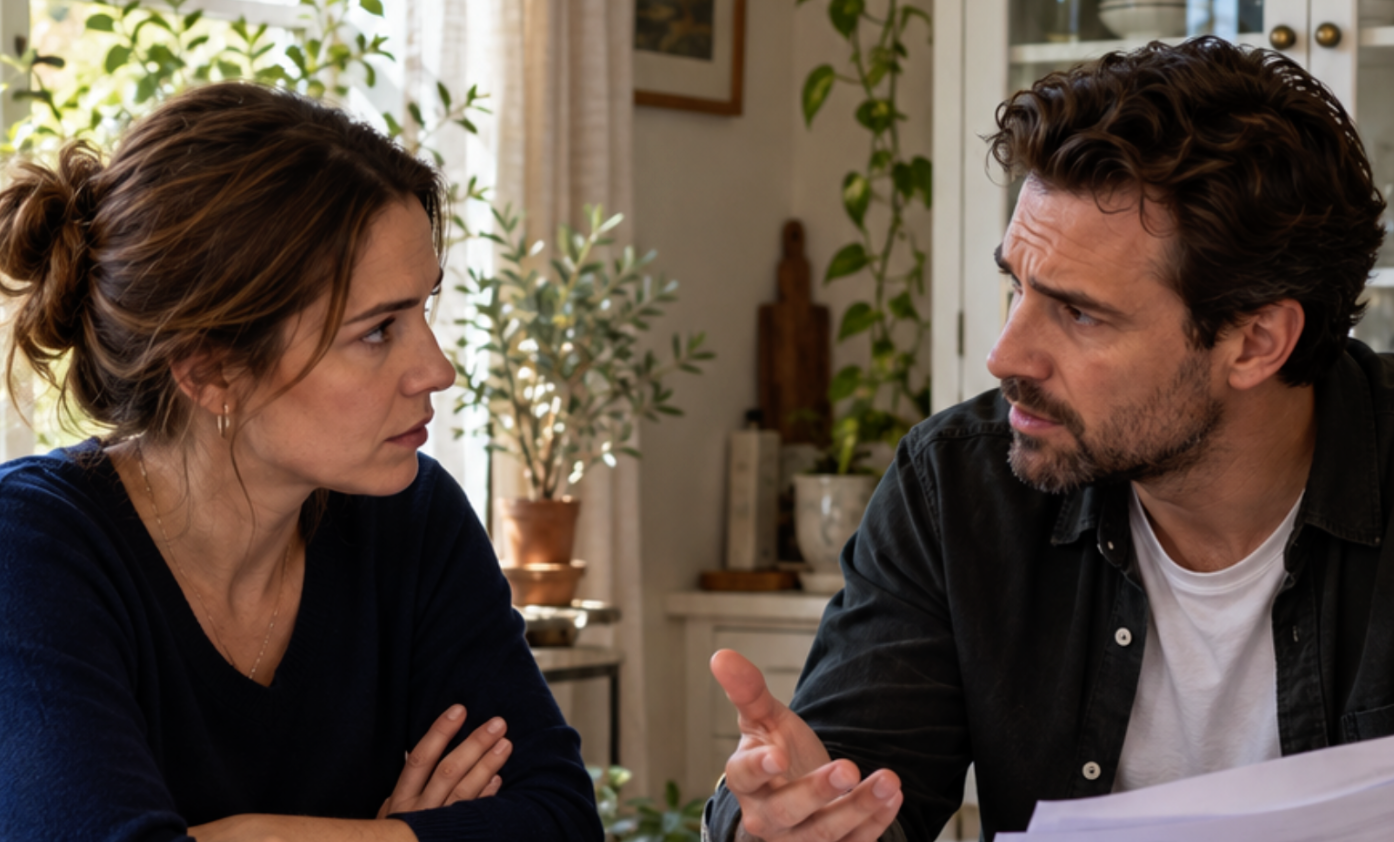
On Saturday, I arrived at the dacha an hour earlier than planned and found a woman I didn’t know in the yard. She was standing by the shed, taking pictures of the roof and asking Sergei whether the metal shelving would stay after the sale.
I remember thinking: What sale?
A man of about fifty came out of the house, greeted me, and immediately asked:
“Are you taking the refrigerator, or leaving it?”
Sergei finally noticed me.
“Why are you here so early?”
As if that were the strange part.
I put my bag on the bench by the porch. The woman put away her phone and smiled.
“We’ve seen almost everything. You have a lovely plot. I’m Svetlana.”
“Tatyana.”
“Sergei said you don’t come here very often.”
I looked at my husband.
The dacha was mine. Nine years earlier, my aunt had signed it over to me, and we had never discussed selling it. Quite the opposite: I was planning to repair part of the roof in the spring and had already asked a local contractor how much the work would cost.
“Seryozha, why are these people looking around?”
He waved a hand.
“Oh, it’s nothing. They’re looking for a dacha, so I showed them ours. Why are you getting worked up?”
Svetlana stopped smiling.
Her husband, Andrei, who was standing by the door, asked, “What do you mean, you just showed it to us? I thought we came for more than a look.”
Sergei quickly started talking about the electricity, the well, and the new stretch of fence we had put up three years ago. Andrei listened, but his interest had clearly faded. I stayed quiet too. I wanted to know how far this had gone.
A few minutes later, Svetlana asked cautiously, “Tatyana, when would you be able to clear out the small room? We don’t really need the furniture, though you could leave the wardrobe in the bedroom.”
“Why would I clear out the room?”
She looked at Sergei.
“Before you hand over the house.”
Sergei had an expression I had known for twenty-four years: he was about to pretend everyone else was making a fuss over nothing.
“Let’s not get into this today,” he said. “Finish looking at the plot, and we’ll sort it out ourselves afterward.”
Andrei no longer wanted to look at anything.
They left about ten minutes later.
I waited until their car had turned off our street, then asked, “Are you selling my dacha?”
Sergei began collecting cups from the table, although five minutes earlier he had been sitting comfortably with his guests and had shown no sign of being in a hurry.
“I found decent buyers. Is that a crime?”
“What’s the price?”
“Three million six hundred and fifty thousand.”
I made him repeat it.
It wasn’t a bad price. Perhaps a little less than we could have got if we took our time, but Andrei and his wife planned to buy without a loan or lengthy arrangements.
Sergei took my silence as a good sign.
“See? I’m not giving it away for pennies. Look at the place yourself: the roof’s leaking again, the fence needs painting, and the shed is falling apart. How often do we even come here? Five times a summer?”
“I come more often than that.”
“Fine, eight. What’s the point of keeping it?”
That was how he talked. Within two minutes, it sounded as though he hadn’t tried to sell someone else’s dacha at all. He was simply saving the family from unnecessary expenses.
And the most irritating part was that he was right about some of the expenses.
I had spent a fair amount on the property the previous year: a pump, boards for the veranda, dues, small repairs. The roof was next. Sergei had been saying for ages that it would be easier to sell the place than to spend every weekend patching something up.
But we had never had a conversation in which we agreed to sell.
There had been other conversations.
About three years earlier, Sergei had let his brother store some things in my garage after a move.
“A week at most,” he’d said.
A month later, I opened the garage to find boxes stacked against the wall, two doors, rolls of insulation, and an old cabinet. I had to leave my car outside almost until winter.
Sergei had been surprised by my anger then, too.
“Where else was he supposed to put it all?”
Another time, he lent my electric saw to a neighbor. I searched for it half the day before calling him.
“Pasha has it.”
“Why?”
“He needed to cut some branches.”
“Did it occur to you to ask me?”
“Tanya, he’ll give it back.”
He did. Three weeks later.
Each incident seemed too small to start a family war over. I got angry, Sergei waited it out, and then work, shopping, bills, or a visit from our daughter would come along, and the matter would fade into the background.
I suppose we had both grown used to it. He was used to making decisions first. I was used to grumbling afterward and getting over it.
But you can’t put a plot of land in a garage or lend it to a neighbor for three weeks.
“I’m not selling,” I said.
Sergei stopped collecting the cups.
“You’re doing this on purpose.”
“Doing what?”
“Saying no because I arranged it without you. If you’d found these people yourself, you’d be delighted.”
“Maybe. But I didn’t look for them.”
For another ten minutes, he explained that three million six hundred and fifty thousand rubles wasn’t the kind of money you found lying in the street. Then he said the dacha would be worth less in a year, the roof would cost money, and I had complained myself that I was tired of carrying the burden.
He was right about that last part too.
I really had complained.
That made me angrier still.
Finally, Sergei said, “Fine. If you don’t want to sell, you can explain it to them yourself.”
“No. You made the arrangement. You explain it.”
That was where I made a foolish choice.
I could have asked him for Andrei’s number and told him immediately that there would be no sale. I refused on principle. For once, I didn’t want to clean up the consequences of Sergei’s decision.
Let him call.
Let him tell them.
We locked the house and went home.
That evening, I learned it was already worse than I thought.
Sergei was sitting in the kitchen with his phone. I put the groceries in the refrigerator and started unpacking the bag when I heard him say:
“By the way, they left some money.”
I turned around.
“What money?”
“One hundred and twenty.”
“Thousand?”
“Obviously.”
I didn’t even drop the bag. I took out the milk, put it on the shelf, and then went back to the table.
“What for?”
“To hold the dacha for them.”
“Sergei, what dacha?”
He swiped irritably at his screen.
“Ours.”
“Mine.”
“Oh God, here we go again.”
Then he showed me the transfer.
Andrei really had sent him 120,000 rubles. Sergei had written a receipt in his own name stating that he had received the money toward the future purchase of the dacha and would arrange the paperwork.
I read it twice.
“Did you tell him I’m the owner?”
“Of course.”
“And that I agreed?”
He didn’t answer right away.
That pause told me more than any explanation could have.
“What did you tell him?”
“That we’d decided.”
“We hadn’t decided anything.”
“Tanya, stop picking at words. I was sure you’d agree when you saw the price.”
That, at least, sounded true.
Sergei hadn’t devised some elaborate scheme. He had decided for me because he genuinely believed that once everything was ready, I would complain a little and then sign.
For years, I had given him plenty of reason to think so.
“Give the money back.”
“I will, if you’re absolutely sure you won’t sell.”
“I’ve already said I won’t.”
He put his phone away.
“At least think about it until Monday.”
For some reason, I agreed.
Not to sell. Just to think.
The next morning, I was angry with myself for saying I would think about it, but I still didn’t call the buyers. Stubbornness can be a foolish thing. I wanted Sergei, for once, to deal with the full consequences of his own decision.
On Monday, our daughter Katya called.
“Mom, are you really selling the dacha?”
“Who told you that?”
“Dad. Yesterday he asked whether you’d prefer a crossover or a station wagon.”
I sat down on the edge of the sofa.
“What does a car have to do with it?”
“I don’t know. He said he’d put a little extra money toward it after selling the dacha and replace his car.”
Sergei hadn’t told me that part.
I asked Katya when he’d said it.
“Yesterday. Mom, didn’t you know?”
I gave her a brief account.
Katya listened and, to my surprise, didn’t immediately criticize her father.
“Dad has really gone too far. But you’ve played a part in this too.”
“Thanks.”
“Mom, I’m serious. He’s been doing this for twenty years. For twenty years, you’ve yelled at him and then agreed anyway. He assumed this time would be the same.”
I wanted to tell her that a child shouldn’t lecture her mother about marriage. Then I remembered that my “child” was thirty-one.
“So what am I supposed to do now?”
“How should I know? The dacha is yours. You decide.”
That was the uncomfortable part.
I really did have to decide.
On Tuesday, Sergei said Andrei was ready to meet on Saturday.
“What for?” I asked.
“To sign the papers.”
“I told you I’m not selling.”
“You said you’d think about it until Monday.”
“I have thought about it.”
He stared at me for a long time before saying, “I promised them.”
“Then call them.”
“Tanya, why are you making me look like an idiot?”
I said nothing.
On Wednesday, he brought up the roof again. He found photos of the damp corner of the veranda on his phone, added up three years of dues, and reminded me about the pump.
On Thursday, he got home before I did.
Printed documents were lying on the kitchen table. Sergei sat by the window, looking as though he had arranged an ordinary trip to the dentist.
“We’re meeting them at eleven on Saturday.”
I hadn’t even taken off my coat.
“Meeting whom?”
“Andrei and Sveta. We’ll discuss everything there.”
“What’s there to discuss?”
He tapped the papers.
“They’ve already paid a deposit. Don’t make a scene. Just sign.”
He said it calmly, as if it were an everyday matter.
It was that calmness that finally broke my patience.
He truly expected me to see two people who had come to buy the place, see the papers, remember their 120,000 rubles, and feel too embarrassed to refuse.
It had worked with the garage.
It had worked with the saw.
It had worked with a dozen other little things.
I took off my coat and said, “Give me Andrei’s number.”
“Why?”
“To tell him there won’t be a meeting.”
“Don’t start.”
“His number.”
“I’ll call him myself.”
“When?”
“Tomorrow.”
I looked at the papers.
My name was printed on the top page.
Then I remembered that Svetlana had given me her number the first day. She’d wanted to know the dimensions of the bedroom wardrobe and had sent me a message so I could reply later.
Her number was still in the messaging app.
I went into the other room and called her.
Svetlana answered almost immediately.
“Tatyana? Good evening.”
“Svetlana, I’m calling about the dacha.”
“Yes, Sergei said Saturday at eleven. Andrei’s getting the money ready tomorrow—”
I interrupted her.
“There won’t be a sale on Saturday. I’m not selling the dacha.”
The line went quiet.
“Not at all?”
“Not at all.”
“But Sergei said you just didn’t want to deal with viewings and paperwork.”
“He was mistaken.”
“Wait. What about our hundred and twenty thousand?”
“You transferred it to Sergei?”
“Yes.”
“Then he’ll return it to you.”
When Svetlana spoke again, her earlier politeness was gone.
“Tatyana, do you realize we haven’t looked at any other properties for two weeks?”
I had no answer.
They really weren’t to blame.
“I do. I only learned about the money after your visit.”
“And the sale?”
“On the day you visited.”
She exhaled.
“Wonderful.”
Then she hung up.
Sergei was standing in the doorway.
“Happy now?”
“No.”
“Well, at least you stood up for your principles.”
I lost my temper.
“What principles? You took their money for my dacha!”
He raised his voice too.
“I didn’t steal it! I was going to sell a place we barely use, buy a decent car, and keep the rest for us. At least I’m trying to do something while you pour money into that shack every year!”
We said plenty more things we shouldn’t have.
I brought up his brother and the garage. He reminded me how often he had driven out to the dacha to fix a tap or the wiring. I said I had never asked him to sell my property. He replied that I had always asked him to repair it.
At one point, Sergei said, “Fine. You wanted this. You can deal with them yourself now.”
“No. You took the money.”
That ended the conversation.
The next day, at around four, Andrei called.
He called Sergei, not me.
My husband spoke in the hallway, but our apartment is small, and I could hear almost everything.
“Yes, I’ll return it… I said I’ll return it… Andrei, I’m not refusing.”
A pause.
“No, I can’t pay back the full amount today.”
That was when I came out.
Sergei saw me and turned away.
After the call, I learned that he had 101,300 rubles left of the 120,000.
“Where’s the rest?”
“I spent it.”
“On what?”
“Tanya, what difference does it make now?”
It made a difference to me.
It turned out he had paid for car insurance, ordered a set of tires, and bought something else for the car. He had planned to do all that even without selling the dacha; he had simply decided that since the money was already there, he could put it back later.
He hadn’t.
Andrei wanted the full amount returned at once.
Sergei opened his banking app, did some calculations for several minutes, and finally asked, “Do you have twenty thousand until payday?”
I looked at him.
“I do.”
He was clearly waiting for more.
“Well?”
“Lend it to me. I’ll pay you back in a week.”
“No.”
“You’re going to make a whole production out of nineteen thousand?”
“Eighteen thousand seven hundred. And this isn’t my mess.”
He set his phone down sharply.
“We are husband and wife, you know.”
“Did you say that to yourself when you were selling the dacha?”
Sergei went into the other room.
An hour later, I heard him calling someone. Then someone else. Finally, he came back to the kitchen and said Andrei and Svetlana would come to our apartment the next day.
“Why here?”
“To collect their money.”
I made a point of staying home.
Sergei objected.
“Do you really have to be here?”
“Yes.”
“To watch?”
“Yes.”
It was petty. I knew that.
But after everything that had happened, I wanted to see how it ended.
Andrei and Svetlana arrived after six. They didn’t come into the apartment; they stopped in the entryway. Svetlana greeted me coolly. Andrei merely nodded.
Sergei took out his phone.
“I’ll transfer it now.”
“All of it?” Andrei asked.
“All of it.”
I stood by the door to the other room and said nothing.
Sergei transferred 101,300 rubles, then sent another 18,700 in a separate transfer.
I later learned he had taken the missing money from his savings account, where he kept funds for maintaining and eventually replacing his car.
Andrei checked his app.
“It’s here.”
“Well, that’s that,” Sergei said.
But Andrei didn’t leave.
“No, it isn’t. Explain one thing to me. Did you know your wife didn’t want to sell?”
Sergei grimaced.
“She didn’t even know about it at first.”
I hadn’t expected him to answer so plainly.
Svetlana looked at me.
Andrei asked, “So you took our money before you’d agreed anything with the owner?”
“I was sure I could persuade her.”
“Those are two different things.”
Sergei was getting angry again.
“I returned your money, didn’t I? What else do you want?”
Andrei put his phone in his pocket.
“Nothing.”
They left.
There was no shouting and no threats. As she was leaving, Svetlana said to me, “At least we found out now.”
“Yes,” I replied.
The door closed.
Sergei went into the kitchen and sat down. I stayed in the hallway.
A minute later, he said, “Seen enough?”
I wanted to come back with something sharp, something that would make him fall silent and finally understand what he had done.
I couldn’t think of anything.
“Yes,” I said.
For the next few days, we spoke only when necessary.
Buy bread.
Call Katya.
Pay a bill.
On Sunday, I got ready to go to the dacha.
In the past, Sergei would usually ask what needed doing and come along, even if he complained the whole way. This time, he sat in the kitchen scrolling through his phone.
I picked up the keys.
“Will you be long?” he asked.
“Until this evening.”
“Are you going to look at the roof?”
“Yes.”
He was quiet for a moment, then said, “Two of the boards underneath, above the veranda, are already soft. If the contractor goes up there, have him check those first.”
I made a note on my phone.
Sergei looked back at his screen.
The dacha was quiet. I opened the house, raised the blinds, and walked through the rooms.
A piece of paper was still lying on the table, with the wardrobe measurements Svetlana had written down on that first day. I threw it away and called the roofing contractor.
He arrived after lunch, inspected the veranda, and quoted a price. It was more than I had expected.
I agreed to have him repair only the worst section. We decided to leave the rest until spring.
When I got home that evening, Sergei asked, “Well?”
“They’ll fix the part above the veranda. The rest can wait.”
“How much?”
I told him.
He whistled but made no comment.
A few days later, Svetlana sent me a single message: they had found another plot, and Sergei had returned their money in full.
I showed it to my husband.
He read it and handed back my phone.
“Good.”
That was all.
The dacha remained mine. The ownership papers had been in my drawer all along, so there was no ceremonial moving of documents. I didn’t take Sergei’s keys away, either. The keys had never been the issue.
But from then on, whenever he said, “I’ve already arranged it,” I no longer started by wondering how awkward it would be to refuse someone else.
I started by asking who had given him permission to make an arrangement on my behalf.
And one day, Sergei stopped himself in mid-sentence.
“I promised someone… Actually, never mind. I’ll ask you first.”
I said nothing.
He took out his phone and called the person he had been about to make a promise to.