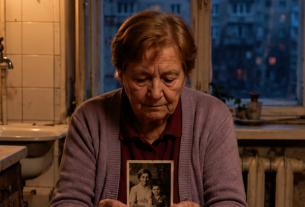
My name is Vera, I’m forty-six years old. I work shifts, two days on, two days off, I’m raising a teenage daughter, and for several years now I’ve been very careful about who I let into my life. It’s not because I’m overly suspicious or so hurt from past relationships that I’m now afraid of men. It’s just that with age, you start to realize one simple truth: the most valuable thing you have isn’t your home, your income, or even your free time by itself. The most precious thing is peace of mind. Being able to live each day the way you want, without having to justify to another adult why there’s no borscht in the fridge, why a ready breakfast wasn’t waiting in the morning, and why you don’t see your kitchen as an all-you-can-eat café for the man living nearby.
I met Fedya in a completely ordinary way. There were no fateful encounters with thunderclaps, beautiful music, or slow-motion moments. We saw each other a few times in mutual company, then happened to bump into each other by a movie theater, started talking, and exchanged phone numbers. He was forty-nine, I was forty-six. He made a pretty good first impression. Not quite magazine-cover handsome, but he looked well-groomed, dressed nicely, and had a good sense of humor. He was working, lived on his own, was divorced, and his grown-up son was living his own life. In our first conversations, he didn’t start complaining about an ex-wife or try to find out how much I earned or what size my apartment was. Compared to some previous encounters, that alone felt like a real achievement.
For the first month, we just spent time together. We walked around the city, went to the movies, had a couple of dinners in restaurants, got out of town once, and talked a lot. I liked that Fedya didn’t try to rush things. In the evenings, he might text and ask how my day was, suggest meeting up on the weekend, or sometimes bring me coffee. I wasn’t making grand plans for the future, because I’d long since stopped viewing every date as an audition for the role of husband. I enjoyed being with him, and at the time, that felt like more than enough.
My daughter mostly lived her own teenage life: school, friends, clubs, spending weekends either with me or her father. Because of my two-on, two-off work schedule, my free days sometimes fell in the middle of the week. After one of our movie nights, there was an evening that, at first, seemed like the most natural next step in our relationship.
We left the movie theater and stood by the car for a long time, chatting about the film we’d just seen. We laughed about one of the characters, whom Fedya called the most unlucky man in the history of cinema. In two hours, he managed to make, it seemed, every possible mistake in a relationship. I joked back that some men could turn even a happy life into a step-by-step guide on how to ruin it.
«Well, not all men are like that,» Fedya countered.
«Of course not. Some just stay silent until it’s too late.»
— Do you trust men yourself?
— Sometimes.
— Do you trust me?
I looked at him and smiled.
— You currently have trial access.
Fedya laughed.
We said our goodbyes and went our separate ways, but a few minutes later he texted, saying he didn’t want the evening to end and suggested we go for another walk. I was alone: my daughter had gone to her father’s for the weekend, and after my work shift I had a free day, so my apartment felt unusually quiet. I figured there was nothing wrong with one more stroll. We met up again, walked for a while, and then I was the one who suggested:
— If you want, you can come over to my place. We can sit, have some tea, watch something.
Fedya looked at me in surprise.
— Are you sure?
— Absolutely.
At that moment, I thought to myself that this is exactly what healthy adult relationships should look like. No pressure, no ambiguous hints, no feeling like I owed him anything just because he paid for dinner. I invited him over because I felt good with him and wanted to spend a bit more time together.
We got to my place, opened a bottle of wine, chatted in the kitchen for a while, and then moved to the living room. Everything felt calm and natural, without any awkwardness or sense of obligation. We spent the night together, and in the morning, I thought we’d wake up, have coffee, eat breakfast, and then either go our separate ways or maybe decide to spend part of the day together.
But Fedya managed to surprise me in the middle of the night.
Around midnight, he suddenly started getting dressed.
— Where are you going?
— Home.
I even sat up in bed.
— Right now?
— Yes.
— Did something happen?
— Nothing. Your bed is just uncomfortable. I’ll sleep much better at my place.
I looked at him, thinking he was joking at first.
— You’re really leaving just because of the bed?
— Why not? I have a great mattress. Here, my back will hurt later.
I shrugged.
— Okay. If that’s more comfortable for you.
Fedya got dressed, called a taxi, and left.
And you know, I didn’t even feel offended. An adult man decided he’d be more comfortable sleeping at home—fair enough, no one’s stopping him. Maybe the mattress really didn’t suit him. Maybe he’s just used to his own bed or simply doesn’t like spending the night at someone else’s place. It didn’t bother me at all. I closed the door, went back to bed, and fell asleep peacefully.
At eight in the morning, the door phone woke me up.
At first, I didn’t even realize what was happening. It was my day off, I wanted to finally catch up on sleep after my shifts, my daughter was at her father’s. My phone was somewhere on the nightstand. The apartment was completely silent. And suddenly, this annoying morning ring—it felt almost like a declaration of war at eight a.m. after a few days of work.
Barely dragging myself out of bed, I threw on my robe and went to the intercom.
— Who is it?
— Fedya.
I was still half asleep and didn’t immediately realize who I was hearing.
— Fedya? What’s going on?
— Open up.
I pressed the button to buzz him in and headed toward the apartment door. As I walked, I tried to figure out why he’d come back. The first thing that popped into my head was maybe he’d forgotten something — his phone, keys, jacket, or charger. After all, what grown man would show up at eight in the morning for no reason?
I opened the door. Fedya was standing there, smiling, holding a small bag in his hands.
I looked at him and asked:
«Did you forget something?»
He replied as calmly as ever:
«No.»
I fell silent, waiting for an explanation. Fedya kept looking at me.
«I just missed you.»
I couldn’t help but smile at that.
Honestly, it does sound kind of romantic. He didn’t want to wait for a more appropriate time, so he showed up first thing in the morning. Maybe he really did miss me, maybe he just wanted to see me and have coffee together. I was practically melting from this sweet surprise when he said the next thing:
«I, uh… came for breakfast.»
I blinked a few times, trying to process what I’d just heard.
«What?»
«I said, I came for breakfast.»
«At my place?»
«Yeah.»
I glanced from him to the clock, then back at Fedya.
«Fedya, it’s eight in the morning. Last night you went home because my bed was uncomfortable for you.»
«Yeah.»
«And now you’ve come back at eight in the morning. For what?»
He looked at me like he was explaining something completely obvious.
«For breakfast.»
That’s the moment when my brain finally woke up.
«Wait a minute. So you got up early, got dressed, came all the way over here, buzzed me on the intercom so I’d let you in and make you breakfast?»
«Yeah. What’s the big deal?»
I stood in front of him in my robe, hair a mess from sleep, trying to make sense of how overnight our romance had suddenly turned into a free cafeteria.
«Fedya, what makes you think I’m going to feed you?»
He looked at me with genuine surprise.
«Well, you’re my woman now.»
«So?»
«So? A woman should take care of her man.»
I actually laughed out loud. I just couldn’t come up with any other reaction.
«And what exactly is included in this caring package?»
«Well, at least breakfast.»
«Why at least?»
«Vera, why are you starting? I came over to see you. Was it really so hard to make me some eggs?»
At that moment, I wanted to fling open a window and make sure we hadn’t somehow ended up back in the nineteenth century.
«Fedya, do you hear yourself right now?»
«Of course I do. I’m hungry.»
«And I want to sleep.»
«But you’re at home.»
He frowned, clearly annoyed by my answer.
«I thought you’d greet me properly.»
«I did greet you properly. I got up at eight in the morning and opened the door for you.»
The irritation on his face was becoming more and more obvious.
«Vera, I don’t understand what the problem is. We spent the night together. I’m a man, you’re a woman. Isn’t it natural for the woman to make breakfast in the morning?»
«For whom is that natural?»
He shrugged nonchalantly.
«For normal people.»
The word «normal» made me laugh the most. Apparently, being «normal» now meant a woman should be willing to get up at eight in the morning—after a long workday or even on her day off—to let in a man she’s only known for a month and go cook him breakfast. All just because he decided he wanted his own personal chef.
I replied calmly, without any irritation:
«Fedya, there’s a cafe around the corner. It opens at seven in the morning. You can go there.»
He looked at me as if I’d just suggested he walk to another city.
«A cafe? Isn’t there food at home? Why should I go anywhere if I can eat here?»
«Because I don’t plan on getting up to make you breakfast.»
«But why?»
«Because I don’t want to.»
This time, he was truly offended.
«You’re kind of weird. I came over because I missed you.»
«I got that already.»
«And you can’t even feed me? I thought you were different.»
«And I thought you came here to see me.»
«Well, I did come to see you.»
«No, Fedya. You came for the food.»
He said nothing.
I was about to close the door, but he unexpectedly added:
«You know, a real, normal woman would’ve at least offered me coffee.»
I looked at him closely and said:
«And a normal man wouldn’t show up at a woman’s place at eight in the morning without an invitation and demand to be fed.»
That’s when Fedya puffed up for good.
«Alright. I get it.»
«Wonderful.»
«I won’t bother you anymore.»
«Thank you.»
He turned and walked away. I closed the door, leaned against it, and stood there motionless for a few seconds.
Then I started laughing. Not because the situation was particularly funny—although, honestly, there was plenty to laugh at.
I just couldn’t believe that a grown man could turn an ordinary romantic date into an interview for the role of a woman who’s supposed to serve him on demand so quickly.
I went into the kitchen, put the kettle on, and remembered what had happened the night before. Fedya had left because he didn’t like my bed. Turns out, sleeping at my place wasn’t comfortable for him, but breakfasting here was ideal. Now that’s an interesting outlook on life.
About thirty minutes later, I got a message on my phone.
«I thought you were a real woman. But you…»
That was it. Just an ellipsis.
I looked at the screen and at first I was tempted to reply. I wanted to write out the whole story—to explain that I work, that today is my day off, that I never promised to make him breakfast. That an adult is perfectly capable of buying his own food. And that after just one night together, a woman doesn’t automatically become a wife and kitchen help.
But then I paused and thought—why bother explaining? He’s already told me everything I need to know about himself.
In his view, a ‘real woman’ is someone who, even if she hasn’t gotten enough sleep, heads straight to the kitchen at 8AM to cook breakfast for a man—simply because he now thinks he’s entitled to be cared for, without ever asking or agreeing on anything together.
And if a woman suggests they go to a café instead, well, in his eyes, that means there’s something wrong with her.
He’s got it pretty comfortable, that’s for sure.
No need to ask for anything, no need to make plans or wonder if maybe the other person is still asleep. All it takes is calling a woman ‘yours,’ and suddenly you think you’re entitled to a whole list of favors.
I decided not to reply. Fedya stopped messaging me too. A day later, he disappeared from my life completely. And you know what’s surprising? I didn’t feel upset at all.
I went about my day—walking around my apartment, doing chores, working, chatting with my daughter—and every now and then, I’d recall that morning and keep coming back to the same question: why, exactly, was I supposed to feed him?
We had only been seeing each other for a month. One month! We weren’t living together, we weren’t married, we never talked about running a household together. No one ever agreed that I would cook while he’d take care of the groceries.
He just ended up spending the night at my place once. The next morning, he was hungry—and it seemed only natural to him that the woman should serve him.
And it never even crossed his mind to ask:
“Vera, would you mind if I stopped by in the morning?”
No, he just showed up. Didn’t text ahead, didn’t call, didn’t ask if it was a good time for me. He didn’t bring breakfast with him, didn’t offer to cook something himself. He didn’t even suggest ordering food.
He arrived and started waiting.
He waited for me to open the door, make him breakfast, and maybe even thank him for coming over so early in the morning.
Later, I told my friend about what happened. She was quiet for a moment, thinking about my story, then asked:
«Vera, can you imagine what would have happened if you had actually cooked for him?»
«I don’t even want to think about it.»
«Exactly! Today he’d ask for eggs, tomorrow he’d wonder why you didn’t make cheese pancakes. In a week, he’d be telling you what a poor hostess you are. And after a month, he’d start reminiscing that his mom’s borscht was way tastier.»
I couldn’t help but laugh.
«And then he’d claim I only act like a real woman on holidays.»
«Of course! And soon enough he’d decide that breakfast wasn’t a request—it was his right.»
Those are the words I kept thinking about for a long time after.
The truth is, it was never really about the eggs. I could have cooked Fedya breakfast—if he had come at a different time, if he had asked first if it was convenient for me, if it was my own wish, if we had a relationship where caring for each other went both ways.
If only he had sometimes brought me coffee, cooked dinner for me, asked how I was feeling or what kind of mood I was in. If only we had grown closer gradually and come to an understanding about how best to make our life together comfortable.
But nothing like that ever happened between us. There was one night, and the next morning, there was a man at my door who already expected that it was my duty to feed him.
As soon as I refused, he didn’t even ask why. He didn’t suggest another option, didn’t say he’d just go to a cafe instead. Right away, he started judging whether I fit his idea of what a real woman should be.
“I thought you were a real woman.”
Apparently, just refusing to cook him breakfast was enough to strip me of my status as a real woman.
I started to wonder, what does that even mean? Does being a real woman mean making eggs in the morning? Borscht for dinner? Clean socks? Washed shirts? Jumping up at the first ring of his call?
And what role is the man supposed to play in all of this?
What should he be doing? Show up, eat, leave, come back in the morning, eat again, get offended and disappear? Such an exciting life for a man, right?
The funniest part was that Fedya probably didn’t even realize what really happened. He most likely sincerely thought he’d met a woman who didn’t know how to take care of a man. Maybe later he told someone that I was cold, selfish, materialistic, and totally unsuitable for family life.
But all I did was refuse to make breakfast at eight in the morning for someone who decided on his own to show up at my place uninvited.
After this experience, I started paying more attention to how men behave—not just the grand romantic gestures, but the things they take for granted.
You can buy flowers. Pay for a dinner. Go to the movies. You can even pretend to be attentive, caring, and romantic for a whole month.
But one day, a man comes to your home at eight in the morning and tells you:
“Now you’re my woman. You have to take care of me.”
And in that moment, you learn so much more than after a dozen fancy dates.
As long as a man is courting a woman, he can play almost any role.
But once he decides he has the right to control her personal space, her time, her body, her kitchen, and her care, what he really thinks is normal starts to show.
By the way, Fedya never showed up again. Not a week later, not a month later, not even by chance outside a movie theater.
He just disappeared from my life.
At first, I did wonder: maybe I should have acted softer? Maybe I should have just said, “Fedya, let’s have breakfast tomorrow?”
But then I pictured what that “tomorrow” would look like. I’d be making him breakfast while he sat at the table, just waiting.
Then he’d ask:
“Do you have any coffee?”
And then he’d want to know:
“Why are we out of eggs?”
And finally, he’d end up asking:
“So, what’s for dinner tonight?”
Somewhere between making an omelette and washing his plate, it suddenly hit me: the man who left last night because my bed was too uncomfortable now feels completely at home in my kitchen.
No, thank you. I’m forty-six years old. I’m a grown woman and I know exactly how to take care of people—my daughter, my parents, my friends, and myself.
I can absolutely take care of a man, too—if there’s true mutual respect. Not just some self-proclaimed right to be waited on because he’s decided, ‘You’re my woman now.’
But I’m done proving how feminine I am by how many breakfasts I cook.
And I definitely won’t be waking up at eight in the morning just because a man calls—especially one who doesn’t even think to ask if it works for me.
Let him go to a café. That’s exactly why restaurants exist, after all. And if the man disappears after that, it means he was never interested in me as a woman in the first place.
All he wanted was to be served.