The kitchen was filled with the scent of borscht and old grudges—a smell that, after seven years, had become familiar to me. I, Alina, was swirling sour cream into the pot, watching as the rich pink swirls slowly melted away in the deep red soup. Through the arched doorway, I could see the edge of the living room, where my husband Kirill lay on the couch, glued to the flickering TV screen. In the bedroom, just behind a thin wall, drafts wandered—Galina Petrovna, my mother-in-law, was airing out the room as she did every evening, despite the freezing cold outside. «The air should be as clean as your conscience,» she would say. For some reason, my conscience always felt a bit musty when she was around.
«Alina, did you put salt in the borscht?» my mother-in-law’s voice rang out from the living room. Not really a question—more like a test. A checkpoint.
«Yes, Galina Petrovna.»
«And bay leaf? You didn’t overdo it, right? You know it gets bitter if you leave it in too long.»
I sighed and fished out two leaves from the soup. She was going to say I «overdid it» anyway. Seven years ago to the day, Kirill and I moved into this three-room apartment «temporarily,» after our own tiny flat was flooded by the neighbors upstairs and needed major repairs. That «temporary» stay quietly stretched out, turning into a permanent lease paid with my own peace of mind. Kirill worked, I worked, but according to my mother-in-law, «renting something decent» in Moscow was «an unjustifiable extravagance.» Here, she’d say, «these are familiar walls and I can keep an eye on you.» She certainly did.
My phone vibrated on the table, making the glass saltshaker tremble. A number I didn’t recognize. Normally, I wouldn’t answer, but something made me pick up.
«Hello?»
«Good afternoon, this is Anna Sergeevna from the notary’s office. I’m looking for Alina Dmitrievna Kryukova.»
«That’s me.»
«Alina Dmitrievna, my condolences for your loss. I need to invite you to our office for the reading of your grandmother Vera Pavlovna Smirnova’s will. Can you come tomorrow at eleven?»
My fingers turned cold. Grandma had passed away three months ago. After Grandpa’s quiet, almost invisible death two years before, she just faded, like a candle deprived of oxygen. The funeral was modest, attended by just me and a few of her equally quiet, elderly neighbors. Kirill and I came for just one day. My mother-in-law said back then, «What’s the point of staying? Old age is no joy. Go if you have to, but come right back for the night. It’s awkward to sleep in a stranger’s empty house.»
«The will?» I repeated, dumbfounded. «But… she didn’t have anything. Except the apartment. And even that was only a co-op…»
«There is other property listed in the will,» the notary replied coolly. «I’ll see you tomorrow. Bring your passport.»
She gave me the address and hung up. I stood there, clutching the phone in a hand sticky from the borscht. «Other property.» What could Grandma have left? Her collection of embroidered napkins? The old tea set with chipped edges? And why a will? The apartment in the old building would come to me anyway, as her only granddaughter. My mom, who died a long time ago, and I were Grandma’s only family.
«Who was that?» Kirill asked lazily from the living room, not taking his eyes off the TV.
«A notary. About Grandma’s inheritance.»
«Ha,» he snorted. «Inheritance. That’s what you’re worried about? Just another pile of junk to haul around.»
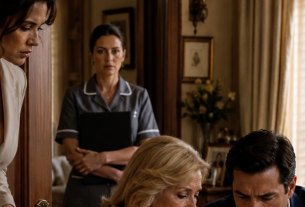
Galina Petrovna stepped out of the bedroom, adjusting her knitted cardigan on her shoulders. Her gaze was sharp, like a scanner.
«What inheritance? Did your paupers cause you problems again right at the end?» Her voice was calm, but there was always a steely thread of contempt in the word «paupers.»
That was how she always called my grandma and grandpa. For their old-fashioned clothes, their tiny apartment in a five-story building on the outskirts, their lack of «social standing.» They were engineers, spent their entire careers at the same research institute. For Galina Petrovna, a bookkeeper who retired with an honorary letter from the ministry, that was the very definition of failure.
«I don’t know,» I replied honestly, feeling my stomach tighten. «The notary said there’s a will. She wants to see me tomorrow.»
«Well, so she called, big deal,» my mother-in-law waved it off as she walked to the stove and peeked into the pot. «The borscht boiled over. I guess all this inheritance talk was distracting. Come on, Kirill, have some dinner.»
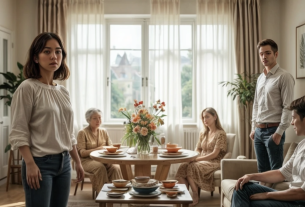
The usual silence hung over the table, broken only by the clinking of spoons and Galina Petrovna’s commentary about the news. Yet I could feel her eyes on me. Sharp, searching.
«So, what could your grandma have possibly written in her will?» she finally snapped, putting down her spoon. «That you get some old photos? Or that awful sideboard? Just don’t bring any of that here. We have enough memories of our own.»
«Mom,» Kirill replied indifferently. «What does it matter, really?»
«It matters, son. An inheritance is a responsibility. Alina is a soft person, she could have written anything, and then it’s you who’ll have to deal with it. Maybe there are debts? Utility bills? You need to check that right away so you don’t get stuck with it.»
A wave of bitterness washed over me. It wasn’t curiosity or any kind of protection—just a fear that another problem would end up at their doorstep. A problem in the form of me and my «wrong» past.
«There aren’t any debts,» I said quietly. «They always paid everything on time.»
«Paupers always pay the little bills on time,» my mother-in-law scoffed. «They just can’t imagine money on a bigger scale.»
Dinner continued in the same spirit. I washed the dishes, listening to Kirill laughing at some TV show in the living room. The sound of his laughter, so familiar and yet so distant to me now, cut right through me. I thought about grandma—about her quiet, wrinkled hands that smelled of vanilla and old paper. About her «paper park»—a candy box filled with old letters, postcards, and faded sheets with official stamps. «This is our story, Alishenka,» she used to say. «Not wealthy, but clean.» How lonely she must have felt in those final years, when I, absorbed in just getting by in this unfamiliar apartment, only visited once a month for an hour.
The next day, I asked for time off from work. On the subway, I rode in a strange haze. The notary’s office was downtown, in an imposing building. Anna Sergeevna, a woman in a strict suit and an unreadable face, invited me into her office.
— Alina Dmitrievna, please have a seat. Your grandmother, Vera Pavlovna, wrote her will about a year and a half ago, and I certified it. It changes the usual order of inheritance. Besides the property you already know about — namely, the cooperative apartment at 10 Tenistaya Street, Apartment 14 — the estate also includes securities and certain claims.
I blinked, lost in confusion.
— What kind of securities? What claims?
— Vera Pavlovna and her late husband, Dmitry Fedorovich, were owners of dematerialized shares in several companies, which they received back in the early nineties. They also had a savings account with one of the funds, where dividends have been deposited all these years. Plus, — the notary glanced at her paper — the apartment that Dmitry Fedorovich received via a closed allocation at the research institute in 1986 was not a cooperative apartment, but a state-owned one, and later it was privatized by both of them as joint property. After her husband passed away, Vera Pavlovna’s share transferred to her, and now, according to the will, to you.
My mind was buzzing. Dematerialized shares. A savings account. A privatized apartment. These were words from another universe.
— And… how much? — I breathed out.
Anna Sergeevna stated the amount. First, the total value of the shares and savings. The number was so unreal that I didn’t even register it. Then she repeated, slower. It was more than Kirill and I could have earned in twenty years. Then she told me the address of that ‘state’ apartment. A street in a prestigious, quiet neighborhood, not far from the subway. Three rooms. Market price.
The world shrank down to the chair I was sitting on and the white paper in the notary’s hands. I couldn’t catch my breath.
— But… they never… they lived so modestly, — I said, my voice sounding strange, almost unfamiliar.
— According to the documents, they received regular dividends, but judging by the statements, they almost never withdrew them. The funds were reinvested. During our conversation about the will, Vera Pavlovna told me that she and her husband always considered this money a ‘rainy day fund,’ and preferred to live on their pensions. That ‘rainy day’ never came for them. It has come for you.
I left the building as if in a dream. Walked on the pavement, my legs numb beneath me. One phrase kept circling my mind: “Quiet Shore.” Grandma sometimes called her little apartment that. Turns out, she was wrong. The Quiet Shore was here. This wasn’t just a sum of money. It was a ticket to another life. A life where I’d never have to watch Galina Petrovna check how much milk was left in the fridge every morning. Where I wouldn’t have to explain a new sweater. Where I could finally breathe.
I sat on a bench by the subway, pulled out my phone. On the screen — Kirill’s smiling face from our vacation three years ago. Back then, we still had something alive between us. I dialed his number.
— Hey, — he answered. — So, did your ragtag relatives leave you their hidden treasures?
His voice carried that same light, familiar sarcasm. The kind I’d learned to ignore. But this time it was as jarring as a knife scraping glass.
— Kirill, — my voice faltered. — This… this is serious. There’s more than just the old apartment.
«Seriously?» he laughed. «Alright, you can tell me all about it at home. Mom has reheated the soup. Come back soon, don’t be late.»
He hung up. I stared at my phone, then watched the expensive cars driving past, then lifted my eyes to the gray sky. There was a chasm between the world I had just visited and the world I was about to return to. And I still didn’t know if there was a bridge between them.
The journey home felt endless. The subway, a transfer, then our familiar courtyard lined with bare poplar branches. I walked like a sleepwalker, clutching the notary-printed document in my coat pocket. The numbers burned in my mind, but I still couldn’t believe it. Maybe a mistake? A computer glitch? But the stamp, the signature, the dry legal terms—all screamed that it was real.
I paused outside the entrance, looking up at the light in our windows. On the sixth floor, borscht was bubbling and the TV was blaring. That was my life—washed, vacuumed, neatly arranged on shelves by someone else’s hands. And now I had to bring a little bomb into that life. Suddenly, I really didn’t want to go upstairs.
The key clicked in the lock, louder than usual to my ears.
«Ah, finally back!» came Galina Petrovna’s voice from the kitchen. «Come eat dinner. Everything’s gone cold. Kirill, set a plate for your wife.»
The smell of borscht, usually so comforting and warm, now felt suffocating. I took off my coat, hung it up, and slowly walked into the kitchen. Kirill set a plate on the table without looking at me. His face had the usual tired, distant look from work.
«Well?» Galina Petrovna said, sitting down across from me and folding her hands on the table. Her posture was that of an interrogator. «What’s the news from your departed relatives? Did they leave you their stamp collection?»
She was smiling, but her eyes stayed cold, scanning me intently.
I sat down and pushed my plate away. My palms were wet.
«Not stamps,» I began in a quiet voice. «It turns out… my grandparents had something else. Besides their Khrushchyovka apartment.»
«Some-thing else?» my mother-in-law dragged out the words, mocking. «An old ZIL fridge? A Soviet pressure cooker? Oh, Alina, don’t keep us in suspense, just tell us already. We won’t understand anyway, we don’t have fancy inheritances—just modest ones.»
Kirill snorted as he poured himself some compote.
«Mom, come on. Why are you making such a big deal out of it?»
«It is a big deal, son!» she snapped. «An inheritance is always an event. Even if it’s just three buttons. So what is it, Alina?»
I took a deep breath, as if I were about to dive into icy water.
«An apartment. Not the one on Tenistaya. Another one. Three rooms. In the city center. And money. Some kind of stocks.»
Silence fell. Only the quiet hum of the fridge could be heard. Kirill stopped chewing, his fork frozen in midair.
«What?» he asked, frowning.
«What other apartment?» Galina Petrovna’s voice lost all trace of mockery. It became even, sharp as a knife. «You must be mistaken.»
«I’m not mistaken. There’s a will. There are documents. The apartment is on Sadovaya Street, number 25. And there’s a bank account.»
I couldn’t say the amount. I just couldn’t. Those numbers seemed vulgar, out of place—especially here, in this kitchen with its cracked plastic tablecloth.
My mother-in-law couldn’t believe her ears. She asked me three times, just to be sure.
«Sadovaya? 25? That’s… that’s right near the metro. That’s a prestigious neighborhood. A three-bedroom? Are you sure?»
«Yes.»
«And how much… how much money? In the account?»
She fired off questions like a machine, her eyes darting over my face, searching for any sign of a lie or madness.
I stayed silent, dropping my gaze to the floor.
«Alina, I’m asking you: how much money?» Her voice was quieter now, but beneath the softness there was a steely grip.
I told her the amount. Just the number from the bank account, not even mentioning the apartment’s value. It was enough.
The silence grew thick, solid, almost like jelly. I watched as Galina Petrovna’s face slowly changed. Every trace of expression faded away, as if erased by a rubber. And then, in her eyes, something flickered. Not happiness. Not surprise. A quick, cold calculation. Like a cashier counting a big bill.
Kirill cleared his throat.
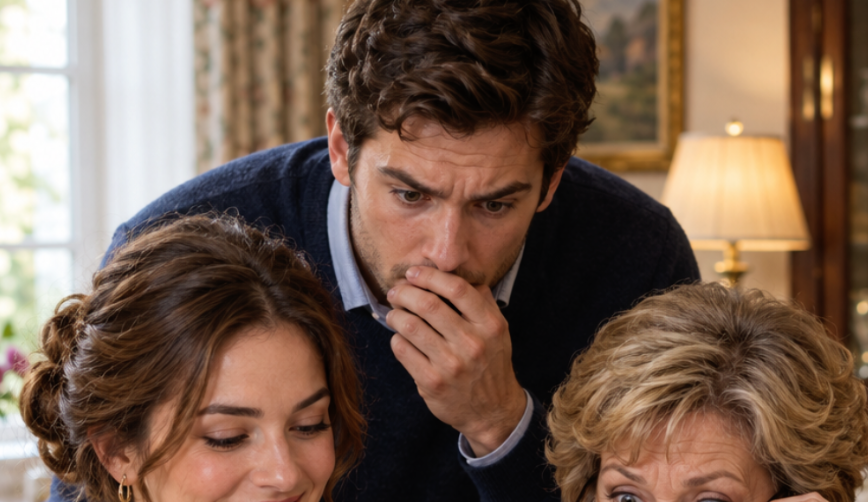
«You… are you serious?» he asked, and for the first time, I heard something in his voice that wasn’t mocking. It was confusion mixed with a hint of growing greed. «How did they get that kind of money? Did they rob banks or something?»
«Stocks,» I repeated. «They bought them a long time ago, and now they’re worth a lot more.»
«Stocks…» Galina Petrovna echoed, her voice strange and breathy. She leaned back in her chair, her gaze turning inward. «Ragtag people… with stocks. Three rooms on Sadovaya. I never would’ve thought. Never…»
Then she suddenly shook herself and her face came alive again—but now it was different: focused, businesslike, with a warm smile that didn’t reach her eyes.
«Well, Alina… Congratulations, of course. This is… surprising. Very. Kirill, did you hear that? Your wife is a wealthy heiress.» She laughed, but it sounded strained, forced. «Wow, life sure takes unexpected turns. And here we are… just spinning our wheels.»
She got up, walked over to the stove, and pretended to check the kettle. But I could see how tense her back was.
«We need to think this through,» she said, now staring at the black glass where our kitchen reflected back at us. «Carefully think it all through. Luck doesn’t just fall in your lap like this. It’s a big responsibility. You, Alina, are a gentle person; someone could trick you, take advantage of you. We need to be smart about this. Use family wisdom.»
I felt a cold chill run down my back. «Family wisdom.» Those words lingered in the air, heavy and foreboding.
We finished dinner in a heavy, funeral-like silence. Kirill kept sneaking glances at me, his expression complicated: curiosity mixed with a strange kind of hurt, as if I’d betrayed him somehow. Galina Petrovna busied herself cleaning the table, clattering the dishes loudly. Her thoughts seemed far away, and that scared me most of all.
At night, lying next to Kirill in the dark, I stared at the ceiling.
«Why didn’t you tell me right away?» he asked suddenly, not turning toward me.
«I didn’t believe it myself at first.»
«So what are you going to do now?»
«I don’t know. I need to think. Maybe visit that apartment.»
He rolled over onto his side to face me. In the streetlight glow, his features looked almost unfamiliar.
“Mom’s right,” he said quietly. “You could get scammed. You don’t really understand any of this. We need to sell it all, quickly, before the prices drop. And… buy something sensible.”
“What do you mean by ‘sensible’?” I asked, already sensing where he was heading with this.
“Well, I don’t know… We could buy two apartments. One for us. Separate, our own place. And another one for Mom. She supported us for seven years, even if it wasn’t talked about directly. We lived here for free. It’s just… fair compensation. Otherwise, it’s awkward: you became rich and we’re still stuck in this old three-room flat.”
His words hit the silence of the room like stones. “Fair compensation.” “Awkward.” My mouth tasted bitter.
“You want me to buy your mom an apartment?” I asked, trying to keep my voice steady.
“Not exactly like that!” he whispered, getting irritated. “I just want us all to benefit. So Mom doesn’t feel left out. She’s helped us all her life. And now, with your inheritance… It’s good luck for everyone! For the family! You’re not going to be stingy, are you? We’re family.”
He said the word—‘family’—like a mantra, like an ultimatum. And in that moment, I understood. For him, ‘family’ meant him, his mother, and… me, but only as long as I played by their rules, as long as I owed them. My inheritance didn’t become our shared fortune. It became a threat to their order. Now it needed to be made part of their system. Split up. Controlled.
“I’ll think about it,” I whispered, turning to face the wall.
“Yeah, think about it,” he said, voice almost sleepy as he put his hand on my shoulder. “Think about us. Together we’ll sort it all out.”
His hand felt heavy. I lay still, staring into the darkness, feeling how the crack that appeared during dinner was now tearing our life apart. The silence after his words rang louder in my ears than any argument could.
The next morning, the atmosphere in the apartment felt like the calm before a battle. The silence was tense and electrified. Galina Petrovna, usually lively and noisy in the kitchen, drank her tea quietly, her eyes glued to a tablet. Real estate websites flashed on the screen. I could tell by her intense, greedy look that she was checking prices.
Kirill was getting ready for work, avoiding my gaze. His kiss on my cheek was dry, quick, formal. It was as if we’d become strangers overnight.
“Mom said Olga will come by this evening,” he tossed over his shoulder as he buttoned up his coat. “You two should talk. She knows more about these things.”
Olga. Kirill’s sister. The family’s definition of success. Owned a small sanitary shop. Tough, practical, with the same sweetish smile that always masked her cold calculation. Her visits rarely meant anything good—especially now.
I was left alone under my mother-in-law’s watchful, yet supposedly indifferent gaze. I needed to get out. Anywhere. Just so I could breathe.
“I’m heading out,” I said as I put on my jacket. “To the apartment. To take a look.”
Galina Petrovna looked up from her tablet.
“Alone? Why? It’s probably cold and dirty there. Wait for Olga, go together. She’ll take one look and instantly tell you how much it’s worth and how’s best to sell it.”
«I want to do this alone,» I repeated stubbornly, feeling a lump growing in my throat. «This is mine. I want to see it first, just by myself.»
She shrugged and turned her attention back to her screen.
«Suit yourself. Do you even have the keys? You’re not going to break in, are you?»
«The keys are with the notary. I’ll pick them up.»
I dashed out of the apartment like I was escaping a trap. Outside, a biting wind met me, but it felt sweeter than any warmth at home. I collected the keys from the notary and headed to Sadovaya.
The house was old, made of brick, with high ceilings and a wide staircase. The entrance was clean and well-kept. The door to apartment 34 was heavy, made of oak. The key turned with a deep, solid click.
I stepped inside. Silence. The scent of dust, old wood, and something else—an elusive smell of emptiness, of life long absent. A sunbeam slipped through a crack in the shutters, lighting up the parquet floor covered in a gray layer of dust. Big rooms, tall windows, ornate plaster on the ceiling. It wasn’t luxurious, but it was solid and dignified. Nothing like the cozy, cramped Khrushchyovka full of furniture on Tenistaya.
I wandered through the rooms, letting my fingers brush along the windowsills. In one room stood an old writing desk covered with green felt. On top: an inkwell, an elephant-shaped paperweight. And the very box from “Ptichye Moloko” sweets. Grandma’s «paper park.»
My heart tightened. I approached, gently blew the dust off the lid, and opened it. Letters, postcards, photos… and a sturdy, yellowish envelope, addressed in her familiar elegant script: «To Alishenka.»
My hands started to tremble. I took the letter and unfolded it.
«Alishenka, my dear one.
If you are reading this, it means I have already joined Grandpa. Don’t be sad. We lived a long life, and its greatest wealth is you. You were always our light.
By now, you’ve probably learned about the apartment and the money. Grandpa and I knew you’d be surprised. Maybe even scared. We deliberately never talked about it. We never changed homes, we never boasted. Do you know why? We saw how money changes people. Makes them suspicious, greedy, lonely. We didn’t want ‘kind’ relatives flocking to us or for you to feel different from everyone.
This money and this apartment aren’t for luxury. They’re your quiet shore, Alinka. Your right to choose. So you never have to depend on anyone. So no one can put you on your knees, so you never have to put up with humiliation for a roof over your head. So you can choose who to be with and how to live. And if life ever gets hard, always remember—you have this little island. It’s yours. Yours alone.
Take care of yourself. Love. And remember—the most valuable inheritance is not in papers, but in the ability to remain a good person. Just as you always were for us.
Your grandma Vera.»
Tears streamed down my face, hot and salty. They dripped onto the yellowed paper, smudging the ink. I sobbed, sitting on the dusty floor in the empty room, clutching the letter in my fist. These words were both a balm and a verdict. She had known everything. She saw, she sensed my lack of freedom, even when I tried to hide it. And she was giving me a weapon. But I was afraid to take it.
I sat there for a long time, until my tears had dried up completely. All that was left was an emptiness, but it no longer felt helpless—it was now filled with a calm, crystal-clear determination. Grandma was right. This is my shore. My choice.
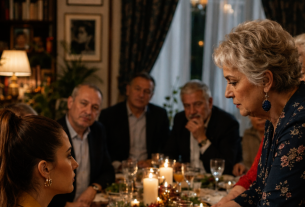
When I came back, I found the house buzzing with a nearly festive commotion. Galina Petrovna was setting the table with a special air, not just for dinner, but almost as if for a celebration: a bowl of Olivier salad, a plate of cold cuts, the good dishes. The kitchen was filled with the aroma of roasted chicken. And I could hear Olga’s voice—loud and confident—coming from the living room.
«Mom, of course you sell. Right away, before the market drops. And put the money to work! I’ve got a new project brewing, the profitability is around thirty percent. She and I will work something out, definitely.»
I walked into the living room. Olga, dressed in an expensive suit with a flawless manicure, sat in an armchair sipping tea. She looked at me with an appraising gaze, as if sizing up merchandise.
«Oh, the heiress is back!» she greeted me warmly, but her eyes stayed cold. «So, did you check out your new palace? I hear the neighborhood’s top-tier.»
«I saw it,» I replied shortly.
«Perfect. Come, Alina, let’s have a business talk.»
Galina Petrovna moved next to her daughter, forming a united front. I remained standing.
«Olya, as a specialist, knows what should be done with this fortune,» my mother-in-law started, her tone now more commanding than advising. «The apartment needs to be sold immediately. The money from the account should be withdrawn too. All together, it should be invested in a reliable venture—Olya’s business. She guarantees it. You’ll get interest. It’s the smart choice.»
«What kind of interest?» I asked softly.
«Well, we’re family,» Olga cooed sweetly. «I’m not going to take much from you. Your money will work, instead of just sitting there. You don’t know a thing about investing, but I do—I’m a pro. We’ll do it all legally, with a contract, you just have to sign. And Mom and Kirill will keep an eye on everything, so no one tricks you. Everything will be above board.»
She spoke so convincingly, with such caring family concern. But every word seemed to say: «You’re foolish, you can’t handle this, just give it to us—we’ll do what’s best.»
«I don’t want to sell the apartment,» I said, and for the first time in years, my voice didn’t waver. «And I don’t want to invest the money in some vague business.»
A brief silence fell. Olga stopped smiling. Galina Petrovna frowned.
«What do you mean, vague?» Olga asked coldly. «It’s plumbing, Alina. Plumbing! That’s forever. Always in demand. Safer than a bank.»
«That’s your business. I don’t want to. I’ll decide for myself what to do with my inheritance.»
«Yourself?» Galina Petrovna snapped, her voice ringing. «Alina, come to your senses! Have you lost your mind over this money? They’ll strip you bare! You’ll lose everything at every turn! We’re family, we just want to help!»
«Help me, or help yourselves?» burst out of me.
Galina Petrovna went pale. Olga slowly put down her teacup.
«Well, I see,» she drawled. «You’ve changed your tone. Rich girl now. I guess those paupers didn’t just teach you how to save, but how to be stingy, too.»
“Don’t you dare speak about them like that!” I suddenly shouted. All the stress of these days poured out. “You looked down on them! Thought they were nothing! But they turned out to be wiser and purer than all of you! They didn’t leave me money—they gave me freedom! And you want to take that away from me!”
“What freedom?!” Galina Petrovna jumped up, her face twisted with anger. “What freedom in this tiny place?! You owe everything to this family! We took you in! Fed you! Kirill married you when he could’ve found a girl with a better status! And now you want to leave us? You found some treasure and act like we mean nothing? You’re ungrateful!”
“Mom, calm down,” Olga tried to interject, but her eyes were blazing too.
“No! I won’t calm down! She needs to understand! The apartment should be ours! At least give us a share! That’s only fair! We supported her for seven years!”
Just then, the front door clicked. Kirill had returned. He froze in the doorway, taking in the scene: his mother trembling with rage, his sister’s stone-cold expression, and me standing in the middle of the room, tears on my face but my expression set and determined.
“What’s going on?” he asked dumbly.
Immediately, Galina Petrovna rushed over to him and grabbed his hand.
“Son! Just listen to what your wife is saying! She wants to take everything and kick us out! She hates us! All because of money!”
“Kirill, I only said that I don’t want to sell the apartment and invest in Olga’s business,” I said, looking straight at him. “And that I want to make my own decisions.”
He looked at me, and in his eyes I saw not support, but irritation and exhaustion.
“You’re upsetting mom again!” he barked. “All because of some papers! Can’t you just talk things over calmly? Make mom calm down right now! What, one night sleeping with some money and now you’re ready to destroy the family?”
His words were the last straw. There was not a hint of doubt or an attempt to understand me. He had already picked a side. The side of the loudest voice. The side where he was seen as the head of the family, where his mother’s authority was absolute.
I looked at the three of them. My husband demanding I ‘calm’ his mother. My mother-in-law staring at me with hatred and triumph. My sister-in-law already imagining how to split up my money.
And I felt like I didn’t know them anymore.
Without a word, I turned, walked into the bedroom, and started pulling my suitcase out from under the bed. Behind me there was silence, then hurried footsteps.
“Where do you think you’re going?” Kirill grabbed my arm above the elbow, hard.
“Let go.”
“I said, where are you going? Throwing a tantrum now?”
I yanked my arm free and looked him in the eyes.
“I’m going to my own place. To my apartment. I need to be alone.”
“Your own place?” he sneered, filled with venom. “Suddenly new horizons are opening up? Going back to your dead old folks, is that it? They mean more to you than the living?”
I paused in the doorway with my suitcase in hand. I looked back at him and his mother, who stood behind him with a victorious look on her face.
“They’re dead,” I said clearly and loudly, making sure everyone heard. “But they gave me a life. And you, the living, want to take it away.”
Without waiting for a reply, I walked into the hallway, put on my jacket, and left the apartment. The door slammed behind me with a sound that felt final, like it was closing forever.
The first days on Sadovaya felt like a blur. I found myself living among dust and shadows, like a ghost haunting my own new home. Sleeping on a folding bed I picked up from the nearest store, eating whatever I could find. My phone stayed silent, and the quiet was deafening. I was waiting for a call, a shout, an apology—anything. But nothing from the life I left behind reached me. Only once did I get a text from Kirill: «Think it over. Mom is very upset. Come back, we’ll discuss everything civilly.» I didn’t reply. The word «civilly» now sounded hypocritical and terrifying to me.
I started tidying up the apartment little by little. Not because I wanted to settle in, but to drown out the voices in my head. I cleaned the windows, wiped dust from the moldings, scrubbed the old parquet floors. Physical exhaustion felt like a blessing. One day, while I was covered in grime and fussing with trash by the door, a man appeared on the landing. He looked about forty, wore a plain jacket, and had a businesslike yet non-pushy demeanor.
«Hello. Are you Alina Dmitrievna? My name is Sergey. Anna Sergeyevna, the notary, gave me your address. Sorry to drop by without calling first.»
I grew cautious, clutching a rag in my hand.
«Why are you here?»
«Anna Sergeyevna is worried. She said you seemed very vulnerable during your appointment. In situations like this, people often make the wrong choices under pressure. She asked me, as a lawyer friend, just to offer you advice—human to human, at no charge. So that no one tricks you.»
There was neither pity nor curiosity in his eyes. Only a neutral willingness to help. Something about his calmness made me loosen my grip.
«Come in. But it’s a mess in here.»
«I won’t get in the way,» he said, stepping over the threshold. He glanced around. «Sturdy walls. Quite an inheritance.»
He helped me carry out bags of trash, then we sat in the kitchen over tea at the table I’d scrubbed until it shone. And I told him everything. Seven years living in my mother-in-law’s three-room apartment. The endless borscht, the inspections, being called ‘paupers.’ The notary. The amount that sounded like a sentence in the kitchen. Olga’s suggestion to sell and invest in her business. My grandmother’s letter. The argument. Kirill’s words: «Calm your mother down.» And my own reply—the one that still echoed in my dreams: «You, the living, want to take her away from me.»
Sergey listened silently, only nodding now and then. Once I finished, he took a sip of tea and calmly said:
«From a legal perspective, you’re in a completely safe position. The inheritance is your personal property, acquired before marriage. Neither your husband nor his relatives have any claim to it. Even if he files for divorce, it can’t be divided.»
«I’m not thinking about divorce,» I replied automatically, but even to me, it no longer sounded convincing.
«I’m not saying you should,» he said. «I’m saying they might be thinking about it. And their actions are a textbook case of pressure. Trying to make you feel guilty, indebted, or inadequate. When people keep telling you black is white and your own opinions are nonsense, you start to believe it. That’s a form of psychological abuse.»
He spoke without emotion, like a doctor giving a diagnosis. That made his words even more frightening—and strangely freeing. Someone finally called things what they are.
«What do I do?»
«Nothing. Don’t sign any papers, don’t lend any money, don’t transfer any shares. Handle your property the way you see fit. Their noise is just that—noise. It only has power as long as you’re inside their system. You’ve stepped out. You have this ‘quiet shore,’ like your grandmother wrote. Legally speaking, it’s untouchable.»
After he left, I felt lighter. Not because all the problems were solved, but because I finally had solid ground to stand on. Law. Facts. Not emotional blackmail. For the first time in a long while, I felt like my life and my decisions actually belonged to me.
A week later, the intercom buzzed. I walked to the panel, my chest tightening. On the black-and-white screen, there was Kirill’s face—tense and tired.
«Let me in. We need to talk.»
I sighed and pressed the button.
He came in, looking around. There was a flicker of surprise and annoyance in his eyes. The apartment was no longer neglected. The floors were clean, and there was a fresh paint smell coming from the room where I’d started renovations.
«So, you’re making yourself at home,» he stated, skipping any greeting.
«Yes. What do you want?»
«To talk. Without Mom, without Olya. Sober.»
We stood in the empty living room. He didn’t sit down. Neither did I.
«I’ve thought it over,» he began, looking somewhere past me. «And you’re right. Mom went a little overboard. You can see where she’s coming from—she’s worried about us, wants stability. But demanding everything isn’t fair.»
A faint hope stirred inside me. Maybe he finally understood? Heard what I was saying?
«I’m suggesting a reasonable compromise,» he continued, his voice now businesslike—just like at work. «We’re not asking for everything. You put half of the apartment in both our names. Or—or better: you get a mortgage on this place. The amount will be small compared to the value, you can handle it. With that money, we’ll buy a new apartment for Mom. She’ll move out of her three-room, and we can finally have our own separate place. In her apartment. Or even here, if you want. Doesn’t that make sense? Mom will be happy, we’ll have a place of our own, and you’ll still keep most of your inheritance. Everyone wins.»
He said it so smoothly, so reasonably. Like he was solving some optimization problem. In his proposal, there wasn’t even a hint that he was asking me to pay them off. That the only way to ‘free’ his mom’s apartment was to buy her independence. He still saw my money and my property as a shared pool to keep his family satisfied.
I looked at him—this handsome man I knew so well—and couldn’t find a trace of the person I loved. He wasn’t my husband. He was an accountant, weighing what’s profitable.
«Let me get this straight,» I said quietly, «you want me to… take out a loan just to buy the right not to live with your mother? So she gets a new place, and we get her old one? And you call that ‘everyone wins’?»
“It’s not about buying her out!” he flared up, but quickly composed himself. “It’s about making sure she has a dignified retirement! She spent her whole life helping us! This is only fair! Do you really want it to look like some kind of joke: you end up in a luxury apartment, while my mother has to squeeze into some old Khrushchyovka? You’re not selfish, Alina. Think about the family.”
In that moment, everything became crystal clear. To him, ‘family’ was just a hierarchy. At the top was Galina Petrovna. Then him. And me—left somewhere at the bottom, running errands. Any property I owned, any stroke of luck I had, was only there to strengthen this pyramid. My millions from those ‘paupers’ were a system glitch in his eyes, and he had to fix that by putting things back in the order that made sense to him.
I didn’t feel anger. Just a cold, all-consuming emptiness.
“So you want me to just, calmly and for the sake of ‘family’, hand over to you and your mother half of what my grandparents left to me?”
“Not give it away! We could have made it joint property! Or invested it in a place for my mom! What difference does the wording make? The important thing is the result! Everyone would be happy!”
I shook my head slowly.
“This offer doesn’t make me feel good, Kirill. It makes me feel awful. And ashamed. Ashamed of you.”
His face twisted.
“So that’s how it is. Turns out you’ve got a greedy streak too. The paupers got what they wanted. Well. My mother warned me.”
“Please leave,” I said, my voice calm. “There’s nothing left to discuss.”
He hesitated for a moment, gave me a look filled with hurt and misunderstood righteousness, then turned and walked away.
I locked the door, turned with my back to it, and slowly slid down onto the floor. There were no tears. Just a quiet, absolute clarity. The bridge across the divide had burned down. And it wasn’t my fault. Not even the fault of the overbearing mother-in-law. It was the man who should have been my support, but who never learned to see me as a person—and not just an extension of his life.
He offered me a deal. Turns out love can be measured in square meters and interest rates. And it turned out to be cheap, just like that worthless old bond from my grandmother’s jewelry box that I never had the heart to throw away.
She showed up a week after Kirill. No phone call. I saw her face on the intercom screen and froze for a second. Galina Petrovna stared right into the camera, lips pressed tight, her expression cold and determined. I knew if I didn’t open, nothing would be resolved—she’d stand out there, ringing, maybe even yelling through the door. I hit the button.
She climbed the stairs without taking the elevator, and I could hear her steady, purposeful steps. When I opened the door, she stood on the landing, eyeing the freshly painted walls in the stairwell. Her gaze was piercing, like that of a strict inspector.
“Come in,” I said, stepping aside.
She entered without taking off her coat, without putting down the small bag she’d brought. She looked over the entryway, the clean parquet, the living room door where you could still smell paint and the new laminate. Her face showed no anger or hysteria. Just a cool, almost businesslike composure.
“Making yourself at home, I see,” she said, just like Kirill. But when she said it, it sounded like an accusation.
Yes. What brings you here, Galina Petrovna?
I’m here to talk. Honestly. Just between us, without any onlookers.
She walked into the living room, which was still almost empty except for two foldable chairs and a toolbox. She didn’t sit down, and turned to face me.
«I won’t beat around the bush, Alina. You’re destroying my family. You’re making my son look like a traitor and a greedy man, and me—a monster. And all because of some papers that just landed in your lap out of nowhere.»
Her voice was steady, but every word hit its mark precisely.
«I’m not making anyone look bad. I’m simply protecting what my dearest ones passed on to me.»
«Protecting? From whom? From us? Are we thieves? We gave you shelter for seven years! We fed you! And now, after getting the inheritance, you want to run off like a rat abandoning a sinking ship and leave us with nothing? Is that what you call gratitude?»
There wasn’t even a hint of doubt in her words. Only certainty, almost bordering on fanaticism.
«I’m grateful for the roof over my head. But that doesn’t give you the right to my life or my inheritance. Kirill even offered… to buy my independence from you. Is that normal?»
«He offered a fair solution!» Her voice shook for the first time, and I could hear a long-held anger breaking through. «So everyone could be happy! So you’d still be part of the family instead of hiding away in your… own burrow! So no one would have hard feelings! But what about you? You want to take it all and walk away? Leave my son with nothing? He’s used to a different standard of living!»
That’s when it hit me. This wasn’t just about money. It was about control. About how I, always obedient and accommodating, had suddenly stepped out from under her influence. And that frightened her more than any amount of money could.
«Galina Petrovna, Kirill is a grown man. He has a job. He can provide himself with whatever ‘standard of living’ you imagined for him. I don’t want to live by your rules anymore. By rules where I am always in debt, where my family are ‘nobodies,’ and your ‘fairness’ is just everything revolving around your own comfort.»
She turned pale, her lips went white.
«I see. So that’s how it is,» she said, stepping closer to me. «Then listen to me carefully. I will not let you ruin what I’ve built my entire life. I won’t let you leave my son empty-handed while you bask in your grandmother’s money. You have two choices. Either you become part of this family under our conditions—transfer part to Kirill, we sell this apartment and buy two, just like he reasonably suggested. Or…» she paused dramatically, «or you get out of our lives forever. But remember: money without roots, without family, never lasts. Alone, you’ll squander everything. And when those papers turn to dust, don’t come here pleading for forgiveness. We won’t be here.»
She exhaled, pleased with her speech. She expected me to be scared, to cry, to give in. But as I looked at her, all I felt was… pity. Pity for someone who measured happiness in square meters and other people’s debts, who never understood that you can be rich with nothing but love.
«I’ve already sung, Galina Petrovna,» I said quietly. «Seven years in your silent choir were plenty. Now I’ll sing my own songs. And I won’t be asking to come back. Never again.»
Her face twisted. For a moment, I saw something like fear in her eyes—a fear of someone else’s uncontrollable freedom.
«I feel sorry for you,» she snapped at me from the doorway. «Money’s gone to your head. The beggars have taken their share.»
And then she left. Her footsteps echoed on the stairwell, loud and final.
Half a year passed.
I was still living on Sadovaya, but it was no longer an empty, cold house. It was my home now. I finished renovating the bedroom and the living room: bright walls, books on the shelves, and a simple wooden table by the window. I returned to architecture, taking on a few private projects. I worked from home, at that very table. Sometimes Sergei helped with advice—by now, he’d become a friend. Just a friend—no hints, no subtext. He was the anchor to reality that kept me believing in my choice.
Three months after my mother-in-law’s visit, I received a court summons. Kirill had filed for divorce. The official reason on the paperwork was the usual: «incompatible personalities.» Not a word about money or inheritance. I think his mother insisted on this—to «keep our dirty laundry in the family» and not make it look like they were after my wealth. The irony is, they couldn’t even admit the real reason to the court. The divorce went quickly and quietly. We sat on different benches in the courtroom and never looked at each other once.
Every now and then, I’d catch snippets about them from old mutual acquaintances I’d bump into. From a former colleague who saw Kirill at a business center: «He’s thinner, looks so gloomy.» From a former neighbor: «Galina Petrovna keeps bragging her son is finally free and can find someone on his level, but she’s as angry as ever, snapping at everyone.»
The most telling encounter happened at the supermarket. I was by the tea shelf when I spotted them at the end of the aisle. Galina Petrovna was passionately arguing with Kirill, jabbing at the price tag on a jar of coffee. He listened with that same tired, distant look on his face I remembered so well. Our eyes met. For a split second, something flickered in his gaze—maybe shame, maybe regret. He quickly turned away, took his mother by the arm, and led her off in the other direction. They walked away without looking back. Two silhouettes, forever merged into one. In that moment it hit me: he never chose her over me. He simply never existed apart from her. My millions had only exposed a truth I refused to see for years.
That evening, I went to my bookshelf, where in a simple wooden frame stood that old bond from my grandmother’s box—the worthless slip of paper with watermarks, the one she and grandpa for some reason had always kept. Next to it was her letter. I hadn’t read it since that day, but every word was burned into my memory.
I stepped out onto the balcony. It was early autumn—the air smelled of smoke and ripe apples. Behind me, in my quiet apartment, the lights were on and soft music played. I gazed at the glowing windows in other buildings and the dark outline of the old poplar tree in the yard. Instead of feeling victorious, I was overwhelmed with a deep, aching sense of gratitude.
Thank you, Grandma. You were right. The best inheritance isn’t fancy papers, properties, or bank accounts. It’s knowing how to say ‘no’ when people love you only for your silent ‘yes.’ Your calm shore has proven stronger than any storm. And now, at last, I’m standing firm on it. Alone, but free.