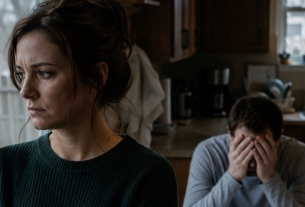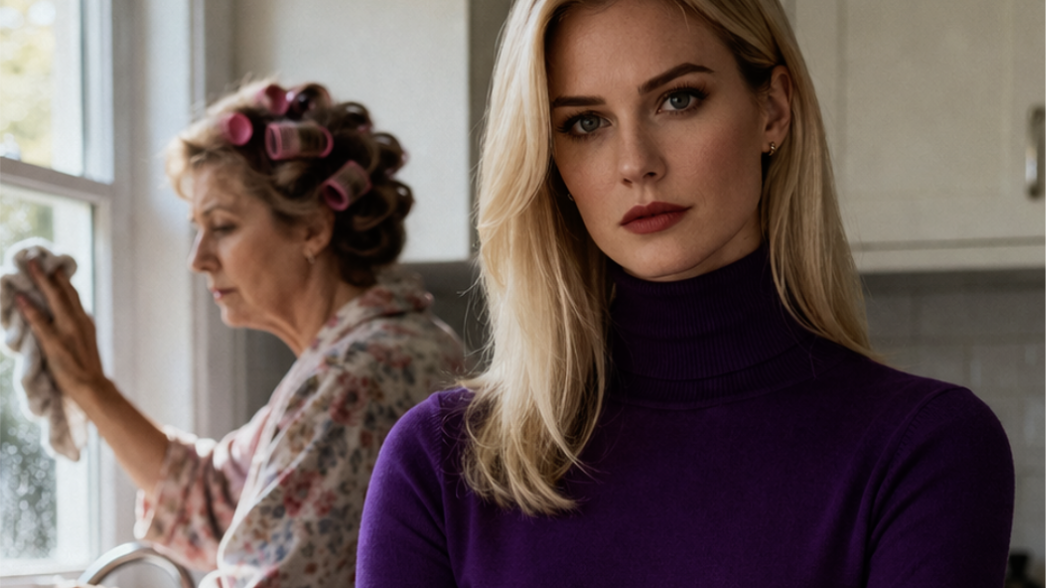
“Tanyusha, I think there’s a dead fly stuck to your chandelier. Or is that a raisin?” Alla Fyodorovna’s voice dripped with the kind of sugary concern people usually use when delivering an incurable diagnosis.
I didn’t even turn around from the stove, where the cutlets were sizzling. My mother-in-law, as always, had materialized in the hallway without ringing the bell, using the duplicate key my husband Volodya had “accidentally” left with her.
“That’s not a raisin, Alla Fyodorovna,” I replied calmly, turning the meat over. “It’s a surveillance camera for microbes.”
My mother-in-law froze, her famous white handkerchief stopping halfway to the top shelf of the cabinet.
“What a joker,” she muttered through clenched teeth, though just in case she glanced up at the chandelier uneasily. “I only mean well. Dirt is a kind of energetic stagnation. That’s why Volodya’s career isn’t going anywhere.”
“Volodya’s career isn’t going anywhere because he plays Tanks in the stockroom instead of working, not because of dust,” I shot back, arranging the cutlets on a platter.
Angela, my sister-in-law, floated into the kitchen. Thirty-four years old, permanently “searching for herself,” with nails long enough to dig a trench. Behind her shuffled Pavel Gennadyevich, my father-in-law, wearing the self-important look of a man who had just saved the world, though in reality he had merely parked his company Toyota.
“Oh, Tanya, cutlets again?” Angela wrinkled her nose. “We’re eating healthy now. Mom says fried food clogs your chakras.”
“And I thought envy and other people’s bank accounts clogged chakras,” I smiled, setting the plate on the table. “But if you’re on a diet, the tap water is fresh and nicely chlorinated.”
Angela puffed out her lips in offense, but she was the first to grab a fork.
Dinner went in its usual format: a jury trial judging a poacher. I was the poacher, the one who had trespassed on their precious Volodya. Volodya himself, a thirty-eight-year-old “boy,” sat in silence with his face buried in his phone, methodically eating dinner and trying not to draw attention to himself.
In the corner, at a little table, sat my Gleb. He’s thirteen, skinny as a reed, and wears glasses with thick lenses. My husband’s relatives pointedly ignored him, as if he were a piece of furniture—and not a particularly well-chosen one.
“Speaking of cleanliness,” Alla Fyodorovna said demonstratively, unfolding her snow-white handkerchief and swiping it along the edge of the table. The handkerchief remained spotless. She clicked her tongue in disappointment, but immediately found a new subject. “Pavel Gennadyevich drove Arkady Semyonovich today—the satirical writer, that one! A great man. He told Pasha, ‘You, Pavel, are the salt of the Russian earth, a true народный типаж.’”
My father-in-law straightened his shoulders, causing a button on his shirt to creak plaintively.
“Yes, Arkady Semyonovich values me. Says I inspire him. One intellectual is naturally drawn to another,” Pavel Gennadyevich declared pompously, raising a finger. “Satire is not the same as giving people shots in the backside, Tatyana. It requires subtlety.”
I took a sip of tea and looked at him carefully.
“Pavel Gennadyevich, satire is the mocking of human vices. If a satirist is praising you, I wouldn’t be proud—I’d reread Gogol. It’s quite possible that to him you’re a ready-made Chichikov, just without the carriage.”
My father-in-law choked on his bread, his face turning crimson. He flailed his hands, trying to object, but only a strangled wheeze came out of his throat, like the horn of a broken steam engine.
Like a deflated balloon that had dreamed of becoming an airship.
“You’re mean, Tanya,” my mother-in-law snapped, patting her husband on the back. “We come to you with goodwill, with a proposal, and you mock us.”
“What kind of proposal?” I tensed. Their proposals usually cost me nerves and money.
“The housing issue,” Angela announced solemnly, pushing away her empty plate. “Mom found an option. We sell your two-room apartment and Mom’s one-room apartment, and buy a big house in the country. We’ll all live together, out in the fresh air. It’ll be good for Gleb—he’s as pale as a fainting moth.”
I looked at Gleb. My son didn’t move, but I could see how white the knuckles of the hand gripping his book had become.
“Angela,” I began sweetly, “biology teaches us that symbiosis is only possible when both organisms benefit. In our case, this would be parasitism. You don’t work, Alla Fyodorovna inspects for dust, and Volodya plays Tanks. Who exactly is supposed to support this ‘little cottage’? Me?”
“Why so rude?” Alla Fyodorovna huffed. “Volodya has prospects. And the house would be our family nest!”
“We already have a family nest. It’s my apartment, which I bought before marriage. And I’m not going to let cuckoos nest in it.”
“You’re selfish!” my mother-in-law shrieked, launching into her signature act. “I raised my son, I gave my whole life for him! And you… Speaking of cleanliness! I’m sure it’s not just dust in this house. As a homemaker, you’re a zero. I can feel dirt with my skin!”
She snatched up the handkerchief again and rushed toward the refrigerator, clearly intending to conduct an inspection of the top shelf.
“Stop,” I said, getting to my feet. “Alla Fyodorovna, you love inspections so much? Wonderful. Let’s do a counter-test. A professional one.”
I went over to the cabinet where I kept my work bag and pulled out a portable Wood’s ultraviolet lamp. I sometimes brought it home to check the cat for ringworm, but today it would come in handy for another kind of fauna.
“What is that?” my mother-in-law asked warily.
“A lamp that reveals organic contamination, bacteria, and fungi invisible to the naked eye. You claim your hands are sterile and your intentions pure, while my house is dirty? Let’s test it. Turn off the light, Volodya.”
My husband, chewing on a gingerbread cookie, obediently flipped the switch. The kitchen sank into semi-darkness.
“Let’s start with your ‘snow-white’ handkerchief, which you just used to wipe my table, and before that probably used after holding bus handrails,” I said, switching on the lamp.
In the violet glow, the handkerchief that had looked perfectly white in daylight suddenly lit up with poisonous green and brown stains. It looked like a star map from a galaxy of unsanitary horror.
“Oh!” Angela squealed.
“See those spots?” I explained in the tone of a lecturer. “That’s organic matter. Sweat, grease, skin cells, and most likely colonies of staphylococcus. With this ‘flag of cleanliness,’ you just smeared bacteria all over my dining table.”
I moved the beam onto my mother-in-law’s hands. Under the ultraviolet light, her palms glowed like an alien’s after radioactive rain.
“And you said you’d washed your hands,” I remarked dryly. “Under your nails there’s an entire microbiology museum.”
My mother-in-law hid her hands behind her back like a schoolgirl caught smoking.
“That’s… that’s just hand cream!” she blurted. “Nourishing cream!”
“Right, nourishing,” I nodded. “For bacteria. A perfect environment.”
I switched the light back on. The effect was magnificent. Alla Fyodorovna’s arrogance fell off her like plaster from an old facade. She sat there red-faced, crumpling her “dirty” handkerchief in her hands.
“That’s a trick,” Pavel Gennadyevich muttered. “Charlatanism. Arkady Semyonovich says science nowadays is for sale…”
And then a quiet voice from the corner made everyone jump.
“Mom, may I say something?”
Gleb set his tablet aside. For the first time that evening, he looked up at the relatives.
“And where do you think you’re butting in, squirt?” Angela snorted. “Go do your homework.”
“I just happen to read the blog of that very same writer, Arkady Semyonovich,” Gleb said, adjusting his glasses. His voice trembled, but he spoke clearly. “Today he posted a new story. It’s called ‘The Mare’s Driver.’”
“What mare?” my father-in-law frowned. “He writes about me in lofty tones!”
“May I read it?” Gleb asked, and without waiting for permission, began reading from the screen. “‘My driver Pasha is a remarkable specimen. A creature made of swagger and cheap tobacco. He is convinced we are friends, though I keep him only because he amusingly steals company gasoline, thinking I don’t notice. Pasha loves lecturing his daughter-in-law, even though he can’t tell Schopenhauer from a latch bolt. Today he spent a full hour telling me how he and his wife plan to “squeeze” — I quote — an apartment out of “that medic with baggage.” During this same trip, Pasha managed to run three red lights while gawking at billboards for dumplings…’”
Silence fell over the kitchen. Not the ringing kind—heavy, sticky silence, the kind that settles when someone has loudly passed gas in an overcrowded elevator.
Pavel Gennadyevich’s face slowly turned the color of an overripe eggplant. He opened and closed his mouth like a fish thrown onto shore, but no sound came out.
“That’s… that’s slander!” he finally croaked. “I’ll sue!”
“There’s a photo of your company car with the license plate in the comments,” Gleb added mercilessly. “Captioned: ‘The chariot of greed.’”
Alla Fyodorovna jumped up, knocking over her chair.
“Get your things, Pasha! They’re insulting us here! We came with all our heart, wanting to unite the family, and they… Gleb, you’re a wicked boy! Just like your mother!”
“Just like his mother,” I agreed, feeling a hot wave of pride spread through me. “Smart, honest, and clean.”
“And you, Volodya?” my mother-in-law shrieked, turning to her son. “You’re going to let them humiliate your father like this?”
Vladimir, who had been trying to turn invisible the whole evening, finally looked up. He looked at his mother, at the fake-cream stains on her hands, at his father, who had just been publicly ridiculed by his idol, and then at me.
“Mom,” he said quietly. “Well… it’s true. Dad did talk about the gasoline. And you really were discussing the apartment out loud.”
It was a rebellion. Weak, timid—but a rebellion.
“My foot will never cross this threshold again!” Alla Fyodorovna grabbed her handbag. “Angela, we’re leaving! Your wife, Volodya, is a witch, and her son is a spy!”
They rolled out of the apartment noisily and foolishly, bumping into each other in the narrow hallway. My father-in-law forgot his cap, came back for it, locked eyes with Gleb, spat, and fled again.
When the door slammed shut, I exhaled slowly. Volodya silently started clearing the dishes. He knew that today it was better to keep quiet and wash.
I went over to Gleb and wrapped my arms around his thin shoulders. He buried his nose in my stomach, the way he had when he was little.
“Thank you, son,” I whispered, stroking his stubborn cowlicks. “You absolutely destroyed them. How did you even find that blog?”
Gleb looked up, adjusted his glasses, and a mischievous sparkle flashed in his eyes—the kind I hadn’t seen in a long time.
“Mom, I’ve been subscribed to it for half a year. Grandpa Pasha bragged so much that I decided to check. And today I just got a notification about the new post. I thought… it was time.”
I looked at him and felt a lump rise in my throat. My small, quiet defender. While I had been fighting them with irony and ultraviolet light, he had delivered a precision strike with the truth.
“You’re my hero,” I said, and the tears finally rolled down my cheeks. Not from hurt, but from an overwhelming sense of relief.
Gleb smiled, awkwardly wiped my cheek with his palm, and said:
“Mom, don’t cry. If Grandpa Pasha comes at us again with his ‘plans,’ we’ll just comment under that post and tell everyone how it really happened. Let people know what kind of ‘salt of the earth’ he really is.”
I laughed through my tears. Justice had triumphed, and it wore the face of a thirteen-year-old boy in glasses who loved his mother more than he feared cruel adults.