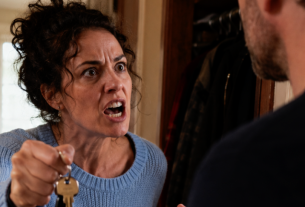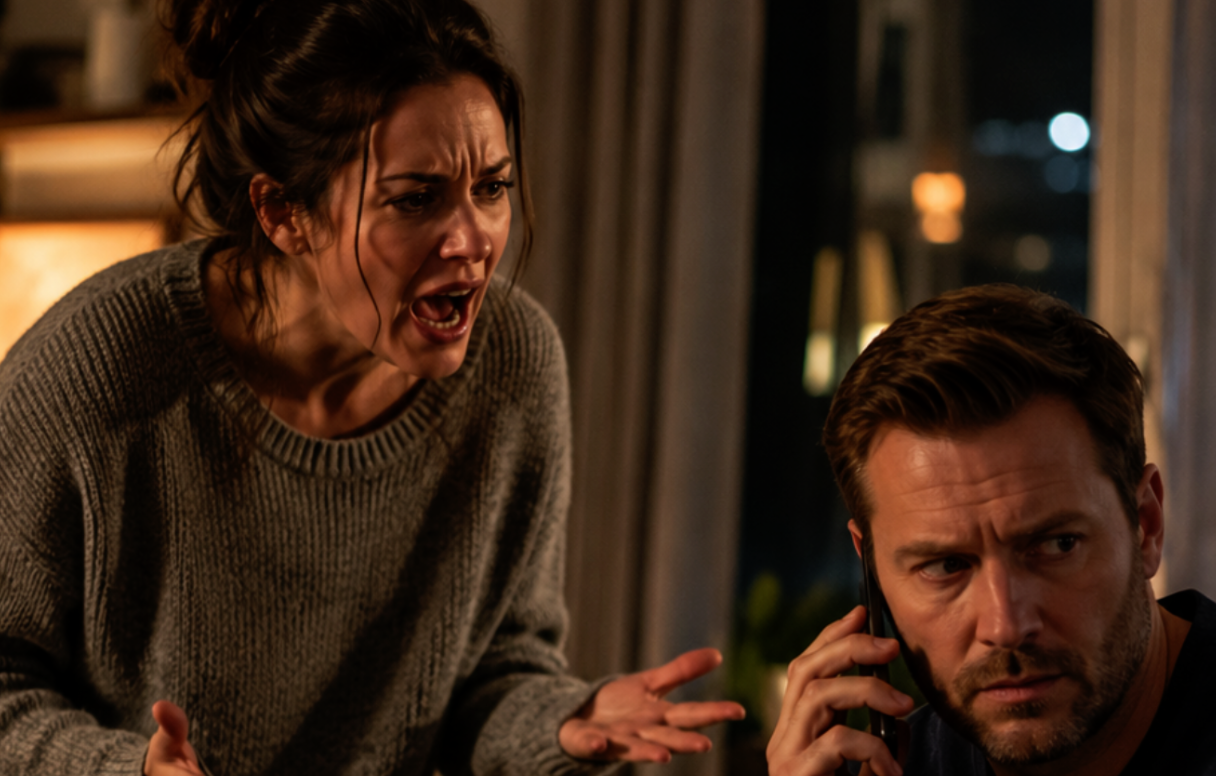
“Your mother wants a fur coat for her anniversary, and you told her I’d take out a loan to buy it?! Are you out of your mind?! I’m walking around in a down jacket that’s five years old, and we’re supposed to dress your mother in furs?! Let your father buy it for her, or earn the money yourself, but don’t drag me into your debts!” his wife shouted after overhearing her husband’s phone conversation, but she immediately stopped short when she saw his reaction.
Pavel did not even turn away from the mirror in the narrow hallway, where he was carefully smoothing down his thinning hair, trying to hide the bald spot that had begun to show. He was getting ready for an “important business meeting,” which Irina knew perfectly well was most likely taking place in a sports bar with his eternally promising loser friends. There was not a drop of remorse in his posture, not a shadow of fear, only the cold, sticky irritation of a man being distracted from great achievements by the annoying buzzing of a fly.
“Ira, stop throwing a tantrum. Your screeching is giving me a headache,” he said lazily, adjusting the collar of the jacket they had bought on sale two years earlier. “As always, you’re exaggerating and seeing only the negative. Nobody is dragging you into debts. If you want to know, this is a strategic investment in the family image. Mom is turning fifty-five. It’s an anniversary. Everyone will be there: Auntie from Surgut, who has money, Uncle Valera, who works in the city administration. Do you want us to look like paupers with a set of enamel pots in gift wrap?”
Irina stood in the kitchen doorway, clutching a wet kitchen towel so tightly that her knuckles turned white. The apartment smelled of fried onions, cheap laundry powder, and dampness—the pipe in the bathroom was leaking, and Pavel had been promising to fix it for three months, but “hadn’t gotten around to it.” Against the backdrop of worn vinyl wallpaper peeling away from the walls in places and old linoleum, all this talk about “family image” and “investments” sounded like refined mockery.
“What image, Pasha? Do you even hear yourself?” Irina’s voice became hard and dry, like sandpaper. Her tears dried instantly, giving way to cold, piercing anger. “We haven’t paid utilities for two months. There’s half a pack of butter and soup made from chicken backs in the fridge. You’ve been scraping by on odd jobs for six months, and sometimes they don’t even cover your gas. And the fur coat your mother wants costs two hundred thousand! Two hundred! That’s four months of my salary, if I don’t eat, don’t drink, and walk to work.”
Pavel finally condescended to turn around. He looked at his wife with that condescending, slightly disgusted squint that appeared on his face every time the conversation turned to real money and household problems.
“You always complicate everything, always count pennies,” he grimaced, as if he had smelled something unpleasant. “Two hundred thousand is nothing nowadays. Just cut paper. Inflation will eat it all to hell in a year. But fur is eternal value, status. Besides, I’m not asking you to take it all out of your wallet at once. You’ll take an ordinary consumer loan, spread it over five years. The payment will be tiny, four or five thousand a month. You spend more than that on your pads and shampoos.”
“I don’t buy expensive shampoos, Pasha. I take lunches in containers because we save every kopeck,” Irina said sharply, taking a step toward him. “And why should I take out the loan? You’re the son, you’re the man. Go to the bank, sign the agreement in your own name, pay your four thousand, and make your mother happy. What’s the problem? Why should I do it?”
Pavel looked away, nervously tugged at the zipper on his jacket, and shifted from one foot to the other. His artificial confidence cracked.
“You know the situation perfectly well, so why are you playing dumb?” he muttered irritably. “My credit history is… let’s say, temporarily on pause. There are those old microloans hanging there, plus I had a late payment on the credit card when I fixed the car after the accident. They won’t give me anything now. The bank will reject me right away. Or they’ll give it at a crazy interest rate, as a risky client. But your history is clean as a baby’s tear. You’re the proper one, with an official salary, work history, all that. They’ll approve you in five minutes right in the app. I’m doing this for us, Ira! So we don’t have to blush in front of the relatives and stare at the floor. Uncle Valera, by the way, might help me get a decent position if he sees I’m a solid man, that things are going uphill for me, since I can give my mother such royal gifts.”
Irina looked at her husband and felt a dull, dark rage boiling inside her. He did not simply want to hang a financial yoke around her neck for five years. He wanted to buy himself an entry ticket into “high society” and the respect of wealthy relatives at her expense, while remaining in everyone’s eyes a caring, successful, loving son. And she would be left with the debt and the hole in the budget.
“So let me make sure I understand this correctly,” she said slowly, separating each word. “You’ll stand at the anniversary party in a restaurant, handsome, proud, in a suit, handing your mother a mink coat, listening to toasts about what a wonderful son you are and what a pillar of the family. And I’ll spend five years paying the bank, denying myself winter boots and decent food? And when I ask you for money for next month’s payment, you’ll say, ‘Well, babe, things are tight right now, the clients fell through, pay it yourself, you can manage.’ Have I understood your scheme correctly?”
“Why do you have to put it so crudely? You twist everything right away…” Pavel winced as if he had a toothache. “We’re a family. We have a shared budget. Today you pay, tomorrow I’ll rise up and close it all early.”
“We don’t have a shared budget, Pasha. There’s my budget, which we survive on, and your ‘pocket expenses,’ which I know nothing about, but I can guess where they go.”
“Oh, here we go! She’s started nagging!” Pavel abruptly waved his hand, cutting off the conversation, and reached for the door handle. “We’re talking about something sacred—my mother! She raised us, she didn’t sleep nights, she deserves to feel like a queen at least once in her life, not a workhorse. And you’re standing here counting pennies, clinging to scraps of paper. That’s low, Ira. Just low. I thought you were kinder and more farsighted.”
He had already opened the door, intending to escape, as he always did when the arguments ran out and only demagoguery remained.
“Stop,” Irina blocked his path, pressing her hand against the doorframe. “Have you already promised her? Tell the truth.”
Pavel hesitated for a second, his eyes darting, but then he lifted his chin, deciding to go all in.
“Yes, I promised. I told her the matter was settled. Mom is already happy. She’s already told all her friends that her son is giving her a fur coat. So there’s no turning back now, Ira. If you dig your heels in now, you won’t just let me down, you’ll disgrace me in front of the whole city. You’ll spit into the soul of an elderly person, whose blood pressure might even spike. Think about that while I’m at my meeting. And get your passport ready. Tomorrow we need to submit the application so there’s time to choose the size.”
He roughly pushed her aside with his shoulder, stepped out onto the landing, and called the elevator.
“And heat up dinner by ten. I’ll come home hungry. Fry some potatoes!” he shouted as the elevator doors were already closing, without even turning around.
The apartment door slammed shut. Irina remained standing in the dim hallway, staring at her reflection in the dusty mirror. A tired woman in a stretched-out house T-shirt looked back at her, with dark circles under her eyes and an extinguished gaze. Five years ago, when they got married, Pavel had spoken about partnership, support, and a shared dream. Now he was demanding tribute. And the most frightening thing was not that he was asking for money. It was that he sincerely believed her only function in this life was to silently serve his excessive ambitions and his mother’s whims.
The phone in the pocket of her robe chimed, breaking the silence. Irina slowly took it out, feeling her fingers go cold. A message from Zinaida Petrovna. On the screen was a photograph from an expensive catalog: a model with a haughty face wrapped in a luxurious graphite-colored fur coat. And the caption below: “Irochka, Pasha said you agreed, how wonderful of you! I found an option here, but it’s a little more expensive than we thought. Still, the hood is rich, and the length is good. I’ll come by tomorrow and we’ll discuss the details. I’ve already chosen the store. Kisses, my dears!”
Irina lowered the hand holding the phone. Her fingers trembled slightly, but not from fear—from the desire to smash the screen against the wall. So it was “a little more expensive.” So it was tomorrow. The trap had snapped shut. They had already decided everything behind her back, divided the skin of a bear she was supposed to pay for with her health and nerves.
She slowly walked into the kitchen without turning on the light and sat down on a stool. In the silence, the hum of the old refrigerator sounded like a deafening roar.
“We’ll discuss it,” she whispered into the emptiness, and her lips twisted into an angry smirk. “We most certainly will, Zinaida Petrovna.”
She was not going to run to the bank. She was not going to cry. Inside her, where obedience had once lived, a cold, calculating determination was ripening—one Pavel had never noticed in her, considering her a soft-bodied little fool. Tomorrow’s visit promised to be interesting. Very interesting.
The next evening, the doorbell rang exactly at seven, as if a timer on an explosive device had gone off. Zinaida Petrovna was never late, especially when it came to collecting tribute. Pavel, who had spent the last half hour nervously pacing the living room, straightening couch cushions and brushing away nonexistent specks of dust, immediately rushed to open the door.
Irina remained sitting at the kitchen table, looking at her cooling tea. She heard bags rustling in the hallway, and then her mother-in-law’s heavy, cloyingly sweet perfume spread through the apartment—Red Moscow mixed with something French and very expensive.
“Pashenka, my son! Look how thin you’ve gotten, my God! Skin and bones!” Zinaida Petrovna’s voice filled the whole space, pushing the air out of it. “And where is our little homemaker? Tired from her job again, I suppose?”
Her mother-in-law sailed into the kitchen like an icebreaker entering a shallow harbor. She was a heavyset but well-groomed woman with a high hairstyle that contained more hairspray than hair. She wore a coat with a fur collar, which she demonstratively did not take off in the hallway; she merely unbuttoned it, showing a massive gold chain around her neck.
“Hello, Ira,” she nodded to her daughter-in-law like a noblewoman to a serf. “Why are we sitting in the dark? Saving money? That’s right, every kopeck counts. Pasha, put the kettle on. I brought pastries from the confectionery—real ones, not those wooden cookies you usually eat.”
She pushed the sugar bowl aside like the mistress of the house and placed a thick glossy catalog and a tablet in the middle of the table. Irina silently watched the performance. Zinaida Petrovna behaved as if the purchase had not merely been settled, but approved by a heavenly council.
“So then, my dears,” she began, without even waiting for tea. “I spent half the day today driving around to three salons. My legs are humming, it’s awful. But I found exactly what we need. Pasha, come here, look.”
Pavel obediently jumped to his mother’s side, peering over her shoulder.
“This one,” a finger with a large ruby ring poked at the tablet screen. “‘Black Diamond.’ Mink, horizontal cut, hood—cobra. Perfect length, covers the knees so I won’t freeze. And the style is such that you can immediately see—a woman of status, not a pensioner standing in line for discounts.”
Irina glanced sideways at the screen. The price under the photograph was printed in small font, but the zeros were perfectly clear. Two hundred forty thousand.
“Zinaida Petrovna,” Irina said quietly, raising her eyes to her mother-in-law. “We talked about two hundred. This model costs two hundred forty. Plus bank interest.”
Her mother-in-law slowly turned her head. In her eyes, thickly lined with eyeliner, there was sincere bewilderment mixed with contempt.
“Irochka, are you serious right now?” she sighed theatrically, pressing a hand to her chest. “We’re talking about an anniversary. A date that happens once in a lifetime. Do you want me to wear some cheap Chinese thing for two hundred that will shed like a cat in a year? The difference is only forty thousand. That’s ridiculous.”
“It isn’t ridiculous for us,” Irina said calmly, though everything inside her trembled with tension. “We don’t have an extra forty thousand. Pasha doesn’t have a job that would cover expenses like this.”
“He’ll find one!” Zinaida Petrovna barked, and the mask of good nature slipped for a second. “He’s a man, he has arms and legs. And you, my dear, could support your husband instead of counting every ruble. Look at how you live. Old wallpaper, furniture from ten years ago. It’s embarrassing to invite people over. So at least let his mother look decent, since you yourselves don’t know how to live beautifully.”
“Mom is right, Ira,” Pavel cut in, trying not to look his wife in the eyes. “Are we really going to fight over forty grand? We’ll take it for a longer term, the payment will hardly change. But the thing will be high quality.”
Zinaida Petrovna smiled victoriously and opened the paper catalog, smoothing the page with her palm.
“Exactly. Quality is the main thing. You walk around in that gray down jacket of yours, Irochka, like a moth. It hurts to look at you, honestly. I understand you don’t love yourself, that you don’t care. But I am a noticeable woman. I go out in society. People look at me. I cannot afford to look pathetic. It’s a matter of respect for Pasha’s family.”
The blow was calculated perfectly. Irina felt the blood rush to her face. Her down jacket was warm and comfortable, but to these people it was a symbol of her worthlessness.
“So in order for you to look ‘noticeable,’ I have to walk around in this down jacket for five years and pay the bank?” Irina asked, looking straight into her husband’s eyes. “Pasha, do you understand we can’t handle this payment? The debit and credit simply won’t balance.”
“Oh, stop pretending to be poor!” Zinaida Petrovna waved her off, taking a small mirror from her purse and fixing her lipstick. “You have a good salary, Pasha told me. You just need to spend wisely. Buy less nonsense. And anyway, this is a gift. Gifts aren’t discussed, they’re given. Pasha promised me. A man said it, a man did it. And as a wise wife, you should help him keep his word, not put sticks in his wheels.”
She snapped the mirror shut loudly.
“In short, I’ve made arrangements at the salon. They’ve reserved the coat until the day after tomorrow. Tomorrow you’ll go, arrange everything, and bring the money by evening. Or a card, I don’t care how you pay. The main thing is that by Friday I’ll be dressed properly.”
Pavel nodded like a bobblehead.
“Of course, Mom. We’ll do everything. Ira will submit the application tomorrow morning in the app. Approval is instant there. In the evening we’ll pick you up and go to the store.”
“Wonderful,” Zinaida Petrovna rose without touching her tea. “And eat the pastries. Maybe you’ll become kinder. Ira, and fix your face. One would think I was asking you for a kidney, not help for the family. You should be ashamed. A husband only has one mother.”
She floated toward the exit, rustling her bags and spreading waves of suffocating perfume. Pavel scurried after her, helping her button her coat, babbling something about a taxi and how much he loved her.
Irina remained in the kitchen. On the table lay the forgotten catalog, open to the page with the “Black Diamond.” The model looked at her defiantly, wrapped in fur that cost more than all the furniture in that kitchen. Zinaida Petrovna had not even asked how they were doing. She had not asked whether they had money for food. She had simply come in, pointed her finger, and set a deadline for the execution of the sentence.
The front door slammed. Pavel returned to the kitchen, wiping sweat from his forehead. He looked excited and pleased, like a schoolboy who had passed a difficult exam.
“Well, you see? Everything went fine,” he exhaled, loosening the tie that seemed to have been choking him all evening. “See? Mom is happy, everyone is calm. Good job not making a scene in front of her. I knew you had a head on your shoulders, not just those stupid principles.”
Pavel went to the refrigerator, took out a can of beer, and opened it with a loud hiss. He behaved as if he had just defused a bomb and now had every right to a hero’s rest. His hands were no longer shaking, and his movements had gained the swagger of a master of life who had successfully “sorted out” the problem.
“You really think everything went fine?” Irina asked quietly, not rising from her chair. She looked at her husband the way one looks at an unfamiliar insect that has accidentally flown into the apartment—with disgust and bewilderment. “Your mother just humiliated both of us, trampled our budget, called me a gray moth, and you’re standing there drinking beer?”
Pavel took a large gulp, burped, and grimaced, looking at his wife as if she were a spoiled child.
“Oh, don’t start, all right?” he waved the can, splashing a little foam onto the floor. “Mom is old-school. That’s just her way of talking, commanding. She means well. So she said a couple of harsh words, big deal. But she loves us. And anyway, what difference does it make who said what? The main thing is the result. We agreed. Tomorrow we take the money, Friday we give the fur coat, Saturday we party at the banquet. That’s it, the scheme works.”
Irina slowly closed the glossy catalog still lying in front of her. The face of the model in the fur coat disappeared beneath the cover.
“I did not agree, Pasha. I kept silent because I was ashamed of you. Ashamed to see a grown man grovel before Mommy and fear saying one word against her.”
“Silence means consent!” Pavel roared, and his good mood evaporated instantly. “Did you object in front of her? No. That means you signed on. Now it’s too late to back out. You don’t want me to call Mom and say, ‘Sorry, Ira changed her mind, she’s holding onto the money,’ do you? Can you imagine the scandal? She’ll hound you out of this world.”
He approached the table, looming over her, and his voice became ingratiating, sticky, full of hidden threat.
“Ira, let’s not do anything stupid. You’re tired right now, you’ve worked yourself up. Go to sleep. Morning is wiser than evening. And tomorrow, with a fresh head, you’ll arrange everything at work during lunch. You’ll even feel good about it. Imagine: we present the gift, all the guests gasp, Mom cries with happiness, hugs you… You’ll become the beloved daughter-in-law. It’s an investment in relationships, understand?”
Irina raised her eyes to him. There was such an icy emptiness in them that Pavel felt uneasy for a second. But he attributed it to her usual “female spite.”
“I’m not going to sleep,” she said evenly. “I need to finish a report.”
“You’re a fool,” Pavel snorted, finishing his beer and crushing the can in his fist. “Sit there and sour, then. I’m going to bed. Tomorrow is a hard day. I still have to make the banquet deposit, arrange things with the musicians… So much to do, so much to do, and no support from you.”
He threw the crushed can toward the trash bin but missed. He did not pick it up. He stretched, cracking his joints, and trudged toward the bedroom, muttering something under his breath about ungrateful women.
“Calm down by morning!” he shouted from the hallway. “And don’t forget to put your phone on charge. Your battery always dies at the worst possible moment. The application needs to be sent before lunch, or the reservation will fall through!”
The bedroom door slammed shut. Irina remained alone in the kitchen. The ticking of the cheap clock on the wall sounded like hammer blows to her temple. She looked at the beer can lying on the floor, at the crumbs from the pastries her mother-in-law had brought but never eaten, at that cursed catalog.
“Application before lunch,” echoed in her head.
She knew she would not do it. But she also knew Pavel would not back down. He had been cornered by his own vanity and fear of his mother. That evening had shown her the main thing: she and Pavel lived in parallel realities. In her world, they had to pay rent and treat their teeth. In his world, there existed only “status,” “Uncle Valera’s respect,” and endless loans that for some reason she was supposed to pay off.
Irina stood up, picked up the can, and carefully placed it in the bin. Then she turned off the light. The darkness of the kitchen seemed like a refuge. Ahead lay a sleepless night and a day that was supposed to become decisive. She felt the expectation of disaster tightening inside her like a taut spring, but strangely, it brought relief. Better a horrible end than horror without end.
For the next two days, tension hung in the apartment, thick and suffocating, like before a thunderstorm in mid-July. Pavel did not speak; he growled. He walked through the rooms, nervously jerking his shoulders, constantly calling someone, locking himself in the toilet, and coming out red-faced and sweaty. Irina tried not to meet his eyes, but she felt his presence with her back—heavy, oppressive, full of unspoken accusations and expectations.
On Thursday evening, twenty-four hours before the “great event,” the abscess finally burst. Irina had just returned from work, tired, carrying a bag of cheap groceries, and had barely managed to take off her shoes when Pavel appeared before her in the hallway. He was wearing only sweatpants, bare-chested, and he reeked of alcohol mixed with the sour smell of fear.
“Well?” his voice broke into a shriek. “Did you submit the application? Mom has already called three times. She was at the salon, tried it on again. They’ve reserved the fur coat until tomorrow morning. Do you understand tomorrow is the final deadline?”
Irina silently went into the kitchen, placed the bag on the table, and began taking out pasta, bread, and milk. Her calmness affected Pavel like a red rag to a bull. He flew to the table and slammed his fist down so hard that the milk carton jumped.
“I’m talking to you! Are you deaf?!” he screamed, spitting saliva. “Are you dragging this out on purpose? Do you want to give me a heart attack? Or do you think this is a joke?”
“I didn’t submit the application, Pasha,” Irina said quietly but firmly, not lifting her eyes from the groceries. “And I won’t submit it. I told you yesterday. I told you the day before yesterday. There is no money. There will be no loans.”
Pavel froze. His face became blotched with crimson. He grabbed his head as if his skull were splitting open, and began pacing the tiny kitchen—three steps one way, three steps back.
“You don’t understand… You’re just stupid, you don’t understand what you’re dragging me into!” he stopped and jabbed a finger at her. “It’s not only about the fur coat! I already borrowed money!”
Irina raised her head. Something inside her snapped.
“You did what?” she asked.
“I borrowed money for the banquet!” he spat out the confession. “Seventy thousand! From guys in the neighborhood, with interest, ‘until Saturday.’ What do you think I booked the restaurant with? Your pennies? I calculated everything, Ira! It’s a business plan, damn it!”
He came right up to her, looming over her, his eyes shining feverishly.
“Listen carefully. Tomorrow is the anniversary. Uncle Valera is coming, in-laws are coming, lots of people. All with money. I counted on us giving Mom the fur coat—it would be a sensation, understand? A bomb! Everyone would see that Pavel had risen up, that everything was sweet for Pavel. And then, on that wave, they’d start giving envelopes. Good, thick envelopes! With that money, I’d cover the restaurant debt, pay the guys their interest, and we’d still have some left!”
Irina looked at her husband and no longer recognized him. Standing before her was not simply an irresponsible man, but a madman who had built a house of cards at the edge of a cliff and demanded that she prop it up with her shoulder.
“You… you borrowed money to show off?” she whispered. “And what if they don’t give as much as you imagined? What if the envelopes are empty? What will you pay with? My kidney?”
“Don’t jinx it!” Pavel roared. “They’ll give it! Uncle Valera never puts in less than ten if he sees class. And without the fur coat, there is no class! If I show up with a bouquet of weeds, they’ll realize I’m broke trash. And the gifts will match—a tea set or bed linens. And then I’m finished, Ira. The guys won’t wait. Is that what you want? Do you want them to put me on the meter?”
He grabbed her by the shoulders and shook her.
“You take out your phone right now. Right now! Open the app and take out a loan for two hundred forty thousand. Transfer it to my card. And we forget this conversation. I’ll save the situation, I’ll get out of it, but you have to give me startup capital! It’s your duty!”
“Take your hands off me,” Irina hissed, throwing off his palms. She felt physically disgusted by his touch. “You’re sick, Pasha. You’re a gambler. You’re gambling away our life for your cheap showmanship. I won’t give you a kopeck. Go to your mother, tell her about your ‘business plan.’ Let her sell her gold chains and pay for your banquet.”
“You don’t dare touch my mother!” he shrieked. “She’s a saintly woman! She must not know that her son is bankrupt because of a greedy wife! Do you want to disgrace me? Do you want everyone pointing fingers?”
Pavel rushed into the hallway, grabbed her purse, and shook all its contents onto the floor. Lipstick, keys, wallet, passport—everything scattered across the dirty linoleum. He found the phone and, growling triumphantly, returned to the kitchen.
“Password!” he demanded, thrusting the screen into her face. “Tell me the password, or I’ll smash it! I’ll do everything myself. I don’t care about your principles. This is about my reputation!”
“Reputation?” Irina laughed bitterly, looking at her husband’s trembling hands. “You don’t have a reputation, Pasha. You’re a soap bubble. You’re nobody. And if you press even one button now, tomorrow I’ll go to the bank and file a fraud report.”
“You bitch…” he whispered, and something completely dark, animal-like appeared in his eyes. “You decided to blackmail me? Your own husband? I’m trying for the family, spinning like a snake on a frying pan, and you…”
He threw the phone onto the table. The screen rang but did not break.
“You have until morning,” he said through clenched teeth, leaning close to her face. “Until eight in the morning. If the money isn’t on the card, blame yourself. I won’t care that you’re my wife. I’ll make your life so miserable you’ll howl. You’ll crawl on your knees, begging me to forgive you.”
He turned around, knocking his shoulder against the doorframe, and went into the bedroom, slamming the door so hard that an old framed photograph fell from the wall in the hallway—their wedding picture, where they both smiled, not knowing that five years later one of them would be ready to sell the other for a mink pelt and Uncle Valera’s approval.
Irina remained standing in the middle of the kitchen. She was shaking, but the fear was gone. In its place came icy, crystalline clarity. This was the end. Not just a scandal, not a quarrel. This was the point of no return. The person behind the wall was a stranger. Dangerous, pathetic, and a stranger.
She looked at the phone. Until eight in the morning. She had an entire night to make a decision. And she knew for certain that this decision would please neither Pavel nor Zinaida Petrovna. Tomorrow was supposed to be their triumph, but Irina felt it would be their collapse. And she would be in the front row to watch it.
“Well, lovebirds, the car is waiting downstairs! Come out. I ordered a Comfort Plus taxi so we don’t have to shake around in a minibus with money!” Zinaida Petrovna’s voice cut through the morning silence of the apartment like a circular saw.
She stood in the hallway already in full parade: her bouffant was even higher than yesterday, her lips blazed scarlet, and a predatory gleam of anticipation burned in her eyes. Her mother-in-law had not even taken off her shoes, trampling the doormat in her outdoor boots, her entire appearance showing that every second of delay was a crime against her anniversary.
Pavel dashed out of the bedroom, buttoning his shirt on the move. He was pale, dark shadows lay beneath his eyes, and his hands trembled slightly. He shot Irina a glance in which animal fear and pleading were mixed. He was still hoping. He believed that his wife, cornered by his mother’s authority, would now silently take out the card, tap her phone, and save his hide.
“Mom, just a second, just a second… Ira only needs to get ready,” he muttered, nervously licking his dry lips. “Irish, where are you? Come on, give me the card. Mom can pay at the register herself. We don’t even have to go if you’re late for work. Just transfer it now, in front of Mom.”
Irina came out of the kitchen. She was already dressed—in that same old down jacket and jeans. In her hands she held a cup of unfinished coffee, and that calmness looked frightening against the background of her husband’s hysterical fuss. She slowly took a sip, looking over her mother-in-law’s head.
“There will be no transfer, Zinaida Petrovna,” she said in an even, everyday tone, as if announcing the weather forecast. “And there will be no trip. There will be no fur coat.”
A pause fell. Zinaida Petrovna blinked, her smile slipping away and exposing yellowish teeth. She shifted her gaze from her daughter-in-law to her son and back again, trying to understand what game they were playing.
“What kind of joke is this?” her voice became lower, more dangerous. “Pasha, what is she saying? We agreed yesterday. The reservation is valid until noon. Do you want me to be disgraced in front of people?”
“Mom, she… she’s just joking,” Pavel jerked toward his wife, trying to grab her elbow, but Irina sharply stepped back. “Ira, stop this circus! Transfer the money! Right now!”
“I’m not joking,” Irina placed the cup on the cabinet. The sound of porcelain against wood rang like a gunshot. “There is no money. I will not take out a loan for two hundred forty thousand to cover your insolvency, Pasha. And I will not sponsor your dances in front of relatives.”
“What insolvency?” Zinaida Petrovna stepped forward, looming over Irina like a massive rock. “What are you allowing yourself, girl? My son does everything for you, and you begrudge his mother a gift? You’re just a greedy piece of filth, that’s what you are. Pasha, tell her! Make her!”
“And do you know, Zinaida Petrovna, what your son used to book the banquet?” Irina cut her off harshly, looking straight into her heavily made-up eyes. “He didn’t earn a single kopeck for this anniversary. He borrowed seventy thousand from thugs at interest so he could throw dust in Uncle Valera’s eyes. He was counting on the guests seeing the fur coat, melting, and giving envelopes that he would use to pay off the debts. This isn’t a gift. It’s a financial pyramid. And if I buy this fur coat now, we’ll be left with a five-year loan and a debt to his buddies, because the envelopes won’t be enough.”
Pavel howled like a wounded animal. His face became covered in red blotches. He grabbed his head, realizing that his scheme had collapsed and now he stood naked before his mother and before his problems.
“Shut up! Shut up, you bitch!” he screamed, spraying saliva. “You ruined everything! You’re drowning me on purpose! Mom, don’t listen to her, she’s lying! I have everything under control!”
Zinaida Petrovna froze. The information reached her slowly, but when it did, her reaction was not at all the one Pavel may have hoped for. She did not rush to comfort her son. She pursed her lips in disgust.
“Ah, so that’s what it is…” she drawled in an icy tone. “So you have no money, son? You decided to ride out on your wife’s back? And when it didn’t work out, you stand there sniveling?”
“Mom, I wanted the best! I wanted it to be dignified!” Pavel was almost crying, his voice breaking into falsetto. “I would have paid it back!”
“‘Would have’ gets in the way,” Zinaida Petrovna cut him off. She sharply turned to Irina, and there was not a drop of sympathy or understanding in her gaze. Only cold, calculating hatred. “And you… You could have helped your husband. You can see he’s trying, spinning around. Trying for the family. But you clung to your pennies. What kind of wife are you after that? You’re just a stone around his neck. If not for you, he would have risen long ago. You’re the one dragging him down with your poverty and wretchedness.”
“I’m dragging him down?” Irina laughed bitterly. “I feed him, I pay the rent, I clothe him. And now I’m also guilty because I didn’t let him climb into a debt pit for your whim?”
“This is not a whim. It’s status!” her mother-in-law barked. “But you wouldn’t understand that. You’re from a different breed. Small and gray. Ugh, shame on you. Both of you are something else. One is a loser who offers his mother empty air instead of a gift, and the other is a greedy bitch who doesn’t respect her husband.”
Zinaida Petrovna adjusted the collar of her coat and contemptuously surveyed the cramped hallway, as if seeing it for the first time.
“I will never set foot here again,” she hissed. “And don’t come to the anniversary. I don’t want to see your sour faces. I’ll tell the guests my son is sick. Better that than disgracing myself with your little bouquets. Live however you want. Gnaw at each other in your swamp.”
She turned and left, slamming the door so hard that plaster sprinkled down from the ceiling. In the silence that followed, only Pavel’s heavy breathing could be heard. He stood in the middle of the hallway, arms lowered, staring at one point. Then he slowly raised his head toward Irina. There was no remorse in his eyes. There was only the pure, unclouded hatred of a man who had been deprived of a dream, even if that dream was fake.
“Are you happy?” he asked quietly, and the tone sent shivers down Irina’s spine. “Is this what you wanted? Mother left. I’m in debt. Uncle Valera is closed to me now. You destroyed my life with one word: no.”
“You destroyed it yourself, Pasha,” Irina took her bag. She had to go to work. Life continued, despite the ruins around her. “I simply refused to pay for your funeral.”
“Get out,” he hissed. “Go to your work. I don’t want to see you. When you come back tonight, we’ll talk differently. You’ll answer for everything, understood? You’ll work off every kopeck I lost because of you.”
“We won’t talk, Pasha. There is nothing left for us to talk about,” Irina opened the door. “The apartment is rented. The lease is in my name. When I come back tonight, your things should no longer be here. Go to your mother. Or to your creditors. I don’t care.”
She stepped out onto the landing without looking back. Behind her she heard the sound of a blow—Pavel had kicked something heavy, perhaps the cabinet or the wall, and howled with powerless rage. But Irina was already calling the elevator. The button glowed red like a warning signal, but she felt calm. The scandal was over. There would be no fur coat. There would be no family either, but as it turned out, there had been no family for a long time—only an expensive mortgage on someone else’s showmanship, which she had finally paid off today.