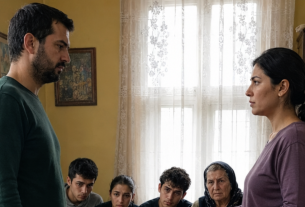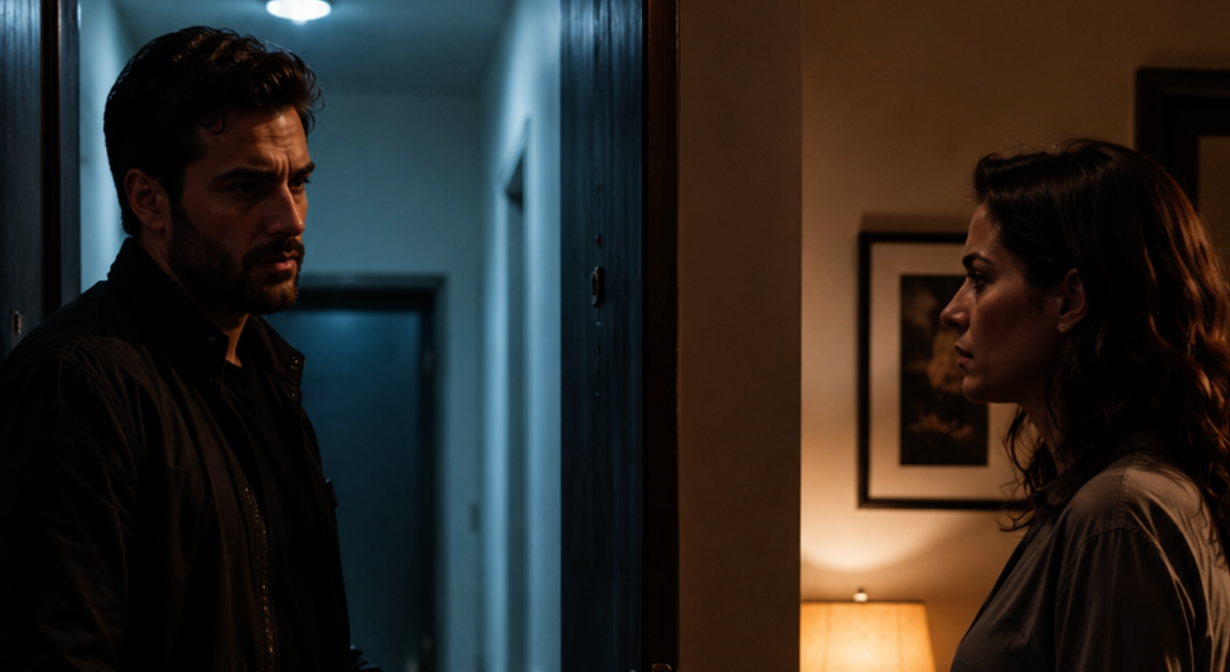
“Mom’s apartment is in emergency condition, Ksyusha. She’ll stay with us until everything gets sorted out. I’ve already told her to pack.”
Ksenia slowly placed the towel on the edge of the sink and turned to her husband.
“You told her to pack before talking to me?”
Valery stood in the middle of the kitchen in his jacket, as if he had only stepped in for a minute and casually dropped a phrase that was not supposed to change anything. His face had that familiar expression of a man who had already decided in advance that arguing with him was pointless.
“What is there to discuss?” he spread his hands. “My mother’s ceiling is leaking. The tiles in the bathroom are coming loose. It’s impossible to live there.”
“I’m not asking about the tiles. I’m asking why you are making decisions about my apartment.”
Valery exhaled loudly.
“Here we go again. Your apartment, my apartment… We’re husband and wife.”
Ksenia did not answer immediately. She looked at his boots. Dirty water had already dripped onto the mat, even though she had washed the entryway only yesterday. Before, she would definitely have said, “Take off your shoes.” Now she said nothing. She simply noted the small detail to herself as yet another confirmation: he was used to coming in and making a mess, then expecting her to fix everything herself.
“This apartment came to me from my father,” she said evenly. “I lived here before our marriage. You knew that.”
“So what? Am I a stranger here?”
“You are my husband. But you are not the owner of this apartment.”
Valery smirked, but the smirk came out sharp and unpleasant.
“So that’s how it is. When I put up shelves in the pantry, I was your husband. But when my mother needs help, suddenly I’m nobody.”
Ksenia picked up her phone from the table, checked the time, and put it back.
“Shelves in the pantry do not give you the right to move someone in here without my consent.”
“She is my mother.”
“I remember.”
“Then behave normally.”
Ksenia raised her eyes to him.
“Normally means what? Staying silent while you decide who will live in my apartment?”
Valery took off his jacket and threw it over the back of a chair. Ksenia looked at the jacket, then at her husband. He noticed her glance and deliberately did not move it.
“Ksyusha, you simply don’t understand what condition she’s in,” he said, now more softly. “She’s alone. It’s hard for her. I can’t abandon her.”
“Nobody is asking you to abandon her.”
“Then what’s the problem?”
“The problem is that you are not offering help. You are presenting me with a done deal.”
He walked up to the table, took an apple from the bowl, and began turning it in his hands.
“She’ll stay in the small room. You only keep things there anyway.”
Ksenia gave a quiet laugh.
“In the small room, I have my work desk, documents, and shelves with orders.”
“You’ll move them aside.”
“No.”
Valery stopped turning the apple.
“What do you mean, no?”
“I mean exactly that. Your mother is not moving in here.”
For a couple of seconds he looked at her as if he were waiting for her to correct herself. Before, Ksenia really would have corrected herself. She would have softened the phrase, added explanations, justified herself, searched for a compromise. For too long she had tried to be a convenient wife: not to hurt his pride, not to speak harshly, not to seem heartless.
But over the past few months, something inside her seemed to have been assembling itself piece by piece. Not harshness, not anger, but clarity.
It had not started with his mother’s apartment. It had started much earlier.
At first, Galina Petrovna began coming over without warning. She had a set of keys “just in case,” which Valery had given her during the first year of their marriage. Back then, Ksenia had not argued. Her mother-in-law lived in the neighboring district, Valery was often late, and Ksenia thought: who knows, maybe it really will come in handy.
The keys came in handy quickly.
Galina Petrovna could show up on a Saturday morning while Ksenia was still in the bathroom. She could come in during the day and open the refrigerator, count the containers, look into the cabinet with grains. She could leave a bag with Valery’s things that she had “accidentally washed at her place,” even though he had not lived with his mother for five years.
“I’m not a stranger,” she would say, walking into the apartment in her outdoor shoes and looking around as if she were inspecting a hotel room after the cleaner.
At first, Ksenia endured it. Then she began asking Valery to talk to his mother.
“She’s old-school,” he would answer. “Don’t take it so personally.”
“I don’t like it when someone opens the door with their own key without ringing.”
“She’s not stealing anything.”
“What does stealing have to do with it?”
“Then why make such a big deal out of it?”
Every conversation ended the same way: Valery tiredly scratched the back of his head, promised to “say something sometime,” and then nothing changed.
Galina Petrovna began to feel freer and freer.
Once, Ksenia returned from the workshop earlier than usual and found her mother-in-law in the small room. She was standing by the shelving unit, sorting through folders and boxes.
“What are you looking for?” Ksenia asked, stopping in the doorway.
Galina Petrovna flinched, but immediately straightened up.
“I’m just looking at how much unnecessary stuff you have here. The room is going to waste. Valerochka should have a proper office, not that little corner by the window in the bedroom.”
“This is my workroom.”
“What kind of work is this? Papers, boxes, bags. You should at least sort it out. A home should be tidy.”
Ksenia walked to the table and closed the box with fabrics.
“Don’t touch my things.”
“Oh, aren’t we important,” Galina Petrovna smiled thinly. “I only wanted to help.”
“Help does not begin with someone else’s folders.”
That evening, Ksenia told Valery. He listened without looking up from his phone.
“Mom is just curious.”
“She was rummaging through my documents.”
“Don’t exaggerate.”
“Valer, she was alone in the room and going through folders.”
Only then did he finally look up.
“And what was so secret in there?”
That was the first time Ksenia stayed silent for a long while after one of his phrases. Not because she had nothing to say. Because words had become useless. He did not see a violation of boundaries. He saw only the inconvenience she was creating for his mother.
Then there was the incident with the keys.
Ksenia asked him to get the set back. Calmly. Without a scandal.
“Valer, take the keys back from your mother. Let her ring before coming over.”
He promised.
A week later, Galina Petrovna opened the door herself again.
Ksenia was standing in the entryway with a hair dryer in her hand, her hair still damp. Her mother-in-law came in, placed a bag of canned goods on the cabinet, and looked her over.
“Oh, you’re home? I thought you were working.”
“You opened the door with your key again.”
“What, was I supposed to stand on the stairs?”
Ksenia looked at the keychain in her hand.
“Valera was supposed to take the keys back.”
Galina Petrovna narrowed her eyes.
“He didn’t. That means he doesn’t think it’s necessary.”
That phrase turned out to be more honest than all of Valery’s explanations.
Two days later, Ksenia called a locksmith and changed the lock. Without making a statement, without unnecessary conversations. She simply arranged it, met the technician, waited while he finished the work, checked the new key, and put the spare set in the drawer with her documents.
When Valery could not open the door with his key that evening, he first called.
“Are you home? Did the lock break or something?”
Ksenia opened the door.
“It didn’t break. I changed it.”
He came in, frowning.
“Without me?”
“Yes.”
“Are you even normal?”
“Absolutely. Now your mother doesn’t have keys to my apartment.”
Valery slammed the door harder than necessary.
“You deliberately humiliated Mom.”
“I protected my home.”
“From my mother?”
“From a person who enters without permission.”
That night they barely spoke. Valery slept on the edge of the bed, demonstratively turned away. Ksenia lay beside him and looked into the darkness. Before, she would have worried, tried to make peace, explained herself more gently. But now what irritated her more was not the quarrel, but how late she had decided to take such a simple step.
After the lock was changed, Galina Petrovna changed tactics. She stopped coming unexpectedly, but began calling Valery every evening. Sometimes Ksenia heard only his answers.
“Yes, Mom.”
“Of course, Mom.”
“I’ll talk to her.”
“No, she isn’t against it, she just has that kind of character.”
Ksenia would sit at her laptop in the small room and know that in ten minutes he would come in with another request.
And that was exactly what happened.
“Mom is asking us to take her to the clinic.”
“I’m busy tomorrow.”
“It’s only for an hour.”
“Valer, I have work.”
“You make your own schedule.”
“That’s exactly why I know when I’m busy.”
He would get offended.
“Fine, I understand. My mother is getting in the way of your life.”
“Your mother can take a taxi. Or you can take a day off.”
“It’s hard for me to ask for time off.”
“And it’s not hard for me to reschedule orders?”
He would leave without answering.
Then Galina Petrovna began saying at meetings that Ksenia had “distanced her son from his mother.” Valery would listen and look away. He did not object. He did not defend her. He simply waited for the unpleasant moment to end.
Ksenia remembered not her mother-in-law’s words, but his silence.
The final straw was not the repairs in Galina Petrovna’s apartment, but a conversation Ksenia accidentally overheard.
She came home early. A delivery service car was standing by the entrance, the elevator took a long time to arrive, so Ksenia went up the stairs. The apartment door was not closed tightly: Valery had recently come in and had apparently not shut it properly. His voice came from the kitchen. He was speaking on the phone.
“Mom, I’ll handle everything. No, she’s not going anywhere. She’ll be capricious for a while and then get used to it.”
Ksenia froze by the door. She did not go in at once. She simply placed her hand on the handle.
“Yes, we’ll clear out the small room. Where is she going to go? She’s stubborn, but she’s not stupid. She understands that Mother is more important than her boxes.”
Ksenia’s fingers tightened around the handle so hard that the metal dug painfully into her skin.
“No, we won’t sell your apartment for now. First we’ll see. Maybe you’ll like it at our place. Ksenia cooks decently, the house is clean. It’s hard for you alone there anyway.”
She opened the door.
Valery turned sharply. His face stretched in surprise, but only for a second. Then he quickly pulled himself together.
“Mom, I’ll call you back.”
Ksenia took off her shoes, walked into the entryway, and placed her bag on the shelf.
“I heard everything.”
“What exactly?”
“Enough.”
He put the phone in his pocket.
“Ksyusha, you misunderstood.”
“You told your mother that I’m not going anywhere.”
“It’s just an expression.”
“You said you would clear out my workroom.”
“Because we need to find an option.”
“For whom?”
“For Mom!”
“Your mother has her apartment.”
“It’s bad there.”
“Then help her with repairs. Hire workers. Rent her a place nearby. Take her to your own place, if you find one. But she is not moving into my apartment.”
Valery stepped closer.
“Do you hear yourself? My own place? I am your husband!”
“For now, yes.”
He blinked, as if she had struck him not with her hand, but with meaning.
“What does that mean?”
“It means I’m tired of being the person whose opinion in her own home is treated as an obstacle.”
“You’re dramatizing.”
“No. I’m finally calling things by their names.”
That conversation ended badly. Valery slammed the door and went to his mother. He returned the next evening with a bag and a stubborn expression on his face.
“I spent the night at Mom’s,” he announced, as if Ksenia was supposed to be frightened.
“I understood.”
“She cried.”
Ksenia closed her book.
“I’m sorry.”
“Really? Doesn’t look like it.”
“I’m sorry that it’s hard for her. But that does not cancel my decision.”
“You’ve become cruel.”
Ksenia looked at him calmly.
“No. I simply used to give in for too long.”
After that, they lived for another two weeks in a strange routine. Valery would sometimes try to behave affectionately, then lose his temper. In the morning he could make an omelet and put greens on her plate, and in the evening declare:
“A normal wife would have offered on her own to let her husband’s mother stay nearby.”
Ksenia would answer:
“A normal husband would have asked his wife first.”
Sometimes he would fall silent, clench his jaw, and go out onto the balcony to call Galina Petrovna. Ksenia saw his silhouette behind the glass door, saw him nodding, listening to his mother, answering in short phrases. Each time he returned not as a husband, but as a messenger.
“Mom says you want to turn us against each other.”
“I want only people I personally agree to see every day to live in my apartment.”
“She’s an elderly person.”
“And that means she can decide for me?”
“You’re picking on words.”
“I’m picking on actions.”
One day Valery came home with Galina Petrovna.
They had no bags, but they looked as if they were scouting the place before moving in. Ksenia was working in the small room at the time. She heard voices in the entryway and came out.
Galina Petrovna was standing by the mirror, unbuttoning her coat. Valery was holding a bag of medicine.
“We won’t be long,” he said too quickly. “Mom needs to rest, she isn’t feeling well.”
Ksenia looked at her mother-in-law.
“What happened?”
Galina Petrovna pressed her palm to her chest.
“Blood pressure. My son got scared and brought me to his place. I’m alone at mine, but here there are people.”
“Have you seen a doctor?”
“Why a doctor right away? I took a pill.”
Ksenia shifted her gaze to Valery.
“If she’s unwell, we need to call a doctor or take her to the hospital.”
“No one needs to take me anywhere,” Galina Petrovna said sharply, then immediately softened her voice. “I’ll just lie down for a little while.”
“Where?”
Her mother-in-law smiled.
“In the small room. It’s quiet there.”
Ksenia did not move.
“No.”
Valery turned pale with irritation.
“Ksenia, don’t start.”
“I’m not starting. I’m continuing what I’ve already said many times.”
“A person is unwell!”
“Then we’ll call a doctor.”
She picked up her phone. Galina Petrovna immediately straightened.
“No doctor is necessary. Valera, tell her.”
Ksenia lowered the phone.
“So she is unwell enough that she needs to lie down specifically in my workroom, but not unwell enough to seek medical help?”
Her mother-in-law’s face reddened in blotches.
“You’ve become such an unpleasant woman.”
“I’ve become attentive.”
Valery took his mother back home half an hour later. As she was leaving, Galina Petrovna threw out:
“Valerochka, think carefully about who you live with. A wife should support her husband, not check every word.”
Ksenia stood in the hallway and said nothing. She was not going to argue with a woman who called any boundary cruelty.
When the door closed, Valery returned to the room.
“Are you satisfied?”
“No.”
“My mother feels unwanted because of you.”
“In my apartment, she really is not the mistress.”
“And what about me?”
Ksenia looked at him for a long time. He looked tired, but not guilty. He still considered himself the injured party. He was still waiting for her to back down.
“And you choose every day who you want to be here.”
He snorted.
“Beautifully said. Only life isn’t made of beautiful phrases.”
“Exactly.”
The next day, Ksenia went to a lawyer. Not because she was planning to divorce immediately. She wanted to understand how to act calmly and correctly if Valery did bring his mother with her things.
The lawyer, a rather dry woman of about forty-five, listened carefully, clarified when the apartment had been received, how it was registered, and whether the husband was registered there. Valery was registered at his mother’s place and was not officially registered in Ksenia’s apartment. The apartment belonged to Ksenia through inheritance from her father, and the documents were in order.
“You have the right not to let his mother in,” the lawyer said. “As for your husband, if he is not registered there and is not an owner, you can also ask him to move out. But it is better not to take arbitrary action with his belongings in a way that would later allow him to accuse you of damaging property. Document everything. Save correspondence. If there is a scandal, call the police. Regarding divorce: if he agrees and there are no minor children together, you can do it through the registry office. If he does not agree, then through court. There should be no property claims to your inherited apartment, but if there is jointly acquired property, that will need to be handled separately.”
Ksenia went out into the street with a heavy folder in her bag and an unexpected calmness. Not joy, no. She simply had a plan. And a plan always gave her ground to stand on again.
At home she sorted the documents, made copies, and put the originals into another secure drawer. Then she opened Valery’s closet and, for the first time, looked at his things not as a wife who washed and hung them up, but as the owner of the apartment who had to decide how much longer she would tolerate someone else’s disregard.
He returned late. Tired, irritated, with the smell of frosty air on his jacket.
“Mom has agreed to come on Sunday,” he said without even greeting her.
Ksenia was standing at the kitchen table, cutting a cucumber for salad. The knife stopped for a second, then continued moving.
“No.”
“I’m not asking.”
She placed the knife beside the cutting board.
“That’s your mistake.”
“Ksenia, enough. I’ve already arranged a car. Some of her things are packed. A neighbor will help carry them down.”
“Cancel it.”
“I won’t.”
“Then I won’t open the door.”
Valery gave a short, angry laugh.
“Do you even hear yourself? My mother will be standing on the stairs with bags, and you won’t open the door?”
“Yes.”
He took a step toward her, but Ksenia did not even step back. She only placed her palm on the edge of the table.
“You’ve become a stranger,” he said quietly.
“No, Valera. I’ve become myself. It’s just inconvenient for you.”
He turned around and left the kitchen.
Sunday became the day after which Ksenia’s last doubts disappeared.
In the morning, Valery left early. He said only:
“I’m going to get Mom.”
Ksenia was already awake. She put on a house outfit, tied up her hair, checked her phone, the documents, and the number of the local police station. She did not want a scandal, but she was ready for one.
At eleven, the doorbell rang.
Ksenia looked through the peephole. On the landing stood Valery, Galina Petrovna, a male neighbor with two plaid bags, and a taxi driver holding another large duffel.
Ksenia opened the door, but remained standing in the doorway.
“Ksyusha, move aside,” Valery said.
“No.”
Galina Petrovna lifted her chin.
“Valera, I told you. She’s going to put on a performance.”
“Do not bring my things into the apartment,” Ksenia said.
The male neighbor awkwardly shifted from one foot to the other and looked at Valery.
“So where should I put them?”
“In the apartment,” Valery snapped.
“No,” Ksenia repeated.
The taxi driver placed the duffel on the floor of the landing.
“I delivered it. The rest is up to you.”
He went toward the elevator, clearly relieved that he was not obliged to participate in a family dispute.
Valery tried to enter. Ksenia did not grab his arms or push him. She simply took out her phone.
“I will call the police if you try to bring these things in against my will.”
Galina Petrovna gasped.
“You’re disgracing your own husband!”
“Your son knows the apartment belongs to me.”
Valery turned crimson.
“Put the phone away.”
“No.”
“Are you seriously ready to do this in front of people?”
“I am seriously ready to protect my home.”
The male neighbor put the bags back down.
“Valera, I think I’ll go. You handle this yourselves…”
He quickly went down the stairs.
Galina Petrovna remained on the landing with her bags. Her face changed: her confidence cracked, but instead of confusion, resentment appeared — heavy and aggressive.
“See, Valera? See what she’s like. For the sake of her room, she keeps her husband’s mother on the stairs.”
Ksenia looked at Valery.
“Take her home.”
“She is not going home.”
“Then rent her a place.”
“We don’t have that kind of extra money.”
“I don’t have that obligation either.”
“You are my wife!”
“And you are my husband. But you brought a person here despite my direct refusal.”
He opened his mouth, closed it, then grabbed one of the bags.
“Mom, let’s go. I’ll deal with this.”
Galina Petrovna looked at Ksenia as if memorizing her face for future revenge.
“You won’t get away with this.”
“I’ve already let too much go on for too long,” Ksenia replied.
Valery took his mother away. He did not return home that evening. He wrote briefly: “I’ll be at Mom’s. Think about your behavior.”
Ksenia read the message, took a screenshot, and put her phone away.
She did not cry. She did not smash dishes. She did not pace around the apartment. She simply opened the window to air the place out, washed the floor in the entryway after the marks left by the bags, and sat down at her work desk. Her hands obeyed poorly: her fingers missed the keys, the lines blurred from fatigue. But she still finished the urgent order. Because her life should not have to stop every time Valery chose his mother instead of a conversation with his wife.
Over the next few days, he lived at Galina Petrovna’s place. He wrote rarely. His messages alternated between accusation and attempts at reconciliation.
“Mom is upset.”
“You could have been softer.”
“Aren’t you ashamed?”
“Let’s talk without hysterics.”
Ksenia answered briefly:
“I’m ready to talk. Your mother moving into my apartment is not up for discussion.”
On the fourth day, he came to get some things. Not all of them. He took a couple of shirts, the car documents, a charger, and a razor. He moved around the apartment in demonstrative silence. Ksenia stood in the bedroom doorway and watched to make sure he did not take anything extra.
“Are you controlling me now?” he asked.
“Yes.”
“Wonderful.”
“After you tried to move your mother in here, I’ll be more attentive.”
He zipped up the bag.
“You’ll regret this.”
“Maybe. But not the fact that I said no.”
He left, leaving some of his things in the closet. That was when Ksenia understood: he did not consider his departure final. The things he had left behind were an anchor. A way to keep his place in the apartment. A way to return whenever he decided it was time.
A week later, Valery showed up with a bouquet. Not Ksenia’s favorite flowers, but the ones sold near the metro in ready-made wrapping. He stood at the door, smiling cautiously.
“Peace?”
Ksenia did not take the bouquet.
“A conversation.”
He went into the kitchen. He placed the bouquet on the table without even removing the wrapping.
“I lost my temper,” he said.
Ksenia sat opposite him.
“About what exactly?”
“Well… about the move. I should have done it differently.”
“How differently?”
“Prepared you first.”
She smiled only with her eyes.
“Not asked me, but prepared me?”
Valery rubbed the bridge of his nose.
“Ksyusha, don’t cling to words. I came to make peace.”
“You came to restore a convenient order.”
“What order?”
“The one where your mother decides, you agree, and I adjust.”
“That’s not true.”
“Then say it directly: your mother will not live in my apartment. Ever. Without my consent.”
Valery fell silent.
Ksenia looked at him and saw him searching for a way around it. Not an answer. A way around it.
“Well, you can’t be so categorical,” he finally said.
She stood up.
“The conversation is over.”
“What has happened to you?”
“Everything has become normal with me.”
He stood up too.
“You will destroy the marriage because of stubbornness.”
“It isn’t my ‘no’ that is destroying the marriage, Valera. It is your unwillingness to hear it.”
He left again. The bouquet remained on the table. Ksenia took it out to the garbage bins ten minutes later.
After that, she began gathering his things.
Not in anger. Not at night, not with trembling hands, not in theatrical offense. She did everything calmly and neatly. She folded shirts into one bag, jeans and sweaters into another. She wiped his shoes and put them into a bag. His old magazines, cables, and a box of tools she packed separately. Documents that belonged to him she put into a folder.
She did not throw anything away. She did not damage anything. She did not hide anything. She simply cleared her space.
Each item seemed to remove a layer of someone else’s pressure from the apartment. Here was his jacket, which he always threw anywhere he liked. Here was the cracked mug he drank from only because he was “used to it.” Here was a stack of advertising leaflets that Galina Petrovna brought “just in case.” Ksenia looked at all of it and was surprised by how much space was occupied by the belongings of a person who had spent so much time convincing her that she was exaggerating.
On Friday, Valery called.
“I’ll come tomorrow. We need to talk properly.”
“Come.”
“Without your coldness, please.”
“Come sober and without your mother.”
“What does Mom have to do with it?”
“Exactly.”
He ended the call.
The next day, Ksenia woke up early. It was cloudy outside, but the apartment seemed bright. She washed the floor, opened the small window, and checked the bags. Then she moved them into the shared corridor by the door, but not onto the stair landing. Until Valery arrived, his belongings remained under her supervision. Everything was neat, without humiliation, without trash, without petty revenge.
Then she got dressed, fixed her hair, poured herself some water, and waited.
Valery came closer to lunchtime. He rang the doorbell, even though he still had his key. Ksenia opened the door.
He entered confidently, but immediately stopped.
His bags were already lying in the hallway.
At first, he simply stared at them without moving. Then he shifted his gaze to Ksenia.
“What is this?”
She did not answer.
He stepped inside slowly, as if checking whether he was truly seeing what he was seeing. His eyes slid over the bags, over the shoe bag, over the folder on top.
“Ksenia, are you serious?”
She stood by the door, straight and calm. She did not cross her arms, did not close herself off, did not turn away. She simply looked at him the way she should have looked at him long ago: without a plea to understand, without waiting for mercy.
“You packed my things?”
The silence stretched for several seconds.
“So that’s how it is?” he smirked, but his voice broke into a hoarse sound. “After everything?”
Ksenia was in no hurry to speak. There had been enough conversations on this subject. So many that words had already lost their weight. He again started talking about circumstances and family, about his sick mother, about a son’s duty, about how “you can’t be so harsh,” as if all of that could cancel out the main thing: he had chosen pressure instead of dialogue.
“Mom really is in a difficult situation,” Valery said, taking a step toward her. “It’s like you deliberately don’t want to see that. She isn’t a stranger. I can’t split myself in two. There are circumstances, Ksyusha. There is family. Sometimes you need to give in.”
Ksenia listened silently.
Silence hung in the apartment. Behind the wall, someone turned on the water. A car passed outside. Everything around them continued living its ordinary life, while here, in the narrow corridor, their shared story came to an end.
Valery waited for her to change her mind. It was visible on his face. He still hoped that she would sigh now and say, “Fine, let’s try again.” He was used to her firmness not lasting long. Used to her softening after a pause.
But Ksenia did not look away.
She nodded toward the door.
For several seconds, no one moved.
Then she said coldly:
“The things are already outside the door. You chose your mother — live with her.”
He fell silent.
His confidence disappeared. His face became confused, almost empty, as if only now he understood that this was not another quarrel, not a disciplinary pause, not a woman’s hurt feelings that he could wait out at his mother’s place.
Ksenia opened the door wider.
“Put the keys on the cabinet.”
Valery looked at her, then at the cabinet by the entrance. He took out his keychain and slowly removed the key from his ring. The key fell onto the surface with a short, dry sound.
“Are you really throwing me out?”
“Yes.”
“I am your husband.”
“That is exactly why you should have been the first to respect my home.”
He wanted to say something, but found no words. He bent down and picked up two bags. Then he came back for the rest. Ksenia stood nearby and watched to make sure he took everything.
When the last bag was beyond the threshold, Valery lingered.
“I didn’t think you were like this.”
Ksenia looked at him calmly.
“And I spent too long thinking you were different.”
She closed the door.
She did not slam it. She did not strike it. She simply closed it.
Then she took the key from the cabinet, put it into a drawer, and for a few seconds pressed her palm against the smooth surface of the door. Behind it, movement could still be heard: Valery was lifting the bags, something scraped against the wall of the stairwell. Then the footsteps grew muffled.
Ksenia went into the kitchen, poured some water, and took several sips. The glass tapped lightly against the table when she set it down. In her chest there was neither relief nor joy. There was the exhaustion of a person who had spent too long explaining the obvious.
That evening she wrote Valery one message:
“I am ready to file for divorce through the registry office if you agree. If not, I will go to court. You have taken your things. Do not come to the apartment without my consent.”
The answer did not come right away.
“Mom said you’ll regret it.”
Ksenia read it, cleared the notification from the screen, and wrote nothing more.
She went into the small room. Her papers lay on the desk, boxes with orders stood nearby, and on the windowsill was the lamp she had bought herself when she first set up her workspace. Everything was in its place.
And it was at that very moment that it became clear: the decision had been made for good.