Saturday morning began with a crash. I was still lying in bed when the sound of a frying pan hitting the floor came from the kitchen, followed by my husband’s muffled curse. Sergei always got up earlier than me on weekends, firmly believing that a day off was meant for getting a pile of chores done, not lying around in bed.
“Lena, are you coming soon?” he shouted from the kitchen. “Breakfast is getting cold.”
I stretched, reluctantly crawling out from under the warm blanket. Outside the window, a nasty May drizzle was falling, and the sky was covered in gray cotton wool. I had absolutely no desire to put on rubber boots and go to the dacha, but we had agreed that this weekend we would start planting.
A surprise was waiting for me in the kitchen. Sergei was standing by the stove in my flowered apron and looked unusually fussy. He had already sliced sandwiches and poured two mugs of coffee.
“Sit down, you need to eat properly,” he said, pushing a plate toward me. “We have serious work today.”
I sat down, looking at him suspiciously. Usually on Saturdays he grumbled that I took too long to get ready, but now he had made breakfast himself. Strange.
“What work? It’s raining,” I said, taking a sip of coffee. “Maybe we should go on Sunday? I wanted to stop by my mother’s.”
Sergei hesitated, turned a spoon in his hands, and put it down on the table.
“No, Lena, we definitely need to go today. I’ve been thinking… It’s time to get to the garden beds, my dear!” He tried to smile, but the smile came out strained. “The strawberries are getting damp, and the weeds are probably waist-high already. You know, if we don’t take care of it now, nothing will grow later.”
I stared at him. He was speaking as if he were giving a lecture on gardening, while stubbornly looking out the window and avoiding my eyes.
“Seryozha, what’s going on with you?” I pushed my cup aside. “We always go together. Why the rush? Do you have some plans for the evening?”
“No, what plans?” He abruptly stood up and went to the window, turning his back to me. “There’s just a mountain of work. I have to submit a report on Monday. I calculated it: if we both leave, I won’t have time. And what are you going to do sitting at home? Go there, get some fresh air. The rain seems to be letting up. I’ll call you in the evening.”
He was speaking too quickly. And too smoothly. As if he had rehearsed this speech several times in front of a mirror.
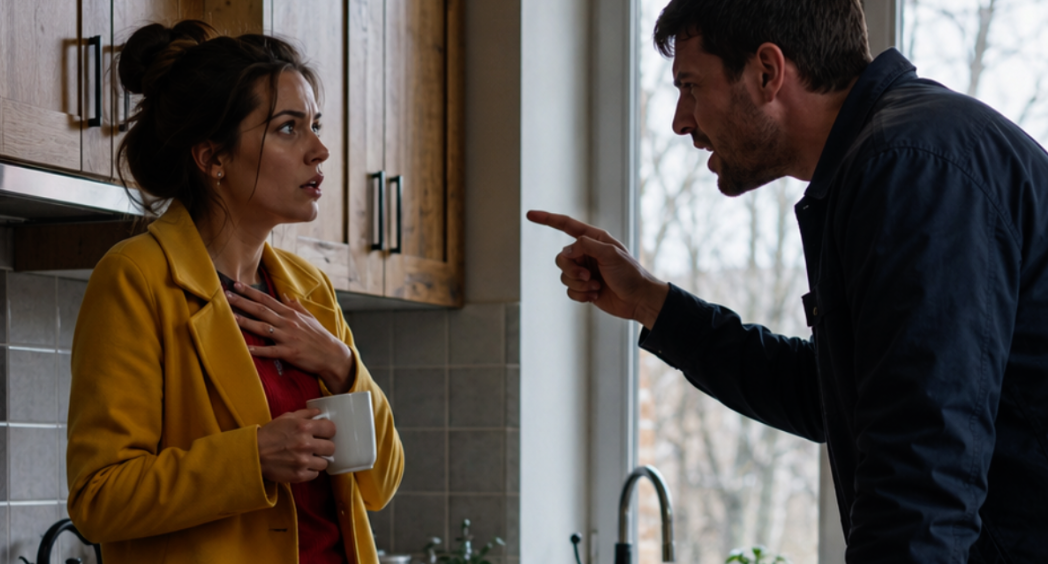
“You’ll call me in the evening?” I repeated. “Are you seriously suggesting that I go to the dacha alone, carry buckets around, dig in the dirt, while you sit in a warm apartment and work on your report?”
“Lena, why are you starting?” He turned around, and the familiar look of irritation appeared on his face, the one he always got whenever I tried to argue with his “brilliant” plans. “I’m working. Working for the family. And you like fussing around at the dacha anyway. You enjoy it.”
I did enjoy it. But I enjoyed it when we did it together. When he dug the beds and I watered them, when we grilled shashlik and laughed. But sitting alone in an empty house under a drizzling rain? That was about as high on my list of plans as jumping out of an airplane.
“I don’t like being there alone,” I said firmly. “Let’s go on Sunday, do everything quickly together. Or take Monday off.”
“Lena,” Sergei’s voice became metallic, “I’ve already decided. The car is fueled, your bag is packed. Let’s not make a scandal, all right? I’m tired after the week. I really need to work in peace today. You’ll go, tidy things up, and on Sunday evening I’ll pick you up.”
I looked at him. I looked for a long time. He lowered his eyes, walked to the stove, picked up a cloth, and began wiping the already clean surface. Something was wrong here. Very wrong.
At that moment, the phone in my bag rang. I glanced at the screen. It was my friend Tanya.
“Hi,” I said, without taking my eyes off my husband.
“Hi, Lenka! What are you doing today? Maybe we should go into town, see a movie? There’s a comedy playing, just right for us exhausted old hens,” Tanya’s cheerful voice chattered through the receiver.
“Tanya, I think I’m going to the dacha,” I answered, trying to sound calm.
“Where?” Tanya almost choked into the phone. “Are you crazy, Lena? In the rain? In the mud? Have you lost your mind? Your neighbors out there are a whole cast of characters, I remember how we had to fend off their goats last year. Anything could happen, and you’ll be alone.”
“Come on, the fence is high,” I said, almost word for word repeating what I had been thinking myself, though Tanya’s words made an unpleasant tightness form under my ribs. “Nobody climbs in.”
“Well, watch yourself,” Tanya wouldn’t let up. “And where’s your man? Is he going too?”
“He’s working,” I said shortly, watching Sergei pretend to be extremely busy washing dishes.
“He’s working,” Tanya snorted. “We’ve heard those fairy tales before. All right, Lenka, be careful. If anything happens, call me right away. And don’t sleep there during the day. What if some maniac shows up?”
“Tanya, thanks, that really calmed me down,” I sighed. “All right, kisses. I’ll call you later.”
I hung up. Sergei turned around.
“Tanya? What did she want?”
“She invited me to the movies,” I answered. “I told her we had dacha plans.”
He visibly relaxed. His shoulders literally dropped.
“That’s right. Your Tanya only thinks about going to the movies, while we have a house and a household to take care of. All right, come on, get ready. I took your bag out into the hall.”
Half an hour later, I was standing at the door in old jeans and a jacket, holding a bag of food and rubber boots. Sergei kissed me on the cheek and helped me put on my backpack.
“Did you take the house keys?” he asked, staring somewhere at the wall.
“Yes, I took mine.”
“Well, yes, yes,” he muttered. “All right, drive carefully. I’ll call.”
I stepped out onto the landing and turned around. Sergei was already closing the door, not even waiting for me to reach the elevator. Strange. Usually, he stood on the landing until the elevator left.
In the car, I started the engine and drove out of the courtyard. The road to our gardening community took about an hour. The rain would grow heavier, then almost stop, and the windshield wipers scraped monotonously across the glass. I kept replaying the morning conversation in my head and felt a dull anger boiling inside me. He could have simply said, “Lena, I really need to work.” Why all the grimacing, the fake cheerfulness, the sideways glances?
I turned on the speakerphone and called him.
“Hello, Lena, what is it? Did you forget something?” Sergei’s voice sounded tense, and I could hear some voices in the background.
“No, I didn’t forget anything,” I said. “Seryozha, tell me honestly, what happened? You’re acting jumpy today.”
“Nothing happened,” he snapped. “Have you already left? All right, I’ll call you back. I have a work call.”
And he hung up. I looked at the darkened phone screen and shook my head. Fine. I’d arrive and figure it out. Maybe things really were hectic at work, and I was just winding myself up.
The drive took even less than an hour. At the entrance to the gardening community, I nodded to the familiar watchman, old Pyotr, and drove along the broken dirt road to our plot. Our house stood deep inside, right by the forest. We had bought the plot three years earlier, invested a pile of money, renovated the old little house, and put up a new corrugated metal fence. It was my pride.
I drove up to the gate, turned off the engine, and stepped out into the fine, unpleasant rain. And immediately froze.
There was a different lock hanging on the gate. Completely new, shiny, with a long shackle. Our old rusty one was gone.
I blinked, thinking I must have mistaken it. I came closer. No, it was definitely not ours. Maybe Sergei had changed it and forgotten to tell me? That was unlike him, but who knew.
I took out my phone to call him, then changed my mind. After all, I had my own key. I pulled out the key ring, inserted the key into the lock… and it did not even turn. The lock was not just new. It was someone else’s, and my keys did not fit.
My heart gave an anxious thud. I stepped over to the small gate leading into the yard. There was a lock there too, but this one, on the gate, was our old one. I nervously unlocked it, went inside, and froze as if rooted to the spot.
The plot was in perfect order. Even too perfect. The paths had been swept, though we had not been there for almost a month. The currant bushes I had been planning to prune had already been neatly trimmed. Laundry was drying on the ropes stretched between the house and the shed. Someone else’s laundry. Old faded bed linen, some washed-out T-shirts, and monstrous flowered men’s underwear I would never have bought in my life.
I slowly walked toward the porch. My legs turned to cotton. My heart was pounding somewhere in my throat. I climbed the porch steps and pushed open the entryway door. It was not locked.
The entryway smelled of cabbage soup and tobacco. Someone else’s dishes stood on the shelves. My jar of grain had been moved aside, and next to it lay a pack of cheap pasta.
I looked into the house. The windows were fogged from the warmth inside. Through the cloudy glass, I could see silhouettes. Several people.
I opened the door and stepped in.
At the kitchen table, on my chairs, sat two women. One was elderly, heavyset, with thin gray hair gathered into a bun and a nasty look in her small eyes. The other was older, similar to her, with the same grasping little eyes. On the stove—my stove—the kettle was merrily boiling, and the smell of something burned hung in the air.
The elderly woman with the bun turned at the creak of the door and stared at me. The pause stretched on for several endless seconds. I looked at her, and she looked at me. Only the hiss of steam from the kettle broke the silence.
“Hello,” I finally forced out. My voice sounded muffled and unfamiliar. “Who are you?”
The woman with the bun suddenly spread into a smile. It was a bad smile, sugary and fake, like a cat that had eaten the sour cream.
“Oh, Lenochka, you came!” she exclaimed, throwing up her hands and rising from the table. “Zinaida and I are just sitting here, drinking tea, resting, breathing fresh air. It’s so beautiful here, so quiet. Seryozha said you were supposed to drop by today. So we were waiting for you.”
I looked at her and could not say a word. Seryozha said? Seryozha knew? My vision swam. The second woman, who had been called Zinaida, studied me curiously over her glasses without saying a word.
“By what right…” I began, but my voice broke.
“Come in, come in, don’t stand in the doorway,” my mother-in-law interrupted me, because I had finally recognized her. It was Raisa, Sergei’s mother, though she looked much older and more neglected than the last time we had visited. “We’re going to live here for a little while now. Seryozha allowed it. Don’t worry, we won’t bother you. There’s plenty of room.”
She said it so calmly, so casually, as if they had only stopped by for five minutes and had not settled into our house, changed the locks, and hung underwear on my clothesline.
I shifted my gaze from her to Zinaida, then to the window, behind which someone else’s laundry swayed in the wind, and felt a heavy, sticky rage boiling inside me, mixed with a wild, animal fear. My house had stopped being mine.
I stood in the doorway of my own house and felt the floor slipping out from under me. Raisa, my mother-in-law, looked at me with a syrupy smile that made my jaw clench. She was wearing some stale house robe, and her hair, which was usually dyed a neat light brown, had grown out and stuck up in gray strands. Beside her hovered the second woman, Zinaida, just as old and unkempt.
“What are you doing here?” I repeated, trying to pull myself together. My voice was still trembling.
“I already told you, we’re resting,” Raisa threw up her hands and took a step toward me as if she wanted to hug me. I instinctively recoiled. “Come in, why are you frozen in the doorway? You must be tired from the road and cold. We’ll pour you some tea.”
She spoke as if she were the mistress of the house and I were an uninvited guest.
“Raisa Ivanovna,” I deliberately addressed her formally to set a boundary, “I am asking you: by what right are you in my house?”
The smile slid off my mother-in-law’s face. Her eyes narrowed and became sharp.
“In your house?” she repeated, and her voice rang with steel. “My dear, my son built this house. He is the owner here. And I am his mother. So this is not your house, it is ours. Seryozha’s. And Seryozha let us in.”
“Seryozha let us in,” Zinaida repeated like an echo, speaking for the first time.
I looked at her. This second woman, apparently my mother-in-law’s sister, was sitting at the table with her cheek propped on her hand, looking at me with open curiosity. My cups, my sugar bowl, and my bread were on the table in front of them. I mechanically noted that the bread was stale, probably three days old. They had likely bought their own.
“When did he let you in?” I asked. “Why don’t I know anything about it?”
“There are a lot of things you don’t know,” Raisa snorted and turned toward the stove, lifting the kettle. “Do you even know, Lenochka, what is happening in our family? That Kolya, Seryozha’s brother, had a heart episode? That the doctors told him he needs fresh air, to live outside the city? No, you don’t know. All you care about is commanding everyone at your dacha, but when it comes to helping relatives, there’s none of that.”
I was stunned by her aggression. Uncle Kolya, Sergei’s brother, was a shady man. We barely communicated with him. He drifted around somewhere, drank, and I thought he had even served time once, long ago. Sergei did not like talking about him.
“What does Uncle Kolya have to do with this?” I breathed.
“Everything!” Raisa snapped around, holding a ladle in her hand. “He is living with us now. Well, he had been living in the city, in a dormitory, but they’re renovating there, so he was temporarily kicked out. We asked to stay with you—or rather, with Seryozha—but your apartment is small, we wouldn’t all fit. So Seryozha suggested we come here. We’ll live here until autumn, and then we’ll see.”
I listened and could not believe my ears. Until autumn? They intended to live here until autumn?
“And the lock?” I asked, remembering the new one on the gate. “Why did you change the lock?”
“Kolya changed it,” Zinaida spoke up, apparently deciding it was time to join in. “For safety. Your old lock could be opened with any nail. This one is good, reliable. Kolya gave us the keys.”
“The keys,” I repeated. “So now I don’t have a key to my own gate?”
“Then get one from Kolya,” Raisa shrugged. “He’ll come back from fishing in the evening. Ask him. It’s no big deal.”
She said it so calmly, so matter-of-factly, as if we were talking about some trifle. I looked at her, at Zinaida, at the unfamiliar dishes, at the dirty footprints they had tracked across the floor, and felt a wild, blind anger boiling inside me.
Without a word, I turned and went to the bedroom. The one Sergei and I had arranged for ourselves. We had a small room with a double bed, a wardrobe, and a dressing table that I had brought from the apartment when we bought a new one.
I pushed open the door and froze on the threshold.
Our bed was gone. Or rather, it was there, but the bed linen on it belonged to someone else. Rumpled, with some yellow stains on the pillows. On the dressing table stood cheap bottles of hairspray, a comb with gray hairs, and glasses in a worn frame. I flung open the wardrobe. My things—jackets, sweaters, jeans that I left here so I wouldn’t have to carry them back and forth—had been dumped at the bottom, in the corner, in a pile. And on the hangers hung some old-lady shapeless robes, greasy dresses, and torn sweaters.
I stepped into the hallway. My breath caught. Someone clearly lived in the little room we called the guest room, though essentially no one had ever spent the night there. The door was half open, and I saw a folding bed on the floor, and on it a bundle where an infant was wriggling. Beside the folding bed, a young girl sat on a chair, painting her nails bright pink and looking at her phone. With my nail polish. My phone? No, the phone was hers, cheap. But the polish… Tanya had given me that polish for March 8. I had barely used it and had been saving it.
The girl raised her head and stared at me.
“What are you doing walking around here?” she asked insolently.
“Me?” I was taken aback by such nerve. “I live here.”
“Oh,” the girl drawled without a trace of embarrassment. “Aunt Raya said the mistress would come. I’m Sveta, Uncle Kolya’s daughter. And this is mine.” She nodded toward the child.
I looked at her, at the infant who stirred and began to whimper, at my nail polish in her hands, and found no words.
“That is my nail polish,” I finally forced out.
The girl looked at the bottle, then at me, and grimaced.
“Oh, come on, big deal. Ours ran out, and I found this in the wardrobe. You’re not greedy, are you?”
I slammed the door and went back to the kitchen. My legs were shaking. Raisa and Zinaida were sitting at the table as if nothing had happened, drinking tea with ring-shaped crackers.
“What are all those people doing here?” I asked, trying to make my voice sound firm. “Are you going to tell me who all these people are and why they are living in my house?”
“Lenochka, don’t get worked up,” Raisa put down her cup. “I’m explaining to you: Kolya is with us. And with him is his daughter, Svetochka, and my great-grandson—that is, Kolya’s grandson. They had nowhere to go. We’re not strangers, we’re family. They’ll live here for a month or two, then they’ll get an apartment and leave.”
“A month or two?” I raised my voice. “And nobody asked me? This is my house! I hammered every nail here with my own hands, I sewed the curtains, I washed the floors! And you have already turned everything upside down, thrown out my things, and stolen my nail polish!”
“Watch your language,” Raisa snapped. “Nobody stole your things. There wasn’t enough room in the wardrobe, so we hung ours up and folded yours neatly. And if that polish is yours, Sveta will give it back. Don’t be greedy.”
My vision darkened. I ran out into the entryway, fumbled for my phone in my pocket, and pressed Sergei’s number. He did not answer right away. And when he did, I heard noise, loud voices, and male laughter in the background.
More details
door
Beds and bed frames
doors
“Hello?” Sergei’s voice sounded somehow drunk and cheerful.
“Seryozha, what are you doing?” I shouted into the phone. “Do you know that your mother and a whole crowd of people are living at our dacha?”
“Oh, you’ve already arrived?” he replied, and there was not a drop of surprise in his voice. “Well, yes, I wanted to tell you. Mom asked. Kolya has problems. They won’t stay long.”
“Won’t stay long?” I was suffocating. “They’ve taken over everything here! They threw out my things, strangers are sleeping in our bedroom, and there’s some Sveta with a child in the guest room! Did you know? Did you know all this and not tell me?”
“Lena, don’t shout,” his voice became irritated. “I thought you’d react normally. They’re family. Mom, my brother. They’ll live there for a little while. Why are you acting like they’re strangers?”
“Like they’re strangers?” I was nearly crying. “They are strangers! Seryozha, why did you change the lock? I don’t have a key now!”
“Oh, Kolya changed that. I allowed him. Ask him for the keys. Lena, everything will be fine. Please don’t make a scene in front of Mom. All right, I’ll call you back. I have things to do.”
He hung up. I stood in the entryway, listening to the beeps, and felt the world collapsing. My hands were shaking, nausea rising in my throat. I returned to the house. Raisa and Zinaida were looking at me with faint mockery.
“Well, did you talk to your dear husband?” Raisa asked. “Did he tell you that we’re here with his permission?”
I looked at her. At this woman who had always disliked me, who had believed I was not good enough for her son, who tried to sting me at every meeting.
“Where are my things?” I asked quietly.
“In the pantry,” Raisa waved her hand. “Everything of yours is there. We are civilized people, we didn’t throw it out.”
I went to the pantry. It was a tiny windowless room where we kept tools, jars of preserves, and various junk. I opened the door and saw it. My things had not simply been folded. They had been dumped in piles, mixed with some rags, with a dirty padded jacket lying on top. It smelled of dampness and mice.
I closed the door and pressed my forehead against the wall. What should I do? What was I supposed to do now?
Raisa’s voice came from the kitchen:
“She’s so nervous, she’s shaking. Seryozha spoiled her. Nothing, she’ll live with us and toughen up.”
“And she won’t throw us out?” Zinaida asked.
“Where will she throw us?” Raisa chuckled. “Seryozha won’t allow it. He’s an obedient boy. And that one… let her get used to it. We’re not strangers, after all.”
I pulled myself away from the wall and went into the house. I needed to get a grip. I sat on a stool in the corner of the kitchen, farther away from them.
“I’m hungry,” I said, trying to speak evenly. “I have food in the bag.”
“We’ve already eaten,” Raisa answered. “Go cook for yourself. We’re not servants. There’s the stove, water is in the bucket.”
I got up, took my bag, pulled out bread, cheese, and sausage. Their stale bread lay on the table, my butter dish was empty, and the cheese I had bought last week and forgotten here had apparently been eaten too.
“Where is my cheese?” I asked.
“What cheese?” Raisa asked innocently. “Oh, that one in the fridge? We ate it. We thought it was yours—well, common. You don’t mind, do you? We didn’t know you were coming.”
I said nothing. I sliced the sausage, made a sandwich, and went out onto the porch. The rain had almost stopped, but the sky was gray and heavy. I sat on the steps, chewed my sandwich, and looked at the stranger’s laundry still hanging on the line. Somewhere behind the fence, a dog barked. Voices and laughter came from the house. My life had turned into someone else’s.
The phone vibrated. Tanya.
“Well, Lenka, how are you there? Did you arrive?” she asked.
“Tanya,” I said quietly, so they would not hear me inside the house, “something has happened…”
“What?” Tanya immediately became alert. “What happened?”
“They’re all here,” I did not know how to explain it. “My mother-in-law, her sister, my husband’s brother with his daughter and a baby. They’re living here. They’ve already changed the locks and thrown out my things.”
“What?” Tanya screamed into the phone. “Are you serious? And where is Seryoga?”
“Seryoga knows. He let them in. And he didn’t tell me.”
“You have got to be kidding me,” Tanya gasped. “Lenka, what kind of lawless nonsense is this? Throw them out! This is your dacha! You bought it together!”
“I can’t,” I sobbed. “That man, Uncle Kolya, he’s shady. I’m scared.”
“Listen,” Tanya began speaking quickly and angrily, “do you remember the documents for the plot? Who is the owner?”
“We both are. It was bought during the marriage, so it’s joint.”
“There!” Tanya brightened. “That means you have every right! You are the owner! Call the police and have them removed!”
“Tanya, what if they’re registered here?” I asked, remembering something I had heard somewhere.
“Registered in a dacha house?” Tanya snorted. “Are you out of your mind? It’s not a residential house, it’s a garden house. You can’t register there unless you specifically formalized it. Did you?”
“No,” I said. “We didn’t even think about it.”
“There you go!” Tanya hissed with excitement. “That means they are nobodies there. Tell them: either they leave, or you call the cops. Don’t be afraid, Lenka, you’re right.”
I listened to Tanya and felt a small flame of hope lighting inside me. She was right. I was the owner. I had rights. I stood up from the porch, straightened my shoulders decisively, and went inside.
The kitchen was overheated. Raisa and Zinaida were no longer drinking tea. They had taken out some knitting and were sitting comfortably, as if they had lived there forever.
“Raisa Ivanovna,” I said firmly. “I need to talk to you.”
She raised her eyes to me.
“Talk, then.”
“The thing is, this house is jointly owned by Sergei and me. I have the right to decide who lives here and who does not. I did not invite you. And I am against you being here. You need to move out.”
Raisa put down her knitting. Her face became covered in red blotches.
“What?” she said threateningly. “You are throwing us out? Your husband’s mother? How can you even say such a thing?”
“I am not throwing anyone out,” I said, trying not to tremble. “I am saying that I did not give consent for you to live here. That is my right.”
At that moment Sveta came out of the room, holding the whimpering child in her arms.
“What’s all the noise?” she asked, yawning.
“There she is,” Raisa pointed at me, “trying to evict us. Onto the street, with a small child.”
Sveta stared at me with hatred.
“Listen, you—” she began, but the sound of the front door opening interrupted her.
A man stumbled into the entryway. Short, stocky, with an unshaven face and cloudy eyes. He wore rubber boots and a dirty padded jacket, and in his hands were fishing rods and a bucket of small fish. This was Uncle Kolya, Sergei’s brother.
He entered the kitchen, set the rods in the corner, looked at me, and smirked.
“Oh, the mistress has arrived,” he said in a hoarse voice. “Hello, Lena.”
I said nothing, feeling fear seize my throat. He reeked of alcohol and fish.
“Kolya,” Raisa rushed toward him, “she is throwing us out. Says the house is hers and that we’re strangers here.”
Uncle Kolya looked at me. His gaze was heavy and sticky.
“So she’s throwing us out,” he said slowly. “Well, well. And have you seen the documents for the house, Lena? Who is the owner here?”
“Sergei and I,” I replied, trying to speak firmly.
“Wrong,” he smirked and reached into the pocket of his padded jacket. “Seryozhka signed a gift deed for me six months ago. For half the house. So, my dear, I am just as much an owner here as you are. I have the right to live here. And I have the right to let my mother in. And my daughter.”
He pulled a crumpled paper from his pocket, unfolded it, and thrust it in my face. I saw an official seal, some signature, and a date. Six months ago.
The blood drained from my face. Six months ago. Sergei had signed over half the house to his brother six months ago and had said nothing to me. I stared at that paper and could not see the letters. There was a roar in my ears.
“Do you understand?” Uncle Kolya put the paper back. “So don’t boss people around here. We’ll live here. And if you don’t like it, go back to the city. Nobody’s keeping you.”
Sveta giggled. Raisa smiled triumphantly. Zinaida buried herself in her knitting again.
I staggered out of the kitchen. My legs would not obey. I went out onto the porch, down into the wet garden, stepped over to the fence, and vomited. Right into the currant bushes I had planted so lovingly.
The phone vibrated again. Sergei.
I answered, and before he had time to say anything, I screamed:
“I will never forgive you for this. Never. Do you hear me? You betrayed me.”
Then I hung up. After that, I turned the phone off completely. I stood in the fine rain, clutching the dead device in my hand, and stared at the house that was no longer mine.
I do not know how long I stood in the rain. Water ran down my collar, my hair got wet and stuck to my face, but I felt nothing. The paper still stood before my eyes, crumpled, with an official seal. A gift deed. For half the house. Six months ago.
Six months ago, Sergei and I had still been sleeping in the same bed. Six months ago, he told me he loved me. Six months ago, we chose new curtains for the living room together. And all that time, he knew he had given half our house to his alcoholic brother.
I tried to remember that day. Six months earlier had been autumn, October. Sergei had taken time off work then, said he needed to go take care of some business. I had even been surprised that he did not take the car and went by bus instead. He said he would leave the car for me in case I wanted to visit my mother. At the time, I was touched by his thoughtfulness. But it turned out he had been going to the notary to sign a gift deed for his brother.
The cold seeped into my bones. I realized that if I did not go back inside, I would collapse with pneumonia. I had to force myself to return.
The kitchen light was on, the house was heated, and it smelled of fish soup. Uncle Kolya had apparently already dumped out his fish and was now sitting at the table with a mug of something cloudy in front of him, definitely not tea. Raisa was bustling by the stove, Sveta was rocking the baby, and Zinaida was dozing in the corner.
I entered, wet and trembling, and all eyes turned to me.
“Oh, there she is,” Uncle Kolya chuckled. “Got soaked? Sit down, warm up. The fish soup will be ready soon.”
He spoke as if nothing had happened. As if he had not just thrust a paper in my face that crossed out my life.
“I don’t want your fish soup,” I answered, trying to keep my voice from shaking. My teeth were chattering, and it was obvious.
“As you wish,” Uncle Kolya shrugged indifferently and took a sip from his mug.
I went to our bedroom. No longer ours. On the bed where Sergei and I had slept lay some rags, apparently Raisa’s things. I sat on the chair by the dressing table and turned on my phone. The screen lit up, and notifications immediately poured in. Seven missed calls from Sergei. Three from Tanya. And a text from my husband: “Pick up the phone. I’ll explain everything. You misunderstood.”
I called Tanya. She answered after the first ring.
“Lenka! Why aren’t you answering? I’m losing my mind over here! What happened?”
“Tanya,” I said, and my voice broke into tears. “Tanya, he signed a gift deed. For half the house. To his brother. Six months ago. And he didn’t tell me.”
Silence hung in the receiver. Then Tanya exhaled:
“What?”
“Exactly. I saw it with my own eyes. A document with a seal. Now this Kolya is an owner. They have the right to live here. And I can’t throw them out.”
“That can’t be!” Tanya shouted. “How did he do that without you? It’s jointly acquired property!”
“I don’t know, Tanya. I don’t know. He said it was a gift deed. Maybe he can give away his share.”
“Did you check? Are you sure it’s not fake?”
“What fake? I saw the seal, the signature, the date. It’s a real document.”
“Lenka, listen to me carefully,” Tanya began speaking quickly and clearly, like a commander. “Tomorrow, go to the administration and request an extract from Rosreestr. It will show who the owner is. If he really registered it, then we’ll think about what to do. But for now, don’t panic. Pull yourself together. You’re there alone with them. They’ll devour you.”
“I’m scared, Tanya,” I whispered. “That Kolya is frightening. And that Sveta is brazen. And my mother-in-law… they hate me.”
“Don’t be afraid of them,” Tanya said harshly. “You’re the owner until proven otherwise. Keep in mind, even if he has a share, you have a share too. They have no right to throw you out or touch your things. That’s unlawful self-help. If anything happens, call the police right away.”
“All right,” I said, wiping away my tears. “Tanya, thank you. You’re the only one I have.”
“Hold on, friend. I’ll come tomorrow if needed. Just say the word.”
“No, don’t,” I replied. “I’ll handle it myself. Or I won’t. I don’t know.”
We said goodbye. I sat a little longer, then got up and went to the kitchen. Something had to be decided. Sitting in the bedroom and crying was not an option.
The fish soup was ready in the kitchen. Raisa was ladling it into bowls, Sveta was already eating, blowing on the spoon, Uncle Kolya was slurping loudly and dipping a crust of bread into his bowl. Zinaida had woken up and pulled her chair closer to the table too.
“Sit down,” Uncle Kolya muttered without looking at me. “It’ll get cold.”
I sat. Raisa placed a bowl of fish soup in front of me. It was rich, with large chunks of fish, smelling of dill and bay leaf. I was starving; all I had eaten that day was a sandwich in the morning.
I picked up a spoon and tasted it. It was good. The fish was probably fresh, straight from the river.
“Well, Lena,” Uncle Kolya began, pushing his empty bowl aside and taking out a pack of cheap cigarettes. He lit one right there in the kitchen, blowing smoke at the ceiling. I wanted to say that nobody smoked in our house, but I stayed silent. “Shall we talk?”
“About what?” I asked, not lifting my eyes from my bowl.
“About life,” he smirked. “You’re angry with me, I understand. You think I’m a stranger here, that I came and seized everything. But you misunderstood. I don’t wish you any harm.”
I raised my eyes. He was looking at me almost kindly. Almost. But there was something in his eyes that made me uneasy.
“What do you wish?” I asked.
“To live,” he answered simply. “I’m sixty years old, Lena. I’m a second-degree disabled person, my heart is no good. The doctors said I need to be outside the city, fresh air, peace. Where am I supposed to get a place outside the city? I have nothing. Only my own brother. So Seryozha helped.”
“And why didn’t he tell me?” I asked. “Why secretly?”
Uncle Kolya took a drag and released the smoke.
“Would you have agreed?” he squinted. “You’re a city woman, educated. What do you need people like us for? You would never have agreed. So Seryozha didn’t tell you, so as not to upset you. And then everything somehow got rolling. He thought you’d understand when you saw it. Family, you have to help.”
“Family,” I repeated bitterly. “Do you consider me family?”
“Are you not family?” Raisa spoke up. “You’re married to my son. That means you’re our daughter-in-law, almost a daughter. Why are you grumbling?”
I looked at her. A daughter. She had never considered me a daughter. At every meeting, she tried to needle me that I cooked wrong, dressed wrong, raised children wrong—children we did not have, which was a separate painful topic.
“Raisa Ivanovna,” I said quietly, “you have never loved me. Why pretend now?”
She choked, putting her mug down.
“What are you making up now?” her voice became shrill. “I always treated you with warmth, and you—”
“What warmth?” I interrupted, feeling anger rising inside me. “When at our wedding you told my mother I had bewitched Seryozha because he was a lodger with money? When I had a miscarriage and was in the hospital, and you didn’t even call? When at every meeting you hinted that I was barren because I wasn’t giving birth?”
Silence hung in the kitchen. Sveta stopped chewing and stared at me with curiosity. Zinaida anxiously shifted her gaze from me to Raisa. Uncle Kolya put out his cigarette in the empty plate.
“Stop that,” he said harshly. “Don’t touch Mother.”
“I’m not touching her,” I replied. “I’m simply telling the truth. Why are you putting on a performance here? You don’t love me, I don’t love you. Let’s live honestly.”
“Fine,” Uncle Kolya agreed unexpectedly easily. “We’ll live honestly. I’ll tell you straight: we are not leaving. I have a share here. The house is now mine, yours, and Seryozha’s. Three owners. We will divide the territory.”
“Divide how?” I did not understand.
“Like this.” He spread his hands. “We’ll divide the rooms. The kitchen is shared. The plot in half, or however we agree. You live in the city, and we’ll be here permanently. That means we need more conveniences.”
I looked at him and could not believe my ears. They intended to live here permanently? And what about me? What about Sergei and me? We came here every weekend. We rested here. Our souls rested here.
“And Sergei?” I asked. “What does Sergei say?”
“What about Sergei?” Raisa smirked. “Seryozha is a smart boy. He listens to his mother. He said we can live here as long as we want. And Kolya is now an owner, so all questions go to him.”
“Give me his phone number,” I asked. “I want to talk to him.”
“Call him,” Uncle Kolya pushed his cheap button phone toward me. “Only he won’t tell you anything new.”
I took out my own and called Sergei. He answered immediately.
“Lena,” he began quickly, “where are you? Why weren’t you picking up? I was worried.”
“I’m at the dacha, Seryozha,” I replied. “At my dacha, where your relatives are living, the ones who changed the locks and threw out my things.”
“Lena, don’t start,” he said tiredly. “I’ll explain everything. We’ll talk when I come.”
“When will you come?” I asked.
“Tomorrow, probably. Or the day after. I have work.”
“Seryozha,” I tried to speak calmly, “did you sign a gift deed to your brother? Six months ago?”
There was a pause in the receiver. A long, heavy pause.
“How do you know?” he finally asked.
“They showed me the document. Did you really do this? Without me?”
“Lena, it’s my share,” his voice sounded guilty, but firm. “I have the right to dispose of my share. The house is ours together, but we have equal shares. I can give my share to whoever I want. It’s legal.”
I closed my eyes. He was right. Legally, he was right. We owned the house in equal shares. By law, he could do whatever he wanted with his share—sell it, give it away, leave it in a will. He had that right. And he was not required to ask me.
“Do you understand what you have done?” I whispered. “Now they are the owners here. They will live here. And us?”
“We’ll come as guests,” he said. “Lena, why are you so worried? They’re my family. My mother, my brother. They’re old and sick. They need help. And we are young and healthy. We can live in the city. The dacha won’t run away.”
“You’ve lost your mind,” I breathed. “This is our dacha. We built it, we invested money into it. And now you’ve handed it over to your drunks?”
“Don’t you dare talk about them like that!” he roared. “That is my mother! My brother! And who are you? You’re just a wife. One who can’t give me children and only knows how to count money.”
It hurt so much that I stopped breathing. He had never spoken like that before. Never reproached me for infertility. We both knew that the problem was with both of us. The doctors had said so: an infertile marriage, the cause unclear, both of us needed treatment. We had been undergoing treatment, but so far without results. And now he had thrown it in my face.
“You…” I began and fell silent. I had run out of words.
“All right, forgive me,” he muttered. “That came out wrong. Lena, let’s talk tomorrow. I’ll come and we’ll resolve everything.”
“Don’t come,” I replied. “No need. I’ll resolve it myself.”
And I hung up.
Everyone in the kitchen was looking at me. Sveta with her mouth open, Zinaida with sympathy—strangely enough—Raisa with triumph, and Uncle Kolya with a faint smirk.
“Well, did you talk?” he asked. “Are you convinced?”
I stood up from the table.
“Where is my room?” I asked. “Where can I sleep?”
“In the pantry,” Raisa nodded. “Your things are there. We’ll set up a folding bed for you.”
“In the pantry?” I repeated. “You are sending me to sleep in the pantry?”
“Where else are you going to sleep?” Raisa seemed surprised. “Zinaida and I are in the bedroom, Sveta and the baby are in the guest room, Kolya made himself a bed on the veranda. There’s no more space. You’re alone; you’ll fit perfectly in the pantry.”
I looked at her. She was not joking. She truly believed that I, the lawful owner, should sleep in the pantry among tools and jars of pickles.
“I’m leaving,” I said. “I’m leaving now.”
“Well, go then,” Raisa shrugged. “And tomorrow you’ll come and look for a place again. Or wait for Seryozha. Your choice.”
I left the kitchen, went to the entryway, and put on my wet jacket. My hands were trembling so badly I could barely get into the sleeves. I stepped out onto the porch. The rain had almost stopped, but it had grown cold and dusk was falling. I got into the car, started the engine, turned the heater up all the way, and sat there, staring at the dark windows of the house where the lights were on and, probably, they were laughing at me.
Leave? Where? To the city, to Sergei? To look at his guilty face? To my mother? To tell my mother that my husband had given the dacha to his alcoholic brother and sent me to sleep in the pantry? My mother would have a heart attack.
I took out my phone and called Tanya.
“Tanya, can I come to you?”
“Of course, come! Where are you? What happened?”
“I’m at the dacha. I’m leaving now. I’ll be there in an hour. I’ll tell you.”
“I’m waiting for you, Lenka. Hold on.”
I hung up, wiped my tears, and drove off the plot. At the gate, I had to get out to lock the small gate with our old lock. I still had not received a key to the new gate. I had not even asked. Those gates were not mine anymore anyway.
The drive to the city took more than an hour. I drove slowly because tears kept streaming from my eyes and the road blurred. Sergei’s words kept spinning in my head: “Who are you? You’re just a wife.” Just a wife. One who cannot give birth. One who has no say. One who should sleep in the pantry while his mother and brother occupy her bedroom.
I reached Tanya’s place an hour and a half later. She lived on the first floor of a Khrushchev-era apartment block and opened the door immediately, in a robe, disheveled, but with a firm look.
“Come in,” she said, pulling me into the hallway. “Take your clothes off. You’re all wet. And cold as a frog.”
I undressed and went to the kitchen. Tanya was already putting on the kettle, taking cheese and sausage from the fridge, and opening a jar of pickles.
“Tell me,” she commanded, seating me at the table. “Everything from the beginning.”
And I told her. Everything. About the locks, the stranger’s laundry, Sveta with my nail polish, the gift deed, Sergei’s words. Tanya listened silently, only her face becoming darker and darker.
“Bastard,” she said when I finished. “Your Seryozha is a rare bastard. Sorry, of course, but it’s true.”
“I know,” I replied. “Tanya, what should I do?”
“What is there to do?” Tanya poured me tea and pushed a sandwich toward me. “Tomorrow you go to the administration and request an extract from Rosreestr. Then you go to a lawyer. Let them see if something can be done about that gift deed. Maybe it can be challenged.”
“Challenged?” I raised my eyes.
“Yes. If he did it without your knowledge, if it was jointly acquired… Though a share is his share, so that’s complicated. But a lawyer knows better. And also,” Tanya lowered her voice, “have you checked the apartment documents? Is the apartment also jointly acquired?”
“Yes, we bought it during the marriage,” I replied.
“There. If he disposed of the dacha like that, he may have something planned with the apartment too. You need to check everything. All the documents.”
I looked at Tanya and felt the fear gradually letting go. She was right. I could not fall apart. I had to fight.
“Thank you, Tanya,” I said. “You’re a true friend.”
“Obviously,” she smirked. “All right, let’s sleep. We need to get up early tomorrow.”
She made up the sofa for me in the living room, gave me clean bedding and a towel. I took a shower, washed off that day full of filth and humiliation, and lay down. But I could not fall asleep for a long time. I kept thinking about what would happen tomorrow. And about the fact that my husband, with whom I had lived for ten years, had turned out to be a stranger.
I woke up because someone was shaking my shoulder. I opened my eyes and saw Tanya’s face right in front of me. It was already light outside, sunlight breaking through the thin curtains.
“Lenka, get up,” Tanya was already dressed and combed, holding a mug of coffee. “It’s almost nine. I didn’t want to wake you, you fell asleep so late, but it’s time. Business is waiting.”
I sat up on the sofa, rubbing my face with my palms. My head was buzzing, and my mouth was dry as if after an illness. I remembered the previous day, and my heart clenched with pain again.
“What time is it?” I asked hoarsely.
“A quarter to nine. Here, drink coffee.” She thrust the mug into my hands. “I made breakfast. Eat, and we’ll go.”
“Where?”
“What do you mean, where? To the multifunctional center, for the extract. Have you forgotten? We talked about it yesterday.”
I took the mug and sipped. Hot, strong, with sugar. Tanya knew how to bring me back to life.
“You’re coming with me?” I asked.
“Did you think I’d let you go alone?” she snorted. “No way. We’ll go together. I took time off today. I said my friend was unwell. My boss is an understanding woman; she let me go.”
I looked at her with gratitude. Tanya and I had been friends since school, for more than twenty years. She had never abandoned me in trouble.
“Thank you, Tanya,” I said, feeling tears rise in my throat.
“Oh, none of that snot,” she waved me off. “Eat. I made sandwiches. And dress warmly, it’s windy outside.”
I ate, got dressed, and combed my hair. Looking at myself in the mirror was frightening—my face was swollen, my eyes red. But never mind, I would survive.
We left the apartment. Tanya lived not far from the center, and it was about a fifteen-minute walk to the multifunctional center. We walked slowly. I told her details from the previous evening that I had not had time to tell her at night. About how Uncle Kolya smoked in the kitchen, about the fish soup, about Sergei’s words.
“Scum,” Tanya commented briefly. “And your Seryozha is a dog. Sorry, of course.”
“I’m not offended anymore,” I replied. “I’ve already burned through everything.”
There were not many people at the multifunctional center. We took a number and sat down to wait. The line moved quickly, and after about twenty minutes we were called to the window.
“Hello,” I said to the young woman in glasses. “I need an extract from the Unified State Register of Real Estate for a property. For a house and a plot.”
“Address?” the woman asked, preparing to type.
I dictated the address of our gardening community and the plot number.
“Are you the owner?” the woman asked, looking at the monitor.
“Yes. My husband and I.”
“Passport, please.”
I handed over my passport. The woman entered the details and tapped on the keyboard. Then she fell silent, peering at the screen.
“Right,” she said slowly. “The land plot is registered to two people. Shared ownership, one-half each. And the house… Hmm.”
“What?” I felt my heart drop. Tanya squeezed my hand.
“The house is also shared ownership,” the woman said. “But the shares are distributed differently. Do you need a full extract or a short one?”
“Full,” I replied. “The fullest one.”
“All right. Wait.” The woman went somewhere deeper into the office. I looked at Tanya. She looked at me. We were both silent, but I knew she was thinking the same thing I was. The woman had seen something in the computer, something bad.
About ten minutes later, she returned with papers.
“Here,” she said, handing me several sheets. “The extract is ready. Pay four hundred fifty rubles at the terminal.”
I paid, took the papers, and we went outside. I could not sit on a bench to read them—my hands were shaking. We moved over to the wall of the building, and I unfolded the pages.
I read for a long time, absorbing every line. Tanya stood beside me and looked over my shoulder.
“Well?” she could not stand it.
I found the section titled “Rights Holders” and read aloud:
“Land plot: Elena Viktorovna, one-half share. Sergei Ivanovich, one-half share. Residential house: Elena Viktorovna, one-third share. Sergei Ivanovich, one-third share. Nikolai Ivanovich, one-third share. Registration date: October fifteenth of last year.”
I raised my eyes to Tanya. Her jaw dropped.
“So,” she said slowly, “he didn’t just give away his own share? He reduced your share too?”
“I don’t know.” I reread it again and again. “It says I have one-third. Before, I had one-half. How is that possible?”
“Right.” Tanya snatched the papers from me. “Give them here. Are you sure you used to have half?”
“Of course I’m sure. We bought it during the marriage. It was equal. That’s how the notary registered it. I remember I had the ownership certificate in my hands. The old paper one.”
“Where is it?”
“At home, in the wardrobe, in the documents folder. Or at the dacha? I don’t remember. Sergei and I kept them together.”
“I see.” Tanya turned the papers over in her hands. “Lenka, this is very suspicious. To reduce your share, your consent was needed. Did you sign anything?”
“No!” I nearly shouted. “I didn’t sign anything. I didn’t even know he was arranging this gift deed.”
“Then how did they do it?” Tanya frowned. “Let’s go to a lawyer. Right now.”
“To whom?”
“I know someone.” Tanya was already pulling me by the hand. “He helped my ex with alimony. Smart guy. Not far from here, on Sovetskaya Street.”
We walked quickly. I could barely keep up with Tanya. My legs tangled under me, and there was a roar in my head. One-third. I had one-third of the house left. And that Kolyan, who had been catching fish yesterday and smoking in the kitchen, had the same share as I did.
The lawyer sat in a small office on the second floor of an old building. On the door was a sign: “Civil Law Consultations.” We went in. At the desk sat a man of about fifty, slightly bald, wearing glasses, with a tired face.
“Hello,” Tanya said. “Do you remember me? I’m Tatiana, Viktor’s friend. You helped him with alimony.”
“Ah, yes, I remember,” the lawyer nodded. “Come in, sit down. What happened?”
I sat opposite him and put the extract on the table.
“Here,” I said, trying to speak calmly. “Please look at this. I need to understand whether this is legal.”
The lawyer took the papers, put on his glasses, and began reading. Tanya and I sat silently and watched him. The minutes stretched endlessly.
“Interesting situation,” he finally said, putting the papers aside. “Tell me everything in detail. What kind of house, when you bought it, how it was registered, who the owners are.”
I told him. Everything, from the very beginning. About the purchase, about our equal shares, about Sergei, about his brother, about the previous day, about the gift deed they had shown me.
The lawyer listened attentively, occasionally asking questions and making notes in a notebook.
“So,” he said when I finished. “The situation is complicated, but not hopeless. First, the gift deed for the share. If your husband gave his share to his brother, that is his right. A notary certified it, and the law allows it. The question lies elsewhere. You said you had half the house. Now you have one-third. That means someone disposed of your share as well.”
“But I didn’t sign anything,” I repeated.
“That’s the point,” the lawyer nodded. “Your share cannot be reduced without your consent. Unless, of course, you signed some document without looking. Or unless the signature was forged.”
“Forged?” My breath caught.
“Yes. It happens. Husbands bring their wives papers and say, ‘Sign here, it’s for taxes,’ and who knows what is actually there. Did you sign anything like that?”
I thought. Six months ago… In autumn. What happened in autumn? Sergei had indeed brought some papers. He said they were for tax recalculation, that the administration required them. I signed without reading. I trusted him.
“There was something,” I said quietly. “He brought papers. I signed.”
The lawyer and Tanya exchanged glances.
“What papers?” the lawyer asked. “Do you remember?”
“No, I don’t. He said it was for taxes. That it was some formality.”
“I see,” the lawyer sighed. “Then there are two options. Either you signed consent to redistribute the shares, and then everything is legal. Or the signature was forged, and then this is a criminal matter.”
“What should I do?” I asked.
“To begin with, you need to request from Rosreestr copies of the documents on the basis of which the changes were made. Then we will see exactly what you signed. Or what was signed for you. Bring me those papers, and then we’ll think.”
“Does that cost money?” Tanya asked.
“The request to Rosreestr requires a state fee, not much. As for my consultation…” He named a quite acceptable sum. “If it goes to court, that will be a different matter.”
I nodded. I did not have much money, only my own personal savings, but it would be enough for this.
“I understand,” I said. “Thank you. I’ll make the request.”
We left the lawyer, and I felt slightly calmer. There was a plan. There was something to do.
“Tanya, thank you so much,” I said. “You have no idea how much you’re helping me.”
“Forget it,” she waved it off. “This is a matter of principle. I hate people like that. Come on, let’s go back to the MFC and write the application for copies.”
We returned to the multifunctional center, took a new number, and filled out an application for copies of the title documents. We were told they would be ready in five business days.
When we stepped outside, my phone rang. Sergei.
I looked at the screen, and everything inside me turned over. Anger, pain, resentment—all mixed into one tight knot.
“Answer,” Tanya said. “I’ll stand nearby.”
I pressed accept.
“Hello.”
“Lena,” Sergei’s voice was guilty and soft, the way he usually spoke when he had done something wrong. “Lena, I’m in the city. I came. Can we meet? Talk.”
“What is there for us to talk about?” I asked coldly.
“Lena, I’ll explain everything. Forgive me for yesterday. I shouldn’t have said that. I’m an idiot. Please, let’s meet.”
I looked at Tanya. She nodded.
“Where?” I asked.
“By the park, at the entrance. In an hour.”
“All right.”
I hung up.
“How are you?” Tanya asked. “Will you go?”
“I’ll go. I want to look him in the eye.”
“I’m coming with you,” Tanya said firmly. “I’ll sit on a bench nearby. If anything happens, I’ll come over.”
“Thank you.”
We headed toward the park. There was still an hour before the meeting, so we went into a café and drank a cup of coffee each. Tanya tried to distract me, telling stories from work, but I barely listened. The same thoughts spun in my head: how could he? Why? For what reason?
At exactly one in the afternoon, we approached the park entrance. Sergei was already standing there, smoking, though he had quit about five years earlier. Seeing me, he put out the cigarette and stepped toward me.
“Lena,” he said, trying to look into my eyes.
“Don’t come closer,” I stopped him. “Stand where you are. Say what you wanted to say.”
He froze. He looked rumpled, unshaven, his eyes red.
“Lena, I’m an idiot,” he began. “I ruined everything. Forgive me.”
“What exactly did you ruin?” I asked. “Signing a gift deed to your brother? Or sending me to sleep in a pantry? Or calling me barren?”
“That’s not what I meant.” He turned pale. “I lost control. Forgive me.”
“Tell me, Seryozha,” I looked straight into his eyes, “why did you do it? Why did you sign the share over to your brother?”
“He asked,” Sergei replied. “Mom asked. Kolya has problems. He has nowhere to live. I thought it was temporary.”
“Temporary?” I almost laughed. “He’s an owner now. That’s not temporary. That’s forever. Or did you think he would later gift the share back to you?”
Sergei remained silent.
“And what about me?” I asked. “Why do I now have one-third instead of half?”
He flinched.
“How do you know?”
“I know. I already got the extract. So why?”
“Lena,” he hesitated, “there was a situation… Kolya said it would be fairer that way. So everyone would have equal shares. I thought you wouldn’t find out.”
“You thought I wouldn’t find out that part of my house had been stolen from me?” I raised my voice. “Have you lost your mind?”
“Nobody stole anything,” he mumbled. “You signed it. You signed the consent yourself.”
“I signed a paper you gave me without reading it!” I could no longer hold back. “You said it was for taxes! You deceived me!”
Passersby began to glance over. Sergei looked around, embarrassed.
“Lena, not here,” he pleaded. “Let’s go somewhere and talk calmly.”
“No,” I cut him off. “Here. Tell me plainly: did you forge my signature, or did I sign without looking?”
“You signed,” he said quietly. “I gave you the papers, and you signed.”
“And you didn’t tell me what they were?”
“I thought you wouldn’t understand. I thought it would be easier this way. Kolya asked very insistently. He said that if he had a share, he could take out a loan and finish building the house. And I thought we’d return everything later.”
I looked at him and could not believe my ears. A loan. Uncle Kolya wanted to take out a loan secured against a share of the house. And if he did not pay it back, the house would be taken. My third too.
“You are an idiot,” I said calmly. “You are simply an idiot. You handed our house over to an alcoholic who wants to take out a loan. Do you understand that we could lose everything?”
“We won’t lose it,” he assured me. “Kolya is a decent man. He’ll pay it back.”
“Kolya is an alcoholic who has been in prison!” I was shouting now. “Have you completely lost your mind?”
Tanya appeared from behind me. She walked up and stood beside me.
“Everything okay, Len?” she asked, glaring at Sergei like a wolf.
“Everything is fine,” I answered. “We’re just finishing. Seryozha, I’m filing for divorce. And I will challenge your schemes with the shares. You deceived me, and I will not leave it like this.”
Sergei turned even paler.
“Lena, don’t,” he said. “Let’s talk. I’ll fix everything.”
“How will you fix it?” I asked. “Revoke the gift deed?”
“I’ll talk to Kolya. He’ll return the share.”
“He won’t,” I snapped. “And you know it. Goodbye, Seryozha.”
I turned and walked away. Tanya walked beside me. Sergei shouted something after us, but I did not listen.
We turned the corner, and I stopped. My legs were trembling, my heart pounding.
“You did well,” Tanya said. “You held yourself together perfectly.”
“Tanya,” I looked at her, “what do I do now? He’s right, I signed those papers. With my own hands. Idiot.”
“You’re not an idiot,” Tanya said firmly. “You trusted your husband. That’s normal. He turned out to be a bastard. But the lawyer said there are options. Let’s go back to him and tell him what we found out.”
We returned to the lawyer. He was still there. I told him about my conversation with Sergei, about the fact that I had signed the papers without reading them.
The lawyer sighed.
“This complicates the matter, but it does not make it hopeless,” he said. “If you signed the documents, formally you gave consent. But there is a nuance. If you prove that you were misled, that the essence of the documents was not explained to you, you can try to challenge the transaction. But it is difficult. You need witnesses and evidence. And you need to act quickly.”
“What do you advise?” I asked.
“First, collect your documents from home. Passport, marriage certificate, all property papers. As long as you have them, you are safer. Then file for divorce and at the same time file a claim for the division of property. In court, the gift deed can be challenged if you prove that it was jointly acquired property and that you were deceived.”
“And housing?” Tanya asked. “Where is she supposed to live?”
“With you for now?” the lawyer looked at me. “Or rent. The apartment, as I understand, is also jointly owned?”
“Yes,” I replied. “We live in it.”
“Do not return there for now,” the lawyer advised. “Take only the essentials and stay with your friend. To avoid conflict and so he cannot pressure you.”
I nodded. It all sounded reasonable.
“How much time do I have?” I asked.
“The sooner, the better. The limitation period for such cases is three years. But it is better not to delay.”
We said goodbye to the lawyer, agreeing that I would bring him copies of the documents when I received them from Rosreestr.
It was already getting dark outside. Tanya and I walked back to her place. On the way, I was silent, digesting the information. Life had split into before and after. Before yesterday, I had a husband, a house, a dacha, some kind of confidence in tomorrow. After—nothing. One-third of a house that an alcoholic wanted to mortgage, my husband’s betrayal, divorce, and uncertainty.
“Tanya,” I said when we reached her building. “What if I fail? What if I lose?”
“You won’t lose,” she answered. “I believe in you. And lawyers exist to win. Come on, let’s go. I’ll feed you dinner.”
We went up to the apartment. Tanya went to the kitchen to cook, and I sat on the sofa and took out my phone. I needed to call my mother and tell her that everything was fine. But I did not want to lie. I put the phone aside and closed my eyes.
Tomorrow would be a new day. And I would fight. Because I had nothing left to lose.
Five days dragged on endlessly. I lived at Tanya’s, slept on her sofa, ate her food, and felt like a guilty cat taken in out of pity. Tanya did not complain. On the contrary, she did everything to keep me from falling apart. In the evenings, we drank tea, watched TV shows, and she carefully steered the conversation toward neutral topics. But I saw how she looked at me—with anxiety and pity.
Sergei called every day. At first I rejected the calls, then stopped responding entirely. He sent texts: “Lena, let’s talk,” “I love you,” “We’ll fix everything.” I read them and deleted them. Loves me? Someone who loves you does not give half a house to his alcoholic brother and trick his wife into signing papers reducing her share.
On the third day, he came to Tanya’s building. I saw him through the window, standing at the entrance, smoking one cigarette after another, looking up at the windows. Tanya looked out, saw him, and pulled the curtain shut.
“Don’t go out,” she said. “Let him stand there and leave.”
He stood there for an hour and left. The next day, he came again. And again. On the fifth day, I could not stand it and went out.
“What do you want?” I asked, standing on the steps and looking at him coldly.
“Lena,” he stepped toward me, but I stepped back. “Lena, please come home. I’ll fix everything.”
“How?” I asked. “Have you already fixed it? Has Kolya moved out of the dacha?”
Sergei lowered his eyes.
“He can’t move out. He has nowhere to go.”
“There you are,” I smirked. “You haven’t fixed anything. You just want me to come back and accept it. So I’ll sleep in the pantry while your mother and brother occupy my bedroom.”
“Nobody is forcing you to sleep in the pantry,” he said quickly. “I’ll talk to Mom, they’ll clear a room.”
“Thank you, but no,” I answered. “I’ve already found a place to live. And I filed for divorce.”
He turned pale.
“Are you serious?”
“Absolutely. The application is already in court. I called this morning and asked.”
That was not true. I had not filed yet, but I was going to. After receiving the documents from Rosreestr.
“Lena, don’t do this,” he pleaded. “Ten years together. Are you really going to cross it all out?”
“You crossed it all out,” I said. “Not me. You. When you signed the gift deed to your brother. When you had me sign papers without telling me what they were. When you called me barren. Go, Seryozha. I have nothing to discuss with you.”
I turned and went back into the building. He shouted something after me, but I did not listen.
On the fifth day, right on time, Tanya and I went to the multifunctional center. I took my passport, ticket number, and approached the window. The woman handed me an envelope.
“Sign here,” she said.
I signed, took the envelope, and we went outside. My hands were shaking so badly I could not open it. Tanya took the envelope from me, tore it open, and pulled out the papers.
“Read,” she said, handing them to me.
I scanned the first page. Ordinary text, standard wording. Then I reached the second sheet and froze.
“What is it?” Tanya looked over my shoulder.
“This is the gift agreement,” I said quietly. “From Sergei to Nikolai. For one-half share of the house.”
“We know that,” Tanya nodded. “Look further.”
I turned the page. The third sheet was the most important. At the top in large letters: “Spouse’s Consent to Alienation of a Share in the Right of Common Ownership.”
I skimmed the text. Everything was written correctly, legally. I, Elena Viktorovna, consent to my husband Sergei Ivanovich giving his share in the right of common shared ownership of the residential house to his brother Nikolai Ivanovich. Signature. Date.
The signature was mine. I recognized my flourish, though it looked a little strange, as if I had written in a hurry or without looking.
“I signed this,” I said, devastated. “It’s my signature.”
“And the date?” Tanya asked. “What date?”
I looked. October fifteenth. I remembered that day. It was a Tuesday. Sergei had come home from work earlier than usual and said we urgently needed to sign papers for the tax office. I was sitting in the kitchen, cooking dinner, my hands covered in flour. He placed the sheets in front of me and pointed: “Here and here.” I wiped my finger, leaving a flour mark on the paper, and signed, without reading. I was in a hurry because something was burning on the stove.
“I didn’t even read it,” I said. “He said it was for taxes. I believed him.”
“Idiot,” Tanya breathed. “Sorry, of course, but idiot. How can you sign without reading?”
“I trusted him,” I replied. “Ten years together. I thought we were family.”
Tanya hugged me.
“All right, don’t cry. What now?”
“We go to the lawyer,” I said. “Let him look.”
We went to the lawyer. He was there, reading some papers. Seeing us, he set them aside.
“Come in, sit down,” he said. “Did you bring them?”
I handed him the documents. He put on his glasses and began reading attentively, thoughtfully. We sat silently and watched him. The minutes stretched like hours.
“So,” he finally said. “The situation is as follows. You gave consent, and the signature is yours. This confirms that you knew about the gift and did not object. From a legal point of view, everything is clean.”
My hands dropped.
“So nothing can be done?”
“It can,” he said unexpectedly. “But it is difficult. Look. You signed consent for your husband to gift his share. It was his share, and he had the right to dispose of it. The question is different. Why did your share decrease? Initially, you had half. Then, after all the manipulations, it became one-third. That means there was another action—a redistribution of shares. Did you sign anything else?”
I thought. Had there been something else? That day in October, Sergei had brought several sheets. I signed two or three; I could not remember exactly. But in my memory, only one “consent” remained.
“I don’t remember,” I said honestly. “Maybe there was something else. But I didn’t read it.”
“Bad,” the lawyer sighed. “If you signed consent to the redistribution of shares, then everything is legal. But there is a nuance. Such transactions must be notarized. A gift agreement for a share—yes, it can be certified by a notary, which apparently happened. But redistribution of shares is already a change to title documents. A notary is also required there. Were you at the notary’s?”
“No,” I replied. “I didn’t go anywhere. Sergei brought the papers home.”
The lawyer thought for a moment.
“That is interesting. If you were not at the notary’s office and there is a signature, then either the notary certified your signature remotely—which is impossible—or the signature was forged, or you signed some other papers and the notary later formalized things retroactively. In any case, this is grounds for an examination.”
“What examination?” I asked.
“A handwriting examination. If it turns out that the signature on the documents about redistribution of shares is not yours, or that it was placed under pressure, or that you were misled, it can be challenged. But that means court. It is long and expensive.”
“How expensive?” Tanya asked.
“The examination is around thirty thousand. State duty is a few more thousand. Plus my services. If you lose, you pay everything yourself. If you win, you can recover costs from the defendant.”
I did not have that kind of money. Not really. My personal savings were about fifty thousand, and that was everything I had. I had been saving for a rainy day.
“I’ll think about it,” I said.
“Think,” the lawyer nodded. “But time is not on your side. If Kolya has already started arranging a loan, the house could be auctioned off. And you will get nothing.”
I left the lawyer’s office in complete numbness. Tanya walked beside me in silence. She understood that talking was useless now.
We returned to her apartment. I sat on the sofa and stared at the wall. My head was empty.
“Len,” Tanya began carefully, “maybe talk to Sergei? Peacefully? Maybe he can convince his brother to give up the share?”
“He won’t convince him,” I replied. “You saw this Kolya? He’ll sit on that share and keep sitting there until he squeezes everything out of it.”
“What if you offer them money? Buy out the share?”
“I don’t have that kind of money. And Sergei doesn’t either. The dacha isn’t worth enough for his brother to agree.”
“What if you sell the apartment?” Tanya suddenly said.
I looked at her.
“What apartment?”
“Yours and Sergei’s. Sell it, split the money, and use that money to buy Kolya’s share. Or buy yourself separate housing.”
“Tanya, are you crazy? The apartment is the only thing we have. And it is jointly owned too. Sergei won’t agree.”
“Ask him. Maybe he will. He has nothing to lose either. If Kolya takes a loan and the house disappears, the apartment will remain. And what if Kolya reaches the apartment too?”
I thought. Tanya’s words made sense. But suggesting to Sergei that we sell the apartment… That meant admitting that our marriage was completely destroyed. Although it already was.
That evening Sergei called me. I answered.
“Lena,” he said in surprise, “you answered.”
“Yes, I answered. We need to talk.”
“I’ll come.”
“No. By phone. I want to offer a solution.”
“What?”
“Sell the apartment. Split the money. With my share, I’ll buy Kolya’s part of the dacha. Or I’ll buy myself housing. And you can do whatever you want.”
Silence hung in the receiver.
“Are you serious?” he finally asked.
“Absolutely. The apartment is worth about five million. Each of us gets one and a half or two million. With two million, it may be possible to buy out Kolya’s share, if he agrees. Some will remain.”
“Kolya won’t agree,” Sergei said dully. “He already said he wants to live at the dacha. He wants to invest in it and finish building.”
“Then I’ll buy myself a studio apartment, and you can stay with him at the dacha,” I said harshly. “I don’t care. I want a divorce and a division of property.”
“Lena, don’t divorce me,” he pleaded. “Let’s try to fix everything.”
“It’s too late, Seryozha. You made your choice when you signed the gift deed. I’ll make mine. Think about my offer. If you agree to sell the apartment, come with the documents. If not, we’ll meet in court.”
I hung up.
Tanya looked at me with respect.
“Hard,” she said. “Well done.”
“There’s nothing good about it,” I replied. “There’s just no other way.”
That night I did not sleep. I tossed and turned, thinking, remembering. Ten years. How we met, how we got married, how we bought the apartment, how we built the dacha. Everything collapsed in one day. Because of what? Because Sergei could not say no to his mother. Because for him, his mother and brother turned out to be more important than his wife.
In the morning Sergei called.
“I agree,” he said tiredly. “Let’s sell the apartment.”
“Really?” I did not believe him.
“Really. I talked to Mom. She said that if we sell the apartment, Kolya will be able to buy out the share in the house and finish building. And you and I… you and I won’t live together anyway.”
He said the last words with such pain that my heart clenched. But I forced myself to be firm.
“All right,” I said. “Then we act. We find a realtor and prepare the documents. And at the same time, we file for divorce.”
“Why so fast?”
“Because there is no reason to drag it out. The sooner we divide the property, the sooner each of us starts a new life.”
He sighed.
“All right. As you say.”
We agreed to meet in two days to discuss the details. I hung up and sat for a long time staring at one spot.
Tanya came home from work and immediately realized something had changed.
“Well?” she asked.
“He agreed to sell the apartment.”
“Wow. And what’s next?”
“Next is divorce and division. Then we’ll see what happens with the dacha.”
“And where will you live?”
“With you for now, if you don’t kick me out. And when we sell the apartment, I’ll buy some small-family apartment. Or a room. Anything, as long as it’s mine.”
“I won’t kick you out,” Tanya said. “Stay as long as you need.”
I hugged her.
“Thank you. You’re my only support.”
“Forget it,” she waved me off. “That’s what friends are for.”
Two days later, I met Sergei in a café. He looked thinner, haggard, with shadows under his eyes. It was clear he had not slept all those days.
“Hi,” he said when I sat down at the table.
“Hi.”
We ordered coffee and sat in silence for a long time, not knowing where to begin.
“I brought the apartment documents,” he finally said, placing a folder on the table. “The ownership certificate, technical passport, everything.”
I took the folder and flipped through it. Everything was there.
“Good,” I said. “I’ll find a realtor. We need to assess the apartment and put it up for sale.”
“Lena,” he hesitated, “maybe we shouldn’t rush? Maybe we should think more?”
“I’ve already done enough thinking,” I replied. “I thought for ten years. Enough.”
He lowered his eyes.
“Will you ever forgive me?”
“I don’t know, Seryozha. Maybe in many years. Or maybe not. But right now I’m not thinking about forgiveness. I need to survive.”
“You’re strong,” he said. “You’ll manage.”
“Yes, I will. And you manage too.”
We finished our coffee and went our separate ways. I went to Tanya’s, and he went to his mother, to the dacha. To his new family, where his mother, alcoholic brother, and brazen niece with an infant were waiting for him.
A week later, the apartment was put up for sale. The realtor said it was a good apartment, in the center, with a good renovation, and would sell quickly. She was not wrong. Two weeks later, buyers were found: a young couple with a child who needed exactly that neighborhood, near a good school.
Sergei and I met at the notary’s and signed the purchase and sale agreement. When I put down my signature, my hand did not tremble. Everything inside had already burned out.
We split the money equally. I received two million three hundred thousand after taxes and the realtor’s fees. Sergei received the same.
“What will you do?” I asked him outside the notary’s office.
“I’ll give part of it to Kolya so he can buy out the share from the state. And I’ll rent something for myself. What about you?”
“I’ll buy a studio. I’ve already found one, not far from Tanya.”
“Good,” he said. “Lena… I really am sorry.”
“I know,” I replied. “Goodbye, Seryozha.”
“Goodbye.”
I walked toward the metro, and my soul felt both empty and light. Empty because ten years had ended. Light because I had finally stopped being a victim and taken my life into my own hands.
A month later, I bought a small studio apartment twenty minutes from Tanya’s. Nineteen square meters, but my own. I chose the wallpaper myself, arranged the workers myself, supervised the renovation myself. It distracted me from thoughts of the past.
Tanya came almost every day, helping, advising, supporting. We became even closer than before.
I tried not to think about the dacha. I knew that Raisa, Uncle Kolya, Sveta with the child, and probably Sergei lived there now. My third of the house remained there, but I could not do anything with it until the issue of shares was resolved.
The lawyer said that now that I had money, I could hire an expert and challenge the redistribution of shares. But I did not rush. Too much had fallen on me. I needed first to settle into my new place and come back to myself.
Only when the studio was ready, when I hung my favorite curtains and arranged books on the shelves, did I realize I was ready for a new battle.
I called the lawyer.
“Hello, this is Elena,” I said. “Do you remember me? The dacha, the shares, the fraudulent agreement.”
“Of course I remember,” he replied. “What have you decided?”
“I’m ready to fight. Let’s begin.”
“Excellent,” he said. “Come in, we’ll prepare the claim.”
I hung up and looked out the window. Rain was drizzling outside, just like on the day I had left for the dacha. Only now I was different. Stronger. And ready to fight for what belonged to me by right.
The court date was set for early September. Three months had passed since the day I left the dacha, leaving strangers in my house. A lot had changed in that time. I had bought the studio, renovated it, furnished it with the bare necessities. Every free minute I spent there, nailing shelves, hanging curtain rods, putting things in their places. It helped me not think about what lay ahead.
Tanya came to me almost every evening. We drank tea in the tiny kitchen, where two people could barely fit, and made plans. She believed in victory more than I did.
The lawyer prepared the statement of claim. We demanded that the redistribution of shares be declared invalid, arguing that I had been misled and had not understood the essence of the documents I was signing. Sergei and Nikolai were the defendants. Raisa and Sveta were not formally part of the case, but I knew they would be there in the courtroom, looking at me with their angry eyes.
A week before the hearing, Sergei called me.
“Lena,” he said tiredly, “maybe we should meet before court? Talk.”
“What is there for us to talk about?” I asked coldly.
“I can convince Kolya to return your share. Peacefully. Without court.”
I thought. Peacefully was good. Faster and cheaper. But did I believe Kolya would agree?
“What are the terms?” I asked.
“You withdraw the claim. He keeps half the house, and you keep half. Like it was originally.”
“And what about the one-third I have now?”
“That was a mistake,” Sergei said quickly. “Kolya agrees to re-register it. You’ll get your half back.”
I was silent, thinking. Half the house was good. That was what belonged to me by right. But should I trust Kolya’s word? The same Kolya who had declared from the doorway that he was the owner and thrust a gift deed in my face?
“I’ll think about it,” I replied. “But I won’t meet. Let your lawyer contact mine. If they prepare a settlement agreement, I will review it.”
“Lena…”
“That’s all, Seryozha. Act through the lawyer.”
I hung up. Tanya looked at me questioningly.
“They’re offering a settlement,” I said. “Kolya is ready to return my share.”
“Do you believe them?”
“No. But let them try. We’ll see what they offer.”
Two days later, my lawyer called and said he had received a draft settlement agreement. I came to his office to study the document.
“Well?” I asked, sitting opposite him.
“Read it.” He handed me several sheets.
I skimmed them. Everything was written beautifully and legally. The defendants admitted that violations had occurred during the preparation of the documents, undertook to restore my share in the amount of one-half, and I waived my claims. Signatures, dates.
“What do you think?” I asked the lawyer.
“I think it’s a trap,” he answered. “Look. They admit violations. But what kind? The consent you signed is legal. That means they are admitting they forged some other documents. If you sign this agreement, you automatically confirm that everything else is legal. And afterward you won’t be able to make any claims.”
“So they want me to withdraw the claim in exchange for what they are already obligated to do by law?”
“Exactly. And then, if they do not fulfill the promise, you won’t be able to do anything. The case will be closed.”
I pushed the papers away.
“What do you advise?”
“Go to court. There we can demand an expert examination, call witnesses, prove that you were misled. If we win, the court decision will oblige them to restore justice. And it will be impossible not to comply with it.”
I nodded.
“All right. We go to court.”
On the appointed day, I arrived at the courthouse early. Tanya was with me, holding my hand and whispering, “Hold on, everything will be fine.” We sat on a bench in the hallway and waited.
The defendants appeared about ten minutes later. Sergei walked ahead, and behind him came Uncle Kolya, Raisa, and Sveta with the child in her arms. The child was crying, Sveta rocking him and glaring around angrily. Raisa was wearing some black coat that looked like mourning and looked at me as if I had personally killed all her relatives.
“There she is,” she hissed as she passed.
“Hello, Raisa Ivanovna,” I replied calmly. “Nice to see you.”
She snorted and turned away.
Half an hour later, we were invited into the courtroom. The judge, a middle-aged woman with a tired face, asked the parties to introduce themselves. My lawyer and I sat on one side, the defendants on the other. Beside Sergei and Kolya sat their attorney, a young man in glasses who kept writing something in his notebook.
The judge read out the statement of claim and asked whether the defendants admitted the demands.
“No, we do not,” the defendants’ lawyer said firmly. “The plaintiff personally signed all necessary documents. Her signature was notarized. There are no grounds for satisfying the claim.”
“We insist on a handwriting examination,” my lawyer said. “The plaintiff claims that she signed documents without reading them and was not informed of their essence. In addition, there are grounds to believe that the signature on certain documents may have been forged.”
The judge looked at me.
“Plaintiff, do you confirm that you signed documents without familiarizing yourself with their contents?”
“Yes,” I said, trying to speak firmly. “My husband, Sergei Ivanovich, brought the papers home and said they were for taxes. I trusted him and signed without reading.”
“And where did you sign them?”
“At home, in the kitchen.”
“Was a notary present?”
“No.”
The judge made a note.
“Good. We will order an expert examination. The next hearing will be in one month.”
We left the courtroom. Tanya hugged me.
“Well done,” she said. “You held yourself together perfectly.”
Raisa passed by and shoved me with her shoulder.
“You’ll see what you get from us,” she hissed. “You’re only wasting time.”
I said nothing.
The examination dragged on for a long time. We waited for the results for almost two months. I went to work, returned to my little studio, talked to Tanya on the phone, and tried not to think about what would happen if the examination confirmed that the signature was mine.
Sometimes Sergei called me. I rarely picked up, but sometimes I answered just so he would leave me alone. He told me that everything at the dacha was as before, that Kolya drank, that Sveta made scandals, that his mother complained about life. I listened and thought: and for this you betrayed me?
“Lena,” he said once, “I understand everything. You have the right to be angry. But I want you to know: I still love you.”
“You are lying to yourself, Seryozha,” I replied. “If you loved me, you would not have done what you did.”
And I hung up.
Finally, a court summons arrived. The examination was ready.
We sat in the courtroom again, once more looking at each other across the aisle. The judge announced the results of the examination.
“According to the expert’s conclusion, the signature on the document ‘Spouse’s Consent to Alienation of a Share’ was made by Elena Viktorovna personally. The signature on the document ‘Agreement on Redistribution of Shares’ shows signs of forgery. The expert notes differences in pressure and in the form of individual elements, indicating that the signature was made by another person or copied.”
My breath caught. Forgery. That meant I had not signed the redistribution agreement. That meant they had forged my signature.
Sergei turned pale. Kolya jerked as if he wanted to say something, but the attorney placed a hand on his shoulder.
“Thus,” the judge continued, “the court recognizes that the redistribution of shares was carried out in violation of the law. The agreement on redistribution of shares is declared invalid. The parties’ shares are restored to their original size: one-half for each spouse. The gift deed in the name of Nikolai Ivanovich remains in force, but only within the limits of Sergei Ivanovich’s share.”
I listened and could not believe my ears. Victory. I had won.
“In addition,” the judge added, “considering that the defendants committed actions aimed at deceiving the plaintiff, the court orders them to reimburse court expenses in the amount of forty-five thousand rubles.”
Kolya jumped up.
“What are you talking about?” he shouted. “What money? I don’t have any!”
“Silence in the courtroom!” the judge snapped. “If you disagree, you may appeal the decision to a higher court. The next hearing…”
But I was no longer listening. I was looking at Sergei. He sat with his head lowered and said nothing. Beside him, Raisa was saying something quickly, pointing a finger in my direction, but he did not react.
We left the courtroom. Outside, the sun was shining, though it was already cold, the end of October. Tanya hugged me and cried.
“You won, Lenka! You won!”
“Yes,” I said. “I won.”
The defendants came out of the courthouse. Kolya walked angrily, hunched like a bull. Sveta dragged the child behind her, and the child was screaming all over the street. Raisa scurried beside them, scolding Sergei. Sergei walked last, looking at his feet.
He raised his head and met my eyes. There was something like respect in his gaze. Or regret. I did not try to figure it out.
“Congratulations,” he said quietly. “You did well.”
“Thank you,” I replied. “Tell your people to clear my half of the house. I’ll come in a week.”
“All right,” he nodded.
I turned and went toward the metro. Tanya was catching up with me and saying something, but I did not hear her. One word pounded in my head: freedom. I was free.
A week later, I went to the dacha. Alone. Tanya wanted to come with me, but I said I could manage myself. I needed to cross that threshold and not be afraid.
I drove up to the familiar gate. The lock was new, the same one Kolya had put on. But now I had a key. Sergei had sent it by courier.
I opened the gate and entered the plot. Everything looked neglected. The beds I had never planted in spring were overgrown with weeds. The paths had not been swept. Someone else’s laundry was hanging on the lines again, but now there was less of it.
I went up to the house. Uncle Kolya was sitting on the porch, smoking. Seeing me, he stood up.
“You came,” he said gloomily.
“I came,” I replied. “Where are my things?”
“In the pantry, where else would they be?”
“I’m not talking about the pantry. I’m talking about my room. My bedroom.”
He shifted awkwardly.
“Mother lives there.”
“Then tell your mother to pack. Half the house is mine. And the bedroom is mine. Choose any other room, but my bedroom must be cleared.”
“What?” Raisa rushed out of the house. “You’re throwing us out?”
“I am not throwing you out,” I replied calmly. “I am taking back what belongs to me by law. You can live in another room. Or on the veranda. Or in the guest room. But my bedroom will be mine.”
“How dare you!”
“I have the right,” I cut her off. “I have the court decision with me. You may read it.”
I pulled a copy of the decision from my bag and handed it to Raisa. She snatched the paper, skimmed it, and turned crimson.
“Kolya!” she shouted. “Look!”
Kolya took the paper, read it, and grunted.
“It’s legal,” he said. “Mother, you’ll have to move over.”
“What?” Raisa lunged at him. “You’re going to let this upstart command us?”
“What can I do?” Kolya shrugged. “The court issued a decision. If we don’t comply, bailiffs will come. Do I need that?”
I looked at them and felt a strange calm. Kolya, it turned out, could think when his own skin was at stake.
“All right,” he said, turning to me. “You win. We’ll clear the room in two days. But there’s nowhere to put Mother’s things.”
“There’s the veranda,” I reminded him. “Or the living room. Choose.”
“Sveta and the child are in the living room,” Raisa muttered.
“Then the veranda. It’s warm if you heat the stove.”
Raisa wanted to say something else, but Kolya snapped at her, and she fell silent.
I entered the house. Everything was still dirty, smelling of tobacco and cabbage soup. I looked into the bedroom. Raisa’s bed stood there, her things lay on the dressing table, and it smelled of age and medicine.
I closed the door and stepped back onto the porch.
“In two days,” I said. “I’ll come on Saturday. The room must be empty when I arrive.”
And I left.
On Saturday, I came with Tanya. We brought garbage bags, gloves, and cleaning products. We were determined.
The plot was empty. I unlocked the door with my key and went in. The bedroom was clean. Strangely, but clean. There were no strangers’ things, the floor had been swept, the windows washed. My bed linen was lying on the bed—the very set I had bought three years earlier and thought had disappeared.
I went into the kitchen. Sergei was sitting there. Alone.
“Hi,” he said.
“Hi. Where is everyone?”
“Kolya and Sveta went into town on business. Mom is on the veranda, packing.”
“Good,” I said. “Why are you here?”
“I wanted to help. If needed.”
“Not needed,” I cut him off. “We can manage ourselves.”
He sighed and stood up.
“Lena, I understand you’re angry. But I really want to help. Can I at least take out the trash?”
Tanya snorted, but I stopped her with a gesture.
“All right,” I said. “Take out the trash. And nothing else.”
He nodded and went out.
Tanya and I started cleaning. We threw away a pile of someone else’s junk left by the relatives—old newspapers, empty bottles, broken chairs. We washed the floors, wiped the dust, aired out the rooms.
After several hours, the house was transformed. It became clean, bright, smelling of freshness. I opened the windows, letting in the cold October air.
“Well,” Tanya said, “now is it your turn to command the garden beds?”
I smiled.
“Now it is mine.”
We stepped out onto the porch. Sergei stood by the fence, smoking. Seeing us, he put out the cigarette.
“Done?” he asked.
“Done,” I replied. “Thank you for the help. You can go.”
“Lena,” he stepped toward me. “I want to ask forgiveness. For everything. For betraying you, for not protecting you, for those words… I was an idiot. I understood that too late.”
I looked at him. Thin, haggard, with gray at his temples that had not been there before. My ex-husband. The man I had trusted for ten years.
“Did you really understand?” I asked.
“I did. I lost you. And only now did I realize that you were the most important thing in my life.”
“It’s late, Seryozha,” I said quietly. “Too late.”
He nodded.
“I know. But I wanted you to know. And also… I’m leaving Mom. I’m renting a room in the city. I can’t live with them anymore.”
I was surprised.
“And what about the dacha? Your share?”
“Let Kolya live here. Or sell it. I don’t care. I want to start a new life. Without all this.”
“Well,” I said. “Good luck to you.”
“And to you, Lena. Thank you for everything.”
He turned and walked toward the small gate. I watched him go and felt a strange emptiness inside. Not pain, not anger, not resentment. Just emptiness.
“Let’s go drink tea,” Tanya said. “I’m freezing.”
We returned to the house. I put on the kettle and took out cups. It was getting dark outside, and the house was warm and cozy. My house. My half.
“How are you?” Tanya asked.
“I’m fine,” I replied. “Even good.”
“And what happens with the dacha now? Will you live here?”
“I’ll come on weekends. Like before. Only now alone.”
“And Kolya? He’s staying here.”
“He’s staying. But we divided the territory. This half of the house is mine. The plot is split in half. We’ll live like neighbors.”
“You won’t want neighbors like that,” Tanya snorted.
“It’s fine. I’ll get used to it. The main thing is that the law is on my side.”
We drank tea and talked about all sorts of things. Work, plans, new movies. An ordinary conversation between two friends. And it felt so good, so normal, that I almost forgot all the horrors of the past months.
In the evening, we left for the city. I drove and looked at the road. One thought circled in my head: it was over. I survived. I won.
A week later, I came to the dacha again. Alone. The plot was quiet; Kolya had probably gone fishing. I went into the house, turned on the heating, changed into old jeans, and went out into the garden.
The beds I had never planted in spring were waiting for me. The weeds had grown waist-high, but that was all right. I took the hoe, stuck it into the earth, and said aloud:
“It’s time to get to the garden beds, my dear.”
And I began to dig.