Anna first noticed the brown-bound notebook on the third day after the wedding. It was lying on the kitchen table beside the coffee machine that Mikhail had spent several months choosing, comparing prices in seven different stores and reading reviews late into the night.
“What’s this?” she asked, leafing through the pages covered in her husband’s tiny handwriting.
“An expense record,” Mikhail replied without looking away from his laptop screen. “Milk—89 rubles, bread—35, transportation—120. I write everything down.”
Anna nodded, although something inside her stirred uneasily. It was not that she objected to order. Quite the opposite. After the chaos of her parents’ home, where her mother could spend their last money on a bouquet of flowers “to lift the mood,” while her father bought a new fishing rod even though the refrigerator was empty, such meticulousness had initially seemed attractive.
“That makes sense,” she said. “Especially since we’re planning to renovate the bedroom.”
Mikhail looked up and smiled that special smile that had once made her heart beat faster.
“Exactly. Soon we’ll know how much we spend on everything and where we can save.”
During the first few weeks, Anna even found it sweet. Mikhail bought groceries using a list he prepared the night before, checking every item carefully. He knew which store sold cottage cheese more cheaply and where it was better to buy meat. He kept all the receipts in a special folder, and in the evenings, sitting at the kitchen table, he transferred the amounts into his notebook.
“Look,” he would say, showing her columns of figures. “We spent two hundred rubles less on groceries this month than last month.”
Anna nodded, although she did not understand why it mattered so much. Could two hundred rubles really make a significant difference? But Mikhail was happy, and she did not want to spoil his mood.
Everything changed at the end of their second month of married life.
“Anya, we need to talk,” her husband said, placing the notebook and a calculator on the table.
She came over, wiping her hands on a kitchen towel. Two sheets of paper lay on the table. One was labeled “Mikhail,” and the other “Anna.”
“I’ve analyzed our expenses,” he began, and she heard traces of the tone he used when speaking to his subordinates at work. “It paints an interesting picture.”
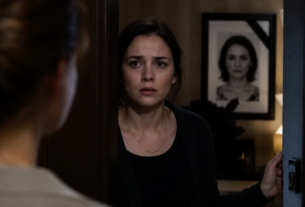
Anna sat down across from him, already sensing that she would not like this conversation.
“For me, there are groceries, transportation, utilities, and the internet,” Mikhail said, running his finger down the list. “For you, there are groceries, transportation, and also… manicures, the hairdresser, the beautician, and massages.”
“So what?” Anna felt a defensive note creep into her voice.
“The point is that your expenses are seventeen thousand rubles higher than mine. Every month.”
She remained silent, processing what she had heard.
“I don’t understand what you’re getting at.”
“I’m saying it’s unfair when one person spends much more from the shared budget than the other. I suggest we divide everything. Shared expenses are split equally. Personal expenses come out of each person’s salary.”
Anna looked at her husband as though she were seeing him for the first time. Sitting in front of her was a man who, only a month earlier, had spoken about love and about how they were now one, but who was now reducing their lives to columns and figures.
“Mikhail, we’re a family,” she said quietly.
“That’s exactly why we need to be honest with each other. You want to go to the movies—you pay for it yourself. I’m perfectly happy staying home and watching television.”
“And what if I want to go to the movies with you?”
“Then buy two tickets. I didn’t ask to go.”
Anna stood up from the table, feeling as though she did not even know what to say.
“I’m going for a walk,” she said, picking up her jacket.
“Don’t forget to record your transportation expenses,” Mikhail called after her.
She walked through the evening city without paying attention to where she was going, wondering what had happened. When she got married, she had imagined a shared future and the life they would build together. But it turned out that, to Mikhail, marriage was merely two separate people living together, each of them expected to pay for their own share of happiness.
She returned late. Mikhail was already asleep, and she lay awake in the darkness for a long time, listening to his steady breathing.
In the morning, he behaved as usual. He made coffee, read the news, and got ready for work. Anna remained silent, not knowing what to say.
“Anya,” he said, stopping her by the door. “I know you were upset yesterday. But you have to understand, this is the right thing to do. It’s fair.”
“Fair,” she repeated.
“Yes. And tonight I want to apologize. I’ll buy champagne and fruit, and we’ll have a romantic dinner. Just like the first days after the wedding.”
Anna nodded, not entirely understanding what her husband meant.
Mikhail kept his word. He returned from work with a bouquet of roses, a bottle of champagne, and a bag of fruit. He lit candles and put on quiet music. They ate dinner by candlelight, and he was attentive and tender, just as he had been at the beginning of their relationship.
“Forgive me,” he said, taking her hand. “I didn’t mean to hurt you. I’m simply used to planning and controlling everything.”
“I know,” Anna replied.
“We’ll find a compromise. We definitely will.”
They made peace that night, and Anna almost believed that everything would be fine.
Almost.
The following day, she was getting ready for work when Mikhail, without looking up from his newspaper, casually asked:
“When are you going to pay me back for the fruit?”
Anna froze with her handbag in her hands, stunned by his audacity.
“What?”
“We entertained ourselves yesterday. The fruit and champagne count as entertainment. And we agreed that entertainment comes out of your budget.”
She slowly placed her handbag on the floor.
“That was your way of apologizing.”
“Yes, but a principle is still a principle. I can’t make exceptions. That would be unfair.”
Anna stared at her husband and realized that she was speaking to a stranger. A man capable of turning an apology into an expense category, a man who could send her a bill for making peace, had nothing in common with the person she had loved.
“Mikhail,” she said very quietly. “Are you serious?”
“Completely. Eight hundred rubles. There’s no hurry. You can pay me back by the end of the month.”
She picked up her bag and headed toward the door.
“Anna, where are you going?”
“To work. And then to my mother’s. I need to think.”
“Think about what?”
She turned around and looked at him one last time.
“About whether it’s worth living with a man who is willing to sell me his own apologies.”
“It’s only money,” Mikhail said in confusion.
“Exactly,” Anna replied before leaving and quietly closing the door behind her.
As she rode the metro, she thought about how money was never merely money. It reflected how people viewed others, intimacy, and love. It was a way of showing what mattered and what did not. And if eight hundred rubles for fruit mattered more to Mikhail than their marriage, perhaps they truly were not meant to continue along the same path.
Her mother met her at the door without asking unnecessary questions. They sat in the kitchen, and Anna told her everything, from the brown-bound notebook to the bill for their reconciliation.
“You know,” her mother said, stirring her tea, “your father was economical too. Do you remember how he counted every kopeck?”
Anna nodded.
“But when you came down with pneumonia, he sold his favorite fishing rod to buy your medicine. He didn’t think about the money. He thought about you.”
“And what if Mikhail isn’t capable of something like that?”
“Then think about whether you want to live with someone who will never put you above his principles.”
Anna stayed with her mother for three days. Mikhail called and sent messages in which he explained his position again and again. He did not understand that the issue was not the money. The problem was that, in his idea of marriage, there was no room for spontaneity, sacrifice, or unconditional devotion.
On the fourth day, she returned home. Mikhail greeted her with relief.
“Anya, I’m so glad you’re back. I’ve been thinking about our relationship.”
“And what conclusion did you reach?”
“We can increase the entertainment budget. Let’s say, to five thousand rubles a month.”
Anna looked at her husband and realized that he had not changed. He still saw their problem entirely in terms of figures.
“Mikhail, do you understand that I didn’t leave because of the money?”
“Then why did you leave?”
“Because you turned our love into bookkeeping entries.”
“But order is a good thing,” he said, bewildered.
“Order is good, yes. But not in feelings. Feelings need room for chaos, generosity, and irrationality.”
They stood in the hallway, and Anna suddenly saw their future with perfect clarity. Mikhail would record every breath she took and assign a monetary value to every “I love you.” Their children would receive pocket money in exchange for hugs, and family celebrations would turn into expense reports.
“I need more time,” she said.
“How much?”
“I don’t know. Perhaps a lifetime.”
She picked up her suitcase and headed toward the door again.
“Anna, wait. Maybe I was wrong about the fruit. You don’t have to pay me back.”
She turned around and smiled sadly.
“Thank you for your generosity.”
“I don’t understand what you want from me.”
“I want you to love me more than you love your notebook. I want you to forget about money sometimes for our sake. I want you to be able to spend your last money on flowers simply because I’m in a bad mood.”
“But that’s irrational,” Mikhail said.
“Love is irrational,” Anna replied. “And our marriage is far too rational. Perhaps that is the problem.”
A week later, she filed for divorce. Mikhail never fully understood what had happened. He believed they could have reached an agreement, found a compromise, and drawn up a plan. But some things cannot be planned, and some bills cannot be paid.
Anna moved into a rented apartment and started keeping a notebook of her own. But in addition to figures, she wrote down her thoughts, feelings, and plans. At the end of every month, she reviewed not only her financial situation, but her emotional one as well.
She understood that happiness could not be divided into expense categories. It lived in illogical gestures, spontaneous decisions, and the willingness to spend your last money on something that would make the person you loved happy.
Mikhail remained with his notebooks, his order, and his certainty that he was right.
He still did not understand what he had lost.
After all, love had never been included in his accounting system.