Olga received her bonus on Friday, and all evening she walked around the apartment with that peculiar, slightly foolish feeling of celebration you get when, for the first time in a long while, you allow yourself to be happy without reservations. Almost one hundred thousand rubles—for the quarterly project she had practically carried on her own, staying late after work, redoing other people’s reports, and listening to complaints from the client. At the meeting, her boss mentioned her name first, and someone even applauded.
On her way home, Olga bought a small cake, made some tea, and sat in the kitchen scrolling through her banking app, admiring the nice, round, honestly earned sum sitting in her account.
“You know what I’m thinking?” she said to Alexey, who was flipping through channels in the living room. “Why don’t we go to Karelia in September? Remember, you wanted to go. We can use my bonus.”
“Uh-huh,” her husband replied without taking his eyes off the screen.
She wasn’t offended. She was used to it. For the past couple of years, Alexey seemed to have moved behind some invisible glass wall. He was there beside her, ate the same dinner, slept in the same bed, but reaching him had become increasingly difficult. Olga blamed exhaustion, work, the way every marriage supposedly lost some of its shine with time, and tried not to overthink it.
Besides, the deepest crack in their home ran through an entirely different fault line—the one called Alla Viktorovna.
Her mother-in-law was the kind of woman who knew how to ask for something in such a way that refusing felt like a crime. Olga had endured it for three years.
It had started with small things. Alexey’s mother complained about her tiny pension, her medication, how difficult it was to live alone. Olga, still naïvely wanting everyone to like her back then, transferred some money to her. Once, then again.
Eventually, it became a rule.
Every month there was a new reason. The refrigerator had broken. A neighbor from the country house had persuaded her to buy something. She simply didn’t have enough money.
And whenever Olga hesitated, Alla Viktorovna activated her foolproof mechanism: offended silence, heavy sighs over the phone, and comments like, “A mother raises a son all her life, and now she can’t even ask him for anything.”
“Lyosha,” Olga finally put down her phone and went into the living room. “We need to talk. Seriously.”
“About what now?” Alexey lowered the volume but kept the remote control in his hand.
“About your mother. I’m tired, do you understand? For three years I’ve been giving her money. Not helping—giving. Because if I don’t, all that begins again. The resentment, the accusations that I’m greedy, that I’ve turned you against your mother. I can’t do it anymore.”
Alexey finally turned toward his wife, and his face took on that familiar stone-like expression—the one that always appeared whenever the conversation involved his mother.
“Olya, she’s an elderly woman. Things are difficult for her. What, do you begrudge her the money? We have it, she doesn’t. Normal people help their parents.”
“They do,” Olga agreed. “Helping is when you give from the heart and when someone asks you like a normal person. When someone squeezes money out of me every month under threat of a family scandal, that isn’t help. That’s something else.”
“Oh, stop making things up.” Alexey irritably threw the remote onto the sofa. “Mom has never squeezed anything out of you. She asks because she has nobody else. And you count every penny. A wife is supposed to hold the family together, not divide everything into what’s mine and what’s yours.”
“The family,” Olga repeated quietly. “And I’m not family, in your opinion? For three years I’ve been supporting this family with my bonuses, and all I ever hear is that I don’t give enough.”
The conversation ended the same way all conversations like this ended—with nothing resolved.
Alexey sulked, went into the kitchen to finish the cake Olga had bought to celebrate her bonus, and spent the rest of the evening demonstratively refusing to speak.
Olga lay awake in the dark thinking that her husband had once again failed to understand the most important part.
He didn’t see the difference between kindness and people taking advantage of that kindness.
To him, everything was simple: his mother asked, therefore they had to give.
How his wife felt about it didn’t matter.
By that time, Olga’s relationship with her mother-in-law had grown completely cold. They rarely saw each other, usually only on major holidays, and every meeting consisted of strained smiles and polite phrases that meant nothing.
Olga knew that as soon as she left the room, Alla Viktorovna would start singing the same old song: her daughter-in-law was greedy, cold, didn’t love her son, and couldn’t properly take care of a household.
Alexey’s sister sometimes repeated these comments to Olga, awkwardly trying to sympathize with her.
Eventually, Olga decided she’d had enough.
She stopped giving Alla Viktorovna money completely.
She didn’t declare war. She simply answered the next request calmly and said that she couldn’t help that month.
Then the following month.
And again after that.
Alexey was furious.
Every refusal turned into a fight. He demanded that Olga give in, pressured her, accused her of causing his mother’s blood pressure to spike, said the neighbors were judging them, and insisted that a normal woman would never behave that way.
Olga stood her ground.
Something inside her was hardening, turning into a calm, cold determination never to bend again.
An invisible wall seemed to rise between them, and both of them knew it was there, although neither said so aloud.
Then the money disappeared.
Olga noticed it on Saturday morning, the day after receiving her bonus.
As usual, she opened the app to see how much she could set aside for the trip—and the money was gone.
Her account was almost empty.
She blinked and refreshed the page, assuming the app was malfunctioning.
The numbers did not change.
The entire bonus, down to the last ruble, had been withdrawn.
Olga opened her transaction history, and her fingers turned cold.
Cash withdrawal.
An ATM not far from their apartment.
The previous evening, while Olga had been working late.
“Lyosha!” Olga rushed into the room, holding her phone. “Lyosha, look! The money’s gone. The entire bonus. Someone withdrew it!”
Alexey reluctantly looked up from his own phone and glanced at the screen.
“Maybe you withdrew it yourself and forgot.”
“How could I have withdrawn it when I was at work? One hundred thousand! I think I’d remember withdrawing a hundred thousand!”
“I don’t know.” Her husband shrugged and turned away. “Maybe you spent it somewhere on your clothes and now you’re panicking. Your money is always disappearing somewhere.”
Olga stood there with the phone held out in front of her, staring at her husband, unable to find the words.
No help. No sympathy. Not even a simple, “Let’s figure this out.”
Instead, he blamed her.
As if it were somehow her fault that the money she had earned had disappeared from her bank card.
Blood rushed to Olga’s cheeks, but she stayed silent.
Something about her husband’s reaction—the speed of it, the readiness with which he blamed everything on her—made her suspicious.
She stopped trying to convince him.
Quietly, she went into the kitchen, sat beside her cold tea, and began to think.
Really think.
She started putting together details she had previously ignored.
Her bank card stayed in her wallet.
Her wallet stayed in her handbag.
Her handbag was almost always with her.
But the day before yesterday, the day she had received her bonus, she had left her handbag at home. She had rushed home after work to change before a corporate dinner, tossed her things down, and left with only her phone.
The card had remained in the apartment.
And Olga and Alexey were not the only people who had keys to the apartment.
There was a spare set—the one Alexey had given his mother without asking Olga.
Just in case, he had said.
You never know.
Well, now she knew.
Olga had no direct proof.
Only a suspicion that made everything inside her tighten.
But she didn’t want to accuse anyone without evidence. It would simply turn into another argument in which she would somehow end up being the guilty one.
So Olga decided to act differently.
Calmly.
Patiently.
While Alexey spent the weekend visiting a friend at his garage, Olga remembered the small video camera in the hallway.
She had bought it on sale at an electronics store some time ago—the kind of tiny camera that could be mounted discreetly and recorded onto a memory card.
She had installed it in the entrance hall, concealed among the coats on the rack so that it captured the front door and part of the hallway.
She checked the recording.
Everything worked.
The picture was clear.
Then she did something she hadn’t done in a very long time.
She called her mother-in-law herself and invited her to dinner.
“Alla Viktorovna, come over on Saturday. We’ll sit together, have dinner as a family. It’s been a long time.”
There was a surprised pause on the other end.
“Is that you, Olya?” her mother-in-law asked suspiciously. “Well, imagine that. What brought this on?”
“Nothing special. I just thought we should be warmer toward each other. Lyosha misses you.”
“Of course I’ll come,” Alla Viktorovna said, her voice suddenly warmer and filled with satisfaction. “I’ve been saying for ages that there’s no point in us fighting. We’re family.”
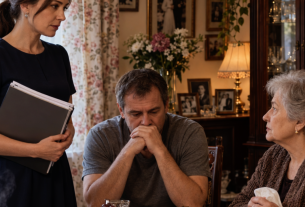
Alla Viktorovna arrived on Saturday dressed nicely, carrying a pie and in an excellent mood.
And—something Olga particularly noticed—not once during the entire evening did she mention money.
No complaints about her pension.
No hints about medication.
No heavy sighs.
She sat there happily praising Olga’s cooking, talking about the country house and her neighbors.
Too calm.
Too satisfied with herself.
Like someone whose problems had already been solved.
Olga watched her mother-in-law carefully while pretending not to.
She poured more tea, smiled, and kept the conversation going.
Only after they had finished the pie and everyone leaned back in their chairs did Olga speak casually.
“I had something unpleasant happen this week. I received a bonus, almost one hundred thousand rubles. And can you imagine? It disappeared. It was taken from my card, and I can’t even understand how.”
Olga watched her mother-in-law very closely.
And she saw exactly what she had expected to see.
Alla Viktorovna wasn’t surprised.
She didn’t gasp.
She didn’t offer sympathy.
She didn’t ask how something like that could have happened.
Her face froze for a fraction of a second.
Then, almost instantly, it assumed its familiar expression of offended self-righteousness.
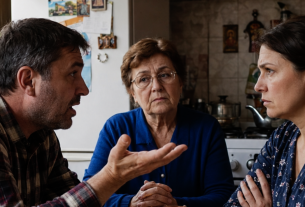
“And why are you looking at me?” her mother-in-law demanded, although nobody had accused her. “You probably spent it yourself and now you’re looking for someone to blame. I know you young people. Money slips right through your fingers, and then everyone else is guilty.”
“I didn’t say anything, Alla Viktorovna,” Olga replied gently. “I only said that the money disappeared.”
“Then why are you saying it in that tone?” Her mother-in-law raised her voice and turned toward her son. “Lyosha, do you hear this? I came here with good intentions, and she practically accuses me of stealing. See what she’s like? I’ve always told you.”
“Olya, enough,” Alexey immediately took his mother’s side, as always, without hesitation. “Why are you starting this? You lost the money, that’s your problem. Why ruin Mom’s mood?”
“Exactly,” Alla Viktorovna agreed. “She lets the whole household fall apart, can’t even keep track of her money, and somehow everyone else is to blame. When I was your age, I knew where every single kopeck was.”
Olga listened.
Calmly.
Without interrupting.
She let both of them speak until they had nothing left to say.
Her mother-in-law grew increasingly heated, listing every one of Olga’s supposed flaws.
Greedy.
Cold.
Didn’t appreciate her son.
A terrible housewife.
Alexey nodded and agreed.
Olga waited.
She had understood long ago that defending herself was useless. It only added fuel to the fire.
So she let them say everything.
Every accusation.
Every criticism.
Let them empty themselves completely.
When Alla Viktorovna finally ran out of steam and reached for her now-cold tea with the expression of a victor, Olga quietly put her own cup on the table.
Then she looked directly into her mother-in-law’s eyes.
“The money didn’t disappear from my card by itself. And very soon, we’re going to know exactly whose hands took it,” Olga said calmly.
The kitchen went silent.
Alla Viktorovna froze with her cup halfway to her lips.
“What is that supposed to mean?” Her voice trembled, suddenly losing its former confidence.
Olga took her phone from her pocket and slowly unlocked it.
“I have a camera in the entrance hall. It’s been there for a week. It records everyone who enters and leaves. Would you like to see what it recorded?”
Alexey’s expression changed.
The usual mask of self-confidence disappeared, revealing something confused and almost frightened underneath.
“What camera?” he muttered. “You’ve been spying on us?”
“I’ve been monitoring my own home,” Olga replied. “After my money disappeared from it. I have every right.”
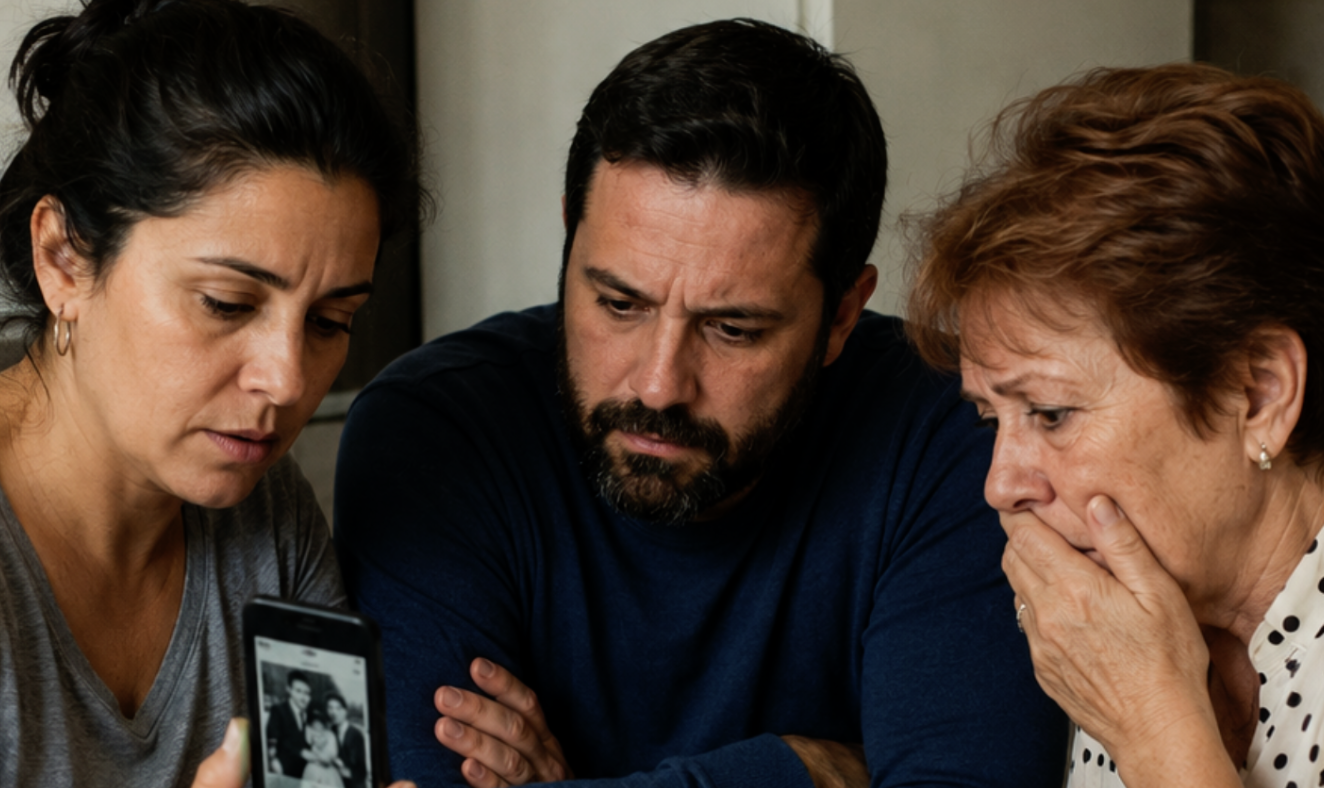
She placed the phone face-up on the table and pressed play.
The recording showed the hallway of their apartment.
The date and time were visible: the evening before last, when Olga had been working late.
The front door appeared in frame.
A key turned in the lock.
The door opened.
Alla Viktorovna entered using her own key—the spare set.
She looked around, listened for a moment, then walked deeper into the apartment.
A minute later, she returned to the coat rack where Olga’s handbag was hanging.
With a practiced movement—as though she had done it before—she pulled out the wallet and removed Olga’s bank card.
The camera clearly captured her face, her hands, and the moment she slipped the card into her pocket and left.
Some time later, she appeared on the recording again.
She placed the card carefully back inside the wallet, exactly where she had found it.
“The PIN,” Olga said quietly, looking not at the screen but at her pale mother-in-law. “I once entered it while paying for something when Lyosha was nearby. I suppose he remembered it and told you. Or maybe you saw it yourself. It doesn’t matter. The important thing is right here. Your key. My card. My money.”
Alla Viktorovna opened her mouth but couldn’t find anything to say.
Her hands began to shake, and the cup rattled against its saucer.
“I… I was going to return it,” she finally managed. “It was a loan. I would have paid you back.”
“A loan without asking me? By secretly taking my card out of my handbag?” Olga shook her head. “There’s another word for that, Alla Viktorovna.”
But that wasn’t everything.
The recording continued.
Olga had deliberately not stopped the video because the previous night, while reviewing the footage, she had discovered something else.
Something that had made the ground disappear beneath her feet.
Something that had kept her awake almost the entire night as she prepared herself for this dinner.
The time stamp on the screen changed.
It showed another day—before Olga had received the bonus.
Once again, the front door opened.
But this time it wasn’t her mother-in-law who entered.
It was Alexey.
And behind him came a young woman Olga had never seen before.
Blonde, wearing a light dress, she casually took off her shoes in the hallway as though she were completely at home.
As Alexey passed beside her, he placed a familiar hand around her waist.
Then they disappeared together deeper into the apartment.
Into Olga’s apartment.
While Olga wasn’t home.
The silence in the kitchen became thick as water.
Olga looked up from the phone and stared at her husband.
Alexey’s face turned blotchy.
“Who is she, Lyosha?” Olga asked in an unnaturally even voice. “Who is that woman in my home?”
“She’s…” Alexey swallowed. “She’s a colleague. From work. We were working on a project…”
“You hold your colleagues by the waist while working on projects?” Olga didn’t even raise her voice. “In my apartment, when I’m not home?”
And then Alla Viktorovna intervened.
In doing so, she exposed all of them completely.
“So what!” her mother-in-law shouted, and something that had evidently been building inside her for a long time finally burst free. “Yes, it’s Yana! She’s a good girl, unlike you! Lyosha came alive with her, but with you he walked around miserable all the time! What did you ever do to keep him? All you ever cared about was counting your money!”
“Yana,” Olga repeated quietly. “So you know her. By name.”
Alla Viktorovna stopped abruptly, realizing she had said too much.
But it was already too late.
Everything fell into place instantly and completely, with a clarity worse than any scream.
Her mother-in-law knew.
She knew about the other woman and had not merely kept silent—she approved of it.
Supported it.
Welcomed Yana as a preferable future daughter-in-law.
And the money that had secretly been taken from Olga’s handbag—her bonuses, the money she had honestly earned—perhaps it had all gone there too.
To the blonde Yana.
To gifts for her.
To their meetings inside Olga’s own apartment.
“So that’s where my money was going,” Olga said, and for the first time that evening her voice trembled slightly—not from weakness, but from how disgusting the truth felt. “I supported you for three years, Lyosha. My bonuses, my side jobs. And you used that money on another woman. You brought her into my home. With your mother’s blessing.”
“Olya, you misunderstood everything,” Alexey finally said, but now he wasn’t defending himself.
He was defending Yana.
“Yana has nothing to do with this. Don’t drag her into it. She’s normal. At least she doesn’t drive me crazy over every little ruble…”
And that settled everything.
His wife had just shown him a video proving his infidelity and theft within his family, and the person he felt the need to defend wasn’t his wife.
He didn’t even try to explain himself.
He defended his mistress.
Olga looked at him and wondered how she could have spent so many years refusing to see what was obvious.
She stood up from the table.
Calmly.
Without theatrics.
“All right. Both of you, listen carefully.” Her voice was steady again, and that steadiness was more frightening than shouting. “This apartment belongs to me. I bought it before we were married, with my money. I have all the documents. Both of you are going to gather your things and leave now. Lyosha, go to your Yana since she’s so wonderful. Alla Viktorovna, go home.”
“This is my apartment too!” Alexey exploded. “I’m registered here! I’m your husband! I have rights!”
“You’re registered here,” Olga nodded. “Removing your registration is simply a matter of time. But you have no ownership rights whatsoever. I bought the apartment two years before I even met you. Ask a lawyer if you want. Property acquired before marriage isn’t divided during divorce. That’s basic law.”
Alexey opened his mouth to argue but stopped.
His expression made it obvious that he already knew perfectly well what the documents said.
He had simply hoped things would never come this far.
“And the money, Alla Viktorovna,” Olga turned toward her mother-in-law, “you’re going to return it. Every last ruble. I have a recording of you taking it. I have the bank statement. I can go to the police tomorrow, and then this won’t be a family conversation anymore. It’ll be a formal theft report. Decide which you prefer: return it peacefully or explain yourself to the police.”
Her mother-in-law went pale, then red.
She opened her mouth, ready to launch into another tirade, but met Olga’s calm gaze and fell silent.
For the first time in three years, she had nothing to say.
The video on the phone erased every offended sigh, every accusation that Olga was greedy.
The camera had recorded the truth.
And the truth was not on Alla Viktorovna’s side.
They left that same evening.
Alexey rushed around the apartment packing his things, alternating between shouting and pleading.
“Olya, let’s talk. Let’s handle this like normal people. We’ve been together for so many years.”
Olga silently handed him his bags.
Alla Viktorovna sat on the small bench in the hallway, looking as though she had aged several years in a single evening, muttering something about ingratitude.
But the old force was gone from her words.
“Leave the key,” Olga told her mother-in-law when she reached the doorway. “The spare one. The one Lyosha gave you.”
Alla Viktorovna silently took the key ring from her handbag, removed the apartment key with trembling fingers, and placed it in her daughter-in-law’s outstretched palm.
The door closed.
Olga changed the locks the very next morning.
Not because she was afraid.
She did it because she needed a full stop.
Because she needed to feel that the doorway belonged only to her again.
The locksmith changed the cylinder and gave her three new keys.
Olga kept all three.
After that, she acted methodically and without unnecessary emotion, the same way she handled projects at work.
She copied the camera footage onto her computer and made several backups.
She went to the bank and obtained an official statement showing the cash withdrawal.
Then she went to the police and filed a report.
Not for revenge, as she later explained to herself.
But because otherwise everything would have remained trapped in that same family swamp where the weaker person was always made guilty.
And Olga had no intention of being the weaker person anymore.
The police accepted her report.
With evidence like that—a video showing someone entering another person’s apartment using a key and taking their bank card, plus a bank statement proving the withdrawal—the situation was clear.
Alla Viktorovna received a call from the police station and was summoned to provide an explanation.
Within a week, tight-lipped and humiliated, she transferred the entire sum back to Olga.
Almost one hundred thousand rubles.
Every last ruble.
Anything to avoid court.
Anything to avoid humiliation in front of the neighbors and relatives.
The money returned to Olga’s account just as mysteriously as it had disappeared.
Only now Olga knew the whole story behind it.
She filed for divorce that same month.
At first, Alexey threatened to sue for half the apartment.
Then, after a lawyer explained exactly what Olga had already told him—that premarital property was not subject to division—he lost his confidence and agreed to everything.
In truth, there was very little to divide.
The car was registered in his name.
The apartment belonged to her.
They had accumulated almost nothing together because Olga’s money had constantly gone either to her mother-in-law or, as she had now discovered, elsewhere.
Alexey moved in with Yana.
Olga didn’t deliberately ask about him afterward, but it was a small world, and mutual acquaintances eventually told her that things hadn’t gone very well between them.
As it turned out, Yana valued Alexey only as long as someone else’s money was financing his generous gestures.
When she discovered that those gestures had ended along with Olga’s bonuses, and that Alexey himself lived on a salary barely sufficient for two people, her enthusiasm cooled quickly.
Within a few months, they separated.
Alla Viktorovna, meanwhile, suddenly lost both access to Olga’s wallet and the convenient apartment where she had been free to come and go using her spare key.
She was left with her small pension and a son who no longer had a home or the support system he had previously relied upon.
Olga stayed in her apartment.
At first, the silence felt strange.
No television playing in the evenings.
No phone calls from her mother-in-law.
No exhausting conversations about money.
But she became accustomed to the quiet surprisingly quickly.
And she realized that the silence wasn’t empty.
It was peaceful.
She rearranged the furniture the way she had wanted to for years but had never dared because Alexey always dismissed her ideas with, “Stop making things up.”
She installed new hooks in the hallway where the old coat rack—the one that had once concealed the camera—had stood.
She removed the camera itself.
There was no one left to watch.
As for that bonus, the one that had finally been returned to her, Olga eventually spent it exactly as she had originally planned.
She went to Karelia.
Alone.
In autumn, just as she had dreamed.
Only without him.
She stood on the shore of a cold lake, watching the wind send ripples across the dark water, and realized that this quiet feeling inside her was what she had been missing for all those years.
Not money.
Not approval.
Just the simple right to be the owner of her own home and her own life.
Without somebody else’s key in the lock.
Without having to prove every single day that she was worth something.
Olga returned home rested.
She opened the door with her own key—the only key that now turned in that lock—and for the first time in a very long time, she crossed the threshold with a light heart.