“What vacation are you talking about? Mom needs her roof replaced,” Viktor declared over breakfast without even looking up from his phone.
Svetlana froze with a coffee mug in her hands. For a month now, the printed tickets to Altai had been hanging on the refrigerator—bright, bearing the airline’s logo, held in place by a mountain-goat magnet. Their first vacation together in ten years. The first route they had chosen together, leaning over a map one evening. The first time she had truly believed they would finally go somewhere to relax instead of solving someone else’s problems.
“So we’re not going anywhere again?” she asked quietly.
“Well, you understand that Mom can’t manage on her own.”
Viktor scrolled to another page on his phone. His coffee had gone cold long ago.
Svetlana slowly looked at the tickets. Then at the window, where the morning fog was melting away. And for the first time in fifteen years, she wondered aloud how many vacations had disappeared over the years under those familiar words: “Mom can’t manage on her own.”
Fifteen years is a long time. Long enough to get used to many things. Svetlana and Viktor had married when she was twenty-eight and he was thirty. Then Alina was born. She was now in her second year at a teacher-training university and occasionally appeared at home with a backpack and a stack of lecture notes.
Viktor worked as a mathematics teacher at a school, while Svetlana handled notarial matters at a law firm. Their life was organized, predictable, and seemingly quite normal.
Except for vacations.
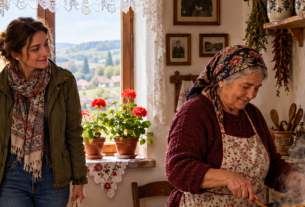
During the first few years, Svetlana did not attach much importance to it. Her mother-in-law, Nina Vasilyevna, lived alone in a private house outside the city, and every summer something urgent came up. One year the shed sagged and needed a new foundation. Another year the fence had dried out and fallen apart. Then it was time to build a veranda—“It will all be yours someday anyway, children.”
Viktor took vacation time. Svetlana took vacation time. They went there to dig, paint, and carry planks.
“It’s for us too, you understand?” Viktor would explain, and Svetlana would nod because arguing seemed petty.
The years passed. Pipes were replaced, the vegetable garden was dug over, and the property was cleaned up after every winter. For their tenth wedding anniversary, they planned a trip to Kaliningrad. Svetlana was already looking at guided tours of old Königsberg. But then Nina Vasilyevna suddenly decided the windows had to be replaced.
Urgently.
Right then.
“We can always go another time,” Viktor said.
Svetlana remained silent.
“Another time” never came.
This time, she had prepared for six months. She saved money from every paycheck, studied routes, and read travelers’ reviews. Mountain lakes, passes, clean Altai air. She bought the tickets, booked hotels, and downloaded offline maps.
When Alina found out, she said:
“Mom, you’re practically glowing.”
Svetlana laughed and really did glow.
Until that very morning when Nina Vasilyevna called and announced that the roof was leaking.
“Can you imagine? It stood for forty years, and now this,” Viktor said over dinner in the tone of a man who had already made the decision.
The house really was forty years old.
But the leak had appeared right now.
Exactly one month before their vacation.
Svetlana did not want to argue. She tried to speak calmly.
“Vitya, let’s hire workers. They’ll replace the roof in three days. It’s not that much money.”
“Have you even seen what roofers charge these days?” Viktor shook his head. “She’s alone. She can’t afford that.”
“Then we’ll pay for it.”
“Svetlana, we have to help her. She’s my mother.”
“And the vacation?”
“There will be other vacations,” he said simply, as though that settled the matter.
Svetlana went into the kitchen and stared out the window for a long time. Then, without really knowing why, she climbed up to the overhead storage shelf where an old box of documents and photographs was kept.
She began going through everything—receipts for building materials, photographs of them holding shovels and buckets of paint, screenshots of messages in which trips had been planned and then canceled.
The picture that emerged was frightening.
Out of eleven vacations during their marriage, nine had been spent taking care of her mother-in-law’s needs.
More than two hundred days.
Repairs. Gardening. Cleaning. Construction.
Svetlana wrote the numbers on a sheet of paper and stared at them for a long time.
That evening, Alina stopped by. She saw the photographs spread out and sat down beside her mother.
“What are you doing?”
“Counting,” Svetlana said with a bitter smile.
Alina flipped through the pictures.
“Mom, honestly, I don’t remember us ever going on a real family vacation. I only remember Grandma’s country house.”
Svetlana did not answer.
She looked at her daughter, who had grown up while they were digging someone else’s vegetable garden, and felt something inside her—something quiet and infinitely patient—finally break.
Two weeks before their departure date, Svetlana told her husband:
“Vitya, I’m going to Altai. With you or without you.”
He looked at her with mild confusion, the way one looks at someone who has made an inappropriate joke.
“Okay, okay.”
He did not take her seriously.
That was a mistake.
Nina Vasilyevna called every day.
First, she talked about the rain that would soon flood the ceiling.
Then about her blood pressure going up.
Then about how she had only one son.
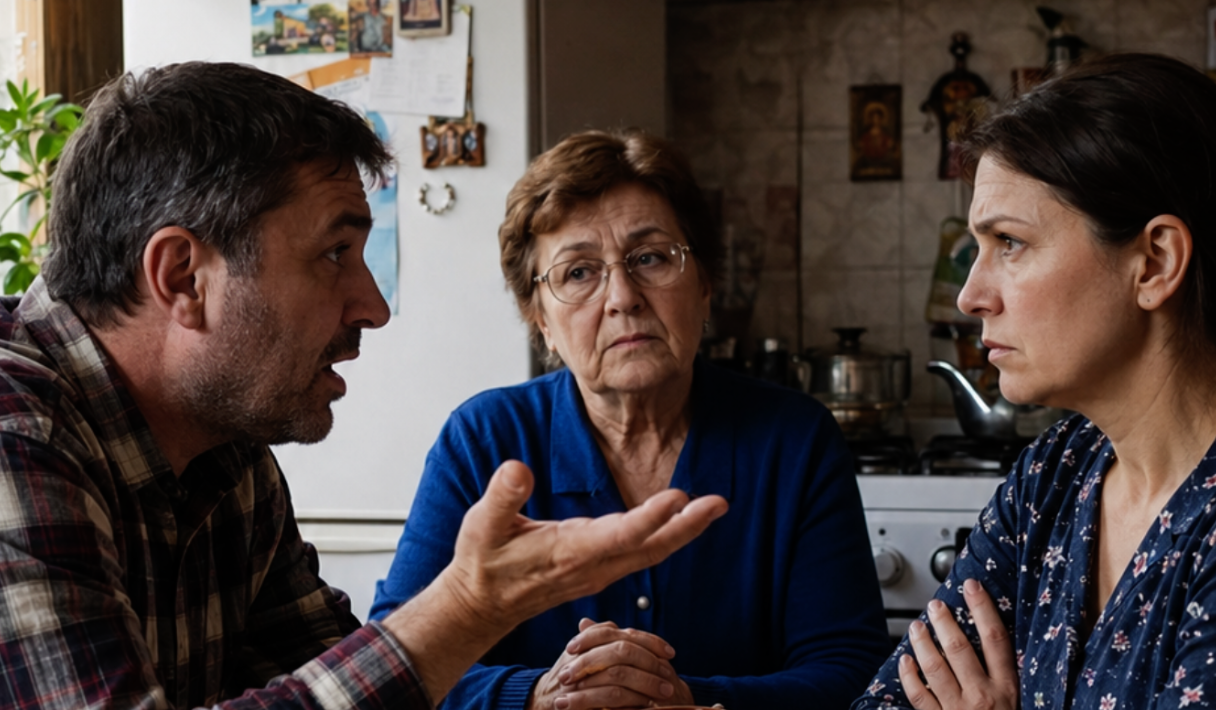
On Friday, her mother-in-law came over in person for a family dinner. Viktor’s sister Olga and her husband had also been invited.
Nina Vasilyevna sat at the head of the table, small and upright, her lips tightly pursed.
“A normal wife would support her husband,” she said, looking at Svetlana. “The family needs help, and she wants to go off to the mountains.”
Silence fell over the table.
Viktor stared down at his plate.
Olga exchanged a glance with her husband.
“And when will the family support me?” Svetlana asked.
No one had expected that question.
Especially not in such a calm voice.
Svetlana stood up, went into the other room, and returned with a sheet of paper.
She read aloud—year by year, vacation by vacation.
The shed.
The fence.
The veranda.
The pipes.
The windows.
The vegetable garden.
The vegetable garden again.
More than two hundred days.
Nine times out of eleven.
Olga listened, frowning more deeply with every item.
“Mom,” she finally said, “why can’t professional workers handle the roof? We can all contribute.”
Nina Vasilyevna opened her mouth and closed it.
Then opened it again.
For the first time in many years, no one supported her.
And she did not know what to say.
The real conversation happened that evening after Alina left to visit a friend.
They sat in the kitchen, and Svetlana spoke quietly, without tears. She was simply tired.
“Vitya, I’m not asking you to abandon your mother. I’m asking you to notice, at least sometimes, that I exist too. That I have wishes too. That for fifteen years, I have always been at the end of the line.”
“You’re exaggerating everything,” he began in his usual way.
“Name one time. Just one. When you refused your mother for my sake.”
Viktor opened his mouth.
Then closed it.
He thought about it.
For a long time.
Seriously.
And he could not remember a single occasion.
At that moment, the phone rang.
Nina Vasilyevna.
“Well? Are you coming to help or not? I need to know for sure,” she demanded.
Viktor was silent for a second.
“Mom, workers are going to handle the roof. I’ll find a crew and pay for it.”
The phone practically exploded.
His mother shouted about betrayal, about being all alone, about strangers ruining everything, and about how she had always known that his wife would turn him against her.
Viktor listened without interrupting.
Then he said calmly:
“Mom, I love you. The crew will come next week.”
And he ended the call.
For a long time, he stared at his phone.
Something inside him felt strange, as though something had loosened and tightened at the same time.
Guilt and relief, mixed so closely together that he could no longer tell them apart.
“Are you all right?” Svetlana asked.
“I don’t know,” he answered honestly. “But I think I should have done this a long time ago.”
The three of them flew to Altai together—Svetlana, Viktor, and Alina, who decided at the last moment to join them.
Svetlana looked out of the airplane window, and she did not have a single thought about garden beds, repairs, or other people’s problems.
Only the clouds below.
And a feeling of lightness she had almost forgotten.
The mountains greeted them with cold air and such vast open spaces that it took their breath away.
They were walking along a trail beside a turquoise lake when Viktor suddenly stopped, looked around, and said with genuine amazement:
“Listen. This really is beautiful.”
“You only just noticed?” Alina laughed.
Then, looking at his jacket, she added:
“So it turns out a vacation is not just Dad holding a hammer.”
Viktor looked embarrassed.
Then he laughed too.
In the evenings, they sat on the hotel veranda and talked.
Really talked.
Without rushing.
Viktor said that he now understood what all those years must have looked like from Svetlana’s perspective. He said he was not trying to make excuses. He simply wanted her to know that he finally heard her.
Svetlana was in no hurry to forgive him.
But she listened.
Meanwhile, a three-man crew replaced Nina Vasilyevna’s roof in four days.
Viktor learned about it from a short message from his sister Olga:
“Everything’s done. The price was reasonable.”
He put his phone away and ordered more tea.
Nina Vasilyevna did not call for almost a month after they returned.
Then she started calling again.
At first, she was cold and brief.
Viktor spoke to her calmly and helped when he could, but now it was different.
Not because he was obligated to.
Because he decided for himself when and how he wanted to help.
Several months passed.
Gradually, the tension faded.
Nina Vasilyevna came over for tea and behaved more cautiously.
No one announced any new rules out loud.
They simply existed now.
The following summer, Svetlana took out the map again.
This time, the two of them looked at it together.
One day, her mother-in-law casually mentioned that the gazebo had become terribly run-down and that it would be good to fix it before the cold weather arrived.
Viktor answered calmly, without irritation:
“Mom, first we’re going on vacation. Then we’ll see.”
Svetlana was standing in the doorway and heard every word.
She said nothing.
She simply returned to the kitchen and looked out the window for a long time.
On the living-room wall hung a photograph of the three of them against the backdrop of the Altai Mountains, squinting in the sunlight and laughing.
Alina later said it was the best photograph they had taken in all those years.
Svetlana agreed.
Not because of the mountains.
But because in that photograph, they finally looked like a family living by its own rules.