I was standing by the office printer, waiting for the cost estimate for an apartment building on Proletarskaya Street to finish printing. Tatyana, our HR manager, came out of her office and immediately asked:
“Lidia Pavlovna, how did the wedding go? Artyom stopped by last week and showed us some photos on his phone. The bride’s dress was so beautiful. Where did you order it?”
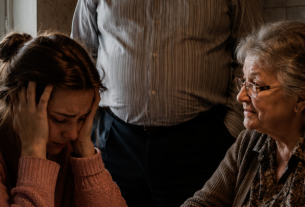
I turned toward her with a stack of still-warm pages in my hands. I wanted to answer honestly, but instead I smiled the way women smile when they haven’t been invited to their own son’s wedding.
“It went well,” I replied. “The newlyweds chose everything themselves.”
“It was probably a modest celebration,” Tatyana said with a nod. “A lot of people skip the big reception these days. And they’re right. Why spend all that money?”
I said nothing. Tatyana went back to her office, while I sat down at my desk and stared at the monitor without seeing a single number on the screen.
All I could see was Olesya’s face when she had said, “We couldn’t invite everyone.”
That sentence had come over the phone six months earlier. At the time, I thought, well, young people really don’t want huge weddings anymore. But not inviting the groom’s own mother? That possibility had never even crossed my mind.
I’m fifty-eight. I work as an economist for a property management company, calculating residents’ bills, checking completion certificates, and arguing with contractors. Since my husband passed away, I’ve lived alone in the two-bedroom apartment we once received through the factory and privatized many years ago.
My son Artyom moved out six years ago. At first, he rented a room, then moved in with his girlfriend.
I barely knew Olesya. We had met maybe four times. She was an ordinary young woman who worked as an administrator at a chain electronics and appliance store. She was always polite and addressed me formally by my first name and patronymic, but there was always a certain distance between us.
The first call about the wedding came in early October. Artyom called one evening. His voice sounded happy, though slightly tense.
“Mom, Olesya and I have decided to get married. In the middle of November. We’ll have a small restaurant reception, just people close to us.”
“Congratulations,” I said. “What date?”
“November fifteenth. We’ve already booked the place. About thirty people, no more. You understand, our budget is limited. We saved for it ourselves. Olesya’s parents helped a little, but we didn’t want to burden anyone.”
I listened and waited.
He talked about the guest list, how they still needed to order the rings, and how the emcee turned out to be someone Olesya knew.
And all the while, I kept waiting for him to say, “Mom, we’re inviting you. Come.”
But he didn’t.
Then he fell silent, and I heard some rustling through the phone. I heard Olesya quietly say something in the background. Artyom cleared his throat.
“Mom, there’s something we need to tell you. The guest list ended up being really tight. We couldn’t invite everyone. You understand, the venue is small. We decided it would only be the closest people… well, and Olesya’s parents. We’ll invite you afterward and have a separate family dinner together. You understand, right?”
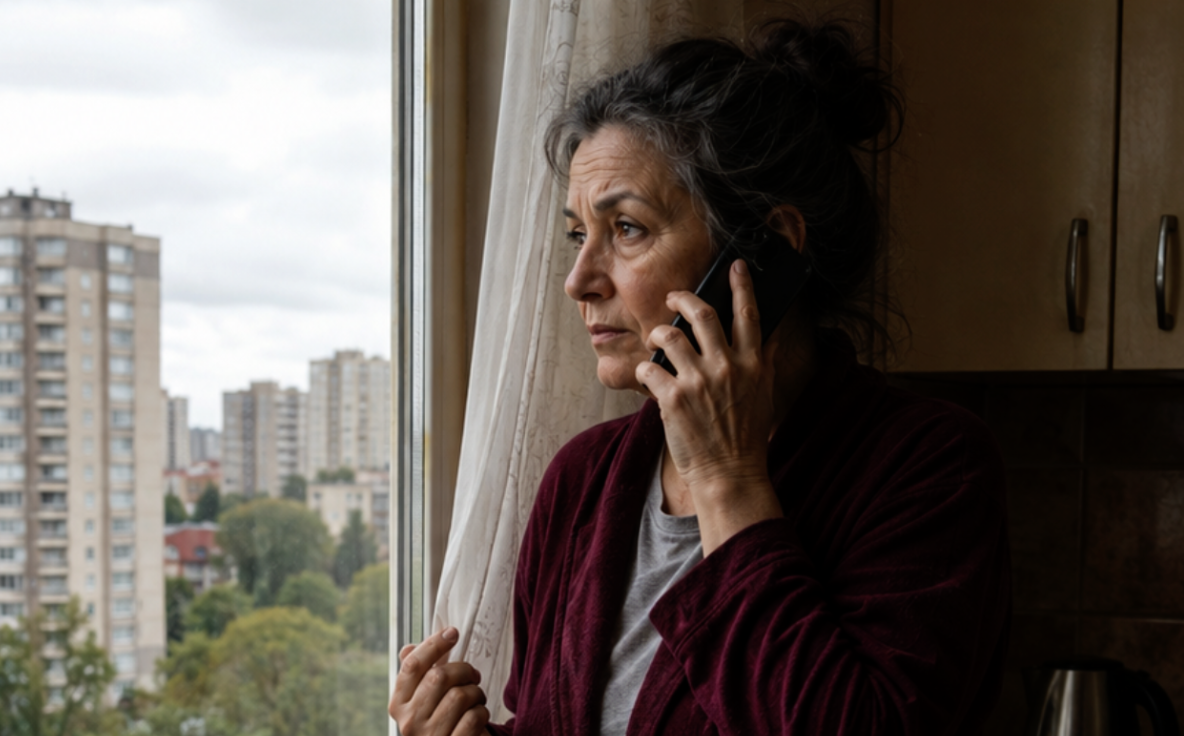
I stood beside the kitchen window with the phone in my hand. A light rain was falling outside, drops sliding down the glass. I stared at the apartment building across the courtyard, where a warm light glowed in one of the windows, and I didn’t know what to say.
“Of course I understand,” I finally said. “It’s your day.”
“Thank you, Mom. I knew you’d understand. Olesya was worried you might be offended.”
“I’m not the type to get offended,” I said, surprised by how calm my own voice sounded.
After hanging up, I sat down on a stool and stared at my phone for a long time.
“We couldn’t invite everyone.”
The phrase kept circling in my head. I repeated it silently about ten times.
Only the closest people.
Apparently, Olesya’s parents counted as close.
And I didn’t.
That evening, I called my sister in Nizhny Tagil and told her everything. She gasped and said something I couldn’t bring myself to say aloud, though deep down I agreed with her.
“Lida, this isn’t just some wedding. This is something people remember for the rest of their lives. They erased you. Do you understand what that means? Later they’ll say, ‘Well, you weren’t even at the wedding.’”
“They said they’d invite me separately.”
“A separate family dinner? When? After the honeymoon? A year later? Do you actually believe that?”
I didn’t.
But I desperately wanted to believe my son.
A week later, Artyom came by to pick up some old documents. By then, a distant relative had already told me that the wedding guest list was hardly limited to “only the closest people.”
All of Olesya’s cousins were invited. Her coworkers, her friends, even an old dormitory neighbor from university.
And as the relative told me, “From your side, Lida, there isn’t a single person.”
When Artyom was standing in the hallway putting on his shoes, I asked:
“Tell me honestly. Was I not invited because Olesya didn’t want me there?”
He froze without lifting his head.
“Mom, why are you putting it like that? It just happened this way. We really couldn’t invite everyone. Olesya has a big family, and I only have you. And if you came while she had twenty relatives there, it would look strange. Olesya thought you’d feel uncomfortable.”
“I would have felt perfectly comfortable being beside you on a day like that.”
Artyom straightened up.
I suddenly noticed how exhausted he looked. There were faint shadows under his eyes and his cheeks seemed hollow. He worked as a logistics coordinator for a transport company and often stayed late, and now he also had the wedding preparations to deal with.
“Mom, please. Don’t start. We’ve already decided everything. Olesya is nervous enough as it is. Her parents aren’t easy people. Her mother is constantly criticizing her. And now she has to explain herself to you too…”
I wanted to say, “And who am I supposed to explain myself to?”
But I held back.
My son looked exhausted. I understood that he was caught between two fires.
And he had chosen the one that burned brighter.
After he left, I went into the bedroom and sat on the bed.
The apartment was quiet except for the sound of the kitchen faucet dripping. I had been meaning to tighten it for ages but never seemed to find the time.
I sat there for about fifteen minutes. Then I got up, went into the kitchen, and washed the floor.
Not because it was dirty.
I simply needed to keep my hands busy.
The wedding took place on November fifteenth.
That day, I went to work for the morning shift even though I was supposed to have the day off. I traded shifts with a colleague.
All day I checked reports, answered phone calls, and went back and forth to accounting.
At around four in the afternoon, when I calculated that the ceremony must already have taken place, I went into a utility room, closed the door, and stood there for several minutes with my forehead pressed against the cool wall.
Then I fixed my hair, washed my face with cold water, and went back to work.
That evening, I heated up some soup, but I couldn’t eat.
I sat by the window in the dark, staring outside.
My phone remained silent.
No one called.
No one sent me a single photograph.
Artyom was probably busy.
Three days later, he came to see me with Olesya.
They brought me a piece of wedding cake in a plastic container and a small bouquet of white carnations.
“Here, Mom, we decided to come visit you,” Artyom said. He smiled, but there was guilt in his eyes. “We can sit together like we promised.”
Olesya stood in the doorway, shifting from one foot to the other. She wore a short puffer jacket and held a bag in her hands.
“Lidia Pavlovna, I’m sorry things turned out that way with the invitation. We honestly didn’t mean to hurt you. It was just our day, and we wanted everything to happen the way we had imagined it.”
I looked at her and, for the first time, noticed how thin and almost colorless her eyebrows were. She normally filled them in with a pencil, but by evening the makeup had faded, leaving her face looking strangely vulnerable.
“I’m not offended,” I said, not entirely truthfully. “Come in.”
They took off their shoes in the hallway, and Olesya left the bag by the door.
We went into the kitchen.
I put the kettle on, made tea, took out cups, and sliced a sponge cake I had baked that morning without really knowing why.
Olesya removed her jacket and carefully hung it over the back of a chair.
Artyom sat by the window and accidentally knocked a bottle of vitamins on the windowsill with his elbow. It rolled toward the edge, but I caught it.
“I take these to keep my energy up,” I explained as I put the bottle in the cupboard. “I get dizzy sometimes.”
“You should get more rest,” Olesya said. “Maybe take a trip to the seaside?”
“Maybe,” I replied. “Someday.”
The conversation never really flowed.
Artyom told me about the wedding: what the host had been like, how the guests had danced, how they had decorated the car.
I listened and nodded as though I were watching somebody else’s movie.
Olesya occasionally added something or corrected him when he remembered a detail incorrectly.
I kept looking at her, trying to understand what she felt.
After they left, I threw the carnations into the trash.
Not because I didn’t like them.
I simply couldn’t look at them without feeling bitter.
But I ate the cake.
I took a small spoon and ate it straight from the plastic container while standing beside the kitchen table.
It was sweet, with a faint tartness from the filling.
As I ate, I thought about how all I had received from my own son’s wedding was a slice of cake.
Delivered afterward like a consolation prize.
From that evening on, I stopped calling Artyom first.
Before, I had called every other day.
How are you?
What did you eat?
Do you need money?
Now I remained silent.
If he called me, I answered calmly and briefly without asking many questions.
At first, he didn’t seem to notice.
When he finally did, he called and asked:
“Mom, you’re acting differently. What happened?”
I was standing in the hallway of my apartment, having just returned from work. I had a grocery bag in one hand and my phone in the other, pressed between my shoulder and my ear because I couldn’t get the key into the lock. The lightbulb in the stairwell had burned out, and it was dark.
“Nothing happened. I just don’t want to impose on you. You have your own family.”
“You’re not imposing,” Artyom said, irritation creeping into his voice. “You’re my mother.”
“Exactly,” I replied. “I’m your mother.”
He was silent for a moment.
“Are you still upset about the wedding?”
“I’m not upset. I just drew my conclusions.”
“What conclusions?”
I finally managed to open the door and stepped into the dark hallway. I switched on the light and put the grocery bag on the floor.
“That there’s no point forcing yourself into a place where you’re not wanted. You live with Olesya. You have your own rules. I don’t want to interfere.”
“Mom, that’s not right. Olesya treats you perfectly well.”
“I’m not talking about her attitude toward me. I’m talking about yours.”
Silence came from the other end of the line.
Then Artyom let out a heavy breath.
“Fine. Let’s not talk about this. I’ll call you later.”
“All right. Call when you feel like it.”
After hanging up, I unpacked my groceries and put the milk in the refrigerator. An opened package of butter wrapped in foil was sitting on one of the shelves. I automatically straightened the wrapper before closing the refrigerator door.
A month after the wedding, Olesya’s mother, Galina, called me.
We had only spoken a couple of times before, but she had apparently decided to show some concern.
“Lidia Pavlovna, dear, I know everything. It was disgraceful. I told my Olesya myself that you can’t treat Artyom’s mother that way. But you know how stubborn she is. And your Artyom is gentle—he couldn’t insist.”
I listened to her and thought, I wonder whether she remembered me when they were making the guest list?
But why would she?
I was nobody to her.
“Please forgive them,” Galina continued. “They’re young and foolish. They’ll understand later.”
“I’m not holding a grudge,” I replied. “Live your lives in peace.”
After that conversation, I withdrew completely.
I stopped accepting invitations to family dinners, which came once every couple of months and always seemed half-hearted.
I made excuses about work, being tired, or having other things to do.
I could see that Artyom was upset.
But he never insisted.
And that was the most painful part.
He never insisted.
At the end of March, a pipe burst in my bathroom. A connection on the main riser had come loose, and water poured across the floor.
I rushed around with rags and buckets, trying to reach the emergency maintenance service.
At that moment, Artyom called.
“Mom, are you home? I wanted to stop by.”
“I’m home!” I shouted over the sound of rushing water. “But my apartment is flooding. The downstairs neighbor keeps calling and yelling at me.”
“I’m coming.”
He arrived forty minutes later with a plumber he had found through someone he knew.
Artyom didn’t even bother taking off his shoes. He went straight into the bathroom.
Together, they shut off the water, replaced part of the pipe, and calmed down the neighbor downstairs.
I stood in the hallway watching my son take charge, and for the first time in a long while I felt something close to relief.
Not because he had fixed the pipe.
Simply because when I needed him, he had been there.
Afterward, we drank tea in the kitchen.
Artyom’s shirt was damp with sweat, and his hair stuck to his forehead.
He looked at me without saying anything.
“What?” I asked.
“Would you call me if something serious happened?” he asked. “I mean, if you suddenly felt ill or something?”
I shrugged.
“There’s an ambulance.”
“Mom, I’m serious.”
“What do you want me to say? That I’ll call you and interfere with your life? You’re the one who chose this distance between us.”
Artyom placed his cup on the table and pushed it aside.
“I didn’t choose distance. I just couldn’t stand my ground back then. Olesya gave me an ultimatum. She said that if you came to the wedding, she wouldn’t feel comfortable or free. She had a difficult childhood, and she needed that day to belong completely to her. She was afraid you would judge her.”
“I never judged her.”
“She didn’t know that. You were always reserved around her. She couldn’t understand what you were thinking or feeling. And I couldn’t explain it to her. You didn’t get angry or cause a scene, so she decided you didn’t care.”
I stared at my son.
There was such a simple, bitter truth in his words that it became hard to breathe.
I hadn’t made a scene, so apparently it was acceptable not to invite me.
I had behaved with restraint, so my presence wasn’t considered necessary.
I didn’t force my way into other people’s feelings, so they decided I was harmless enough to exclude.
“You have to understand,” Artyom continued, “Olesya isn’t a bad person. She genuinely thought you wouldn’t be offended. That you would understand. That this was something she could do.”
“And you?” I asked. “Did you think the same thing?”
He lowered his head.
“I hoped so.”
There it was.
He had hoped his mother would swallow everything again and not create any problems.
And I had swallowed it.
But I hadn’t forgiven it.
Those are two different things.
I stood up and carried our cups to the sink. My hands moved automatically, performing a familiar gesture refined by years of habit.
“I’m glad you came,” I said. “Thank you for fixing the pipe.”
“Mom, let’s try to make things better. Olesya is willing to talk to you.”
“About what? About how I didn’t make the guest list? She already said everything: ‘It was our day.’ Fine. Let it be yours. I’m not trying to claim any part of it.”
Artyom was quiet for a moment, then stood up.
“I don’t know what I can do to make you believe that I love you.”
I dried my hands on a towel and turned toward him.
“You don’t need to do anything. Just remember that I’m your mother. Even when I’m not on the guest list.”
He left, and I remained sitting in the kitchen for a long time afterward.
The cost estimate for the building on Proletarskaya Street that I had printed at the office that morning was lying on the table. I automatically straightened it and slipped it into my work folder so I wouldn’t forget it the next day.
The apartment smelled damp after the flooding, but the draft was already clearing the air.
I closed the window, adjusted the curtain, and sat down again.
Life continued even when everything inside you seemed frozen.
That summer, Artyom and Olesya had a son.
Artyom called me from the maternity hospital and told me they had named him Maxim.
I congratulated him and asked whether everyone was all right.
He said yes.
I didn’t go to the hospital to see them, although I desperately wanted to.
I waited until I was invited.
The invitation came two weeks later.
I arrived with a bag of baby clothes—undershirts, rompers, and a couple of warm blankets.
I had bought everything from the same chain store where Olesya worked, though she wasn’t working that day.
Olesya opened the door with Maxim wrapped in a blanket in her arms.
She looked exhausted, with shadows under her eyes, but her smile was gentle.
“Hello, Lidia Pavlovna. Come in.”
“Hello, Olesya. I brought you a few things.”
I took off my shoes in the hallway and handed her the bag.
She took it and looked inside.
“Oh, you really didn’t have to bring so much. We already have everything.”
“It won’t go to waste.”
I walked into the room.
It was a small one-bedroom apartment, but it was clean. The baby’s crib stood beside the window, with a dresser full of diapers next to it.
I looked at my grandson and felt something inside me begin to loosen.
He was tiny, with delicate skin and his mouth slightly open as he slept, his little arms stretched out in a funny way.
He was completely defenseless.
And there was something about that which softened my resentment.
“How are you feeling?” I asked Olesya.
“Fine. Artyom helps when he’s not at work. But it’s difficult, of course.”
“If you ever need someone to watch the baby, tell me. I’m nearby. I can come.”
Olesya nodded but said nothing.
I understood that she wouldn’t call.
Not because she was cruel.
She simply wasn’t used to it.
I began visiting them once a week, on Saturdays.
I brought groceries and sometimes cooked lunch.
At first, Olesya remained tense around me, but gradually she began to relax.
One afternoon, while I was washing the dishes after lunch, she came up behind me and quietly said:
“Lidia Pavlovna, I feel like there’s still something unresolved between us. Because of what happened with the wedding.”
I didn’t turn around. I kept scrubbing the pot.
“I don’t want to discuss it.”
“But I can see that you keep your distance. Artyom says you’ve changed.”
I put down the sponge and turned toward her.
“Olesya, I’m not going to change back. You made a choice, and you had every right to make it. But choices have consequences. I can’t treat you like a daughter when you didn’t want me at my own son’s wedding.”
She lowered her eyes.
“I didn’t realize it was that important.”
“Exactly. You didn’t think about it.”
She went into the other room to the baby.
I finished washing the dishes and went home.
That evening, I felt strange.
On the one hand, there was emptiness.
On the other, there was a kind of peace.
I had finally said what I really thought.
Not angrily.
Simply as a fact.
And saying it made things easier.
Two years passed.
Maxim grew older, and I saw him almost every week.
My relationship with Olesya settled into something acceptable—polite, calm, without accusations or demands.
She never apologized.
I never asked her to.
We simply coexisted within the same family like two planets moving along different orbits.
Recently, Artyom came to see me alone and without warning.
He took off his shoes in the hallway, sat down in the kitchen, and drank some tea.
For a long time, he said nothing.
Then he spoke.
“Mom, I keep thinking more and more about that wedding. I’m ashamed. Ashamed of what I did to you. I should have insisted.”
“Why didn’t you?”
“Because I was afraid. Olesya said that if I pressured her, she would cancel the whole thing. And I loved her too much to risk losing her. I thought you would always be there anyway, while she might leave.”
I looked at my son.
He sat hunched over, turning a teaspoon between his fingers.
“And now?” I asked.
“Now I understand that I was weak. But there’s nothing I can do to change it anymore.”
“You can’t change what happened. But you can make sure you never repeat it.”
He looked up at me.
“I won’t.”
I nodded.
The spoon he had been playing with fell to the floor. He bent down, picked it up, and placed it back on the table.
I looked at his hands, at that familiar gesture, and thought:
He is still my son.
Confused and imperfect, but mine.
And I am still his mother.
Even when he chooses someone else over me.
I don’t know whether I have forgiven Olesya.
Sometimes I think I have.
Sometimes I think I haven’t.
But I no longer expect her to make things right.
I don’t expect my son to somehow redeem himself either.
I simply live my life.
I work.
I see my grandson.
I help when I’m asked.
And when I’m not asked, I don’t interfere.
On a shelf in my bedroom is a photograph from that wedding, sent to me by Olesya’s sister.
The newlyweds are in it.
The guests.
The cake.
The flowers.
I’m not.
I put the photograph in a frame, and sometimes I look at it.
Not because I want to reopen the wound.
But because I want to remember that every choice has a price.
And the person who pays that price isn’t always the person who made the choice.
A question for the reader: Can forgiveness be considered complete if you continue helping and staying in contact, but deep inside you no longer expect an invitation or acknowledgment—and that no longer causes you any pain?