The chrysanthemums had been sitting on the windowsill for almost three weeks. There wasn’t even a vase in the rented one-room apartment, so Maryana put them in a three-liter jar that used to hold her mother’s pickles. White, lush, still tied with a golden ribbon from the wedding. Every morning, she changed the water for them, though she couldn’t really say why. Maybe because there were no other gifts from her husband’s parents. Or maybe she just really wanted to believe there was something behind that bouquet besides coldness.
Everyone already knew about the bouquet. Her coworkers, the neighbors in her building, even the woman in the kiosk by the bus stop where Maryana bought bread every morning.
* * *
“Maryanochka, is it true what they say?” Tetiana put aside the scissors she used to cut ribbon for parcels and peered over her glasses. “That your in-laws only gave you flowers?”
Maryana placed the shipping label neatly on the box and smoothed it out with her palm.
“It’s true.”
“No way. But they have money. They own three building supply stores—the whole city buys tile from them. I thought at the very least they’d hand over keys to an apartment. Or a car.”
“Chrysanthemums,” Maryana repeated. “White ones.”
Tetiana seemed like she wanted to ask something else, but when she saw Maryana’s face, she fell silent. The silence felt even worse than the questions.
That day at the post office was hectic, people kept coming in one after another, and Maryana was grateful for it. As long as she was counting change and searching for parcels on the shelves, she didn’t have time to think. But the thoughts still caught up with her.
She remembered how, at the wedding, her mother came to them with an envelope. Her mom had raised a calf all by herself, sold it in the spring, and spent half a year saving from every pension payment so the envelope wouldn’t be empty. She also embroidered a rushnyk—a traditional towel. She’d spent the whole winter working on it in the evenings under a desk lamp, because she could no longer see the stitches clearly in full light.
Aunties from the village brought pillows, a blanket, a multicooker. Even her cousin, who barely made ends meet himself, arrived with an envelope.
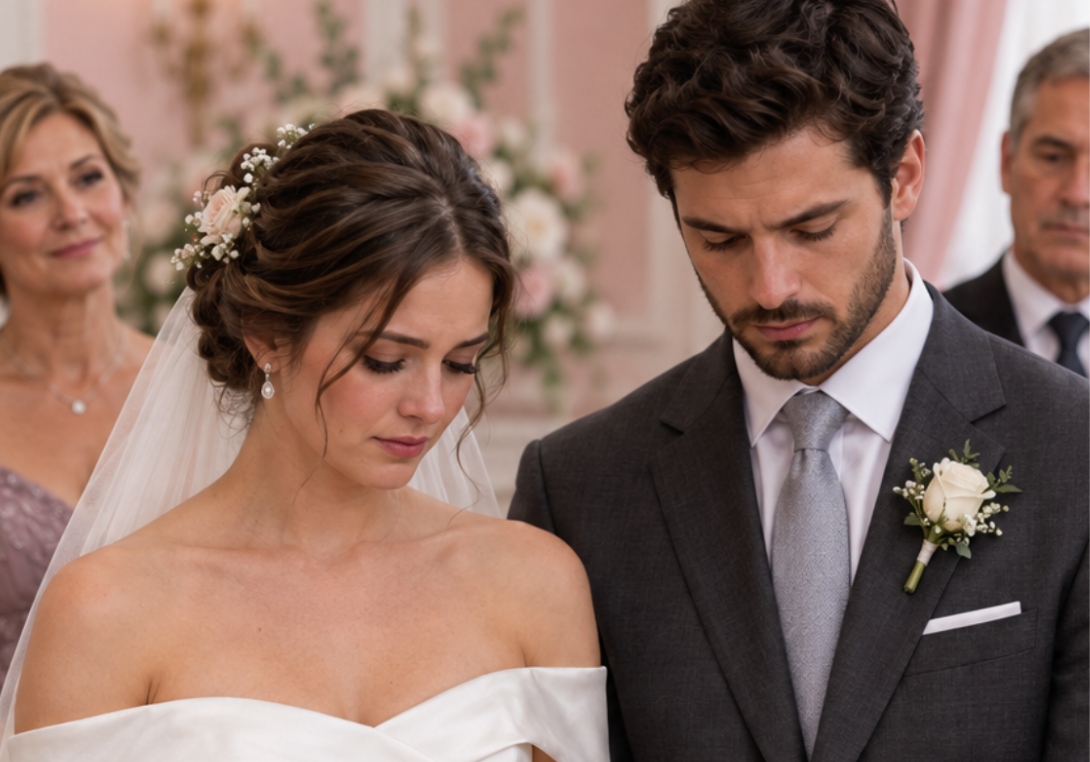
But Olena Serhiivna and Valentyn Petrovych arrived last. Her mother-in-law, dressed in a beige suit, held out the bouquet and said “Congratulations” in an even tone, without saying another word to her daughter-in-law for the entire evening. They left before the cake was even served.
Kostya had nervously joked that his parents had business early in the morning. The guests smiled. But Maryana saw how her mother’s sisters exchanged glances.
* * *
That evening, she couldn’t hold back.
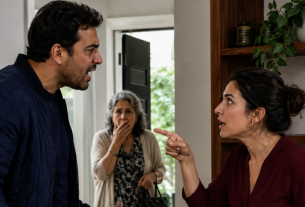
“Tetiana mentioned the bouquet to me today. Now the whole post office knows, Kostya. I feel ashamed to look people in the eye.”
Kostya was taking off his shoes in the hallway and didn’t even look up.
“Let them talk. Why should it matter to us?”
“It doesn’t matter to you. But it does to me. Your mom did this on purpose. She wanted to show everyone that I mean nothing to your family.”
He straightened up, paused for a moment, and said nothing. There was no point arguing—he’d seen it all himself.
The next day, Kostya went to his parents. Their house stood on the outskirts, behind a tall fence with an automatic gate. His mother greeted him in a silk robe, watering can in hand—she’d been watering a ficus in the living room.
“Oh, son. What brings you here?”
“Mom, we need to talk.”
“Go ahead, but make it quick,” Olena Serhiivna put the watering can on the windowsill. “I have a manicure appointment at noon.”
“About the wedding. About how you and Dad behaved there.”
— And how did we behave? We came, greeted everyone, gave flowers. Just like everyone else.
— Just like everyone else? — Kostya felt his voice shaking. — All the other guests gave money, appliances. Maryana’s mom even sold a calf just to save up for a proper envelope. And you — just flowers.
His mother shrugged.
— We don’t owe anyone anything. We raised you, gave you an education, helped you stand on your own two feet. That should be enough.
— Mom, that was my wedding. The only one I’ll ever have!
— For now, your only one, — she replied, giving a small, tight-lipped smile.
— What do you mean by that?
— Nothing special. These days young people get married, then a year later everyone goes their separate ways. Don’t take it personally, son, I’m just being realistic.
Kostya’s father walked out of the office, tablet in hand, overhearing the conversation.
— What’s going on here?
— Kostya is upset that we gave flowers, — his wife complained.
— What’s wrong with that? It was a nice bouquet. I picked it out myself.
— Dad, even Maryana’s relatives from the village, who saved up for months, gave a bigger gift than you did.
Valentyn Petrovych calmly put the tablet down on the table.
— We’re not stingy, son. You know that. We just don’t see the point of investing money in someone we don’t care for. And, forgive me, in someone who isn’t right for you.
Kostya was stunned. He had expected excuses, some kind of justification, but not such blunt honesty.
— Maryana is my wife!
— Unfortunately, — Olena Serhiivna said quietly.
He stormed out, slamming the door so hard the gate’s sensor started blinking.
At home, Maryana was waiting for him in the kitchen. The tea had long since gone cold.
— Well? Did they explain themselves at all?
Kostya stared for a long while out the window, where wet yellow leaves clung to the glass.
— They explained. They just don’t accept you. And they’re not even trying to hide it.
Maryana sat down on a stool and buried her face in her hands. She grew up in a small house, just her and her mother. All her childhood, she dreamed about a big family, a long table crowded at the holidays, full of laughter, bickering, passing salad bowls from hand to hand. But it turned out nothing like she imagined.
That evening, for the first time, she didn’t change the water for the chrysanthemums.
* * *
Weeks went by, but nothing changed. The in-laws acted as if Maryana didn’t exist. For New Year’s, they invited Kostya to a restaurant and pointedly clarified that “Maryana will probably go visit her mom.” For Valentyn Petrovych’s sixtieth birthday, only one invitation arrived. Kostya went alone, coming back after midnight, silent and carrying a bag of fancy pastries his mother had sent “for you, son, for the morning.”
Kostya started visiting his parents more and more often. His dad needed help with paperwork at the store, his mom asked him to drive her to the market for new seedlings, something was leaking at the cottage. Maryana stayed alone in their one-room apartment, where the heat sputtered in winter and she had to sleep in socks. She cleaned, cooked, remade the curtains, anything to keep her hands busy. But her thoughts always circled back to the same question: what did I do wrong?
One February day, Solomiya, her old friend from trade school, dropped by with a bag of tangerines. She took off her coat, glanced at Maryana, and immediately grew serious.
— How are you, Marusya?
— I’m fine, — Maryana tried to smile, but it didn’t work.
— Is it your mother-in-law again?
— They just don’t even notice me, Solomiyka. Not a call, not a word. They don’t invite me to birthdays. Kostya visits them, but it’s like I’m sitting in another room, behind closed doors.
— And what about Kostya?
— He says his mom just has a strong personality.
Solomiya peeled a tangerine and placed half of it in front of her friend.
— A personality is when someone flares up and then cools off. Or when they’re stubborn like a goat. But when someone pretends you don’t exist for months, that’s not just a personality, Marusya.
Maryana didn’t reply, just stared at the jar on the windowsill. The chrysanthemums inside had dried long ago, their petals papery and grey, but she still couldn’t throw them out. Solomiya realized it was best not to push and started chatting about mutual friends.
* * *
Late that night, Kostya came back from his parents’.
— You were there again? — Maryana called from the kitchen.
— Mom asked me to move a wardrobe. I was only there for an hour.
— An hour. It’s already ten.
— Maryana, don’t start.
— I’m not starting. I’m just asking, when will you have an hour for me?
He sighed and hung up his jacket.
— She just hasn’t gotten used to you yet. Give her some time.
— Kostya, we’ve been married for six months! How much more time does she need? A year? Ten?
— It’s not easy for me between you two, either, you know.
— And is it easy for me? I’m an outsider in your family. They don’t even see me there!
Kostya stayed silent and went into the other room to turn on the TV. Maryana locked herself in the bathroom, turned on the faucet to drown out any sound, and stared at her reflection in the fogged-up mirror for a long while.
The next day, she decided to try again. She baked a honey cake with her mother’s recipe, using honey from the neighbor’s apiary—the same honey her mom had sent in the fall in a half-liter jar with a lid tied up with string. The cake layers came out thin and even, the cream was delicate. Maryana wrapped the cake in parchment and called her mother-in-law.
— Olena Serhiivna, good afternoon. Could I come by for a visit?
— Why?
— I just wanted to sit together, maybe talk. I baked a honey cake, with my mom’s recipe.
There was a brief pause on the phone.
— I don’t eat sweets. And anyway, I don’t have time.
The line went dead.
Maryana set her phone down next to the cake. When Kostya came home that evening, she told him about the call. He just shrugged and cut himself a slice.
— Well, at least you tried.
— I did try, — she said quietly. — But you try living with this every day.
He finished his cake and went to watch TV.
* * *
In spring, Maryana finally found the courage to have the conversation she’d been putting off for a long time. She thought maybe this could change everything. That if a child appeared in the house, things would thaw. Her in-laws would want to see a grandchild, Kostya would come closer.
— Kostya, — she said one evening, sitting down next to him on the couch. — Maybe we should think about having a child?
He looked up from his phone.
— What?
— I’m ready to be a mom. Are you?
Kostya was silent for a long time, fiddling with his phone.
— Now isn’t the right time, Maryana. I’m not sure about us. We need to sort this out first.
She nodded, got up, and went to the kitchen. Her hands instinctively started washing an already clean cup.
A few days later, she overheard the conversation. Kostya was out on the balcony, the door half-open, probably thinking she was asleep. He was talking to his mother.
— Mom, listen, I get it… No, please don’t say that… Maybe you were right. Maybe I did rush into this.
Maryana quietly lay down again and stared at the ceiling until morning. She didn’t feel like crying anymore. Inside, everything was silent, like a house emptied of all its furniture.
* * *
She packed her gym bag in just half an hour. As it turned out, she didn’t have many things: some sweaters, jeans, her phone charger, a makeup bag. The last thing she packed was her mom’s towel, embroidered with red poppies and viburnum. For six months, it hung on the kitchen hook, and Maryana would wipe her hands on it gently so as not to spoil it.
Kostya woke up when she was already zipping up her jacket.
— Where are you going so early?
— To mom’s.
He sat up in bed, glanced at the bag, then at her.
— For long?
— I don’t know, Kostya.
She waited, hoping he would get up. That he’d say, “Don’t go,” or at least, “Let’s talk.” Instead, he just rubbed his face with his hands.
— Well… do what you think is best. Call me when you get there.
She set the key on the windowsill, next to the jar where the dried chrysanthemums still stood. Then she quietly closed the door behind her.
The first minibus to the village left at 6:40. Wet March snow was falling, melting instantly on the asphalt. Maryana took a seat by the window, put her bag on her lap, and didn’t look at her phone once during the entire journey.
Her mom was waiting at the bus stop. In her old quilted jacket, holding an umbrella, even though the snow had almost stopped. She didn’t ask any questions. She just took her daughter’s bag, took her arm like she was a little girl, and led her down the familiar path to the house.
— Come on, dear. I just baked some cabbage pies. They’re still warm.
In the kitchen, it smelled like dough and firewood. Maryana unzipped her bag, took out the towel, and hung it on the old nail near the cupboard. Right where it hung all winter while her mom embroidered it.
Her mom set a cup of tea in front of her, sat across from her, and covered her hand with her own—rough, and warm.
For the first time in a long while, Maryana didn’t have to prove anything to anyone.