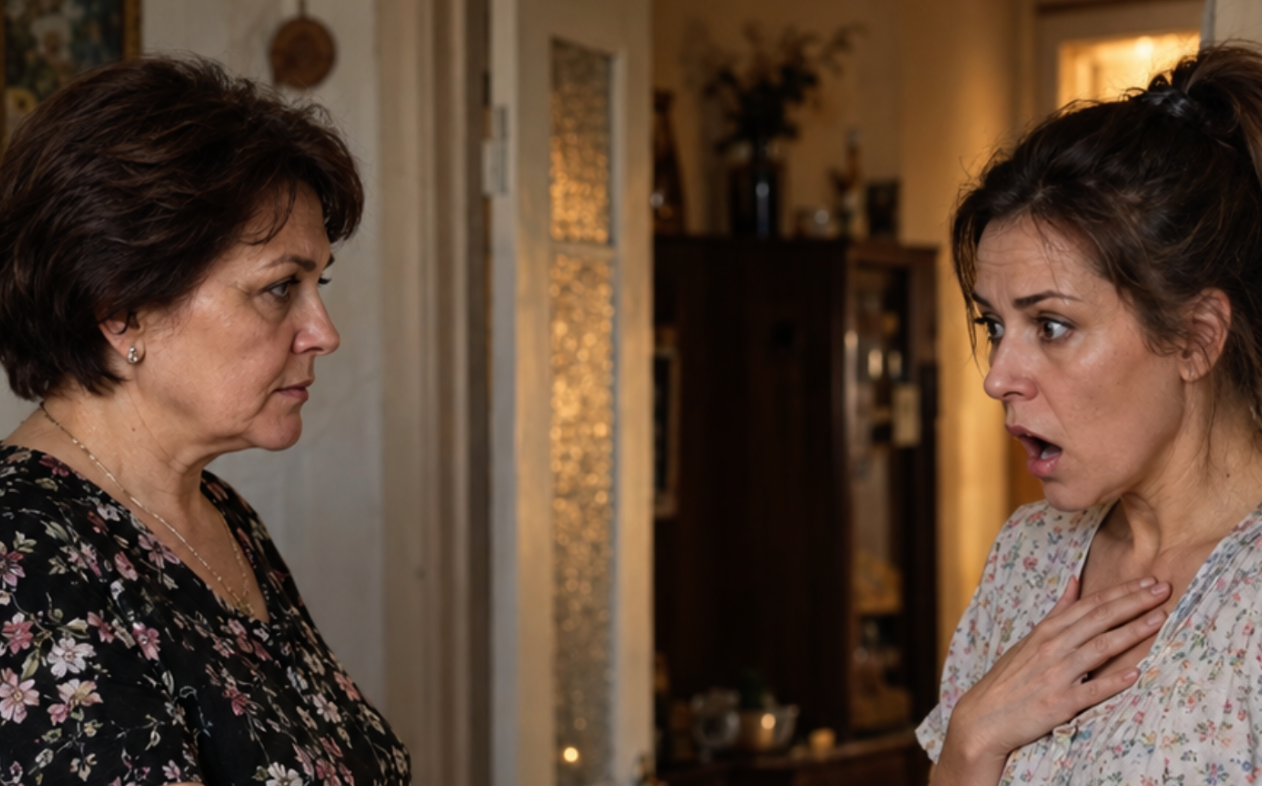
“Mom, why are you buying strawberries at that price?” Polina said disapprovingly, moving the container of berries farther back in the refrigerator. “You said yourself that you were saving money for new winter boots.”
Sofia Leonidovna said nothing at the time. She merely wondered whether her daughter might actually be right. Why should a pensioner indulge herself with expensive strawberries so early in the season?
Of course she wanted the berries. Of course she could afford such a small pleasure.
But if her daughter thought they were too expensive, then so be it.
Polina rarely gave advance notice of her visits. She simply showed up.
Short and energetic, she always seemed to live in fast-forward—doing everything quickly and hurriedly, never stopping for even a minute.
“Can you believe it? I decided to treat myself,” she said one day, holding up her hand to display a new piece of jewelry. “I’ve earned it!”
Sofia Leonidovna smiled and put the kettle on the stove.
The ring really was beautiful: a silver setting with a large greenish-blue stone. She did not ask how much it had cost. Her daughter worked and managed her own income, so she had every right to spend it however she pleased.
But then Polina opened the refrigerator.
As usual, she began carefully inspecting the groceries.
She checked the expiration date on the cottage cheese.
She moved the carton of kefir.
She looked behind the bottle of milk.
And almost immediately, she spotted the strawberries.
“You bought them again?” she asked in surprise. “Mom, we’ve already discussed this. You’re saving money for winter shoes, yet you’re spending it on such expensive berries. Is that really sensible?”
Sofia Leonidovna slowly stirred the soup.
“Polina, it’s my money,” she said calmly. “And I’m the one who decides what to buy with it.”
Her daughter merely smirked.
She did not continue the conversation. She finished her tea, kissed her mother on the cheek, and left.
As she said goodbye, the ring with the turquoise-colored stone flashed once again.
When the door closed, Sofia Leonidovna cleared away the cups, wiped the table, took out the strawberries, washed them carefully, placed them in a bowl, added a little sour cream, and began eating slowly, savoring every berry. They were delicious.
But an unpleasant feeling remained inside her, like a tiny splinter.
A few days later, the telephone rang.
“Mommy, I’ve been thinking,” Polina began rapidly. “Could I bring the children over for the weekend? They could use some home-cooked food, their grandmother’s care, and fresh air. They spend all day sitting around in the city.”
Sofia Leonidovna did not live in the countryside at all.
She lived in an ordinary second-floor apartment with windows overlooking the courtyard.
But Polina spoke so confidently that it sounded as though the children were truly being sent to a holiday resort.
Sofia Leonidovna agreed.
On Saturday morning, her daughter brought Kirill and Nastya over.
She left no money for their expenses.
As she was walking out of the apartment, she called over her shoulder:
“I’m completely overwhelmed right now. Buy them something good, all right? Just no processed convenience foods.”
Sofia Leonidovna merely nodded. After closing the door, she stood in the hallway for a while, looking at the children’s sneakers.
One of Kirill’s shoelaces had come undone.
The heel of Nastya’s shoe was visibly worn down.
Half an hour later, Sofia Leonidovna was already at the market.
She bought fresh beef—the grandchildren loved meatballs.
Real homemade cottage cheese—Nastya hardly ate any other kind.
Sweet cherries, because it was summer.
Apples, which Kirill could eat endlessly.
Good natural juice in a glass bottle.
Sour cream.
Butter.
Flour for homemade pastries.
The envelope containing the money for her winter boots immediately became noticeably thinner.
“It’s all right,” she whispered to herself.
The children ate with great enthusiasm.
Sofia Leonidovna watched them, feeling both happy and worried.
She was happy that her grandchildren enjoyed her homemade food.
She was worried because very little money remained until her next pension payment.
Polina arrived on Sunday evening.
She looked rested.
Tanned.
She smelled of expensive perfume.
“Look how rosy their cheeks are!” she laughed, playfully pinching Kirill’s cheek. The boy grimaced but secretly smiled at his grandmother.
“You can tell they’ve been eating properly. There’s nothing like home cooking.”
Just as she was preparing to leave, her daughter suddenly added:
“Only don’t spoil them with sweets so often. Nastya told me you baked pastries. Mom, why would you do that? It’s all that extra flour and butter—and far too many calories.”
Once again, Sofia Leonidovna did not argue.
But as Polina was about to leave, she gently touched her elbow.
“Polina… The next time you leave the children with me, please bring some money for groceries.”
Polina laughed.
Not maliciously.
She simply seemed genuinely surprised.
“Mom, what are you talking about? They’re your grandchildren. Do you really resent buying food for them?”
After the door closed, Sofia Leonidovna spent a long time cleaning the kitchen.
Then she sat down on a stool.
In the complete silence, her thoughts began arranging themselves one after another.
Toward evening, her neighbor Anna stopped by.
After listening to the story, she sighed heavily.
“My son used to behave exactly the same way. He’d ask for money, ask me to look after his child, then ask for something else. I agreed for a long time. Then one day, I stopped.”
“And what changed?” Sofia Leonidovna asked.
Anna unwrapped a caramel candy.
“After a few months, he realized that his mother wasn’t obligated to keep solving everything for him. Now he calls to ask how I’m doing—not because he needs help, but simply to talk. Do you understand the difference?”
Sofia Leonidovna did understand.
But she still said quietly:
“Our situation is completely different…”
Anna did not argue.
A week later, Polina called again.
“I’ll bring the children over again on Friday evening,” she announced cheerfully. “Buy some good meat, but make sure it’s fresh. They definitely need fruit. Don’t buy bananas—they’re too high in calories. Blueberries would be wonderful if you can find them. Homemade milk would be better. And make the compote yourself instead of buying juice.”
Sofia Leonidovna listened in silence.
Homemade milk was expensive.
Blueberries were even more expensive.
“Will you leave money for it?” she asked calmly.
Polina let out a heavy sigh.
“Mom… Not this again. You sit at home anyway. The children need good food. You’re their grandmother.”
On Friday, she arrived again.
And once again, she brought no money.
Instead, she brought a bag of dirty laundry.
“Could you wash these too, please? The washing machine is broken.”
Sofia Leonidovna said nothing.
She washed the clothes.
She went to the market again.
She bought meat.
Blueberries.
Homemade milk.
Cottage cheese.
Eggs.
Sour cream.
When she opened the envelope containing her savings that evening, the truth became clear: there was almost no money left for her winter boots.
Buying them now seemed very far away.
She spent almost the entire weekend at the stove.
She cooked rich cabbage soup.
She made cutlets.
She baked pancakes filled with cottage cheese.
She prepared compote from fresh cherries.
The grandchildren ate with pleasure.
“Grandma, your food tastes better than a restaurant’s!” Kirill said.
Nastya nodded enthusiastically.
“Did your mother take you anywhere too?” Sofia Leonidovna asked.
“Of course!” the girl said excitedly.
She opened the photographs on her phone.
There was ice cream.
There were amusement park rides.
There was Kirill with his face covered in food.
Then another photograph appeared.
Polina was seated at a beautifully arranged table.
Her friends were sitting beside her.
There were white tablecloths.
Steaks.
Salads.
Wine glasses.
A bottle of wine.
“That’s Mom relaxing with Aunt Olya,” Nastya explained casually.
Sofia Leonidovna stared silently at the screen.
While she had been counting her last coins and wondering how she would manage until her next pension payment, her daughter had been enjoying herself at a restaurant.
After the children ran outside to play, Sofia Leonidovna took out a clean sheet of paper.
She picked up a pen.
And began to write.
Beef.
Cottage cheese.
Blueberries.
Homemade milk.
Eggs.
Sour cream.
Cherries.
Flour.
Butter.
She calculated the total.
Then she studied the figure carefully once again.
And attached the sheet of paper to the refrigerator door with a magnet.
Polina arrived to pick up the children on Sunday evening.
She looked as pleased as ever.
Rested.
Smelling of expensive perfume.
“Mommy, you’re simply wonderful!” she said, peering into the pot containing the leftover cabbage soup. “Other grandmothers don’t want to look after their grandchildren, but you never refuse.”
Sofia Leonidovna silently removed the sheet of paper from the refrigerator and handed it to her daughter.
“What’s this?” Polina asked with a smile. “A new recipe?”
“No,” Sofia Leonidovna replied calmly. “It’s a list of what I spent on groceries for the children this weekend.”
Polina carefully scanned the list, and the smile instantly disappeared from her face.
“Are you serious?” she asked in disbelief.
“Completely,” Sofia Leonidovna answered calmly. “When I buy myself a few strawberries, you tell me they’re too expensive for a pensioner. But when I have to use my pension to buy your children fresh meat, blueberries, and other costly products, you apparently think that’s perfectly normal.”
Polina’s cheeks immediately flushed.
“Mom, can you even hear yourself?” she said indignantly. “They’re your grandchildren! Your own flesh and blood! Aren’t you ashamed to present us with a bill like this?”
Sofia Leonidovna calmly looked first at the ring with the turquoise-colored stone adorning her daughter’s hand and then met her eyes.
“You found money for a new piece of jewelry,” she said quietly. “You also found money to meet your friends at restaurants. Yet somehow, you can’t afford to buy groceries for your own children—even though your husband earns a very decent salary. And after all that, you’re telling me that I should be ashamed?”
Polina flinched.
It seemed as though she wanted to reply, but she could not find the words.
She merely swallowed nervously.
Her face looked unusually bewildered.
Her cheeks were burning.
Her eyes darted restlessly from side to side.
Sofia Leonidovna suddenly realized that she had never seen her daughter like this before.
“How did you even…?” Polina began.
“Nastya showed me the photographs on her phone herself.”
Polina abruptly grabbed the bag containing the children’s belongings.
She called Kirill and Nastya.
After crossing the threshold of the apartment, she stopped and turned around.
Her face had become cold and utterly unfamiliar.
“Congratulations, Mom. You’ve become someone who bills her own grandchildren for food. A real shopkeeper.”
The door slammed shut.
Sofia Leonidovna remained standing in the hallway for several seconds.
Then she slowly walked into the living room and quietly sat down in an armchair.
After that conversation, Polina stopped calling.
A long silence followed.
Whenever the children visited their grandmother, their father brought them over.
Each time, he arrived with groceries in the car, and before the visit, a transfer for their expenses appeared in Sofia Leonidovna’s bank account.
He offered no explanations.
And she asked no unnecessary questions.
It became easier for everyone that way.
One day, Sofia Leonidovna went to the market.
She spent a long time walking among the fruit and berry stalls.
Then she stopped beside the strawberries.
She chose the largest ones.
The most fragrant.
The ripest.
The vendor carefully poured the berries into a bag, and she unexpectedly felt a lightness she had not experienced for a very long time.
At home, she washed the strawberries thoroughly.
She placed them in her favorite ceramic bowl.
She sat by the window.
And slowly ate one berry after another, savoring the true taste of summer.
She no longer felt any guilt or doubt.
At last, she had allowed herself to spend her own money as she saw fit.
And she did not regret it in the slightest.
By winter, Sofia Leonidovna had managed to buy herself a new pair of boots after all.
And this time, no one told her they were too expensive.