My Husband’s Family Gathered to Divide My Inheritance—But I Showed Up with My Lawyer and Their Debt List
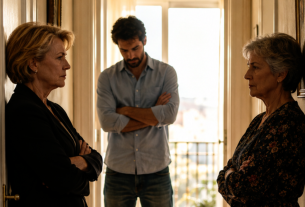
The tape measure clicked as I opened the door. The yellow tape zipped back into its case, and Oksana, who was at grandma’s window, turned to me like I was the one who showed up uninvited.
«Oh, Zhenya. We thought you’d be at your shop on Mondays.»
My shop is closed on Mondays. Has been for eight years, ever since I opened it. My sister-in-law knew this better than most: Mondays were always when she called to ask if anything nice for Yelisey had come in. But I kept silent. My eyes were fixed on the room.
Grandma’s couch wasn’t by the wall but stretched across the room, the back to the door. The rug was rolled up and leaned against the wardrobe. On the windowsill was a piece of notebook paper: ‘3.10 × 2.85’, ‘window 1.40’, ‘radiator?’. In the middle of the room, Yelisey, Oksana’s son, was sitting on a stool, eating an apple from the bag I’d brought over on Friday.
I run a little secondhand clothing shop, and over eight years, I’ve picked up a habit my husband calls ‘nitpicking’: I always notice when something’s been touched. If a jacket is hanging crooked, it’s been tried on. If a button is fastened in the wrong hole, someone tried it on in a rush. In grandma’s apartment, everything had been touched.
«What’s this?» I asked.
«Just figuring some things out,» Oksana waved the paper. «Yelisey needs a proper bed, and there’s a niche here. If the couch goes by the window, it’ll fit. Don’t worry, we’ll be careful. Mom said he can stay here until you sell the apartment, why should it sit empty? It’s hard for him and me in our tiny place—he’s nineteen, after all.»
«While you sell it.» I repeated that in my head because I couldn’t believe it the first time.
«We’re not selling anything.»
«Well, not selling yet,» Oksana replied casually. «Arseniy says there’s no point before spring anyway, prices drop in winter. His realtor is coming on Wednesday to take some photos, just to get an idea.»
«Whose realtor?»
«Arseniy’s acquaintance. Zhenya, why are you looking at me like that? We’re family, not outsiders.»
«How did you get in?»
She was genuinely surprised.
«Albert gave us the key. On Thursday, actually.»
She pulled the key out of her jacket pocket, and I recognized it instantly. Grandma always hung the spare on a red satin ribbon so it wouldn’t get mixed up with the mailbox key. In the spring, when we were moving out her old wardrobe, I handed that key to my husband—he arrived with the movers an hour before I did. I never asked for it back. It never occurred to me that I should.
«Please, give it to me.»
«Albert gave it to me, so I’ll give it back to him.»
She didn’t say it out of spite. It was more like a child hiding a piece of candy that dad allowed, but mom somehow disapproves of. The key slipped back into her pocket.
I wouldn’t have tried to take it by force, even if I could. I said:
«There won’t be any realtor on Wednesday. Elisey, please, put the sofa back where it was.»
Elisey turned red up to his ears, put his apple core on the windowsill—right on top of Oksana’s numbers—and silently pushed the sofa back to the wall. Oksana pursed her lips, rolled up the tape measure, and said that they were only trying to help. Five minutes later, they were gone.
I unrolled the carpet. It didn’t fall the way it used to when Grandma was here: there was a crease where it had been folded. I stood for a long time, smoothing that crease with the tip of my shoe, even though I knew it wouldn’t go away that way.
Grandma Daria passed away in March. She wrote the will for me five years ago, back when I visited her every other day: bringing food, washing her, arguing with the clinic. Mom didn’t object; she had her own apartment in Yaroslavl, and at the time she said over the phone, «You’re the one there, so you’re the heir, it’s only fair.» In September, after the required six months, the notary gave me the certificate, and a week later I got the statement that the two-room Khrushchyovka on Zavodskaya, fourth floor, was now mine.
I didn’t do anything with it. Each Monday, I sorted through Grandma’s things: giving some to the neighbors, taking some home, but I couldn’t throw out or sell her coats and dresses, not even in my own shop. It would have felt like putting Grandma herself up on the rack.
At Albert’s birthday, at the end of September, my mother-in-law asked me between the main course and dessert:
«Zhenya, so what are you planning to do with the apartment?»
«Nothing yet. I’m still sorting things out there.»
«Zhenya will decide,» Albert said.
Back then, I heard that as support. Now, standing on the crease in the carpet, I wondered for the first time if maybe he was just dodging the question.
Albert got home from work around seven. I waited until he washed his hands.
«You gave Oksana the key to Grandma’s apartment.»
He dried his hands on the towel, slowly, one finger at a time.
«Yeah, I did. Elisey wanted to see it. Zhenya, the place is really cramped for him, and Oksana is at her wits’ end…»
«Oksana says: ‘while you’re selling it.’ And there’s a realtor coming for Arseniy on Wednesday.»
Albert sat on the stool and rubbed his neck. He always does that when he needs to say something unpleasant and isn’t sure how to begin.
«We were at Mom’s on Saturday, just talking things over. Arseniy says that since we’re married, by law half belongs to me. He checked. Mom says it’s only fair to sell it and split it—half to you, and with my half, I could help out. Give some to Arseniy for a loan, some to Oksana for Elisey’s down payment. I didn’t promise anything. I said, ‘We’ll talk.’»
«Did you tell them it’s my apartment?»
«Zhenya…» he spread his hands. «We’re family, after all.»
Just then, his phone rang. He glanced at the screen and handed it to me.
«It’s Mom. She wants to talk to you.»
«Zhenya,» my mother-in-law’s voice was warm, almost gentle. «Come over at two on Sunday, both of you. The whole family will get together, and we’ll settle the apartment situation as a family, before anyone starts arguing. I’ll bake a pie.»
Settle. Not discuss, not consult. Settle.
«Alright,» I said. «We’ll come.»
That night I couldn’t sleep, trying to honestly answer why, in the past six months, I hadn’t once told them outright: the apartment belonged to my grandmother and me, leave it alone.
The answer was old, eight years old. When I decided to open my store, I had just enough for my first batch of inventory, but nothing for rent. Serafima and my late father-in-law, Timur, handed me a hundred thousand in an envelope. «This is from us. Don’t even think about paying it back.» I cried right there in their hallway. Even now, I remembered that white envelope, marked «For Zhenya» in Timur’s handwriting. And my mother-in-law, ever since, at every holiday, between toasts, would tell some guest: «We helped her get her shop off the ground.» And each time, I nodded. It was the truth.
My initial plan was simple—and, as I now realize, convenient for everyone except me. Come, listen, politely refuse to sell. Maybe let Elisei stay for a couple of months so I wouldn’t seem greedy. Smooth things over.
But by morning, I realized there was nothing to smooth over. The decision had already been made without me: an outside realtor had set the price, the money had been divvied up for loans and payments, Elisei had been measured a spot for his bed. All that was needed from me on Sunday was to agree. And if I refused, they had their comeback ready: “We helped you open your shop, and now this.” And my husband, who “didn’t promise anything,” would sit between us, rubbing his neck.
Something else stung me. Arseny was ‘finding out’ that half the apartment belonged to Albert. And I didn’t even know if that was true. I was sure it wasn’t. But ‘sure’ isn’t the kind of word you bring to your mother-in-law’s table against three people.
On Tuesday morning, I opened the shop, put the kettle on, and, as always, took out my notebook from under the register to record yesterday’s receipts. My notebook was thick, ninety-six pages, the third of its kind. I wrote down everything that left the shop without payment: something taken home to try on, something ‘to be paid for on Friday,’ something a friend took ‘to show her husband.’ Not out of suspicion. It’s just if I don’t write it down, the accounts don’t match up at the end of the month, and I start to think I’ve been robbed.
I flipped back through the pages. In the margins it said: «Oksana — gray wool coat, 6,500, will pay after payday.» A few pages later: «Oksana — winter jacket for Elisei, 7,200, by the end of the month.» Two more pages: «Oksana — green dress + boots, 5,800, later.»
«Later» was written in my own handwriting. Back then, that word seemed polite.
I poured myself some tea and dialed Filipp Andreevich.
He’d been coming to me for three years, every Saturday, hunting for old wool blazers and ties with tiny patterns, always bargaining out of principle and always ending up buying more than he intended. He worked at an office just two doors down, the sign above said: «Inheritance. Housing. Family disputes.» I never thought I’d actually need his services.
He arrived at lunchtime. We sat together in the storage room, surrounded by sacks of items waiting to be sorted. I told him everything, doing my best to keep my emotions in check. He listened patiently, spinning a button between his fingers that he must have picked off a coat.
«The apartment is straightforward,» he said. «Anything one spouse inherits belongs to them personally. It isn’t counted as joint property, which means there’s nothing to split. No one can sell, rent, or register anyone there without your consent. That’s not just my opinion, it’s Family Code, Article Thirty-six.»
A wave of relief washed over me. I hadn’t even realized just how tense I had been.
«The debts are more complicated,» he went on. «There aren’t any signed IOUs, right?»
«No IOUs. But I have bank transfers showing exactly what they were for, messages, and a notebook.»
«Transfers and messages count for something. But court can take a long time, and I can’t promise any guarantees. I’d start differently: suggest they admit the debt in writing and agree to a payment plan. People often sign when the numbers are clear and there are witnesses. Not always, but often.»
«Can you come over on Sunday?»
He paused for a moment.
«I can. But you’ll be the one talking. I’ll answer any legal questions if they come up and bring the paperwork. I’m not going to persuade anyone or bang my fist on the table.»
«I don’t need anyone banging on the table.»
The consultation was three thousand, but Sunday appointments were seven. I pulled the money from the envelope where I’d been saving for November’s rent: the landlord was raising it by four thousand starting next month, and I had already postponed my winter bulk order by two weeks. Taking out ten thousand from that envelope definitely stung. But thinking about the hundred and eighty Arseniy owed me—that stung a lot more.
I called Arseniy that same evening.
«We don’t need the realtor on Wednesday.»
«I was just going to look, Zhenya,» he replied cheerfully. «Why are you getting worked up? We’ll sort everything out on Sunday. Alright, I’ll reschedule.»
Reschedule, not cancel.
For three evenings I sat in the kitchen with notebooks and my phone. Albert watched TV and didn’t ask what I was doing, and I didn’t tell him. The banking app had all the details saved. January 12th, year before last: «To Arseniy for car repairs, until spring,» one hundred eighty thousand. Back then, he was making deliveries with his own car, the gearbox had broken, and it was me he called, not his brother. «Zhenya, help me out, don’t tell Albert, he’ll blab to Mom.» In April, there was a repayment: twenty thousand, labeled «part.» And nothing after that.
Continued in the comments.
August that same year: thirty-five thousand to Oksana, «courses for Elisei.» I found her message in our chat: «Zhenya, I’ll pay you back before September, I promise, my advance is delayed.»
November: «Eldorado,» thirty-eight thousand nine hundred ninety. My mother-in-law’s washing machine broke down, she called me in tears and we went to the store together. I paid with my card. «I’ll pay you back little by little from my pension.» She’s received her pension twenty times since then.
I added up Oksana’s belongings based on the purchase price, not the retail value. Over three years, it totaled forty-seven thousand three hundred.
On a separate sheet, I wrote everything out neatly in a column, with dates. And above the first line, I noted separately: ‘Received from Serafima and Timur for the first rent — 100,000 (gift).’ I debated for a long time whether to include that line. But in the end, I decided if I’m going to count, I have to count everything. Otherwise, it’s not accounting, it’s revenge.
On Saturday evening, I placed the sheet in front of Albert.
He read it for a long time. When he reached Arseniy’s entry, he looked up at me.
«One hundred eighty? He said thirty. For spare parts.»
«He paid back twenty.»
«Why didn’t you tell me?»
«Because you would have said: it’s just Arseniy.»
He didn’t argue. That felt worse than if he had.
«And the lawyer… is that really necessary?»
«Yes. Arseniy was ‘looking into it.’ Let him get answers from someone who knows.»
«Mom will think you’ve come to start a war.»
«Mom has already decided who gets what from my apartment. I’m just coming to watch it happen.»
Albert went out to the balcony and smoked for longer than one cigarette. When he came back, he said nothing and went to bed. I still have no idea whose side he’ll be on tomorrow.
Outside his mother’s building, Filipp Andreevich was waiting for us, dressed in the dark jacket he bought from me last spring, folder under his arm. Albert greeted him with a silent handshake.
Serafima opened the door, saw a man she didn’t know, and stopped smiling.
«Who is this?»
«Filipp Andreevich, the lawyer. I asked him to come since we’re talking about inheritance.»
She stood in the doorway for a moment. I could see her weighing the situation: refusing entry would mean admitting she had something to hide. And Serafima has never in her life admitted to hiding anything.
«Come in,» she said. «Take off your shoes, my floors are clean.»
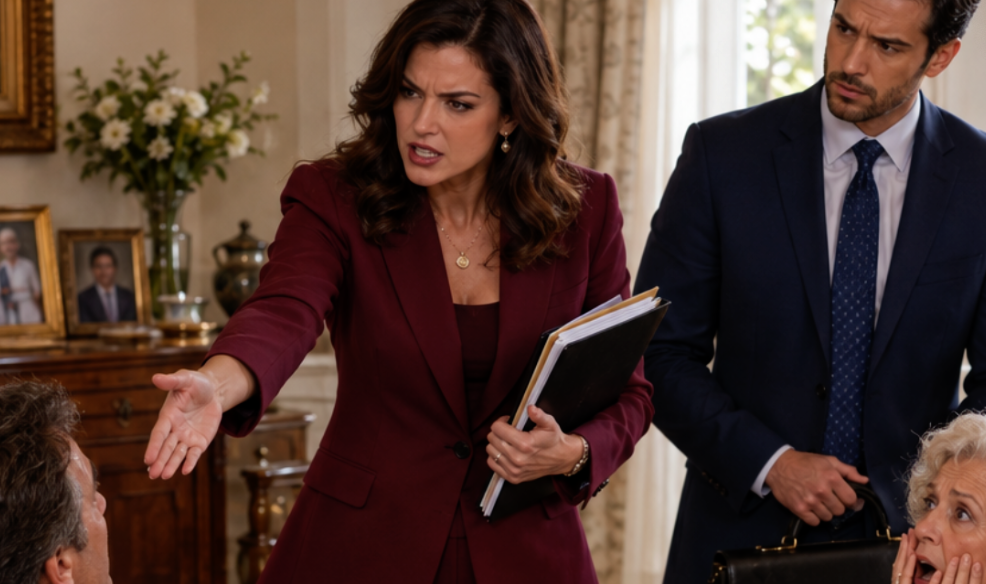
In the big room, the table was extended, covered with a sunflower-patterned tablecloth, and a cabbage pie cut into squares. Arseniy was sitting by the window, Oksana was at the end, closer to the door. Yelisei wasn’t there. When Arseniy saw Filipp, he laughed:
«Wow. Zhenya, are you taking us to court?»
«No. I just want to avoid arguments over who knows what.»
My mother-in-law poured tea for everyone, including Filipp, who thanked her but didn’t take any pie. Then she put on her glasses and unfolded her own sheet of paper. For some reason, I hadn’t expected that.
«I did some calculating, just to be fair,» she said. «The realtor says the apartment is worth three million nine hundred thousand. Zhenya, as an heir, gets half. Albert’s half is one million nine hundred and fifty thousand. Arseniy to cover his loan, seven hundred. Oksana gets eight hundred for Yelisei’s down payment. The cottage roof has been leaking for three years — that’s two hundred. The rest goes to Albert. I don’t need anything.»
She took off her glasses. She truly didn’t want anything aside from the roof. This was her family, her children, and as far as she was concerned, everything was divided just right.
«The realtor gave a value for the apartment he hasn’t seen?» I asked.
«He saw it,» Arseniy said. «Oksana sent him photos.»
Oksana stared into her cup. I remembered the measuring tape and the sheet on the windowsill.
«Filipp Andreevich,» I said, «could you please explain where Albert’s half comes from?»
Filipp set down his cup.
— Nowhere. Any property a spouse inherits is legally theirs alone and doesn’t get split during a divorce. Albert has no claim to that apartment. Only Evgenia can decide to sell, rent, or let anyone stay there.
— But I was told… — Arseniy started.
— Then you were told wrong. Family Code, Article Thirty-Six. You can look it up right on your phone.
Arseniy made a sound, grabbed his phone, and actually pulled it up. He read, lips moving, then set the phone face down. Albert watched his brother. My mother-in-law looked at me, her expression shifting from angry to offended, like someone told at a party that they’d come to the wrong house.
— What do laws have to do with this? — she said. — Laws are for strangers. We’re family. Timur and I set you up with a store, did you forget? One hundred thousand, our last. And now an apartment just falls in your lap, while Arseniy has a loan and Elisha has nowhere to live. How is that fair? When Arseniy’s car broke, you wouldn’t even lend him money. He told me everything. We kept quiet, stayed out of it. But now…
I looked at Arseniy. He stared down at his plate.
So that’s how it was. For two years, my mother-in-law thought I refused to help her son when he was in trouble. For two years, I couldn’t understand why she became so distant—I thought I was imagining it.
— One hundred and eighty thousand, — I said. — January 12th, two years ago. Bank transfer from my card.
The kitchen faucet was dripping. I could hear every single drop.
— One hundred and eighty? — Serafima asked.
— Mom, come on… — Arseniy spun his cup in his hands. — I’m paying it back.
— Twenty. In April. — I pulled out a piece of paper from my bag and set it on the table. — If we’re being fair and saying everything is shared, let’s count it all up. Not just what you’re owed.
I read aloud, slowly, listing the dates. First, the top line: a hundred thousand for the initial rent, a gift. Then Arseniy. Then Oksana’s courses. Then her coat, her puffer, a dress with boots, a spring jacket, another jacket.
Oksana couldn’t hold it in at the mention of her coat.
— You kept track of my clothes?!
— I write down everything that leaves the store unpaid. Otherwise, my accounting doesn’t add up. And I never cheated you—at the register you even wrote yourself: “I’ll pay for the coat from my salary.”
— Those were gifts! You gave them yourself!
— Fine. The things can be gifts. — I ran my pen along the edge of the list. — But thirty-five thousand for courses, ‘until September’—was that a gift too?
Oksana opened her mouth and closed it again.
The last item was the washing machine. My mother-in-law read it before I got to it—across the table, upside down—and her face started to show red blotches.
— But that was… for my birthday…
— Your birthday is in May. The machine broke in November. You said you’d pay me back little by little from your pension.
She didn’t say a word. I could see she remembered. It was just easier to forget.
I picked up my pen and, in front of everyone, crossed off the washing machine. Then drew an arrow to the very top line—the one hundred thousand.
— I’ll count that as your gift. We’re even on the machine. And as for the rest of that hundred—thank you. Really, thank you. I’ve remembered that envelope for eight years.
Serafima took her own piece of paper—the one where she calculated three thousand nine hundred—folded it in half, then again, and tucked it under the sugar bowl. Her hands were restless.
Filipp Andreyevich opened a folder and placed two sheets of paper on the table.
«These are debt recognition agreements,» he said. «With a payment schedule. No interest, just as Evgeniya asked.»
«I’m not asking anyone to sell anything,» I said. «No cars, no apartments. I just want you to sign that you owe the money, and start paying it back little by little. Arseniy, ten thousand a month. Oksana, your courses—five.»
«And what if I don’t sign?» Arseniy asked. Not confrontational, just genuinely curious.
I looked at Filipp.
«Then Evgeniya will decide whether to take it to court,» he replied. «There are money transfers, there’s correspondence. I can’t promise anything. But this isn’t something that will just be ignored.»
Arseniy looked at his mother. He probably expected her to say, «Don’t you dare sign, we’re family.» Half an hour ago, she might have actually said that.
«Sign it,» Serafima said quietly.
He signed. Slowly, with a firm hand, he put his signature twice where Filipp indicated, and then pushed the sheet away from him, like a plate of food he wasn’t going to eat.
Oksana stood up.
«I’m not signing anything. You’re all insane. Over clothes, over this apartment…»
«The key,» I said.
«Albert, say something!»
Everyone looked at her husband. He was sitting there, hands between his knees, staring at the folded paper under the sugar bowl. It felt to me like a lot of time passed. In reality, probably just three seconds.
«Oksana, give back the key.»
His voice was quiet. He wasn’t defending me—no. He just sounded tired, like someone who’d been deceived by his own brother for two years, and had only just realized it.
Oksana unzipped her pocket hard, tossed the key onto the tablecloth. The red ribbon landed across the sunflowers. In the hallway, she struggled for a while to get her foot into her boot, then slammed the door so hard the glasses in the cabinet rattled.
I put the key in my purse.
We sat for another ten minutes. No one touched the pie. My mother-in-law asked Filipp if he wanted more tea, he declined and stood up. Arseniy went out onto the stairs to smoke and didn’t return to the table. In the hallway, Serafima said to me, looking away:
«You could have told me sooner. About Arseniy.»
«He asked Albert not to say anything. And Albert tells you.»
She didn’t reply.
Out on the landing, I gave Filipp Andreyevich an envelope. He didn’t count the money, just put it in his folder and said he’d come by on Saturday—apparently, I’m expecting a shipment from Lithuania with some tweed. I said, come by.
On Monday, I called a locksmith and changed the lock in my grandmother’s apartment. Two and a half thousand. The key with the red ribbon no longer opened anything, but I didn’t throw it away—I hung it by my front door on a separate hook.
Albert noticed it in the evening.
«Will you give me a key? To the new lock?»
«If you need to go there, just let me know. I’ll open up.»
He stood there for a moment, nodded, and went to put on the kettle. For two days, he barely spoke to me, but he didn’t argue either. On the third day, he finally asked what I planned to do with the apartment. I said I hadn’t decided yet. And that I would be the one to decide.
On the fifteenth, my phone pinged: a transfer from Arseniy, ten thousand, signed «debt. Ars.» I opened my notebook to the last page and wrote, «Arseniy — 10,000. Balance 150,000.» Then I called the wholesaler and said I’d pick up the winter shipment on Friday.
There was nothing from Oksana. No money transfer, no call. On Friday, her friend—who sometimes stops by—asked if she could take a down jacket home for Oksana to try on, promising she’d bring it back later. I explained that we have a fitting room for that, and jackets can only be taken home after they’re paid for. Her friend was offended and left without the jacket.
On Sunday, my mother-in-law called.
«Come over at two. There will be cabbage pie.»
She didn’t say a word about the apartment. Not about Arseniy either. As we were saying goodbye, she suddenly added:
«Zhenya. The washing machine is great. It runs quietly.»
«I’m glad to hear that,» I replied.
On Monday, I went to Zavodskaya, unlocked the door with my new key, and spent a while fiddling with the lock—I still wasn’t used to it. The couch was against the wall. The carpet was laid out evenly, but the crease still hadn’t smoothed out. I sat on the couch, in my grandmother’s spot, and for the first time in six months, I thought not about sorting things, but about what I actually wanted to do with this apartment.