Every morning, when her father headed out for a trip, Katya would wake up before dawn.
It wasn’t because her mother woke her. Her mother rarely got up early—she’d lie there, turned to the wall, blanket pulled up to her chin, pretending to be asleep. Katya woke on her own, thanks to the alarm she’d set the night before. Five in the morning. Just to make sure she had enough time.
She would go barefoot down the cold wooden floors to the kitchen. The light was already on. Her father sat at the table—big, broad-shouldered, wearing a stretched-out sweater and old jeans—drinking tea. When he saw Katya, he always smiled—a tired but warm smile.
«Why are you up so early, dragonfly? Go back to bed.»
«I want to see you off.»
«No need to see me off. I’ll be back soon.»
«Doesn’t matter.»
She would sit next to him, resting her head on his shoulder. He would stroke her hair—his big, rough palm smelling of diesel and metal. Katya would close her eyes, savoring the feeling.
«Dad, where are you going this time?»
«Up north. To a little village past the forest. I’m delivering building materials.»
«Is it a long drive?»
«A day to get there, a day back. Plus loading and unloading. Three or four days in all. Then I’ll be home.»
«With a present?»
«With a present.» He’d tap her on the nose. «What kind do you want?»
«Surprise me.»
«Alright. I’ll think of something.»
Then he’d stand up, put on his jacket, and grab his bag. Katya would follow him out onto the porch. Outside, it was November or December—dark, cold, the snow crunching underfoot. His big truck waited at the gate, frosted over from the night. Her father would climb into the cab, starting the engine to warm it up. Katya would stand by the gate, wrapped up in her mom’s old sweater, and watch the red taillights fade off down the road until they finally disappeared around the bend.
And every time, something in her broke—a thin, plaintive ache, as if he was leaving forever.
That’s how it always was. For as long as Katya could remember, her father was away on the road. A week here, a week there. Sometimes two. Sometimes three, if the trip was far—to the other end of the republic, or even farther. He worked as a truck driver, hauling whatever needed to be hauled: boards, bricks, pipes, groceries, equipment for oil workers. The job was tough, but by local standards, it paid well. Their house was solid, just as nice as anyone else’s. The fridge was always full. Katya’s clothes were always new, never hand-me-downs.
But a house isn’t just walls. It’s also the people inside.
And there weren’t really people in their house. Or rather, there were—but it was as if they existed in different worlds. Her father was away. Her mother was withdrawn. Katya drifted somewhere in between, like a lost soul.
Her mother’s name was Olga. She used to be beautiful—Katya had seen old photographs: young, laughing, with her hair piled high in a bright dress. By forty, that beauty had faded. Olga had put on weight, her face was puffy, and her eyes had lost their spark. She worked as a shop assistant in the village store—three days on, three days off. In her free time, she’d either sit watching TV or go over to her neighbor Zinka’s for a chat.
Katya didn’t know exactly when this started. Maybe when she was five. Maybe six. Maybe earlier—she couldn’t really remember. But by eight, she’d already noticed: something was wrong with her mother.
Neighbor Zinka would gossip to Grandma Valya over the fence—loud enough to think Katya couldn’t hear:
— Her lover came to see her again. I saw him out the window. He slipped away in the middle of the night like a thief. And Sergey is away on a trip…
— You don’t say!
— I swear to you. It isn’t the first time, either. And not the first lover. She cheats on her husband — right under his nose. Shameless woman.
Back then, Katya didn’t know what the word ‘lover’ meant. But she understood the tone. And the way Aunt Valya shook her head and clicked her tongue—she got that, too.
That evening, she asked her mother:
— Mom, what’s a lover?
Olga froze. She turned around. Her eyes were like a cat’s when it spots a dog.
— Where did you hear that word?
— Aunt Zina said it. She told me that your lover came to see you.
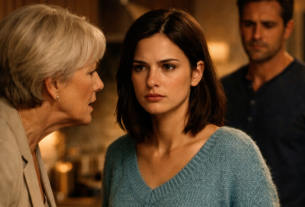
Olga went pale. Then her face flushed. She grabbed Katya by the shoulder—so hard it would leave a bruise:
— Don’t you dare listen to what those hens say! Do you understand? Don’t you dare! And don’t you tell your father! Not a word, do you hear me?!
Katya nodded, even though she didn’t understand. But she remembered the fear in her mother’s eyes. And from that day on, she started looking at her mother differently. Warily. Closely. The way you look at someone when you don’t know what to expect from them.
Her father came back a week later. He brought Katya a doll—a big one in a pink dress, with closing eyes. Katya was happy, but not for long. She watched her father and wondered: ‘Does he know or not?’
She couldn’t ask. She was afraid. And she was afraid for her father, too, and for her mother—it was strange, but she was. And for herself.
Her father was always calm. Almost too calm. He’d arrive, unpack his bag, wash up after the trip, and sit down for dinner. He hardly talked to Olga: ‘How are things?’, ‘What’s at the store?’, ‘How’s Katya doing in school?’. Olga answered with short replies. They didn’t fight. They didn’t yell at each other. But there was no warmth between them—just habit, two strangers living under the same roof.
One night Katya woke up thirsty. She walked barefoot down the dark hallway. The door to her parents’ bedroom was ajar. The nightlight was on. Katya peeked in and saw her father sitting on the bed, his back to the door, holding a photo in his hands—the one where her mother was young and laughing. He stared at it for a long, long time. Then set it on the nightstand. Lay down. And—Katya could have sworn—she heard a quiet, choked sigh.
She didn’t go in. She went back to her room. Lay down. And stared at the ceiling for a long time.
Now she knew for certain: he knew.
The years passed. Katya grew up.
At school she was a good student—not the very best, but diligent. Her teachers praised her. Especially her literature teacher, elderly Valentina Dmitrievna, who told Katya: “You have a deep soul, Katya. You really understand people.” Katya would blush and feel embarrassed.
By fifteen, she understood a lot. She realized why her mother sometimes disappeared in the evenings, all dressed up and made up, even when her shift at the store was over. She realized why her father was home so rarely—and not just because of work. She understood why the neighbors whispered behind their backs.
Her relationship with her mother grew worse and worse. Olga seemed to sense her daughter’s judgment—and put up defenses. She struck first. She’d yell over little things. She even hit—once, across the cheek—for Katya ‘looking at her the wrong way.’ Katya didn’t cry. She just pressed her lips together and went to her room.
Her father was away on a work trip when it all happened. When he came back, Katya told him everything. He listened in silence, saying nothing. Then he went to see Olga. Katya never knew what they talked about. But from that moment on, her mother never laid a finger on her again. Instead, she just watched her — with angry, hurt eyes, as if Katya was the one to blame for it all.
One day, Katya couldn’t hold back anymore. She went up to her father — he was in the yard fixing the car, his arms covered up to the elbows in grease.
«Dad, can I ask you something?»
«Go ahead, dragonfly.»
«Why do you live with her?»
Her father froze. He straightened up slowly, wiped his hands with a rag, and looked at Katya with a long, heavy gaze.
«What do you mean?»
«You know what I mean.» Katya looked him right in the eye. «Everyone knows. You know. Why won’t you get a divorce?»
He was silent for a long time. Then finally said:
«Don’t get involved in this, Katya. You’re still too young. You wouldn’t understand.»
«I’m not that young. I’m fifteen.»
«Exactly. Fifteen.» He turned away. «When you’re older — we’ll talk.»
And that was it. The conversation was over. Katya went to her room, slamming the door behind her. She felt hurt. She had hoped her father would open up, share something with her. Maybe they’d become closer. But instead, he brushed her off. Like she was just a child.
A week later, he left on another work trip.
Katya finished school and moved to the capital of the republic to study at the teacher’s college. She wanted to be a primary school teacher. ‘It’s easier with kids than with adults,’ she told herself. And there was some bitter truth in that.
In the dorm, during her first year, she got drunk for the first time. Just like that, hanging out with the girls at a freshman party. Drunk and crying in the bathroom, an older student stroked her head and asked, «What’s wrong? Guy troubles?» Katya shook her head and said, «No. It’s my dad… my dad… he…» — and couldn’t explain. Then she fell asleep.
In the morning, she was ashamed. She promised herself never to touch another drop. And she kept that promise — all five years of college.
She came home for holidays. Her mother greeted her with a fake warmth that faded away before the evening was over. Her father was still always away for work. Katya noticed: he had aged. His back stooped more. There was more gray in his hair. But he remained just as silent. He never complained. Never explained.
In her third year, she tried again:
«Dad, seriously. You’re not happy with her. She doesn’t love you. You don’t love her. Why are you two still together?»
«And what do you suggest?» he snapped back, sharper than before. «Get a divorce? Then what? She’ll be alone. Who needs her at forty-five, with her temper? She’ll be ruined.»
«Why should you care? She made her own choices!»
«It’s not for you to judge, Katya,» he cut the air with his hand. «Not for you. You don’t know enough about life yet.»
«And do you?» Katya was almost in tears. «You know everything and do nothing! You’re like… like a stone! Cold, unmoving! I try to talk to you like an adult, and you just shut me out. You’ve always been like a wall!»
He looked at her then. His eyes were gray and faded — like a winter sky. And in them was so much pain that Katya fell silent.
«Alright, sweetheart,» he said quietly. «That’s enough. I have to go. I need to load up in four hours.»
And he left.
Katya stood in the middle of the yard and cried — out of helplessness, out of hurt, and out of love for this silent, stubborn man who carried his own cross and never let anyone else touch it.
After graduating from teacher’s college, Katya returned to her hometown. She got a job at the local school—teaching first grade. Class 1-A. Twenty-six little first graders—noisy, funny, and touching. She taught them how to read and write, broke up fights, wiped noses, and talked to their parents. She loved her job. The kids loved her too—she was strict but fair.
Katya lived in a small house on the edge of the village—her grandmother’s old home that her parents gave her after her grandmother passed away. She fixed it up. Painted the walls in cheerful colors. Hung curtains. Got herself a cat—a bold, ginger one named Barsik. In the evenings, she drank tea and graded papers.
She visited her father often. Tried to keep her distance from her mother—but sometimes their paths crossed. Their conversations were short and tense. “How are you?”—“Fine.” “Alright then.” And that was it.
Her father was already over fifty. He still worked as a truck driver, even though the doctors told him to take care of his back and his heart. But he just waved them off, saying, “As long as my legs hold up, I’ll keep driving. Without work, I’ll wither away.”
Katya would look at him and think: Here’s a man who spent his whole life behind the wheel. Who knew his wife was unfaithful—and stayed silent. Who loved his daughter—but hardly saw her. Who gave up everything—and in the end, ended up face to face with his sacrifice that nobody wanted.
One day, she made up her mind.
It happened in August. Her father had just returned from a short three-day haul to the district center. He was sitting on the bench in the yard, fiddling with some metal parts. Katya came in through the little gate and sat down beside him.
“Dad.”
“What is it, dragonfly?”
She hadn’t been a “dragonfly” for a long time—she was a grown woman now, twenty-six years old, with a degree, a job, and her own life. But to him, she’d always be his little dragonfly.
“Dad, I want to talk. Seriously.”
He put the metal pieces aside and looked at her.
“Well, go on.”
“Why didn’t you divorce Mom? Back then, a long time ago? When I was little?”
Her father sighed. He stared at his hands in silence for a long time.
“You’re at it again…”
“Yes, again. Only this time, I’m not leaving. I’m an adult. I have a right to know. You’ve stayed silent all your life—now tell me. Please.” She paused. “I’m not here to judge you. I just want to understand.”
Her father looked at her for a long time. Then—it was like something inside him shifted, a barrier fell away—and he started to speak.
“I knew. I knew from the beginning. Well, maybe not right from the start—about three years after you were born. Somebody told me. Do you think you can keep secrets in a village? Even the dogs knew. Word got to me.” He gave a humorless smile. “At first, I didn’t believe it. Thought they were lying, jealous. But then I saw it myself. Came back from a trip a day early—and saw.”
“And what did you do?”
“Nothing.”
“What do you mean, nothing?”
“What was I supposed to do? Go inside, make a scene? Beat him up? Beat her?—He shook his head.—I stood outside the gate…and walked away. Slept in the truck, by the highway. And in the morning, I came back—as if nothing had happened. And since then—that’s it. I just live.”
“But why?” Katya looked at him wide-eyed. “Why didn’t you get a divorce? Why didn’t you leave?”
“Because of you.”
“Because of me?”
«Yes.» He let out a heavy sigh. «I always thought: a child needs a mother. Any mother. But a mother. If I left, you’d be left with either me or her. With me—I’m always away on trips. Who would look after you? With her—she would ruin you, I know her. And to split you between us…» He shook his head. «I didn’t want to divide you. So I decided: I’ll just put up with it. You’ll grow up, then we’ll see. For now—let things stay as they are.»
Katya listened. She felt a lump in her throat.
«And you… all these years… you just endured?»
«I endured. What else could I do? You’re my daughter. I’m responsible for you. I decided: it’s better for you to have both a father and a mother, even if we’re like this, than to have no one at all.»
Katya stayed silent. She looked at him—this gray-haired, tired, stubborn man. And suddenly, she broke down in tears.
«Dad…» She took his hand. «Dad, you have to understand… All this time you thought you were saving me. That you were giving me a family. But really, you were taking yourself away from me. You were here—and not here. You’d come home, leave again, bring gifts, say ‘how are you, dragonfly’—then disappear. I grew up and wondered: why is Dad always away on trips? Why doesn’t he want to be with me?»
«Katya…»
«Wait. Let me finish.» She wiped her tears with her palm—like a child, smearing them across her cheeks. «Every time you left, I’d wake up at five in the morning. By myself. With an alarm clock. Just to see you off. To spend even ten minutes with you. While you had your tea. While you were getting ready. That was my only time with you, Dad. Ten minutes. Once every two weeks. Or a month. Do you realize what that did to me?»
Her father stared at her. His face had turned to stone. Only his eyes betrayed him. In them there was so much anguish, so much shock—as if he was hearing something for the first time that he should have heard twenty years ago.
«I thought…» he said quietly. «I thought it was for the best. That I was making money. That you had everything you needed. That your mother was there…»
«Mother?!» Katya almost shouted. «What kind of mother is she? She hit me when I was thirteen. In the face. Because I ‘looked at her wrong.’ She never once asked how things were going at school. Never once came to a parent-teacher meeting. Never hugged me—not once, just because. She was there—but not really. The same as you. You both were there—and yet neither of you were. You didn’t give me a family. You gave me loneliness. Every day. For years.»
Her father lowered his head. His shoulders, always so broad and dependable, suddenly seemed narrow and pitiful—like an old man’s.
«I didn’t know…» he whispered. «I really didn’t know…»
«You didn’t want to know. You hid—in your work, in your journeys, in your silence. You thought—you’d get through it. But I had to get through it too. Only I was just a child. I didn’t understand why things were this way. Why didn’t Dad stay with me? Why didn’t he take me with him? I thought—maybe I was to blame. Maybe I did something wrong.»
«Katya, my dragonfly…» He reached out to her. «I never… never thought you were bad. You are the best thing I have. The only reason I lived.»
«Then why didn’t you live with me?» Katya was now crying openly, angry tears streaming down her face. «Why weren’t you there? Why didn’t you read me bedtime stories? Why didn’t you teach me how to ride a bike? Why didn’t you protect me when the boys teased me? You were alive, you were healthy, you could have! But every single time, you chose the road. You always picked the cabin of your truck over me. And you thought that was the right thing to do?»
Her father stayed silent. He stared at his hands – big, covered in oil, with dirt permanently etched into the lines of his palms. He looked at them as if for the first time: with these hands, he held the steering wheel. He tightened bolts. He signed delivery forms. But he didn’t hold his daughter with them. He didn’t hug her. He didn’t stroke her head – except for those ten minutes at five in the morning.
«I’m a fool,» he said quietly. «An old fool. I thought I was giving you everything. But what I gave you was emptiness.»
«Not emptiness,» Katya replied. «You gave me an example. An example of how not to live. I looked at you and thought: I will never be like that. I will never stay silent. I will never just endure. I will never sacrifice myself – because those sacrifices mean nothing. Not even to the people you make them for.»
They sat together on an old bench under the August sky. Somewhere in the grass, a cricket was chirping. Somewhere far off, a dog barked. The sun was dipping toward the horizon, and the shadows were growing long and blurry.
«So what should I do now?» her father asked. «I’m old already. It’s too late to change.»
«It’s never too late, Dad.» Katya took his hand. «You can start right now. Today. Say everything to her you haven’t said for twenty years. And then leave. And start living. Really living. Here, with me.»
«You want me to leave her? After all these years?»
«I want you to stop being a shadow. I want you to become a real person. I want you to be my dad – not for ten minutes every two weeks, but always. Every single day. I need you, Dad. Alive. Real. Here with me.»
He looked at her. For a long time. His eyes were wet, but he didn’t cry – maybe he’d forgotten how after all these years.
«And your mother?» he asked. «What about her?»
«She’s an adult. She’ll take care of herself. Or she won’t. That’s her choice. Just like everything else in her life. You can’t save someone who doesn’t want to be saved. You can only save yourself. And me. If it’s not too late.»
«It’s not too late,» he said. «For you – it’s never too late.»
And for the first time in many years, he smiled. Not that tired, forced smile he wore when he left for trips, but a different one – bright, a little lost, like he’d just shrugged something heavy off his shoulders.
The conversation with Olga happened three days later.
Katya wasn’t there. Her father said, «I’ll do it myself.» And so she stayed home – waiting.
Those were the longest hours of her life. She paced around the room, petted Barsik, tried to grade papers, but the letters blurred before her eyes. She kept thinking: «What if he backs out again? What if he just says – never mind, I’ll put up with it?» And that thought filled her with cold dread.
But when it was dark, there was a knock at the gate.
Her father stood on the doorstep. Bag in hand. The old, worn bag he took on every trip.
«I’ve left,» he said simply. «For good.»
Katya rushed to him and hugged him tight. They stood there for a long time, silently, just holding each other. Two grown-ups, finally finding each other after twenty-six long years.
«What did she say?» Katya asked as he walked into the house and set his bag down by the door.
«Nothing,» her father shrugged. «She just looked at me, that’s all. It was like she was expecting it. Like she was tired of it too.»
«Don’t you feel sorry for her?»
«I do,» he sighed. «But I feel sorrier for myself. And for you.»
Katya made some tea. They sat in the cozy little kitchen with bright, cheerful curtains, and for the first time in years, they really talked—really talked. No more holding back. No more walls.
Her father started telling her about his life. How he became a truck driver at just over twenty, right after the army. How he met Olga—she was beautiful, lively, fun. Things were good at first, for a year, maybe two. Then it felt like something cracked. At first, just a little, almost invisible. She wanted more fun, nice things, attention. He just wanted a quiet life, a home, a family. They just didn’t match. But Katya was already born, so he told himself: ‘I’ll wait. When my daughter grows up, we’ll see.’
«And I did wait,» he said, stirring his tea. «I waited twenty-six years. But you turned out to be wiser than me. You saw the truth before I did.»
«I just watched,» Katya replied. «My whole childhood, I just watched. I watched you. I watched her. I watched you together. And I saw what you both couldn’t see.»
«What was that?»
«That you were both unhappy. In different ways. She was unhappy because her life didn’t turn out how she dreamed. You were unhappy because you made yourself a martyr. But sacrifice—no one needs that. Not me, not her, not even you.»
Her father nodded, took a sip of tea, and looked out the window to where the birch trees rustled behind the dark glass.
«Do you know what the silliest part is?» he asked.
«What’s that?»
«I wasn’t really sacrificing for her. I was sacrificing myself. It was just easier that way. To leave, to not see, not deal with things. Then to tell myself, ‘I’m doing it for my daughter.’ Like I was a good guy. Like I was a hero. But in reality, I was just a coward. A coward scared to face the truth.»
Katya came over to him and hugged his shoulders.
«You’re not a coward, Dad. You’re just a person. A bit lost. Tired. But you came. You’re here. That’s what matters most.»
They finished their tea and went to bed—Katya in her own room, her father on the sofa beneath a blanket Katya had knitted last winter. And Barsik, their bold ginger cat, came and curled up at his feet—as if he’d always slept there.
A year went by.
Her father quit his job at the transport company. He said, «I’ve had enough of the road. I’ve traveled enough.» Katya helped him get a job as a school security guard—not a fortune, but enough to get by. Most importantly, he was always there. Every day. Not off on the road, not far away somewhere, but here, close by.
He’d come in the morning—open the gates, check the classrooms, stoke the furnace in the boiler room. In the afternoon he’d sit in his little room under the stairs—reading newspapers, napping, chatting with the teachers. In the evening he’d go home—to that same little house of Katya’s, where now the two of them lived together.
One day, he said:
You know, Katya, I’ve realized something. All my life, I thought work was the most important thing. That I had to earn, provide, bring home gifts. But it turns out, what’s truly important is just being there. Being present. Sitting in the kitchen, drinking tea together. Watching you grade your students’ notebooks. Listening to your stories about your first graders. That’s what life really is. Everything else is just hustle.
Katya smiled.
See? And you said it was too late.
It’s only too late when you’re in the ground. As long as you’re breathing, it’s never too late.
They lived together. Quietly. Peacefully. In the evenings, they played chess—her father had taught Katya when she was seven, and now he was dusting off those old skills. On weekends, they’d go to the river—swimming in the summer, walking on the ice in the winter. They talked. A lot—about everything: school, the weather, people, the past.
The past hadn’t vanished completely. Sometimes it resurfaced—in a random phrase, a forgotten photo, or an unexpected memory. But it no longer burned. It had become a part of life—accepted, lived through, left behind.
Katya saw her mother rarely. Olga lived alone in the old house, still working at the same shop. Katya would drop by once in a while—just to make sure she was okay, to see if she needed anything. Their conversations were short now, but no longer hostile. It was as if, after letting her husband go, Olga had let something inside herself go too. Some old grudge. Some resentment towards life.
One day, Katya asked her father:
Did you forgive her?
No, he said. I didn’t forgive. But I don’t judge her either. She is who she is. I’m not perfect, either. None of us are gifts, really. We just weren’t right for each other. Like a bolt and a nut with different threads. You turn it, but it won’t tighten. And we turned for twenty-six years.
And now?
Now I’m tightening different bolts. He grinned. School ones. The threads fit there.
Katya burst out laughing. For the first time in a long while, it was easy and from the heart.
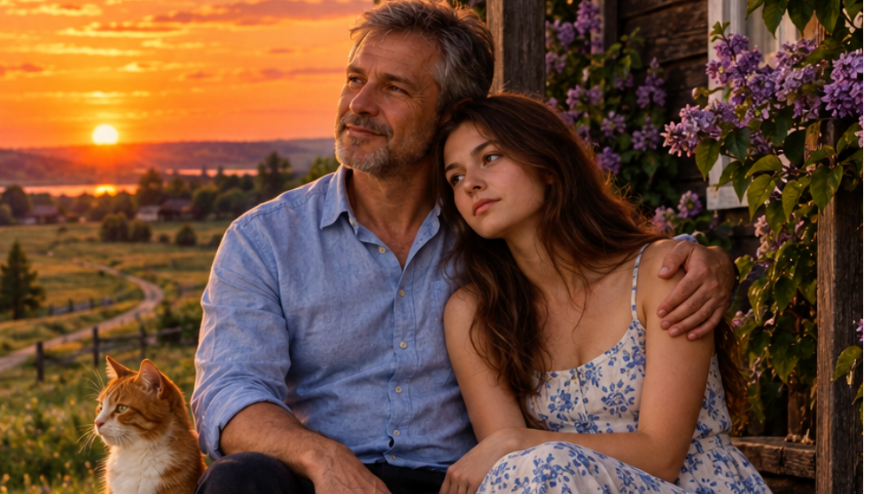
It was evening. A warm August night, with the scent of hay and the distant hum of combines. Katya and her father sat on the porch.
Dad, Katya said, do you remember asking what gift I wanted?
I remember. You always said, «You figure it out.»
Well, you’ve already given me a gift. The very best one. She leaned against his shoulder. You came back. Really came back. Not for ten minutes, not for a day. For good.
He wanted to say something but couldn’t. He just held her close—tight and strong, as if trying to squeeze all those years he’d missed into a single embrace.
A bird flew across the sky—a black dot against the sunset. Where was it headed? No one knew. But Katya watched and thought: That’s us, too. Flying, not knowing where. And it’s wonderful if, at the end, there’s someone waiting. Someone who remembers. Someone who hasn’t forgotten. Continued in the comments.
She remembered everything. But now her memories had gained something new—the most important thing: an evening, a sunset, the scent of August, and her father’s hand on her shoulder.
She had grown up.
And her father was finally there.