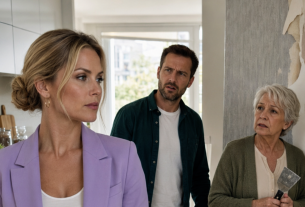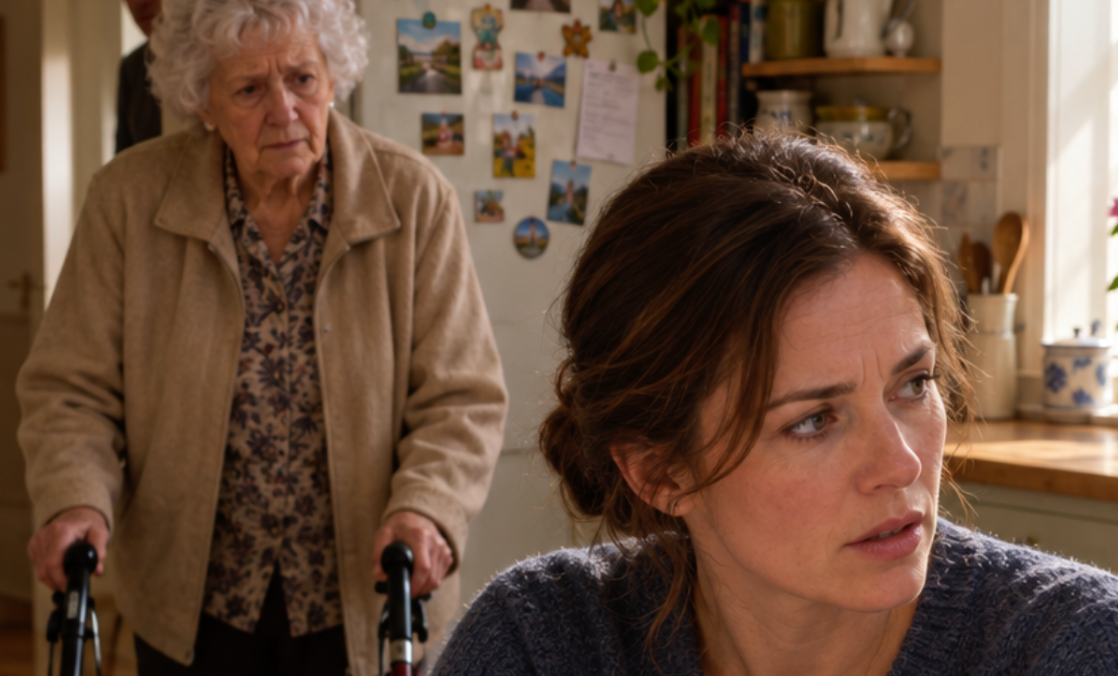
“You’re not coming out until you give my son the inheritance!” my mother-in-law yelled, blocking the kitchen door with the ironing board.
“You’re not leaving until you sign the waiver for my son!” Nina Arkadyevna slammed the kitchen door shut and propped it from the outside with something.
I heard a stool scrape across the linoleum, then something thud against the door—probably the ironing board. The handle wouldn’t budge, no matter how hard I tried, up or down.
“Nina Arkadyevna, open the door.”
“I’ll open it when you come to your senses. The paper’s on the table, the pen is right there. Everything’s prepared, you just have to sign.”
Right there on the plastic tablecloth, next to a half-finished cup of tea, I saw the sheet inside a clear file. At the top, in neat handwriting: «Statement of Refusal of Inheritance.» My name, my passport info, my mother’s name. And then a line that made my mouth go dry: «in favor of Sergey Viktorovich Laptev.»
Sergey Laptev—my husband. We’ve been married for nineteen years.
I sat down on the stool by the window. Our kitchen is tiny, six square meters. There’s a fridge, stove, a table for three, and a windowsill with a pot of geraniums. Out the fifth-floor window, you can only see the playground and the wall of the neighboring building. There’s nowhere to go—unless I climb out the window.
My phone was in my jacket, out in the hallway. I realized that immediately.
My mom passed away at the end of May. She was seventy-six—her heart. She owned a two-bedroom apartment on Zavodskaya Street, in an old five-story brick building. She’d privatized it herself back in ’94, after my dad had already left us. There was also a garage, registered to her about ten years ago, and a savings account I didn’t really know much about.
There were two immediate heirs: me and my younger brother Oleg. Mom didn’t leave a will, so everything was divided fifty-fifty.
Oleg lives in Surgut. He works shifts and has three kids. For the funeral, he flew in for two days, hugged me at the cemetery and said:
«Marina, you’re here, you decide what’s best. I’ll think about it.»
In June, I filed the paperwork with the notary. Oleg sent his in by mail, through a notary in Surgut. The notary, Irina Pavlovna, a reserved woman with glasses on a chain, explained that the inheritance certificates wouldn’t be issued until the end of November, once six months had passed.
And then, in August, the conversations started at home.
Sergey started them off, as if in passing while we ate dinner and watched the news.
«So, what are you going to do with your mom’s apartment? Planning to rent it out?»
«I haven’t decided yet. It needs renovating. And Oleg and I have to sort things out.»
«What’s there to sort? He’s in Surgut, doesn’t need the apartment. Buy out his share and you’re done.»
«With what money, Sergey?»
He just shrugged and changed the channel.
A week later, Nina Arkadyevna arrived. She lives in Podolsk, visits us about once a month, always with a bag of pies and a list of criticisms. Usually, these were about my curtains, my haircut, and the fact that I still hadn’t given her grandchildren, even though I’m forty-four and that ship has sailed.
This time, she didn’t even take her coat off.
«Marina, here’s what I think. You do understand this belongs to everyone, right? You’re a family. Sergey has worked himself to the bone for you for nineteen years.»
For the record, Sergey had been working at his friend’s auto shop for the past three years, off and on. Most of the family’s income was mine: I’m a senior nurse at the regional hospital, with extra pay from night shifts. But I didn’t say any of that out loud. I’d learned over the years not to. Arguing with his mother meant enduring a week of him telling me how ungrateful I was.
«Inheritance isn’t shared between spouses, Nina Arkadyevna,» I told her calmly. «It’s personal property.»
«Who told you that nonsense?»
«The notary did.»
She pursed her lips and looked at her son. Sergey stared at his plate.
By September, my mother-in-law started calling every day. She didn’t call me, she called Sergey. I overheard bits and pieces: “Are you a man or not?”, “She should put it in your name if she’s so honest”, “I told you, she’s sly.”
One evening, Sergey came home earlier than usual and laid out a printout on the table.
«Here. Read this.»
It was from a forum, an article about how an heir can refuse their share in favor of another person.
«Sergey, why do I need to read this?»
«Because mom’s right. You’re getting half the apartment. Oleg will sell you his share, you know he will. And then what? It’ll all be on you again. Let’s do the fair thing: put it in my name, I’ll handle the repairs, we’ll rent it, it’ll bring money to the family.»
«If the money goes to the family, does it matter whose name is on it?»
He got quiet. Then he said, looking past me:
«It matters because I want to feel like I own something, just once.»
I felt sorry for him. Strange, isn’t it? Sorry. I thought maybe he was tired of being married to a nurse who always worked night shifts. Maybe he was ashamed, especially with his mother around. Maybe a man needs to have something to his name. I even told him I’d think about it.
I did think about it—at work, late at night between IVs. And that morning, I wrote to Oleg: “Is it okay if I buy out your share on an installment plan?”
Oleg replied after three hours: “Marina, did Sergey not mention anything to you?”
I read that twice.
“About what?” I messaged back.
“Never mind. We’ll talk later, I’m on shift.”
He never did call—neither that day nor the next.
At the beginning of October, I went to Zavodskaya. I needed to record the utility readings and pick up mom’s documents from the cabinet: her policy, pension card, medical records.
The apartment still smelled like dust and my mom’s perfume, sitting untouched on her dresser. I opened the cabinet and noticed instantly—the folder with the documents wasn’t how mom left it. She always put the spine facing out, I remembered that from childhood. Now, it was turned so the spine faced the wall.
I flipped through it. Everything seemed to be there—except for one thing: the old registration for the garage and the contract with the garage cooperative were missing.
The only people with keys to my mom’s apartment were me and our neighbor, Valentina Semyonovna, just in case. I walked down to her on the second floor.
«Valentina Semyonovna, did anyone come for the keys?»
«Sergey came, back in September. Said you asked him to check the pipes, that your keys were at work. So I gave them to him. He’s family.»
«Did he bring them back?»
«He did, an hour later. Is everything okay, Marina?»
Continued in the comments below.
“You’re not leaving until you sign the disclaimer for my son!” Nina Arkadyevna slammed the kitchen door and braced it from the hallway. I heard the screech of a stool dragging across the linoleum floor. Then… Continued in the comments
“You’re not leaving until you sign the disclaimer for my son!” Nina Arkadyevna slammed the kitchen door and braced it from the outside.
I heard the scraping of a stool moving across the linoleum. Then something thudded dully against the door—probably the ironing board. The door handle wouldn’t budge, not up or down.
“Nina Arkadyevna, open the door.”
“I’ll open it when you come to your senses. The paper’s on the table, the pen is right there. Everything’s filled out—all you need to do is sign.”
On the oilcloth, next to an unfinished cup of tea, was a sheet in a clear folder. On top, in someone else’s neat handwriting, it said: ‘Statement of renunciation of inheritance.’ My name, my passport details, and my mother’s name were filled in. And below, a phrase that made my mouth go dry: ‘in favor of Sergey Viktorovich Laptev.’
Sergey Viktorovich Laptev is my husband. We have lived together for nineteen years.
I sat down on the stool by the window. Our kitchen is tiny, six meters. We have a fridge, stove, a table for three, and a windowsill with geraniums. From the fifth floor window, you can only see the playground and the wall of the neighboring building. There’s no way out from here, unless through the window vent.
My phone was in my jacket, in the hallway. I realized that right away.
My mom died at the end of May. She was seventy-six, heart problems. She owned a two-room apartment on Zavodskaya, in an old five-story brick building. She had privatized it back in ’94, alone, since my dad had already left the family by then. There was also a garage—she had it registered about ten years ago—and a savings account I really didn’t know much about.
There were two first-line heirs: my younger brother Oleg and me. Mom didn’t leave a will, so everything was split in half.
Oleg lives in Surgut; he works rotations and has three kids. He flew in for the funeral for two days, hugged me at the cemetery, and said:
“Marina, you’re here, you’ll know best. I’ll think about what’s best to do.”
In June, I submitted the application to the notary. Oleg sent his by mail, through a notary in Surgut. The notary, Irina Pavlovna—a reserved woman with glasses on a chain—explained that the certificates wouldn’t be issued until the end of November, after the six months had passed.
And then, in August, the conversations at home began.
At first, Seryozha brought it up casually. We were having dinner, the news was on TV.
“So, what are you planning with your mom’s apartment? Gonna rent it out?”
“I don’t know yet. It needs repairs. And Oleg and I need to come to an agreement.”
“What’s there to agree about? He’s in Surgut—he doesn’t need that apartment at all. Just buy out his share and that’s it.”
“With what money, Seryozha?”
He shrugged and changed the channel.
A week later, Nina Arkadyevna came to visit. My mother-in-law lives in Podolsk, and usually comes once a month, bringing a bag of pastries and a list of remarks. Usually, her complaints were about my curtains, my haircut, and the fact that I still hadn’t given her any grandchildren, though I’m forty-four and that ship has sailed.
This time, she didn’t even take off her coat.
“Marina dear, here’s what I think. You do understand this is all shared, right? You are a family. Seryozhenka has been working for you for nineteen years.”
By the way, for the last three years, Seryozha had been working on and off at a friend’s car repair shop. I was actually the main breadwinner: I’m the head nurse at the regional hospital, plus I take night shifts. But I never said this out loud. For years, I’ve preferred to keep things to myself. Getting into arguments with his mother only meant I’d have to listen for a week about how ungrateful I was.
«Inheritance isn’t divided between spouses, Nina Arkadyevna,» I replied. «It’s considered personal property.»
«And who told you that?»
«The notary.»
She pursed her lips and looked over at her son. Seryozha stared at his plate.
In September, my mother-in-law started calling every day. She never called me, just Seryozha. I overheard bits and pieces: «Are you a man or what?» «Tell her to put it in your name if she’s really so honest,» «I told you she was sneaky.»
One evening, Seryozha came home earlier than usual and set a printout on the table.
«Here. Read this.»
It was an article from some forum about how an heir can refuse their share of inheritance in favor of someone else.
«Seryozha, why do I need to read this?»
«Because Mom’s right. You’ll end up with half the apartment. Oleg will sell you his share, he won’t have a choice. And then what? Once again, everything’s on you. Let’s be fair: transfer it to me, I’ll handle the repairs, we’ll rent it out and the money goes to the family.»
«If the money is for the family, what difference does it make whose name it’s in?»
He went quiet. Then, avoiding my eyes, he said:
«The difference is, I want to feel like I actually own something.»
I felt sorry for him. That’s the strangest part—I felt sorry. I thought maybe he was tired of being the husband of a nurse with night shifts, maybe he was ashamed in front of his mother, maybe men really need to own something. I even said I’d think about it.
I thought about it that night, during my shift, between IV drips. In the morning, I wrote to Oleg: «Would you mind if I bought your share in installments?»
Oleg replied three hours later: «Marina, hasn’t Sergey mentioned anything to you?»
I reread his message twice.
«About what?» I wrote back.
«Never mind. Let’s talk later, I’m at work right now.»
He never called. Not that day, not the next.
At the beginning of October, I went to the apartment on Zavodskaya. I needed to take the meter readings and pick up my mom’s documents from the cabinet: her insurance policy, pension ID, and her medical records.
The apartment smelled of dust and mom’s perfume, which still stood on the vanity. I opened the cabinet and instantly noticed that the folder with the documents was lying differently. Mom always placed it with the spine facing out—I remembered that since childhood. But now it was turned with the spine toward the wall.
I went through it. Everything seemed to be in place. Except for one thing: the old technical passport for the garage and the contract with the garage cooperative were missing.
Only two people had keys to my mom’s apartment: me and the neighbor, Valentina Semyonovna, just in case. I went down to see her on the second floor.
«Valentina Semyonovna, did anyone come to you for the keys?»
«Oh, your Seryozha was here, back in September. He said you’d asked him to check the pipes, and that your keys were at work. So I gave them to him. He’s practically family.»
«And did he return them?»
«He brought them back an hour later. Is something wrong, Marina?»
«Everything’s fine,» I said.
But nothing was fine. I had never asked him to check the pipes.
When I got home, I asked him directly.
«Did you go to Zavodskaya?»
He didn’t even try to deny it.
«Yeah, I was. I just wanted to estimate how much the repairs would cost. So I could actually talk to you about it in detail.»
«Then why did you take the garage documents?»
He hesitated for only a second, but it was noticeable.
«What documents? I didn’t take anything. Maybe Mom moved them somewhere herself.»
And for a moment, I almost believed him. Over the past year, Mom had gotten easily confused. She could have moved them herself. It was definitely the most convenient explanation: no one stole anything, just age and a little mess.
But the folder was lying spine-down against the wall.
On October 17th, Nina Arkadyevna showed up without calling first, on a Saturday morning at nine. Sergey opened the door for her, as if he’d been expecting her. She walked into the kitchen, where I was drinking tea after my night shift, set that very document in a folder on the table, and sat down across from me.
«Here’s the deal. I went to a lawyer. Everything is drawn up the right way. You’ll sign it, and we’ll go together to your notary to get it certified.»
«Nina Arkadyevna, I’m not going to sign this.»
«Oh, yes you will.»
«Sergey,» I called out into the hallway. «Do you hear this?»
He was standing silently in the kitchen doorway. Then finally he said,
«Marina, please just sign it. What does it really matter? We live together, don’t we?»
«If we live together, then why do we need this?»
«Enough,» Nina Arkadyevna said, standing up. «Sergey, step outside.»
He left instantly, like a little boy. She followed him out, and the door slammed shut.
And that’s how I found myself locked in my own kitchen—in an apartment that Sergey and I bought on mortgage back in 2011 and finally paid off in 2022. Half my salary all those years went straight into these walls.
I could hear them whispering just beyond the door. I couldn’t quite catch the words, just the tones: hers, pressing and persistent, his, continuously whining.
I got up and walked over to the door.
«Sergey. Open up. This isn’t funny anymore.»
«Marina, Mom just wants you to think this over calmly.»
«I’ve thought it over calmly. Open the door.»
«Sign it, and we’ll let you out,» his mother chimed in.
I went back to the table and looked at the sheet again. That’s when I noticed something I’d overlooked: the statement wasn’t just about giving up my share of the apartment. It said: «from all inheritance due to me, wherever and in whatever form it may be.»
That covered everything. Including the garage. Including a bank deposit I hardly knew anything about.
And another thing—back in June, Irina Pavlovna quietly told me almost in passing that a direct refusal can only be made in favor of other heirs. My husband wasn’t an heir to my mother. Which meant my mother-in-law’s lawyer either didn’t know the law or wrote this paper for another reason altogether.
What reason, I didn’t know yet. But that was the first crack in their confidence.
The clock on the fridge showed it was twenty to ten. Upstairs, Arkady Ilyich—my neighbor—usually smoked on his balcony above the kitchen on weekends. I opened the window and looked up. No smoke.
But I remembered that above the sink, behind the jars of grains, I kept my old button phone. I’d left it there since last winter when my smartphone broke; at work, we’re not allowed to be out of touch, and the old phone was always charged just in case. The SIM card inside was my work number—actually, the hospital’s, officially registered to the department.
The phone flashed: one bar of battery left.
I called Oleg. He picked up after the fifth ring, his voice rough—clearly he’d just woken up after a long night.
«Oleg, it’s me. I don’t have time to explain. Last time you asked if Sergey told me something. What exactly was he supposed to say?»
There was a pause. I could hear him walking barefoot across the floor.
«Marina… he called me in August. Said you weren’t ready to ask directly, but that you both wanted me to give up my share in your favor. And then, he said, he’d sort everything out. I told him I’d think about it. Then in September, he called again and asked if I knew how much was in Mom’s account.»
«And? How much?»
«I didn’t know. He said about two million. Apparently Mom told him herself when he was fixing her faucet.»
Two million. Mom had been saving her whole life. Her engineer’s salary at the factory, then her pension, and the money from that garden plot she once sold. She never told me exactly how much was there. Only once did she say, ‘This is for you and Oleg. For a rainy day.’
«Oleg, did you sign anything?»
«No. I didn’t like that he was talking to me and not you. I wanted to call you, but… I’m sorry. Work shifts, kids…»
«Don’t sign anything. You hear me? Nothing.»
«Marina, what’s going on over there?»
«I’m locked in the kitchen.»
He was silent for a moment.
«Call the police.»
My phone beeped and showed a dead battery.
I stood in the middle of the kitchen, phone dead in my hand, suddenly realizing: all this time, I thought he just wanted to feel in control. That he was hurt. That Mom had gotten to him.
Now the picture looked different, but I still didn’t see it all. Why did he need me to give up the account if it couldn’t be in his name anyway? Why the documents for the garage?
I remembered how in July he started talking a lot about cars. That the old Lada was falling apart, that he needed a decent one, that his friend from the shop could get him a good Kia. I remembered how in August he stopped leaving his phone on the hallway table, taking it even into the bathroom. I remembered that in September a letter from the bank came in his name, and he opened it on the stairs without coming inside.
Suddenly, it went quiet behind the door. Then I heard footsteps and the front door slamming. Someone left.
«Nina Arkadyevna?» I called out.
«I’m here. Sergey went to get the lawyer. He’ll explain everything to you, since you won’t listen to me.»
My mother-in-law said this almost calmly. And that was scarier than if she’d yelled: it was clear they weren’t backing down—they were going to keep pressing, and now they had reinforcements.
I sat down on the stool. Looked at my hands, at the geranium, at the paper in the file.
In my head, I could hear Mom’s voice, from some distant childhood moment when I cried because of a neighbor girl: «Don’t cry. Think about what you can do right now.»
I couldn’t do much. But there was something I could do.
Our building is an old panel house from the 80s. The kitchen window faces the courtyard, and right below us on the fourth floor lives Tamara Grigorievna, a retired teacher. Our windows are about two and a half meters apart. In October, before they fully turn on the heat, she always keeps her window cracked—she has asthma.
I leaned out the window and called down—not shouting, but loud enough:
«Tamara Grigorievna! It’s Marina from the fifth floor. Are you home?»
About ten seconds later, I heard a creak from the frame downstairs.
“Marina? What happened?”
“Please call the police. I’m locked in the kitchen in my own apartment. Number fifty-three. And let them know that the front door to the apartment is probably locked from the inside.”
She didn’t ask me to repeat anything. She just said:
“Got it. Hang in there.”
Nina Arkadyevna must have overheard something from behind the kitchen door.
“Who are you shouting at in there?”
“The neighbor.”
“So you want to disgrace us? In front of the whole building?”
“You’re disgracing yourself, Nina Arkadyevna.”
She let out a loud sigh and, judging by the noise, pushed a stool aside. The door opened. My mother-in-law stood in the doorway, red-faced, holding an ironing board in her hands.
“Go on. Go call whoever you want. But don’t come crying later when Seryozha divorces you and takes half the apartment.”
I walked past her into the hallway and got my phone out of my jacket. Eight missed calls from Oleg and a message from Seryozha, which he must have accidentally sent to the wrong person. The message was short: “Ma, keep her there. Vadim said if she doesn’t sign today, we’ll lose the deposit on Monday.”
What deposit? Who is Vadim?
The police arrived twenty minutes later. Two young officers—polite but exhausted. By the time they arrived, Nina Arkadyevna was sitting in the living room, sipping valerian drops.
“It’s just a misunderstanding,” she said. “The door got stuck, we couldn’t open it.”
“Did it get stuck with a stool wedged under it?” the senior officer asked, glancing at the stool that was still propped against the kitchen door.
I gave a statement. Detailed, with times and her exact words. The senior officer said they would document everything and conduct an investigation, then decide if there was reason to open a case. I nodded. It was important to me that it was recorded. So that no one could later claim, “the door just got stuck.”
Seryozha returned as the police were leaving. Alone, without a lawyer. He saw the uniforms, stopped on the landing, and went even paler than the wall.
“Marina, what are you doing?”
“Who is Vadim?” I asked.
He opened his mouth, then closed it again.
He didn’t answer that day, nor on Sunday. He spent the night at his mother’s place in Podolsk. On Monday morning, I took a day off and went to see Irina Pavlovna.
The notary listened to me silently, adjusting her glasses.
“A directed refusal in favor of your spouse is impossible—he’s not an heir,” she said. “I would never certify such a statement. But there’s something that worries me. In September, a man came here, said he was your husband. He wanted to know about the inheritance assets, the bank accounts. I refused—he isn’t part of the inheritance case. He left, but he gave me a business card. He said, if you don’t want to handle things yourself, have someone contact this person.”
She pulled the business card out of a drawer. ‘Vadim Ryabov. Auto loans, pawn loans, urgent car buyouts.’
“Can I take a photo of it?”
“Of course.”
After that, I went to the garage cooperative where my mother’s garage was kept. The chairman, Gennadiy Fyodorovich, an older man, had known my mom for twenty years.
«So your husband came by,» he said. «In September. Had the vehicle passport and the contract. Said his mother-in-law had died, his wife gave him the garage, so he needed the membership transferred. I told him nothing happens without an inheritance certificate. He asked if he could at least have the keys to the gate for now. I refused.»
Now the whole picture finally came together.
Sergey took out a loan. I didn’t know what for, but I knew from whom: a letter from the bank, opened on the staircase, a phone he carried into the bathroom, talks about a new car. Then, judging by a business card, he got in touch with Vadim, who gives loans against collateral. And he promised to repay the debt from my mother’s inheritance, the whole thing, including the deposit and the garage.
That evening, Oleg called me.
«Marina, your Vadim called me. Says Sergey named me as the guarantor on the understanding that a wife’s brother wouldn’t refuse. Asked when the sister would sign. I told him to get lost.»
«Oleg. I’m going to file for divorce.»
«That’s right. Do you want me to give you my share? I truly don’t need it, I have everything I need in Surgut.»
I burst into tears, for the first time in all these months. Not because of Sergey. Because my brother, whom I saw once every two years, was by my side when my own husband locked me in the kitchen.
«There’s no need to give it away. Let’s stick to our agreement—I’ll buy out your share, slowly but honestly.»
«As you wish,» he said. «But remember: I’ll give you a discount.»
Sergey returned on Wednesday. He sat in the kitchen, on that same stool by the window.
«Marina, let’s have a proper talk.»
I put a printed photo of the business card and his message to his mother on the table in front of him.
«Start talking.»
He was silent for a long time. Then he finally admitted he had taken out a personal loan back in the spring, for eight hundred thousand. He invested it with a friend into selling used cars. The cars didn’t sell, the friend disappeared. The bank started calling. To cover the bank, he borrowed from Vadim using our Lada as collateral, and Vadim had already added interest, so the debt had nearly doubled. Mom knew about the debt. She came up with a plan to pay it off.
«And the documents for the garage?» I asked.
«Vadim said the garage can be sold right away. He’s got his own people.»
«Mom’s garage.»
«Well, what was I supposed to do?» he suddenly yelled. «He threatened me!»
«You should have told me. In April. In May. Any day.»
He lowered his head.
«You would have yelled at me.»
«I would have yelled,» I agreed. «But then we would have figured it out together. Instead, your mother locked me in the kitchen.»
I filed for divorce at the end of October. The lawyer Irina Pavlovna sent me to calmly explained everything. Our apartment, bought during the marriage, would be split in half, no way around that. But my mother’s inheritance wouldn’t be touched—it’s my personal property. And his loans, taken without my knowledge and not spent on our family, the court would most likely consider his personal debt. The lawyer asked me to gather evidence: that I didn’t know about the credit, that no money came into our joint finances. I had it all: my statements, his message to his mother, the police report, Gennady Fyodorovich’s testimony.
Nina Arkadyevna called me once, in November.
«You destroyed the family over some money.»
“You tried to take my mother’s money from me to pay off your son’s debts. I didn’t ruin anything. I simply stopped signing.”
She hung up the phone. She never called again.
Seryozha moved in with his mother in Podolsk. Vadim, I heard, took the Lada. He’s paying his bank loan himself now, from his salary at the auto shop where he was rehired full-time.
We’ll sell the apartment later and split it. That’ll be in the spring, after the court hearing. I’m not in a rush.
At the beginning of December, Irina Pavlovna gave me the certificate of inheritance rights. Half the apartment on Zavodskaya, half the garage, half the savings account. Turned out, the account wasn’t two million, but one million six hundred—my mother had been slowly withdrawing money for medicines over the last year. Oleg got the same share. I’m buying out his part of the apartment in installments over three years. He really did lower the price by nearly a third, but got upset when I tried to argue.
I’m moving to Zavodskaya in March, once I finish the renovations there. For now, I go there on weekends. I peel off old wallpaper, wash windows, and sort through the china cabinet.
I put the folder with documents back in the china cabinet, spine facing out, just like Mom always did. I also changed the lock on the front door. Now, I have one set of keys and gave the other to Valentina Semyonovna, with a request not to give it to anyone—even if they say they belong.
Last night I sat on the windowsill in my mom’s kitchen, sipping tea. The kitchen door was thrown wide open. I even considered taking it off its hinges entirely. There’s no one left I need to shut out here.
Sometimes the hardest thing isn’t to leave—it’s to say for the first time: “You can’t treat me like this anymore.” If you understand these words, stay with the channel.