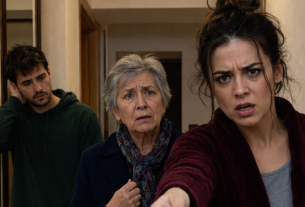
“Going to the dacha again? We agreed, for once, to just sleep in and go to that new park. They’re opening a peony exhibition there today,” Oksana’s voice trembled with rising hurt and the exhaustion that had built up over the workweek.
“Well, you know Mom. She suddenly needed the veranda roof redone. The workers have already arrived, and someone has to supervise the process and make lunch for them,” her husband muttered guiltily, hiding his eyes and nervously adjusting the strap of his wristwatch. “Oksana, please, just be patient. It’s being done for all of us. It’s a long weekend; we’ll still have time to go look at your peonies.”
Oksana silently sank down onto the little ottoman in the hallway, looking at the light windbreaker and comfortable city sneakers she had laid out in advance. Instead of a leisurely walk among flowers, she was facing an old housecoat, rubber galoshes, endless peeling of potatoes for a whole crowd of hired builders, and her mother-in-law’s remarks, sharp as metal shavings.
The twenty years of her marriage to Pavel had followed the same script: Antonina Petrovna’s interests always came first, forming the invisible but solid foundation of their family life.
She stood up, put the windbreaker back into the closet, and took out an old sports bag, into which she automatically began packing work clothes. Pavel exhaled with relief and went to start the car. He always did that — smoothed over conflicts at his wife’s expense, just to avoid an open confrontation with his domineering mother.
The drive out of town took about two hours because of the heavy traffic. Oksana looked out the window at the trees flashing past and remembered how hard she had once tried to become a good daughter-in-law to Antonina Petrovna. In the first years of marriage, she sincerely believed that love and care could melt any ice. She baked her signature cabbage pies every weekend, helped plant endless rows of potatoes, and spent hours weeding garden beds under the scorching sun while her mother-in-law sat in the shade on the veranda, complaining to the neighbors about her high blood pressure.
Gradually, help turned into obligation. Antonina Petrovna called Oksana at work, dictated grocery lists, demanded that Oksana make doctors’ appointments for her, pay utility bills, and bring her medicine. Any attempt by Pavel to say that he and his wife might have plans of their own was cut short by theatrical clutching at the heart and the phrase that she had not raised her son only to be abandoned in her old age.
The car turned onto a country road covered with deep puddles after the recent rain. The familiar green fence of the dacha plot appeared around the bend. A Gazelle van stood by the gate, and two gloomy men were unloading rolls of roofing felt and boards from it.
Antonina Petrovna stood on the porch with her arms folded across her chest. She was wearing her usual knitted cardigan, despite the fairly warm weather.
“Finally,” she said instead of greeting them when Oksana and Pavel approached the house. “I thought you’d deign to show up by dinner. The workers have been here since eight in the morning, hungry. Oksana, go quickly to the kitchen. There’s chicken in the refrigerator. Make soup and navy-style pasta. And don’t forget to bring up the compote from the cellar.”
“Hello, Antonina Petrovna,” Oksana replied evenly, setting the heavy grocery bags on the wooden porch floor. “I’ll change and start cooking.”
“She needs to change,” her mother-in-law grumbled under her breath, but loud enough for everyone to hear. “As if she’s come to a resort. Pasha, go show the foreman where to stack the old boards, and give them the money for the materials. They brought the receipts.”
Oksana went into the cramped summer kitchen, which smelled of dampness and old dill. Mechanically, she put on a faded apron, took out the pots, and got to work. The knife tapped familiarly against the cutting board as she chopped onions and carrots.
Her thoughts kept circling around how much money she and her husband had put into this dacha over the past five years. First they had replaced the windows, then installed proper plumbing, and now there was the roof. The dacha belonged to her mother-in-law, but Antonina Petrovna always said she was doing it for them.
“This will be your family nest. You’ll bring your grandchildren here,” she liked to repeat whenever another bill for building materials had to be paid.
Two hours later, lunch was ready. Oksana set a large table on the veranda for the workers, poured soup for everyone, and went into the house to call her mother-in-law. The door to Antonina Petrovna’s bedroom was slightly ajar. Oksana had already raised her hand to knock when she heard her mother-in-law’s voice. She was talking to someone on the phone.
“Yes, Lyudochka, my breadwinners have arrived,” Antonina Petrovna’s voice sounded lively and not sick at all. “Oksanka is bustling around in the kitchen, Pashka is settling up with the workers. The roof cost a pretty penny, of course, but they’re good kids. They didn’t skimp.”
Oksana froze. Lyuda was Antonina Petrovna’s older daughter, Pavel’s sister. She lived in a neighboring town, showed up at the dacha once a year for barbecue, and never took part in repairs or garden work.
“Of course, everything is going according to plan, daughter,” her mother-in-law continued. “Once we finish the veranda and replace the fence next month, we can start the paperwork. I already asked at the MFC what documents are needed. We’ll draw up a gift deed for your Igoresha. The boy will be getting married soon; he’ll have his own property, a country residence.”
Apparently, the person on the other end asked something, because Antonina Petrovna gave a condescending snort.
“What about Pashka? Pashka is a grown man. His Oksanka earns good money; they can buy themselves something else if they want. But our Igorek is a student. He needs it more. I’m the owner; I’ll give it to whoever I want. The main thing is, don’t blurt it out to them yet, or they might abandon the repairs halfway through. Let them finish it. They’re doing it for the family, after all.”
Oksana slowly lowered her hand. The air in the corridor suddenly became thick and sticky; there wasn’t enough oxygen. Inside, there was no rage, no desire to burst into the room and make a scene. There was only an icy, crystal-clear realization of what a hopeless fool she had been for all these twenty years.
A family nest.
For the grandchildren.
She turned around silently, went back to the kitchen, took off the apron, and neatly hung it on the nail by the door. Then she went into the hallway, took her city windbreaker, her handbag, and silently headed for the gate.
Pavel was standing near the workers, explaining something to the foreman. Seeing his wife walking toward the exit with a bag on her shoulder, he frowned in surprise and hurried over to her.
“Oksan, where are you going? Did you forget to buy something at the store?”
“I’m going home, Pasha,” she said calmly, without a single emotion in her voice. “By train.”
“What train? What are you thinking? Mom asked you to water the greenhouse this evening too. Is lunch ready?”
“Lunch is on the table. And Igorek can water the greenhouse. It’s his country residence now.”
She did not explain anything else. She simply opened the gate, stepped out onto the road, and walked toward the railway station. It was about three kilometers away on foot, but to Oksana, that walk felt like the easiest stroll she had taken in years.
As she walked along the roadside, she took out her mobile phone. The screen already showed: “Incoming call. Antonina Petrovna.” Oksana pressed the red button and declined the call. The phone rang again. She went into her contact settings and pressed “Block caller.”
The train was half empty and smelled of warm artificial leather. Oksana looked out the window, and with every kilometer that carried her farther from the dacha settlement, the invisible concrete block she had carried on her shoulders all these years crumbled into dust.
At home, she took a hot shower, brewed herself some good loose-leaf tea — the kind Antonina Petrovna had always called “aristocratic nonsense” — and sat down on the sofa with a book.
Closer to evening, the front door slammed. Pavel had returned.
He entered the living room red-faced, angry, and confused.
“Can you explain to me what kind of circus you put on?” he began from the doorway. “Mom is lying there with high blood pressure, and the workers had to wash the dishes themselves! Why aren’t you answering the phone? She called you about twenty times!”
Oksana put the book aside, took a sip of tea, and looked at her husband.
“Sit down, Pasha. And listen to me very carefully. I will never answer your mother’s calls again. Not tomorrow, not in a month, not in a year.”
Pavel dropped heavily into the armchair, clearly not expecting such a calm and cold tone.
“What happened? Did she say something wrong to you? Well, you know what she’s like. She’s an elderly woman; she may have muttered something without thinking.”
“She thought very well, Pasha. I accidentally overheard her conversation with your sister. Do you know why you and I are redoing the roof, spending our savings, replacing the windows? So that next month your mother can go to the MFC and draw up a gift deed for that dacha in Igorek’s name. As she put it, you and I will earn more, but the boy needs it more. And she specifically asked Lyuda to keep quiet so we would finish the repairs at our own expense.”
Pavel froze. The color slowly drained from his face, leaving behind an unhealthy pallor. He opened and closed his mouth several times, like a fish thrown onto shore.
“That can’t be true,” he finally forced out. “You probably misunderstood. She always said it was ours…”
“I understood everything perfectly,” Oksana cut him off. “And from a legal point of view, she’s right. The dacha is registered in her name. All the money we invested there without receipts and notarized agreements was our personal charity. She has every right to gift her property even to a neighbor. The problem isn’t the dacha, Pasha. The problem is that we were used as free labor and sponsors, while she wiped her feet on me.”
“I… I’ll talk to her,” her husband muttered uncertainly, taking out his phone.
“Talk. She’s your mother. But my foot will never step there again. And not a single kopeck from our family budget will go there anymore. If you want to help her, do it yourself, with your own hands and from your own salary. Cross me out of that equation.”
Over the next few weeks, Oksana’s life changed dramatically.
At first, Antonina Petrovna tried to break through the defense using her son. She called him every day, complained about her health, and demanded that Oksana come and apologize for her “demonstration.” She sincerely could not understand why her ever-obliging daughter-in-law had suddenly rebelled.
When Pavel timidly tried to ask his mother about the will and the gift deed for Igor, a grand scandal erupted. Antonina Petrovna screamed into the phone that she was still alive and would not have her property divided, that Oksana was a mercenary woman who only cared about square meters, and that now she really would give everything to her grandson after such beastly treatment.
Pavel walked around gloomy. He had to go to the dacha himself on weekends because someone needed to supervise the installation of the fence. One Sunday evening, he returned exhausted, with dirty hands and an aching back, sat down in the kitchen, and looked at his wife, who had just taken a golden apple pie out of the oven.
“You know, Oksan,” he said quietly, “Lyuda didn’t even come to help remove the construction debris. Mom called her, and she said she and Igor had plans. They went to the water park.”
Oksana said nothing. She cut a piece of hot pie, put it on a plate, and set it in front of her husband. She didn’t need to gloat. Life itself was putting everything in its place.
The real climax came a month later, on Pavel’s birthday. They decided to celebrate at home, just the two of them, ordering food from a good restaurant.
That evening, the phone rang. It was Antonina Petrovna. Pavel sighed and answered, putting the call on speaker because his hands were busy slicing bread.
“My son, happy birthday, my own flesh and blood,” his mother-in-law sang in a sugary voice. “I wish you happiness, robust health, success at work.”
“Thank you, Mom.”
“And where is that wife of yours? She could at least answer the phone on such a day and thank her mother-in-law for raising such a man for her.”
Oksana, sitting across from him, did not even lift her eyes from her glass of juice.
“She’s here, Mom. We’re having dinner,” Pavel replied tensely.
“Oh, they’re having dinner!” Antonina Petrovna’s tone instantly changed, taking on the familiar shrill notes. “And his own mother is sitting here all alone, with her blood pressure jumping! Is that fancy doll of yours going to keep playing the silent game with me? She hasn’t shown her face for a month! I need to move the tomato seedlings out onto the balcony; it’s too heavy for me! Tell her to come after work tomorrow and help! And what kind of fashion is this now, ignoring grown people?”
Oksana calmly pushed her plate aside, looked at the phone lying on the table, and said in an even, well-controlled voice:
“Antonina Petrovna, I am not ignoring you. I have simply excluded you from my life. Igor, the future owner of your dacha, can move your seedlings. And if he is busy, hire helpers. I have my own life, my own work, and my own home. I no longer intend to spend my time servicing your interests.”
A heavy, almost tangible silence hung on the other end of the line. Her mother-in-law was clearly drawing in more air for a counterattack.
“How dare you!” the speaker finally exploded. “Who do you think you are?! I’ll open Pasha’s eyes about you! You’re destroying the family! Pasha, do you hear how she’s talking to your mother?! If you don’t put her in her place right now, I don’t want to know you!”
Pavel looked at his wife. He saw her calm face, empty of malice. He saw her tired eyes, in which there was no longer any fear — not of his mother, not even of a possible divorce. He remembered his hands rubbed raw the previous weekend, remembered how his sister had refused to come, and how his mother had screamed at him for buying the wrong brand of cement.
He reached for the phone.
“You know, Mom, Oksana isn’t destroying anything,” Pavel said firmly, unexpectedly even to himself. “For twenty years, she endured what should never have been endured. And I’m no better; I allowed you to take advantage of her. You decided to give the dacha to Igor — that’s your right. But then let Igor and Lyuda carry your seedlings and build your fences. And Oksana and I are going out of town next weekend, to a holiday resort. Just the two of us. Good night, Mom.”
He pressed the end-call button.
An incredible, dense silence settled over the apartment. Pavel looked at the dark screen of the phone, then shifted his gaze to Oksana and smiled somehow guiltily, almost boyishly.
“Listen, are the peonies in that park still blooming?”
Oksana smiled back, feeling something bright and warm blooming inside her.
“They are. We’ll have just enough time to go tomorrow.”
Six months had passed since that evening.
Antonina Petrovna, realizing that her manipulations no longer worked, really did transfer the dacha to her grandson. True, after that, her daughter Lyuda’s enthusiasm quickly ran dry, and the mother-in-law had to deal with the garden herself, hiring neighborhood boys for money. She occasionally called her son and complained about her ungrateful daughter, but Pavel had learned to gently yet firmly cut those conversations short.
Oksana never once answered the phone when an unfamiliar number suspiciously similar to her mother-in-law’s appeared on the screen. Her weekends now belonged only to her and her family. She learned to bake new cakes not to please someone else, but because she herself enjoyed the smell of vanilla in the house. She and her husband redecorated their bedroom, went on a seaside vacation, and began taking evening walks more often.
She understood the main rule, the one they don’t write about in books on family psychology: in order for others to start respecting you, you must first stop being a convenient object that gets taken off the shelf only when dirty work needs to be done.
And sometimes the best thing you can do to preserve your peace of mind — and even your marriage — is simply press the decline-call button.