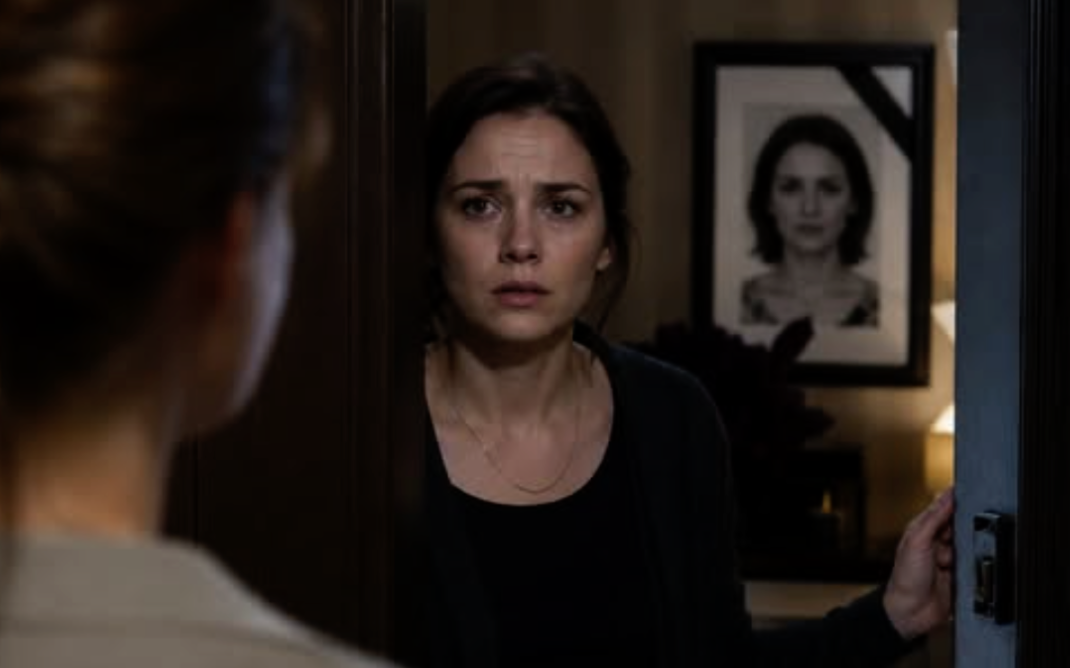
“Mom, we buried you last year,” my daughter said as she opened the door, and behind her I saw my own photograph in a mourning frame.
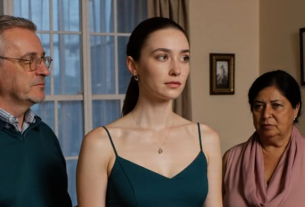
Darya froze on the threshold, her whitened fingers clutching the metal handle convulsively. I blinked, trying to comprehend the absurdity of the situation and the black velvet ribbon crossing my smiling face diagonally in the portrait. My husband Igor came out of the kitchen with a leisurely stride, carefully wiping his hands on an expensive linen towel.
His well-groomed eyebrows rose high, and his jaw sagged slightly at the sight of my dusty raincoat and heavy backpack. He clearly had not expected such a critical malfunction in his perfectly arranged life schedule.
“Svetlana, this is completely irrational of you,” he forced out, looking me up and down as if a courier had delivered him defective goods. “We’ve only just finalized all the paperwork and finished the major renovation. Your appearance right now disrupts all the logistics we’ve built.”
I silently stepped into the hallway, noticing how my hiking boots left muddy tracks on the unfamiliar pale laminate floor. Instead of my beloved beige wallpaper with its warm pattern, the walls were covered with faceless gray plaster that reminded me of a clinic. My own home looked as if it had been prepared for random tenants, stripped of the slightest sign of comfort.
“I was taking care of my aunt in a mountain settlement when a mudslide came down and cut off all communications completely,” I said, slowly pulling off my scarf. “And you, apparently, decided not to burden yourselves with long searches and simply wrote off your missing wife as scrap.”
Igor sighed irritably, his entire appearance demonstrating incredible fatigue from my outrageous incompetence in family matters.
“We honestly waited a full eight months, Svetlana. Under the emergency situations law, that is quite a sufficient period to obtain a certificate. Dasha urgently needed to pay for her master’s degree, and your insurance came at just the right time. Life has to move forward. You can’t cling forever to an unprofitable past.”
“Yes, and the memorial meal cost us quite a decent amount. We rented a very prestigious hall with a strict menu,” my husband added with obvious reproach in his voice, as if I owed him money for my own funeral dinner. “You could at least have sent word through someone before showing up so unceremoniously and ruining people’s lawful day off.”
My daughter guiltily lowered her eyes, nervously twisting the edge of her expensive designer sweater, apparently bought with my “funeral” money. I silently walked into the living room, with growing astonishment noticing how absolutely all my personal belongings had vanished from the space. The landscapes I had carefully painted in watercolor on weekends were gone, and so was the round-bellied vase with dried flowers.
In the place of my favorite soft armchair now stood Igor’s enormous, clumsy exercise machine, looking like some kind of torture device.
“And where did you put my things?” I asked, examining the empty, alien shelves made of cold glass and metal.
“We gave them to charities for people in need. It was the most logical and environmentally friendly decision,” my husband quickly replied, adjusting the collar of his perfectly ironed shirt. “We couldn’t keep all that useless junk, creating dust collectors in the renovated modern living room.”
I had always sincerely believed that my family was the most reliable rear guard in any misfortune. I imagined them going mad with grief, calling rescue services and knocking on the doors of government offices. It turned out they had simply crossed me out of their financial estimate with great relief as soon as a convenient legal excuse appeared.
I walked along the empty wall where Dasha’s funny childhood photographs in simple wooden frames used to hang. In their place now gleamed a huge plasma screen, reflecting our elongated, distorted silhouettes. That black mirrored surface seemed to swallow the last remnants of former family warmth.
“You didn’t even bother to save my art books?” I asked, pointing to the completely empty corner.
“We’ve switched to electronic formats, Svetlana. Paper media take up too much useful space and collect bacteria,” Igor snapped. “Your library was taken to the local wastepaper collection point. They even paid a little cash for it.”
He said this with such undisguised pride, as if he had made an incredibly successful commercial deal on the stock exchange. My entire carefully collected library of rare editions had been reduced to cheap recyclable waste. They had methodically erased every visual trace of my existence, clearing the territory for their new needs.
I opened the door of the wall-mounted kitchen cabinet, hoping to see at least my favorite tea cup and saucer with blue forget-me-nots. But instead, identical, faceless white mugs from a cheap chain store stood in even soldierly rows. My dishes, brought back from our old honeymoon trip, had disappeared along with the rest of the memories.
“We needed a unified minimalist concept in the interior,” Dasha hurried to explain, noticing my darkening gaze. “The fashionable designer said that a mix of colors creates psychological discomfort and seriously spoils the appetite. Your old cups absolutely didn’t fit this new, clean aesthetic.”
“I see. My life didn’t fit into your carefully calculated budget either,” I smiled bitterly, closing the cabinet door. “It is much easier to declare a person gone forever than to admit your inability to wait and fight for her. You didn’t just get rid of my things. You joyfully issued me a one-way ticket for the sake of fresh renovations.”
Igor irritably rubbed the bridge of his nose, clearly unable to cope with the stream of my ironclad logical arguments.
“Svetlana, we are not on the stage of a provincial theater. Let’s do without these pompous dramatic metaphors,” he grimaced. “The situation has already taken a certain form. We need to look for a constructive way out of this unpleasant position.”
“And what exactly is your constructive plan for disposing of a living wife?” I asked, calmly crossing my arms over my chest.
“You go back to where you came from and keep out of sight in the city for at least a couple of months,” my husband quickly and businesslike stated. “During that time I’ll prepare the necessary papers, consult some notary acquaintances, and somehow smooth over this awkward legal collision.”
This business proposal sounded so absurd and brazen that I could not even find the strength to become truly angry. He was seriously suggesting that I play hide-and-seek with my own fate so he would not have to return millions to the insurance company. At that moment, an unfamiliar long-legged blonde walked gracefully out of our former bedroom, tightly wrapped in my cozy terrycloth robe.
“Igorek, darling, who is this woman who came without calling?” she drawled capriciously, adjusting my belt around her slim waist.
“This is… a distant relative of ours from the provinces. She is already about to leave,” my husband fussed, making ridiculous and pitiful expressive signals to me with his eyebrows. “Understand, Svetlana, your return right now benefits absolutely no one. You are ruining the lives of three people.”
He pronounced these words so calmly and convincingly, as if he were talking about an ordinary rearrangement of office furniture. It did not move him at all that I was standing exhausted and alive in the middle of what had once been my beloved living room. To him, I had become nothing more than an unpleasant system error that had disrupted his perfect mathematical algorithm.
The blonde fastidiously tugged at the edges of my robe, as if it had suddenly become physically unpleasant to her.
“Igor, if this woman starts laying claim to our living space, I’ll move to a hotel today,” she declared in an icy tone. “I absolutely did not sign up to take part in these showdowns with your resurrected ex-wives.”
My husband turned visibly pale and pleadingly clasped his hands to his chest, looking ingratiatingly at his new spoiled passion.
“Darling, Snezhana, don’t get worked up. I’ll solve everything within half an hour,” he muttered, instantly losing all his vaunted business grip. “Svetlana will leave right now. She is an understanding woman and doesn’t like cheap scandals.”
He turned sharply toward me, and in his narrowed eyes I saw open, undisguised panic at the possible loss of comfort.
“Please, Svetlana, try to understand the situation. Don’t destroy what we have built with such enormous effort over this year,” he hissed through his teeth. “I’ll compensate all your transportation expenses and add extra on top. Just disappear from our apartment right now.”
“From your apartment?” I repeated ironically, looking around at the gray, sterile walls of the renovated living room. “You know, Igor, I really have no desire to stay in this faceless office. A real home is where they wait for you until the very end, not where they rush to obtain a certificate with an official seal.”
“Mom, maybe it would be better for you to rent an inexpensive room somewhere on the outskirts for now?” Dasha timidly suggested, hiding behind her father’s broad back. “Dad is making sense. According to the documents, you no longer exist here. There will be huge problems with the tax authorities.”
My gaze accidentally fell on the glass coffee table near the large panoramic window. Under a wide white mug with half-finished sweet fruit drink lay my old, battered sketch album, being used by the new owners as an ordinary coaster. On its cardboard cover was an ugly, sticky stain from the damp bottom of the mug.
Igor followed my tense gaze and, with a careless movement, swept the album straight into the metal trash bin.
“Sorry, the new housekeeper mistook it for advertising brochures. There is already too much visual garbage here,” he explained in an absolutely even tone that did not express a single drop of regret. “Let me call you a good business-class taxi. That would be more reasonable for the stability of our mental state.”
My last, most foolish and naive hopes crumbled into fine gray dust, leaving behind only a sharp, crystalline clarity. I was not going to engage in empty arguments or appeal to their long-atrophied conscience. Casting pearls before people who considered you an illiquid asset was not merely pointless, but humiliating.
I slowly walked into the corridor and stopped beside the built-in electrical panel, behind which Igor had hidden the key to the bank safe-deposit box all his life. He was so lazy in everyday matters that even for the sake of a new renovation he had not changed that hiding place. With a familiar gesture, I pried open the plastic cover and pulled out the flat metal key.
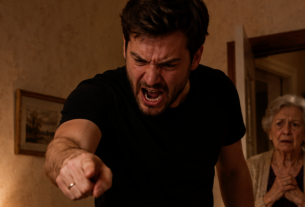
“What kind of cheap trick is this, Svetlana?” my husband exclaimed indignantly, taking a quick, threatening step toward me. “You have no moral right to manage our shared funds without prior written approval!”
“You yourself said, Igor, that legally I no longer exist,” I said, hiding the key in the deep pocket of my raincoat. “Which means you won’t be able to accuse a bodiless ghost of theft, even with the best lawyer.”
His face was quickly covered with uneven red blotches from powerless rage and the realization that his perfect plans were collapsing. Snezhana let out a frightened squeak and disappeared into the spacious bedroom, tightly closing the heavy oak door behind her. Dasha stood motionless, watching the public collapse of her father’s authority with wide-open eyes.
“Listen to me carefully, my pragmatic widower,” I stepped toward my husband, forcing him to nervously retreat toward the wall. “You were in such a hurry to make use of the insurance money that you forgot one small legal detail concerning this apartment.”
Igor swallowed. His eyes darted around, searching for support from the deaf gray walls.
“This property came to me as an inheritance from my grandmother before our official marriage,” I said with pleasure, drawing out the words. “And as soon as the certificate of my death is annulled, all your transactions, including the registration of this blonde, will turn into a pumpkin.”
“You… you wouldn’t dare. That would be bureaucratic hell, court cases for years!” he shouted, but his voice treacherously broke on a high note.
“Oh, I’m in no hurry. I have a whole new life ahead of me,” I smiled my most polite and cold smile. “I already went to the passport office this morning and filed an application for my miraculous resurrection. So tomorrow, people from the insurance company’s security department will come to you with very uncomfortable questions about fraud.”
I confidently approached the tall chest of drawers and, with a decisive gesture, took my ridiculous mourning photograph. Pulling the glossy picture out of the frame, I slowly tore it cleanly in half with a crisp sound. The scraps of thick paper drifted soundlessly onto the expensive new laminate floor, placing a bold and uncompromising full stop in our family history.
“I wish you the best of luck talking to the investigators, Igorek,” I said, taking hold of the front door handle. “Try not to bury anyone else ahead of time. It does terrible things to your karma and your credit history. And now you have exactly twenty-four hours to pack up your eco-friendly belongings and vacate my living space.”
The heavy front door closed softly behind my back, forever cutting me off from those alien, calculating people. The air in the cool stairwell seemed extraordinarily fresh to me, bringing with it the intoxicating scent of absolute clarity. My real story was only beginning, and from now on, I would be the only one setting the terms in it.
I walked quickly down the sunlit street, feeling an astonishing, resilient confidence in every broad step. There was no longer any need to search for pathetic excuses for other people’s indifference or try to fit into someone else’s convenient budget. Being legally dead for a moment had been frightening, but using that resurrection for an elegant revenge turned out to be damn pleasant.