Yulia stood by the window, watching the rain drumming against the glass. In her hands, she held an envelope from the notary: Aunt Vera had left her four hundred thousand rubles as an inheritance. It was not a huge amount, of course, but for Yulia, it was serious money. Her aunt had worked all her life as a mathematics teacher, had never had children, and had always favored her niece over the rest of the relatives.
“Anton, look,” Yulia said, handing the documents to her husband. “The money came through.”
Anton looked up from his phone and quickly ran his eyes over the papers.
“Well, that’s good. What are you going to do with it?”
Yulia sat down beside him on the sofa and took his hand.
“I was thinking… remember how about five years ago we talked about a dacha? Somewhere we could go in the summer, get out of the city, breathe fresh air, plant flowers. I’ve always dreamed of having my own garden.”
Anton shrugged.
“Well, if you want. Just keep in mind, you’ll have to go there all the time and take care of everything. It’s not something you can just buy and forget about.”
“I understand,” Yulia smiled. “That’s exactly what I want. To have my own place where I can rest from everything.”
Her husband nodded, not really going into the details. For Anton, a dacha was something like an additional burden, but since his wife was so excited about the idea, he did not object. The main thing was that the purchase would not affect the family budget. The money was Yulia’s inheritance, and she had every right to spend it as she wished.
Over the next two weeks, Yulia studied listings and went to look at plots. She needed something not too far from the city, so they could come on weekends without spending hours in traffic jams. And then she found it: a small plot in the suburbs, six hundred square meters with a neat little house. The previous owners were moving to another region and were selling the dacha quickly, almost for next to nothing.
Yulia fell in love with the place immediately. The house was old, but sturdy, with a veranda and large windows. Old apple trees grew around it, and along the fence there was an empty strip of land — the perfect place for the rose garden Yulia had dreamed of for years.
The deal was completed quickly. Yulia received the keys, the ownership documents, and immediately began planning how to arrange everything. She bought several books on landscape design, studied rose varieties, and imagined how, in summer, flowers of every shade — from delicate cream to rich burgundy — would fill the air with fragrance along the fence.
Anton, however, treated his wife’s dacha plans calmly. He went to the plot with Yulia a couple of times and helped move the old furniture left behind by the previous owners, but he did not show much enthusiasm. Work took up a lot of his time, and on weekends, he preferred resting at home to digging in the ground.
One evening, Anton and Yulia came to dinner at the home of Larisa Ivanovna, Anton’s mother. His mother lived alone in a two-room apartment. Her husband had died five years earlier, and since then, Larisa Ivanovna had focused all her energy on her only son.
“Well, how are things, young people?” his mother asked as she set the table.
“Everything’s fine, Mom,” Anton said, taking a piece of pie. “By the way, we have some news. Yulia bought a dacha.”
Larisa Ivanovna froze with a plate in her hands, then suddenly brightened as if she had just been told she had won the lottery.
“A dacha? Where?”
“In Sosnovka,” Yulia replied, feeling something tighten inside her. She knew her mother-in-law well enough to predict where this conversation might lead.
“Oh, Sosnovka! That’s a good place. I know it. Tamara Stepanovna, an acquaintance of mine, has a dacha there. And what kind of plot is it? Big?”
“Six hundred square meters,” Yulia tried to speak neutrally. “The house is small, but cozy.”
“Oh, how wonderful!” Larisa Ivanovna clasped her hands. “Antosha, do you hear that? At last we’ll have a dacha! I dreamed of one for so many years, but somehow it never worked out.”
Yulia frowned. We? It was her dacha, bought with her money. But she did not say anything aloud. She did not want to ruin the evening and start an argument.
For the rest of the dinner, Larisa Ivanovna asked about every little detail: how many rooms there were, whether there was a cellar, what the soil was like, whether there was plenty of sun. Yulia answered curtly, while Anton did not notice the tension. He was used to his mother taking a lively interest in every aspect of their lives.
A week later, Anton came into the kitchen, where Yulia was washing the dishes after dinner.
“Listen, I was thinking,” her husband began. “Mom could come to the dacha sometimes and help with the vegetable garden. You know, she sits alone and gets bored. This way she’d have something to do.”
Yulia turned to her husband, drying her hands on a towel.
“Anton, I wasn’t planning to turn the dacha into a vegetable garden. I want to plant a rose garden, flowers, make it a place to relax.”
“Mom won’t get in the way,” Anton waved his hand. “She can simply keep an eye on things while we’re at work. Besides, she has more experience than both of us put together.”
Yulia pressed her lips together. She wanted to say that she did not need Larisa Ivanovna’s help, that the dacha was her personal space, a place where she wanted to come to rest from work, from the bustle of the city, and from her mother-in-law’s constant presence in their lives. But the words stuck in her throat.
“I’ll give Mom a spare set of keys,” Anton continued, not noticing his wife’s silence. “It’ll be calmer that way. You never know, if something happens there, she’ll be able to check.”
“Anton, I’m not sure that’s a good idea…”
“Yulia, don’t exaggerate. Mom wants to help. She has good intentions. We’re not going to offend her, are we?”
Yulia spread her hands helplessly. Arguing with her husband was useless. Whenever the conversation turned to Larisa Ivanovna, Anton turned into a deaf wall. His mother was an unquestionable authority to him, and he took any criticism of her as a personal insult.
The next day, Anton really did give his mother the keys. Larisa Ivanovna accepted them with a triumphant smile, and when Yulia found out about it that evening, she only sighed heavily. Well, they would see how it all turned out.
Her mother-in-law’s first visit to the dacha happened on a Wednesday. Yulia was at work when she saw a message from the neighbor on the adjoining plot, whom she had managed to meet the previous weekend.
“Yulia, someone came to your place. An elderly woman. Is everything all right?”
Yulia frowned and quickly typed back: “Yes, that’s my mother-in-law. Thank you for letting me know.”
On Thursday, when Yulia came to the dacha, she discovered that someone had washed all the dishes in the kitchen and rearranged the jars in the cupboard. On the windowsill stood a potted geranium that definitely had not been there before. The room smelled of someone else’s perfume.
Yulia walked through the house, examining the traces of someone else’s presence. Her mother-in-law had clearly spent several hours there — she had swept the floor, wiped the dust, and even washed the curtains, which were now drying on a line in the yard.
On the one hand, it seemed there was nothing bad about it. On the other hand, irritation was rising inside her. This was her house, her territory. And coming here without warning, managing her things — it was wrong.
On Saturday morning, when Yulia and Anton came to the dacha together, his mother was already there. She was standing in the vegetable patch with a shovel, digging a bed.
“Oh, you’re here!” Larisa Ivanovna waved cheerfully. “Antosha, come help your mother. I decided to plant potatoes here.”
Anton obediently took a second shovel and went to dig. Yulia stood to the side, watching the scene. No one had asked her opinion. No one had wondered whether she wanted to plant potatoes at all.
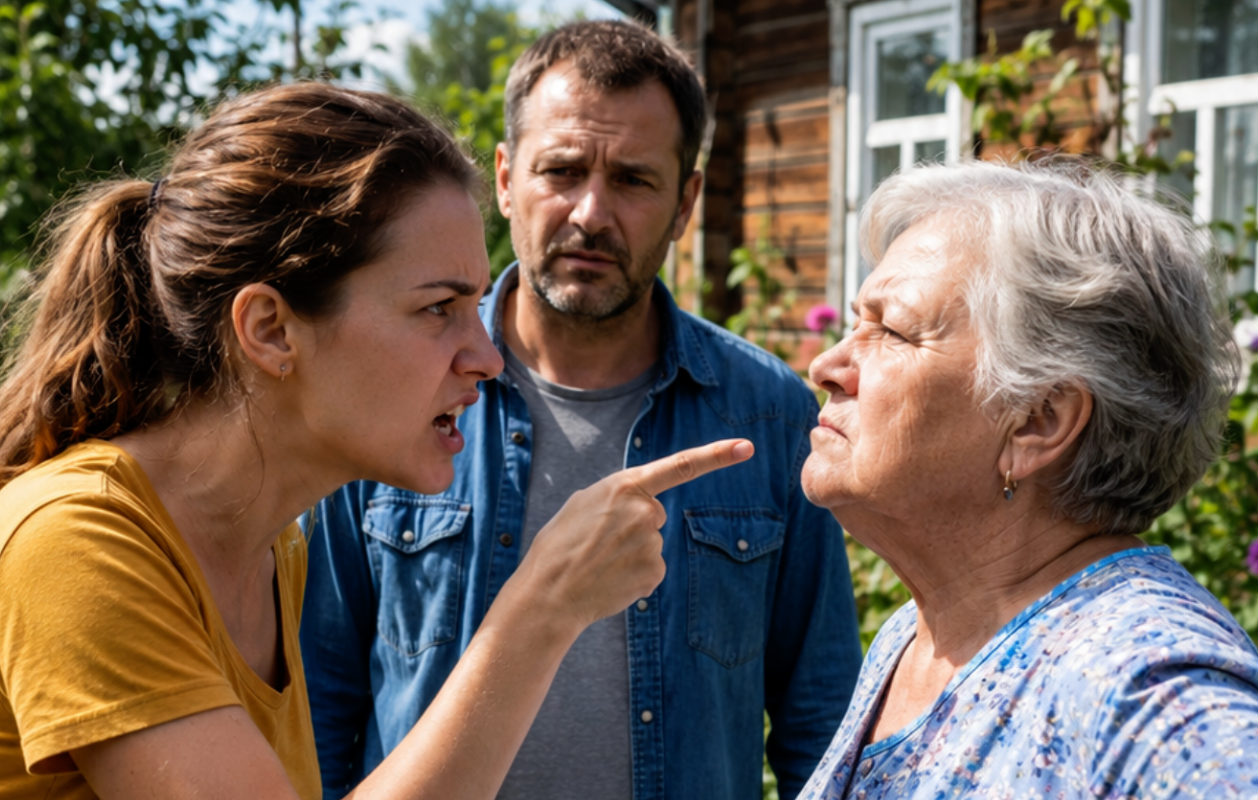
“Larisa Ivanovna,” Yulia tried to speak calmly, “I was planning to plant roses in this spot.”
“Roses?” her mother-in-law snorted. “Yulechka, dear, roses are beautiful, of course, but impractical. It’s better to grow something useful. Potatoes — now that’s something worthwhile. Or tomatoes, cucumbers. Roses only take up space.”
Yulia clenched her fists. She wanted to object, to say that it was her dacha and that she herself would decide what to plant there. But Anton was already digging the soil with his mother, discussing the work.
The next few weeks turned into a nightmare. Larisa Ivanovna came to the dacha two or three times a week. She appeared without calling, without warning, simply taking the keys and going there. Yulia constantly discovered traces of her presence: either the curtains had been replaced with new, more “practical” ones, or the furniture had been rearranged, or someone else’s jars had appeared in the cellar.
One Sunday, Yulia arrived and saw three unfamiliar women on the veranda, drinking tea with her mother-in-law. Larisa Ivanovna had arranged a gathering with her friends without asking permission from the owner of the dacha.
“Ah, Yulechka, come in, come in!” Larisa Ivanovna waved her over. “Meet my friends — Tamara Stepanovna, Galina Petrovna, and Zinaida Mikhailovna. We decided to relax here in the fresh air.”
Yulia forced a smile and greeted them. Indignation was boiling inside her, but she could not make a scene in front of strangers. She had to sit at the table, drink tea, and listen as her mother-in-law’s friends discussed neighborhood gossip.
That evening, Yulia tried to talk to Anton.
“Anton, we need to set boundaries with your mother. She comes to the dacha whenever she wants and brings her acquaintances there. This is wrong.”
“Yulia, why are you starting again?” Anton did not even lift his eyes from his laptop. “Mom is trying. She’s helping. She isn’t damaging anything.”
“She rearranged all the furniture! She changed the curtains! She dragged her jars into the entire cellar!”
“So what? It’s good that Mom is helping arrange the dacha. You and I don’t have time for it.”
“Anton, I don’t want someone arranging my dacha for me,” Yulia felt her voice begin to tremble from helplessness. “I wanted to do everything myself, the way I like it.”
“Oh, God, what difference does it make who does what? The result is what matters. Mom is experienced. She knows what’s best.”
Yulia fell silent. The conversation had reached a dead end, just like every previous attempt to discuss her mother-in-law’s behavior. Anton did not see a problem. To him, his mother was a saint, and Yulia was simply being difficult.
A month passed. Yulia had almost resigned herself to the fact that the dacha had stopped being her personal space. She continued to go there, but it no longer brought her joy. Everywhere there were traces of Larisa Ivanovna — her things, her order, her rules.
Then, one weekend, Yulia decided to make her long-standing dream come true — to plant roses. She ordered seedlings online, choosing varieties for several days and reading reviews. Fifteen bushes were delivered: English roses, hybrid teas, floribundas. Yulia spent all of Saturday preparing the soil along the fence, digging holes, fertilizing the ground, and carefully planting each seedling.
The work was hard, but pleasant. Yulia imagined how, in a couple of months, the first buds would bloom there, how in summer the rose garden would smell sweet along the fence. This was hers, only hers.
Anton did not go to the dacha that day — he had a meeting with friends. Yulia did not insist. She even enjoyed working alone, in silence, taking pleasure in the process.
By evening, all the seedlings had been planted. Yulia watered them, placed little labels with the names of the varieties beside them, and looked over her work with satisfaction. At last, something truly hers had appeared at the dacha, something her mother-in-law had not yet managed to interfere with.
On Friday, Yulia decided to go to the dacha after work to check how the roses had taken root. The day had been difficult, and she was tired, but the thought of the rose garden warmed her soul. She wanted to see the seedlings, water them, maybe loosen the soil a little.
Yulia parked by the gate and walked toward the house. Right away, she noticed that the gate was open. Strange. She was sure she had locked it the previous week.
Yulia entered the plot and froze. Where her rose garden had been just a week earlier, there was now freshly dug black earth. Straight beds, neatly marked with stakes. And beside the compost pit lay a pile of dug-up seedlings — the roses were lying mixed together, their roots already beginning to dry out, their leaves wilting.
Yulia came closer. Her legs felt as if they had turned to lead. She crouched beside the pile of seedlings and ran her hand over the wilting leaves. Fifteen bushes. Everything she had chosen, ordered, planted. Everything destroyed.
She stood up and looked around. In the beds that now occupied the place of the rose garden, there were labels: “Tomatoes,” “Peppers.” Larisa Ivanovna had not merely dug up the roses — she had already planned what would grow there instead.
Yulia sat right down on the ground. Her hands were shaking. A wave of rage rose inside her, so strong that it became hard to breathe. She sat for several minutes, staring at the ruined rose garden, then abruptly stood up, walked to the car, and drove away.
All the way home, Yulia was silent. She gripped the steering wheel so tightly that her knuckles turned white. One question kept turning over and over in her head: how? How could someone do such a thing? Without asking, without permission, simply take and destroy someone else’s work, someone else’s dream?
At home, Anton was sitting on the sofa with his phone. He looked up when Yulia entered the apartment.
“Ah, hi. Did you go to the dacha?”
“Your mother dug up my roses,” Yulia said in an even voice, but Anton must have heard something alarming in her tone because he put down his phone.
“What?”
“I said: your mother dug up all my roses and made tomato beds in their place.”
Anton frowned.
“Well… maybe she thought it would be better that way? Mom didn’t mean any harm…”
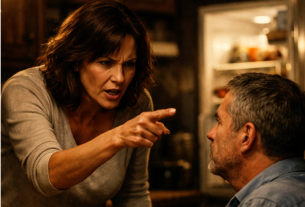
“DIDN’T MEAN ANY HARM?!” Yulia’s voice shot upward. “I spent a week choosing those seedlings! I spent an entire day planting them! It was MY dacha, MY money, MY roses! And your mother just went and destroyed everything without even asking!”
“Yulia, calm down, don’t yell…”
“I’ll yell as much as I want!” Yulia threw her bag onto the floor. “Do you even understand what’s happening?! Your mother behaves as if the dacha belongs to her! She comes there whenever she wants, does whatever she wants, brings her friends there! And you… you just turn a blind eye to it!”
Anton got up from the sofa.
“My mother wanted to help…”
“Help?!” Yulia laughed, and the laugh sounded hysterical. “She wanted to help when she rearranged the furniture without asking? When she changed the curtains? When she filled the whole cellar with her jars? That’s help?”
“Yulia, enough already. Mom is an elderly woman. She cares in her own way…”
“If I see your mother at the dacha without permission one more time, I’ll change the locks!” Yulia blurted out, looking her husband straight in the eyes.
Anton turned pale.
“What are you saying?”
“I’m tired,” Yulia felt something inside her finally break. “I’m tired of living in a marriage of three people. Where your mother is more important than I am. Where my opinion means nothing. Where I’m supposed to stay silent and tolerate everything because ‘Mom meant well.’”
“Yulia…”
“I’m filing for divorce,” Yulia said, walking into the bedroom and taking a large sports bag out of the wardrobe.
“What are you doing?” Anton followed her.
“Packing my things. I’ll stay with Sveta for a couple of days, and on Monday I’ll go to a lawyer.”
“Yulia, stop it. Don’t make people laugh. You’re throwing a tantrum over some roses?”
Yulia stopped and slowly turned to her husband.
“Not over roses. Over the fact that in five years of marriage, you have never once taken my side when it came to your mother. I was always supposed to give in, stay silent, endure. And today I realized I can’t do it anymore. I don’t want to.”
She continued packing her things. Anton stood in the doorway, and it seemed only now was he beginning to understand how serious everything was.
“Yulia, wait. Let’s discuss this calmly…”
“It’s too late to discuss it,” Yulia zipped the bag. “I talked to you about this a hundred times. You didn’t listen. Well, now here’s the price.”
She walked past her husband toward the door. Anton grabbed her by the arm.
“Yulia, wait. I… I’ll talk to Mom.”
“You’ll talk to her?” Yulia smirked. “Like you talked all the previous times? You’ll explain to her that she ‘went a little too far,’ she’ll get offended, and then you’ll persuade me not to quarrel with her?”
“No, I’m serious. I’ll tell her this isn’t acceptable.”
“Anton, I don’t care anymore,” Yulia pulled her arm free. “I’m tired. I need time to think.”
She left the apartment without looking back. Anton remained standing in the hallway, staring at the closed door. And only now, when his wife had actually left, did he realize that the situation had gotten out of control.
Anton sat down on the sofa and clutched his head. Five years of marriage. He had always thought everything was fine between him and Yulia. Yes, his mother sometimes interfered in their affairs, but wasn’t that normal? Parents always wanted to help. He had not seen a problem in it.
But Yulia had. And she had kept silent. Endured. Until today.
Anton took his phone and looked at the time. Ten in the evening. He dialed his mother’s number.
“Hello, son?” Larisa Ivanovna’s voice was cheerful. “Did something happen?”
“Mom, did you dig up Yulia’s roses at the dacha?”
There was a pause.
“Well… I thought it would be better to make beds there. Roses are beautiful, of course, but there’s no use in them. But tomatoes…”
“Mom,” Anton interrupted his mother-in-law, and for the first time in many years, there was firmness in his voice. “Yulia left me. She packed her things and left. She said she’s filing for divorce.”
“What?!” Larisa Ivanovna gasped. “Over some roses?! Antosha, you understand that this is nonsense! She’s just hysterical!”
“Not over roses, Mom. Because you constantly interfere in our life. And I never put you in your place.”
“Anton, I’m your mother! I’m trying to help you. I do everything so that things are good for you!”
“I know, Mom,” Anton rubbed his face with his hands. “But Yulia didn’t ask for help. The dacha is her territory, her money, her dream. And you behaved as if it were your property.”
“Oh, Antosha, how can you say that…”
“Mom, listen to me carefully,” Anton stood up and began pacing the room. “I can lose my wife. Do you understand? I can end up alone because I couldn’t protect my family from your interference.”
“Anton, you’re saying terrible things! Am I your enemy?”
“No, Mom. You’re not an enemy. But you have no boundaries. And I’m no less guilty of that than you are because I allowed all of it.”
Larisa Ivanovna fell silent. Anton could hear her breathing heavily into the phone.
“What do you want from me?” his mother finally asked, resentment in her voice.
“Return the dacha keys. Tomorrow. And don’t go there again without Yulia’s invitation.”
“Anton…”
“Mom, I’m serious. Either you do as I ask, or I really will be left without a wife. Is that what you want?”
A long pause followed.
“All right,” Larisa Ivanovna said quietly, tightly. “I’ll return the keys.”
“Thank you, Mom.”
Anton hung up and sat down on the sofa again. For the first time in his life, he had told his mother no. For the first time, he had put his wife’s interests above Larisa Ivanovna’s wishes. And it felt strange, frightening, and right all at once.
For the next few days, Yulia stayed with her friend Sveta. Anton called, sent messages, asked her to come back and talk. Yulia did not answer. She needed time to sort out her own feelings.
She really was planning to file for divorce. Five years of putting up with her mother-in-law’s interference, her husband’s indifference, the feeling that her opinion meant nothing — it was enough. The roses had been the last straw, but the problem went much deeper.
On Wednesday evening, Anton came to Sveta’s apartment. Yulia opened the door and silently looked at her husband.
“May I come in?” Anton asked.
Yulia nodded. They went into the living room. Sveta tactfully went to the kitchen.
“I talked to Mom,” Anton began. “She returned the keys. I told her she can no longer come to the dacha without your invitation.”
Yulia said nothing.
“I bought new rose seedlings,” her husband continued. “The same varieties you ordered. They’ll arrive on Saturday. I want us to plant them together. I’ll help you. And no one else will interfere anymore.”
“Anton, it’s not only about the roses,” Yulia sighed heavily.
“I know,” her husband sat down beside her. “It’s about the fact that for five years, I didn’t hear you. I didn’t protect you. I put my mother above my wife. I was a bad husband.”
Yulia looked at Anton. In his eyes, she saw something she had not seen for a long time — sincere remorse.
“I don’t know whether we can make it work,” Yulia admitted. “Too much resentment has built up.”
“Let’s try,” Anton took her hand. “I’ll change. I promise. I’ll set boundaries with Mom. I’ll learn to say no to her when it’s necessary. I’ll listen to you. Please give me one more chance.”
Yulia was silent for a long time. Then she nodded.
“One chance. But if you choose your mother over me again, I’m leaving forever.”
“Agreed,” Anton squeezed her hand tightly.
On Saturday, they went to the dacha together. Anton had indeed ordered the same rose seedlings Yulia had bought. They planted them along the fence, working together in silence and concentration. It was symbolic: they were not just planting roses; they were trying to grow something new in their relationship.
After the last seedling was in the ground, Anton and Yulia sat on the veranda with tea.
“We need to talk about the rules,” Yulia said.
“Yes,” her husband agreed.
“The dacha is our place. Yours and mine. Not your mother’s. If Larisa Ivanovna wants to come here, she must ask permission. In advance. And accept refusal if I don’t want to see her.”
“I agree.”
“If we have disagreements about your mother, you will not automatically take her side. You will listen to me. And we will make a decision together.”
“I agree,” Anton nodded.
“And one more thing. I want us to start seeing a family therapist. We need help to work through all this.”
Anton was silent for a moment, then nodded.
“All right. I’ll find a good specialist.”
Larisa Ivanovna did not contact her son for a week. She was offended, and the offense ran deep. But then she called him herself.
“Anton, I want to apologize to Yulia,” his mother said.
“Mom, that’s good.”
“May I come to your place on Saturday? I’ll bake a pie.”
“I’ll ask Yulia and call you back.”
Anton really did ask. Yulia thought for a while and agreed.
The meeting was tense. Larisa Ivanovna brought a pie, apologized for the roses, and promised not to interfere anymore. Yulia accepted the apology, but remained distant. Trust had been damaged, and rebuilding it would take a long time.
Anton kept his word. He began going to therapy with Yulia once a week. It was not easy — discussing their problems, admitting mistakes, learning to hear each other. But they tried.
Larisa Ivanovna gradually came to terms with the new rules. She no longer came to the dacha without an invitation. At first, she called every week, asking whether she could come. Sometimes Yulia agreed, sometimes she refused. And Anton did not try to pressure his wife when she said no.
By the middle of summer, the roses bloomed. Yulia stood by the fence, breathing in their fragrance, and for the first time in a long while, she felt that the dacha had truly become her place. A place where she could rest, relax, and be herself.
Anton came up behind her and put his arms around her shoulders.
“It turned out beautifully.”
“Yes,” Yulia smiled. “Very beautifully.”
Their marriage changed after that crisis. They began talking more, discussing problems instead of keeping silent about them. Anton learned to say no to his mother, and it was not easy for him, but he understood that otherwise he would lose his family.
Larisa Ivanovna now came to the dacha no more than once a month, and every visit was agreed upon with Yulia. His mother-in-law behaved carefully, trying not to impose herself or cross boundaries. The relationship between her and her daughter-in-law remained cool, but at least there were no open conflicts.
And the dacha became for Yulia and Anton what it should have been from the very beginning — a place of peace, where no one invaded without invitation. A place where they could be together, work in the garden, enjoy the silence and each other.
And when, in autumn, Yulia cut the last roses before the frost and placed them in a vase on the veranda, she understood that those flowers meant much more than just a beautiful rose garden. They were a symbol of her right to her own space, to respect, to being heard.
And her husband had finally understood that.