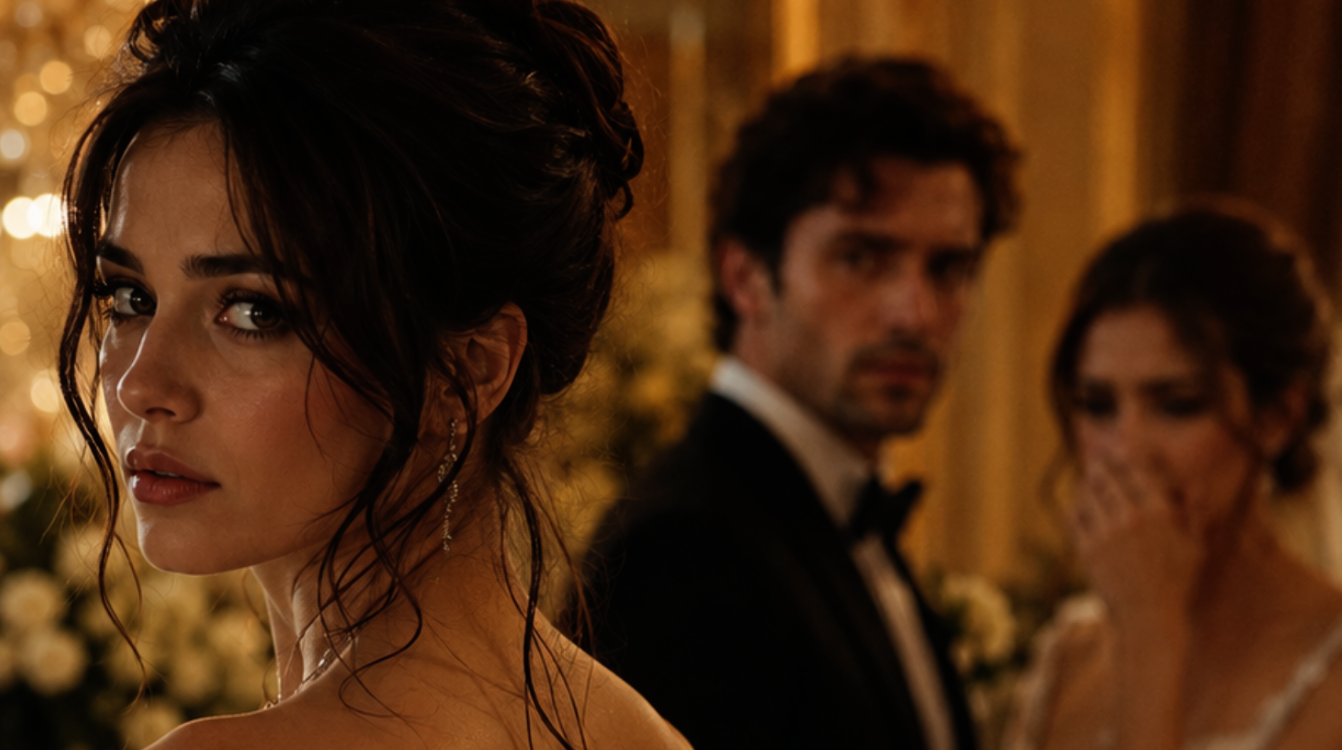
“Don’t expect me at the wedding. I’m not going to play the role of the happy relative,” Kira smirked.
The words were spoken quietly, but so clearly that it was as if someone had turned off the sound at the large family table. Just a second ago, spoons had been clinking, napkins rustling, Aunt Valentina Nikolaevna had been animatedly describing how beautiful the group photo would look beside the arch of fresh flowers, cousin Artyom had been arguing with the bride about the music, and the groom’s father had been nodding thoughtfully, though he was clearly thinking about something else.
Now everyone was looking only at Kira.
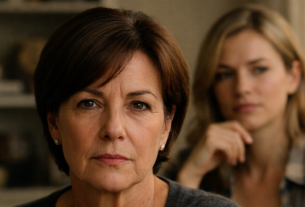
She sat upright, not lowering her gaze. A faint smirk remained on her face, but her fingers gripped the edge of her napkin tightly. Not from anxiety. More likely from the desire not to say too much. Over the past months, so much “too much” had accumulated that it could ruin not only this dinner, but their entire polished picture of a close-knit family.
“Kira, are you serious right now?” Ilya was the first to come to his senses.
He sat opposite her in a new light-colored shirt, wearing the same expression that appeared on his face every time someone refused to do what was convenient for him. Ilya was Kira’s younger brother. As children, she had defended him in the yard, covered for broken cups before their parents, helped him with his studies, and taken him to the doctor when their mother was late at work. And now he was looking at her as if she had thrown a tantrum out of nowhere.
“Completely serious,” Kira replied.
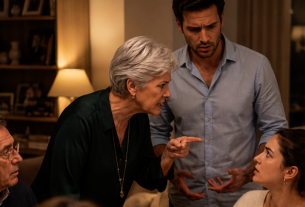
“Well, here we go,” Aunt Valentina Nikolaevna said quietly, but loudly enough for everyone to hear. “Couldn’t you sit calmly for just one evening? People have a celebration coming up.”
Kira slowly turned her head toward her.
“People have a celebration,” she repeated. “And I, apparently, have a rehearsal for a role?”
“What role?” her aunt snapped. “You’re the groom’s sister. You’re supposed to be there, smile, help. These are normal things.”
“Over the past months, I’ve been ‘supposed’ to do a lot of things,” Kira said calmly. “Only somehow people remembered that when they needed me. But when I needed at least some support, everyone suddenly became very busy.”
The table fell silent again. Only the low hum of the refrigerator could be heard from the kitchen. Ilya’s fiancée, Alina, lowered her eyes to her plate. She was not a bad girl, Kira understood that. But Alina had settled into their family too quickly and had too willingly accepted the rule that Kira’s inconvenient feelings could be ignored.
It had not started with the wedding.
If someone had asked Kira exactly when she first felt unnecessary, she would not have named this dinner, or even the day Aunt Valentina Nikolaevna sent her a list of tasks for the celebration. No. It had started in spring, when Kira and Ilya’s mother ended up in the hospital.
Back then, everyone had said the right words. They called, gasped, asked what the doctors had said. Valentina Nikolaevna sent long messages with advice about which documents needed to be collected, cousin Oksana promised to come by on the weekend, their father grumbled that he hated hospitals but also promised to hold himself together. In the first days, Ilya called three times a day.
And then reality became less convenient than sympathy over the phone.
Someone had to visit their mother, talk to the doctors, buy medicine, bring clean clothes, handle documents, clean the house, cook light meals, and make sure their father did not forget to eat or wander around the apartment looking lost. Gradually, all of it fell on Kira.
She worked as a furniture restoration specialist in a small workshop. The work required focus, hand strength, and patience. After her shift, she went to the hospital, then to her parents’ place, then home. Sometimes she fell asleep sitting in the bathroom on the closed lid of the washing machine because she no longer had the strength to reach the bed. In the morning, she got up, tied back her hair, looked at her face in the mirror, and forced herself not to think that even the most stubborn people could not last like this for long.
Ilya was busy during that period.
First, he had urgent matters at work. Then he was helping Alina choose a banquet hall. Then Alina’s dog got sick. Then they had to meet the photographer. Then it turned out they had an appointment with the host. Each time, the reason sounded convincing, especially if one did not listen too closely.
“Kira, you’re strong,” he would say over the phone. “You talk to Mom more calmly. I’ll come on Saturday.”
On Saturday, he would come for twenty minutes, bring juice, ask what was new, take a photo of the medicine list for himself, and leave because Alina was waiting for him at the shopping center.
Kira did not make scenes. Back then, she still believed that in families there were periods when one person carried more, and then the others would definitely lend a shoulder. It had just happened that way for now. Ilya was simply overwhelmed. Their father simply did not know how to cope with the illnesses of loved ones. Their aunt simply lived far away. Oksana simply had children. Everyone had their own “simply,” and only Kira had none.
Their mother was discharged a month later. She became weaker, slower, and quieter. Kira moved some of her things to her parents’ place so she could spend the night there several times a week. She bought groceries, sorted medical papers, scheduled her mother’s checkups, and made sure her father did not forget to pay the utility bills.
That was when Valentina Nikolaevna first started talking about the wedding.
She came to Kira’s parents’ house on a Sunday, when their mother was finally able to come into the kitchen and sit at the table with everyone. Kira was cutting vegetables, their father was laying out bread, and Ilya and Alina had brought a cake from a bakery. Everyone was trying to look cheerful. Even their mother smiled, though her hand trembled noticeably when she picked up her cup.
“Well, now we can talk about something good,” Valentina Nikolaevna announced solemnly. “Ilyusha and Alina have chosen a date. The wedding is in August.”
Their mother started crying immediately. Not loudly, not theatrically. She simply covered her face with her hand and nodded several times. Kira came over and gently hugged her shoulders. Ilya was glowing. Alina showed photos of the restaurant on her phone. Their father perked up and began asking about the guests.
Kira smiled then too. Sincerely. Despite her exhaustion, despite the fact that she had been running on autopilot for weeks, she was truly happy for her brother. She wanted to believe something bright had appeared in their home again.
But after just a few days, the wedding stopped being happy news and turned into another list of responsibilities.
First, Alina asked Kira to look at an old wooden chest they wanted to place in the gift area. Kira knew wood and could quickly make the thing presentable.
“It only needs the lid tightened,” Alina said. “And a little freshening up. You know how to do that.”
Kira came after work, saw the dried-out hinges, chips, damp stains, and realized that “a little freshening up” would not be enough. She spent three evenings on the chest. She sanded the surface, reinforced the fastenings, and chose a safe finish. When she brought the finished piece, Alina clapped her hands and said it was perfect for photos.
The thank-you came quickly, in passing. A minute later, Valentina Nikolaevna asked:
“Kirochka, could you also make a frame for the seating chart? In your style, so it looks expensive.”
Then came table signs, a wooden ring box, a photo stand, and small decorative elements. At first, Kira agreed because it was her brother. Then she agreed because she had already been pulled into it. Then because, for some reason, refusals were treated as betrayal.
“Kira, you love this kind of thing,” Alina would say. “You have golden hands. It would be strange for us to order from strangers when we have our own craftswoman.”
The word “own” struck a nerve every time. Own when something needed to be made beautiful. Own when something needed to be brought, taken away, invented, fixed. But when Kira herself needed someone to stay with her mother for even one evening, everyone suddenly remembered their personal matters.
One day Kira asked Ilya to come to their parents’ place on Friday. She needed to finish an order she had already postponed twice because of the hospital. The work was important: an old chest of drawers with carved fronts, a difficult material, and a client who had been waiting for a long time. Kira did not like letting people down.
“Ilya, stay with Mom for a couple of hours. Just make sure she doesn’t get up unnecessarily. Dad went to the doctor, and I can’t split myself in two.”
“I can’t on Friday,” her brother replied. “Alina and I are going to look at a suit.”
“You can look at a suit on Saturday.”
“We can’t. There’s an appointment.”
“What kind of appointment is there in a clothing store?”
Ilya exhaled irritably.
“Kira, don’t start. You talk as if my wedding is nonsense.”
Kira was standing in the workshop then, holding the phone with her shoulder while trying to remove a dried layer of varnish from a part with her fingers. She was silent for a few seconds, then said very calmly:
“I’m talking about Mom.”
“I understand. But you’re there. And I need to live too.”
That phrase stayed in Kira’s head for a long time. “I need to live too.” As if she herself had no life. As if she was not a person, but a convenient, sturdy shelf where everything heavy could be placed without checking whether it could bear the weight.
A few weeks before the family dinner, there was the incident with their mother’s dress.
Kira’s mother was still recovering and worried she would look bad at the wedding. She had lost weight, begun to stoop, and felt embarrassed by her slow walk. Kira suggested they choose a comfortable, beautiful dress for her, something calm and not too ornate. They went to the store together. Her mother looked at herself in the mirror for a long time, adjusted the sleeve, and asked Kira not to rush her. Kira waited patiently.
In the end, they found a dark-blue dress with a neat cut. In it, her mother straightened immediately. Her face softened, her eyes came alive.
“I look like my old self in it,” she said quietly.
Kira smiled and squeezed her hand.
That evening, they sent a photo of the dress to the family chat. Ten minutes later, Valentina Nikolaevna wrote:
“A bit too dark for a wedding. It will look gloomy in the photos.”
Then Alina added:
“Maybe something lighter? Our concept is delicate.”
Kira looked at the screen and felt her shoulders tense. Her mother, sitting beside her, also saw the messages. She immediately placed her phone face down.
“Maybe I really should get something else?” she asked.
“No,” Kira answered sharply, then softened her voice. “You look good in it. Nothing else matters.”
But it turned out that it did matter. Two days later, Ilya called and carefully asked:
“Kira, don’t get angry. But could you still persuade Mom to wear something lighter? Alina is worried about the overall picture.”
Kira placed the brush she had been using to coat a wooden detail on the table and closed the jar of finish.
“Ilya, Mom chose something for the first time after the hospital that doesn’t make her want to hide. Are you really asking me to take that away from her because of the overall picture?”
“You’re dramatizing everything again.”
“No. I’m calling things by their names.”
“It’s impossible to talk to you when you’re in this mood.”
“It’s impossible to talk to me when people expect me to stay silent.”
After that, the family chat became unusually quiet. No one apologized. They simply stopped discussing the dress. But Kira noticed how Alina assessed her mother with a glance at the next meeting and quickly looked away.
Then there was the story with the jewelry.
Their grandmother on their mother’s side had once owned a silver brooch with small garnets. It was nothing fabulously expensive, but it was beautiful and belonged to the family. Their grandmother had given it to Kira on her eighteenth birthday, saying that she knew how to care not only for things, but also for people. Kira kept the brooch in a small wooden box. Sometimes she wore it on holidays, but more often she simply took it out, wiped it with a soft cloth, and put it back.
Valentina Nikolaevna remembered the brooch.
“Kirochka,” she said one day when they had all gathered at their parents’ house, “lend Alina Grandma’s brooch for the wedding. It would be beautiful. Something old, family-related, with history.”
Kira did not even immediately understand that her aunt was serious.
“No,” she replied.
Valentina Nikolaevna blinked.
“What do you mean, no?”
“I mean exactly that. It’s mine. Grandma gave it to me.”
“No one is taking it from you. Just for one day.”
“I said no.”
Alina blushed and tried to smile.
“Kira, I’ll be careful. Truly. I just liked the idea.”
“I understand,” Kira said. “But I won’t lend the brooch.”
Ilya frowned.
“It’s a family piece.”
“That’s exactly why I don’t want to turn it into a wedding accessory for a pretty photo.”
“You just hurt Alina,” her brother said.
Kira looked at him carefully. He had not asked why the item mattered to her. He had not remembered that their grandmother had personally given the brooch to her. He had not considered that over these months, Kira had already given too much time, strength, and care. He saw only an inconvenient refusal.
“Is anyone afraid of hurting me?” Kira asked.
The room became awkward. Their father coughed, their mother lowered her eyes. Valentina Nikolaevna quickly started talking about something else, but from that day on, Kira noticed a change. They began including her in wedding conversations not as a beloved sister, but as a worker who needed to be kept within limits.
They consulted her when something needed to be done by hand. But when it came to guests, seating, and family photos, her opinion was bypassed.
One day, she accidentally saw a printed list of shots for the photographer. The sheet was lying on Ilya’s kitchen table. Kira had come to bring the finished seating signs and was waiting while her brother looked for packaging for them. Her eyes caught the lines on their own.
“Bride and groom with parents.”
“Bride and groom with Aunt Valya.”
“Bride and groom with friends.”
“Bride and groom with cousins.”
“Group photo with family.”
“Kira separately with Ilya, if she’s in a normal mood.”
She read the last line twice. Then she put the sheet back exactly as it had been and touched nothing else.
Ilya returned with a bag, talking about the restaurant, the driver, and how everyone should probably gather the day before. Kira looked at him and, for the first time, saw not the younger brother she had picked up from school in the rain as a child, but an adult man who had quickly learned to make use of her patience.
“Kira, what’s wrong with you?” he asked.
“Nothing.”
“Tired again?”
“Probably.”
He did not ask further. It was more convenient for him to accept that explanation.
Kira prepared for the family dinner without any desire. Valentina Nikolaevna insisted that everyone gather in advance and “calmly discuss the final details.” They chose her parents’ place: the large table, familiar kitchen, familiar faces. Kira wanted to refuse, but her mother asked:
“Please come. Not for them. For me. I don’t want people saying again that you keep yourself apart.”
Kira came.
The entryway smelled of freshly washed floors and roasted chicken. Her father met her at the door, awkwardly kissed her cheek, and immediately said:
“Just no arguments today, all right? Your mother is nervous.”
Kira took off her coat, hung it carefully, and looked at her father.
“Why am I being told this in advance?”
“Because you’ve become sharp.”
“I’ve become tired.”
Her father looked away.
“Everyone gets tired.”
Kira did not answer. She went into the kitchen, greeted Alina, Ilya, her aunt, and her cousins. Her seat turned out to be almost in the very corner, next to Oksana, who spent most of the evening scrolling through her phone and only became animated when the conversation touched on outfits.
At first, everything was tolerable. They discussed the menu, departure time, and who would pick up whom. Kira silently ate salad and answered briefly when addressed. Her mother sat opposite her and looked anxiously at her daughter from time to time. Kira smiled at her so she would not worry.
Then Valentina Nikolaevna took out a notebook.
“Now, something important. We need to assign who is responsible for what on the wedding day. Ilyusha and Alina, of course, are the main stars of the celebration. The parents will be nervous. So we need one calm, responsible head.”
Almost everyone looked at Kira at the same time.
She slowly placed her fork beside her plate.
“No,” she said.
“What do you mean, no?” her aunt did not understand.
“I will not be the responsible head on the wedding day.”
Ilya rubbed the bridge of his nose tiredly.
“Kira, who else if not you?”
“The coordinator you hired.”
Alina tensed almost imperceptibly.
“The coordinator will be at the venue. But someone needs to explain the family details to her.”
“Then explain them.”
“You know them better,” Valentina Nikolaevna said. “You’re organized. You’ll make sure the parents aren’t late, that your mother doesn’t get too nervous, that the gifts are put where they need to be, and that none of the guests get lost. And the photographer also asked for someone to help gather the relatives for the group photos.”
Kira looked around the table.
“So at the wedding, I’m supposed to be not a guest, but the relative on duty?”
“Why do you have to say it so rudely?” her aunt threw up her hands. “It’s help.”
“Help is when someone asks and is ready to hear no. What you have here is an assignment.”
“Is it really so hard for you to help your brother for one day?” Ilya asked.
Kira looked at him and noticed how Alina turned her head slightly toward him, as if waiting for the right reaction. Ilya was irritated, but still restrained. He wanted the evening to go beautifully. Beauty had become the main word of the past months. A beautiful hall. Beautiful photos. A beautiful dress. Beautiful family relationships. The main thing was not to touch what had long been cracking beneath that beauty.
“Ilya, I’ve already helped,” Kira said. “The chest, the signs, the ring box, the stands, trips to Mom, documents, the hospital, the house. I helped more than you noticed.”
“The hospital again,” he exhaled. “Kira, how long are you going to throw that in our faces?”
Their mother flinched as if she wanted to intervene, but their father quietly touched her hand.
Kira slowly turned toward her brother.
“I’m not throwing it in your faces. I’m reminding you because all of you acted as if it never happened.”
“It happened,” Ilya said. “But life goes on.”
“For you, yes.”
Those two words landed on the table heavily and unpleasantly. Valentina Nikolaevna immediately rushed to smooth things over.
“Close people shouldn’t count who did how much. Today you helped, tomorrow they’ll help you.”
Kira smirked.
“Tomorrow?”
“Of course.”
“When does that tomorrow come?”
Her aunt frowned.
“I don’t understand what you’re getting at.”
“In spring, I asked someone to cover for me with Mom for two hours. No one could. I asked Ilya to go with Dad for the test results. He had a suit fitting. I asked Oksana to at least bring groceries when I was sitting at the doctor’s myself. She wrote that the children had activities. I asked you, Aunt Valya, to talk to Mom because she was afraid of being hospitalized again. You said you didn’t know how to talk about such things. But you know how to manage a guest list beautifully.”
Oksana lifted her head from her phone.
“Kira, I really do have children. Why are you starting?”
“I’m not starting. I’m answering the question.”
“What question?” Ilya asked irritably.
“Why I don’t want to be your convenient happy relative.”
Alina set down her napkin. Her face became tense, but she made her voice soft.
“Kira, I think you’re transferring old grievances onto our wedding. We didn’t want to use you. You really are good at a lot of things. And we wanted you to be close.”
“Close?” Kira repeated. “Or on standby?”
“That’s unfair.”
“What was unfair was writing in the photographer’s list: ‘Kira separately with Ilya, if she’s in a normal mood.’”
Ilya’s eyes snapped up.
“You were going through my papers?”
“The sheet was lying on the table. I brought your signs. The same ones I made in the evenings after work.”
Alina turned pale. Valentina Nikolaevna pressed a hand to her chest.
“Who knows what they wrote there! Those were working notes!”
“Very accurate notes,” Kira said. “You decided in advance that I might be a problem. Not because I ruined anything, but because I stopped smiling on command.”
“Kirochka…” her mother said quietly.
Kira immediately softened. She looked at her mother and, for a second, regretted that all of this was happening in front of her. But then she remembered her mother in the dark-blue dress placing her phone face down after the comments about the “overall picture.” She remembered how her mother had tried to give up the beautiful thing she liked just so she would not inconvenience anyone. And that regret turned into stubborn clarity.
“Mom, I don’t want to stay silent anymore for the sake of peace that exists only because one person endures everything.”
Her father sighed heavily.
“Daughter, but your brother’s wedding happens once in a lifetime.”
“Maybe. And Mom’s illness was not an everyday event either. But for some reason, no one called a family gathering then.”
Ilya leaned back in his chair.
“Do you want me to sit here guilty in front of everyone now?”
“No. I want you to hear someone besides yourself for once.”
“I do hear you!” he raised his voice. “You just make it sound like we’re monsters. I had things to do too. I have a wedding. I couldn’t live only on hospitals and your complaints.”
“I couldn’t either,” Kira said. “But I did.”
That phrase finally hit him harder. Ilya clenched his jaw, but said nothing.
Valentina Nikolaevna decided to take the conversation into her own hands. She always did that when she felt control slipping away. First she changed her tone to affectionate, then to offended, and if that did not work, to accusatory.
“Kirochka, listen. All families go through difficult periods. You can’t destroy a celebration because of hurt feelings. People will come, they’ll look. You’re the groom’s sister. Imagine how it will look if you’re not there. Questions will start. What will we tell the guests?”
Kira looked at her almost with curiosity.
“There it is.”
“What?”
“You’re not worried about how I feel. You’re worried about what the guests will say.”
“Guests are people too,” Oksana muttered.
“Of course. Only why did their opinion become more important than mine?”
Alina said quietly:
“Kira, no one wants to hurt you.”
“Alina, did you ask Ilya to talk to me about Mom’s dress?”
The bride became confused.
“I was just worried your mother would look too strict. We have a soft color palette.”
“Mom smiled at herself in the mirror for the first time after the hospital.”
Alina opened her mouth, but did not immediately find an answer.
“I didn’t know it was that important to her.”
“You didn’t ask.”
The awkwardness became almost tangible. Kira’s father started folding a napkin into even strips, though he never usually did such things. Her mother looked down at the table, and her face showed how painful it was for her to see her children argue. Ilya was silent. For the first time that evening, he seemed to begin understanding that the conversation could no longer be reduced to the usual “Kira is tired.”
But Valentina Nikolaevna did not give up.
“All right, let’s say we were inattentive somewhere. But why such loud words right away? Not attending your brother’s wedding is an action after which the relationship will no longer be the same.”
“It’s already no longer the same,” Kira replied. “You only noticed now, when I refused to service the celebration.”
“What do you mean, service it?” her aunt flared up. “It’s impossible with you! Ask you for help, and then you present a bill.”
Kira slowly straightened.
“I’m not presenting a bill. I’m returning your attitude to you. Just without gift wrapping.”
Ilya slapped his palm on the table, not hard, but sharply.
“Enough! What do you want to hear? That I’m a bad brother? Fine. I’m bad. Happy?”
Kira looked at him without anger. That, it seemed, made it even harder for Ilya.
“No, Ilya. I wanted to hear: ‘Kira, forgive us, we really went too far.’ Or: ‘Thank you for not abandoning Mom.’ Or at least: ‘Don’t do more than you can.’ But once again, you’re offering me a choice between silence and scandal.”
“Because you’re the one who turns everything into a scandal!”
“No. I simply stopped smoothing things over.”
Those words seemed to put an end to Kira’s long internal argument with herself. She had been trying for a long time to explain what was happening. Why after every family conversation she wanted to leave and wash her hands under cold water for a long time, though she had touched nothing dirty. Why Alina’s requests made her neck begin to ache. Why after messages from Aunt Valentina Nikolaevna she placed her phone face down and stared out the window for several minutes.
She was not jealous. She was not evil. She did not hate the wedding. She was simply tired of being the person called “family” only when it was convenient.
Someone at the table coughed quietly. Oksana picked up her phone again, but did not unlock it. Alina sat very straight, and for the first time her expression was not offended, but confused. Perhaps she truly had not thought that throughout all this preparation, Kira was not just helping — she was gradually disappearing as a person with her own boundaries.
“Kira,” Alina said carefully, “if it was hard for you, you could have said so earlier.”
Kira gave a short smirk.
“I did. More softly. That’s why no one heard me.”
“But not coming at all…” Alina began.
“I won’t be able to be honest there. And I don’t want to act happy for the camera.”
Ilya looked at her with irritation, but his voice now carried exhaustion.
“So you’re going to punish me?”
“No. I’m going to stop punishing myself.”
Their mother raised her eyes.
“Darling, maybe you could just come to the registry office? Without the restaurant. Just for the ceremony.”
Kira looked at her. This was the hardest part. Refusing her aunt was easy. Refusing her brother after all his words was almost calm. But her mother… Her mother wanted peace. She wanted to gather her children beside her, to prove to herself that the illness had not completely destroyed the home, that there could still be good days ahead for the family.
Kira was silent for a few seconds. Then she said more gently:
“Mom, I’ll think about the ceremony. But I won’t go to the celebration where I’m expected to smile for other people’s eyes.”
Valentina Nikolaevna immediately seized on that.
“See! So we can still agree. Then you’ll stand nearby for the photos after the registry office, and then quietly leave. Just please make a normal face, without that constant dissatisfaction.”
Kira turned to her. And everything inside her that had almost softened became firm again.
“No.”
“What is it now?”
“I will not make a ‘normal face’ at your request.”
“Good Lord, what is wrong with you?” her aunt could not stand it anymore. “A wedding! Joy! A beautiful day! Is it really so hard to stop thinking only about yourself for once?”
Kira laughed quietly. The laugh came out short, without joy. She picked up the fork she had set aside earlier, looked at it, and put it back down. That small gesture somehow helped her collect herself completely.
“For once?” she asked. “Do you really think I only think about myself?”
“How does it look from the outside?”
“From the outside,” Kira said slowly, “I spent all spring driving Mom to doctors while you sent advice. From the outside, I slept at our parents’ place when Dad couldn’t cope. From the outside, I made wedding decorations that you now call ‘just help.’ From the outside, I kept silent when Mom’s dress was discussed as an unfortunate stain in your photos. From the outside, I refused to lend my brooch, and I was immediately made out to be greedy. From the outside, I’m sitting here listening as I’m assigned in advance to be responsible for everyone else’s convenience, and I’m also supposed to be grateful for the trust.”
Oksana tried to interject:
“You’re lumping everything together…”
“Because it is all one lump, Oksana. You just brought it to me piece by piece, and now you’re surprised that I no longer want to sit beside it.”
Ilya abruptly stood up from the table.
“That’s it. I’m not going to listen to this. My wedding is in three weeks, and you’ve decided to start an autopsy of old grievances.”
“Sit down,” their father said unexpectedly.
Everyone turned to him.
Kira’s father rarely intervened. He was the kind of man who chose silence in family conflicts, considering it wisdom. But now he looked at his son sternly and tiredly.
“Sit down, Ilya.”
Ilya hesitated, then sat.
Their father ran a hand over his face.
“Kira is right about one thing. We really did dump a lot on her.”
Valentina Nikolaevna bristled.
“Nikolai, don’t start! This is not the time to look for someone to blame.”
“When is the time?” he asked. “After the wedding? After she finally stops coming to see us?”
Kira looked at her father. She had not expected those words from him. Not after his request in the entryway to have “no arguments.” Not after months when he had taken her help for granted because otherwise he would not have coped himself.
He spoke unevenly, as if every word took effort.
“I’m no hero. I understand that. When your mother got sick, I panicked. Kira took everything on herself. I got used to it. It’s convenient when there’s someone nearby who knows what to do on their own. Only afterward you stop noticing that this person is alive too.”
Their mother began to cry quietly. Not loudly, without sobbing. She simply covered her eyes with her hand.
Ilya looked down at the table. Alina carefully placed a hand on his elbow, but he did not react.
Kira felt her fingers tremble. Not from weakness. From surprise. She did not need a public victory. She did not want her father to repent in front of everyone now. For the first time in a long time, someone simply said out loud what she herself had been afraid to say too loudly: they really had used her. Not out of hatred. Not out of malicious calculation. Out of habit. Out of convenience. Out of the certainty that she would endure.
And that was even more hurtful.
Because an open enemy is easier. You can throw them out of your life, close the door, stop answering calls. But here sat her own family. People she loved. People who were sincerely surprised that she no longer wanted to be a soft doormat at the entrance to their beautiful family picture.
“Dad,” Ilya said quietly, “I didn’t think it looked like that.”
Kira turned to her brother.
“Did you ever think about how it looked to me?”
He raised his eyes to her. The former certainty was gone from them. But there was still no true understanding yet. Only the confusion of a person who had seen for the first time that the usual order of things might be unfair.
“Probably not,” he said.
Valentina Nikolaevna snorted with displeasure.
“Wonderful. Now let’s all make Ilya guilty before his own wedding. Kirochka, have you achieved what you wanted?”
Kira looked at her aunt and realized there was nothing more to say to her. Not because she was bad. But because Valentina Nikolaevna had spent her entire life seeing only the façade. Everything had to be proper: family photos, shared toasts, smiles beside flowers, correct captions in the album. What happened behind that façade interested her only when the crack became visible to outsiders.
“Aunt Valya,” Kira said, “I’m not trying to achieve anything. I’m leaving the role you invented for me.”
“What role?” she almost shouted.
“The convenient one. The strong one. The one who doesn’t take offense. The one who will always understand, accommodate, do it, bring it, smile, and not ruin the photo.”
Alina suddenly said quietly:
“I didn’t want you to feel that way.”
Kira looked at her without the previous sharpness.
“Maybe. But you wanted everything to look beautiful. Sometimes those are different things.”
The bride nodded, as if those words had landed where they needed to. She did not cry, did not start making excuses. For the first time that evening, she fell silent not in offense, but in thought.
Ilya spoke again:
“Kira, let’s do this. I’ll come to our parents tomorrow. I’ll take Mom to her checkup myself. And with the decorations… nothing else is needed. Really. We’ll manage.”
“That’s good,” Kira said.
“And the wedding… I want you to come. Not as the responsible person. Just as my sister.”
Kira looked at him for a long time. There was no longer an order in that request, but there was too little in it to restore her desire to come. He wanted things to be as they had been before. But “before” was what had brought them here.
“Ilya, I heard you.”
“Does that mean yes?”
“It means I heard you.”
He tightened his fingers on the edge of the table.
“You can’t just decide not to come.”
“I can.”
“I’m your brother.”
“I remember.”
“Then why?”
Kira slowly inhaled and exhaled just as slowly. She was tired of explaining, but right now she had to say the main thing, without shouting or unnecessary words.
“Because I don’t want to stand beside you in photos and pretend everything is fine when, inside this family, no one notices a person until she stops being convenient. Because I don’t want to listen to toasts about closeness after which I’ll be asked again to drive someone home, keep an eye on the gifts, or smile more properly. Because I don’t want my refusal to be treated as a bad mood. This is not a mood. This is a boundary.”
The word “boundary” sounded unfamiliar in their kitchen. Here, they more often spoke of patience, propriety, duty, and gratitude. Boundaries in this family were usually considered something harsh, almost improper. Especially if they were set by a woman from whom understanding was expected.
Valentina Nikolaevna shook her head.
“This is what pride leads to.”
“No,” Kira said. “This is what indifference leads to when it has been called concern for family peace for too long.”
Their mother stood up from the table. Their father wanted to help, but she stopped him with a gesture. She came over to Kira and placed her palm on her shoulder. Her hand was light and warm.
“Forgive me,” she said quietly.
Kira blinked quickly. That was not at all what she had expected.
“Mom, what for?”
“For also staying silent. It was convenient for me that you knew how to do everything. I was afraid to ask Ilya again so he wouldn’t get irritated. I was afraid to trouble my sister. But I was not afraid to trouble you. Because I knew you would come.”
The smirk that had stayed on Kira’s face like armor all this time wavered. She covered her mother’s hand with her own.
“I came because I love you.”
“I know. But love should not be a reason to pile everything onto you.”
Those words unexpectedly did more for Kira than all possible apologies from the others. She looked at her mother and, for the first time that evening, felt not only exhaustion, but also relief. Not complete relief. Not festive. Just small and cautious. As if someone had finally opened a window in a room after a long, suffocating conversation.
“I’m sorry too,” Ilya said quietly.
Kira turned to him.
“Don’t say it now just to close the subject. It’s better to do something differently later.”
He nodded. Like an adult. Without his usual offense. Perhaps for the first time in a long while, he had truly heard her.
But Kira’s decision did not change because of it.
She understood that one evening of admissions did not erase months of being unseen. One “forgive me” did not turn the wedding into a place where she would feel calm. And if she gave in now only because everyone was frightened by the consequences, everything would return. They would again seat her in a corner with responsibilities, again ask her to smile, again call her sharp if she refused.
“I won’t come to the restaurant,” Kira said. “And I won’t participate in staged family photos.”
“Kira…” Ilya began.
“I can come to Mom in the morning and help her get ready, if she asks me herself. I can congratulate you personally before or after the ceremony, without a crowd and without cameras. I’ll give you the gift. But the celebration where I’m expected to portray joy will happen without me.”
Valentina Nikolaevna jumped up.
“So you’ve still decided to disgrace us?”
Their father looked at her sharply.
“Valya, enough.”
“No, not enough!” her aunt flared, red blotches appearing on her face. “I’ve spent so many years gathering this family, reconciling people, inviting everyone, trying, and now one offended girl will dictate who goes where and who smiles how!”
Kira stood too, but calmly. The chair moved quietly across the floor.
“Exactly. Who smiles how. That’s the whole difference between us. For you, the smile matters. For me, what matters is whether there is anything real behind it.”
She went to the coat rack in the entryway and took her coat. No one tried to stop her right away. Everyone seemed to be waiting for her to change her mind, return, and say that she had spoken in anger. But Kira was no longer the woman who smoothed over sharp corners with her own hands and then wondered why her palms were covered in scratches.
Ilya came out after her.
“Wait.”
Kira stopped, but her coat was already draped over her arm.
“I don’t want us to part like this,” he said.
“We’re not parting, Ilya. We’re just stopping the pretense that everything between us is fine.”
He ran a hand through his hair, looking at her in confusion.
“Was I really that blind?”
Kira looked at her brother. As a child, he had a small scar on his left eyebrow from falling off a bicycle. She had dragged him home across the yard then, while he cried not from pain, but from fear that their father would scold him. Kira had said that she had failed to hold the bicycle. She was put in the corner for it, and that evening Ilya brought her a candy and whispered that she was the best sister.
She remembered that boy. And maybe that was why she had tolerated adult Ilya for so long — the one who was used to his sister covering for him again, enduring again, managing again.
“Not blind,” she said. “Comfortably looking the other way.”
He flinched at those words, but did not argue.
“I’ll try to fix it.”
“Try. But not so I’ll come to the wedding. Do it so that later you don’t have to look for your sister only in old photographs.”
Kira put on her coat. Her mother came into the entryway, no longer crying, but pale and very composed.
“Write when you get home,” she said.
“I will.”
“And thank you for saying it.”
Kira nodded. That mattered more than any persuasion.
When she opened the door, Valentina Nikolaevna’s voice came from the kitchen:
“Of course, now she’s the heroine, and we’re all the bad ones!”
Kira did not even turn around. Before, she would definitely have gone back and started proving that she did not think everyone was bad, that she was simply tired, that they had misunderstood her. Now she did not. Let everyone figure out for themselves who they had been in this story.
The stairwell was cool and quiet. Kira went downstairs without hurrying. It was already getting dark outside. Streetlights glowed in the courtyard, wet asphalt reflected the yellow light, and someone had left a child’s scooter near the entrance. An ordinary evening, an ordinary courtyard, an ordinary life in which something had just ended.
She reached her car, sat behind the wheel, and did not start the engine right away. First, she took out her phone. Messages had already appeared in the family chat.
Oksana wrote: “You could have been softer.”
Valentina Nikolaevna: “I’m shocked. I never thought my own niece was capable of striking the family like that.”
Alina wrote nothing.
Ilya was silent too.
Kira looked at the screen and turned off notifications. She did not leave the chat, did not block anyone, did not write a sharp reply. She simply removed the unnecessary noise. For the first time in a long while, she did not feel the urgent need to explain, justify herself, or save someone else’s impression of her.
A minute later, a private message came from her mother: “I love you. I’m keeping the blue dress.”
Kira smiled. No smirk this time. Truly. Tired, but warm.
She replied: “You are beautiful in it.”
Then she started the car and drove out of the courtyard.
There would be more conversations ahead. Perhaps Ilya really would try to change something. Perhaps Aunt Valentina Nikolaevna would spend a long time telling everyone how Kira ruined the wedding preparations. Perhaps one of the guests would ask why the groom’s sister was not at the restaurant, and the family would have to come up with, for the first time, not a beautiful version, but an honest one.
But Kira already knew the most important thing.
She was not obligated to be present where they wanted to see her only as part of the décor. She was not obligated to smile so others could feel calmer. She was not obligated to prove her love by participating in a performance where her exhaustion, pain, and resentment were considered unpleasant little details.
At the large family table, for the first time, someone refused to participate in the beautiful family picture that existed only for other people’s convenience.
And that person was Kira.