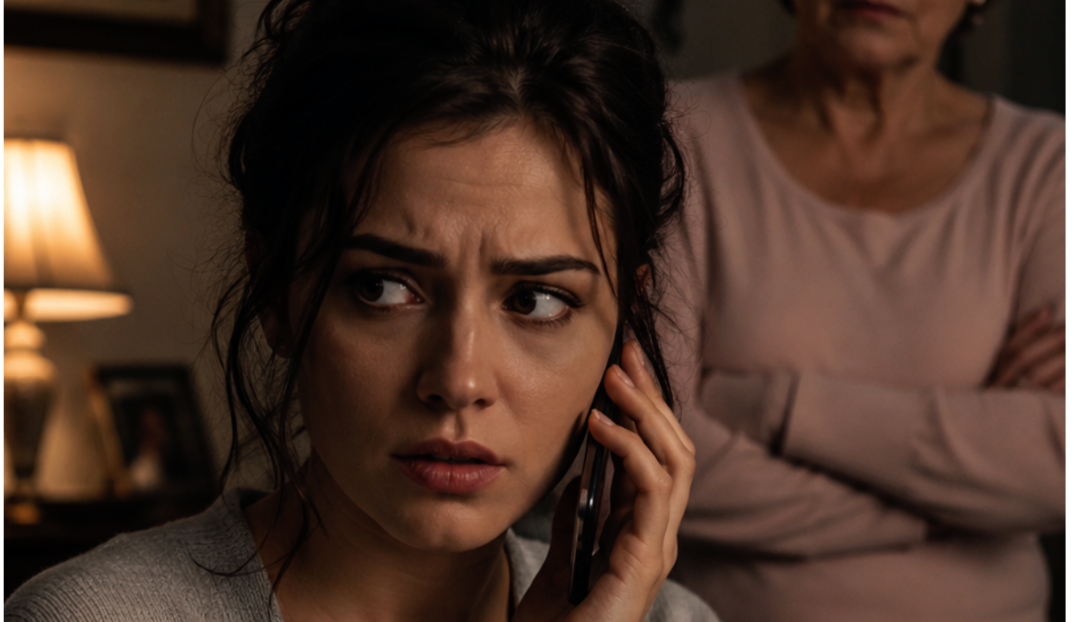
“Verochka, I heard about your inheritance and immediately decided to call,” her mother-in-law began speaking with unexpected tenderness.
Vera looked at the phone screen as if it were showing her not a person’s name, but a storm warning.
The display read: Valentina Pavlovna.
Her mother-in-law.
For the past few months, she had barely called Vera directly. If something needed to be passed along, found out, or requested, Valentina Pavlovna acted through her son. She would ask Artyom to find out when they were coming to the dacha. Or tell him to pass on that her blood pressure had gone up. Or suddenly remember that she had not seen her grandson in a long time, even though only a month earlier she herself had refused to come to his school event because “the train is inconvenient.”
Vera stood in the middle of the kitchen with a towel in her hands and stared at the phone. The stove was already turned off, chopped vegetables lay on the table, her son Lenya was muttering something over a math problem in his room, and Artyom was staying late after work. An ordinary evening. Nothing special.
Except for this call.
The phone kept vibrating on the countertop, inching toward the very edge. Vera managed to catch it at the last second. For a few moments she looked at her mother-in-law’s name, then finally answered.
“Yes, Valentina Pavlovna.”
“Verochka, hello, my dear!” The voice on the other end was so soft that Vera even pulled the phone away from her ear and looked at the screen again.
It was the same number.
“Hello,” she said cautiously.
“How are you? How is your health? How is your mood? You must be so tired. Work, home, the child… Everything is on you, poor thing.”
Vera slowly lowered the towel onto the edge of the table. The last time her mother-in-law had called her “poor thing” was the day she had come over without warning and saw that Vera had ordered food delivery instead of making a homemade dinner. Back then, Valentina Pavlovna had said in a completely different tone:
“My poor son, living on convenience food.”
Since then, in their family, the “poor” ones were usually only Artyom’s side.
“Everything is fine,” Vera replied. “Thank you.”
“And how is dear Lenya? Studying? Not sick?”
“He’s studying. He’s doing homework now.”
“My clever boy. I’ll have to buy him something. I saw a craft set recently, such a nice one. I thought: Lenya would like that.”
Vera remained silent.
In seven years of life with Artyom, she had learned Valentina Pavlovna’s intonations well. She had one voice for neighbors, another for doctors, and another for relatives from whom she needed something. Today it was precisely the third version: warm, rounded, cautious, as if each word had been greased in advance so it would slide through more easily.
“Did you want something?” Vera asked directly, without rudeness.
“Oh, why are you being so formal right away? I just decided to call. I missed you. We’re not strangers, after all.”
Vera turned toward the window. Outside the glass, the courtyard was growing dark. On the playground, swings rocked without children, and the wind pushed someone’s plastic bag across the asphalt.
“We’re not strangers,” when spoken by Valentina Pavlovna, usually meant: “You are about to be asked to give in.”
Vera had already heard that phrase when her mother-in-law asked her to give her sister-in-law Svetlana an almost new garment steamer. Then when Valentina Pavlovna decided that Vera should take vacation time and sit with her sister after surgery, because Artyom “couldn’t ask for time off, he’s a man, he has a serious job.” Another time, when her husband’s relatives decided that Vera was simply obligated to let a cousin’s nephew stay with them during his exam session, even though they had a two-room apartment, a school-age child, and no extra space at all.
That was when Vera said no for the first time.
After that, Valentina Pavlovna spoke to her through Artyom for almost a month, even though they lived in the same city.
“It’s just unexpected,” Vera replied. “You haven’t called me in a long time.”
“I kept meaning to, kept thinking… And then I heard the news and realized I shouldn’t put it off. My heart told me to call.”
Vera narrowed her eyes slightly.
A week ago, she had finished handling the inheritance after the death of Aunt Raisa.
Her aunt had been her mother’s younger sister. She had no children, had buried her husband long ago, and in recent years Vera had helped her with hospitals, medicines, and documents. Not because she was waiting for an inheritance. Simply because Raisa Stepanovna had once pulled Vera herself out of a difficult period: after her mother’s death, it was Aunt Raisa who supported Vera, helped with Lenya, watched him when he was little, and gave her money when Artyom’s freelance payments were delayed and Vera had just come out of maternity leave.
After her aunt’s death, it turned out that she had left Vera a small one-room apartment on the outskirts and part of her savings. Not millions, not luxury, but for their family it was a serious support. Vera planned to fix up the apartment and rent it out, and put the money aside separately — for Lenya’s education and as a reserve, so she would never again have to ask anyone for help.
She had made no announcements, had not told everyone. She simply went to the notary, completed the documents, took the certificate, and then showed everything to Artyom at home.
At first, Artyom was pleased. He even hugged her in the kitchen and said:
“Ver, now we can finally breathe a little.”
Back then, she had also thought that they would finally be able to live more calmly.
But the very next day, her husband was speaking with his mother on the phone in the hallway with too much animation. Vera was not eavesdropping; she had simply left the room to get her charger and heard a fragment:
“Yes, she’s already completed it… No, the apartment is small… There’s money too, but she hasn’t decided yet…”
When Artyom saw Vera, he quickly changed the subject.
“Mom, we’ll talk later.”
Vera said nothing. She only noted it.
And now came the call.
“Verochka, I heard about your inheritance and immediately decided to call,” Valentina Pavlovna finally said, as if she had reached the main course after a long series of appetizers.
Vera involuntarily smirked. Not angrily, not loudly. It was just that all the details had fallen too neatly into place: the soft voice, the questions about her health, the craft set for Lenya, “we’re not strangers.”
“I see,” she said.
“Just don’t think anything bad,” her mother-in-law immediately fussed. “I mean it from the heart. It’s a big event, after all. May Raisa Stepanovna rest in peace, she was a good woman.”
Vera gripped the phone a little tighter.
Valentina Pavlovna had seen Aunt Raisa twice in her life. The first time at Lenya’s christening, the second at his fifth birthday. After the second meeting, she told Artyom that Raisa Stepanovna was “too independent and sharp-tongued.” Svetlana later accidentally passed that on to Vera, adding that “elderly women are often strange.”
“Yes, she was a good woman,” Vera replied dryly.
“And look how she took care of you. That is real family. Not like some people, who live their whole lives and leave nothing behind.”
Vera remained silent.
“What I’m calling about, Verochka… You are now the owner of another apartment.”
“I am.”
“Where is the apartment?”
“On the Sadovaya side.”
“Is that where the old five-story buildings are?”
“Yes.”
“Well, that’s all right, the location isn’t the worst. If you renovate it, someone can live there.”
Vera heard the word “live” immediately.
Valentina Pavlovna paused briefly. From that pause, it was clear she was waiting for a question. Vera did not ask one. She went to the table, sat down on a stool, and looked at the clock. Lenya had stopped muttering in his room and seemed to be listening.
“You see,” her mother-in-law continued, now less confidently, “Svetlana is in a difficult situation right now.”
Vera closed her eyes for a second.
There it was.
Svetlana was Artyom’s younger sister. She had recently turned thirty-two. She worked sometimes as an administrator in a salon, sometimes as a manager in a store, sometimes “looking for herself.” She had no husband, but she did have a six-year-old son named Platon and a habit of believing that everyone around her had to help her because she was “alone with a child.”
In reality, she had never been alone. Valentina Pavlovna watched Platon, her husband Viktor Semyonovich drove them to doctors, Artyom periodically transferred money to his sister, and Vera had several times bought the boy seasonal clothes when Svetlana once again complained that “everything had gone up in price at the worst possible time.”
“What happened with Svetlana?” Vera asked, though she no longer wanted to listen.
“The landlady of the apartment she lives in raised the rent. Completely lost her conscience. Sveta is crying, Platosha is nervous. A child shouldn’t live in constant fear that they’ll be thrown out.”
“I understand.”
“So I thought… Your apartment is empty now.”
“It isn’t empty. My aunt’s things and documents are there. They need to be sorted out and cleaned.”
“Well, the things can be moved. We’ll help. Sveta is tidy, she’ll keep everything safe. She can live there for now.”
Vera opened her eyes and looked at the wall opposite. On the refrigerator hung Lenya’s drawing: a house, a tree, and three people. He had drawn himself in the middle, Vera on the left, Artyom on the right. All of them had enormous smiles.
“For now — how long is that?” Vera asked.
“Well, why talk about deadlines right away? Until she gets settled. Until life improves. You understand how hard it is with a child.”
“Valentina Pavlovna, I planned to rent this apartment out.”
Her mother-in-law seemed not to hear.
“Verochka, how can you rent it to strangers when family is in trouble? You’re a mother yourself. Imagine if Lenya ended up in such a situation.”
“I am thinking about Lenya. This money is needed for him.”
Her mother-in-law’s voice grew thinner.
“Doesn’t Artyom earn? Or have you now decided to save separately from the family?”
“This is an inheritance from my aunt.”
“But you’re married. The family is still shared.”
Vera exhaled slowly.
She had clarified the legal side immediately. The inherited apartment belonged only to her. It was not divided, was not considered jointly acquired property, and did not depend on whether it was received before or during the marriage. Raisa Stepanovna had repeated while she was still alive:
“Verka, keep the documents with you and don’t let anyone pretend that what’s yours belongs to no one.”
Back then, Vera had laughed. Now she understood that her aunt knew people better than it had seemed.
“The apartment is mine,” Vera said calmly. “And I make the decision about it.”
“Who is arguing?” Valentina Pavlovna replied quickly. “No one is taking it away. Just to live there. Sveta is your husband’s own sister. Platon is your nephew. Surely you wouldn’t take money from them?”
“If they live in my apartment, then there will be an agreement and payment.”
The other end went quiet.
“An agreement? With family?” her mother-in-law finally asked again.
“Yes.”
“Verochka, are you serious right now?”
“Absolutely.”
“I don’t recognize you. You used to be kinder.”
Vera looked at her hand. On her finger shone the ring Artyom had given her for their fifth anniversary. Back then, they celebrated modestly, just the two of them, while Lenya was with her friend. Artyom said beautiful words, promised that he would always be on her side, that they were one team.
Vera very much wanted to believe that was still true.
“I haven’t become cruel,” she said. “I’ve become more attentive.”
“To what?”
“To what people call help.”
Valentina Pavlovna inhaled sharply.
“So you refuse?”
“I stated the conditions. An agreement, normal payment, responsibility for utilities and the condition of the apartment. If that suits Svetlana, we can discuss it.”
“Where would she get money for payment? I told you, she’s in trouble!”
“Then she needs to look for an option within her means.”
Her mother-in-law no longer tried to sound affectionate.
“I understand. Money matters more to you than family.”
“No,” Vera answered. “It’s just that my family is not only your requests. It is also my son, my safety, and the memory of my aunt, who did not save all her life for Svetlana.”
“Oh, so that’s how you speak now.”
“As it is.”
“I’ll talk to Artyom.”
“Do that.”
Vera did not hang up first. She waited until Valentina Pavlovna ended the call herself. When short beeps sounded in the receiver, she placed the phone face down.
Lenya peeked out of his room.
“Mom, is everything okay?”
He was nine. He already understood more than adults would have liked to show him. He had Artyom’s eyes and her habit of wrinkling his forehead when something did not add up.
“Everything is okay,” Vera said more softly. “Did you solve the problem?”
“Almost. It’s about trains, and they’re moving toward each other. I don’t understand why they have to move toward each other at all if they could just call each other.”
Vera laughed quietly.
“A logical question. Let’s take a look.”
She went to her son, sat beside him, took a pencil, and began drawing a diagram. For a while, the apartment was calm: paper rustled, Lenya argued with the wording of the problem, the kettle clicked in the kitchen. Vera almost convinced herself that the conversation with her mother-in-law could be postponed until tomorrow.
But Artyom came home an hour later, and from his face she immediately understood: Valentina Pavlovna had not waited.
Her husband took off his jacket in the hallway too sharply and placed his keys on the cabinet with such a sound that Lenya looked out of his room.
“Dad, hi.”
“Hi, champ,” Artyom tried to smile, but the smile came out crooked. “Did you finish your homework?”
“Yes.”
“Go to your room for now. I need to talk to Mom.”
Lenya looked at Vera. She nodded.
“Go. I’ll come in later.”
When the door to the child’s room closed, Artyom went into the kitchen. He did not sit down. He stayed standing by the table with his arms crossed.
“Mom called.”
“I guessed.”
“Ver, what was that?”
“A conversation.”
“Don’t do that. She’s upset.”
“Because of what?”
“Because of your tone. She wanted to ask normally.”
Vera looked at her husband carefully. There was no anger in him, at least not yet. He looked tired, irritated, and at the same time already confident in advance that he would have to “sort out women’s emotions.” That expression had been appearing on his face more and more often whenever the conversation concerned his mother or sister.
“Artyom, your mother wanted to move Svetlana into my apartment for free and without any deadline.”
“Well, not forever.”
“For how long?”
“Until things get better for her.”
“So, without a deadline.”
He ran his hand over his face.
“Ver, Sveta has a child. She really got squeezed by the rent. You see what’s happening now.”
“I do. That’s why I planned to rent the apartment out officially, so we would have additional income.”
“We?” Artyom caught onto the word. “So when there’s income, it’s ours, but when it’s time to help my sister, the apartment is yours?”
Vera stood up and cleared Lenya’s cup from the table. Not because the cup was in the way. She needed to keep her hands busy.
“The apartment is mine in any case. I planned to use the income for our family because I considered us partners.”
“And now you don’t?”
“Now I’m trying to understand whether you do.”
Artyom frowned.
“Don’t twist this. We’re talking about a specific situation. My sister may end up without housing.”
“She won’t end up without housing. She has parents. There’s a free room in your three-room apartment.”
“Mom and Dad are elderly. It’s hard for them with a child.”
“Valentina Pavlovna watches Platon almost every day.”
“That’s different.”
“Of course,” Vera nodded. “When help is needed from your mother, it’s difficult. When it’s from me, it’s normal.”
Artyom abruptly pushed back a chair and finally sat down.
“You’ve become kind of harsh after this inheritance.”
“I’ve become what I should have been long ago.”
“What does that mean?”
Vera leaned against the counter.
“It means that over the past few years, I gave in many times. Your sister asked for money — we gave it. Your mother came without warning — I rearranged plans. Your cousin’s nephew had nowhere to stay — you thought I was obligated to make room. When Lenya was sick, your mother couldn’t come because she had to go to Sveta. When I needed a medical checkup, you said you would drive me, and then you went to fix your parents’ faucet because your mother called in the morning and said it was dripping.”
“Well, I couldn’t just abandon them.”
“But you could abandon me?”
He opened his mouth, but did not immediately find an answer.
“Ver, you’re mixing everything together.”
“No. I’m just calling things by their names for the first time.”
The silence between them became dense. From the child’s room came the sound of Lenya clicking the buttons on his desk lamp.
Artyom spoke more quietly:
“Listen, let’s do this like human beings. Let’s let Sveta stay for a couple of months. She’ll find a better job, save a little, and move out. We won’t lose anything.”
“We’ll lose income for those months. I’ll lose control over the apartment. And if Svetlana gets used to living there for free, will you be the one to evict her later?”
“Why talk about eviction right away?”
“Because ‘a couple of months’ for your sister can easily turn into ‘just a little longer.’ You know that yourself.”
Artyom looked away.
He knew.
Several years earlier, Svetlana had already borrowed Artyom’s car “for a couple of weeks” because she needed to take Platon to the clinic. She returned it three months later, with a scratch on the door and an empty tank. Back then, Artyom told Vera:
“Don’t start. She has a child.”
Then she had left boxes at their place “for a few days” after moving. The boxes stood in the hallway for almost half a year until Vera herself took them to Valentina Pavlovna.
“Sveta isn’t a stranger,” Artyom said, now without his former confidence.
“Not to you. To me, she is a person who is used to taking and getting offended when conditions are set for her.”
“You just don’t like her.”
“I’m not obligated to love her. Respecting boundaries is enough. That is what she has trouble with.”
Artyom stood up.
“I didn’t think you would act like this.”
“And I didn’t think you would demand that I give your sister an apartment without even asking what my plans were.”
“I’m not demanding.”
“Then the conversation is over.”
He smirked.
“Convenient.”
“No, Artyom. It is not convenient. It is very inconvenient. I just no longer want to pay with my peace of mind so that everyone around me can be comfortable.”
That evening, they barely spoke again. Vera put Lenya to bed, checked his backpack, and laid out his clothes for the next day. Artyom sat in the living room with his phone. Sometimes the screen lit up, and he quickly replied to someone’s messages. Vera did not ask whom. She already knew.
In the morning, everything looked almost normal. Artyom drank coffee, Lenya searched for his indoor shoes, and Vera packed a container of food for work. No one raised their voice, but the air in the apartment was uneven, as if after an argument the furniture had stayed in place, yet the usual order had still been disturbed.
Before leaving, Artyom lingered in the hallway.
“Mom is inviting us for lunch on Saturday.”
“Me too?”
“All of us.”
“Why?”
“To talk normally.”
“About the apartment?”
“Among other things.”
Vera looked at her son. Lenya pretended to be fussing with his shoelace, though he was listening carefully.
“I’ll think about it.”
“Ver, don’t start a war.”
“The war is started by the person who comes for what belongs to someone else and gets offended by the word no.”
Artyom clenched his jaw.
“This is my family.”
“And what are Lenya and I?”
He did not answer.
On Saturday, Vera went after all. Not because she intended to give in. On the contrary. She wanted to hear everything directly one time, so there would be no more doubts about who wanted what.
Valentina Pavlovna lived with Viktor Semyonovich in an old brick building not far from the center. Their apartment was spacious, with a long hallway, a large kitchen, and heavy furniture that her mother-in-law called “real, not like what they make now.” Vera always felt like a guest there, even after the wedding. They did not offer to let her take off her coat herself — they took it from her with a look of household control. They did not ask where it was comfortable for her to sit — they pointed out her place. On the family photographs in the living room were Artyom, Svetlana, Platon, Viktor Semyonovich, Valentina Pavlovna herself, distant relatives, even a neighbor girl whom the family had known since childhood. Vera was not on the wall in a single picture.
Lenya was. Once — in a group photo from New Year’s.
When they entered, Svetlana was already sitting in the kitchen. Platon was spinning around nearby with a toy car. Svetlana looked dressed up: a light sweater, large earrings, neat styling. Vera noted it without judgment, simply automatically. A person who was “in desperate trouble with money” looked as if she had prepared for the family council for at least an hour.
“Oh, you’re here,” Svetlana said. “Hi.”
“Hi,” Vera replied.
Lenya greeted everyone and immediately went with Platon to the room where the toys were. Vera watched her son go. She did not want him to hear the conversation, which was clearly going to be unpleasant.
The table was already set with plates, cold cuts, salad, and a hot dish. Valentina Pavlovna bustled around the stove, but the bustle was theatrical. She adjusted the towel, moved spoons around, and sighed.
“Sit down,” she said. “We’ll eat now, then talk.”
“Let’s talk first,” Vera suggested.
Her mother-in-law turned around.
“Serious matters aren’t settled on an empty stomach.”
“I’m not hungry.”
Artyom threw her a warning look. Vera pretended not to notice.
Svetlana leaned back in her chair.
“What is there to settle? Honestly, I didn’t even think this would be such a problem. The apartment is just sitting there, and I have nowhere to live. It’s simple.”
“The apartment isn’t just sitting there,” Vera said. “I plan to rent it out.”
“You can rent it later. I’m not staying forever.”
“For what period?”
Svetlana shrugged.
“As it works out. Can anyone plan anything now? I have a child.”
“That is not a period.”
“God, Vera, you’re talking like I’m a stranger.”
“Precisely because we’re not strangers, I’m speaking directly.”
Viktor Semyonovich, usually silent, cleared his throat.
“Maybe it really should be formalized somehow… so everyone can feel calm?”
Valentina Pavlovna shot a sharp look at her husband.
“Vitya, don’t start.”
“What?” He spread his hands. “The apartment is Vera’s. If Sveta moves there, the conditions need to be clear.”
Svetlana turned to her father in displeasure.
“Dad, you too?”
“I’m not ‘too.’ I’m for order.”
Vera unexpectedly felt grateful to her father-in-law. Viktor Semyonovich rarely interfered, more often retreating from conflict into silence. But now his simple phrase sounded almost like support.
Valentina Pavlovna sat down at the table.
“All right. Let’s talk about conditions. What conditions do you want, Verochka?”
Again that “Verochka.” No tenderness now. With pressure.
“A rental agreement. Payment below market rate, if you want, but not free. Utilities separately. A term — for example, three months. After that, either renewal by mutual agreement or Svetlana moves out. No rearranging furniture in the apartment, no removing my aunt’s belongings, no bringing in other residents without my consent. If something is broken because of the tenant, the tenant pays for repairs.”
Svetlana snorted.
“Are you serious right now? What am I, some tenant off the street?”
“You will be living in an apartment that does not belong to you. So yes, conditions are necessary.”
“I’m your husband’s sister!”
“The apartment is not my husband’s.”
Artyom sharply lifted his head.
“Ver.”
“What?”
“Could you be softer?”
“You could have asked more softly,” she answered.
Valentina Pavlovna placed her palms on the table.
“Vera, you have changed a lot. Money spoils people. I’ve always said that.”
“Money didn’t change me. Situations changed me — situations where convenience was expected from me instead of respect.”
“Who doesn’t respect you?” Svetlana protested. “You were asked to help! A normal woman would understand the situation.”
“A normal woman protects her child and her property first.”
“And my child doesn’t count?”
“Your child is your responsibility.”
Svetlana flushed.
“Excellent. So when you needed Mom to watch Lenya, you didn’t remember responsibility then?”
Vera slowly turned toward her mother-in-law.
“Valentina Pavlovna watched Lenya twice. Once for three hours when I had to go to the doctor with a high fever. The second time for a parent-teacher meeting because Artyom was late. And both times I was reminded afterward as if the whole household had raised my child.”
Artyom stood up.
“Enough.”
“No,” Vera raised her voice for the first time all morning, but did not break. “Not enough. Since we were invited here to talk normally, let’s talk normally. For many years I pretended not to notice. How your sister can ask, but I cannot refuse. How your mother can say hurtful things under the guise of care, and I am supposed to smile. How every time you stand between us in such a way that somehow I must give in, not they must stop.”
“You are humiliating my family right now,” Artyom said.
“No. I am describing my life next to it.”
The kitchen became quiet. Even Svetlana did not immediately find a reply.
Viktor Semyonovich stood up and went into the hallway.
“I’ll go check on the children.”
When he left, Valentina Pavlovna spoke openly harshly:
“Vera, you must understand. Artyom is your husband. His sister is part of your family. If the family has an opportunity to help, decent people help. And you are clinging to this apartment as if you’re planning to take it to the grave with you.”
Vera turned pale, but did not back down.
“It was left to me by a person who, in her final years, needed help more than all of you combined. And almost no one visited her except me. When Aunt Raisa was lying there after surgery, I took time off. When she needed to go to the clinic, I drove her. When she forgot to pay utilities, I handled it. When she became ill at night, I left Lenya with a neighbor and rode to her in the ambulance. Where was your big family then, the one that now speaks so confidently about my duty to share?”
“That was your aunt,” Svetlana said.
“Exactly.”
Artyom sat back down. Vera looked at him and understood: he heard her, but did not want to accept it. It was easier for him to think she was stubborn than to admit that his relatives were too freely disposing of what belonged to someone else.
“Ver,” he said tiredly, “let’s talk at home. Not here.”
“No. It started here, and it will end here.”
Svetlana leaned forward.
“All right. How much do you want?”
“I already said: below market rate, but with an agreement.”
“Specifically.”
Vera named the amount. It was almost half the average rent in that area.
Svetlana laughed.
“Are you mocking me? I don’t have that kind of money.”
“Then this option doesn’t work for you.”
“And if Artyom pays?” Valentina Pavlovna suddenly asked.
Vera looked at her husband.
Artyom lowered his eyes.
And in that moment, everything became even clearer.
“So the plan is this,” Vera said slowly. “Svetlana lives in my apartment. My husband pays for her out of our family budget. I lose the chance to rent out the housing and, in effect, pay for your family’s help myself.”
“Don’t distort things,” Artyom said.
“I’m not distorting anything. I’m calculating.”
Svetlana jumped up.
“Choke on your apartment then! I thought you might turn out to be human.”
“I remain human. Just a human being with boundaries.”
“Boundaries!” Svetlana mimicked her. “Everyone thinks they’re so smart now. They pick up words and run around with them.”
Vera stood up.
“We’re leaving.”
“Of course, leave,” Valentina Pavlovna threw out. “Just don’t be surprised later if people’s attitude toward you changes.”
Vera picked up her bag.
“It has already changed. I just stopped pretending I didn’t see it.”
Artyom did not move.
“Are you coming with us?” she asked.
He looked at his mother, at his sister, then at Vera.
“I’ll come later.”
Those two words struck harder than the entire morning conversation.
Vera nodded.
“All right.”
She went into the hallway, called Lenya, and helped him get dressed. Viktor Semyonovich stood by the door and looked confused.
“Vera, don’t be angry with us old people.”
“I’m not angry with you, Viktor Semyonovich.”
He said quietly:
“Don’t hand over the apartment without paperwork. Later you’ll be the one blamed.”
Vera looked at him with unexpected warmth.
“I know.”
“And take care of the boy.”
“I am.”
She and Lenya rode home by bus. Her son sat beside her, clutching his backpack. For some time he was silent, then asked:
“Mom, will Aunt Sveta live in Auntie’s apartment?”
“No.”
“Because she was yelling?”
“Because the apartment is needed by us. And because adults should make honest agreements.”
Lenya thought.
“Why did Dad stay?”
Vera looked out the window. Outside the glass, bus stops, shop windows, and people with bags flashed by.
“He needs to talk to Grandma.”
“Is he angry with us?”
“I don’t know.”
“Are you?”
Vera turned to her son.
“I’m not angry with you. Never think that adult quarrels are because of children.”
Lenya nodded, but it was clear that the answer had not fully reassured him. He leaned against her shoulder. Vera put one arm around him and, for the first time in a long while, allowed herself not to keep her face composed, at least in front of the bus window.
Artyom returned late. Lenya was already asleep. Vera was sitting in the kitchen with Aunt Raisa’s documents. She had sorted them into folders: the certificate of inheritance rights, the extract from the real estate register, receipts, old utility contracts. Beside them lay a notebook where she had written what needed to be done in the apartment: remove the old sofa, replace the faucet, check the wiring, order cleaning, buy a simple refrigerator for future tenants.
Artyom came in, saw the documents, and grimaced.
“You decided to deal with this today?”
“Yes.”
“To spite everyone?”
“No. Because it needs to be done.”
He sat opposite her.
“Mom cried.”
“And Svetlana?”
“Sveta was hysterical. Dad was silent.”
“And you?”
“I tried to explain that you’re not as bad as you looked.”
Vera looked up at him.
“How generous.”
“Don’t start.”
“Artyom, do you really think I was the one who looked bad today?”
He tiredly rubbed the bridge of his nose.
“You could have agreed at least temporarily. I would have made sure Sveta didn’t get arrogant.”
“You didn’t make sure when she drove your car for three months. You didn’t make sure when her boxes stood in our hallway. You didn’t make sure when your mother discussed in front of me that I was raising Lenya wrong. Why should it be different now?”
“Because I promise.”
Vera looked at him for a long time. Earlier, that word would have been enough for her. She would have believed him, relaxed, and given in. Then she would have dealt with the consequences herself, while Artyom said: “Well, what can we do now?”
“No,” she said.
“So you don’t trust me?”
“On this issue — no.”
He stood up abruptly.
“Wonderful. So we’ve talked.”
“Yes. Finally honestly.”
The following days passed in a strange mode. They lived in the same apartment, took care of the child, went to work, discussed household matters, but between them lay not one argument, but something much deeper. Artyom became dry and spoke briefly. Vera did not try to shake him out of it. She dealt with the inherited apartment.
On Saturday, she went there alone.
Aunt Raisa’s apartment greeted her with silence and the smell of old paper. Vera opened the windows, let in the cold air, and walked through the rooms. It was a small one-room apartment, but bright. Empty flowerpots stood on the windowsill, several of her aunt’s dresses hung in the wardrobe, and buttons lay in a jar in the kitchen. Vera touched the lid of the jar and suddenly remembered how, as a child, Raisa Stepanovna had let her sort through those buttons, arrange them by color, and imagine that each one was a precious stone.
She had not cried at the funeral. She could not. She had held herself together, run around with documents, answered calls, calmed Lenya. But now she stood alone in her aunt’s kitchen and felt something tremble in her face. She leaned her palms on the table and looked for a long time at the patch of light on the floor.
“Well, Aunt Raisa,” she said quietly. “It has begun.”
It seemed to her that her aunt would have replied with something sharp and funny. For example:
“And what did you think, that they’d bring you flowers? They brought a calculator.”
Vera spent almost the whole day in the apartment. She sorted through part of the cupboards, set aside things for a charity collection point, and separately stacked photographs and letters. Among the papers, she found an old envelope with her surname on it. Her heart began to beat faster.
Inside was a note from Aunt Raisa. Only a few lines, written in her uneven handwriting:
“Vera, if you’re reading this, then I’m already gone. Keep the apartment for yourself. Don’t sell it in a rush and don’t let in those who start pressing on pity. Pity is a bad contract. Help only when you yourself decide to, not when you’ve been cornered. Say hello to Lenya. He’s a good boy. Your Aunt Raya.”
Vera reread the note three times. Then she carefully put it in her bag, in a separate pocket.
When she returned home that evening, Artyom was in the kitchen. A cup stood in front of him, and his phone lay screen up. Messages from Svetlana were flashing on the screen.
Vera had not intended to look, but she still managed to notice one:
“If she won’t give the apartment, let her at least give money. It fell from the sky for her anyway.”
Vera stopped in the doorway.
Artyom quickly locked the phone.
“How is the apartment?” he asked.
“It’s still standing.”
“Ver…”
“I saw the message.”
He was silent.
“Sveta is writing out of emotion.”
“Very precise emotion.”
“Don’t cling to it.”
“I’m not clinging. I’m drawing conclusions.”
She went into the room, took Aunt Raisa’s note out of her bag, and put it in the drawer with her personal documents. Then she returned to the kitchen.
“Artyom, I want to say this right away. I will not give Svetlana money either.”
He exhaled sharply.
“No one is asking.”
“She is. Just through you for now.”
“She’s desperate.”
“She is an adult woman. She has a job, parents, and the ability to look for other housing. I am not obligated to pay for her habit of living at the expense of other people’s decisions.”
“You’ve become very cold.”
Vera sat across from him.
“No. A cold person would not have cared for a sick aunt. Would not have bought winter boots for your nephew. Would not have tolerated your mother’s barbs for years. I am not cold. I am tired of being convenient.”
Artyom was silent.
“And one more thing,” Vera continued. “On Sunday, I’m meeting a realtor. I’m going to rent the apartment out officially.”
“You’ve already decided?”
“Yes.”
“Without even discussing it with me?”
“I did discuss it. You wanted to move Svetlana in there. I refused. Now I’m dealing with my apartment.”
“Does our marriage matter to you at all?”
Vera looked at him for a long time, calmly.
“It matters. That is why I’m speaking honestly instead of silently storing resentment. But if marriage means to you that I must give my resources to your relatives in order to earn normal treatment, then we have different ideas of family.”
He smirked without joy.
“You speak beautifully.”
“Life shows things ugly.”
A week later, the apartment had been put in enough order to show it. Vera did not make expensive investments: she called a handyman to replace the faucet, had the outlets checked, bought a new mattress, ordered cleaning, and left some of her aunt’s sturdy, neat furniture. The realtor, a woman named Galina, inspected the apartment and said:
“We’ll rent it out quickly. Quiet area, transport nearby. Just prepare the documents.”
Vera had the documents ready.
The first suitable tenant turned out to be a music teacher, Tamara Igorevna, a woman of about forty-five. She came to view the apartment with her sister, carefully inspected the kitchen, asked about the neighbors, the payments, and the agreement. Vera liked that she did not try to bargain to the point of humiliation and did not press on pity.
“It’s important for me to live peacefully,” Tamara Igorevna said. “I’m divorced. I want a place where no one comes without asking.”
Vera involuntarily smiled.
“It is important to me too that everything be calm.”
They agreed.
That evening, Vera told Artyom about it.
He froze.
“You already rented it out?”
“We’ll sign the agreement tomorrow.”
“Do you understand that now Sveta definitely has nowhere to go?”
“No. Now Svetlana definitely has nowhere to go in my apartment.”
“Mom won’t survive this.”
“She will. She’s an adult.”
“You’re talking about my mother.”
“And you’re talking about my apartment as if I stole it from your family.”
Artyom slapped his palm on the table. Not hard, but Lenya went silent in his room.
“What happened to you?”
Vera stood up.
“Don’t hit the table. The child can hear.”
Artyom looked toward the child’s room and lowered his voice.
“Sorry.”
“Not to me. To him.”
He went to Lenya’s room. Vera heard her husband quietly say:
“Champ, everything is fine. I just lost my temper.”
Lenya answered something indistinct.
When Artyom returned, some of the anger seemed to have drained from him. He sat down, lowered his head.
“I don’t know how to be between you.”
“You don’t need to be between us. You need to stand beside the person you’re building a life with.”
“They are my mother and sister.”
“And I am your wife. Lenya is your son.”
“I understand that.”
“Understanding isn’t enough.”
He raised his eyes.
“What do you want from me?”
Vera did not answer immediately.
“For you to stop bringing other people’s demands into our home and calling them family matters. For you not to discuss my inheritance with your mother without my consent. For you not to promise behind my back what does not belong to you. And if your relatives speak badly about me, for you not to sit silently beside them.”
Artyom rubbed his palms.
“I didn’t promise the apartment.”
“But you gave hope.”
“I thought you would agree.”
“Because I used to agree.”
He did not argue.
The next day, the agreement with Tamara Igorevna was signed. Vera received the first payment and put the money into a separate account. She did not hide it or make it a secret. She simply showed Artyom:
“This is an account for Lenya and for an emergency cushion.”
He looked at it.
“I understand.”
“You can participate in decisions about our shared life. But not in distributing my inheritance among your relatives.”
“I understand.”
She was not sure he understood completely. But for the first time, at least he did not argue.
Svetlana called two days later. Vera saw the name on the screen and was slightly surprised: her sister-in-law usually texted, she did not like calling.
“Yes, Sveta.”
“Well, congratulations,” she said without greeting. “You rented it out after all.”
“Yes.”
“To some stranger woman.”
“To a tenant under an agreement.”
“And your own nephew can live wherever he wants.”
“Platon lives with his mother.”
“Do you understand that I’m now moving in with my parents? And Mom will suffer.”
“That is your family decision.”
“My family decision? Then who are you?”
Vera looked at her aunt’s note lying under a transparent folder on the table.
“I am the person you remember when you need an apartment or money.”
Svetlana fell sharply silent.
“You were always only thinking of yourself.”
“Perhaps.”
“Artyom will regret marrying someone like you.”
“That is for him to decide.”
“Don’t expect Mom to forgive you.”
“I didn’t ask her for forgiveness.”
Svetlana hung up.
After that, a cold war began. Valentina Pavlovna stopped calling Vera entirely. She called Artyom often. Sometimes he went to talk in the bathroom or on the balcony, thinking Vera could not hear. She did not hear the words, only the tone: tired, justifying himself. Several times he returned irritated, but he no longer tried to start a conversation about the apartment.
Svetlana really did move in with her parents. A week later, Valentina Pavlovna sent Artyom a long message about how there was noise in the apartment, Platon scattered toys everywhere, Svetlana cried, and Viktor Semyonovich had begun going out for walks longer than usual. At the end, it said:
“This is what Vera’s stubbornness has led to.”
Artyom showed the message to his wife himself.
“I don’t know what to answer.”
Vera read it and handed the phone back.
“Answer that Svetlana made the decision to move in with her parents. I didn’t move her there.”
Artyom silently typed something. Vera did not check.
A month after renting out the apartment, something happened that she did not expect.
Viktor Semyonovich called.
“Vera, hello. Are you busy?”
“Hello. No, go ahead.”
“I wanted to apologize.”
Vera even stopped in the middle of the corridor at work.
“For what?”
“For that whole circus. I was silent too much back then. I should have said earlier that the apartment is yours and no one had any business laying claim to it.”
“You did say it back then.”
“I didn’t say enough. Valya and Sveta are nagging me now, but I tell them: there was no reason to count on it. Sveta has already found a room near Platon’s kindergarten. Cheaper than the previous apartment. She simply wanted something better and free.”
Vera smiled for the first time in a long while.
“Thank you for saying that.”
“Don’t press Artyom too hard,” he asked after a pause. “He isn’t bad. He just got used to his mother giving orders and him smoothing things over.”
“I know he isn’t bad.”
“But smoothing things over at your expense isn’t allowed.”
“That is what he has to understand himself.”
“He will. If he isn’t a fool.”
Vera came home calmer that day. She did not tell Artyom about the call from his father. Not because she was hiding it. It was simply not a conversation for reporting.
But that evening, Artyom began himself.
“Dad called today.”
“To you?”
“Yes. He told me to stop being a messenger between Mom and our family.”
Vera raised her eyebrows.
“Just like that?”
“Almost. He also said that if I lose my wife because of Sveta’s rent, I’ll be the stupidest man in the neighborhood.”
Vera could not help laughing quietly.
Artyom also smirked, but quickly became serious.
“Ver, I really am guilty.”
She looked at him carefully.
“Of what exactly?”
He understood that a general “I’m guilty” was no longer enough for her.
“Of telling Mom about the inheritance without your permission. Of deciding that you would agree because you used to agree often. Of leaving you alone against everyone at my parents’ place. And of not understanding right away: I was demanding not help, but a concession at your expense.”
Vera was silent. Inside her, there was no triumphant victory. Rather, a weariness that had finally been given permission to sit down.
“Thank you for saying that.”
“I don’t want things to be like that between us.”
“Neither do I.”
“Mom is inviting us to Platon’s birthday next Sunday.”
Vera tensed.
“And?”
“I said we’ll come if no one bothers you with conversations about the apartment and money. If they start, we leave.”
Vera looked at her husband almost with disbelief.
“You said that?”
“Yes.”
“And what did she say?”
“She said I’m under the thumb.”
“And you?”
“I said it’s better to stand beside my wife than be convenient for all my relatives.”
Vera turned away toward the sink and picked up a sponge, though the dishes were already clean. She needed a few seconds.
“All right,” she said. “We’ll go. But if they start…”
“We’ll leave.”
Platon’s birthday was held at a children’s play center. That turned out to be a good decision: less kitchen, fewer closed family conversations, more children, noise, and entertainers. Svetlana was tense, but she held herself together. When they met, Valentina Pavlovna kissed Lenya, kissed Artyom, and gave Vera a dry nod.
“Hello.”
“Hello.”
For the first half hour, everything went calmly. The children ran around, Platon was happy with Lenya’s gift, and Viktor Semyonovich told Artyom something about repairing a bicycle. Vera had already thought the day might pass without unpleasantness.
But Valentina Pavlovna still could not hold back.
When the adults sat down at the table, she leaned toward a neighbor, some distant relative, but spoke loudly enough:
“These are the times we live in. Some people have two apartments and still won’t help family. But they’re happy to look good in front of strangers.”
Artyom immediately raised his head.
Vera calmly placed her fork beside her plate. She did not put it down sharply, but precisely placed it. Evenly, without a sudden movement.
“Valentina Pavlovna,” Artyom said.
His mother-in-law put on an innocent face.
“What did I say? I wasn’t talking about you at all.”
“You were talking about us,” he answered. “And we discussed this.”
“So now I can’t say a word.”
“You can. But not at our expense.”
Svetlana rolled her eyes.
“Here we go.”
Vera stood up.
“Lenya, get ready.”
The boy, who was just drinking juice beside Platon, looked at his mother in surprise.
“Already?”
“Yes.”
Artyom stood up too.
“Let’s go.”
Valentina Pavlovna looked confused. Apparently, she had not expected the threat to leave to turn out to be something other than a threat.
“Artyom, are you really going to take the child away from the party over one phrase?”
“Over disrespect toward my wife,” he said. “We congratulated Platon. We gave the gift. You can continue without us.”
Svetlana jumped up.
“Are you normal? This is my son’s birthday!”
“Then don’t turn it into a conversation about Vera’s inheritance.”
Vera did not add a word. She did not need to. Artyom himself helped Lenya put on his jacket, said goodbye to Platon, and gave a short nod to his father. Viktor Semyonovich sighed but said nothing. There was understanding in his eyes.
Outside, Lenya asked:
“Did we leave because Grandma was talking about the apartment again?”
Artyom crouched down in front of his son.
“We left because in a family, you can’t hurt each other and pretend nothing happened.”
“Did Grandma hurt Mom?”
“Yes.”
Lenya thought.
“Then why didn’t we leave before?”
Vera looked at Artyom. He slowly stood up.
“Because before, I didn’t understand right away what the right thing to do was,” he said.
It was not a perfect answer. But it was honest.
By winter, life gradually settled into a new routine. Tamara Igorevna paid on time, kept the apartment tidy, and once a month sent Vera a short message: “Everything is fine, the meter readings are as follows.” The rental income went into the separate account. Vera spent part of it on Lenya’s robotics classes — he had been asking for them for a long time, but they had kept putting it off. The rest accumulated.
Relations with Svetlana became cool but clear. She rented a room in the apartment of an elderly woman near Platon’s kindergarten. Vera learned this from Artyom. At first, Svetlana complained, then got used to it: the landlady turned out to be calm, got along with the child, and charged a moderate amount. A couple of months later, Svetlana got a permanent job in a sales office. Not the dream of a lifetime, but more stable than her previous attempts to “find herself.”
At first, Valentina Pavlovna held on to resentment. She did not call Vera, and in Artyom’s presence sighed that “families used to be stronger.” But after that birthday, Artyom stopped passing on those sighs as urgent news. If his mother began speaking badly of Vera, he ended the conversation. Not rudely. Simply:
“Mom, I’m not going to listen to this.”
And one day Vera heard it herself. Artyom was talking on the phone in the hallway, the door slightly open.
“No, Mom. The apartment is Vera’s. She was not obligated to move anyone in there. We have closed this topic.”
Vera stood in the room without moving. That phrase did not erase all past hurts, but for the first time in a long while she felt that beside her there was still an adult man, not only his mother’s son.
In spring, six months passed since Aunt Raisa’s death. Vera went to the cemetery alone. She bought simple flowers, cleared away dry branches, and stood by the grave. Then she took that same note from her bag and said quietly:
“I held on to it, Aunt Raya.”
The wind moved the edge of her scarf. Vera adjusted it and smiled.
“And you know, not only the apartment.”
She truly had held on to more than real estate. She had held on to the right not to justify what was hers. She had held on to her son’s peace. She had held on to a boundary that she herself had once allowed to be pushed farther and farther away. And perhaps she had given Artyom a chance to finally become not an intermediary between his mother and his wife, but a husband.
When she returned home, Artyom was making dinner. He was not doing it very skillfully: vegetables lay on the table, a bowl of chopped ingredients stood nearby, and Lenya was commanding the process, insisting that Dad was cutting everything too large.
“Mom, we’re making salad!” her son announced. “Only Dad is slow.”
“I am not slow, I am thorough,” Artyom objected.
Vera took off her jacket and went into the kitchen.
“Need help?”
Artyom looked at her.
“No. Sit down. Today we’ll do it ourselves.”
She sat by the window and, for the first time in a long while, allowed herself simply to watch. Not control, not rescue, not pick up someone else’s responsibilities, but sit and watch the two people she loved argue over a cucumber.
Suddenly, the phone on the table vibrated.
Vera looked at the screen.
Valentina Pavlovna.
Artyom saw the name too and tensed.
“Will you answer?”
Vera thought for a moment and picked up the phone.
“Yes, Valentina Pavlovna.”
Her mother-in-law’s voice sounded unusually restrained.
“Vera, hello. I won’t keep you long. I wanted to ask how Lenya is. Artyom said he’s going to robotics.”
“He is. He likes it.”
“That’s good. I’m glad.”
The pause was long. Vera had already decided that a request would appear again. But unexpectedly, Valentina Pavlovna said:
“I got carried away back then. About the apartment. It turned out wrong.”
Vera remained silent.
“Sveta seems to have settled in now. Platon has gotten used to it. So… maybe it was for the best.”
It was not a full apology. It was not a warm conversation after which everyone hugs and forgets the bad. But Vera had long stopped waiting for beautiful scenes from people. Sometimes adult life changes not through loud confessions, but through a short phrase said without the usual pressure.
“It’s good that things have improved for Svetlana,” Vera replied.
“Yes. And… tell Lenya I bought him a set. Not because I had to, but simply because I saw it and thought of him.”
Vera looked at her son. Lenya was just trying to take the knife away from Artyom because “that’s not how you cut carrots.”
“I’ll tell him.”
“Goodbye, Vera.”
“Goodbye.”
She put down the phone.
“What?” Artyom asked.
“Grandma bought Lenya a set.”
“Without conditions?”
Vera smiled slightly.
“I hope so.”
Lenya perked up.
“What kind of set?”
“I don’t know. You’ll find out when she gives it to you.”
“Just not one for little kids.”
“We’ll pass along the request,” Artyom said.
Vera looked at them and felt the kitchen fill with ordinary evening noise: the knock of a knife on a cutting board, a child’s voice, water in the sink, neighbors’ footsteps behind the wall. Everything was simple. Not perfect. Not fairy-tale-like. But real.
She remembered the call that had started everything. Her mother-in-law’s affectionate voice, the strange concern, the words about the inheritance. Back then, Vera had clearly seen for the first time: some relatives remember love precisely at the moment when they learn about someone else’s money.
But now she knew something else too.
If you stop in time, stop justifying what is yours, and do not allow pity to replace honest agreements, even the most unpleasant story can become the beginning of a different life. Not a loud one, not one meant for show, but a peaceful one. A life where help is not torn from someone’s hands, love is not measured in square meters, and family respect begins with a simple recognition: another person’s property does not become common property simply because someone finds it very convenient to think so.