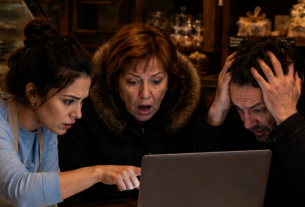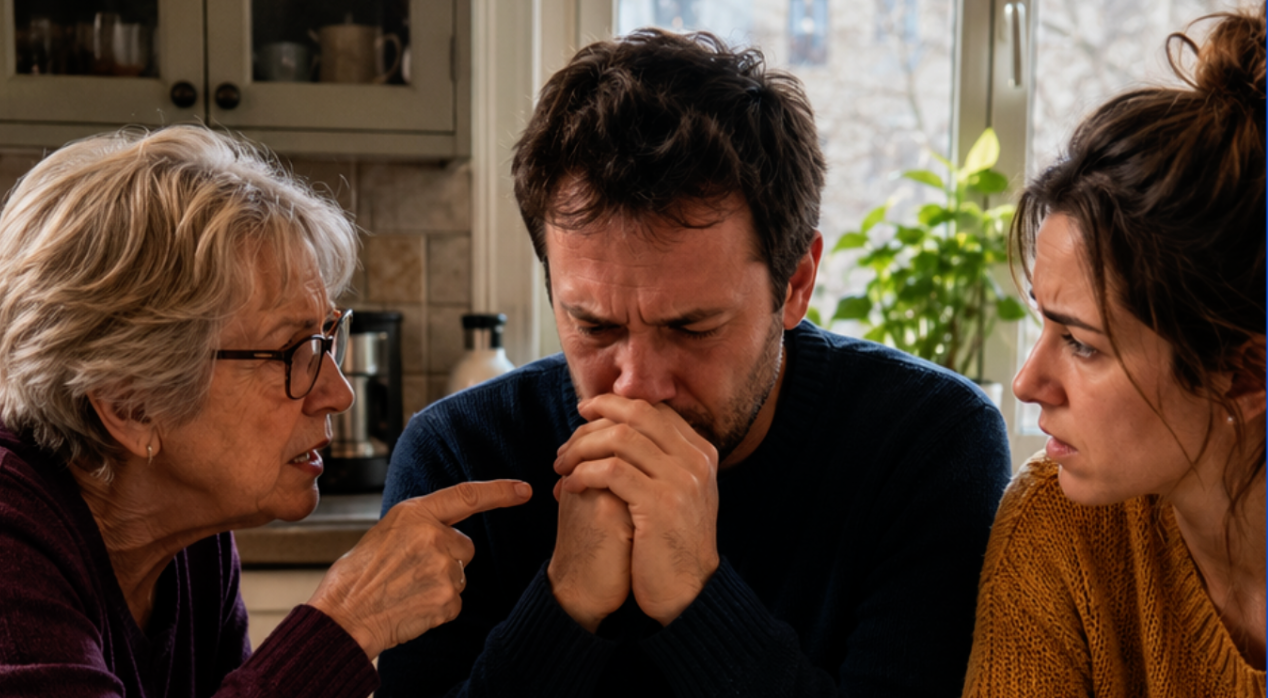
“You’ll sign the consent for my registration at the MFC tomorrow, and we won’t embarrass ourselves in front of people,” my mother-in-law said, placing her cup on the edge of my kitchen table. “Seryozha has already decided. The study suits me, and you don’t need an entire house all to yourself anyway.”
On the table beside the plates lay my passport, which Sergey had taken from the drawer in the hallway, and a printed owner’s consent form.
The guests fell silent.
My husband’s cousin Viktor looked away, the neighbor buried her face in her napkin, and Lyubov Andreyevna sat there so calmly that one might have thought we were discussing a place for her coat in the closet rather than my house.
I picked up my passport and slipped it into the pocket of my house cardigan.
“Who gave you permission to touch my documents?”
Sergey did not even look embarrassed. He sat next to his mother in a dark sweater, wearing the expression of a man tired of my “stubbornness.”
“Ksenia, don’t start. Mom will stay with us. It’s no big deal. Her apartment is on the fifth floor, and there’s no elevator. You’re not a stranger, after all.”
Lyubov Andreyevna immediately joined in.
“Exactly. Not a stranger. Although you behave as though we’re trying to live off you. Without my son, you’d be nobody, Ksenia. You’d still be sitting in your father’s old room counting pennies. It was Seryozha who brought you into a decent life.”
She said it in front of everyone.
Nine people were sitting around the table, all of whom Sergey himself had invited to a “family dinner.” Five minutes earlier, they had been praising the house, the tidy yard, and the new fence. Now every one of them pretended to be deeply fascinated by their plate.
I looked at my husband.
“Do you think that too?”
Sergey grimaced as though I had asked an inconvenient question at the wrong time.
“Mom said it harshly, but essentially she’s right. The house is big. You spend all day in your study, while Mom suffers alone in a Khrushchev-era apartment. We’re family. We have to help each other.”
“Helping means asking first,” I said. “But you’ve already brought her things here.”
Indeed, three large bags belonging to Lyubov Andreyevna stood in the hallway, along with a box of dishes and a bag containing bed linen.
She had brought everything over during the day while I was at work.
Sergey had called and informed me that “Mom just left some things here so she wouldn’t have to carry them later.”
I had said that we would talk about it that evening.
He had replied, “Just don’t make a scene. I invited guests.”
Now it was clear why the guests were there.
Sergey had assumed that, in front of other people, I would keep quiet, smile, sign the consent form, and vacate my study.
Then my mother-in-law would move in “for a month,” then “until spring,” and eventually her temporary registration would become an excuse for her to repeat that she was not a guest but practically the lady of the house.
“Ksyusha,” Sergey lowered his voice, though he spoke loudly enough for everyone to hear, “you’re an adult. Mom isn’t asking you for a share of the property. Just a room and registration so she can use the nearby clinic and sort out her documents properly. Why are you being so difficult?”
Lyubov Andreyevna smirked.
“Because she’s used to giving orders. But that doesn’t work in a family. Once you married my son, you became obligated to take his mother into consideration.”
I stood up from the table.
“Since you decided to have this conversation in front of guests, we’ll finish it in front of guests. Wait a minute.”
Sergey suddenly gripped the edge of his chair.
“Where are you going?”
“To get the documents for the house.”
He exhaled sharply and leaned back.
Lyubov Andreyevna glanced at him, and for the first time that evening, anxiety appeared on her face.
Apparently, she had not expected me to bring documents instead of excuses.
Her box labeled “Kitchen” was already standing in the study.
She had placed it right beside my desk.
Her blanket lay over my chair.
In the corner stood a bag containing her slippers.
Someone else’s belongings in my room looked more brazen than any words could have been.
I removed the blanket from the chair, placed it on top of the box, and took a folder containing copies of the property documents from the cabinet.
The originals were at my father’s house.
After the first conversation about my mother-in-law moving in, I had taken them to Pavel Grigoryevich.
He had not asked unnecessary questions. He had simply said:
“Ksyusha, when people start making decisions about someone else’s house, it’s better to keep the documents far away from those people.”
At the time, his bluntness had made me uncomfortable.
Now I was grateful to him.
When I returned to the kitchen, the guests were silent.
Sergey stared at the passport in my pocket as though I had stolen something from him.
I placed the folder beside the consent form.
“Extract from the Unified State Register of Real Estate. Owner: Melnikova Ksenia Pavlovna. House: 96.8 square meters. Land plot: eight sotkas. Address: Sosnovy settlement, 17 Lesnaya Street. Basis of ownership: deed of gift dated March 15, 2021. Donor: my father, Pavel Grigoryevich Orlov.”
Lyubov Andreyevna quickly said:
“So what? You’re married. That means the house is family property.”
“The house was gifted to me. Sergey knows that.”
“Seryozha?” My mother-in-law turned toward her son. “What is she talking about?”
My husband did not answer immediately.
He ran a hand over his face, then said:
“Mom, not now.”
“No, now,” I said. “Because a minute ago you were explaining to the guests that without your son I was nobody. Well, here’s the truth: my father gave me this house. Before moving here, Sergey lived in a rented apartment. He entered this house as my husband, not as its owner.”
Viktor finally raised his eyes.
“Seryoga, is the house really registered in her name?”
“Stay out of it,” Sergey snapped irritably.
“I’m not interfering. I’m asking because you’re demanding her signature in front of everyone.”
Lyubov Andreyevna abruptly picked up the consent form and pulled it toward herself.
“No one is taking her house away. I only need registration and a room. A normal daughter-in-law would have offered on her own.”
“A normal mother-in-law would have asked first whether she was allowed to live in someone else’s house,” I replied. “She wouldn’t bring in her bags while the owner was at work.”
Sergey jumped to his feet.
“Enough. You’re deliberately humiliating us.”
“Me?” I pointed at my passport. “You took my document from the drawer and placed it beside a consent form I had never seen. Your mother put her belongings in my study. The two of you decided for me who would live in my house.”
The table fell silent again.
But it was no longer the awkward silence in which everyone waited for the victim to swallow the insult.
Now the guests understood that they had not been invited to dinner.
They had been invited to serve as pressure.
The neighbor stood up first.
“Ksenia, I think we should go. I’m sorry. I didn’t know this was what was happening.”
Her husband rose after her.
Then another couple.
No one stayed to finish the meat Sergey had so carefully bought for the “family evening.”
Viktor lingered at the door and said to my husband:
“You shouldn’t have done this in front of people. You really shouldn’t have.”
When the door closed, Lyubov Andreyevna dropped her polite tone.
“Seryozha, are you going to keep quiet? Your wife humiliated your own mother in front of the neighbors!”
“I didn’t humiliate anyone,” I said. “Your belongings are in the hallway and the study. Take them away today.”
My mother-in-law spun toward me.
“You’re throwing me out?”
“I never gave you permission to move in.”
“I’m your husband’s mother!”
“You are not the owner of this house.”
Sergey approached the table and tried to take the folder.
I put my hand on top of it.
“Don’t touch it.”
“Ksenia, don’t push this too far. Are those copies?”
“Yes. The originals aren’t in the house.”
He froze.
At that moment, I realized I had hit closer to the truth than I intended.
That meant the thought of the documents had already crossed his mind.
Maybe not today.
Maybe later.
But it had.
“Do you think we’re thieves?” he asked.
“I think that after seeing my passport on the table and your mother’s bags in my study, my documents should be kept somewhere no one can reach them.”
Lyubov Andreyevna threw up her hands.
“So this is the gratitude we get! My son fed her, helped set up the house, and now she’s practically calling his mother a thief!”
I turned toward her.
“Sergey did not buy this house. He did not register it in his name. He did not pay off a loan for it. His contribution to this house was ordinary married life: fixing a faucet, bringing home boards, assembling a wardrobe. That does not give him the right to move his mother in without the owner’s consent.”
Sergey gave a bitter laugh.
“So I’m nobody here?”
“You’re my husband. For now. But being a husband does not make you the owner of someone else’s property.”
He walked over to the window.
Lyubov Andreyevna looked at him expectantly, as though he were about to slam his fist on the table and restore her authority.
But Sergey had already understood that continuing to pressure me while the property documents were lying openly on the table would be foolish.
Especially after the guests had left with a clear understanding of who had been trying to coerce the owner of the house.
“Your mother is leaving today,” I said. “Sergey, you’ll take her belongings away. Tomorrow at noon, you’ll collect your documents and return the house keys. If you believe you have any property claims, contact a lawyer. But I will not sign consent for your mother to live here or register here.”
“You have no right to treat me like this,” Lyubov Andreyevna said more quietly now.
“I have the right not to let a person who calls me nobody live in my house.”
My mother-in-law wanted to answer but could come up with nothing stronger than her usual line.
“Seryozha, let’s go. Let her sit alone with all her precious square meters.”
Sergey silently picked up her bags.
First the ones from the hallway, then the belongings from the study.
I followed him and removed her blanket from my chair.
He looked at the box labeled “Kitchen,” then at the work folders on my desk.
“You could have given up one room,” he said.
“I’ve been giving things up for five years. Doctors, groceries, holidays, money for utility bills, silence while she criticized me. I will not give up a room.”
He picked up the box and carried it toward the door.
Lyubov Andreyevna stood in the hallway wearing her coat and looked at me as though I had destroyed some lawful plan of hers.
But she had no right to anything.
She had merely calculated that I would be too embarrassed to refuse.
At the door, Sergey stopped.
“I’ll come back tomorrow. We’ll talk normally.”
“You’ll come alone tomorrow. Without your mother. And without papers for me to sign.”
“You’ve gone too far.”
“No. I simply reached my documents before you did.”
He slammed the door, not very hard, but hard enough to make the glasses in the cupboard rattle.
I remained standing in the middle of the hallway where someone else’s bags had been that morning.
A mark from the box remained on the floor.
I took a cloth and wiped it away without anger.
It was not a symbol or some beautiful gesture.
It was simply dirt on the floor of my house.
That evening, Sergey sent me a message:
“Mom is crying. Are you happy now?”
I replied:
“Your mother tried to move into my house without my consent and force me to sign her registration papers in front of guests. Tomorrow at noon, you will return the keys.”
After that, he sent three more messages about family, ingratitude, and my cruelty.
I did not answer.
Instead, I photographed the consent form he had left on the table and sent it to Yana Viktorovna.
The next day, Sergey arrived at 12:17.
Alone.
He entered the hallway, looked at the empty space where his mother’s bags had stood, and said:
“Do you really want to divorce over this?”
I had already packed his things: clothes, tools, a box containing documents for his car, his laptop, and a sports bag.
Everything stood against the wall.
“Not over ‘this.’ Over the fact that you took my passport, placed your mother’s registration consent form in front of me, and expected me to sign it in front of guests.”
“I wanted to do it like normal people.”
“Normal people ask before bringing over bags.”
He picked up the first bag but did not leave.
Instead, he sat on the edge of the shoe bench and looked at me wearily.
“Ksyusha, Mom really can’t manage the fifth floor anymore. It’s hard for her.”
“Then help her exchange apartments. Rent her a place on the ground floor. Hire someone to help her. But don’t solve the problem by taking over my study.”
“You talk as though I’m a stranger.”
“Yesterday, you showed me that my signature mattered more to you than my consent.”
He said nothing.
Then he removed the house key from his key ring and placed it on the bench.
He pulled the second key, the one to the gate, from his coat pocket.
“No duplicates?” I asked.
“No.”
“Write it down.”
He looked up sharply.
“Are you serious?”
“After yesterday? Yes.”
Sergey stared at me for a long time.
Then he took a sheet of paper and wrote:
“I have returned the keys to the house and the gate. I do not have any duplicates.”
He signed it and added the date.
I photographed the written statement in front of him.
At that moment, Viktor drove into the yard.
He got out of his car and opened the trunk.
“I’ll help transport the things.”
Sergey sharply asked:
“Who invited you?”
“No one. But I was sitting at that table yesterday and saw what it looked like. It’s better if you collect your belongings peacefully.”
My husband wanted to snap at him but remained silent.
They carried out the bags in twenty minutes.
Before leaving, Sergey paused at the study.
The room was mine again: desk, documents, shelves, work lamp.
No mother-in-law’s blanket.
No boxes.
No strange slippers.
“Mom said you’ll regret this,” he said.
“Tell Lyubov Andreyevna that the only thing I’ll regret is not speaking up sooner.”
He did not answer.
Viktor’s car drove through the gate, and the house became quiet.
Not empty.
Normal.
There was no longer someone else’s decision waiting in the hallway.
Two days later, Sergey sent a long message.
He wrote that he had invested effort in the house, that his mother had a right to help, and that I had made him look weak in front of his relatives.
At the end, he added:
“I’ll still find out what I’m entitled to.”
I forwarded the message to Yana Viktorovna.
The lawyer’s response was sent officially.
Without emotion, it stated that the house and land had been gifted to me under a deed of gift dated March 15, 2021, that I was the owner, and that I had not given Lyubov Andreyevna permission to live or register there.
Yana Viktorovna also separately reminded him that if Sergey believed he had any claims, he could pursue them through lawful means, without pressuring me or trying to use my personal documents.
After that, Sergey called in a very different tone.
“So now everything goes through a lawyer?”
“Yes.”
“We could have talked.”
“We did. You chose a dinner with guests and my passport on the table.”
He was silent for a moment.
“Mom wants to apologize.”
“She can write to me herself.”
Lyubov Andreyevna wrote that evening:
“Ksenia, I said too much, but you also have to understand a mother. I wasn’t asking to move in with a stranger. I was asking to live with my son.”
I replied:
“You were not asking to move into your son’s house. You were asking to move into mine. I said no.”
She did not write to me again.
On June 10, 2026, Sergey came with Yana Viktorovna and his own lawyer.
We met in the study.
On the table lay the extract from the Unified State Register of Real Estate, a copy of the deed of gift, the written statement confirming the return of the keys, and the list of belongings he had collected.
Sergey signed a written confirmation that he had returned the keys, had no duplicates, had removed his belongings, and that I had never given consent for Lyubov Andreyevna to live or register in the house.
Separately, his lawyer stated dryly that Sergey would not pursue a property claim regarding the house.
There was no beautiful reconciliation.
No one cried or begged for forgiveness on their knees.
Sergey simply signed the papers because he had understood that his mother’s loud words could not turn someone else’s property into family property.
When the lawyers went outside toward the car, he paused at the gate.
“Do you really think I was trying to pressure you?”
“I don’t think it. I saw it.”
He lowered his gaze.
“I thought you would give in.”
“That was exactly the problem.”
Sergey left.
That evening, my father called.
Pavel Grigoryevich asked only one thing:
“Are the documents safe?”
“They’re safe. I have the keys. And the house too.”
“Then you did the right thing, Ksyusha.”
The next day, Viktor brought over the last of Lyubov Andreyevna’s boxes, which Sergey had forgotten in the trunk.
Inside were two cups, an old robe, and a bag of grains.
I did not call my mother-in-law and listen to another speech about how “we’re family.”
I simply gave the box back to Viktor and asked him to take it to Lyubov Andreyevna’s address.
On the box, I wrote:
“Personal belongings. Return to owner.”
By evening, I opened the window in the study and sorted through the work folders I had been forced to move because of someone else’s bags.
The room was once again a study rather than my mother-in-law’s future bedroom.
The returned keys and Sergey’s written statement lay on the cabinet.
No one in the house was saying anymore that I had too much space for one person, that I was obligated to be accommodating, or that without someone else’s son I was nobody.
Lyubov Andreyevna lost the room, the registration, and the ability to give orders in my house.
Sergey lost the keys and the right to make decisions for me.
And what I kept was not some glorious victory, but the most ordinary kind of order: my documents were where they belonged, no one touched my passport anymore, and no one moved into my study without asking.