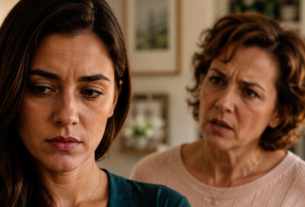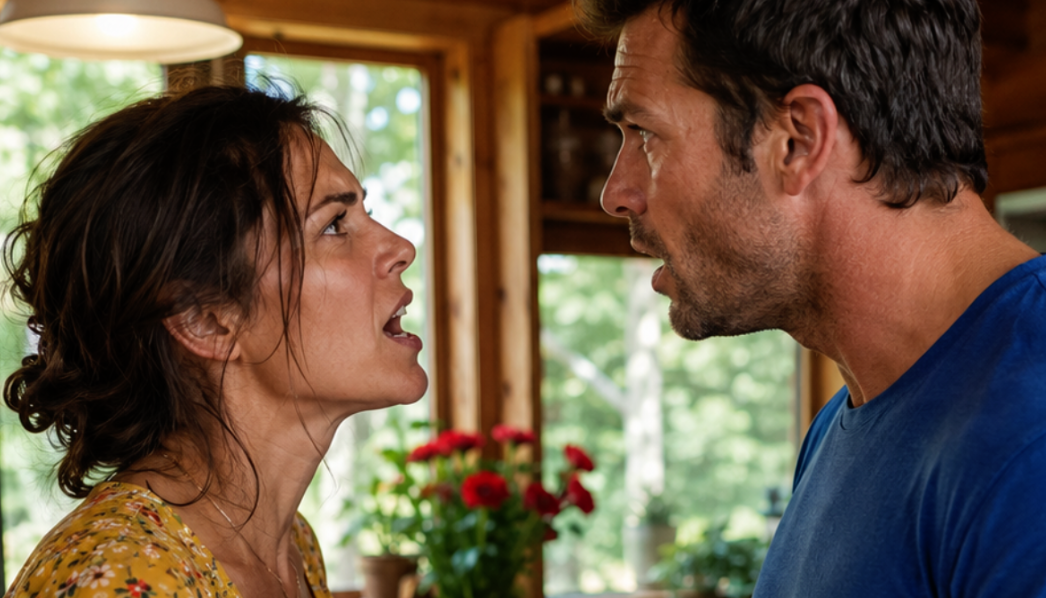
“I’m not going to the dacha anymore! That’s not rest—it’s hard labor under your mother’s supervision!” she declared.
A Friday at the end of May smelled of freshly cut grass and the promise of the weekend ahead. Diana left work at half past six, bought peaches and yogurt at a shop near the metro station, and while riding the bus home, thought about only one thing: lying down on the sofa, putting on something light on TV, and not thinking about anything at all until Monday.
It had been an exhausting week. Diana worked as a food technologist at a small food-production company in Samara, earned 61,000 rubles a month, and had spent the past five days caught in a nonstop cycle of inspections, reports, and negotiations with a supplier who simply couldn’t deliver the required raw materials on time.
Mark met her at the door with his phone in his hand and the expression of a man who had already made all the decisions.
“Get ready. Mom expects us there by ten tomorrow.”
Diana stopped in the hallway, still holding the grocery bag.
“Mark, I just got home from work.”
“I know. That’s why I’m telling you now, so you’ll have time to prepare yourself mentally.”
“Prepare myself,” Diana repeated. Not as a question—she merely repeated the words, trying them on for size.
“Yeah. Mom says it’s already time to hill up the potatoes, and there are lots of other things that need doing. I promised we’d come.”
Diana walked into the kitchen and put the bag on the table. She took out a peach and turned it slowly in her hands.
“You promised. Not us—you.”
“Diana, don’t start.” Mark followed her into the kitchen. “She’s my mother. It’s hard for her to manage everything alone.”
Diana didn’t answer. She put the peach back in the bag, opened the refrigerator, then closed it again. Mark stood there for a little longer before going into the living room.
And that was how it had happened—not all at once, but gradually, almost imperceptibly.
Diana had married Mark two and a half years earlier, and in the beginning, she had genuinely tried to build a normal relationship with his mother.
Yulia Rostislavovna lived alone on the other side of the city. Her husband had died long ago, and she had inherited the dacha from her parents. Judging by everything, that dacha was both the greatest purpose and the greatest burden of her life.
Six hundred square meters of land, an old house, apple trees, a vegetable garden—and endless work that never truly ended, merely changing from one season to the next.
At first, Diana had nothing against it. Of course Mark only had one mother. Of course she was getting older. Of course her son wanted to help her. Diana herself had grown up in a family where respecting one’s elders was considered normal, not an act of heroism.
She first met Yulia Rostislavovna on New Year’s Eve, when Mark brought his fiancée to meet her.
His mother turned out to be a sturdy, businesslike woman with very firm ideas about how life ought to be organized. She spoke a lot and with confidence. She examined Diana with the same particular attentiveness one might use when inspecting goods at a market—not rudely, but very critically.
Then she said:
“Well, you’re not bad. You’ve got two working hands, and that’s the main thing.”
Mark laughed. Diana smiled too. At the time, it seemed like nothing more than a peculiar sense of humor.
Their first trip to the dacha happened in April, a few months after the wedding. Mark spoke about it cheerfully—fresh air, nature, Mom would bake some pies, and they’d have a proper rest away from the city.
Diana packed a light bag, took a book and comfortable sneakers. All the way there on the commuter train, she imagined them sitting on the veranda drinking tea while the fresh spring greenery filled the air with its scent.
They arrived at quarter past ten.
Yulia Rostislavovna met them by the gate wearing a work apron and looking like someone who had already been waiting several hours for reinforcements.
“Finally. Mark, the fence is leaning over there. You need to take a look at it. And you”—Yulia Rostislavovna looked at Diana—“change your clothes and go to the garden beds. They’re full of weeds. I haven’t had time to deal with them.”
Diana exchanged a glance with Mark.
Mark was already walking toward the fence.
“What garden beds?” Diana asked cautiously.
“The usual kind. Onions, carrots. You’ll see what’s what when you get there. The tools are beside the shed.”
Diana was silent for a moment.
Then she decided, Fine, I’ll help this once. It would be awkward to refuse.
She changed clothes, picked up a hoe, and went to work.
She weeded the garden beds for four hours. Then she carried buckets of water from the well to the greenhouse because, according to Yulia Rostislavovna, the hose had burst the previous autumn, and she simply hadn’t gotten around to buying a new one.
Then Diana swept the path.
Then she sorted through last year’s potatoes in the cellar because Yulia Rostislavovna said she was afraid to go down there alone—the cellar was dark, and the ladder was unstable.
Meanwhile, Mark repaired the fence, drank tea with his mother on the veranda, and took a nap in the hammock.
When Diana finally climbed out of the cellar, it was around four in the afternoon. Her back hurt, her palms were covered in dirt, and the only thing she wanted was to sit down and not move.
Yulia Rostislavovna inspected her work, pursed her lips, and remarked:
“You didn’t finish the carrot bed. Oh well. Tomorrow.”
“We’re leaving tomorrow,” Diana said.
“And who decided that?”
“We came for the weekend. Today’s Saturday, tomorrow’s Sunday, and we’re going home in the evening.”
Yulia Rostislavovna looked at Diana as though she had said something completely inappropriate. Then she turned and headed toward the house, calling over her shoulder:
“Mark, tell your wife the carrots aren’t going to weed themselves.”
Mark, who was swinging in the hammock with his phone, raised his head.
“Diana, there’s hardly anything left.”
Diana looked at her husband.
For a long time.
Then she went to wash her hands.
On the commuter train home, she remained silent.
At first, Mark tried to make conversation—about nature, about what a great trip they’d had, about how happy his mother had been.
Diana stared through the window at the fields and bushes flashing past and thought that the word rest was apparently understood very differently in this family.
“Why are you so quiet?”
“I’m tired.”
“Well, that happens. At least the air was fresh,” Mark said before burying himself in his phone again.
Diana closed her eyes.
She said nothing.
She told herself: Fine. It was just once. Things happen.
But that one time stretched through the entire dacha season.
The next trip came three weeks later.
Once again, there was an announcement on Friday evening. Once again, Saturday was spent with a hoe and buckets. Once again, there was Yulia Rostislavovna, who knew exactly where to put a person in order to make maximum use of their labor.
This time, Diana was painting the fence.
The paint was thick, the brush was uncomfortable, and the sun beat directly down on the top of her head. Mark was digging something at the other end of the property—slowly, taking smoking breaks and regularly going into the house for water.
Yulia Rostislavovna came out to inspect Diana’s work every half hour.
“You missed a spot here. See? It’s showing through.”
“I see it. I’ll paint over it.”
“And here too. You’re rushing, and you shouldn’t rush. Do it properly.”
“Fine.”
“And don’t hold the brush like that. Hold it this way.”
Diana held the brush however she thought best and said nothing.
Yulia Rostislavovna stood there for a little longer, found two more things to criticize, and walked away…
The continuation is just below in the first comment.
Friday at the end of May smelled of freshly cut grass and the approaching weekend. Diana left work at half past six, bought peaches and yogurt at a shop near the metro station, and while riding the bus home, she thought about only one thing: lying down on the sofa, putting on something light on TV, and not thinking about anything at all until Monday.
It had been an exhausting week. Diana worked as a food technologist at a small food-production company in Samara, earned 61,000 rubles a month, and had spent the last five days dealing with constant inspections, reports, and negotiations with a supplier who simply could not deliver the necessary raw materials on time.
Mark met her at the door with his phone in his hand and the expression of a man who had already made all the decisions.
“Get ready. Mom is expecting us tomorrow at ten.”
Diana stopped in the hallway, still holding her shopping bag.
“Mark, I just got home from work.”
“I know. That’s why I’m telling you now, so you have time to prepare yourself.”
“Prepare myself,” Diana repeated. Not as a question. She simply repeated the phrase, trying it on for size.
“Yeah. Mom says it’s already time to hill up the potatoes, and there are plenty of other things that need doing. I promised we’d come.”
Diana walked into the kitchen and put the bag on the table. She took out a peach and turned it over in her hands.
“You promised. Not us. You.”
“Diana, don’t start.” Mark followed her into the kitchen. “She’s my mother. It’s hard for her to manage everything alone.”
Diana said nothing. She put the peach back, opened the refrigerator, then closed it again. Mark stood there for another moment before going into the living room.
That was how it had started—not all at once, but gradually, almost imperceptibly.
Diana had married Mark two and a half years earlier, and in the beginning, she had tried very hard to build a normal relationship with his mother.
Yulia Rostislavovna lived alone on the other side of the city. Her husband had died long ago, and she had inherited the country house from her parents. Judging by everything, that dacha was both the greatest purpose and the greatest torment of her life.
Six hundred square meters of land, an old house, apple trees, a vegetable garden—and endless work that never truly ended, only changed from one season to the next.
At first, Diana had nothing against it. Of course her husband had only one mother. Of course she was getting older. Of course her son wanted to help her. Diana herself had grown up in a family where respecting one’s elders was considered normal, not heroic.
She met Yulia Rostislavovna for the first time on New Year’s, when Mark brought his fiancée over to introduce her.
His mother turned out to be a sturdy, businesslike woman with very clear opinions about how life should be organized. She spoke a lot and confidently. She examined Diana with that particular attentiveness one might use when inspecting goods at a market—not rudely, but unmistakably appraisingly.
Then she said:
“Well, she’ll do. She has two hands, and that’s the main thing.”
Mark laughed. Diana smiled too. At the time, it seemed like nothing more than an unusual sense of humor.
Their first trip to the dacha happened in April, several months after the wedding.
Mark spoke about it cheerfully—fresh air, nature, Mom would bake pies, and they would have a proper rest after city life.
Diana packed a small bag, took a book and comfortable sneakers. The whole train ride, she imagined them sitting on the veranda drinking tea and smelling the first fresh greenery of spring.
They arrived at quarter past ten. Yulia Rostislavovna met them at the gate wearing a work apron and looking like someone who had already been waiting for reinforcements for several hours.
“Finally. Mark, the fence is leaning. You need to take a look at it. And you,” Yulia Rostislavovna said, looking at Diana, “change your clothes and go to the garden beds. They’re full of weeds. I haven’t had time to deal with them.”
Diana exchanged a glance with Mark.
Mark was already walking toward the fence.
“What beds?” Diana asked cautiously.
“The usual ones. Onions, carrots. You’ll see what needs doing when you get there. The tools are beside the shed.”
Diana was silent for a second. Then she decided that, fine, she would help this once. It would be awkward to refuse.
She changed clothes, picked up a hoe, and went to work.
She weeded the garden beds for four hours.
Then she carried water from the well to the greenhouse because, according to Yulia Rostislavovna, the hose had burst the previous autumn and she had never gotten around to buying a new one.
Then Diana swept the path.
Then she sorted through last year’s potatoes in the cellar because Yulia Rostislavovna said she was afraid to go down there alone—it was dark, and the ladder was unstable.
Meanwhile, Mark repaired the fence, drank tea with his mother on the veranda, and took a nap in the hammock.
When Diana finally emerged from the cellar, it was around four in the afternoon. Her back hurt, her hands were covered in dirt, and the only thing she wanted was to sit down and not move.
Yulia Rostislavovna inspected her work, pursed her lips, and remarked:
“You didn’t finish the carrot bed. Oh well. Tomorrow.”
“We’re leaving tomorrow,” Diana said.
“And who decided that?”
“We came for the weekend. Today is Saturday, tomorrow is Sunday, and we’re going home in the evening.”
Yulia Rostislavovna looked at Diana as though she had said something completely inappropriate.
Then she turned and headed toward the house, calling over her shoulder:
“Mark, tell your wife the carrots aren’t going to weed themselves.”
Mark, who was rocking in the hammock with his phone in his hand, lifted his head.
“Diana, there’s not much left.”
Diana looked at her husband.
For a long time.
Then she went to wash her hands.
On the train home, she remained silent.
At first, Mark tried to talk—to comment on nature, on what a nice trip they’d had, on how happy his mother had been.
Diana looked out the window at the fields and bushes flashing past and thought that the word rest was clearly understood very differently in this family.
“Why are you so quiet?”
“I’m tired.”
“Well, that happens. At least the air was fresh,” Mark said, returning his attention to his phone.
Diana closed her eyes.
She said nothing.
She told herself: Fine. Just this once. Things happen.
But that one time stretched into the entire summer season.
The next trip came three weeks later.
Again, the announcement came on Friday evening. Again, Saturday was spent with a hoe and buckets. Again, there was Yulia Rostislavovna, who knew exactly where to place a person in order to make maximum use of their labor.
This time, Diana painted the fence.
The paint was thick, the brush uncomfortable, and the sun beat directly down on her head. Mark was digging something at the other end of the property—slowly, taking cigarette breaks and regularly going inside for water.
Yulia Rostislavovna came out to inspect Diana’s work every half hour.
“You missed a spot here. See? You can still see through it.”
“I see. I’ll paint over it.”
“And here too. You’re rushing, and you shouldn’t rush. Do it properly.”
“All right.”
“And don’t hold the brush like that. Hold it this way.”
Diana held the brush the way she thought was appropriate and said nothing.
Yulia Rostislavovna stood there a little longer, found two more things to criticize, and walked away.
That evening at dinner, Diana ate in silence.
Yulia Rostislavovna talked to Mark about the neighbors, fertilizer prices, and how the apple trees needed to be treated before it was too late. Mark listened, nodded, and occasionally replied.
No one paid much attention to Diana—as though she either wasn’t there at all or had become so much a part of the landscape that she required no separate consideration.
After dinner, Diana went outside and stood beneath an apple tree.
It was quiet. The air smelled of earth and freshly cut grass.
She thought: Why am I holding back at all? Because I want to keep the peace? Because speaking up would feel awkward? Because Mark doesn’t want to hear his wife complaining about his mother?
All three answers were true.
And none of them satisfied Diana.
She went back into the house, went to bed, and said nothing.
Back home in Samara, everything seemed less painful.
The working week swallowed everything—process specifications, meetings, invoices, phone calls. Diana returned home from work, cooked dinner, and talked to Mark about neutral things: TV shows, the news, plans for the weekend.
Gradually, the sharpness of the memories faded, leaving only a dull residue in the background that she tried not to disturb.
But the next Friday always came.
“Mom called. We’re going this weekend.”
“Mark, I’ve had an extremely difficult week at work.”
“So what? There’s fresh air there. You’ll relax.”
“I don’t relax there. I work.”
“Diana, you help out a little. That’s not work.”
“I weeded garden beds for four hours. Then I painted a fence all day. What do you call that?”
“That’s what having a dacha is like. There’s always something to do.”
“Not for you. You lie in the hammock.”
Mark grimaced.
“I do other things. I handle all the heavy work.”
“The heavy work,” Diana repeated in a tone she barely recognized herself. “The fence, of course. Yes. Extremely difficult.”
“Don’t be like that. Mom works hard. It’s a big property.”
“Mark, I’m not against helping. I’m against being used as free labor while you relax, and no one even says thank you. Yulia Rostislavovna has never—not once during all these trips—said thank you.”
Mark was silent.
“That’s just the way she is. She’s not used to saying it.”
“But she’s certainly used to criticizing.”
“Diana…”
“Fine,” Diana said. “I’ll go. But this is the last time.”
She went.
It was the third trip—June, hot weather, and the vegetable garden in full swing.
Yulia Rostislavovna greeted them holding a sheet of paper with a list of tasks written on it. An actual handwritten list, like a work assignment.
“Here,” she said, handing it to Diana. “We need to get all of this done today.”
Diana took the sheet and read it.
Weed three garden beds. Tie up the tomato plants. Sort through the raspberries. Dig up a corner for new planting. Wash the inside of the greenhouse.
“That’s a whole day’s work,” Diana said.
“Well, it’s a good thing you came early.”
“Yulia Rostislavovna, this is too much for one person.”
“You’re not alone. Mark will help.”
At that very moment, Mark was already talking to some neighbor near the fence, laughing and gesturing.
Diana looked at the list.
Then at her husband.
Then back at the list.
She put the paper into the pocket of her shorts, picked up a bucket, and headed toward the garden beds.
She worked silently and methodically, without conversation.
Yulia Rostislavovna approached twice. The first time, she said Diana needed to dig deeper. The second time, she said she was working too slowly.
Diana nodded and continued.
Inside her mind, everything was very quiet and very clear—the sort of clarity that comes when a person has made a decision and is simply waiting for the moment when it can finally be announced.
They rode home in silence.
Mark tried to say something about the good tomato harvest and how pleased his mother had been.
Diana looked out the train window at the sunset over the fields—pink, beautiful, and completely at odds with her mood.
“Are you angry?” Mark asked.
“No.”
“Then why are you quiet?”
“I’m just thinking.”
“About what?”
“Different things.”
Mark shrugged and returned to his phone.
Three weeks passed after that trip.
Diana worked, cooked, cleaned, and lived her ordinary life. She only reacted briefly whenever the subject of the dacha came up—changing the subject or responding with a few words.
Mark, apparently, decided that everything had settled down on its own.
And then Friday came again.
July. The very middle of summer.
Diana was sitting in the kitchen with a cup of tea, reading something on her phone, when Mark came home from work and announced from the doorway, without even taking off his sneakers:
“We’re going to Mom’s tomorrow. She’s already expecting us.”
Diana lifted her head.
“Did you ask me?”
“What?”
“Did you ask whether I wanted to go?”
Mark walked into the kitchen, opened the refrigerator, and took out some water.
“Diana, that’s not something you ask about. She’s my mother. You visit your mother.”
“Mark, sit down.”
Something in Diana’s voice made her husband turn around.
He looked at his wife, closed the refrigerator, and sat on the chair opposite her.
“I want to have a normal conversation,” Diana said. “Do you remember what our trips to the dacha are actually like?”
“Well… we help Mom. We get some fresh air.”
“I weed garden beds. I carry water. I paint fences. I wash greenhouses. Last time, your mother brought me a list of tasks written on a piece of paper, like an assignment. Did you see that?”
“Well, she’s just very hardworking.”
“Mark.” Diana put her cup down on the table. “I come back from those weekends feeling worse than I do after a full working week. My back hurts, my hands hurt, and no one has ever once said thank you. But I get criticized every time. I’m told I dig incorrectly, paint incorrectly, and work too slowly.”
“She doesn’t mean any harm…”
“Mark, I’m not discussing whether she means harm or not. I’m telling you what’s happening. Meanwhile, you relax. It isn’t fair.”
Mark frowned.
“Are you trying to say I’m a bad husband?”
“I’m saying the situation is unfair. And I’m asking you to see that.”
“Mom is an elderly woman. She needs help.”
“Then help her yourself. I don’t mind you going. I’m talking about myself. I don’t want to go.”
Mark leaned back in his chair and looked away.
“She’ll be offended.”
“Yulia Rostislavovna?”
“Yes. She’ll say you don’t respect the family.”
“Mark, I respect family. What I don’t respect is a situation in which I’m used as a worker and criticized at the same time. Those are two different things.”
“You’re dramatizing everything.”
Diana looked at her husband.
For a long time. Calmly. Without anger—with the kind of exhaustion that doesn’t come from a single day, but from something that has been accumulating for a long time.
“All right. Let’s test that. Call your mother right now and tell her that the two of you are going this weekend. Let’s see how she reacts.”
“That would be awkward.”
“So it’s only convenient when I go and work.”
Mark stood up.
“Diana, don’t do this. We go together. It’s normal. That’s how things are done in our family—”
“In your family. I was never consulted about joining this tradition.”
“You’re my wife. A wife is part of the family.”
“Then explain something to me as a member of the family: Why am I working in the garden while you’re lying in the hammock?”
Mark fell silent.
His jaw tightened slightly. Diana knew that sign. Her husband didn’t have an answer, and that made him angry.
“Fine,” he said at last. “Since you’re putting it that way, you’re obligated to go. She’s my mother, and you’re obligated to respect her.”
“Obligated,” Diana repeated quietly.
“Yes. Obligated. That’s how a family works.”
Diana stood up from the table.
She walked to the window and looked outside. Linden trees swayed in the evening breeze, and someone was walking a dog in the courtyard. Just an ordinary evening.
“Mark, I’m not going to the dacha anymore.” Diana turned toward her husband. “It’s not a vacation. It’s forced labor under your mother’s supervision. And I’m not going to pretend that’s normal.”
Mark stared at his wife as though she had spoken in a foreign language.
“What did you say?”
“You heard me.”
“You… Did you just refer to my mother like that?”
“Mark, what I just told you is that I’m no longer going somewhere where I’m treated like a servant. That’s the main point. Everything else is a detail.”
“No, wait.” Mark stepped forward. His voice grew louder and harder. “You have no right to speak about my mother like that. She’s spent her entire life taking care of that property. She’s alone. She—”
“She is an adult woman with her own dacha. It’s her choice and her responsibility.”
“Family helps family!” Mark slapped his palm against the table—not hard, but sharply. “Don’t you understand that? Or do you simply refuse to understand?”
“I understand. What I don’t understand is why your definition of family includes my labor but doesn’t include my opinion.”
“You’re selfish. That’s the entire explanation.”
“Fine.”
“What do you mean, fine?”
“Then let it be so.” Diana crossed her arms. “If refusing to weed someone else’s garden makes me selfish in your eyes, then apparently we define words differently.”
“Mom was right. From the beginning, you never wanted to accept our family.”
“Yulia Rostislavovna told you that?”
Mark stopped short.
“That doesn’t matter.”
“No, it does. Did she tell you that I don’t accept the family?”
“She sees that you keep your distance.”
“Because I’m not allowed to be part of the family. I’m handed a task list and a hoe.” Diana spoke evenly, without raising her voice, and that calmness seemed to anger Mark more than shouting would have. “Mark, I tried for three years. I went there. I worked. I kept quiet. I thought things would get better. They didn’t. Because neither you nor Yulia Rostislavovna need them to get better. It’s more convenient when I stay quiet and do what I’m told.”
“So you’re choosing a scandal instead of peace in the family.”
“I’m choosing honesty instead of convenient silence.”
“Then choose.” Mark looked at his wife coldly. “Either you go to the dacha like a normal wife, or I don’t even know what kind of marriage this is.”
Diana looked at her husband.
There was a long pause.
Outside, a dog barked and then fell silent.
“Is that an ultimatum?”
“Call it whatever you want.”
“All right.” Diana nodded. “Then here’s my answer: Pack your things and go to your mother. Right now. There’s no reason for you to live here anymore.”
Mark’s eyes widened.
“What?”
“The apartment is mine. I bought it before we were married, and it’s registered in my name. Legally, it’s simple. Pack your things.”
“You… You’re serious?”
“Completely.”
Mark stood motionless for several seconds.
Then something in his expression changed. The anger remained, but beneath it appeared confusion, almost childlike.
“Diana, you can’t just suddenly—”
“I can. And I am.”
“Because of the dacha?! Because of some garden beds?!”
“Because for three years, you refused to see a problem. Because you just gave me an ultimatum. Because your mother talks about me behind my back, you listen to her, and you don’t think I even deserve to know. The dacha is only the final straw, Mark. Not the cause.”
Her husband went into the bedroom.
Diana heard wardrobe doors slamming, something falling, and the silence occasionally broken by the quiet, angry noises of someone packing.
She returned to the table and finished her tea, which had long since gone cold.
Her hands weren’t shaking.
That surprised even her. She had expected it to be worse. She had expected to be overwhelmed by something heavy.
But instead, there was only silence.
Mark emerged twenty minutes later carrying a large bag.
“You’ll regret this.”
“Maybe,” Diana said. “But not right now.”
He left.
The door didn’t slam. The lock simply clicked shut.
Diana remained sitting in the kitchen for another ten minutes without moving.
Then she stood up, washed her cup, dried it carefully, and put it on the shelf.
Two days later, Yulia Rostislavovna called.
Diana let the phone ring until it stopped and didn’t answer.
Then a message arrived:
Diana, we need to talk.
Diana read it, put her phone away, and went to the balcony to water the flowers.
A week later, Mark resurfaced.
He called in the evening, and his voice sounded different—quieter, without its former certainty.
“Diana, can we talk?”
“We can.”
“I… I said things I shouldn’t have. The ultimatum was wrong. I lost my temper.”
Diana listened and thought: So here it is. The thing I once feared I would never hear. My husband is saying the right words. Admitting it. Apologizing.
But now it sounded different from the way she had imagined.
“Mark, I hear you.”
“Can you give me another chance?”
“What kind of chance?”
“Well… to come back. To talk things through properly. I understand that I went too far.”
Diana paused.
“Mark, do you understand why this happened?”
“Because of the dacha.”
“No. Try again.”
There was a long pause.
“I wasn’t listening to you,” Mark finally said. Quietly, almost reluctantly. “You were talking, but I wasn’t listening.”
“Yes. Exactly.”
“So, will you give me another chance?”
Diana looked out the window.
The evening sky was almost white—the kind of pale July night when darkness seemed unable to arrive.
“I don’t know, Mark. Honestly, I don’t know. Maybe we both need time to figure out what we actually want from this marriage. Not what I want from you or what you want from me. What we both want together.”
“Does that mean no?”
“It means I don’t know yet. That’s not the same thing.”
Mark was silent for a moment.
“All right. I understand.”
They agreed to meet a few days later—not at home, but in a café, on neutral ground.
Without Yulia Rostislavovna. Without trying to determine who was right.
Just to talk—as two people who had once chosen each other and now stood before the question of what to do with that choice.
Diana put her phone on the windowsill.
She thought about how she had no idea how the conversation at the café would end.
Maybe they would find something that could still be repaired.
Maybe they wouldn’t.
Maybe it would turn out there was nothing left to repair—that after three years, words without support had become nothing more than words.
But she knew one thing for certain:
She would never remain silent the way she had before.
Not at the dacha.
Not at home.
Not in a conversation with her husband.
It wasn’t a victory, and it wasn’t a defeat.
It was simply a decision.
Her own decision, made without anyone else’s lists or instructions.