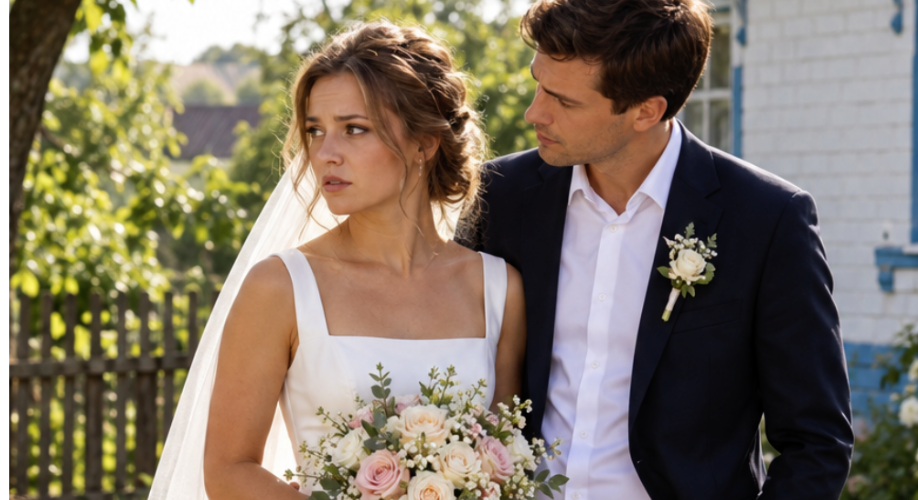
Two chairs stood empty the entire evening.
Roman had made them himself, just a week before the wedding. They were oak, with tall carved backs, heavier than any other chairs. He placed them at the head of the long table, next to the newlyweds. Nadya had asked him to do it. She whispered her request, almost embarrassed by her own hope: “Let them stand. Maybe they’ll come.”
Guests squeezed together on benches, sitting wherever they could, but those two seats remained untouched. The neighbor, Hanna Ostapivna, even laid beautifully embroidered towels on each one, just in case any of the men accidentally sat down after a few drinks. Nadya kept glancing at the wooden gate. Each time the sound of an engine drifted from the road, she instantly straightened her back.
But the car never arrived.
Late at night, after the guests had left and only crumbs from the wedding bread and a half-finished compote remained on the table, Roman silently carried the chairs into the entryway. He didn’t say a word. He just placed them against the wall, carefully and evenly, as if they might still be needed.
* * *
Lyudmyla Andriivna and Oleh Stepanovych never doubted what their only daughter’s life would look like. In their spacious four-room apartment in the city center, everything was planned out in advance, like the menu at a big anniversary party.
A prestigious university. A profitable marriage, ideally with the son of one of Oleh Stepanovych’s business partners. An apartment in a new building, newly renovated, which her parents would help her buy. Then, Sunday family dinners where both families would arrive in expensive cars.
Oleh Stepanovych owned a network of building supply stores. Money was never an issue in the family, and he truly believed that with such a strong foundation, nothing could ever threaten his daughter’s future.
But Nadya pictured her life completely differently.
Quiet, with shoulder-length light brown hair and gray eyes that always seemed to conceal a thought. After graduating from the philology department, she turned down a comfortable job at her father’s company. She found a vacancy for a Ukrainian language and literature teacher in a remote Polissian village, a place nobody wanted to go since the previous teacher retired and young city dwellers were reluctant to move there. She packed two suitcases and left.
Her parents just waved her off.
“She’ll get over it,” her mother said at dinner. “Give it a month walking through mud, without a real shower or coffee shops, and she’ll ask to come home herself.”
A month passed. Then a second. Then winter came.
Nadya still didn’t return.
Unexpectedly, she grew to love that harsh, unhurried life. The morning fog over the marshes, when the pine trees stood knee-deep in mist. The smell of pine resin and smoke. The crackle of the stove when a blizzard raged outside. But most of all, she loved the children, who listened to her lessons wide-eyed, forgetting to close their mouths.
Tarasyk, an eighth grader and the biggest troublemaker in the school, once brought her a crumpled piece of paper with a poem about a stork. His very first poem. Nadya kept that sheet in her notebook.
That same December, the lights went out in the school during a lesson. The principal called the local forestry service, and half an hour later a tall, broad-shouldered guy in work clothes showed up at the door, carrying a toolbox. In an hour he’d fixed the electrical panel, and then, without being asked, he repaired a leaky faucet that had been a problem since the fall, and fixed the classroom door that no one had managed to close properly.
“Do you always do things like this?” Nadya asked him.
“Like what?” he replied, confused.
— More than you asked for.
Roman just shrugged and smiled for the first time that day:
— Why make two trips if you can do it all at once?
* * *
A year later, Nadya dialed her mother. She held the phone for a long time before pressing the call button.
— Mom… Dad… I’m getting married.
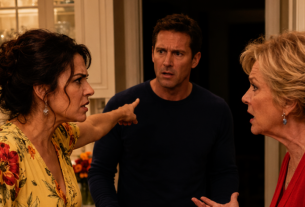
— Oh, Nadyusha! — Lyudmila Andreyevna exclaimed. — To whom? When did you have time for this? Is he one of ours? Did someone come from the city?
— No, Mom. His name is Roman. He’s from here, born and raised. He works at the forestry as an electrician and also fixes motors. We’ve already filed the application. The wedding is in a month.
There was such silence on the line that Nadya could hear the crackle somewhere in the wires.
Then her father took the phone.
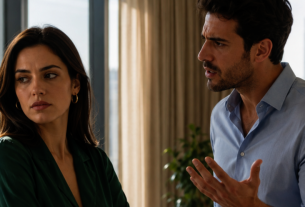
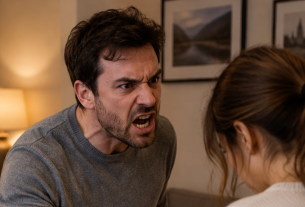
— Have you completely lost your mind?! — his voice thundered. — An electrician? A mechanic?! What did we give you an education for? Why did we hire tutors? So you’d milk cows and wash your husband’s work clothes in some village?!
— Dad, Roman is a good person, — Nadya spoke steadily, even though her knees were shaking. — He’s kind. You can rely on him. He’s already building a house. I love him. Doesn’t that mean anything to you?
— Love, she says! — her father grunted. — That kind of love lasts until the first pair of worn-out boots and an empty wallet! There will be no wedding. Pack your things. I’ll send a car for you tomorrow.
— No.
She was twenty-four, and for the first time in her life, she told her father “no” in a way that made him fall silent.
— I’m not going anywhere. We’ve made our decision. I’m inviting both of you to the wedding. If you love me, please come. I’m asking you.
Her mother snatched the phone.
— Then listen closely. If you marry this country boy, forget our number. You have no parents. And we have no daughter. I’m not going to be embarrassed in front of our friends! My child—married to a simple laborer? It’s a disgrace to the whole city!
Short beeps.
Nadya sat on a stool in the little room she rented from Grandma Zoya, staring at her phone. She waited for her mother to call right back and say she’d overreacted. That none of this was serious.
The phone stayed silent.
She covered her face with her hands and burst into tears. She was ready for anger, arguments, disagreements—but to be disowned in a single sentence? Hadn’t they wanted only her happiness all these years?
The door creaked softly. Roman entered, still in his jacket, raindrops scattered on his shoulders. He looked at her and instantly understood.
He walked over and placed his large, warm hands on her shoulders. His fingers were stained with grease, impossible to scrub off no matter how hard he tried.
— They aren’t coming? — he asked quietly.
Nadya only nodded.
— Hey, come on… Do you hear me? — he knelt down next to her, so he could look her in the eyes. — You have me. And everyone here already sees you as one of their own. We’ll get through this, Nadyusha. We absolutely will.
That’s why she later asked for those two chairs. Because until the very end, she didn’t believe her family would actually keep their word.
They did.
* * *
Five years went by.
For Nadya and Roman, those years were hard—working from dawn till dusk—but happy, the kind of happy you feel when you lay every single brick yourself.
Roman was the kind of person who brought life to everything he touched. Over two years, almost entirely on his own, he built a two-story house from light timber on the high riverbank, just occasionally calling in village men to help. Then came a bathhouse. Then two greenhouses. And then, one spring, he brought home three hives from an old friend, and beekeeping became his way to unwind.
Soon, the forestry enterprise felt too small for Roman. He left and set up his own workshop, where he repaired the hydraulics of logging trucks, tractors, and all sorts of heavy machinery. At first, his customers were familiar drivers. Then friends of friends. Within a year, vehicles from all over the district were lining up outside his hangar. The work was steady, and the house finally had money—honest money, earned by his own hands.
Nadia never left her school job. At twenty-five, she gave birth to twins: Danilko and Zlata. Above their nursery door, Roman carved two wooden storks—one a little bigger, one smaller—and hung them so they seemed to fly together.
When the babies were two weeks old, Nadia printed one photo: two little bundles curled up nose to nose. On the back she wrote, “Mom, you have grandchildren. Danilo and Zlata.” She sent it by post to her parents’ address.
There was no reply.
Every year on her birthday, Nadia caught herself keeping her phone close until evening. And then she would place it face down and go bathe the children.
But the home by the river held something you couldn’t buy for any money: a quiet certainty that these were her own people, and there was no reason to fear tomorrow.
* * *
Meanwhile, everything in the city had turned upside down over those five years.
The first to fall apart was Oleg Stepanovich’s business. Big construction hypermarket chains moved into the region, offering discounts, promotions, and next-day delivery. They drove out the small shops, one after another.
Oleg Stepanovich clung to his business with everything he had. He took bank loans, mortgaged property, invested in new outlets—convinced that he just had to get through the tough times.
But things only kept getting worse.
Lyudmila Andriivna didn’t want to see how serious it had become for a long time. She was used to living large: vacations by the sea twice a year, beauty salons, restaurants, and clothes from expensive boutiques. Giving that up was more than she could handle.
And the debts piled up like a snowball.
When Oleg Stepanovich turned fifty-eight, the bank finally froze the company’s accounts. Their central apartment was put up for sale. That day, after signing the final papers, he walked out onto the steps of the bank, leaned on the railing, and stood there for a long time, unable to move—as if the core had been taken from him all in a single morning.
From then on, he became a different man. In a matter of weeks, he aged by a decade. His face turned gray, his back stooped, and now he shuffled along with a cane.
The apartment, the cars, the country house—all of it went to pay off debts. As for the friends he’d spent years drinking fine drinks with at lavish tables, they vanished so fast it was as if they had never existed. A man without money or influence turned out to matter to no one.
Lyudmyla Andriivna rented a small one-bedroom apartment on the outskirts, right at the top floor of a five-story building. In winter, the corners of the windows would freeze over, and the radiator barely gave off any heat. Her wallet was always stretched, with just enough for bread and the utility bills.
At fifty-five, life hit her harder than ever before, stripping away almost all of her former pride.
* * *
Late one October evening, she sat on a worn-out sofa and watched her husband sleep, his hand tucked under his cheek like a child.
Then she opened her bag. Among expired discount cards she couldn’t bring herself to throw out, there was a photograph. Two little bundles, nose to nose. The edges had faded to white after five years of carrying it with her everywhere. She’d take it out when no one was looking. Then hide it back inside.
Lyudmyla Andriivna picked up her old button phone. She knew her daughter’s number by heart, even though she hadn’t dialed it once in all these years. Her fingers trembled so much she misdialed the last digits twice.
The phone rang for a long time.
«Hello?» The voice was calm, grown-up. More confident than she remembered.
«Daughter…»
That’s all she could say. She broke down crying into the phone, just like a little girl.
«Nadyusha… your father is completely worn out… We’ve lost everything. They took our apartment, they took everything… We have nowhere to go, my dear. Forgive us. If you can, please forgive…»
Her words tumbled out in a jumble: the company, debts, the bank, an empty fridge, electricity bills they couldn’t pay.
Nadya listened in silence. She didn’t feel any schadenfreude or bitter satisfaction that the people who once thought they controlled everything were now asking their daughter—whom they’d rejected—for help. She simply felt deep pain for her mother.
She closed her eyes.
«Mom, get ready. Tomorrow at seven in the morning, there’s a bus from the station to our town. We’ll meet you there.»
«And… and him?» her mother barely whispered. «Your Roman… He won’t mind?»
Nadya glanced at the kitchen. Roman was standing in the doorway, waving his hand: call them, call them.
«Mom, he’s telling me right now to invite you.»
* * *
The journey lasted nearly six hours.
The old coach bus smelled of diesel and someone else’s pastries, bouncing in every pothole. Outside, pine forests, soggy meadows all autumn-red stretched on, and above them, cranes formed a V in the gray sky, flying south.
Oleh Stepanovych didn’t say a single word the whole trip. He gripped his cane with both hands and stared out the window, seeing nothing. Lyudmyla Andriivna wrapped herself tighter in the old gray coat she’d once bought for gardening.
They were headed to a place they hadn’t even wanted to visit for their only child’s wedding five years ago.
Lyudmyla Andriivna’s imagination drew out the worst: a crooked house, knee-deep mud in the yard, a son-in-law in a greasy work jacket, greeting them with a crooked smile and asking, so who was right after all? She braced herself to listen in silence to anything he might say.
They had no other options left.
The bus stopped in the town square. The doors swung open with a heavy sigh, and a blast of wind mixed with cold drizzle hit their faces.
Lyudmyla Andriivna stepped onto the asphalt first. Oleh Stepanovych followed carefully after her.
A tall, sturdy man in a good autumn jacket was walking toward them.
— Good afternoon, Liudmyla Andriivna. Good afternoon, Oleh Stepanovych.
She lifted her head and didn’t recognize him right away.
Roman.
The very same village electrician they once thought unworthy of their daughter. But he didn’t resemble the image she had painted of him in her mind for the past six hours. Standing before her was a confident man with a clear, open gaze, filled with more calm than she’d ever known in her own life.
Roman didn’t grin sarcastically. He didn’t bring up a single word from that old phone call. He simply walked over to his father-in-law and took him by the elbow.
— There’s a step here, be careful. Let me take your bag. The car is just around the corner.
Around the corner stood a spotless, spacious SUV. Roman helped Oleh Stepanovych get comfortable in the seat, then packed their two worn bags—the sum of everything they’d brought from their old life—into the trunk.
They drove to the village in near silence. The parents couldn’t find words. Their amazement, shame, and confusion were too deeply tangled inside.
* * *
The SUV slowed to a stop by a tall wrought-iron gate, and Liudmyla Andriivna let out a quiet gasp.
Beyond the fence towered a two-story house made of light-colored wood. The paths were paved with tiles. Further back, glass-sided greenhouses gleamed in the sun, and along the orchard stood a row of beehives, covered for the winter. Off to one side, a large workshop hangar rose up, where a timber truck waited for repairs.
Nadia stood on the porch.
In five years, she had become even more beautiful. All trace of girlish shyness had vanished, replaced by calm confidence and a special inner light. Two blonde, rosy-cheeked children clung to her skirt, peering curiously at the strangers.
Suddenly, the little girl tugged her mother’s sleeve:
— Mom! Is that the grandmother from the photograph? The one we have on the shelf?
Liudmyla Andriivna froze by the car. She had no idea that her photo had been sitting on the shelf in this house all these years.
Nadia rushed down the steps. Liudmyla hadn’t managed to say a word before her daughter wrapped her in a tight hug, holding her thin, trembling shoulders close.
And at that moment, Liudmyla Andriivna finally broke down. She buried her face in her daughter’s shoulder and began to sob aloud, forgetting about the neighbors and her own pride.
Meanwhile, Roman helped his father-in-law out of the car and slowly ushered him up to the porch.
— Come in, Oleh Stepanovych. The sauna’s already heated. You can relax after your journey and freshen up, and then we’ll have dinner. Nadia cooked enough for half the village.
* * *
That evening, everyone gathered in the large, bright kitchen.
Steam rose from a plate of mushrooms and roast meat. On the table sat crispy potato pancakes with sour cream, sauerkraut with cranberries, freshly baked bread, and a jar of golden honey from their own apiary. Danylko and Zlata played on the warm floor in the living room, building a garage for a toy tractor.
Before sitting down, Roman went out to the entryway and brought in two oak chairs with tall, carved backs. He placed them at the head of the table.
— Please, take a seat, — he said simply. — They’ve been waiting for you for five years.
Nadia turned to the window so no one could see her eyes. Liudmyla Andriivna touched the carving on the chair back, afraid the chair might disappear.
Hardly a word was spoken at the table. Oleg Stepanovich sat quietly, looking at his hands. Then his gaze shifted to the warm, lively kitchen. To his son-in-law, who hadn’t said a single reproachful word all day. To his daughter, whose face made it clear she was truly happy.
In his mind, the words he’d said five years ago echoed again and again. About worn-out boots. About an empty wallet. About her burying herself in the mud.
He slowly lifted his head. Tears rolled down his hollow, unshaven cheeks. He didn’t bother to wipe them away.
«Roman…»
His voice broke into a hoarse whisper.
«Son…»
Roman set down his fork and calmly looked at his father-in-law.
«We really thought you’d fail here,» Oleg Stepanovich said with difficulty. «That you’d live in filth. And we considered ourselves the ones who knew how to live better than anyone else.»
He swallowed hard.
«We measured everything in money. People, too. But life has shown us otherwise. We didn’t just lose our apartment. We grew poor on the inside. But here with you, everything is real.»
He glanced at his wife, who kept dabbing her eyes with a napkin, then turned back to his son-in-law.
«Forgive us, old fools, if you can. For the wedding we didn’t attend. For everything we said back then. I’ve lived so many years, yet only now I understand something simple. I thought someone was wealthy if they had bank accounts, apartments, cars. But you’re the rich one here, Roman. Your hands are golden, and your heart is generous.»
Roman didn’t reply right away. He looked at Nadya. Under the table, she gently squeezed his hand.
Then he reached for the carafe and poured a little of the homemade spirit for his father-in-law.
«Please, have a drink, Oleg Stepanovich.»
He set the carafe back in its place.
«What’s past is past. We’re family.»
He paused for a moment, then added:
«Stay with us. The house is big, there’s enough room for everyone. The forest is nearby, the air is fresh, and there’s a bathhouse. What matters now is that you get back on your feet. We’ll sort out the debts later. You won’t be left alone in this.»
And, as if talking about the weather, he added simply:
«That’s what family is for.»
Lyudmila Andriivna reached for her bag hanging on the back of her chair. She pulled out a worn photograph and placed it on the table between the bread and honey. Two little bundles, noses touching.
«I carried it with me for five years,» she whispered without looking up. «Every day. But to call… I couldn’t let myself. Stubborn, stupid pride.»
Nadya covered her mother’s hand with her own. She didn’t say a word. Nothing needed to be said.
This time Lyudmila Andriivna cried not from fear or desperation. Her tears were a mix of deep relief and burning shame for the words that once pushed her only daughter away.
That autumn evening in the big wooden house by the river, a wall fell—a wall built up over years by pride, arrogance, and false ideas of what makes a person valuable. There were no longer rich parents and a poor country son-in-law. Just family, sitting together. Some had made mistakes and lost nearly everything. Others found the strength not to seek revenge, but to reach out a hand.
And in the spring, Oleg Stepanovich went with Roman to the apiary for the first time. Slowly, with a cane, wearing a borrowed net over his head. Danilko ran ahead, showing his grandfather which beehive housed the angriest bees.
The two oak chairs never sat in the hallway again.