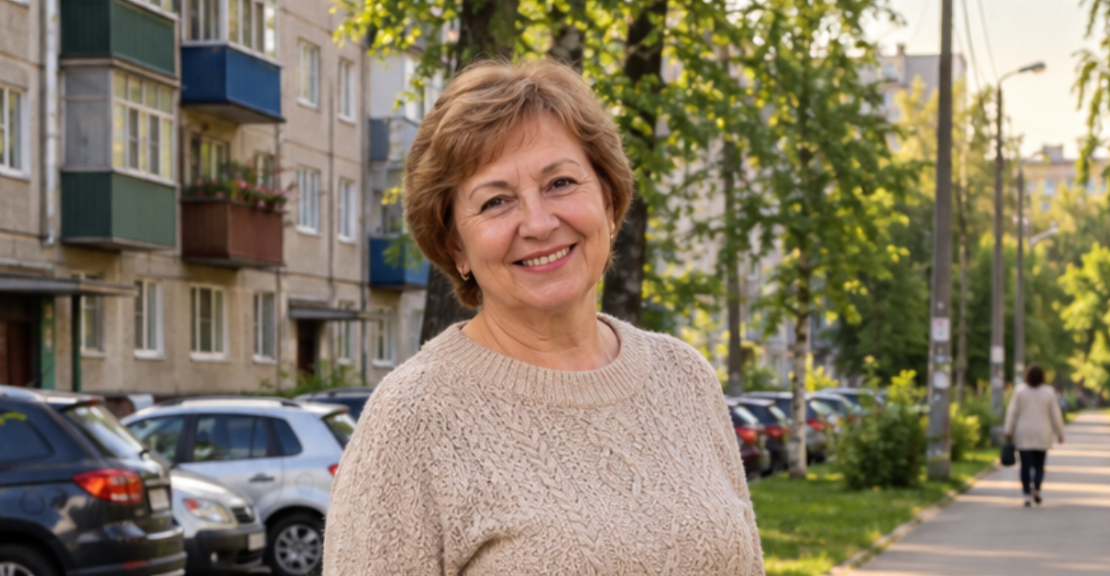
«At your age, it’s too late!» he said. But at 57, she got her driver’s license and did something she’d always dreamed of.
«At your age, it’s too late!» her husband would say. But at 57, Halyna got her driver’s license and finally did something she’d always dreamed of.
Halyna had been carrying her driver’s license in her wallet for nine days now, but she still hadn’t shown it to anyone—not even her sister over the phone. Whenever Mykola went out to the garage, she’d pull out the plastic card, set it on the kitchen table next to the sugar bowl, and just gaze at it. She looked a little puzzled in the photo, with a rebellious strand of hair over her forehead. But below the photo was her name. Her own.
At 57, for the first time in her married life, Halyna did something her husband never even suspected.
* * *
Mykola had been driving her for 35 years. First in a blue «Tavria» he was so proud of and washed by the pump every Sunday, then in a second-hand «Lanos.» He drove her to the market, to her mother-in-law’s to dig potatoes, to various offices for documents, and to distant relatives’ weddings. Halyna would sit on the passenger side with a purse or a pot of stuffed cabbage rolls on her lap, gazing out the window. He always decided when and where they’d go.
She first brought up getting a license when Kateryna was starting first grade. Mykola laughed so hard, as if she’d told a joke.
— Halyna, the wheel’s not for you. You’ve got two little ones and work. I’ll drive you.
The second time she asked, the kids were grown and gone. Then her parents needed help, and Halyna spent three years juggling home, work, and their house on the edge of the village. Then came granddaughter Iryna, and weekends filled up again. Mykola kept repeating the same thing, just adding more with time:
— Why do you need a license? Just tell me where, and I’ll take you. And at your age, it’s too late to learn. Even young guys fail three times.
“Wherever you need” really meant wherever he needed. To his buddy’s for fishing, to Stepan’s to help fix a roof, to the car market for parts. But to her sister Vira, who lived sixty kilometers away, Halyna had to ask weeks in advance.
— Not this weekend, I promised Stepan with the roof, — Mykola would say. — We’ll see about the next.
The next weekend it would rain. Or there’d be football. Or suddenly the «Lanos» started making a weird noise, and “it’s not worth risking it.”
What stuck most with Halyna was Vira’s 60th birthday. Mykola promised to take her, but that morning peered out at the drizzle and said only crazy people went out in this weather. Halyna took the bus, changed at the station, and balanced a cake box on her lap.
She stood for half the trip, as there were no seats. She arrived when the guests were already singing the second song. Vira hugged her at the door and didn’t ask anything. She understood everything already.
* * *
That April morning, Halyna was picking out seedlings at the market. Nearby, a small red car parked near the flower stalls. Out stepped a woman, probably her age, wearing a light jacket and comfortable sneakers. She bought two boxes of seedlings, carefully put them on the back seat, and padded them with newspaper to keep the dirt off. Then she sat down, checked the mirror, turned on her indicator, and drove off.
She didn’t need permission from anyone, Halyna thought. And she wasn’t waiting for anyone.
On her way home, she passed the driving school sign over the fabric store. It’d hung there for years—Halyna had walked past it hundreds of times. That day, she went upstairs.
The receptionist smiled and reached for a form.
— Are you enrolling your daughter or granddaughter?
— Myself, — Halyna replied, surprised at how steady her voice was.
* * *
She studied the rules at night in the kitchen. Mykola watched the news and then his show, and the TV masked her muttering as she practiced tests on her phone. The manual lived in the drawer with towels, under the embroidered one her mother had given her for her wedding. Mykola never looked there.
For driving lessons, Halyna went on Tuesdays and Thursdays. She told her husband she was going to the market. She’d never been good at lying, so after each lesson, she really did go by the market and would come home with a bag of apples or zucchini. Once, Mykola was surprised at how many zucchinis they had, but didn’t ask.
The instructor, Nazar, was young and calm. He called her “Ms. Halyna.” At her first lesson, she stalled the engine seven times in a row, her hands sweaty, her heart pounding in her ears.
— Ms. Halyna, don’t look at me, — Nazar said patiently. — Look in the mirror. I’m not going anywhere; it’s the road you need.
By the end of summer, she was starting smoothly, shifting gears confidently, and even parking by the curb on her first try. Nazar rarely praised, but when he did, it was genuine.
* * *
Halyna failed her first exam on the hill. The car rolled back a few centimeters, and the examiner, eyes still on his tablet, just said, “Sorry.” The second test ended in the garage parking—she hit a post because she rushed, already nervous ahead of time.
Both times she cried on her way home, quietly in the bus, facing the window. The second time, a woman sitting nearby silently offered her a tissue, and that stranger’s kindness just made her feel worse.
At home, Mykola noticed her red eyes.
— What’s wrong? Bad prices at the market?
— I was chopping onions, — Halyna answered, and went to put on the kettle.
The third time, she wore the same light blue blouse as before, deciding the blouse had nothing to do with it. She drove calmly, without a misstep. The examiner, a grey-haired man in his sixties, signed her papers and, unexpectedly, smiled:
— Congratulations. You drove smoother than half the young people I saw today.
Halyna went outside, sat under a maple tree, and laughed out loud—so loud that two young guys near the entrance glanced over. She didn’t care.
* * *
The money was in a closet, in an envelope between the bedsheets. Halyna had been saving from her bakery salary for nearly twenty years, just in case. The envelope thickened, but the «case» never came.
Now she decided—the time had come… (continued in the comments)
For nine days, Halyna carried her new driver’s license in her wallet, and hadn’t shown it to anyone. She hadn’t even told her sister over the phone. Every time Mykola headed to the garage, Halyna would take out the plastic card, set it on the kitchen table next to the sugar bowl, and simply stare at it. She looked a little flustered in the photo, with a stubborn strand of hair out of place above her forehead. But underneath that photo was her name. Her own.
At fifty-seven, for the first time in all her married life, Halyna did something her husband didn’t suspect at all.
* * *
Mykola had been her chauffeur for thirty-five years. First, it was in a blue Tavria he took enormous pride in and washed every Sunday at the pump, and then in a used Lanos. He drove her to the market, to dig up potatoes at his mother’s, to different offices for paperwork, and to distant relatives’ weddings. Halyna would sit on the right, with a purse or a pot of stuffed cabbage rolls on her lap, gazing out the window. He decided where and when they’d go.
The first time she mentioned wanting a license was when Kateryna started first grade. Mykola laughed so heartily, it was as if she’d just told him a joke.
«Halya, why would you need to drive? You have two little ones and a job. I’ll drive.»
The second time she brought it up was after the kids had grown up and moved out. Her parents suddenly needed help, and Halyna spent three years shuttling between her home, work, and their house on the edge of the village. Then her granddaughter Irynka was born, and weekends were once again fully scheduled. And every time, Mykola would say the same thing, only adding new words as the years went by:
«Why do you need a license? Tell me where you need to go, I’ll take you. Besides, at your age it’s too late to learn. Even young guys need three tries to pass.»
In reality, ‘wherever you need to go’ meant wherever he needed to go. To his buddy’s for fishing, to Stepan’s to fix the roof, to the auto market for spare parts. But when it came to visiting her sister Vira, who lived sixty kilometers away in a neighboring town, Halyna had to ask at least two weeks in advance.
«Can’t do this weekend, promised Stepan I’d help him with the roof,» Mykola would say. «We’ll see about next weekend.»
The next weekend it would rain. Or there was football on TV. Or suddenly the Lanos would start making a strange noise, making it «too risky to drive anywhere.»
What Halyna remembered most was Vira’s sixtieth birthday. Mykola had promised he’d drive her, but that morning he looked out the window, saw the drizzle, and said that sensible people stay home in this kind of weather. Halyna took the bus, with a transfer at the station, and a box of cake on her lap.
For half the trip, she had to stand because there were no seats. She arrived when the guests were already singing the second song. Vira hugged her at the door and didn’t ask anything. She already understood it all.
* * *
That April morning at the market, Halyna was picking out seedlings. Nearby, right by the flower stands, a little red car parked. Out stepped a woman about her age, wearing a light jacket and comfortable sneakers. She bought two boxes of seedlings, carefully placed them on the back seat, slid a newspaper under them to keep the dirt off the upholstery. Then she got behind the wheel, glanced in the mirror, turned on her blinker, and drove away.
She didn’t ask anyone for permission, thought Halyna. And she didn’t wait for anyone, either.
On her way home, she walked past the driving school’s sign above the fabric shop on the second floor. That sign had been there for about ten years, and Halyna had passed under it hundreds of times. But that day, she climbed up the stairs.
The young woman at the front desk greeted her with a warm smile and reached for a registration form.
«Are you signing up your daughter or granddaughter?»
«Myself,» Halyna said, surprised by how steady her voice sounded.
* * *
She studied the rules in the evenings in the kitchen. Mykola would watch the news and then a TV series in the next room, and the sound of the television was perfect for covering up her quiet muttering as she practiced tests on her phone. The textbook lived in the drawer with the towels, beneath the embroidered one her mother had given her as a wedding present. Mykola never looked in there.
Halyna went to her driving lessons on Tuesdays and Thursdays. She told her husband she was going to the market. She had never been good at lying, so after every lesson she really did stop by the market and came home with a bag of apples or zucchinis. Mykola was once surprised at how many zucchinis they had, but he didn’t ask any more questions.
Her instructor, Nazar, was young, calm, and always addressed her as ‘Mrs. Halyna.’ At her first lesson, she stalled the engine seven times in a row. Her palms were sweaty, and her heart was pounding in her ears.
«Mrs. Halyna, don’t look at me,» Nazar said patiently. «Look in the mirror. I’m not going anywhere, but you need the whole road.»
By the end of the summer, she could start the car smoothly, shift gears with confidence, and even park by the curb on her first try. Nazar praised her sparingly, but sincerely.
* * *
Halyna failed her first driving test on the hill. The car rolled back about ten centimeters, and the examiner, without looking up from his tablet, said, «Sorry.» Her second test ended with box parking: she hit the post because she rushed and was already a little scared in advance.
Both times, she cried on the way home. Quietly, on the bus, turned toward the window. The second time, a woman sitting next to her silently handed her a tissue, and that small act of kindness from a stranger made her feel even worse.
At home, Mykola noticed her red eyes.
«What’s wrong? Did they overcharge you at the market?»
«I was peeling onions,» Halyna replied and went to put the kettle on.
The third time, she came to the test in the same light blue blouse as the first time, deciding the blouse had nothing to do with it. She drove calmly, without an extra move. The examiner, a gray-haired man around sixty, signed the papers and unexpectedly smiled:
«Congratulations. You drove more calmly than half the young people I saw today.»
Halyna stepped outside, sat on the bench under the maple tree, and burst out laughing. Alone, out loud, so much that two guys at the entrance turned to look. She didn’t care.
* * *
The money lay in the closet, in an envelope between the bedsheets. Halyna had been putting it aside from her wages for almost twenty years while working at the bakery. A little at a time, ‘just in case.’ The envelope grew thicker, but that ‘case’ never seemed to come.
Now, she decided, that time had arrived.
I found the car from an ad on a street nearby. A young couple was selling their silver hatchback—they’d just had twins and needed something bigger. The car was eleven years old, but you could tell it was well cared for: inside, it smelled of a pine air freshener, and there was a neat folder with all the paperwork in the glove compartment. I asked Nazar to take a look at it. He walked around the car, listened to the engine, peeked under the hood, and nodded.
“Go for it, Mrs. Halyna. It’s an honest car.”
The paperwork only took one morning. I drove home by myself for the first time, and parked the car right outside my window.
* * *
Mykola spotted the car when he went out to the garage. I watched from behind the curtain. He stopped, slowly walked around the car, tapped the tire with the toe of his shoe, and looked inside where my bag was lying on the passenger seat. He stood for a bit with his hands in his jacket pockets. I could see his lips move, but I couldn’t hear a word.
Then he came back up to the apartment, paused in the kitchen doorway, and stayed silent for a long time.
“So, where are you planning to drive off to now?” he finally asked.
I wiped my hands with a towel and smiled.
“First, to visit Vira. And after that, Mykola, wherever I want. I’ve waited fifty-seven years. I think I’ll figure out the rest.”
For three days, he barely spoke to me. Over dinner, he talked about the news, gas prices, the neighbor who got a new fence. Not a word about the car. But on the fourth morning, I found a can of windshield washer fluid by the front wheel. Brand new, with the store label still on. Mykola was deeply engrossed in his newspaper and didn’t look at me.
* * *
She headed to Vira’s place in mid-October. There was still morning mist hanging over the fields, and little piles of yellow leaves along the roadsides. Halyna drove at seventy, gripping the steering wheel with both hands, not in any rush. Trucks kept overtaking her one after another, but she didn’t mind at all. She didn’t turn on the radio—she wanted to hear the road, the engine, and herself.
Vira was waiting by the gate, her husband’s jacket thrown over her robe. When the silver hatchback pulled up to the fence, she came closer, leaned in through the window, and clapped her hands in surprise.
“You drove yourself?! Halya, you actually drove here on your own?”
“I sure did,” said Halyna. “Put the kettle on.”
They sat in the kitchen until evening, with apple pie and old photos, remembering their parents and laughing at silly things like they used to as kids. On the way back, Halyna stopped at a roadside stall and bought a pumpkin—a big, orange one she didn’t even need. Just because she could stop wherever she wanted, and no one was sighing from the passenger seat that it was already getting dark.
* * *
A month went by. The starter on Mykola’s Lanos gave out, and the car sat in the garage waiting for parts. On Saturday, Stepan—Mykola’s brother—was celebrating his sixty-fifth birthday in a village forty kilometers away.
On Thursday night, Mykola paced in the hallway for a long time, twisting his cap in his hands. Then he peeked into the kitchen.
“Halya… are you busy this Saturday?”
She set her spoon down.
“Why?”
“Well, Stepan’s having his birthday party. And my car’s out of commission.” He cleared his throat. “Maybe you could give me a ride?”
Halyna looked at him so long that he finally had to look away.
“Get ready. We’re leaving at nine.”
On Saturday, he sat down next to her and fastened his seatbelt before she even had a chance to remind him. For the first ten kilometers, he gripped the handle above the door and watched her every move closely. Then he finally let go. A little while later, he leaned back in his seat and gazed out the window, watching the fields covered in the season’s first frost drift by.
It wasn’t until they were almost at the village that he quietly said, without turning his head:
“You know what, Halya? You did great. I’m sorry I didn’t believe in you.”
Halyna didn’t reply. She simply nodded, turned on the indicator, and smoothly turned onto the village road.
In the glove compartment, underneath a folder of documents, was a sheet of paper folded in quarters. After her first failed driving test, she had scribbled a few lines on the back of her driving school receipt: ‘Faith. The sea. The Carpathians. See the stars somewhere far from the city.’ A neat little checkmark already stood next to the first item.
The rest were waiting their turn. It wouldn’t be long now.