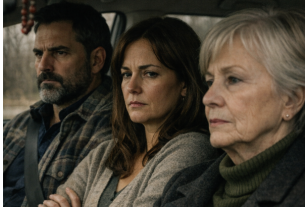
“Lena. I’m going to tell you something now. Just don’t interrupt.”
He said it on Tuesday, during dinner. I had just served Igor borscht — with sour cream, the way he liked it, and pampushki. Igor is my husband. We have been married for twelve years. Our son Nikita is ten, in fourth grade.
“I’m listening, Igor.”
“Lena. Svetka called. She has problems.”
Svetka is Igor’s sister. She is thirty-four. She is married to Vitalik, a freelance photographer who earns either two hundred thousand a month or fifteen thousand, depending on how things go. They have no children. They live in a rented two-room apartment in Moscow — Svetka and Vitalik left our city for the capital five years ago to “build a career.” Svetka works as an account manager at an advertising agency and earns ninety thousand.
“What happened?”
“Her car died. Completely. A ten-year-old Granta, beyond repair now — the engine, the suspension, the body is rotten. The mechanic said it should be thrown away. And Svetka can’t manage without a car — she drives to clients. In Moscow, it’s hard for an account manager without a car.”
“I see. I’m sorry.”
“Lena. I want to help her.”
“Fine. What are you planning?”
“Lena. I want to transfer our savings to her. For a car. A new one. Well, not new, of course — a decent used one, around six hundred and fifty thousand. A Polo, or a Solaris, or a Rapid. Something for five to seven years. So she has a normal car without problems.”
I put down my spoon.
“Igor. Wait. Our savings — that’s seven hundred and thirty thousand?”
“Yes.”
“You want to transfer Svetka seven hundred and thirty thousand?”
“Six hundred and fifty. The rest for fuel, insurance, registration.”
“So, all our savings.”
“Lena. Well, not all of it. About eighty thousand will be left.”
“Igor. We saved seven hundred and thirty thousand. For six years. For our own goals.”
“Lena. I know.”
“Igor. That seven hundred and thirty thousand is our down payment for a bigger apartment. We saved for it for six years. So we could move from our two-room apartment into a three-room one. Nikita is growing up, he has his own room — ten square meters, he sits in there like he’s in a cage. In a three-room apartment, he would have a normal room — fifteen or sixteen square meters. And you and I would have a bedroom. And a living room. We dreamed about this, Igor. For six years.”
“Lena. That can wait.”
“Wait how long?”
“Well… until we save up again.”
“Igor. Six years. We saved for six years. Every month — ten, fifteen thousand, however much we could. From my salary, from yours. It was our shared goal.”
“Lena. And right now Svetka has no car.”
“Igor. Svetka is in Moscow. Where there is a metro, buses, taxis, car-sharing, electric scooters. Moscow isn’t our town, where the bus comes once an hour. You can live without a car in Moscow.”
“Lena. Svetka needs to visit clients. Without a car, she won’t be able to work.”
“Igor. An account manager at an advertising agency visits clients by taxi. Paid for by the company. I checked — my friend works in the same position in Moscow. None of their account managers use their personal cars because parking in central Moscow costs five hundred rubles an hour.”
“Lena. Svetka drives. It’s more convenient for her.”
“Igor. ‘More convenient’ is not a reason to take seven hundred and thirty thousand away from us.”
“Lena!”
Igor slammed his palm on the table. The plate jerked.
“Igor. Don’t raise your voice. Nikita is in his room — he can hear.”
“Lena.” Igor lowered his tone. “Lena, listen. Svetka is my sister. My only one. We’ve been together since childhood. Mom and Dad are dead — we have no one except each other. I can’t abandon her when she has problems.”
“Igor. That is very noble. I respect you for that. But tell me — why does the help have to be in the form of seven hundred and thirty thousand all at once? Why not fifty? Why not a hundred?”
“Lena. A car costs six hundred and fifty. I want to buy her a car.”
“Igor. Why not help her with a down payment on a car loan? Her salary is ninety thousand. A car loan payment for five years on six hundred and fifty thousand would be about fifteen thousand a month. She can handle that perfectly well. Help her with the down payment — one hundred and fifty, for example. And pay the insurance — twenty-five. In total, one hundred and seventy-five. That’s meaningful help. And we would still have five hundred and fifty for our three-room apartment.”
“Lena. Svetka doesn’t like loans. She wants it to be hers right away.”
“Igor. I don’t like loans either. I also want something to be mine right away. A three-room apartment. But I won’t get it because I don’t have six million in cash. I have to save. Svetka will have to as well.”
“Lena. Those are different things.”
“Why?”
“Because Svetka is younger than me. I’m her older brother. I’m obligated to help.”
“Igor. Svetka is thirty-four. She is an adult woman. She has a husband. She has a job. She is not an orphan, not disabled, not a pensioner. Why are you ‘obligated’ to give her all our savings?”
“Lena. Family comes first. Remember that.”
I fell silent.
For a long time.
Igor apparently decided I was thinking it over. And he continued developing the topic.
“Lena. I already told Svetka today that we would help. Tomorrow I’ll go to the bank — withdraw the money, transfer it. Svetka has already chosen a car. A 2020 Polo, gray, six hundred and twenty thousand from a private seller. She’s going to look at it tomorrow evening. I’ll transfer the money to her card, and she’ll go buy it.”
“Igor. Stop.”
“What?”
“Igor. Wait. You already TOLD Svetka today that we would transfer her our savings?”
“Well, yes.”
“Without me?”
“Lena. It wasn’t ‘without you.’ I’m telling you now.”
“Igor. You’re telling ME after you already promised your SISTER. Do you understand the difference?”
“Lena. Don’t nitpick words.”
“I’m not nitpicking. This is a very important point. You consider this money yours. Only yours. You don’t consider it ours.”
“Lena. We are a family. What difference does it make — mine, yours?”
“Then let’s do this. If there’s no difference, tomorrow I’ll go to the bank and transfer all our seven hundred and thirty thousand to my mother. Her pension is twenty-one thousand, and she has been wearing the same shoes for three years. Shall we help Mom?”
“Lena. That’s different.”
“Why, Igor?”
“Because your mother… well, she has a pension. By her status, she’s supposed to live modestly.”
I slowly set down my spoon.
“Igor. What did you just say?”
“Lena, I didn’t mean it in a bad way…”
“Igor. You just said that my mother is a pensioner, so she isn’t entitled to seven hundred and thirty thousand by status. But your sister — an adult working woman, married, childless, with a salary of ninety thousand in Moscow — is entitled to it. Because she is your sister.”
“Lena…”
“Igor. We’re stopping this conversation now. I’m going to finish my borscht. Then we will calmly go into the room and talk. Without Nikita. Because this conversation is going to be long.”
“Lena. I’ve already decided everything.”
“Igor. No. You haven’t decided anything. We haven’t decided anything yet. Finish your food.”
After dinner, I sent Nikita to his room to play on his tablet. I even allowed him more time than usual. Igor sat in the armchair. I sat on the sofa, with a notebook and pen in my hands.
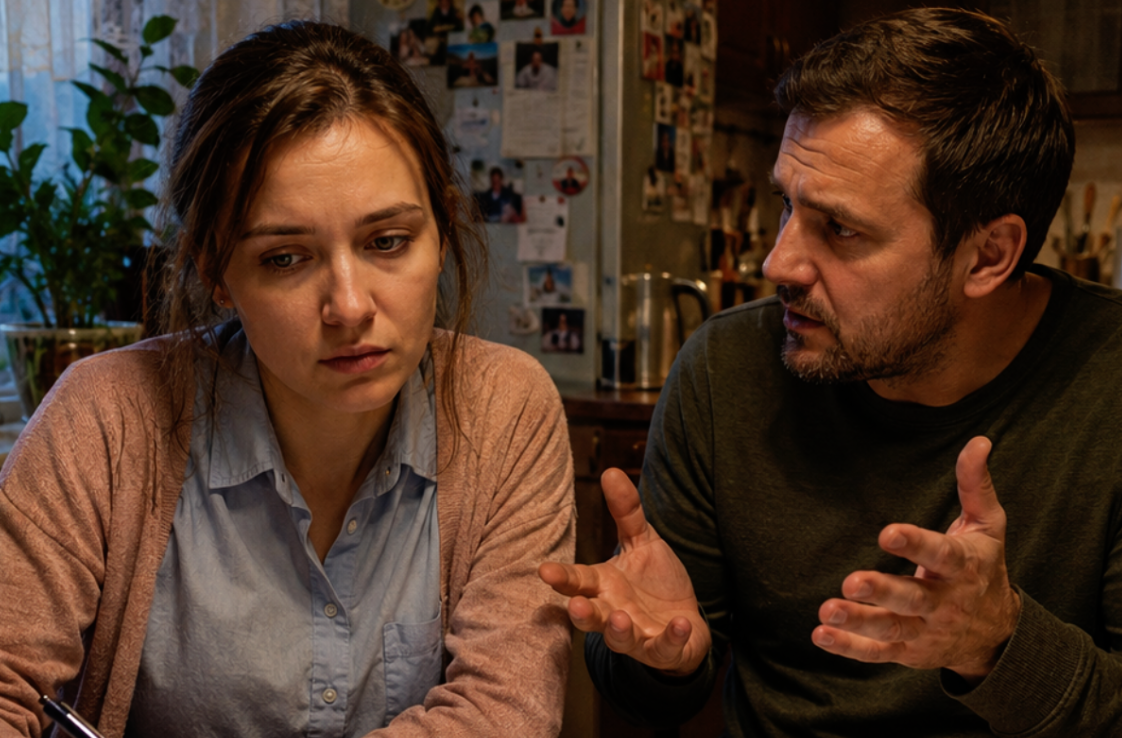
“Igor. I want to talk to you. Seriously. Without emotion. And with numbers. Are you ready?”
“Lena. Why do you always need numbers?”
“Igor. Are you ready?”
“I’m ready.”
“Good. Let’s analyze the situation. First. Our joint money is seven hundred and thirty thousand. Of that: my contribution over six years is three hundred and ninety thousand. Your contribution is three hundred and forty. I counted it. I have all the printouts saved. I earn sixty-eight thousand, you earn eighty-five. I saved more as a percentage of my salary. That’s the first point.”
“Lena. What difference does it make?”
“A big difference, Igor. It means more than half of this money is mine. And if you transfer it to your sister, you are transferring MY money. Without my consent.”
“Lena. We are husband and wife. We have a joint budget.”
“A joint budget is when money is spent by joint decision. Not when one spouse single-handedly decides to give everything to one of his relatives. That is no longer a joint budget — that is your budget, where I work as a reliable donor.”
Igor was silent.
“Second. Igor, I want you to remember two things right now. Do you remember when my mother fractured her hip three years ago?”
“I remember.”
“Do you remember that the operation cost eighty-five thousand? Mom had fifteen. I had twenty. Back then I took another fifty thousand from our joint savings. Do you remember what you said then?”
Igor turned red.
“Lena. That was different.”
“You said then: ‘Lena, that isn’t our joint money. That is money for the apartment. Your mother is your responsibility. Take out a loan.’ So I took out a loan. Fifty thousand at twenty-eight percent annual interest. I paid it off for a year and three months. From my own salary. Remember?”
“Lena… Lena, I was wrong then.”
“You were wrong, Igor. And now you are suggesting that I give everything, down to the last kopeck, to your sister — healthy, working, married, childless. But three years ago, you refused my mother even fifty thousand from the shared pot when she had a fractured hip. Igor. This isn’t ‘family comes first.’ This is ‘my blood comes first, and yours is separate.’”
“Lena. I was wrong then. Now I would help.”
“Possibly. But now I’m offering you a way to test yourself. Are you ready under the following conditions?”
“What conditions?”
“The condition is this. We help Svetka — but within my limits. One hundred and fifty thousand at once for a down payment. Twenty-five for insurance. In total, one hundred and seventy-five. From the joint money. Svetka takes out a car loan for five hundred thousand for five years. The payment will be around twelve thousand a month. With her salary of ninety thousand, that’s normal; it won’t ruin her. And we — meanwhile — with the remaining five hundred and fifty thousand plus future savings — reach a million in a year and a half or two years and apply for a mortgage on a three-room apartment. That is the first option. Balanced.”
“Lena, Svetka doesn’t like loans.”
“That is her problem, Igor. Not ours. Svetka doesn’t like loans — let her save up herself. Or let Vitalik earn it. Vitalik, by the way, is a photographer — he has had months where he made two hundred thousand. Can’t he earn enough for a car in six months?”
“Vitalik… he spends money on equipment. He has professional cameras, lenses…”
“Igor. I understand. Vitalik spends money on his hobby. Svetka doesn’t like loans. And the two of you decided that I should pay for their lifestyle preferences. Out of one hundred percent of my savings from six years. Is that right?”
Igor was silent.
“That is the first option, Igor. The second option is that you transfer seven hundred and thirty thousand to Svetka on your own, without my consent. But then — listen carefully — tomorrow I will go to the bank and do exactly the same thing. Only not for your sister’s car. For repairs in my mother’s apartment. Her ceiling has been leaking for two years — the upstairs neighbor, whose radiator is rotten, doesn’t want to fix it. Mom needs all the wiring, ceilings, and floors replaced. That’s four hundred thousand. Plus I’ll buy her proper winter boots and a coat; she has had the same ones for six years. Plus I’ll install plastic windows for her; her wooden ones are from 1985, and the wind blows in from outside. Plus I’ll buy her a proper refrigerator; her Biryusa already rattles and freezes everything. In total — seven hundred thousand. From our joint money. Seven hundred.”
Igor looked at me.
“Lena. You won’t do that.”
“Igor. I will. No question. If you can, then I can too. You yourself said, ‘Family comes first.’ My mother is my family. Exactly the same way Svetka is yours.”
“Lena. Is this an ultimatum?”
“Igor. This is symmetry. I am warning you: if you transfer Svetka seven hundred and thirty thousand, I will transfer exactly the same amount to my mother. And we will end up at zero. No apartment, no savings, nothing. Svetka will drive around in a Polo. My mother will sit behind new windows. And then we’ll see who helped whom.”
Igor was silent. For a long time.
“Lena. I don’t want to fight.”
“I don’t want to either, Igor. I want fairness. Listen, I’ll say one more thing. A third option.”
“What?”
“The third option is that you help Svetka. From your personal money. Not from our joint money.”
“Lena. I don’t have personal money. Everything I have is joint.”
“Igor. You have a salary of eighty-five. You can start saving — from your next paycheck — forty thousand a month. For Svetka’s car. In fifteen months, you’ll gather six hundred thousand. Then give it to her.”
“Lena. That’s a year and a half!”
“Igor. Svetka drove that Granta for ten years. She can manage for a year and a half with taxis and the metro. Or she can take out a car loan like normal people.”
“Lena. Nothing will change in a year and a half. Svetka needs the money now.”
“Igor. Do you know what I need ‘now’? I need a three-room apartment ‘now.’ I have needed it for six years. Our son needs a normal room ‘now.’ He has needed it for ten years. Do you know what I do? I wait. And save. Because I am an adult. And I understand that ‘right now’ doesn’t always happen. And somehow, I haven’t died.”
Igor sat in the armchair with his head lowered.
“Lena. I can’t tell Svetka no. I already told her yes.”
“Igor. That is your problem. You said yes without checking with me, without discussing it with me, without getting my consent. You did something foolish. And now you have a choice: either you call Svetka and tell her the truth — ‘Svetka, forgive me, I got carried away. Lena and I have a family budget; we decide together. I can help you with one hundred and fifty thousand. The rest is a loan.’ Or you transfer your seven hundred and thirty, and I transfer my seven hundred to my mother. There is no third option.”
“Lena. Don’t pressure me.”
“Igor. I’m not pressuring you. I am setting boundaries. We never had them properly set before — and now I am drawing them. This should have been done long ago.”
Igor stood up. Walked around the room. Sat down again.
“Lena. Give me the night. To think.”
“Of course. Just don’t transfer anything until we talk. If you transfer it without my consent, tomorrow I’ll file to divide our joint accounts. We don’t have a prenuptial agreement; everything is fifty-fifty. I’ll withdraw my half. That’s it. And we’ll continue from there — each on our own track.”
“Lena. Are you threatening me with divorce?”
“Igor. I am not threatening divorce. I am threatening division. Those are different things. We can divide the account and still stay together. I just won’t trust a joint budget anymore. We will move to separate finances — everyone for themselves, shared expenses split in half, by receipt. Like neighbors. If you choose your sister as more important than your wife, I choose myself as more important than you. That is symmetry.”
Igor went to the bedroom. I stayed on the sofa with my notebook.
In the morning, Igor got up before me. Made coffee. Brought it to me in bed.
“Lena. I won’t transfer seven hundred and thirty to Svetka.”
I was silent.
“I’ll call her. Right now. And I’ll say I can only help with one hundred and fifty. The rest — she can take out a loan.”
I nodded.
He called Svetka. In front of me. On speakerphone — I asked for that, and to my surprise, Igor agreed.
“Sveta, hi.”
“Igoryok, hi! I’ve already arranged it with the seller — I’m going at five to look at the Polo…”
“Sveta. Wait. I need to talk to you.”
“What happened?”
“Sveta. Yesterday I promised you seven hundred and thirty. I… I got carried away. I didn’t discuss it with Lena. It’s our joint money. We saved it to move into a bigger apartment. For six years.”
“Igoryok! But how can this be! You promised!”
“Sveta. I know. I was wrong. Listen — I can help you. One hundred and fifty thousand for the down payment on the car. Twenty-five for insurance. In total, one hundred and seventy-five. That’s all I can do from the joint money. The rest is a loan. Car loans are around eleven percent now — that’s normal.”
“Igoryok! Are you kidding me?! I don’t like loans!”
“Sveta. I understand. But you have a choice. A loan. Or a used car for one hundred and seventy-five — there are options like Larguses, Kalinas, old foreign cars. Or you can walk for a while and save up yourself. I can also give you twenty thousand a month from my salary. In a year, that’s two hundred and forty. You’ll have almost half a million. You can buy something decent.”
“Igoryok! This is all LENKA, isn’t it?! She twisted your head!”
“Sveta. Not Lenka. Me. I thought about it and realized I cannot give away the shared goal Lena and I worked toward for six years just so you can have a car. You and Vitalik have salaries, you have options. Lena and I have one chance at an apartment. I’m sorry.”
“Igoryok! I’m not speaking to you! Tell your Lenka congratulations — she’s tamed you!”
“Sveta. Don’t be rude. Lena is right here, she can hear everything.”
“Good, let her hear it! I’ll remember this!”
Svetka hung up.
Igor looked at me guiltily.
“Lena. Forgive me.”
“For what, Igor?”
“For everything. For yesterday. For Svetka being rude to you just now. For three years ago, with your mother. For the six years we saved — and I almost ruined everything. Forgive me.”
I took his hand.
“Igor. Thank you for hearing me.”
“Lena. I… I want to say one more thing.”
“Say it.”
“Lena. Last night I lay there and thought. For a long time. Until three. And I realized — for twelve years, I saw you as… well, as part of Svetka. As an extension of my family. I didn’t see you as a separate person. With your own family. Your mother. Your interests.”
“Igor…”
“Wait, Lena. Let me finish. It’s important. When I said yesterday, ‘Family comes first,’ I meant MY family. My late mom and dad. Svetka. And you — you were somewhere off to the side in that formula. As ‘the wife.’ Not as ‘family.’ And that — that was my big mistake. For twelve years.”
I was silent.
“Lena. You are my family. You and Nikita. Your mother is my mother-in-law, but she is also my family. And Svetka — yes, she is my sister. I love her. But she has her own family. Vitalik. And she should turn to her own family — Vitalik — for help. Not to me.”
“Igor. That is a very mature thought.”
“Lena. I’m forty years old. It’s probably time.”
We both laughed. Quietly. Through the lump in our throats.
Svetka didn’t speak to Igor for three months.
At first, she called. Shouted into the phone. “Igoryok, you’re under her thumb! Igoryok, you betrayed your own blood! Igoryok, Mom would turn over in her grave!” Igor listened. He didn’t justify himself. Once he said, “Sveta, Mom actually wouldn’t turn over in her grave. Mom would be happy for Lena — that I have a normal wife who holds the family together. But she would be upset with you. That at thirty-four, you’re asking your brother for money instead of your husband.”
After that sentence, Svetka hung up.
In the end, she didn’t take out a loan. She bought — with our one hundred and fifty and Vitalik’s one hundred and thirty. Strangely enough, he found the money — he sold one of his lenses and an old camera. She bought a used Logan from 2018 for two hundred and seventy thousand. A Logan, not a Polo. Of course, the Logan didn’t suit her “status.” But it drove.
Three months later, Svetka called Igor herself. Dryly. On business — saying there were photos of their parents in her folder, she was sorting through them and wanted to know whether to send copies. Igor said yes, send them. Svetka sent them. And added at the end: “Igor, forgive me for what I said back then. Vitalik gave me hell — said I had no right to make claims on someone else’s family. I… I thought about it. He was right.”
Igor replied: “Sveta. Thank you. I love you. Just differently now. As a sister. Not as a dependent.”
Svetka didn’t get offended. She only wrote: “Understood. I’ll try to live up to that.”
Since then, they talk once every two or three weeks by phone. Svetka has come to visit us a couple of times — with Vitalik. She brought Nikita a gift. With me, she is polite, cool. I am polite too. We are not friends. And we probably never will be. But we are relatives. And that is enough.
A year and a half passed.
We increased our savings to one million one hundred thousand — because we no longer got distracted by “helping relatives at the first demand.” Igor began taking extra shifts — he works at a design company and did side jobs, drawing plans for private clients. I also started doing bookkeeping part-time for a small sole proprietor I knew. An extra fifteen thousand a month.
With one million one hundred thousand, we applied for a mortgage. We bought a three-room apartment — eighty-two square meters, in our same district, ten minutes from the old apartment. Nikita moved into his own room — sixteen square meters — with shining eyes. He set up a desk for homework, a bed, a shelf for Lego, and hung space posters on the wall. He said, “Mom. This is the best day of my life.”
I cried then. From happiness.
And one more thing. Over that year and a half, I gradually renovated my mother’s apartment. Not all at once, not for seven hundred thousand, but gradually — forty or fifty thousand each quarter. I installed plastic windows. Redid the wiring. Bought a new refrigerator — an Atlant, a normal one. Boots — winter ones, leather, warm. A coat. For the first time in five years, Mom looks like a normal pensioner, not like a beggar.
Igor, notably, took part in those repairs. With his own hands. On weekends, he went to my mother’s and hung wallpaper himself. He redid the wiring himself — he’s an engineer. He chose boots for her himself, together with me in the store. My mother now looks at him like a son. “Lenka, your Igoryok has become golden. Not like before.”
I don’t tell my mother what “before” was like. Why would I? What matters is now.
One day — it was autumn, and we had already been living in the new apartment for a year — Igor and I were sitting in the kitchen. Nikita was doing homework in his room. Outside, it was raining.
“Lena.”
“What, Igor?”
“Lena. I remembered recently. That evening. When I told you, ‘Tomorrow we’ll transfer all the money to Svetka.’”
“I remember, of course.”
“Lena. Back then — at dinner — you nodded. Finished your borscht. And only after that, in the room, did you start talking to me. But you could have made a scandal right there at the table. Shouted. Thrown a plate. There are wives like that.”
“There are, Igor.”
“Lena. Why didn’t you shout?”
I thought about it. For a long time.
“Igor. You know. When I heard that phrase from you, everything inside me went cold. I could have shouted, yes. But I thought about Nikita. He was in his room. He would have heard his mother shouting and understood that there was a fight in the family. And he is sensitive. I didn’t want that image for him. And I thought that shouting wouldn’t prove anything. Shouting would only push you further away — and you would do your foolish thing out of spite. And I needed not to push you away. I needed to turn you toward a conversation. So I finished eating. To calm down. And then — with numbers, with a notebook — I talked.”
“Lena. Do you know what that is? Wisdom.”
“Igor. It isn’t wisdom. It’s fear. I was very afraid of losing you. I thought that if I lost control right then, we wouldn’t get through it.”
“Lena. We didn’t lose control. Thanks to you.”
“Igor. Thanks to US. You heard me. Not every husband would hear — but you did. That is your merit, not mine.”
Igor took my hand.
“Lena. If I hadn’t heard you back then, what would you have done?”
I looked him in the eyes.
“Igor. I would have gone to the bank. And transferred seven hundred thousand to Mom. Exactly as much as you planned to transfer to Svetka.”
“And?”
“And I would have left. Not immediately. But gradually. Because a person who considers my family ‘second-rate’ cannot be my husband. It is very painful. But it is the truth.”
“Lena. Thank you for not leaving.”
“Igor. Thank you that I didn’t have to.”
We sat in silence.
“Lena.”
“What?”
“Lena. I have one more… well, not a request. An idea.”
“Tell me.”
“Lena. Next year — when we can breathe a little with the mortgage — let’s go on vacation, the three of us. To the sea. To Sochi, or Anapa, or somewhere. You and I haven’t had a proper vacation in twelve years — only trips to your mother’s dacha. We’ll show Nikita the sea. And it wouldn’t hurt us either.”
“Igor. That would be the best gift.”
“It isn’t a gift, Lena. It’s normal. I only understand that now.”
I smiled.
“Igor. Do you know what else I’d like?”
“What?”
“For you never to say that phrase ‘family comes first’ again. In any context. It’s a very dangerous phrase, Igor. You can fit anything under it — give away what belongs to others, take from your own, rewrite property, justify any injustice. ‘Family comes first’ is a password for manipulators. A real family doesn’t need slogans like that. It simply lives. Quietly. Every day.”
“Lena. I won’t say that phrase again.”
“Thank you, Igor.”
“Lena. Then what phrase should I say?”
“Say, ‘My wife comes first.’ And ‘my son comes first.’ And ‘my mother-in-law is like a mother to me, first of all.’ But ‘family’ is too vague. Anyone can be written into family — Svetka, Vitalik, some second cousin uncle with his problems. First of all, there are specific people. Specifically — us. The three of us.”
Igor nodded.
“Lena. I’ll remember. Wife comes first. And son. And mother-in-law.”
“Then — peace.”
“Then — peace, Lena.”
And we drank tea. Outside the window, rain was falling. Nikita was in his room listening to something in his headphones — probably music, probably a video. And we sat in the kitchen — in our new kitchen, in our new three-room apartment — and I understood.
Family is not a slogan.
Family is when you don’t give it away to anyone. Not to a sister. Not to a brother. Not to “blood.” Not to anyone.
Only into its own hands. Every day. Quietly. One cup of tea at a time.