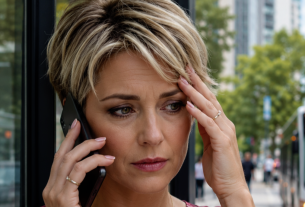
Zlata held the ATM receipt between two fingers, the way you hold something slimy that you do not want to throw into the trash with your bare hands. The number printed on it was round and vicious.
Account balance: 412 rubles.
And yet only yesterday, before going to sleep, she had calculated that there should still be at least fifteen thousand left by the twentieth. Where had the money gone?
Although—what did she mean, where?
Zlata knew perfectly well where it had gone. She simply found it disgusting to admit it aloud, even to herself.
She folded the receipt into quarters and shoved it into her jacket pocket. The small supermarket beneath their apartment building glowed with warm light, and the entrance smelled of fresh bread from the bakery. For some reason, that ordinary, everyday atmosphere made her angrier than anything else.
People pushed shopping carts, chose yogurt, and argued beside the cheese aisle. Everything in their lives seemed normal.
Zlata stood there with a basket containing buckwheat, chicken thighs, a block of butter, and a carton of milk, calculating in her head whether four hundred rubles would be enough.
It was not enough even for that.
She had to put the butter back on the shelf. At the checkout, under the cashier’s gaze, she removed the milk as well.
Buckwheat and chicken. That was all.
At least they would have dinner.
When she got home, Vadim was lying on the sofa with his phone. The light from the screen illuminated his face from below, making him look slightly unfamiliar. When he heard the lock click, he did not even turn his head.
“Hi,” he said without looking away from the screen.
“Hi.”
Zlata dropped the bag onto the table more loudly than necessary. The bag was so light that the sound it made was pathetic, which made her feel even worse.
“Did you eat today?”
“Yeah. Made myself some instant noodles.”
“At least we still had instant noodles.”
Vadim finally looked up. Something in her voice caught his attention.
“What’s wrong with you?”
“Nothing. I’m tired.”
She did not want to start the argument the moment she walked through the door. Zlata had promised herself more than once that she would stop having these kitchen confrontations that ended with doors slamming.
They never accomplished anything.
Vadim would nod, agree, and promise to change, and a week later everything would return to exactly the way it had been before.
So Zlata silently changed her clothes, put water on for the buckwheat, and cut up the chicken. Her hands performed the familiar motions while the same question circled endlessly in her head.
Where was the money?
They had been together for four years.
The apartment belonged to her—a one-room flat in a residential district, with a large kitchen and a view of the garages. It was nothing extraordinary, but it was hers.
Zlata had taken out the mortgage before she met Vadim. She had saved for the down payment for five years, denying herself almost everything. The monthly payment was thirty-one thousand rubles, and she still had another eight years to go.
That thirty-one thousand had always been taken from her bank account.
Always.
Somehow, Vadim had naturally arranged things so that the mortgage was “Zlata’s responsibility” because the apartment belonged to Zlata. Logical, wasn’t it?
Groceries, utilities, and household necessities had also somehow quietly become her responsibility.
Zlata earned reasonably well for their city. She worked as an administrator at a private dental clinic and earned sixty-eight thousand rubles a month, sometimes nearly eighty thousand with bonuses.
Vadim worked in the warehouse of a large retail chain as a receiving clerk and earned around sixty-two thousand.
They had money.
Together, it was a perfectly decent income. Two adults without children should have been able to live comfortably and even put something aside.
But they never saved anything.
And for some reason, everything was always paid for with her card.
“Vadim,” she called from the stove as she stirred the buckwheat. “You were paid the day before yesterday, weren’t you?”
The spoon in his hand froze for a moment. He had come into the kitchen and was reaching toward the frying pan to steal a piece of chicken.
“Yes.”
“And where is it?”
“What do you mean, where is it?”
Vadim took the piece of chicken anyway and blew on it.
“It’s on my card.”
“Which card? There were four hundred rubles left on mine. I had to put the butter back at the store. Can you imagine that? I stood there putting butter back on the shelf like some penniless beggar.”
“Why do you have to start talking like that right away?”
“How am I supposed to talk?”
Zlata switched off the burner and turned toward him.
“Explain it to me normally. I don’t understand. We are two employed adults, and I have to put butter back on the shelf. Where is your salary, Vadim?”
He looked away toward the window.
Outside, the sky was already turning blue with dusk, and the garages were disappearing into the shadows. Someone was working inside one of them, shining a flashlight around.
Vadim stared in that direction as though something vitally important were happening there.
“Well… some of it is gone.”
“Some of it. Fine. How much is ‘some’?”
“Listen, can we not do this today? I’m tired. It was a terrible day. My supervisor drove me crazy over an inventory shortage…”
“How much, Vadim?”
He walked over to the refrigerator and opened it.
It was empty.
He knew it was empty, but he stared inside anyway, simply so he would not have to look at her.
Then he closed it.
“I gave it to Mom,” he said, facing the refrigerator door.
Zlata leaned back against the countertop and crossed her arms.
She would remember that pose many times afterward—how she stood there, gripping her own elbows, waiting for him to continue, already knowing she would not like what came next.
“To your mother. Again. How much did you give her?”
“Well… she asked. She has plans for the summer. She wants to go to a health resort in Kislovodsk. She has blood-pressure problems, and her doctor recommended it. I thought, how could I refuse her?”
“How much?”
Vadim finally turned around.
His face looked guilty and stubborn at the same time. He always looked like that when he understood that he was wrong but had no intention of backing down.
“Fifty-two.”
The kitchen became very quiet.
Only the faucet dripped. The washer had needed replacing for a long time, but they had never got around to it.
“Fifty-two thousand,” Zlata repeated slowly. “Out of sixty-two. You left yourself ten thousand. And you weren’t going to tell me at all, were you? I would have just kept putting butter back on the shelf.”
“Zlata, she’s my mother. It was a one-time thing. She really needs it.”
“A one-time thing.”
Zlata gave a short, humorless laugh.
“Vadim, in March there was another ‘one-time thing.’ You gave her thirty thousand for dental work. In January there was a ‘one-time thing’ for a fur coat, remember? She wanted a new fur coat for the New Year. How many ‘one-time things’ have there been in the last six months?”
“You can’t compare them. Dental work is about health…”
“Was the fur coat about her health too?”
He remained silent.
Blood rose into his neck and spread toward his ears. Vadim always turned red when he was cornered, and he was embarrassed by it.
“I just don’t like refusing her,” he finally forced out. “She raised me alone. I feel like I owe her. Like I’ve been guilty toward her my whole life.”
At that moment, for the first time that evening, Zlata felt her anger being replaced by something else—something heavy and exhausted.
She had heard this before.
Vadim pulled out the phrase “she raised me alone” like a trump card every time, and Zlata never knew what to say in response.
Yes, she had raised him alone.
Yes, it had been difficult.
But what did that have to do with fur coats and Kislovodsk?
“Fine,” she said quietly. “Eat your buckwheat.”
“Zlata…”
“Eat. It’s getting cold.”
They ate in silence.
Vadim kept glancing at her, apparently waiting for her to start again. He almost seemed to want her to shout at him. Then the tension would be released, they could reconcile, and everything could return to normal.
But Zlata remained silent.
And her silence seemed to make him more nervous than any argument could have.
That night, she lay awake for a long time, staring at the ceiling.
Vadim fell asleep quickly, the way people do when they are not accustomed to being tormented by guilt. He breathed evenly, facing the wall.
Zlata calculated.
Thirty-one thousand for the mortgage.
Seven thousand for utilities—it was summer, and they had been using the air conditioner.
Around fifteen thousand for groceries for the two of them.
Then transportation and small necessities.
All of it came from her sixty-eight thousand.
There were four hundred rubles left on her card not because she spent too much, but because she was carrying two people on her shoulders while the second one took his salary across the city to his mother.
By morning, she had made a decision.
She would talk to him.
Calmly.
Without shouting.
One last reasonable conversation between adults.
The conversation took place two days later, on Saturday.
Zlata deliberately chose Saturday. They would both be rested and calm, and neither of them would be in a hurry.
She made coffee. Its rich, comforting aroma filled the room, and for a moment she thought that perhaps they could still solve everything over coffee, like two mature adults.
“Vadim, sit down,” she said, placing a cup in front of him. “Let’s just talk. No arguing. I genuinely want to understand.”
He looked wary, but he sat down.
“I’m not against you helping your mother,” Zlata began, warming her palms around the cup. “Do you hear me? I’m not against it at all. Helping your parents is normal. But you help someone when you have money to spare. We don’t have money to spare. Do you understand? We have a mortgage. Our entire life is invested in this apartment. When you give almost your entire salary to your mother for a health resort while I can’t afford butter, that isn’t help anymore. It’s something else.”
“I understand,” Vadim said with a nod.
The nod even seemed sincere.
“I really do understand. I just didn’t think about how it looked. Mom calls me and starts talking, and I can’t bring myself to refuse her.”
“Then learn to bring yourself to do it. You’re thirty-four years old.”
“Zlata, come on.”
“What do you mean, ‘come on’? Let’s do this. You don’t have to lie to her or argue with her. Just say, ‘Listen, I’m married. We have our own family and our own expenses. If you really need something, I can give you five thousand.’ Five thousand, Vadim. Not fifty-two. That is a reasonable amount of support. That is what adults do.”
Vadim remained silent for a long time, turning the cup on its saucer.
“All right,” he finally said. “You’re right. I really was wrong. It won’t happen again. I promise. Honestly. This salary goes toward our family, and from now on we’ll do what we agreed—five thousand at most, and only if it’s a genuine emergency.”
Zlata looked at him and wanted to believe him.
She wanted it very badly.
They were not strangers. Four years was still four years. They had taken vacations together and shared all the little things that made up a life.
She did not want to destroy everything because of money.
“All right,” she said. “I believe you. But this really is the last conversation like this. I can’t keep doing it. Do you understand? It isn’t that I don’t want to. I genuinely can’t.”
“I understand. Thank you for not telling me to get lost.”
He smiled, reached across the table, and placed his hand over hers.
His hand was warm.
Familiar.
“I’ll change.”
The following month was almost good.
Vadim made an effort. Zlata could see that he was trying.
One day, he bought groceries himself and came home carrying two bags filled to the top. He looked so proud of himself that you would have thought he had performed a heroic deed.
He paid the internet bill.
Once, he even said, “I got a small bonus. Let me transfer it to your card to help with the mortgage.”
He transferred eight thousand rubles.
It was not much, but Zlata accepted those eight thousand almost as though they were a declaration of love.
And yet something remained inside her.
It was not exactly fear. It was a constant sense of alertness, as though she were waiting for something to happen.
Zlata scolded herself for thinking that way.
The man was trying, and she still did not trust him.
That was not fair.
Vadim’s payday was the twenty-fifth.
Zlata spent that entire day on edge. At work, everything slipped from her hands. She mixed up patients’ appointments twice, and the head dentist gave her a strange look.
She kept checking her phone to see whether Vadim had written or called.
He remained silent.
That might have meant nothing. He often went all day without messaging her.
But by evening, Zlata had still worked herself into a state of anxiety.
He came home late, almost at ten.
Zlata heard the door open slowly, almost reluctantly. From the way he moved around in the hallway and took an unusually long time removing his shoes, she immediately understood that something was wrong.
Vadim entered the room and stopped in the doorway.
His shoulders were lowered. He had not even removed his jacket. He stood there soaking wet. Outside, a fine, unpleasant autumn rain had begun to fall.
He stared at the floor.
“Vadim?”
Zlata put down her phone.
“What’s wrong? Did something happen?”
“Something happened,” he said dully.
She got up from the sofa.
She already knew.
She could feel in her skin what she was about to hear, but she waited anyway, hoping she might be wrong.
“What happened?”
“Mom called.”
Zlata slowly lowered herself back onto the sofa as though her legs could no longer support her.
She rested the back of her head against the wall, closed her eyes for a moment, and opened them again.
“Go on.”
“Zlata, just don’t shout, all right? Listen to me.”
Vadim finally removed his jacket and threw it over a chair. It slid onto the floor, but he did not pick it up.
“Mom became ill. This afternoon. Her heart started acting up, and she called an ambulance. She said she was lying there and couldn’t get up. Her blood pressure was almost two hundred. She needs medication and tests. She wants to see a private cardiologist because she would have to wait six months through the public system. I couldn’t refuse her. Do you understand? It’s her heart. It isn’t a fur coat.”
“How much did you give her?”
“Zlata…”
“How much, Vadim?”
He swallowed.
“All of it. Sixty-three thousand. I got a bonus this time.”
Zlata sat very straight, her hands folded neatly on her knees like an obedient schoolgirl.
She looked at him for a long time, studying him as though she were seeing him for the first time.
At that moment, something inside her finally fell into place.
It did not break.
On the contrary, it moved into its proper position, like a dislocated joint returning to the socket with a quiet click, and suddenly revealing how wrong everything had been before.
“You didn’t even call me,” she said evenly. “All day. You knew we had an agreement. You knew I was waiting. And you stayed silent all day so you could come home and present it to me as a completed decision. Just like last time.”
“I was afraid you wouldn’t allow it.”
“Allow it?”
She gave a quiet laugh, and something about that laugh made Vadim flinch.
“So apparently you ask my permission. I had no idea. I thought you were a grown man, but apparently you need your wife’s permission. And when you don’t ask for it, you simply do whatever you want. Convenient.”
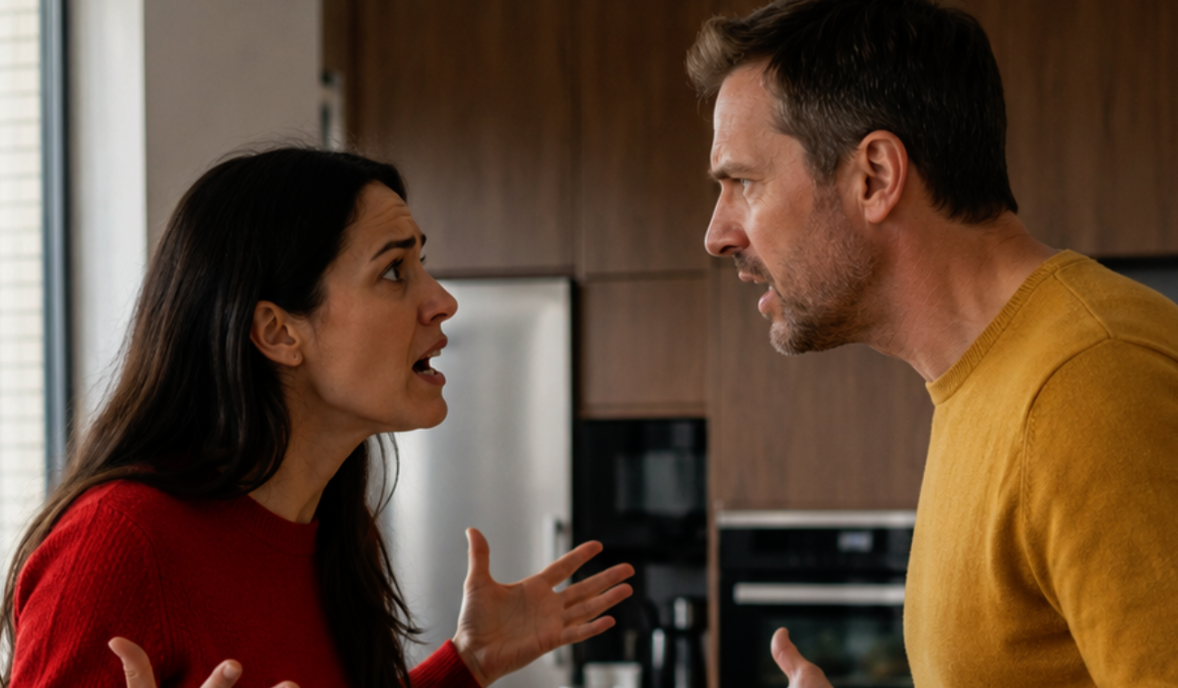
“What was I supposed to do?” Vadim suddenly raised his voice and stepped farther into the room. “I only have one mother. She was ill. It’s her heart! Was I supposed to say, ‘Sorry, Mom, my wife won’t allow me’? Do you even hear yourself?”
That was when Zlata rose from the sofa.
Her body seemed to lift itself before she even realized she was standing.
“Do I hear myself?”
Blood rushed into her face. She could feel her cheeks burning and something trembling inside her chest—not from weakness, but from all the tension she had been suppressing for four years.
“I hear myself perfectly well, Vadim. You’re the one who doesn’t hear yourself. I carry the apartment alone. I pay the mortgage alone. Groceries, electricity, water, even your socks and underwear come out of the same budget. I pay for everything. Every month. For four years.”
“I earn money too!”
“Where is it? Where is the money you earn?”
She gestured toward the window, toward the rain and the darkness where his mother lived.
“I pay for the apartment, I pay for the groceries, but your mother sees your salary more often than I do! Do I look like a workhorse to you?”
Her voice broke at the end.
She fell silent, breathing heavily, pressing her hand to her mouth.
Vadim stood opposite her, breathing heavily too.
The sound of the rain striking the windowsill filled the room. It had become faster now—fine, repetitive, and endless.
“There it is,” he finally said quietly, sounding almost offended. “You’re attacking my mother. I knew it. My mother has always been a thorn in your side.”
Zlata lowered her hand.
“What?”
“You’ve never liked Alina Viktorovna. I can see it. You can’t stand her. And now you’re using the fact that she’s ill to…”
“To do what?” Zlata interrupted. “Finish the sentence. What am I using it to do?”
“To turn me against her!”
Zlata stared at him in disbelief.
Or perhaps she did believe it. Everything was logical. Everything had been leading to this moment.
But some naïve part of her had still hoped that he would say, “I’m sorry. I messed up again. I was an idiot. Let’s figure this out.”
Instead, he was defending his mother.
He was standing in Zlata’s apartment, wearing clothes soaked through and washed with Zlata’s money, after eating food purchased with Zlata’s money, and defending the woman who drained every last coin from their family month after month.
“You know,” Zlata said.
Her voice suddenly became calm, almost gentle, and that calmness made Vadim straighten uneasily.
“I’m not against helping someone with heart problems. If you had come to me and said, ‘Zlata, Mom is genuinely ill. Let’s each contribute twenty thousand and take her to a cardiologist,’ I would have been the first one to drive her. I would have made the appointment myself and sat with her in the waiting room. Because she is a human being, and people help one another. But that isn’t what you did. You secretly gave her everything. And now you’re standing here telling me that I’m the bad person.”
“I didn’t say you were a bad person.”
“Sit down,” Zlata said. “Sit down, Vadim.”
For some reason, he obeyed.
He lowered himself onto the edge of the sofa, wet and awkward, and suddenly looked like a large boy who had been caught misbehaving.
Zlata walked across the room and stopped beside the window.
The yellow lights of the streetlamps blurred behind the glass, while the rain cut diagonally through their glow.
“I’m going to tell you something, and I want you to think about it,” she began without turning around. “You’re thirty-four. I’m thirty-one. I wanted a family. A normal family. I wanted us to have children someday, to visit my parents’ country house together, to save for vacations and a car. I wanted there to be an ‘us.’ But there is no ‘us.’ There is me, you, and your mother. And somehow, in that arrangement, I am responsible for supporting everyone, while decisions are made not by you and not by the two of us, but by her.”
Vadim stared at the floor.
“Alina Viktorovna calls, and that’s it. You go running. You will keep running when you’re forty, and when you’re fifty. Because you have never separated from her. You got married, but you never cut the umbilical cord.”
Vadim said nothing.
“So,” Zlata said, turning toward him, “since you feel so happy and comfortable with your mother, go and live with your mother.”
“What do you mean?” He raised his head.
“I mean exactly what I said. Pack your things and go. Live with her for a while. If her plans, her health, and her wishes are more important to you than our home, then stay close to her. I’m not going to keep supporting a healthy adult man who contributes nothing to my life. I don’t want to, and I won’t.”
“Are you throwing me out?” Vadim jumped to his feet. “Seriously? Because of money?”
“It isn’t because of money,” Zlata said wearily. “I wish it were only about money. It’s because I don’t exist in this family. I’m the service staff. The cashier. The payment terminal. But I’m a living person, Vadim. I get tired too. Sometimes I want someone to think about me. Just once, I would like someone to ask, ‘Zlata, do you have enough? Is this too difficult for you?’ Nobody has ever asked me. Not you. Not your mother.”
“This is my home too!”
That finished it.
Zlata even smiled.
“No. This is not your home. This is my apartment, Vadim. I bought it before I met you. I saved for the down payment for five years. I survived on black caviar—just kidding, I survived on buckwheat, the same as now. I pay for this apartment. You haven’t contributed a single ruble toward it in four years. Not one. You simply live here. So no, it is not your home. I’m sorry.”
Vadim opened his mouth and closed it again.
There was clearly nothing he could say. That made him even angrier, but it was a powerless anger now, and they both understood it.
“Tonight?” he finally asked dully. “You mean right now?”
“Right now.”
“But it’s raining.”
“It’s dry at your mother’s house.”
He stood there for a moment, then went to pack.
He threw his things into a sports bag with sharp, angry movements—shirts, his charger, his razor.
Zlata stood beside the window and did not help him.
In the past, she would have rushed over, folded everything neatly, and rearranged his socks so they would not get crushed.
Now she simply stood there and watched the rain.
“You’ll regret this,” he said from the doorway, throwing the bag over his shoulder. “You’ll come running back to me.”
“Maybe,” Zlata answered calmly. “But something tells me I won’t.”
The door slammed.
His footsteps descended the stairs, lower and lower, becoming quieter.
Then there was silence.
Only the rain remained.
Zlata stood there for a little longer.
Then she walked over and picked up the wet jacket he had left on the floor. For a moment, she considered running after him to give it back. Her hand even moved toward the door.
Then she lowered it.
She hung the jacket on a hook in the hallway.
He could come and collect it later if he needed it.
He was not a child.
Strangely enough, she slept deeply that night.
She did not dream.
When she awoke, the apartment was quiet. But the silence did not feel empty. It felt spacious.
She could walk into the kitchen without encountering someone else’s irritation. She could make coffee and drink it alone beside the window, watching the sky brighten over the garages after the night’s rain.
Zlata filed for divorce on Monday.
She did it without hesitation, sleepless nights, or thoughts of “what if?”
She sat in the registry-office waiting area and scrolled through her phone, and nothing inside her trembled.
They had no children, so the divorce would be straightforward.
There was nothing to divide.
The apartment belonged to her. They did not have a car. They had never managed to save any money.
Their entire married life fit inside the single sports bag Vadim had carried away through the rain.
Vadim called, of course.
He called on the first day and the second.
At first he sounded offended. Then he tried to persuade her. Eventually, he almost begged.
He said he understood everything now. He said he had been a fool. He promised it would never happen again. He would firmly tell his mother no. He would reorganize everything, and from then on they would split all expenses equally. They only had to get back together.
Zlata listened in silence.
Once, she said, “Vadim, you said exactly the same thing to me three weeks ago. Word for word. Over coffee. Do you remember? ‘I’ll change. It was the last time.’ Where did all of that go?”
Then she ended the call.
The following day, Alina Viktorovna called.
Zlata had just returned from work and removed her shoes. When she saw her mother-in-law’s name on the screen, she stared at it for a second before answering.
In a way, she was curious.
“Hello, Zlata,” her mother-in-law said.
Her voice was sweet and syrupy, the voice she used whenever she wanted something.
“How are you, dear?”
“Hello, Alina Viktorovna. I’m fine.”
“I’m calling because Vadim is beside himself. He’s terribly upset. You have to understand that he loves you. He doesn’t know what to do with himself. What happened between the two of you? He says it was something about money. Surely that isn’t a reason to destroy a family. Money comes and goes. You don’t have it today, and tomorrow you do. But family is sacred.”
Zlata walked into the kitchen and sat down.
Outside, rain clouds were gathering again, low and gray, moving over the rooftops.
“Alina Viktorovna,” she said calmly. “Do you genuinely not understand what happened, or are you pretending?”
“What happened? You had an argument. It happens to everyone…”
“What happened is that your son spent four years giving you the salary that should have gone toward our shared life. All of it. Every last ruble. Meanwhile, I paid for the apartment we lived in and bought the food we ate entirely by myself. The last time, he gave you sixty-three thousand rubles. I had four hundred rubles left on my card and had to put butter back on the shelf at the store. That is what happened.”
There was a pause at the other end of the line.
Then Alina Viktorovna spoke again. The sweetness had disappeared from her voice, leaving it dry and sharp.
“What does that have to do with me? I didn’t ask him to give me everything. He gave it to me, which means he could afford it. I didn’t force my son to do anything.”
“You called him every month with a new need. First your teeth, then the fur coat, then the health resort, then your heart. I’m not counting your money, Alina Viktorovna. You have the right to want whatever you want. But Vadim did not distinguish between your wallet and ours. To him, they were the same thing. And you knew perfectly well that he was giving you his last money, yet you took it. Not once did you ask, ‘Vadik, how are things with you and Zlata? Do you have enough?’ Not once.”
“How dare you speak to me like this?” her mother-in-law’s voice rose sharply. “I welcomed you into the family, and you—”
“You did not welcome me,” Zlata interrupted softly. “You tolerated me because I paid for everything. Let’s be honest with each other, woman to woman. You never liked me. And that’s fine. You weren’t obligated to like me. But I will no longer support both you and your son. So take your son back. You never let him go, and he never grew up. Perhaps the two of you genuinely will be happier together. I’ll manage on my own.”
“You—!” her mother-in-law began.
Zlata ended the call.
Not out of anger.
There was simply nothing left to discuss.
She placed the phone face down on the table and sat there for a while, listening to the kettle come to a boil and the rain beginning to patter outside.
Then she stood up, made herself tea, and took out the same butter she had been unable to afford before.
She had finally bought it—two whole blocks, out of spite.
She spread a thick layer on a slice of bread and ate it standing beside the window.
It was probably the most delicious sandwich she had ever eaten.
The divorce was finalized quickly, a month and a half later.
Vadim came to court looking dejected. He kept glancing at her, apparently hoping she would change her mind at the last moment.
She did not.
She signed where required, collected her copy of the documents, and stepped outside.
As though deliberately, a fine autumn rain was falling again.
But this time, the rain did not irritate her at all.
Zlata opened her umbrella—hers, purchased with her own money—and walked toward the bus stop with light steps.
Living alone turned out to be neither frightening nor lonely.
Quite the opposite.
For the first time in four years, her entire salary remained hers.
She still paid the mortgage alone, but now it was honest: one apartment, one person, one person’s expenses.
She even had money left over.
She could not remember the last time she had been able to buy herself a good pair of boots without calculating every ruble.
So she bought them.
She also went to a café with a friend, went to the cinema, and signed up for a course she had wanted to take for a long time but had always postponed because there had been no time or money for it.
According to mutual acquaintances, Vadim continued living with his mother.
Someone mentioned that Alina Viktorovna was now complaining to everyone in the neighborhood that her son was living at her expense, spending his salary on himself, and doing nothing around the house.
When Zlata heard this, she merely shrugged.
She felt neither satisfaction nor pity.
It was someone else’s life now.
It was no longer her concern.
Sometimes in the evenings, when darkness settled outside and the scattered lights above the garages came on, she would find herself thinking about the silence in her apartment.
It was not emptiness, as she had once believed.
It was simply her home.
Hers, and no one else’s.
And at last, she could breathe evenly inside it, without constantly expecting someone’s phone to ring and everything she had worked so hard to gather, piece by piece, to drain out of their lives once again.