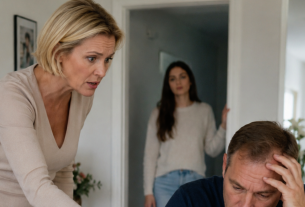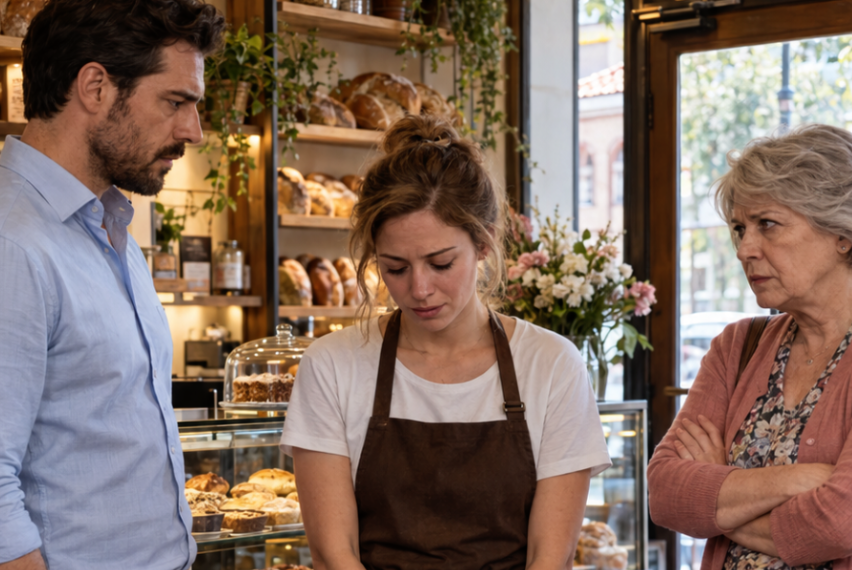
Tell me, Marina, are you even human, or are you some kind of selfish pastry chef?” Nina Mikhailovna plopped down on the sofa, adjusted her robe covered in pink cats, and stared at me over her glasses as if I owed her twenty years of care and gratitude.
I had only just come home from work, covered in flour up to my elbows, with whipped cream in my hair and my nerves at the point of, “One more word, and the cake will end up on someone’s face instead of a plate.”
“Nina Mikhailovna,” I began slowly, trying not to lose my temper, “I’ve been on my feet since five this morning. I had two banquets today, plus a children’s birthday party and a cake for forty people, and now you’re—”
“Exactly!” she exclaimed, slapping her palm against her knee. “You’re always running around with those little cakes of yours, if you’ll excuse me! You only have one mother-in-law, you know. But all of you at that pastry shop act as if you’ve joined a cult. No one can reach you at home, lunch is always some nonsense, and you can’t even cook a proper cabbage soup. I suppose you’re no longer happy to have me here?”
Her voice shifted into an offended tone. Classic.
I silently took off my coat and tossed my shoes by the door, inwardly cursing the day I had agreed to let them live with us. Nina Mikhailovna’s landlord had sold her apartment, and Alexei—my husband—had naturally felt sorry for her.
“Please don’t start,” I said wearily. “We agreed this would be temporary, until you found another place. That was… seven months ago.”
“You never find the time to help us!” Alexei shouted from the kitchen. “You say your business is booming, while Mother is suffering in someone else’s home! Couldn’t you show a little… concern?”
“Concern?” I spun around and walked closer. “You want me to show concern? You’ve been unemployed for two months and living off me, by the way. And your mother isn’t asking for concern—she wants a house by the sea. With a view. And a balcony. Within walking distance of the market, but without a hill. How is that even supposed to work?”
Alexei sat down at the table and pointedly poured himself some tea. His hands were trembling—not from fear, but from irritation.
“You take everything as a personal attack. What am I to you—an enemy?”
“And what are you to me?” I asked quietly. “A partner? A husband? Or simply your mother’s mouthpiece?”
Silence.
So much for our conversation.
Alexei and I met eight years ago. At the time, I had only just begun baking at home for friends and private orders. He came along with some friends to Lena’s bachelorette party and stayed “for dessert,” as he later joked. He was handsome, cheerful, and seemingly kind. Back then, he had appeared dependable.
And now here I was, sitting in the kitchen and calculating how much cream I would need tomorrow, just so I wouldn’t forget that I wasn’t merely someone’s wife or daughter-in-law. I was a person—with my own business and my own dream.
“Marina,” Alexei said half an hour later, peeking into the room with a dejected expression. “Don’t be angry. It’s just… things are hard for Mom. She worked all her life, and now she wants some peace. She says you could sell the pastry shop, and we could buy her a small house in Anapa or Gelendzhik. She would take care of herself and stop bothering you. And perhaps you could find something else to do.”
“Like what?” I looked up at him. “Sell underwear at the market? Or sit in an accounting office staring at paperwork until my eyes cross?”
He shrugged. He genuinely didn’t understand. To him, my pastry shop was nothing more than a hobby that smelled of vanilla and came with expensive rent.
“We could live nearby,” he added. “You wouldn’t be so tired, and Mom would be happy…”
I got up and went into the bathroom. Cold water stopped the tears better than valerian ever could. Then I returned, dried my face with a towel, and said:
“Alexei, have you lost your mind?”
He shrugged again. It was his signature gesture whenever a situation required him to take a position.
“Fine,” Nina Mikhailovna said the following day as she noisily rearranged jars of pickles. “Do whatever you want. Just don’t be offended when life bends you backward. All this ‘I want’ and ‘I dream’ nonsense means nothing. Look at Larisa, my brother’s wife. She worked all the time, and now she’s sitting at home after a heart attack, her husband has left her for a massage therapist, and her business has failed. Think about that.”
And I did think about it—for a long time.
Everything I had was invested in my pastry shop. The loans, the rent, the suppliers, the advertising—it was all on me. Alexei occasionally stopped by, rolled his eyes at the smell of cream, and said, “Wow, there’s a lot of women’s fuss in here.”
Women’s fuss.
Then Nina Mikhailovna would eat food I had paid for, complain to her friends that “Marina works hard, of course, but she neglects her husband,” and wash the dishes with an expression suggesting that I had sentenced her to hard labor.
A week later, Alexei brought me an “idea.”
“Look,” he said, handing me a tablet displaying a photograph of a shabby but charming little house by the sea. “It’s inexpensive. If we sell everything, we’ll have enough.”
I didn’t explode immediately. I didn’t start a scandal. I simply went into the kitchen and silently began scrubbing chocolate cream from the baking molds.
“Are you ignoring me?” he asked quietly.
“No,” I replied. “I’m simply trying not to start a fight.”
“But you said you wanted to live by the sea,” he began with the innocence of a five-year-old.
“Alexei, I said I wanted to go on vacation—for two weeks. You decided that was a signal to sell my business?”
“It’s for Mom. She’s been through so much…”
“And I haven’t been through a damn thing, apparently. Eight years of working with flour and sugar mean nothing to you?”
He shrugged again.
That was when I snapped.
I threw a whisk at him. Not hard, but accurately. He dodged it like a snake. The whisk struck the wall and bounced onto the floor.
“That’s it. I’m leaving,” he muttered before disappearing into the bedroom.
I remained alone in the kitchen, and for the first time in a long while, I didn’t feel like baking a cake. I felt like pouring myself a drink.
“Marina, what’s wrong with you?” Nina Mikhailovna approached me that evening. “He’s trying to do this for me. He wants me to live like a human being for once. But you… you’re stubborn. All you ever think about is yourself.”
“And what do you think I am?” I slowly turned toward her. “A servant? An investor? Or simply an incubator that produces happiness for everyone else?”
She silently spread her hands. Then, wiping her eyes with an embroidered handkerchief, she whispered:
“I thought you were kind.”
She went to her room, leaving me alone with those words: “I thought.”
As though I were an underwater rock against which both of them crashed every day.
Everything ended in the kitchen, just as it had begun.
I placed steaming coffee and a plate of cookies on the table. Alexei sat across from me.
“I have a plan,” he said. “We sell your pastry shop, use some of the money to buy Mom a house, and you keep the rest. You can start something new. You won’t have to work so hard.”
“So I have to begin all over again?” I clarified.
He nodded as casually as though he were suggesting that I change shampoos.
I took my business-registration certificate out of a drawer and placed it beside him.
“Do you see this?”
He nodded.
“Look carefully. This is me. This represents my money, my work, and my hands. I will not sell it. Not for anything.”
“So you’re choosing work over family?”
I looked him directly in the eyes.
“No. I’m choosing respect—respect for myself.”
He stood and walked toward the door. At that moment, his mother emerged from her room. She stood there silently for a moment, and then declared:
“I’ve seen women like you before. All they care about is business and careers. And then they end up with nothing—alone and unwanted by anyone.”
I turned toward her.
“Being alone is better than being permanently indebted to someone.”
The door slammed.
I sat back down at the table.
Only then did I realize that the conflict was no longer merely brewing. It had already climbed out of the jar and was roaming around the apartment like yeast in a warm room.
“Why didn’t you come to the café this morning?” Lena, Marina’s assistant, practically flew through the door as soon as she saw her employer. “You won’t believe what happened! Some man came in and said, ‘This place will be available soon.’ Can you imagine?”
Marina removed her sunglasses. Her eyes were red, but her lips were pressed into their usual businesslike line.
“What does he mean, ‘available’? Did he have any documents? Who was he?”
“I don’t know!” Lena spread her hands. “I told him, ‘Leave, or I’ll call the owners.’ But he smirked and said, ‘Go ahead. Everything has already been explained to them.’ Then he left, as if he thought you already knew.”
Marina froze, her shoulders tensing. Without saying anything, she walked behind the counter and checked whether the lease documents were still there. Then she took out her phone.
“Right. I’m going to call someone,” she muttered, heading into the back room and closing the door behind her.
Alexei didn’t answer. Not the first time, nor the fifth. Then he rejected the call. At eight in the morning.
That meant he wasn’t fishing or at a job interview. He was most likely at home, lying around. Or worse—he was with Mommy again, swapping brains with her.
An unpleasant feeling scraped at Marina’s stomach.
The apartment smelled of stewed cabbage and laundry detergent. The washing machine hummed in the bathroom, while Nina Mikhailovna sat in the kitchen in her floral robe, a tablet on her lap and a sausage sandwich between her teeth.
“Oh, you’re back!” she said with a shrug. “I thought you lived at that bakery of yours now.”
“Pastry shop,” Marina replied calmly. “And yes, unlike this household, people actually work there.”
“I worked too, you know!” Nina Mikhailovna angrily jabbed at her tablet. “Then I raised children and grandchildren. But you measure everything in little cakes. Look what it’s come to: your husband is unemployed, and all you do is decorate cakes!”
Marina walked past her without replying and entered the living room. Alexei lay on the sofa with one leg resting over the back. He was holding his phone, laughing at some video playing on the screen.
“Why did you tell my landlords that we were moving out?”
He looked away from his phone and pretended to stretch.
“Oh, that… Mom called them. She says an opportunity has come up to buy a little house in Gelendzhik. We need to decide quickly before someone else buys it. I merely went there to ask a few questions.”
“You asked a few questions?” Marina sat on the edge of the sofa. “You went to discuss selling my pastry shop without asking me?”
Alexei hesitated. He shoved his phone under the pillow and stood up.
“Why are you getting worked up immediately? It’s only an idea! There’s the sea, warm weather—it’s just what the doctor ordered for Mom.”
“And what has the doctor ordered for me?”
He sighed.
“Marina, stop acting like a child. You’ll succeed anywhere. If you want, you can open another shop. You’ll have money.”
“You’ve lost your mind,” she said quietly. “I’ve spent five years building this place. People come because of me, not because of some unfamiliar building where I’d have to start again from nothing. I negotiated discounted rent and did the renovations at night. And you simply want to sell it all to buy your mother a summer house?”
“It isn’t merely a ‘summer house,’ Marina!” he snapped. “It’s a solution! We have debts and a mortgage. You have an income, and I have my mother. She isn’t young anymore! She wants peace, a normal life, and a home by the sea! She thinks of you as her own daughter, while you treat her like a stranger!”
“I am a stranger to her. Very much a stranger, Alexei. And apparently, I’m a stranger to you as well.”
He grabbed the remote control and switched off the television with such force that he nearly broke the button.
“Listen, that’s enough! You have a business, and she has high blood pressure! You only ever think about yourself! You don’t listen to either of us!”
Marina stood.
“I hear you. I hear that both of you want to climb into my life, cut away everything I care about, and rent out whatever remains. And apparently, I’m supposed to wave a flag cheerfully and cook borscht for you.”
“Don’t exaggerate.”
“And don’t pressure me. I’m not selling anything. And furthermore…”
She looked at him. He stood there slouching, his face red and his hands nervously rubbing his thighs. He was frightened—but not of losing his wife.
He was frightened of having to explain everything to his mother.
“Are you leaving?” His voice trembled.
Marina leaned forward and said slowly:
“I’m not leaving. I’m stepping out of this comedy.”
That evening, Marina packed her belongings quietly. She didn’t noisily zip her suitcases or slam any doors. She packed as if she were preparing for a business trip. But instead of business suits, she packed her favorite hoodie and photographs of her mother that had long been hidden in a drawer.
In the kitchen, Nina Mikhailovna washed cups and hummed to herself. Then she suddenly turned around.
“Oh! Where do you think you’re going?”
“I’m going to stay with a friend for a while. A month, perhaps. I need time to think.”
“So you’re abandoning us? Is that it? Your husband, your family, your responsibilities—and you’re running away? Now we can see what kind of person you really are, Marina.”
Marina smirked.
“What kind?”
“Selfish! A woman should stand by her husband when times are difficult. But you’re running away.”
“You know, Nina Mikhailovna,” Marina said as she zipped her bag, “a woman should stand beside her husband when he stands beside her—not when he’s carrying you on his back.”
The older woman shrank against her chair.
“So that’s what you think? Everything I’ve done has been for him!”
“Everything you do is for yourself. You don’t need a son—you need a family you can control. You want everyone to jump when you whistle and kiss your hands when you snap your fingers. But I’m not your little girl.”
She walked out without slamming the door—calmly, almost majestically.
Inside, however, everything was trembling. Her legs felt weak, and her hands were shaking.
But she was no longer afraid.
At Lena’s apartment, Marina moved into the room where Lena’s daughter had once lived. It was empty now, with pink walls, a wardrobe decorated with unicorns, and the lingering smell of nail polish.
“You’ll be comfortable here,” Lena said, placing a cup of tea on the bedside table. “There’s a blanket in the wardrobe. Just don’t keep everything bottled up, all right? Tell me about it. This is like a television series.”
For the first time that day, Marina smiled.
“A series, yes. Except I’m not wearing makeup. Starring the fool who tolerated everything.”
“You aren’t a fool. You simply became wise a little later than you should have. But better late than in Gelendzhik.”
They laughed. It was nervous laughter, but it was alive—more alive than Marina’s entire family life had been for the past two years.
Late that night, a text message arrived from Alexei:
“I don’t understand why you’re making everything so complicated. We could have reached an agreement. Mom is crying. Come back.”
Marina read it five times. Then she simply deleted it.
No reply. No regret.
Outside, rain streamed down the window. Drops rolled across the glass like memories that could no longer be stopped—but didn’t have to be allowed back into the house.
Marina didn’t return—not the next day, nor the following week. Even when one of her sales assistants quit, even when the café’s water heater broke, and even when the landlord himself called and cautiously asked, “Are you definitely continuing to operate, or should we look for another tenant?” she still didn’t go home.
That place was no longer her home.
Home was where no one asked you to sacrifice yourself for someone else’s comfort.
The three of them worked at the café from morning until night: Marina, Lena, and Vadim, a university intern. Vadim never refused any task and even offered to wash the floors at two in the morning.
“You should sleep at night instead of trying to be a hero,” Marina told him on the third day, after finding him in the storeroom holding a mop, his eyes as wide as an owl’s.
“I get plenty of sleep!” he lied cheerfully before sneezing. “It’s just so warm and welcoming here… I live with my aunt, and she has five dogs. One of them is depressed and barks all night.”
Marina chuckled.
It felt as though the world was coming alive again—people suffering from depression, dogs, dough that covered everything in flour, and coffee that woke you up less effectively than a family scandal.
Only occasionally, in the evenings, did she scroll through old photographs.
Their wedding. Alexei in a suit, smiling at the camera. Marina in a dress without a veil, holding a pastry instead of a bouquet.
Everything had seemed so simple back then. She had believed they were a team.
Then Nina Mikhailovna had interfered with the team.
And everything had begun to fall apart.
They eventually met again on a cloudy Tuesday while Marina was on her way to buy packaging supplies. Alexei stood near the pedestrian crossing by the market, dressed as usual in jeans and a windbreaker, his hands in his pockets.
“Marina…” he said quietly as she approached. “We need to talk.”
“It’s too late. We’ve already said enough.”
“That isn’t what I mean. I… Mom is ill.”
Marina rolled her eyes.
“Alexei, please. Don’t start manipulating me.”
“This isn’t manipulation!” He stepped closer, his voice trembling. “Her blood pressure is very high. An ambulance took her to the hospital. She’s asking about you. She says you were wrong, but she feels terrible when she’s alone.”
“She isn’t alone. She has you.”
“But I…” He faltered. “I am alone, Marina. I don’t know how to live without you. I don’t know how to carry everything myself. You were the engine, while I… I was simply riding alongside you.”
Marina sighed.
For a moment, she felt sorry for him. He genuinely looked miserable: unshaven, with dull eyes, his hands anxiously crushing the hem of his jacket like a schoolboy awaiting a reprimand.
“Alexei,” she said gently, “the engine cannot stay in the trunk while you and your mother ride comfortably. I carried everything—the business, the household, and both of you. You didn’t even notice when I became exhausted.”
“I noticed, but too late,” he said quietly. “Did I really ruin everything?”
“No. We both allowed it to be ruined. But I don’t want to repair it anymore.”
He nodded, then looked up.
“What if… what if we don’t sell anything? What if we leave everything as it is, and you come home?”
“And your mother?” Marina asked with a bitter smile. “What about the house by the sea? Will she let you go?”
He lowered his gaze. He didn’t know what to say.
And that was her answer.
A week later, she received a call from a notary’s office.
“Good afternoon, Marina Alexeyevna. You have been asked to attend the registration of a deed of gift. The owner is Nina Mikhailovna…”
“Excuse me, what?” Marina nearly dropped the phone. “Is she transferring something to me?”
“No, no, quite the opposite. She is transferring her share of the apartment to her son. She asked you to sign your consent as his former spouse. You have already filed for divorce, haven’t you?”
Marina froze, then slowly sat down.
“Former spouse?”
“Yes. Alexei Yuryevich provided us with a copy of the application. Didn’t you file it together?”
“No,” Marina said. “He filed it without me.”
“I see. Well… you will still need to come in and confirm everything.”
Marina slowly put down the phone.
Then she suddenly burst out laughing—until she cried, until she had the hiccups.
So that was how he had done it! He hadn’t even told her. He had simply filed the papers after consulting with Mommy, quietly and secretly, while Marina was busy dealing with Vadim’s dog.
When they met for the final time at the notary’s office, Marina wore a gray trouser suit. Her hair was pulled back, and she wore no makeup, but her face was calmer than it had been in three years.
Alexei looked pale and nervous, with dark circles beneath his eyes. His jacket hung loosely from his shoulders, and his entire body seemed to have shriveled.
“Will you sign it?” he asked, staring at the table.
“Of course.” She nodded. “You need your cozy life by the sea, after all. No engine—only a steering wheel and an old map.”
He didn’t understand. Or perhaps he pretended not to.
She signed the document, stood up, and walked away.
Outside, the air smelled of spring—the first spring in a long time that she was truly able to feel.
They installed a new coffee machine at the café. Vadim solemnly announced that he was taking over the morning shift, while Lena brought in a box containing a sign that read:
“Marina is the owner. She’s the only one in charge here.”
“Hang it above the register,” Lena whispered. “Just in case someone decides again that you’re nothing more than a bargaining chip.”
Marina hung it directly in the center.
And for the first time in a long while, she exhaled—without fear and without guilt.
She simply breathed freely, because no one would ever again demand that she burn down her own life for the sake of someone else’s comfort.
The End.