Timofey stood in the middle of the small room with the balcony, stretching his arms wide as if measuring it.
«Aunt Tanya, would a bunk bed fit in here?»
«It should, probably,» Tatyana smiled. She was sitting down, sorting through a box of papers she’d meant to go through for a while. «Why do you want a bunk bed?»
«So Gosha can come stay overnight with me. Mom said this would be my room, the one with the balcony. And I’ll go to the school that’s right outside, with the pool.»
Tatyana set the folder on her lap.
«Your mom said that?»
«Yep.» Timofey had already lost interest in the conversation and looked out onto the balcony. «Do pigeons live here?»
He was nine. Nadezhda, Oleg’s sister, had left her son with them for Saturday while she went to a job interview. The boy was quiet, liked to draw, watch cartoons, and hardly made any trouble. Tatyana loved having him around. On those days, the apartment felt alive.
That evening, she told her husband about it. Oleg just shrugged.
«Kids make things up. Nadya might have said something like, ‘It’d be nice to have a room like this.’ He must have taken it literally.»
«But he mentioned the school. The exact school.»
«Tanya, he’s nine years old. Are you really going to stress yourself out over kids’ talk?»
Tatyana didn’t argue. But that phrase about the room with the balcony stuck in her mind and wouldn’t go away.
She bought her apartment at thirty-one, four years before her wedding. It was a three-room flat in a brick building, 78 square meters, on the third floor, with windows overlooking a green square. Before that, Tatyana rented rooms for eleven years and saved every penny. She worked as a technical translator, handling German and English documentation for oil equipment, taking on any job, even urgent overnight ones. She never took vacations. She only bought new clothes once every few years, and only when her old ones completely wore out. Friends invited her to cafes, but she always said no, and eventually, they stopped asking.
She managed to save four and a half million rubles. The remaining three million she took as a mortgage, which she paid off early—less than four years—giving more than half her income to the bank. Renovations happened slowly, alongside the last mortgage payments, room by room. She insisted on quality parquet floors, heated bathroom floors, and a custom kitchen. She spent almost a year finishing the living room, determined to have everything exactly as she had dreamed while living in rented rooms.
The third, smallest room with a balcony, Tatyana always called the nursery in her mind. She bought light green wallpaper with little swallows for it even before she got married and put the rolls away on the storage shelf. She decided not to put them up yet, thinking she’d do it when the time felt right.
She met Oleg through mutual friends. He was a cheerful, easygoing sales engineer at a company that sold machinery, someone who could make everyone feel good around him. Their wedding was simple: they signed the papers and celebrated at a restaurant with just close friends and family. Oleg moved in from his mother’s apartment, bringing along just two bags and his laptop.
«Tanya, it looks like something out of a magazine here,» he said the first time he walked through the rooms. «I’m almost afraid I might mess something up.»
That first year, he really was nervous. He’d take off his shoes at the door, clean the sink after himself, and thank her every night for dinner. But with time, he got used to it all. Three years later, he barely noticed the parquet floors, the heated tiles, or the fact that Tatyana still paid for everything in the apartment—from utilities to new water filters. Oleg earned about seventy thousand a month but hardly spent any of his own money on shared expenses, claiming he was saving up for a better car. Tatyana’s income averaged about one hundred fifty thousand, and she didn’t argue. She felt it would be shameful to keep score in a family.
They never had children. Tatyana wanted them, and she’d wanted them for a long time. At thirty-eight, she knew her time wasn’t unlimited. Oleg always found a reason to wait.
«Let’s wait until I get a promotion. Let’s get a new car first, because we can’t drive a kid around in ours. How about we finally go to the seaside together, just the two of us, while we still can.»
They did go to the sea. He still hadn’t changed the car. The promotion kept getting postponed. Tatyana stopped bringing up the topic anymore, because every talk ended the same way: Oleg would say, «Not now,» give her a hug, and go watch football.
Nadezhda, Oleg’s younger sister, raised Timofey on her own. Timofey’s father left for work in Surgut when the boy was two and never came back—he only sent alimony now and then. Nadezhda worked as a receptionist at a beauty salon and lived with her son in a tiny one-bedroom on the edge of the city, in an old five-story building inherited from her grandmother. The apartment was just 31 square meters, with a five-and-a-half-meter kitchen and everything still from Soviet times. Timofey slept on a pull-out chair in the same room as his mother.
«I’ve been sharing a room with him for nine years now,» Nadezhda would complain at every family gathering. «No way to change clothes, can’t even talk on the phone. He does his homework in the kitchen, sitting on a stool.»
Tamara Petrovna, mother of Oleg and Nadezhda, would listen to her daughter and sigh. She had always felt sorry for her youngest. Oleg was independent, things always seemed to go his way, but Nadya was unlucky since childhood, and their mother still considered it her duty to shield her from all of life’s troubles.
Around springtime, Tamara Petrovna started bringing up her daughter-in-law’s apartment. At first, she did it carefully, as if just in passing.
«You’re lucky, so much space. Nadya’s boy is sleeping on a chair, and you have two empty rooms.»
«Tamara Petrovna, I use one of those rooms as an office, that’s where I work.»
«Well, an office,» her mother-in-law smiled. «You can work in the kitchen with a laptop. I did everything on the kitchen table all my life.»
After that, these conversations started happening more often. Every time Tamara Petrovna visited, she would wander around the apartment, peek into the small room, and say the same thing: «It’s just sitting there, empty.» This started getting to Tatyana. She asked Oleg to say something to his mother.
«Tanya, what do you expect? She’s an old woman, she worries about Nadya. She says things sometimes, try not to take it personally, please. Just ignore it.»
Two weeks after that Saturday with Timofey, Tamara Petrovna called and said she and Nadezhda would drop by on Sunday for a family get-together. Timofey would be staying with the neighbor. That made Tatyana suspicious—Nadezhda never went anywhere without her son.
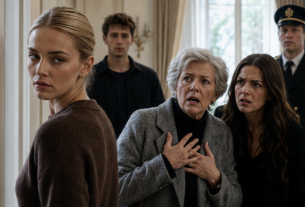
They arrived around lunchtime, bringing a cake. Nadezhda was in a new dress, all made up and cheerful. Tamara Petrovna immediately went into the living room and settled into the armchair by the window—the very one Tatyana had picked out just six months before.
«This armchair is so comfortable,» she said. «Must have been expensive?»
«Just a regular one, Tamara Petrovna.»
Meanwhile, Nadezhda wandered through the apartment. She peeked into the bathroom and touched the heated towel rack. She opened the hallway closet to check how much space there was. She stepped into the small room, stood there for a moment, and then came out with a satisfied look on her face.
«Tanya, is your balcony glazed? Is it warm?»
«It’s glazed.»
«Nice. Timofey could have a little desk out there, study in the summer.»
Tatyana glanced at her husband. Oleg was sitting on the couch staring at his phone, not even looking up.
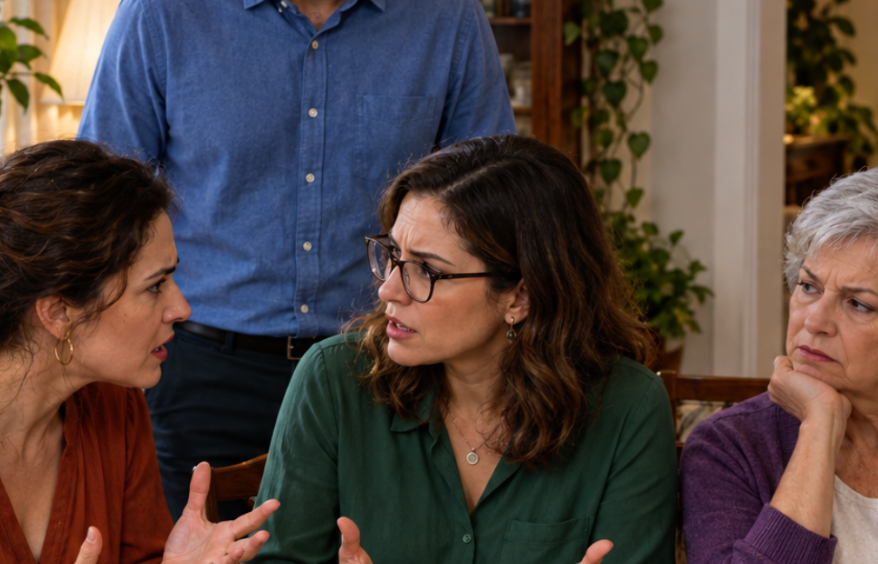
They sat down for tea. Tamara Petrovna cut herself a piece of cake, set it on a saucer, and sighed.
«I keep thinking about how unfair life can be. Some people live in palaces with just two, others squeeze into thirty square meters with a child. And it’s not because some are better or worse than others. That’s just how it happens. But family—family should help balance things like that out.»
«Mom’s right,» Oleg said, not looking up from his phone. «Nadya really does have it rough.»
He said it right away, without pausing, and didn’t even look at his wife. Suddenly, Tatiana understood very clearly that this conversation didn’t start today. It had already happened without her, more than once. Tamara Petrovna, Nadezhda, and Oleg had discussed everything that was being said now, made all the decisions. Timofey was telling the truth.
Nadezhda set her cup down and smiled.
«Tanya, here’s what I suggest. Let’s swap apartments! You take my one-bedroom, with a small additional payment, and I’ll move into your three-bedroom. You don’t have kids anyway! You and Oleg don’t need that much space, you’re always at work. But Timosha needs his own room. Mom will add four hundred thousand, that’s all her savings. And maybe I’ll contribute something later.»
Tatiana looked at her and couldn’t answer right away. She thought she must have misheard. She turned to Oleg. He finally put his phone down.
«Why not?» Oleg said. «Seems like a reasonable solution to me. The two of us could make do in a one-bedroom. No mortgage, we’ll renovate. And at least Timokha will have a proper childhood.»
«A child needs their own room,» added Tamara Petrovna. «Any psychologist would tell you that. He’s grown up now, it’s embarrassing for him to share with his mother.»
Tatiana set her cup on the saucer. Her hands were steady, but the cup still clinked.
«Nadya, your one-bedroom is worth three million. My apartment is about nine. You’re offering a four hundred thousand extra. Do you realize what you’re proposing?»
«Why bring up money right away?» Nadezhda grimaced. «We’re family, aren’t we?»
«I rented rooms for eleven years and saved up for this apartment. I skipped vacations, never bought myself things, worked through the nights. Then I spent another four years giving half my salary to the bank. I’m not going to trade apartments with anyone.»
«See?» Tamara Petrovna pursed her lips and looked at her son. «I told you. I told you she’d answer like that.»
«Tanya, you can’t be like this,» Nadezhda blushed. «You have three rooms for the two of you! Aren’t you ashamed? My child has nowhere to live, and you’re talking about your sleepless nights.»
«You’re heartless, Tanya,» said her mother-in-law. «I never thought. Selfish and heartless.»
Oleg got up from the couch.
«You’re humiliating me in front of my family,» he said quietly, but everyone heard it. «Mom and my sister came to you honestly. And here you go, making it all about the finances. You don’t have your own kids, so you don’t know what it’s like to have a child.»
Tatiana turned slowly to him.
«I don’t have children,» she said. «Oleg, do you remember how many times I asked you? For three years. ‘After your promotion.’ ‘After the car.’ ‘After the vacation.’ You didn’t want to. And now you say I don’t understand.»
Oleg looked away. Nadezhda and Tamara Petrovna exchanged glances. Apparently, they didn’t know this. But it didn’t change anything.
«Well, that’s your business,» said her mother-in-law, getting up. «But Nadya needs help now. Let’s go, Nadyusha. We’re not welcome here.»
They left, the cake on the table still almost whole. Oleg walked them to the elevator and returned looking grim.
All evening, he followed Tatiana around the apartment. While she washed dishes, he stood in the kitchen doorway. When she went to the office, he sat on the sofa across from her.
“Tanya, just think about it. What do those extra square meters really mean to you? It’s just the two of us. We don’t have children yet. But there’s a child in need—my own nephew. Can’t you put his interests above your own?”
«And why should his interests be more important than mine?»
«Because he’s a child.»
«And why should I be the one to sacrifice? Nadia has an apartment. Your mom has a two-bedroom. You have a salary and money for a car. So why should I be the one to give something up?»
«Because you have more than anyone else,» Oleg said, as if that explained everything. «A real family is supposed to share. That’s normal. That’s what family is.»
Tatyana looked at him for a long time. She remembered the first time he walked through these rooms and said it looked like something out of a magazine. How he was afraid to scratch the parquet floors. How he thanked her for every dinner. She didn’t even notice when all of that stopped.
«You just want to be generous at my expense,» she said.
«I just want you to be a decent human being.»
Oleg went to bed. Tatyana stayed in the office, sitting in the dark with the laptop switched off. She thought about how, in three years of marriage, she had never felt so alone as she did tonight over tea, when three people looked at her wanting the same thing from her. And her husband was one of them.
Her eleven years, her late-night translation work, her remodeling, her dream of having a child and picking out wallpaper with swallows—all of it suddenly seemed meaningless. As if she’d just been living here temporarily, holding onto the apartment for someone else the whole time.
In the morning, at half past seven, her phone vibrated. Tamara Petrovna was writing:
«Tanya, I couldn’t sleep all night. I never thought my son would be living with someone like you. Take a look at yourself from the outside. God sees everything.»
An hour later, a notification popped up in the family chat. It was called “Kravtsovs” and had fifteen people: aunts, cousins, an aunt’s husband from Samara whom Tatyana had only ever seen once at a wedding. Usually it was filled with holiday greetings and pictures of grandchildren.
Nadezhda wrote a long message:
«My dear ones, I want everyone to know. Yesterday, Mom and I came to Tanya with a suggestion that could really help Timosha. Tanya and Oleg live alone in a three-room apartment, they have no children. We offered a swap with extra payment so the child could have his own room. Tanya refused and almost called us scammers. Tanya, please explain to the whole family why my son has to sleep in a chair while you have two empty rooms?»
Reactions appeared under the message one after another. Aunt Lyuba left a sad face emoji. Oleg’s cousin wrote: “This is awful.” The aunt’s husband from Samara asked, “But what does Oleg say?”
Oleg replied ten minutes later. Tatyana could see him typing, sitting in the kitchen with his coffee just two meters away from her.
«I’m on my sister’s side. Tanya just won’t understand.»
Tatyana finished reading, put the phone down on the table, and looked at her husband. He didn’t raise his eyes from the screen.
«You couldn’t even say it to my face. You just typed it in the chat.»
«What is there to say? You’re not listening anyway.»
Tatiana decided not to reply in the chat. She hit ‘Leave Group,’ confirmed her choice, and felt her hands finally stop shaking. She no longer wanted to prove anything to those fifteen people—most of whom she barely knew. Nor did she feel the need to prove anything to her husband anymore.
That evening, while Oleg was at the gym, she opened the cabinet in the office and pulled out a blue folder. Sales contract. Property registration statement. A letter from the bank confirming the mortgage closure. The property ownership registration date was four years before the date on their marriage certificate. In a separate section of the folder were receipts and contracts with contractors for the renovations. The final acceptance certificate for the work was signed seven months before the wedding.
The next day, she booked a consultation with a family law attorney. The lawyer—a calm woman in her fifties with short gray hair—carefully looked over the documents.
«The apartment was purchased before the marriage, with your own funds, and the mortgage was paid off before the marriage. It’s your personal property and not subject to division in case of divorce,» she explained. «Your husband could try to claim he invested money in improvements. Did he contribute anything?»
«He didn’t even pay the utilities.»
«Then, based on these documents, he has no grounds to claim half of the apartment. Go ahead and file confidently.»
Oleg got home late that evening. Tatiana was waiting for him in the living room. The documents were laid out on the coffee table.
«Oleg, I’m filing for divorce.»
He stopped in the middle of the room, took off his jacket, and tossed it onto a chair. Then he smirked.
«Of course. So now you’re trying to blackmail me. Do you think I’ll get scared and start apologizing? Not gonna happen.»
«I’m not thinking anything. I went to see a lawyer.»
«A lawyer?» Oleg stopped smirking. «Alright. But just remember, I’ve been living here for three years. I’m registered here, I put up shelves here, I replaced the faucet. I’ll demand half. I know a lawyer who’ll tell me how.»
«He will,» Tatiana agreed. «But the apartment was bought four years before the wedding. The mortgage was paid off six months before the wedding. The renovation finished seven months before it. Here are the documents. Let your lawyer take a look.»
Oleg picked up the registration document and skimmed the lines. He put it down. He took the bank letter. Put that down too.
«Did you prepare all this in advance?»
«It’s been in my cabinet for four years. I just took it out.»
He was silent for a long time. Then he sat down in the chair—on his jacket—and lowered his head.
«Tanya, you can’t be serious. Over one conversation? Okay, no arrangement, whatever. Let’s just forget about it.»
«You didn’t talk about it just once. You discussed it for months. Timofey already knew which room would be his. He knew which school he’d go to. He’s nine years old, Oleg. Someone told him all that.»
Oleg said nothing.
«You wrote in the chat that you were taking your sister’s side. I heard you. Start packing. One week should be enough.»
He spent three days packing. He did it loudly and noticeably: slamming closet doors, talking to his mother on the phone in the hallway so Tatiana could hear. «Yes, Mom. She’s throwing me out. Yes, after everything I’ve done for her.» On the fourth day, he took out the last bag and left the keys on the shelf by the mirror.
Tamara Petrovna called later that evening.
«You destroyed a family,» she said without even greeting me. «A happy family. My son gave you three years of his life, and you threw him out like a stray dog. Just because of your precious square meters. You have no shame, no conscience.»
«Tamara Petrovna, your son is at home with you,» Tatiana replied. «That’s not the street.»
«You’ll regret this. You’ll end up all alone in your three-bedroom, and no one will bring you even a glass of water.»
«Goodbye, Tamara Petrovna.»
Her mother-in-law called two more times. Tatiana didn’t pick up. Then she blocked the number.
She filed for divorce through the online portal on the same day Oleg moved his things out. He didn’t object. They had no financial claims against each other. A month later, at the registry office, the whole thing took ten minutes. Oleg showed up in an old jacket she had once told him to throw away, signed the papers, gave her a nod, and was the first to leave.
Tatiana didn’t write anything to Nadezhda. A few weeks later, Nadezhda messaged her first: «Are you happy now?» Tatiana read the message, deleted the chat, and blocked that number too. She felt sorry for Timofey, and that was the hardest part. But there was nothing she could do for him. Not over the apartment.
Tatiana later heard bits and pieces from a mutual friend who knew the Kravtsovs. Oleg was living with his mother again, back in his old room. Nadezhda had found a better job, at a chain salon, and apparently took out a loan to buy a good chair-bed for her son. Tamara Petrovna was telling everyone her former daughter-in-law turned out to be a cold, calculating woman. Tatiana listened to this without much feeling and didn’t ask for more details.
On the first Sunday after the divorce, she woke up early, just before eight. The apartment was quiet. No one had the TV on in the kitchen, no one was chatting on the phone in the hallway. She lay there and listened to the crows cawing on the poplars in the square outside her window.
Then she got up, took a step ladder down from the closet and pulled out three rolls of wallpaper. Light green, with little swallows. The paper had yellowed at the edges, but the pattern was just like the day she bought them at the hardware store, back when she was still living in a rented room on Zavodskaya street.
She unrolled one roll on the floor of the small room and stared at it for a long time. Then she rolled it up carefully so as not to crease the edge, and put all three rolls in the office, in the bottom drawer of the wardrobe, right next to the blue folder.
That same day, she moved her desk, chair, and lamp into the small room. She placed the desk next to the balcony door so the light would come from the left. She opened her laptop and checked her email. There was a new assignment: two hundred pages of instructions for pump stations, with a two-week deadline.
It felt good to work there. Tatiana hadn’t expected the room to be so bright after lunch. She thought, maybe someday she’d put up that wallpaper. Or maybe not. She didn’t need to think about it now. The room was hers, and the decision about it would be hers, too.