Friday evening promised to be warm and cozy. I set the table in the living room, arranged plates from the new dinner set, and lit candles. The apartment sparkled with cleanliness and expensive renovations, which I had finished literally a month before the wedding. A luxury three-room apartment in a new residential complex on the embankment — my pride, my fortress, bought two years before I met Stas. My money, my nerves, my mortgage, which I had paid off early. Every corner here had been thought through by me personally; every detail reflected my taste and independence. I loved this place and considered it a symbol of my freedom.
Stas, my husband, was helping arrange the appetizers. Tall, with a soft smile and a slightly confused look, he seemed happy. We had gotten married two months earlier, and up until that moment, everything had been going perfectly. His parents lived in a small town, in an old dormitory that had long been threatened with demolition. His mother, Antonina Petrovna, a woman with a commanding voice and a habit of interrupting people, called often, but I wrote it off as maternal concern. His father, Valery Semyonovich, quiet and unnoticeable, always just nodded silently. Stas’s younger sister, Karina, a twenty-year-old girl with the ambitions of a big-city socialite, appeared on the horizon less often, but her social media posts screamed of her desire to escape poverty. That evening, they came to our place for dinner. I sincerely wanted to build a relationship with them, to show that we were one family.
When the guests came in, I immediately noticed the interest with which Antonina Petrovna examined the surroundings. She slowly walked down the hallway, peeked into the bedroom, touched the curtains in the living room, and assessed the size of the kitchen. Her eyes glittered, but I did not attach any importance to it.
“Cozy,” she drawled, sitting down at the table. “Even too spacious for two people.”
I smiled, not sensing the trap. Stas nervously adjusted the collar of his shirt. Meanwhile, my mother-in-law continued:
“Alisa, sweetheart, Valera and I have talked it over. Our dormitory is being demolished next month, and the city administration is offering some tiny cubbyholes on the outskirts. That’s no life. And you have plenty of space here. A good apartment, a big one. We’ve decided: we’ll move in with you as a whole family.”
I froze with my fork in my hand. My mother-in-law was smiling as if she had announced something completely obvious.
“What do you mean, move in?” I asked, trying to remain calm.
“Sweetheart, don’t worry,” Antonina Petrovna waved her hand. “Your renovation is fresh, so Valera and I will take the large bedroom with the river view. You and Stasik can stay in the smaller one; you’ll fit there perfectly well. It’s not bad either. Karina will live in the living room for now; the sofa folds out. A bit crowded, as they say, but no hard feelings. Family should be together.”
I slowly put down my fork. My heart started pounding somewhere in my throat, but my face remained stone-still. My mother-in-law spoke without the slightest doubt, as if she were managing her own property. Stas sat with his head lowered and said nothing. His silence deafened me more than any words could have.
“Antonina Petrovna,” I began, trying not to break into a shout, “I bought this apartment myself. Long before I met Stas. Before the wedding. You know that.”
“Oh, what difference does that make?” my mother-in-law brushed me off, helping herself to salad. “You are one family now. Everything is shared. Don’t be selfish. The boy should have rights too.”
“He has rights,” I replied in an icy tone. “But he has no right to this living space. And neither do you.”
Silence hung over the table. My mother-in-law stopped chewing and glared at me. Karina snorted while scrolling through something on her phone. Finally, Stas raised his eyes and looked at me pitifully.
“Alisa, let’s not do this now. Mom is just suggesting something. Why are you being so aggressive?”
“I’m not being aggressive, Stas. I’m simply reminding everyone of the facts. The apartment is not marital property. It is mine. And no one is moving in here.”
Antonina Petrovna put down her fork and demonstratively pursed her lips. Valery Semyonovich sank even deeper into his shoulders. Karina giggled quietly, as though she were watching a cheap performance. Dinner continued in deathly silence, but I already knew — this was only the beginning.
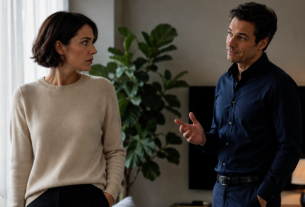
When the guests left, I closed the door and turned to Stas. He stood in the hallway, his shoulders lowered guiltily, but a stubborn spark was already lighting up in his eyes.
“What was that?” I asked, crossing my arms over my chest.
“Why did you treat Mom like that? She only wanted what was best,” he muttered, avoiding my direct gaze.
“What was best for her, you mean? She just assigned rooms in my apartment. You heard that. Why didn’t you say a word?”
“What was I supposed to say?” he exploded. “That you’re greedy? That you’re ready to throw my parents out on the street? They really don’t have housing! Have you seen their dormitory? The walls are covered in mold! And you sit here in three rooms, all alone!”
“I’m not alone. I’m with you. But this is my apartment, Stas. Bought with my money, registered in my name. Before marriage. Do you understand what that means legally? Or has your mother already rewritten the law for herself too?”
He grabbed his head.
“What does the law have to do with it? What do rights have to do with it? This is family! Our own people! You don’t think about anyone else at all! Mom said you were selfish, and I didn’t believe her. But now I see it’s true.”
His words hit me like a slap. I looked at him and no longer recognized him. The Stas who had carried me in his arms, who had said that I was his whole life, had now turned into a pathetic coward repeating his mother’s words.
“You know what,” I said after a long pause, “if you consider my apartment common property, then we clearly need to discuss something with a lawyer. And if your parents try to move in here, I will call the police. I promise you that.”
“You wouldn’t dare!” he snapped.
“Shall we test that?”
He went to sleep in the living room, slamming the door. I sat in the kitchen until three in the morning, drinking cold tea and replaying every moment of our relationship in my head. There had been warning signs. His submissiveness, his unwillingness to discuss household matters, the constant phone calls with his mother. I simply had not wanted to notice them. I had thought love would fix everything. And now, in my apartment, bought with blood, sweat, and tears, strangers had already mentally arranged their furniture.
In the morning, I woke up to a suspicious noise in the hallway. Sleep vanished instantly when I heard my mother-in-law’s commanding voice:
“Karina, drag the suitcase into the living room. Valera, put the bags against the wall, don’t get in the way. Stasik, help your mother!”
I flew into the hallway barefoot, in my pajamas. What I saw made me freeze in shock. The entryway was piled with worn bags, a huge checkered duffel, a couple of wheeled suitcases, and cardboard boxes wrapped in tape. Antonina Petrovna was commanding the process like a general on a battlefield. Valery Semyonovich obediently carried in the last box. Karina, without taking off her headphones, was sprawled on my sofa in the living room as if she had already registered herself here. Stas stood next to his mother, avoiding my eyes.
“What is going on here?” My voice broke into a shout.
Antonina Petrovna turned to me with an expression of genuine bewilderment.
“Sweetheart, we moved in. I explained everything yesterday. Don’t just stand there like a post, help unpack. We had a long trip and we’re tired.”
I clutched the doorframe, afraid I might fall from the sheer audacity I had never encountered in my life. These people had entered my apartment — a place where I let no one in without an invitation — as if I were nothing and they were the owners.
“Leave,” I said hoarsely but firmly. “All of you. Right now.”
“What do you mean, leave?” My mother-in-law planted her hands on her hips. “This is my son’s home. And you are his wife. Your job is to keep order and respect your elders. Don’t rebel.”
“Your son is no one here,” I replied, drawing more air into my lungs. “This apartment is not his property. I am repeating this for the last time: take your things and leave the premises. Otherwise, I am calling the police.”
My mother-in-law’s eyes narrowed into slits.
“Are you threatening me? Me? Who do you think you are? A rootless little girl clinging to my boy. You think that just because you earned enough for an apartment, you can give orders to us? We are Stasik’s family. His own blood. You might be gone tomorrow. And then he’ll be left with the apartment, as he should be.”
“We’ll see about that,” I hissed, turning around and heading to the bedroom.
I locked the door. My hands were shaking, but my mind was working clearly. So, they had decided to take me by force. Fine. I could act too. I took out my phone and found Dmitry’s contact — an old friend of mine, a lawyer with an excellent reputation. He answered immediately, despite the early hour on a Saturday.
“Dima, please come over. Urgently. My apartment is being taken over. Only you can help.”
Forty minutes later, he was standing at the door. Tall, in a strict coat, with his ever-present briefcase. The living room immediately became quieter. The relatives huddled around the table, whispering to each other. My mother-in-law was demonstratively drinking tea from my mug. I came out to them, but no longer as a victim — as the owner. Beside me stood a man who knew the law.
“Good morning,” Dmitry greeted them dryly, looking over those present. “My name is Dmitry Alekseevich. I represent Alisa’s interests. I ask everyone to leave the residential premises immediately. Under Article 35 of the Housing Code and Article 298 of the Civil Code, you are here illegally. The owner objects to your presence.”
Antonina Petrovna jumped up as if stung.
“And who is this? Some hired little lawyer? Do you know they are married? The property is shared!”
“Property acquired before marriage is not subject to division,” the lawyer replied calmly, laying copies of documents on the table. “The certificate of ownership registration is dated two years before the wedding date. The purchase agreement, payment receipts, extract from Rosreestr — everything is here. Neither your son nor you have any rights to this living space.”
Stas rushed toward me.
“Alisa, stop this circus! You’re embarrassing me in front of people! You brought in a lawyer as if we were criminals!”
“Aren’t you?” I asked in an icy voice. “You illegally entered my home, are trying to appropriate someone else’s property, and are intimidating me. That is a criminal offense.”
“Criminal?” Karina shrieked, finally looking up from her phone. “Have you completely lost your mind? We came to see my brother!”
“Your brother is a guest here,” I cut her off. “And guests, according to the same laws, are required to leave the premises at the owner’s first demand.”
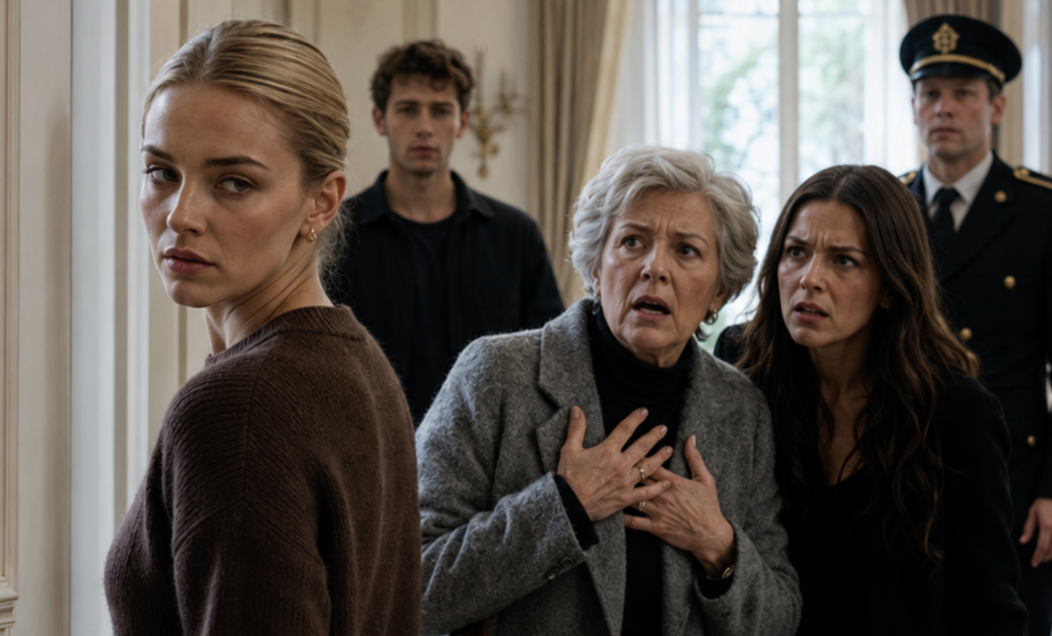
My mother-in-law began clutching at her heart.
“Oh, I feel sick! Call an ambulance! You’ve driven an old woman to a heart attack! Good people, they’re robbing us, throwing us out onto the street!”
But I could see her peeking through her fingers. I nodded to Dima. He called the police and an ambulance at the same time — to document both the illegal entry and the possible deterioration of her health, if there really was one.
Ten minutes later, two police officers entered the apartment. The senior officer, a lieutenant with tired eyes, asked to see the documents. I handed him my passport and the purchase agreement.
“The apartment is mine,” I explained in an even voice, though everything inside me was boiling. “The marriage was registered two months ago. The purchase date was two years and three months ago. These people — my husband’s parents and sister — entered my home without permission and refused to leave. My husband supported them. I demand that the violation of my rights be stopped.”
The police officer carefully studied the documents, then looked at the cluster of relatives.
“Citizens,” he said, “the owner has the right to use, possess, and dispose of her property at her discretion. You are here without legal grounds. Please gather your belongings and leave.”
“How dare you?” Karina screamed, jumping up from the sofa. “We have rights too! He’s our brother!”
“Your brother has no share in this apartment,” Dmitry intervened. “And your presence here without the owner’s consent falls under the article on unlawful self-help. So I strongly recommend that you comply.”
My mother-in-law began rushing around, grabbing bags, searching for support from her son. Stas stood pale as chalk and silent. It finally dawned on him that the law was truly not on his side. He tried one last appeal to pity.
“Alisa, forgive us, we got carried away. Let’s just talk. Don’t throw them out at night; they’re not from here!”
“No, dear mother-in-law, I bought this luxury three-room apartment before the wedding,” I said, enunciating every word and looking straight into Antonina Petrovna’s eyes. “So head straight for the exit — now!”
My mother-in-law opened her mouth, but the police officer stopped her with a gesture.
“Ma’am, you have five minutes to collect your things and leave the premises. Otherwise, we will be forced to use force and draw up a report.”
While the family frantically gathered their suitcases, Karina managed to throw me a look full of hatred and hiss:
“You’ll regret this. We’ll smear you all over the internet so badly you’ll never wash it off.”
I did not answer. I simply stood by the door and waited until the last box disappeared beyond the threshold. When the door slammed shut behind them, I exhaled for the first time in twenty-four hours. Dmitry stayed for another hour, just in case, to help me draft a statement to the police about the attempted illegal intrusion and record the facts. He also gave me advice: if there was slander on social media, immediately save screenshots and go to court.
I thought the worst was over. But by Sunday evening, a flood of messages crashed down on me. Friends, colleagues, even distant acquaintances sent me links. In the local city community, and then in broader Russian groups, an anonymous post appeared with my photos, apparently taken secretly by Karina. The headline screamed: “Heartless Wife Throws Elderly Husband’s Parents Out Onto the Street!” The text described a heartbreaking story about how a young wife had “stolen” an apartment, “thrown out” elderly people, and “humiliated” the entire family. Commenters did not hold back on insults: “monster,” “sellout,” “people like her should be killed.” My phone was exploding with notifications.
Stas sent a message: “Stop this madness before it’s too late. Put everything back the way it was, and Mom will forgive you.”
I did not reply.
I methodically saved every comment, every post, every link. Screenshot after screenshot. My mother-in-law’s phone number appeared in the correspondence — I documented that too. Dima helped prepare a lawsuit for the protection of honor, dignity, and business reputation, as well as a complaint for defamation. Experts confirmed the authenticity of the photos and traced the IP addresses to Karina. The court accepted the case.
None of them appeared at the first hearing, but under the law, after two absences without a valid reason, the case proceeded without the defendants. I provided the apartment documents, the police officers’ witness statements, the lawyer’s conclusion, and the screenshots. My position was rock solid. The court ordered the defamatory information removed and awarded a substantial amount from Stas’s family as compensation for moral damages. But the most important thing for me was the official document establishing the fact of defamation. That paper burned in my hands, but it gave me a feeling of absolute vindication.
Six months passed. I stood by the window of my bedroom, sipping coffee and watching the sunset over the river. The apartment was quiet and clean. I had long since changed the locks and thrown away everything that reminded me of Stas. The divorce went through quickly — thanks to a properly drafted petition and the absence of children together. I had not seen or spoken to my ex-husband since.
One day, at a shopping mall near the escalator, I caught sight of a familiar face. Antonina Petrovna, aged and wearing a worn coat, noticed me and sharply turned away, tugging her husband by the sleeve. They hurried in the opposite direction, almost running. I did not feel even a drop of anger. Only indifference.
I stepped outside, breathed in the cool spring air, and smiled for the first time in a long while. My life belonged only to me. And there was no longer any room in it for other people’s belongings, other people’s claims, or other people’s manipulation. The apartment I had defended became a symbol not only of financial independence, but of inner freedom. And no one would ever take that symbol away from me.