A sunbeam danced across the cover of the wedding album I had just picked up from the print shop. “Maxim and Alena” — the embossed silver letters brushed against the pad of my finger. One month. In exactly thirty days, this album would be filled with photographs of smiles, tears, white dresses, and first dances. I could already picture Max and me, gray-haired and laughing, leafing through it on long winter evenings. The thought warmed me, just like that little sunbeam on the velvet.
The key in the lock of my — my! — apartment got stuck, as usual. That good old stubborn lock, the one my home and I had long since learned to live with. I tapped the key, then pulled the door toward me to help it along — an old trick. But the click was wrong. Dry, short, metallic. Completely new. I inserted the key again and turned it. Nothing. Silence. Only the pounding of my heart in my temples, suddenly faster.
“Maybe Max decided to surprise me,” a stupid thought flashed through my mind. “Maybe he installed a new lock for security.” But Max was on a business trip; his plane wouldn’t land for another three hours. I called him, but his phone went to voicemail. Then I called my future mother-in-law.
Irina Petrovna’s voice was honeyed and velvety, the way it always was when she was up to something.
“Hello, my dear Alenochka, sweetheart!”
“Irina Petrovna, do you happen to know why there’s a new lock on my apartment?”
For a moment, the honey froze.
“Oh, darling, I meant to tell you! Maxim and I decided the old one was absolutely no good anymore. Such a security risk! What if something happened? And soon my grandson or granddaughter will be running around there,” she laughed lightly, like a little bell.
“But… the key? I don’t have one.”
“Of course I’ll give it to you! We’re all family. But you need to understand that family means responsibility. It’s not just slipping a key into your pocket and doing whatever you like. You’re becoming part of our family line. You need to come to that realization. Once you’ve earned it, we’ll give you the keys.”
The last phrase sounded so ordinary, so domestic, as if she weren’t talking about the keys to my personal space, bought with my own money, my night shifts, and my projects, but about permission to stay out until ten in the evening.
“What do you mean, ‘earned it’?” My voice cracked.
“Oh, Alenochka, don’t make a mountain out of a molehill. All women go through this. You need to show that you’re ready to be a good wife, the keeper of the home. Maxim will have his own criteria. And I, as his mother, am simply helping. I have the keys. Come over for family dinner on Sunday. We’ll spend some time together, practice making that signature pie of yours that Maxik loves so much. Then we’ll see.”
She hung up.
I remained standing on the landing, my palm pressed against the cold metal surface of the door. My door. Inside, behind it, my cat Marsik was lying on the couch, waiting to be fed. My dress for the bachelorette party was hanging there. Sketches for my new project were scattered across the table. My life was in there.
And now, apparently, I had to “earn” it.
My first reaction was rage. White-hot, screaming rage, with the urge to pound my fists against that door, kick it down, call the police. But then something else rolled over me, cold and terrifying.
And Max?
Did Max know?
Had he agreed to this?
When he finally got in touch, his confusion sounded genuine.
“Mom did what? Changed the lock? Without me? Alena, I’m shocked. She probably went too far. She only wanted what was best. You know, she just worries. Don’t get worked up. I’ll sort it out.”
“‘Sort it out’ means getting me my keys back right now, Maxim! This isn’t her apartment!”
“Of course, of course. I’ll talk to her. But let’s not have a scandal, all right? You know her heart. Her blood pressure might spike.”
The conversation lasted half an hour. Maxim talked about love, family, and how we “shouldn’t rock the boat” right before the wedding. He promised to “deal with it.” But his voice did not have the steel note I was waiting for. It carried only tired submission, a habit of avoiding sharp corners. A habit of giving in.
An hour later, she brought the keys.
One copy.
The rest stayed with her.
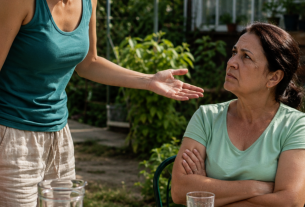
She arrived, as always, with a smile and a lecture.
“Oh, Alenochka, there’s dust on the television. A good homemaker wouldn’t allow that. Once you have your own home, I’ll teach you.”
“You come home from work so late? Maxim worries. A wife should create comfort, not run around at night.”
“This sofa… I’ve found a wonderful corner one for you, Baroque style. This one needs to be thrown out.”
She called Marsik “a carrier of filth” and hinted that “in a house where there will be a child, animals have no place.” One day, my sketches were neatly stacked into a folder and put away in the closet. “You’ll be busy with children, darling. You’ll forget about these little pictures.”
Max stayed silent. When I protested, he kissed me on the forehead and said, “Be patient. She’ll leave soon. She just wants to help us build a strong family. She’s wise.”
His “wisdom” pressed down on me like a heavy blanket. I was suffocating.
The wedding preparations, which should have been happy, turned into hell. The dress Irina Petrovna chose because “yours is too revealing.” The restaurant she approved because “your chef has a questionable reputation.” The guest list she edited because “those artist friends of yours will shock everyone.”
The culmination came at dinner in their home.
Irina Petrovna, glowing, announced:
“Maxim’s father and I have decided to give you a royal gift! We’ll pay the down payment for a new apartment. A big one, in a prestigious district. And this little one-room place of yours, Alenochka, can be rented out. Or sold. The money will go into the family budget.”
Maxim’s father, Vladimir Nikolaevich, silently nodded while sipping cognac.
“And… my apartment?” I forced out.
“Well, we’ll discuss everything as a family,” Irina Petrovna smiled sweetly. “Of course, the ownership will be in Maxim’s name. He’s the man, the provider. And you’ll be the homemaker. The best homemaker. I’ll teach you.”
I looked at Max.
He was intently cutting his meat, avoiding my eyes.
“Max?” I called quietly.
He looked up.
In his eyes I saw not support, but a plea: Don’t start. Don’t ruin the evening.
At that moment, something inside me broke. Completely and irrevocably.
Not anger. Not hurt.
Cold, clear certainty.
It would always be like this. Always. New locks on every door of my life. On my career, on my dreams, on my children. Keys handed out for good behavior. And Max… Max would sit at this table and cut his meat, trying not to notice as his wife was erased piece by piece like pencil marks with an eraser.
“Thank you for the offer,” I said, my voice surprisingly calm. “But I am not selling my apartment. And I have no intention of doing so.”
Dead silence fell.
“Alenochka, you don’t understand…” my future mother-in-law began.
“I understand. Perfectly. And I won’t do it. And I will take back all the keys to my home. Right now.”
“What do you mean, take them back?” Irina Petrovna’s voice lost its honey and turned to ice. “This is a family decision. Maxim, tell her.”
Maxim flushed.
“Mom, let’s not…”
“No, Maxim, let’s,” I said, standing. “Decide now. Right here and now. Or I’m leaving.”
His eyes darted from my icy face to his mother’s crimson one.
“Alena, don’t give me ultimatums! Mom is just taking care of us!”
That was his choice.
Quiet, cowardly — but a choice.
I stepped away from the table. No hysterics.
“Alena, wait!” he shouted after me.
“No, Maxim. That’s it. There will be no wedding.”
The hysterics erupted behind me. Irina Petrovna’s screams — “How dare you! You’re not good enough for him!” — his father’s muffled attempts to calm everyone down, Max’s bewildered voice.
I stepped outside and breathed in deeply.
The night air was bitter and intoxicatingly free.
But I still couldn’t get into my apartment.
My bag with the keys had been left at their house.
The next day, after a sleepless night at a friend’s place, I went home. I urgently needed to feed the cat and pack Maxim’s things before my future mother-in-law and her precious son came running.
The door, of course, was locked.
I called a locksmith.
While he worked, quick, familiar footsteps sounded from the stairwell.
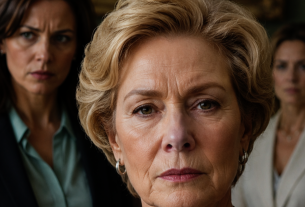
Irina Petrovna appeared like a thundercloud, in an expensive raincoat, her face distorted by genuine fury.
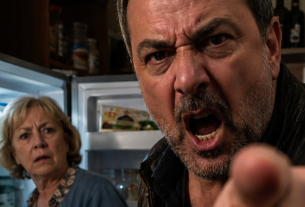
“What are you doing?! This is breaking and entering! I’m calling the police! This is my son’s apartment!”
“No,” I said coldly. “This is my apartment. The documents are inside. And you are an outsider illegally withholding my property.”
The locksmith clicked the lock open.
The door swung wide.
“Don’t you dare go in there! Maxim! Maxim!” she shrieked, already beside herself as she pulled out her phone.
I went inside.
She rushed in after me.
Marsik, frightened, darted under the bed.
Irina Petrovna stood in the middle of the living room, gasping, surveying it like a general before an assault.
“You ruined everything! Everything! Such an opportunity! Such a family! We would have brought you, you little upstart, into proper society!”
“I don’t need to be brought into society. I’m already in it,” I said, beginning to throw things into a suitcase. “I need my life. Leave.”
“I’m not leaving! This is my son’s home!”
“Your son doesn’t live here. And he won’t. Leave, or I really will call the police. With a witness present,” I nodded toward the locksmith, who was watching the performance with interest.
Suddenly she lunged at me, trying to tear the suitcase from my hands. The smell of her perfume — expensive and suffocating — hit my nose. In her eyes there was not just anger, but panic. The panic of a person losing control.
“Give it back! You’re lying about everything! He doesn’t love you! He’s with you out of pity!”
I jerked the suitcase sharply toward myself.
She hadn’t expected it. She lost her balance and, slipping on the scattered papers, plopped down onto the floor. It didn’t hurt her, but it was humiliating. Ridiculous. Sitting on my parquet floor in her perfect raincoat, for one second she looked like nothing more than a confused elderly woman.
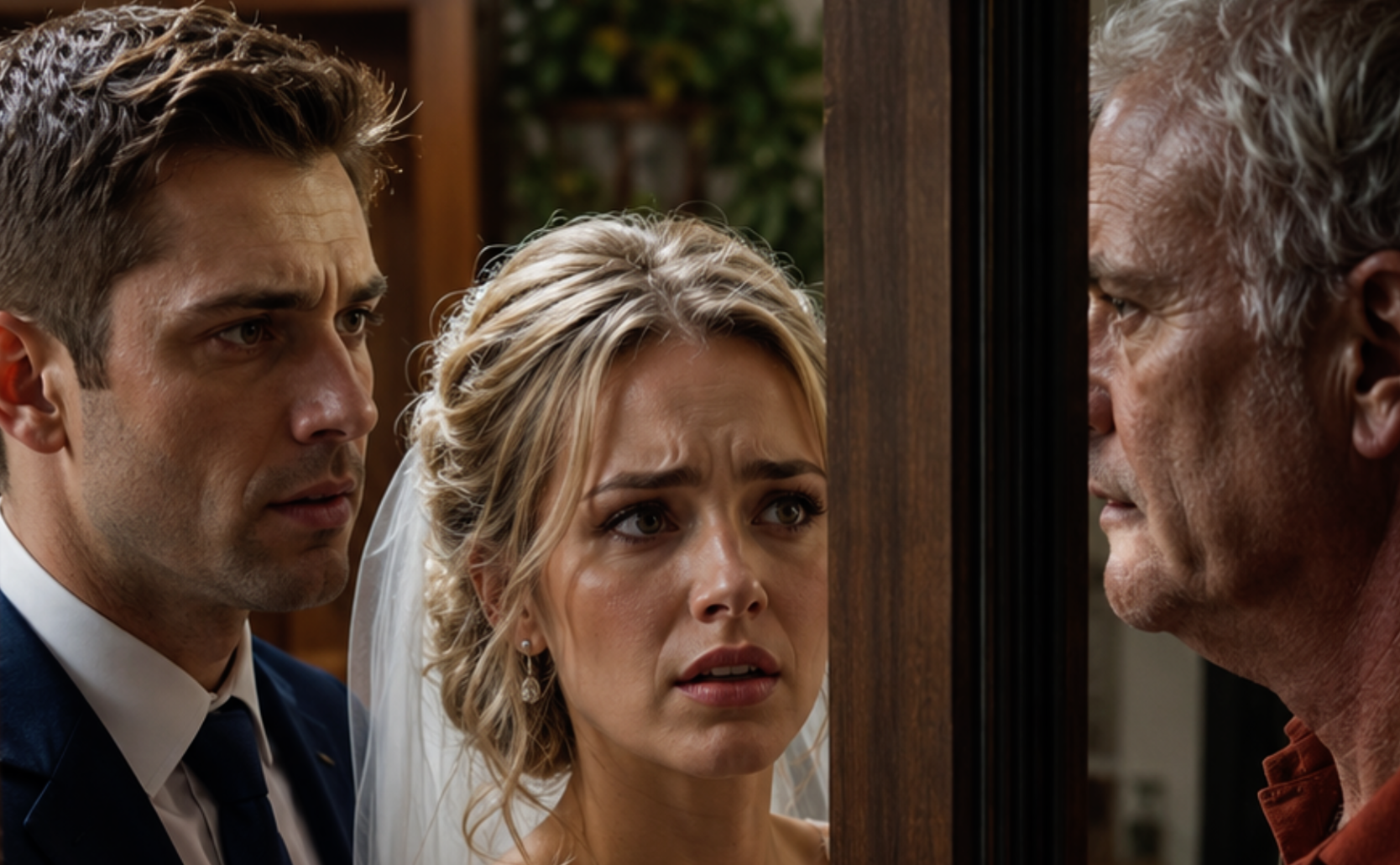
And at that very moment, Max burst through the door.
He saw me with the suitcase, his mother on the floor, and something clicked in his eyes.
Not hesitation.
Not pain.
Pure, genuine rage.
“What did you do to my mother?!” he growled, rushing to help her.
Not to me.
To her.
“She fell by herself while trying to take your things from me,” I said, and my voice finally sounded exactly how I felt: tired and firm. “Both of you — get out of my home. Forever.”
Leaning on Max, Irina Petrovna stood up. Her humiliation instantly turned into triumph.
“You see, son? You see what she’s like? Rude, ungrateful…”
“Out,” I interrupted without raising my voice. “Or the next call will be to the police.”
Max put his arm around his mother’s shoulders and threw me a look full of hatred and something else — perhaps shame, which he immediately crushed down.
“You’ll regret this,” he hissed. “All of it.”
They left.
I closed the door behind them. Not with the lock they had installed. With the latch the locksmith had screwed in while we were arguing.
An hour later, when I was finishing my tea, trying to calm the trembling in my hands, a familiar, piercing screech came from the stairwell.
Then Max’s shout: “Mom! Careful!”
And then the sound — not loud, but desperate — of a body rolling down the stairs.
Then the wail of an ambulance siren.
I did not go out.
I walked to the window and saw the paramedics carefully loading a carefully arranged figure in a raincoat onto a stretcher. Irina Petrovna was waving her free hand, shouting something to her son, who was pacing beside her.
She had fallen down the stairs.
Maybe she had tried to hurry down too quickly in a rage.
Or maybe it was one final attempt to stage a performance in which I was the villain and she was the victim.
It no longer mattered.
I looked at the wedding album lying on the table.
“Maxim and Alena.”
I opened it.
The empty velvet pages were waiting for photographs.
Photographs that would now never exist.
I ran my hand over the smooth surface. Then I took the album, went down to the garbage room, and left it on top of the bin. Let someone take it if they had any use for it.
As I went back upstairs, I heard a quiet meow.
Marsik was rubbing against my legs, demanding affection. I picked him up and held him close. He purred like a tiny motor.
Behind us was the door.
My door.
And my lock.
The key to it now belonged only to me.
And in the end, that was enough.
Enough to start all over again.
Without other people’s locks.
And without other people’s keys to my life.