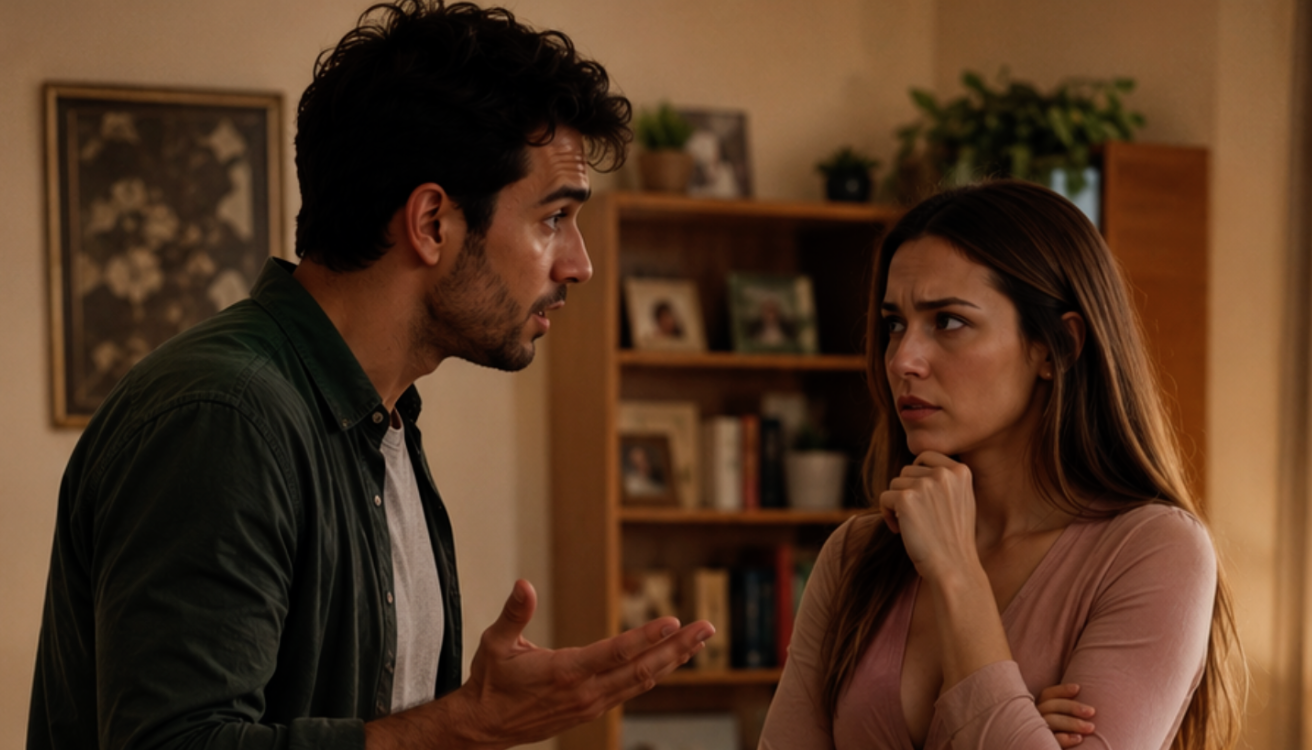
“We’ll sell your apartment and buy a shared one. I’m not going to live in your place like some tenant!” Matvey declared.
Anna could not believe her ears.
“But you said this was the perfect option for us,” she said quietly.
“I wasn’t thinking about the future!” Matvey got up from the table. “What will my friends say? That I’m living with a woman?”
Just yesterday, he had been admiring her new apartment, choosing tiles and curtains with her. He had been planning where they would put his favorite armchair. And today, all of a sudden, he was explaining why the home her mother had given her should become his too.
“This was my mother’s gift for my twenty-fifth birthday,” Anna said, clenching her fists under the table.
“Exactly! A gift to you, not to us!”
At that moment, Anna felt it: this was not about love at all.
Anna gathered the catalogs scattered across the table and carried them to the window. Beyond the glass, the March evening was growing dark, and the first lights were coming on in the courtyard of the new apartment building. Her apartment on the fourth floor overlooked a yard with a children’s playground — her mother had chosen that layout on purpose.
“Anya, you’re not listening to me,” Matvey came up behind her, but he did not hug her the way he used to. “I’m serious. We need to start out as equals.”
Anna was thirty years old, and for the past three years she had been saving for renovations to this apartment, setting money aside from her salary as an accountant at a small company. Back then, five years ago, her mother had come straight to Anna’s workplace with the documents.
“Sign here and here,” her mother said, spreading the papers right on top of Anna’s reports. “I finally sold that wreck outside the city. No one needed Grandma’s dacha. I added my own savings, and it was enough for a one-room apartment in a new district.”
“Mom, I can’t accept such a gift…”
“Let you always have a corner of your own. Life is long. Anything can happen.”
For several years, the apartment stood unfinished. Anna saved money and lived with her mother in their old two-room flat. When, a year and a half earlier, a talkative young man with a charming smile had sat down at the next table in a café, she could never have imagined it would lead to marriage. On New Year’s Eve, Matvey proposed. Anna was over the moon. Around that same time, she finally decided to put the apartment in order and move there together after the wedding.
“Look at this sofa!” Matvey would exclaim. “It will fit perfectly in our living room!”
The word “our” warmed her soul. Matvey seemed genuinely interested in their future together.
Everything changed after the renovations reached the final stage. All that remained was to hang the curtains and arrange the furniture. One evening, during dinner at a café, Matvey suddenly began talking about something that was bothering him.
“You know, Anya, I don’t really like the idea of living in an apartment that belongs only to you,” he began, turning a glass of wine in his hands.
“What do you mean?” Anna asked in surprise.
“Well, you see… In a family, everything should be shared. But this way, it feels like I’m just a guest.”
Anna raised her eyebrows.
“But we chose everything together. You yourself said this would be our home.”
“It may be our home, but the apartment is yours,” Matvey said, setting the glass down on the table. “In a family, everything should be shared.”
At first, he spoke cautiously, as if testing the ground. Then he began returning to the subject more and more often. At every dinner, during walks, even when they were choosing the wedding menu.
“I don’t feel like a man or the head of the family,” he repeated with an offended look. “What kind of master of the house am I if the home doesn’t belong to me?”
It was especially unpleasant when he began complaining to friends right in front of her.
“Can you imagine? I live there like some freeloader,” he said at the table during a mutual friend’s birthday party. “A second-class person in my own family.”
Anna blushed and tried to explain:
“Matvey, I love you. The apartment is just walls, nothing more. We’ll live there together. What difference does it make whose name is on the documents?”
But the conversations became more insistent, and his tone grew harsher. Gradually, Anna began to notice an unpleasant pattern: her fiancé was not worried about their life together or even his male pride. He was worried specifically about ownership of the property.
One evening, Matvey came to her place with a folder of documents and a laptop. His face was glowing with excitement.
“I’ve thought everything through!” he announced from the doorway. “Look what a brilliant plan I came up with!”
He spread printouts from real estate websites across the table and opened a file with calculations in Excel. According to him, Anna’s one-room apartment needed to be sold for four million. The money from the sale would be used as a down payment on a two-room apartment in the same district, worth seven million. The rest would be covered by a mortgage.
“And we’ll register everything as joint ownership, fair and square — fifty-fifty!” he finished triumphantly.
At first, the proposal sounded reasonable. More space, shared property — wasn’t that what young families dreamed of? But that evening, after Matvey left, Anna decided to study his calculations herself. She opened her laptop, carefully reviewed all the numbers, and quickly discovered something strange. Practically the entire down payment would come from the sale of her apartment. The monthly mortgage payment would also mostly fall on her shoulders — Matvey’s salary barely covered his personal expenses. And yet, the shares in the future home were supposed to be divided equally.
The next day, she met with her friend Marina, who worked as a lawyer.
“Let me see those calculations,” Marina asked.
After studying the documents, she frowned.
“Anya, there’s another important point here. If your apartment is sold before the wedding, and the new one is bought after the marriage is registered, Matvey will automatically acquire rights to half of it, even if you are listed as the owner in the documents. He’ll be able to claim a share of the apartment, even without investing a single kopeck of his own money.”
Anna felt the ground slip from under her feet.
She invited Matvey for a serious conversation in the very apartment that had become the stumbling block between them. She made tea and brought out cookies — everything as usual, except her hands were trembling slightly. When he arrived, she calmly placed the printed calculations and the lawyer’s conclusion in front of him.
“Matvey, please explain this to me. Why does everything that is mine become ours in your plan, while you make no contribution at all?”
At first, he looked confused. Then he began making excuses.
“You don’t understand! This is for our future! I’ll earn more, you’ll see!”
“But right now, you’re suggesting that I invest four million, while you invest nothing,” Anna said quietly.
“God, you’re so mercenary!” he exploded. “Counting every penny! Is that how people build a family?”
“And is a family built on deception?” she countered.
Matvey turned red.
“You don’t trust me! If you love me, you should trust me!”
When he realized Anna had no intention of selling the apartment, the mask finally slipped.
“I will not live in an apartment where I have no rights! It’s humiliating!”
At that moment, Anna saw the truth with crystal clarity. He did not care about family, love, or their future together. He cared only about the apartment.
Slowly, she took off her engagement ring and placed it on the table between them.
They canceled the wedding two days later. Matvey tried calling, wrote long messages, promised to change, but Anna no longer answered. The breakup was unpleasant — they had to return the money for the banquet hall, explain everything to relatives, and listen to advice from friends. But all of that was far less painful than the life she might have had with a man who constantly regarded her property as his by right of being her future husband.
For several months, Anna lived alone in her renovated apartment. Gradually, she finished the final details of the renovation. She hung the watercolor paintings Matvey had called “girlish nonsense.” She bought several houseplants — a ficus, an orchid, and even a small lemon tree in a pot. She set up a work corner by the window, where the mornings were especially bright.
“How cozy it is here!” her mother admired whenever she came to visit. “A real woman’s nest!”
“This is my home, Mom. Mine alone,” Anna smiled, and there was no loneliness in those words — only calm confidence.
The apartment truly became her home. Without arguments over who was in charge. Without pressure. Without someone else’s claims to her property.
Anna sat on her favorite balcony with a cup of coffee. The spring sun warmed her face, and below, the waking city hummed with life. She already remembered that story without resentment or anger — rather, with gratitude to fate for giving her a lesson at the right time.
Recently, her mother stopped by with a pie and, after settling into the kitchen, said:
“You know, I’m proud of you. Not every woman would find the strength to leave.”
Anna understood then that her mother had given her more than just an apartment. She had given her independence and the ability to make decisions without fear of ending up on the street. And she was also grateful that Matvey’s true intentions had been revealed before the wedding, not after it, when protecting her property would have been far more difficult.
Now, when her colleagues told her that love required sacrifice and compromise, she only smiled mysteriously. Yes, love required effort. But true love never began with an ultimatum to sell your apartment.