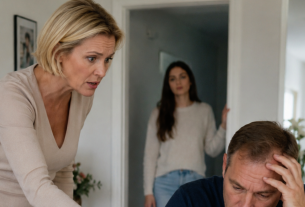
They had managed with one car for about three years. Veronika worked as a coordinator at a logistics company. Her job meant traveling around, meeting clients, and visiting warehouses on the other side of the city. Kirill worked at a design bureau, mostly in the office, with a more predictable schedule.
At first, they found ways to make it work. Kirill drove Veronika to work in the morning before heading to his own job. In the evening, he picked her up, or she took a taxi, or they each made their own way home. But it grew harder, especially when Veronika began making trips around the region and Kirill was assigned to a site in an industrial area with poor bus service.
“We need a second car,” Kirill said one evening, studying their schedules and trying to work out how they could both get where they needed to be the following Wednesday. “Seriously.”
Veronika agreed without argument.
They spent several weeks choosing one together. They both understood that Veronika needed it most: her routes were unpredictable. Kirill’s old car suited him just fine. In the end, they chose a small hatchback that was economical, easy to maneuver, and comfortable both in the city and on the highway. They registered it in Veronika’s name. She felt the difference immediately. She no longer had to arrange her workday around her husband’s schedule.
Life settled into a smoother rhythm. Now they each had a car, and it was so convenient that they wondered how they had ever managed with only one.
About a month after the purchase, Inna came to visit.
Kirill’s sister rarely visited them—three or four times a year, mostly on holidays. Veronika always welcomed her politely: she set the table, gave her and Kirill room to talk, and tried not to intrude on their family time. Inna wasn’t malicious, but she was rather loud. She was the sort of person who said the first thing that came into her head and then acted surprised if someone took offense.
This time, Inna came on a Sunday afternoon. She ate, talked with her brother about work, and had some tea. Then she stepped onto the balcony, supposedly for some fresh air. Both cars were parked outside the building: Kirill’s and Veronika’s new hatchback.
“Which one is that?” Inna asked when she came back into the room, nodding toward the window.
“Veronika’s,” Kirill replied. “We bought it a month ago. She needs it for work.”
Inna was quiet for a moment. Then she said, “It’s pretty nice. Must be convenient.”
That was the end of the conversation that day. Veronika thought nothing of it. People looked at cars all the time.
Kirill called a few days later, around noon. Veronika was waiting for the light to change in the left lane.
“Listen,” her husband began. There was a note of caution in his voice that Veronika noticed at once. “Inna called. She asked about your car.”
“What about it?”
“Well, she says she really needs a car. She doesn’t have enough money for a decent one. She was wondering if maybe you could… give her yours.”
The light turned green. Veronika pulled away, changed lanes, and waited until she was through the intersection.
“No,” she said. “We bought this car for me.”
“That’s what I told her. I just wanted to let you know.”
“You told her the right thing.”
Kirill let out a breath, perhaps in relief.
“Okay. I think she’s a little offended, but that’s her problem.”
Veronika thought the matter was over. It turned out it had only begun.
Inna didn’t call again herself. Instead, she spoke to Lyubov Denisovna. Kirill’s mother lived half an hour away and visited her son about once every two weeks. She usually came without much warning, but never made a fuss. She had always treated Veronika fairly: she didn’t criticize her or interfere, and she helped clear the table on holidays.
Veronika had long considered their relationship neutral in the best sense—neither especially warm nor strained.
Lyubov Denisovna called Kirill on Wednesday evening. Veronika was in the kitchen, while Kirill spoke in the other room with the door partly open.
“Mom, we bought the car for Veronika. Specifically for her. I’ve already explained,” Kirill said quietly but firmly. “She drives all day for work. She can’t do without it.”
There was a pause while he listened.
“Mom, Inna’s an adult. She can save up. Or take out a loan. We can’t give away something we need ourselves.”
Another pause. Then:
“No, Mom. No. This isn’t up for discussion.”
Kirill came into the kitchen, put his phone on the table, poured himself a glass of water, and drank it.
“Mom’s pleading Inna’s case,” he said.
“I heard.” Veronika was chopping onions without turning around.
“I told her no. I think she’ll understand.”
Veronika nodded. The onions stung her eyes, and she squinted.
Lyubov Denisovna arrived on Saturday with a pie, as usual. It was filled with cabbage. Her mother-in-law made it well, and Veronika readily admitted it. They drank tea and talked about ordinary things: the weather, the garden, a new shop in the neighborhood. Veronika began to think the subject might not come up.
Lyubov Denisovna waited until Kirill went into the hallway to answer a call.
“Veronika, dear,” she said gently, as though they were discussing something trivial. “I’ve been thinking about Inna. The old car would suit you too, wouldn’t it? Your little one is lovely, of course, but it’s new. It would be better for Inna. More reliable.”
Veronika set her cup on the table.
“Lyubov Denisovna, we bought that car for me. Specifically because of my work.”
“Yes, yes, I understand,” her mother-in-law said with a nod, as though she agreed. “It’s just that Inna has wanted a car for so long. And she doesn’t have enough money for anything decent. You two have two cars, after all.”
“Because Kirill drives his and I drive mine. We don’t have an extra car. We have two cars we need.”
“Surely you could share somehow,” Lyubov Denisovna said with a smile. “You’re family.”
“No,” said Veronika. “We can’t.”
Kirill returned, and the conversation ended. Lyubov Denisovna finished her tea, spoke to her son about a few things at the country house, and left. Veronika cleared the table and washed the cups.
“Did Mom talk to you?” Kirill asked.
“She did.”
“And?”
“I said no. I’m not sure she heard me.”
Kirill was quiet for a moment.
“I’ll talk to her again.”
“Please do,” Veronika said.
Another week passed. On Friday evening, Inna called Veronika directly instead of calling Kirill. She sounded as though everything had already been decided and she was merely confirming the details.
“Hi, Veronika. Listen, Mom and I were thinking—maybe I could pick up the car next weekend? No point putting it off. I already have my license, and I’ll pay for the insurance myself.”
Veronika stopped in the middle of the kitchen. She was holding a plate she had been about to put in the cupboard.
“Inna, what car?”
“Yours, of course. Mom said you’d agreed.”
Veronika slowly set the plate on the table.
“We haven’t agreed to anything,” she said evenly. “I told your mother no. Kirill told you no. We’re not giving you the car.”
“Oh, come on.” Irritation crept into Inna’s voice. “Mom said you’d talked it over.”
“Your mother misunderstood something. Or she heard what she wanted to hear.”
“Look, that’s really unfair. I genuinely need a car.”
“You need a car,” Veronika agreed. “I need this car too. Every day, for work. That’s exactly why we bought it.”
“But you’ve still got the old one…”
“The old one is Kirill’s. He drives it. That’s enough, Inna. This conversation is over.”
Veronika ended the call. For a moment, she stood looking at the plate on the table. Then she picked it up and put it in the cupboard after all.
Kirill came home half an hour later. Veronika met him in the hallway and briefly told him about the call.
He listened in silence. Then he said, “Mom promised her the car.”
“That’s what it sounds like.”
“Without asking us.”
“Yes.”
Kirill took off his jacket and hung it on a hook. He stood still for a moment.
“I’ll call her.”
“Do,” Veronika said with a nod. “I want to know whether she truly doesn’t understand what she’s done, or whether she does and hopes we’ll keep quiet.”
Kirill called his mother that evening. Veronika didn’t hear the conversation. She deliberately went into another room; she didn’t want to stand over his shoulder. But when Kirill came back, poured himself some tea without a word, sat down, and stared into his mug for a long time, she could tell the call had not gone as he’d hoped.
“Mom thinks that since she’s already promised Inna, we have to follow through. She says she couldn’t give her word and then take it back. It would be embarrassing.”
“Doesn’t it bother her that she gave her word about our car?”
“That’s exactly what I said. She says we don’t need two cars. We managed with one before.”
Veronika looked up.
“Kirill, we managed with one for three years. That’s why we bought a second.”
“I know.”
“Did you tell her that?”
“I did.”
“And?”
“She says Inna needs it more.”
Veronika got up and carried her cup to the kitchen. She stood by the sink, looking out into the darkness. Streetlights glowed beyond the window. Both cars were parked below, just as they were every evening.
“All right,” she said. “So she’ll come here herself.”
“Probably,” Kirill agreed.
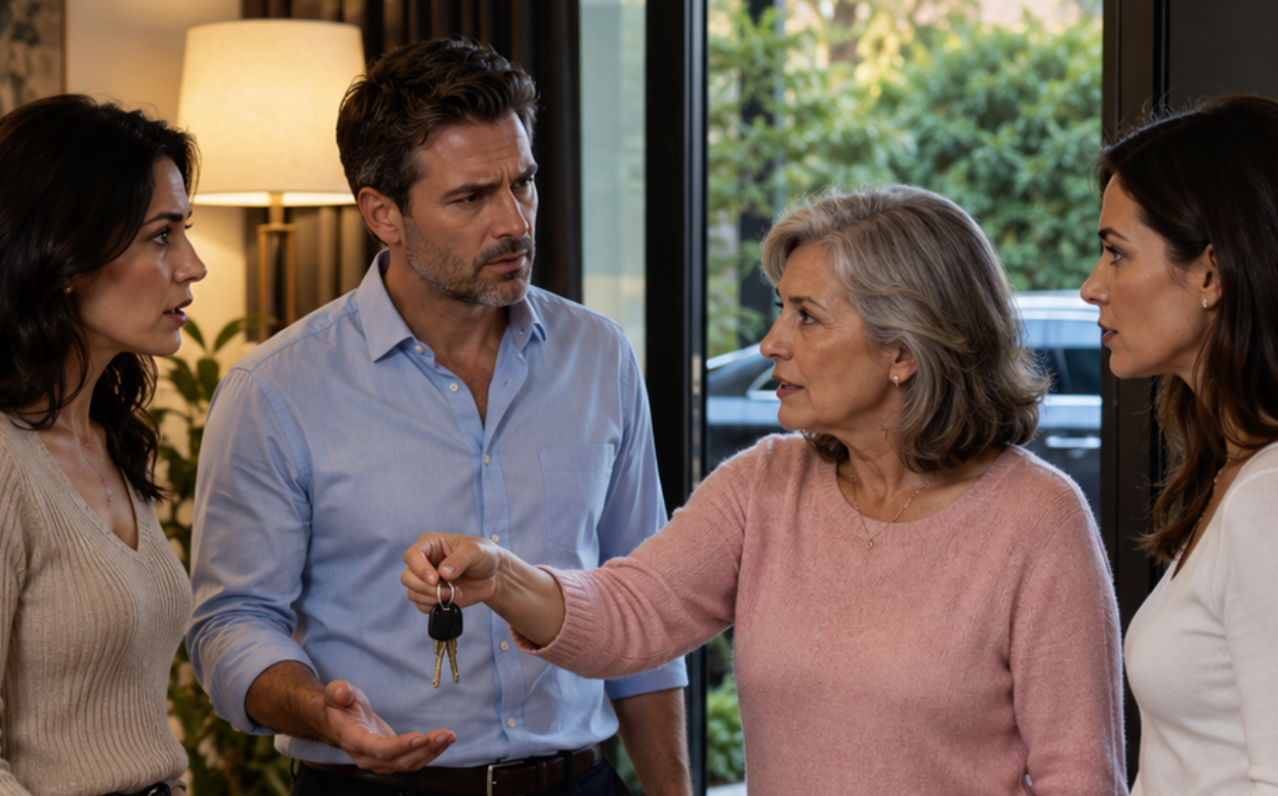
Lyubov Denisovna arrived on Sunday at about eleven in the morning. She brought nothing with her—not a pie, as she usually did. She had come to settle the matter. Inna followed her up the stairs.
Veronika opened the door, let them both in, and offered them tea. Lyubov Denisovna declined, which was unusual too. They sat down in the living room: her mother-in-law on the sofa, Inna in the armchair by the window, and Kirill beside Veronika.
“Kirill, dear,” Lyubov Denisovna began in a calm, patient voice, like someone explaining the obvious. “I’ve already told Inna that you’ll give her the car. You understand I couldn’t make a promise and then go back on it. That would be awkward. It wouldn’t be right.”
“Mom,” Kirill replied evenly, “you made a promise about someone else’s property. Without permission. That isn’t right either.”
Lyubov Denisovna winced slightly.
“Someone else’s property? We’re family.”
“The car is registered in Veronika’s name,” Kirill said. “It belongs to her. Not to me, not to you, and not to Inna.”
Inna leaned forward in her chair.
“Are you serious? You’re making such a fuss over one car?”
“I didn’t start this argument,” Veronika said calmly. “I simply refused to give away my property.”
“Mom promised me! Do you understand that she already promised?”
“I do. She had no right to make that promise.”
Inna turned to her brother.
“Kirill, say something to her. You’re my brother. Would it really hurt you to give me one car?”
“It isn’t my car to give,” Kirill replied. “Veronika drives it every day for work. That’s why we bought it.”
“So what? She could drive the old one!”
“I drive the old one.”
“Then keep driving it and let Veronika walk!”
“Inna,” Kirill said without raising his voice, “enough.”
Lyubov Denisovna spoke up again, this time addressing Veronika.
“Veronika, dear, think about it. You and Kirill can manage perfectly well with one car. You did before. Inna really needs one—for work, to take the children to school, to go shopping. She can’t afford to buy one right now.”
“Lyubov Denisovna,” Veronika said, “you don’t get to decide what happens to our property. Not the cars or anything else. I’m not saying that to hurt you. It’s simply a fact. You can’t make promises on our behalf.”
Her mother-in-law sat up straighter.
“I’m a mother. I think about my children.”
“I understand that. But Inna is your child, not ours. What you give her is for you to decide, not us.”
“But this is what families do…”
“No,” Veronika interrupted, without speaking harshly but with unmistakable clarity. “Families ask each other first. They don’t show up and announce that they’ve already decided.”
Inna turned to her brother again.
“Kirill, at least say something.”
“I already have,” he replied. “The car stays with Veronika. And Mom, I’m asking you never to promise anything on our behalf again. Not cars, not money, not anything else. That decision isn’t yours to make.”
Lyubov Denisovna looked at her son for a long time, hurt and bewildered, as though she couldn’t understand why things had not gone the way she expected.
“So you’re choosing your wife over your sister.”
“I’m choosing what’s fair,” Kirill said. “And my wife is right.”
Inna rose sharply.
“Fine. Now I know where we stand.”
“Inna,” Kirill said evenly, “think about it. If you had a car and someone came to you and said, ‘Give it to us; we need it more,’ would you?”
Inna said nothing.
“Exactly.”
Lyubov Denisovna stood up after her daughter, picked up her bag, and straightened her jacket.
“I thought you were different,” she told Kirill.
“I’m the same as I’ve always been. We just haven’t been in a situation like this before.”
Veronika saw them to the door. Inna left first without saying goodbye. At the threshold, Lyubov Denisovna turned back.
“This is wrong. Families don’t treat each other like this.”
“Goodbye, Lyubov Denisovna,” Veronika said.
The door closed. The apartment fell quiet.
Kirill stood in the middle of the hallway, looking at the closed door. Then he turned to his wife.
“Are you okay?”
“Yes.” Veronika nodded. “Are you?”
“More or less. I just… didn’t expect this from Mom.”
“She didn’t think we’d refuse. She was counting on us feeling too uncomfortable to argue.”
“Probably.”
Veronika went into the kitchen and switched on the kettle. Outside, it was a gray November morning, the kind when you couldn’t tell whether the sky would clear by noon or stay that way all day.
“You know what surprised me most?” she said while the kettle heated. “She didn’t even think to ask us first. She decided that because there are two of us and we have two cars, she could give one away. As if we were a warehouse.”
“She didn’t mean any harm,” Kirill said. “She just doesn’t know how to handle things differently. She sees that Inna has a problem and immediately looks for a solution. She doesn’t stop to think who it belongs to.”
“I understand. But that doesn’t make what she did right.”
“No, it doesn’t.”
Kirill sat at the table. Veronika set a mug in front of him.
“She’ll call again,” he said. “Mom always calls once she’s cooled down. She’ll explain that she meant something else.”
“She can call. Our answer won’t change.”
Over the next few days, Lyubov Denisovna did call—first Kirill, then Veronika. She said she hadn’t wanted to upset anyone, that she had only wanted to help her daughter, and that perhaps they could find some other solution. Kirill answered briefly and without anger: they had made their decision, and they would not change it. When his mother called Veronika, she said the same thing calmly, without adding anything more.
Inna didn’t contact them for several days. Then she sent Kirill a short message: Okay, I understand. There was no apology, but she didn’t raise the subject again. Kirill replied, Okay.
And that was the end of it.
A month later, Inna bought a car herself—a small used one that fit her budget. Kirill heard about it from his mother when she called with other family news. She mentioned it in passing, without commenting on the earlier argument. Kirill told Veronika that evening.
“There you go,” Veronika said. “She found a way.”
“There’s always a way,” Kirill agreed.
On Monday morning, Veronika walked out to the parking lot, unlocked her car, and tossed her bag of work papers onto the back seat. She started the engine and waited for the windows to clear. Over the course of November, she had grown completely used to the car: the way it handled, the climate control, how comfortable the seat felt after a long meeting with a client. Something becomes truly yours gradually, through daily use, familiar routes, and habits.
She pulled out onto the street. The day was beginning as usual: a client at ten, the warehouse at one, the office by four. Lots of miles, lots of conversations, lots of small decisions. It was work she loved, and it required this very car—here with her every day, still her own.
At a traffic light, Veronika turned on the radio. Jazz was playing, with a trumpet. It wasn’t her usual choice, but today it felt right. The light turned green.
Veronika drove on.