Three weeks before the wedding, Alyona received a call from an unfamiliar man who asked which room he should assemble the bunk bed in.
The question was asked so casually, as though Alyona received furniture for a children’s summer camp every Wednesday.
She was standing by the coffee machine in the office kitchen and at first didn’t even understand what he was talking about.
“Excuse me, what bed?”
“A bunk bed. The order is scheduled for today. I’m handling both delivery and assembly. The address is 18 Novatorov Street…”
The man gave her apartment number.
Alyona slowly placed her paper cup on the table.
“And who placed the order?”
“Stanislav. His phone number ends in forty-two.”
She knew those last digits perfectly well.
It was her fiancé’s number.
“Don’t assemble anything yet,” Alyona said. “And don’t bring anything inside either. I’ll sort this out.”
“So where am I supposed to go?”
“Nowhere for the moment. Call the customer.”
The man sighed with the particular weariness of someone who had seen a great deal in his line of work and was no longer surprised by anything.
Alyona returned to her computer, messaged her manager that she needed to leave early, closed her spreadsheets, and twenty minutes later she was already on her way home.
During the drive, she managed to come up with several possible explanations.
Maybe Stanislav had ordered the bed for a friend and accidentally entered their address.
Maybe he intended to resell it.
Maybe it was some kind of wedding surprise, although a bunk bed did not fit very well into Alyona’s understanding of romance.
The last possibility vanished the moment she opened the apartment door.
Stanislav was standing in the hallway with a measuring tape.
A notebook lay on the floor beside him, along with a pencil and his phone. Her fiancé was measuring the wall between the wardrobe and the doorway with the intense concentration of a man preparing an apartment for an international delegation.
“What are you doing home so early?” he asked in surprise.
“I decided I should be here in time for the move-in.”
Stanislav straightened.
“What move-in?”
“I don’t know yet. The man assembling the bed didn’t tell me who the future residents are.”
Something resembling annoyance flashed across her fiancé’s face.
Not fear.
Not confusion.
Exactly the annoyance of a man whose surprise had been discovered sooner than intended.
“I was going to tell you tonight.”
Alyona took off her shoes and walked into the living room.
“Tell me now.”
Stanislav spent a moment retracting the measuring tape, then finally followed her.
“Just don’t get worked up right away.”
“That’s a very good way to begin a conversation after which someone usually does get worked up.”
He sat on the edge of the sofa.
“I thought that after the wedding we should organize the apartment a little differently.”
Alyona looked at him more carefully.
Now this was becoming interesting.
The apartment had three rooms. It wasn’t huge or designer-decorated, just an ordinary apartment in a building from the early 2000s, with a kitchen slightly larger than ten square meters and a long hallway that the developer had apparently designed out of a love for useless floor space.
But Alyona loved the apartment.
And it wasn’t even because of the layout.
She had bought it when she was twenty-seven.
She hadn’t inherited it from a grandmother, won it, or moved into it after a fortunate marriage. She had saved for the down payment, taken out a mortgage, and for seven years, almost every month, paid the bank first and only then calculated how much money she had left to live on.
For the first two years, money had constantly been tight.
She gave up traveling, bought furniture little by little, and only installed a proper kitchen three years after moving in. There were months when an unexpected dentist bill felt like a personal insult.
At thirty-four, Alyona paid off the mortgage early.
She remembered the final payment down to the last ruble, even though she had long since forgotten the price of many much more enjoyable purchases.
Now she was thirty-six.
And for the first time in years, she lived without thinking that on the first day of every month the bank would once again take a noticeable part of her salary.
That was why Stanislav’s phrase “organize the apartment” immediately bothered her.
“What exactly have you decided to organize?”
He, on the other hand, visibly brightened.
“Look. This room will be our bedroom—that part is obvious. We’ll leave the small room free for now, and later it’ll be the nursery.”
Alyona raised one hand.
“‘Later’ is a separate subject. Go on.”
“And the big room can go to Lida.”
For several seconds, she was certain she had misheard him.
“What Lida?”
“My sister.”
“I only know one sister of yours. I’m asking purely because I’m hoping there’s another Lida I don’t know about who lives somewhere in Vladivostok.”
Stanislav grimaced.
“Why do you have to be like that?”
Lidia really was going through a difficult period. After twelve years of marriage, she was divorcing her husband and planning to move out with her two sons, aged nine and eleven.
She and her husband had agreed not to sell the apartment they had bought during the marriage until the division of property had been legally settled. Lidia did not want to stay there. The divorce wasn’t a full-scale war, but living together while waiting for the paperwork had already turned into endless arguments about the kitchen, utility bills, and who had once again left the bathroom light on.
She was looking for a rental near the boys’ school.
In their neighborhood, two-bedroom apartments rented for around thirty-five thousand rubles and up.
Alyona knew that.
What she hadn’t known until today was that her own apartment had somehow become part of Lidia’s housing search.
“You’re proposing that Lidia and her two children move in here?”
“It’s not forever.”
“For how long?”
Stanislav spread his hands slightly.
“Until she sorts out the divorce and her housing situation.”
“So there’s no deadline.”
“Why do you have to put it like that?”
“Because ‘until she sorts things out’ is not a deadline.”
He got up and walked toward the window.
“Alyon, we have three rooms. There are only two of us. One room is literally just sitting empty.”
“Don’t we have two empty rooms?”
“Well, the little one will be for the baby later.”
Alyona looked at him.
“Wonderful. So we don’t even have a child yet, but the child’s room is already untouchable. Meanwhile I, the owner of the apartment, apparently belong to the more flexible elements of the floor plan.”
Stanislav didn’t laugh.
Humor generally wasn’t getting through to him that day.
They had met almost two years earlier at a mutual acquaintance’s birthday party. They dated for nine months without rushing to move in together. At the time, Stanislav rented a studio apartment on the other side of the city.
Then he began staying at Alyona’s place more and more often.
First for weekends.
Then for three or four days at a time.
At some point, it stopped making sense to pay nearly thirty thousand rubles a month for an apartment where he spent only two evenings a week.
They calmly discussed it, and Stanislav moved in with her.
Alyona deliberately didn’t charge him “rent.” He transferred half the utility expenses, bought groceries roughly equally with her, and paid part of their shared household expenses.
The arrangement suited both of them.
And in everyday life, Stanislav turned out to be far more pleasant than many of the men Alyona’s friends complained about.
He cooked.
He could stop at the store after work and buy groceries without sending photos of shelves and asking, “Which cheese exactly?”
He didn’t believe that loading the dishwasher required some mysterious form of female energy.
When the faucet broke, he honestly admitted he had never fixed one before, called a plumber, and did not turn the bathroom into a branch of an experimental engineering plant.
A year after moving in, he proposed.
Alyona accepted without much hesitation.
Then wedding preparations began.
And along with them, a side of Stanislav appeared that Alyona had never encountered before.
First, he suggested rearranging the furniture in the living room so that “after the wedding it would feel more like a family home.”
Then he said Alyona didn’t need to occupy an entire corner of the living room with her desk if she worked from home only a few evenings a month.
Now it turned out that this had not simply been an urge to rearrange furniture.
It had been a warm-up before a much larger program of territorial development.
“Did Lida herself ask you for a room?” Alyona asked.
“No.”
“Then where did this plan even come from?”
“I told her we could probably do it.”
“You already told her?”
“Not exactly. I said we would most likely work something out.”
Alyona leaned back against the sofa.
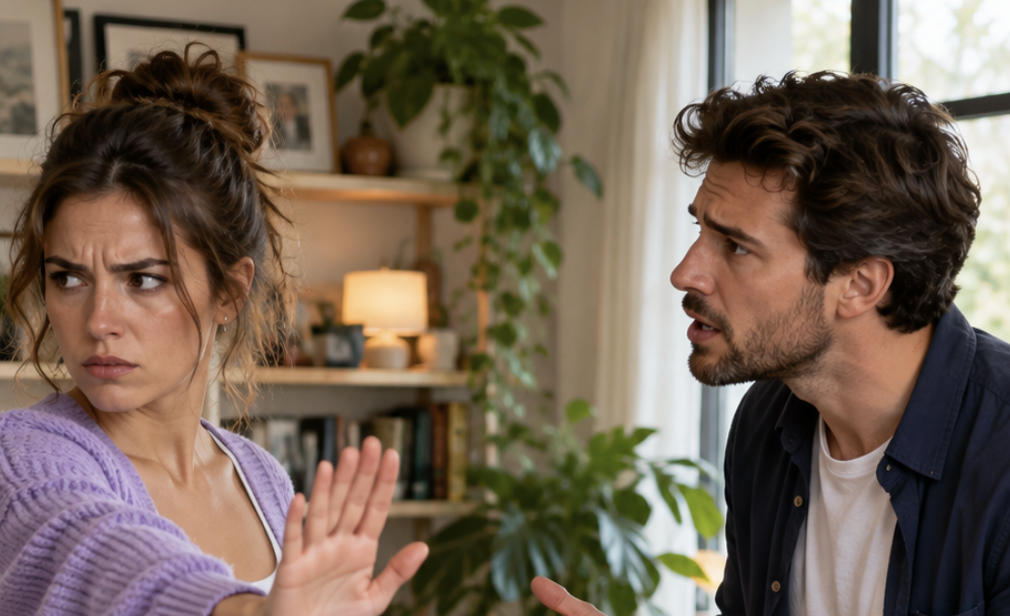
“Stas, do you understand what you’re telling me right now?”
“Yes, I understand everything.”
“No. You told your sister that she could move with her children into an apartment that doesn’t belong to you. Then you ordered a bed for that apartment. And you planned to inform the owner after the furniture had been assembled.”
“Stop saying ‘the owner,’ like we’re strangers.”
“All right. Your fiancée, whom you forgot to ask for permission.”
He rubbed a hand over his face.
“I wanted to prepare everything properly first. So you could see that it wouldn’t be a problem.”
“That’s why you ordered the bed?”
“The boys need somewhere to sleep.”
“Stas, at the moment I have fewer questions about the boys than about anyone else.”
She asked him to show her the order.
Stanislav reluctantly unlocked his phone.
The bunk bed had already been paid for.
Alyona looked at the payment method and at first thought she must have misunderstood.
“You paid for this from our travel account?”
They were planning to spend ten days in the Kaliningrad region after the wedding. Nothing exotic or enormously expensive, but they wanted to stay at a good hotel, rent a car, and travel around the region.
They had opened a separate joint account for the trip and had been transferring equal amounts into it for the past four months.
The money belonged to both of them.
And both had access to it.
“I’ll put it back,” Stanislav said quickly.
“When?”
“After payday. In installments.”
“Why did you take it from there without discussing it with me?”
“Because the bed was on sale. And delivery was only free right now.”
Alyona involuntarily laughed.
“That explains everything. Our family budget has fallen victim to free delivery.”
“Don’t exaggerate.”
She scrolled down the screen.
In the store’s shopping cart were two desks, a wardrobe, and a folding sofa.
“What is this?”
“I haven’t ordered those yet.”
“That’s reassuring.”
“Lida needs somewhere to sleep too. The sofa would fit perfectly here.”
He pointed at the wall.
So that was what the measuring tape was for.
Alyona got up and went to the kitchen.
She wanted some water.
And, at the same time, a few minutes without listening to explanations about how exactly people she had never invited were going to fit into her living room.
Stanislav followed her.
“Why do you immediately react so defensively to everything?”
“Because my apartment has suddenly become part of a relocation program I learned about from a furniture assembler.”
“Lida isn’t a stranger.”
“She’s not a stranger to me either. But that doesn’t automatically make her a resident here.”
“She’s having a hard time right now.”
“I’m not arguing with that.”
“The kids won’t have to change schools.”
“That’s great.”
“And she’ll have to pay thirty-five or even forty thousand in rent. For what? To some stranger.”
Alyona opened a bottle of water.
“That’s called renting an apartment.”
“I know what it’s called.”
“Then what exactly surprises you?”
Stanislav began to get irritated.
From his point of view, the situation was simple. His sister had two children and needed temporary housing. There was a large three-room apartment occupied by only two adults.
Connecting those two facts seemed perfectly reasonable to him.
Alyona also saw a simple situation.
Just a different one.
Stanislav had a sister he wanted to help.
And Alyona had an apartment that was very convenient for him to use for that purpose.
“All right,” she said. “Suppose Lida moves in. Who pays the extra utilities?”
“Oh, come on, what difference does that make?”
“Four people instead of two. Water. Electricity.”
“We’ll work it out.”
“Who buys the furniture?”
“I already started buying it.”
“With our money.”
“I’ll pay it back.”
“Groceries?”
“Lida will buy her own.”
“How long does she stay?”
“I don’t know!”
“Exactly. Neither do I.”
Stanislav planted both palms on the table.
“You’re turning everything into a rental agreement.”
“No. I’m trying to understand why the decision has already been made when I wasn’t involved in it at all.”
He calmed down a little and sat.
“I genuinely thought you’d be fine with it.”
“You thought I’d agree?”
“Yes.”
“Then why didn’t you ask?”
There was no answer.
And Alyona liked that question more than all the others.
If Stanislav had genuinely been certain she would agree, there was nothing stopping him from calling and saying, “Lida has a problem. Let’s discuss it.”
Instead, he had decided to install the bed first.
Then the furniture.
Then, presumably, bring in his sister.
Because saying no to a situation that had already been arranged was much harder.
A few minutes later, Alyona asked:
“What exactly does Lida know?”
Stanislav began answering too carefully.
Which immediately made it clear that she knew quite a lot.
He had already told his sister that “the housing issue is almost settled.”
He told her the school would remain nearby.
He explained to the boys that they would have a bunk bed.
Lidia had even asked whether a second refrigerator would fit in the kitchen. She had a nearly new one of her own and did not want to leave it with her husband after moving out.
“And what did you tell her?” Alyona asked.
“I said I’d check with you.”
She closed her eyes and laughed.
This time, for quite a while.
Stanislav watched her without the slightest amusement.
“What’s so funny?”
“I’m trying to understand what my position is here. You’ve already allocated the apartment. Assigned the rooms. Chosen the residents. Taken money for the bed. But the refrigerator? No. That’s where you decided to preserve the last remnants of democracy and ask me.”
“Stop mocking me.”
“I’m not mocking you. I’m genuinely pleased to discover that at least a refrigerator can’t move into my apartment without my consent.”
After that, the conversation became worse.
Not louder.
They rarely shouted at each other.
But Stanislav finally said aloud what had been hiding behind all the talk of temporary assistance.
After the wedding, he said, they needed to stop dividing life into “yours” and “mine.”
Family should help relatives.
Keeping two rooms to themselves while his sister had to spend a huge amount of money on rent seemed selfish to him.
“Why two?” Alyona asked. “You’ve already assigned one to our future child.”
“Don’t pick at every word.”
“I’m not. I’m interested in why we’re supposedly obligated to share my apartment right now, while your own resources aren’t part of the calculation at all.”
Stanislav frowned.
“What resources of mine?”
“Any of them.”
He owned no real estate.
He also had no savings for a down payment.
Before moving in with Alyona, he had rented an apartment, and most of the money he saved after moving in had simply dissolved into daily life.
Some went toward his car loan.
Some went toward his hobbies.
Stanislav was seriously into fishing and could spend an hour explaining the difference between two reels that looked exactly the same to Alyona and were both indecently expensive.
She had never complained.
It was his money.
He earned a decent salary, paid his loan on time, and contributed to their shared household expenses.
But now all of that suddenly sounded different.
Stanislav could easily call one room “unused” because he had not spent seven years paying for it.
“Do you want to help Lida?” Alyona asked. “Great. Help her.”
“That’s exactly what I’m doing.”
“No. At the moment, you’re helping her with my apartment.”
“Here we go again.”
“Then I’ll suggest something else. Lida rents an apartment for thirty-five thousand. You give her fifteen thousand every month. For her, the rent becomes twenty. That’s meaningful help from a brother.”
Stanislav didn’t answer immediately.
“Fifteen thousand every month?”
“Every month.”
“Alyon, I have the car loan.”
“I know.”
“And the wedding right now.”
“I know that too.”
“Fifteen thousand is a significant amount.”
She nodded.
“Of course it is.”
“Well, there you go.”
“What do you mean, ‘there you go’?”
Stanislav fell silent.
Alyona leaned against the countertop.
“Five minutes ago, one room in someone else’s apartment was nothing important to you. But fifteen thousand from your own salary suddenly became a serious financial burden.”
“Those are different things.”
“Yes. That’s exactly why I noticed the difference.”
He tried again to explain about family, temporary hardship, and how pointless paying rent was.
And then Alyona said without smiling:
“Stas, first earn enough to buy even a one-room apartment of your own. Then you can start deciding what happens to my three-room apartment.”
He flushed.
“Great. So now you’re going to constantly throw it in my face that the apartment is yours?”
“As long as you don’t start allocating its rooms, no.”
“And what changes after the wedding?”
“In the property documents? Nothing.”
He stood abruptly.
That sentence hit him.
Alyona could see it.
But she had no intention of softening it.
She wasn’t trying to humiliate him for not owning property. In two years, she had never once treated it as a flaw.
It had become relevant only now, when Stanislav started discussing someone else’s square meters as if they had come bundled together with the wedding champagne glasses.
That evening, Lidia called.
Alyona saw her name on Stanislav’s screen while they were eating dinner in silence.
At first, he didn’t want to answer, but eventually he did.
“Yes, Lid.”
He listened for a few seconds.
“No, don’t bring anything over yet.”
Another pause.
“No, it’s not about the refrigerator.”
Alyona involuntarily looked up.
The conversation continued for about three minutes. Then Stanislav held the phone out to her.
“She wants to talk to you.”
“Alyona?” Lidia asked cautiously.
“Yes.”
“I think I’m about to ask a very stupid question.”
“Go ahead.”
“Did you even know that we were planning to move in with you?”
Alyona looked at Stanislav.
“I found out today.”
The other end went silent.
“Today? As in, literally today?”
“From the man who was supposed to assemble the bunk bed.”
Lidia remained silent for several more seconds.
Then she said:
“What an idiot.”
Stanislav heard her.
“I’m right here, by the way.”
“Even better,” his sister replied. “Director of Other People’s Housing.”
Alyona bit her lip.
Lidia began quickly explaining that she had been certain her brother had arranged everything with Alyona in advance. He had told her that after the wedding he and Alyona had discussed the free room and were willing to help temporarily.
Lidia herself had never once asked to live there for free.
In fact, she had already viewed two rental apartments. Her brother’s option had simply seemed more convenient because of the school.
“If I’d known he hadn’t even asked you, I never would have continued the conversation,” she said.
Stanislav tried to interrupt.
“I was going to ask.”
Lidia didn’t even let him finish.
“After the bed?”
“I wanted to prepare…”
“Stas, cancel the bed.”
“I’ll have to process a return.”
“Then process it. And don’t call the children with housing updates until you at least have keys to the place you’re promising them.”
This time Alyona laughed openly.
After the call, Stanislav remained silent for a long time.
Then he went to the bedroom.
The next morning, he canceled the bed. The store confirmed the return, and several days later the money was refunded to the same account it had been taken from.
Alyona checked that the money had arrived and left it there.
Formally, the wedding trip was still planned.
So was the wedding itself.
But the very next evening, Alyona called the wedding host and asked him to pause finalizing the program. Then she wrote to the photographer that the date might change.
Stanislav noticed the messages.
“Are you canceling the wedding?”
“I’m putting the preparations on hold.”
“Because of one room?”
“No. Because you made a major decision for me, spent our joint money without asking, and put your sister in a ridiculous position.”
“I returned the money.”
“The store returned it.”
“What difference does that make?”
“A big one. Because the amount of money wasn’t the problem.”
Stanislav paced around the room, clearly trying to find the right argument.
“So what now?”
“I don’t know.”
“Great answer three weeks before the wedding.”
“But an honest one.”
Over the next few days, he became noticeably softer.
At first, Alyona thought perhaps he finally understood.
Stanislav apologized. He admitted he had rushed things. He said he had wanted to help his sister and had gotten carried away.
But two days later, he added:
“Although you didn’t have to make such a huge issue out of it.”
And it became clear that he hadn’t fully understood after all.
Then he suggested a compromise.
Lidia wouldn’t stay indefinitely. She would stay for exactly three months.
Alyona asked:
“Did she ask for that?”
“No, but…”
“Then why are we discussing this again?”
A week later, he suggested renting the room to a tenant, since Alyona was “so principled about unused space.”
She looked at him and understood that Stanislav was still trying to prove the underlying idea: an empty room was obligated to be useful.
It was difficult for him to accept one simple thing.
The room did not have to produce anything at all.
It could remain empty.
It could become an office.
It could be filled with boxes.
It could become a guest room.
Because the right to decide belonged to the person who owned the apartment.
Not to the most enterprising relative.
Two weeks after the bunk-bed incident, Alyona canceled the restaurant reservation.
She lost a small deposit.
The photographer refunded everything.
So did the host.
The hotel booking for their trip was easier: it was refundable. They divided the money in the joint account equally because both had contributed the same amounts. After the bunk-bed refund, the balance once again matched their actual contributions.
The conversation about the wedding lasted less than an hour.
No drama.
Stanislav sat at the kitchen table for a long time, turning a spoon around in his cup.
“So that’s it?”
“The wedding definitely isn’t happening.”
“And us?”
Alyona didn’t answer immediately.
She still loved him.
That was exactly why the decision was more painful than it might have seemed from the outside.
If Stanislav had been an ordinary freeloader who had lived off her for two years and was simply waiting for marriage, everything would have been easier.
But he wasn’t like that.
He worked.
He contributed to the household.
He supported her when her father became ill.
Once, he had even canceled a trip to help her with renovations.
The problem wasn’t that he was a bad person.
The problem was that at some point he had sincerely decided that after the engagement, her property had become a resource for his extended family.
And that asking the owner of that resource was optional.
“I don’t want to decide everything forever right now,” Alyona said. “But I don’t think we should keep living together either.”
Stanislav frowned.
“You’re throwing me out?”
“I’m suggesting that we live separately.”
“Not much difference.”
“There is. You can calmly find an apartment. I’m not putting your suitcase outside the door tonight.”
He found a studio ten days later.
Not the old one—it had long since been rented to someone else. Another place, a little farther from work.
Alyona helped him move his things.
There was no division of furniture because almost all of the large furniture had belonged to her before he moved in. Stanislav took the television he had bought himself, the coffee machine, some kitchen appliances, his tools, and boxes of fishing equipment.
On his third trip, he carried out a long case full of fishing rods and stopped in the hallway.
“So I guess this is my real estate.”
Alyona looked at the case.
“Considering what your fishing gear costs, there should already be at least a small plot of land in there.”
He laughed.
For the first time in weeks, genuinely.
A month after the furniture assembler’s phone call, Stanislav was living separately.
Lidia rented a two-bedroom apartment ten minutes’ walk from the school. Her former husband agreed to pay part of the rent until the division of property was finalized, and Stanislav did eventually start helping his sister financially.
Not fifteen thousand.
Ten.
His own suggestion.
Alyona learned about it not from him, but from Lidia, who called to thank her for a children’s shelving unit Alyona had given her after the move.
“He’s very cautious now,” Lidia said. “Yesterday he asked me three times whether he was definitely allowed to buy the boys a desk lamp.”
“Progress.”
“A little. But at least he isn’t relocating anyone anymore.”
Stanislav and Alyona occasionally exchanged messages.
They did not get back together.
And Alyona never promised that they would.
One day, however, he sent her a photograph of his studio.
There was a sofa in the room, a small table, and a drying rack with laundry.
Under the photograph he wrote:
“Empty corner detected. Haven’t given it to anyone yet.”
Alyona looked at the photo and replied:
“Stay strong. Most importantly, don’t tell your relatives how many square meters it is.”
That was where the conversation ended.
And the large room in her apartment really did remain almost empty for several more months.
Later, Alyona moved her desk into it, put an armchair near the window, and added a bookcase.
The room never acquired any particular grand purpose.
Sometimes Alyona worked there.
Sometimes she read.
Sometimes she simply piled clothes on the armchair because she couldn’t be bothered to put them away immediately.
And what she liked most was that she didn’t have to explain any of it to anyone.
A second refrigerator never appeared in the kitchen either.
And the story of the bunk bed became one of Lidia’s favorites.
Much later, she once said to Alyona:
“Can you imagine what would’ve happened if that furniture assembler hadn’t called you?”
“I can.”
“You would’ve come home that evening and found a children’s room.”
“Why only a children’s room?” Alyona objected. “At the speed Stas was moving, by evening there could’ve been an entire branch of a student dormitory in there.”
They both laughed.
And yet the furniture assembler had turned out to be an extremely timely person in that story.
Because sometimes it is better to discover someone’s family habits before the wedding.
Especially when your future husband has already managed to allocate your rooms, spend your joint money, and reserve space for someone else’s refrigerator—before earning even a single square meter of property of his own.