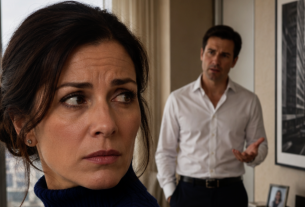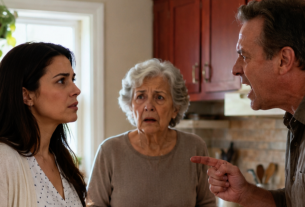
— You’re not going. I’ve made the decision.
Dina froze, her laptop open in her hands. On the screen glowed a confirmation—two tickets to a health resort near Kislovodsk, paid for back in February. She’d been saving for this trip for a year and a half. Every paycheck, she set money aside, skipped her morning coffee, wore the same old coat for the fourth winter in a row.
— What do you mean, I’m not going? she asked, even though she’d clearly heard every word.
— Mom needs surgery. It’s not covered. Eighty-five thousand. We’re giving up our trip, the refund will go to pay the doctors, Artyom said in a flat tone, staring at his phone as if he were quoting the weather. — I’ve already called the agency. We’ll get about seventy percent back.
Dina slowly closed her laptop. Set it on the table. Sat down on a stool because, suddenly, her legs felt like jelly.
Eighty-five thousand. Their trip cost exactly eighty-five.
She didn’t scream. She didn’t cry. She just sat there, looking at her husband of seven years, trying to figure out when exactly he became the kind of man who could spend her money without even asking her.
The apartment on Profsoyuznaya was hers. Dina bought it herself. Thirty-four years old, senior economist at a logistics firm, she’d been working herself to the bone since she was twenty-two. Started out as a call center operator, finished her evening degree in economics, took on side gigs, skipped vacations. By thirty, she’d paid off the mortgage—early, in three huge chunks, each one costing her sleepless nights.
A two-room apartment on Profsoyuznaya, seventh floor, windows facing the park. Nothing fancy—an old panel building from ‘88, six-meter kitchen. But it was hers. Keys, papers, everything in her name.
Artyom came into her life after the apartment was already paid off. They met at a work party—he worked for a related company, selling spare parts for heavy machinery, earning about seventy. Calm, quiet, with a gentle smile. Back then, Dina was tired of being alone. Tired of coming home to empty walls, tired of cooking and eating dinner by herself every night.
A year later they got married. Small ceremony, no restaurant—Dina didn’t like crowds. Artyom moved in with her, rented his own one-bedroom in Biryulyovo, and saved that money in a separate account. Dina didn’t interfere. She believed everyone should have something of their own.
The first two years were fine. Artyom was easy to live with—didn’t argue, didn’t make demands, didn’t create drama. Dina worked, he worked, in the evenings they watched shows together, on weekends they’d visit his parents in Lyubertsy. Dina cooked, shopped, cleaned—not because he insisted, but because that’s just how it was. Artyom did the dishes and took out the trash. That was considered his contribution.
Artyom’s parents—Galina Petrovna and Viktor Ilyich—were simple people, very sure of themselves. Galina Petrovna was a nurse at the clinic, Viktor Ilyich drove a bus until retiring. They lived modestly: two-room apartment in Lyubertsy, a small country house, an old Lada. Dina never saw anything wrong with that. Just regular people.
But there was one thing Dina noticed almost right away, and it only became more obvious with time. Galina Petrovna had a way of speaking where nothing sounded directly offensive, but it always left a bitter aftertaste.
«Dinochka, you really have a wonderful apartment. Good job buying it before prices skyrocketed,» she’d say, glancing around the room. «Artyom could have never saved up for something like this. He’s just not very resourceful.»
The words were supposedly about her son, but they always sounded the same: Dina was praised, Artyom was not. Hidden in that sentence was another message: you just got lucky, and he’s just an add-on next to you.
«Mom, come on,» Artyom would reply weakly, brushing her off.
«What? I’m just telling the truth. Dina’s independent, does everything herself, works so hard. Not many people are like that anymore.»
At first, Dina didn’t think much of it. But then she started noticing a pattern: every visit to his parents ended with Galina Petrovna listing Dina’s salary, her apartment, and how successful Dina was overall. And every time, there was something in her tone that made Dina want to get up and leave.
Then came the requests. At first, small ones: could she lend five thousand until the pension arrived, bring groceries from Auchan—since you have a car and it’s hard for us—or help out at the dacha—Artyom can, but if you came too, it’d go faster.
Dina always helped. Not because she had to, but because she felt it was normal—it was her husband’s family, after all. She’d bring in bags of groceries, give money without asking for it back, and help dig up the garden at the dacha. Galina Petrovna took it all for granted and, in five years, never once said thank you in a way that sounded sincere.
«Well, you can afford it,» she’d say instead of thanks. «Your salary speaks for itself.»
Artyom was always silent during these moments. He’d look away, nodding, almost agreeing with his mother. At first, Dina thought it was just a man’s awkwardness—not everyone knows how to talk about feelings. Then she got used to it, and eventually stopped noticing.
By last spring, Dina was exhausted. Not from work—she actually enjoyed her job. She was tired of living like a hamster on a wheel: home, work, husband’s parents, then work, then more of his parents. She was tired of spending her vacations not where she wanted, but where circumstances took her: the dacha, her mother-in-law’s renovations, or “let’s not go anywhere, it’s too expensive.”
That’s when she decided enough was enough. She found a sanatorium in Kislovodsk—not fancy, just average, with healing mud and mineral water. She booked it for May and paid upfront so she wouldn’t change her mind. She told Artyom:
«We’re going. Two weeks. I already paid for everything.»
Artyom looked at her strangely, like he wanted to say something but didn’t. He just nodded.
«Alright.»
Dina was thrilled. She thought: finally. Finally, something just for the two of them. Finally, she could breathe easy.
For a year and a half, she had been waiting for this trip. She counted down the days. Bought a swimsuit, light dresses, a new bag. She read reviews, mapped out routes, and carefully selected which days she’d treat herself to spa sessions. This was her hidden little joy deep inside—a happiness that helped her get out of bed each morning in February and March, when it was still dark and gray outside.
Then in April, Artyom went to visit his parents. Nothing unusual—he did it every week. He came back late, around half past ten. Dina was already almost asleep.
He took off his shoes, walked into the room, and sat down on the edge of the bed. Dina opened her eyes.
«What’s wrong?»
«We need to talk.»
She sat up and turned on the lamp. Artyom stared at the floor.
«I called the travel agency. I canceled our trip.»
Dina didn’t understand right away.
«What?»
«My mom needs surgery. It’s not covered, and costs eighty-five thousand. We’re giving up our trip so the money can go toward her medical bills.»
Dina looked at her husband. The room was silent. Outside, the small park was noisy—the same one her apartment windows faced. Her apartment, bought with her own money, paid off by her hard work.
«Eighty-five thousand,» she repeated.
«Yes.»
«Exactly what the trip cost.»
«Just a coincidence.»
Dina exhaled slowly. A coincidence. Of course.
«Artyom,» she said. «Do you understand what you’ve done?»
«I helped my mom.»
«You canceled my trip. My money. Without asking me.»
«Our money.»
«No,» Dina shook her head. «Not ours. Mine. I saved up for those tickets for a year and a half. I paid for them with my salary. You didn’t put in a single ruble.»
Artyom looked up at her. There was no guilt in his eyes—just irritation.
«You’re always keeping score. Mine, yours. We’ve been married five years. What difference does it make who paid what?»
«The difference is that you used my money and didn’t ask me.»
«My mom needs surgery. Are you saying we shouldn’t help?»
«I’m saying you should have asked me. Before calling the agency. Before canceling. Before deciding for me.»
Artyom stood up. He paced the room and stopped by the window.
«You’re being selfish, Dina.»
«Selfish?» she scoffed. «For five years I’ve been bringing your parents groceries. For five years I’ve been giving money that’s never returned. For five years I’ve been digging in the garden at your family’s dacha instead of relaxing. And now I’m the selfish one?»
«That’s different.»
«No, it’s not different at all.»
Artyom stayed silent. Dina looked at his back—broad, slouched, familiar down to the last freckle. And she realized she didn’t really know this man. Or maybe she did—she just hadn’t wanted to see it before.
«You know what hurts the most?» she said quietly. «You didn’t even ask me how I felt about it. You just presented it as a done deal. As if my opinion doesn’t matter. As if I’m not the mistress of this house, just some add-on to your family.»
Artyom turned to face her.
«You’re exaggerating.»
«No. I finally see things as they really are.»
She got up and put on her robe.
«I’m going to my mother’s,» Dina said. «I need time to think.»
«Dinochka, don’t be so childish. So the trip is canceled, we’ll just go next year.»
«Next year,» she repeated. «Do you even hear what you’re saying right now?»
Artyom didn’t answer.
Dina packed her bag—quickly, automatically, not looking at her things. She went to the hallway, put on her jacket. At the door, she turned around.
«Artyom,» she said. «I’m not going to my mom’s. I’m going to a hotel. I need to be alone.»
«Dina, come on. Let’s just talk like normal people.»
«We’ll talk. Just not today.»
She left and closed the door behind her. It was quiet. Artyom didn’t run after her. He didn’t call. He didn’t text.
Dina booked a room in a small hotel not far from her work. For three days, she went to her job, came back, lay on the bed, and stared at the ceiling. She thought.
She thought about how five years ago she got married—not for money, not for an apartment, but for a person. She remembered how happy she was when Artyom moved in, how she imagined their life together—quiet, calm, reliable. She thought about how, year after year, she gave herself—her work, their home, his parents—and how each year she ended up alone.
She remembered how two years ago she wanted to buy a new car. Not a fancy one—just something reliable so she wouldn’t have to worry in winter. Artyom said, «Why? We already have a car.» The car was his—an old Ford that he picked, bought, and took care of himself. Dina didn’t argue. She put off the idea. A month later, Galina Petrovna asked for money for a new washing machine. Artyom gave her the money—from their shared savings. He didn’t even ask.
She remembered three years ago when she wanted to visit St. Petersburg—just for a weekend, just to see the city. Artyom said, «Let’s go to my parents instead, they miss us.» Dina went to visit his parents. It was boring, stuffy, six garden plots, endless work in the beds. On Monday at work, her colleague talked excitedly about spending the weekend at the Hermitage. Dina smiled and listened, but inside, she felt something clench.
She remembered how a year ago she got a promotion—became a senior economist, her salary almost went up by half. Artyom said, «Good job.» Galina Petrovna said, «Well, now you can help us even more often.» And Dina did. Because she didn’t know how to say no. Because she was afraid of seeming selfish. Because she wanted to be loved.
On the fourth day, she called her friend Lena, who she’d known since school. Lena worked as a psychologist, lived outside Moscow, raised two kids, and always told the truth straight, even when it hurt.
«I left Artyom,» Dina said.
«Finally,» Lena replied.
Dina was taken aback.
«What do you mean—finally?»
«Dinochka, honey. I told you this five years ago. And four. And three. You didn’t listen.»
«Told me what?»
«That you’re living with someone who doesn’t love you. Who uses you. Who will never take your side.»
Dina was silent.
«I remember when you came to see me two years ago,» Lena continued. «You were in tears. You said you were tired, you couldn’t do it anymore, you felt like a maid in your own house. I told you then: leave. You said: I can’t, it’s family.»
«I don’t remember,» Dina whispered.
«You didn’t want to remember. You wanted to believe things would get better. That he’d change. That maybe you were just asking for too much.»
Dina began to cry. For the first time in days—really cry, sobbing like a child.
«Lena,» she said through tears. «I don’t know what to do.»
«You do know,» her friend replied. «You’re just scared.»
«Of what?»
To be left alone. To admit that five years were wasted. To realize that the person you chose didn’t choose you.
Dina wiped away her tears.
«He called me selfish.»
«He said that because for the first time in five years, you refused to just be convenient,» Lena spoke softly but firmly. «Listen to me, Dinachka. You’re not selfish. You’re someone who’s let others decide for her for too long. You gave everything to this relationship—money, time, energy. What did he give?»
Dina thought about it. She couldn’t find an answer.
«He did the dishes,» she said finally.
«Anyone can do the dishes. But respecting your wife? That’s something else.»
Dina came home a week later. Artyom was there—sitting in the kitchen, drinking tea. He stood up when he saw his wife.
«Dina. Finally. I called, but you didn’t answer.»
«I didn’t want to talk.»
«Let’s discuss this. I’ve had time to think. We can go to Kislovodsk in the fall. Or next year. I’ll find the money.»
Dina shook her head.
«Artyom, this isn’t about the trip.»
«Then what is it about?»
«It’s about you canceling my order without asking me. About you staying silent for five years when your mother humiliated me. About the fact that not once—not once, Artyom—did you take my side.»
«I wasn’t silent.»
«You were silent. Always. When she said I spent too much. When she said I should help more. When she said I was lucky to get the apartment, and you were unlucky with me. You said nothing.»
Artyom looked away.
«I didn’t know what to say.»
«Exactly.»
Dina walked into the room and sat on the couch. Artyom stayed by the door.
«I want a divorce,» Dina said.
Artyom turned pale.
«Are you serious?»
«Absolutely.»
«Because of the trip? Because my mom needs surgery?»
«No,» Dina looked at her husband calmly. «Because I spent five years with a man who didn’t love me. Who loved the comfort I provided. Who loved when everything was quiet and easy. Who never truly chose me.»
«That’s not true.»
«It is true. And you know it.»
Artyom sat down on the floor, leaned his back against the wall, and covered his face with his hands.
«I don’t want a divorce.»
«I know. But I do.»
«Dina, let’s try again. I’ll change. I’ll talk to Mom. I will…»
«Artyom,» Dina interrupted. «You promised to change five years ago. And three years ago. And last year. Nothing has changed. And it never will. Because you’re comfortable with how things are. You like that I work, pay, help, stay quiet. You like that I always give in.»
«That’s not true.»
«It is. And I don’t want to live like this anymore.»
Artyom was silent. Dina stood up, went to the kitchen, poured herself a glass of water, then came back.
«I’m not going to split anything,» she said. «The apartment is mine, you know that. The car is yours. The savings from rent—that’s yours too. I don’t need anything.»
«And what if I refuse?»
«Then it’ll go to court. But I don’t think it’ll come to that. You hate scandals.»
Artyom gave a bitter, joyless smile.
«You’re right. I do hate them.»
The divorce was finalized two months later. Artyom didn’t make a fuss. He signed the papers in silence, took his things, and moved back in with his parents. Dina stayed in the apartment alone.
On her first evening, she wandered from room to room, unsure of what to do with herself. It was quiet. Too quiet. She turned on the TV just to have some background noise. She sat on the sofa and hugged a pillow.
Then it hit her: she actually felt good. Calm. No one was calling her selfish. No one was in charge of her money. No one was making her go to the dacha when she wanted to go to Kislovodsk.
She started to cry. But these weren’t tears of sadness. They were tears of relief.
A month later, Dina went on a trip to Kislovodsk. Alone. She booked the same sanatorium, the same dates—just for one. She walked in the park, drank Narzan water, went to treatments. In the evenings, she sat on the balcony looking at the mountains. She thought about things.
She thought about how she’d given five years to someone who never appreciated her. She thought about how she could have left sooner—but was afraid. She thought about how everything would be different now.
When she returned, she called Lena.
“So, how was it?” her friend asked.
“Good,” Dina answered. “Truly good.”
“I’m glad.”
“Lena, thank you.”
“For what?”
“For telling me the truth. Even when I didn’t want to hear it.”
Lena paused.
“Dinochka, you did it all yourself. I just put a little light on it.”
Dina smiled.
“Thank you anyway.”
Half a year later, Dina met Sergey. He worked at the same company, but in another department—he came to a meeting, stayed after, and they started talking. Sergey was five years older, divorced, no kids. He looked at Dina closely, listened to everything she said, noticed the little things.
Two months later, he invited her to the theater. After four months, he introduced her to his friends. In six months, he told her:
“Dina, I want you to know: I love that you’re independent. I love that you have your own place. I love that you know what you want. I’ll never stand in your way.”
Dina looked at him and realized: this is how it should be. No conditions. No ‘you must.’ No ‘just put up with it.’ No ‘but this is family.’
She didn’t marry him right away. First, they simply lived together—at her place, because her apartment was bigger. Then Sergey suggested they buy one together—shared ownership, equal parts. Dina agreed. Not because she had to, but because she wanted to. For the first time in a long while, she was doing something not out of duty, but out of desire.
A year later, Galina Petrovna called. Her voice was unusually gentle.
“Dinochka, hello. How are you?”
“I’m well, Galina Petrovna. And you?”
“Oh, I’ve been ill. Had surgery, but thank God, everything’s okay now. Artyom is helping.”
“That’s good.”
A pause.
“Dinochka, I wanted to say…” Galina Petrovna hesitated. “I was wrong back then. About the trips. And about everything. You were a good wife. Artyom was lucky to have you. But he… he let you go.”
Dina said nothing.
“I know it’s late. But I wanted you to know.”
“Thank you, Galina Petrovna,” Dina said. “That means a lot to me.”
“Are you happy?”
Dina looked out the window. Outside was the little park—the same old one, with the poplars. Sergey was downstairs washing the car. Soon, friends would be coming over for dinner, just because.
“Yes,” Dina answered. “I’m happy.”
“Good. Thank God for that.”
They hung up almost at the same time.
Dina stood by the window for a moment, then walked into the kitchen. There was a simple vegetable soup bubbling on the stove—nothing fancy. She stirred it, tasted a spoonful, added a bit more salt, and sat down at the table.
The apartment was peaceful. Not empty—just calm. Everything was in its place: cups, books, photos on the shelf. The photos showed different moments—with Lena, with Sergey, from work. But not a single one of her with Artyom. Dina had taken those down long ago—not out of anger, but simply because she didn’t want to keep looking at them.
She remembered how, five years ago, she had been afraid to be alone. Afraid she wouldn’t cope, wouldn’t find someone else, that she’d regret it. But now she realized: loneliness isn’t about being alone. Loneliness is when there’s someone beside you who doesn’t see you. That’s the real emptiness. Everything else is just quiet—the kind where you can finally breathe.
She took a sip of tea. The sun was shining outside the window. Trees in the park rustled their leaves. Everything was right where it belonged.
She understood now that the reason for the divorce had nothing to do with the canceled trip. The trip only made her see the truth she’d avoided for too long: there was never anyone beside her truly willing to choose her.
Dina finished her tea, got up, and went to answer the door—the bell was ringing. Sergey was standing on the doorstep, holding a bouquet of daisies.
“What’s this about?” she asked, surprised.
“No reason,” he smiled. “You love daisies, don’t you?”
She took the flowers and placed them in a simple glass vase she’d bought for three hundred rubles in the subway. She admired them and thought: this is it. Happiness—not loud, not flashy. Simple. Just hers.
The end.
Yes, the apartment is mine. Yes, it’s in my name. No, that doesn’t mean my husband is the boss here or gets to make decisions for me!