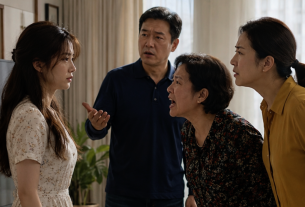
“After the baby is born, everything will be easier. Maxim will be registered here, then the baby will be registered too, and after that we can think about your sister. The apartment has basically been family property for a long time anyway,” Tamara Viktorovna said confidently.
Veronika stopped in the hallway before she had even taken off her shoes.
She had come home almost two hours early. Her meeting with a client had been rescheduled, and the free August evening seemed like a perfect opportunity to have a quiet dinner with her husband. On the way home, she bought peaches, cheese, and fresh bread, imagining how surprised Maxim would be to see her back so early.
Now the paper bag was digging into her fingers, while a conversation drifted from the kitchen that made her lose any desire to walk in smiling.
“Mom, but the apartment is registered in Veronika’s name,” Maxim said quietly.
“For now it’s registered in her name,” Tamara Viktorovna corrected him. “You’ve been married for several years. You can’t keep dividing everything into yours and hers forever. After marriage, the home is practically shared property.”
“I suppose so.”
Veronika slowly lowered the bag onto the bench.
Behind the closed kitchen door, a spoon clinked against a cup. Her mother-in-law was apparently stirring sugar into her tea while discussing her daughter-in-law’s apartment as casually as if she were deciding where to put a new wardrobe in her own bedroom.
“You need to think everything through in advance,” Tamara Viktorovna continued. “Right now there are only two of you, so there’s enough space. Later you’ll have a child. One room will be for the baby, and you’ll have the other. If Inna ever needs to stay with you temporarily, that can be arranged too. She is Maxim’s sister, after all.”
“Does Inna have nowhere to live right now?” Maxim asked.
“She does for now. I’m talking about the future. Life changes. You can’t cling to paperwork and keep repeating that the apartment was bought before marriage.”
“Veronika takes that seriously.”
“Because no one has explained things to her properly. If her husband lives here permanently, contributes to the household, and helps out, then he should have a say. And later you can arrange everything so that no one feels cheated.”
Veronika took off her shoes and placed them neatly against the wall. Then she picked up the bag and walked into the kitchen.
Tamara Viktorovna stopped mid-sentence.
Maxim was sitting by the window. When he saw his wife, he straightened abruptly and instinctively covered a sheet of paper lying on the table with his hand.
Veronika noticed the gesture immediately.
“Don’t hide it,” she said. “I already understand that this is an interesting conversation.”
“You’re home early,” Maxim said.
“As you can see.”
She placed the groceries on the counter and took out the bread, cheese, and peaches. She moved without hurry, giving both of them an opportunity to speak first.
Neither her husband nor her mother-in-law took it.
Veronika turned toward the table.
“So you seriously decided that after marriage, the apartment I owned before meeting Maxim automatically became yours?”
Tamara Viktorovna pushed her cup aside.
“No one decided anything. We were just talking.”
“About registering Inna here, our future child, and transferring ownership of the apartment?”
“You heard a few sentences and you’re already jumping to conclusions.”
“I heard enough.”
Maxim lowered his eyes to the table.
“Veronika, Mom was just talking about the future.”
“My future or hers?”
“Ours.”
“Then why wasn’t I invited to participate in the conversation?”
Tamara Viktorovna straightened in her chair. She wore a light summer dress, and beside her cup lay a notebook she often carried with her. Veronika had always considered that habit harmless. Her mother-in-law used it to write down addresses, shopping lists, and phone numbers.
Now the open page looked different.
Veronika could make out several words: “registration,” “baby,” “Inna,” “three-bedroom.”
She picked up the sheet Maxim had tried to cover.
It was a printed advertisement for a three-room apartment in a nearby district.
“You’ve already found an option?”
“I was showing Maxim what you could buy if you sold this apartment and added some money,” Tamara Viktorovna replied. “You’ve been saying for years that eventually you’ll need more space.”
“We have been saying that. So why are you the one selling it?”
“Don’t pick at my wording.”
Veronika looked carefully at her husband.
“Were you planning to discuss selling my apartment with me?”
Maxim rubbed the edge of the table with his thumb.
“I only looked at the listing.”
“And before that, you agreed that the apartment shouldn’t be considered mine alone anymore.”
“I didn’t mean it like that.”
“You barely said anything. You just agreed with her.”
Tamara Viktorovna exhaled sharply.
“Stop talking to him as if he’s some schoolboy who misbehaved. Maxim is your husband. He’s been living here for years.”
“And what exactly is that supposed to mean?”
“It means he should have rights.”
“What rights?”
Her mother-in-law hesitated for a second.
“At least the right to participate in decisions.”
“About property I bought before I even knew him?”
“There you go again.”
Veronika pulled out an empty chair and sat across from her husband. There was no nervousness in her movements, but Maxim knew his wife well and noticed that she ran her finger along the edge of the printed listing twice before setting it down.
She did that when she was trying not to say something too sharply.
Veronika had bought the apartment four years before meeting Maxim.
By then, she had already spent several years working as an engineer for a company specializing in ventilation systems. She rented a room from an elderly woman and saved money for a down payment.
Her relatives offered to help, but Veronika refused. Not out of pride and not because she wanted to prove anything to anyone. She simply didn’t want buying a home to turn into a family project where everyone who contributed even a small amount later believed they had the right to give advice.
The two-room apartment was in an ordinary prefabricated apartment building near the subway. It wasn’t new or luxurious, but the paperwork was straightforward, the neighbors were decent, and the windows looked out over the courtyard.
Veronika paid off the mortgage ahead of schedule.
Afterward, she replaced the wiring, ordered a new kitchen, renovated the bathroom, leveled the floors, and replaced the front door. She didn’t borrow money, ask relatives to buy furniture, or shift any of the costs onto anyone else.
When the final renovations were finished, Veronika felt for the first time that she could come home in the evening to a place where everything depended only on her.
Four years later, she met Maxim.
It happened at the birthday party of a mutual acquaintance. He worked as a medical equipment repair specialist, traveled frequently between clinics, and had a way of explaining complicated machines that made people genuinely interested.
Maxim never tried to impress her with grand words. After their first meeting, he messaged her the next day, suggested going for a walk, and then courted her calmly for several weeks without pushing or rushing anything.
A few months later, they moved in together.
Maxim moved into her apartment with two suitcases, a toolbox, and a computer. He didn’t own a home of his own. Before meeting Veronika, he had rented a one-room apartment on the other side of the city.
Back then, ownership had never even become a reason for argument.
“The apartment is yours. I understand that,” he said on the first evening while unpacking his clothes into the wardrobe.
“I’m not going to remind you of that every day.”
“And you don’t need to. I’m living with you. I’m not claiming your square meters.”
Veronika remembered that conversation.
That was why the words she had overheard today sounded especially unpleasant.
A year after meeting, they officially married. They kept the celebration small, without loud speeches or days of feasting. After the wedding, Maxim continued living in his wife’s apartment, and outwardly nothing changed.
He contributed to everyday expenses, bought groceries, paid part of the utility bills, and once replaced a broken faucet. All of that was simply normal married life, not an investment that transformed Veronika’s premarital property into jointly owned real estate.
Veronika had always been certain Maxim understood the difference.
At first, Tamara Viktorovna didn’t arouse suspicion either. She came only when invited, brought fruit, asked about her daughter-in-law’s work, and never once tried to act like the mistress of the home.
The first questions about the apartment began several months after the wedding.
“Is the mortgage still large?” she asked one day.
“The mortgage was paid off long before Maxim and I met,” Veronika replied.
Her mother-in-law raised her eyebrows in surprise.
“Completely?”
“Completely.”
“You paid it off yourself?”
“Yes.”
The conversation ended there.
Later, Tamara Viktorovna asked where the property documents were kept.
“In a safe place,” Veronika answered.
“I’m not asking you to show them. I was just curious.”
Some time later, her mother-in-law began talking about moving to a larger home.
“A two-room apartment will be cramped once you have a child.”
“There is no child yet,” Maxim pointed out.
“That’s why you need to think ahead.”
Veronika treated those conversations as ordinary curiosity. Many relatives liked discussing other people’s homes, weddings, children, and living arrangements without necessarily having bad intentions. She answered briefly and did not encourage the subject.
But the questions became more frequent.
Tamara Viktorovna wanted to know whether Maxim was officially registered at the apartment, whether the property could easily be sold, and how much similar apartments in the neighborhood were worth.
Once, she asked whether Veronika planned to give her husband a share of the property.
“No,” Veronika answered directly.
“Why?”
“Because I bought this apartment before I met Maxim.”
“What if he helps pay for future renovations?”
“Then we’ll discuss the expenses beforehand. But that won’t make him an owner.”
Her mother-in-law smirked.
“You’re too strict about everything.”
“I prefer things to be clear.”
Veronika didn’t tell Maxim about that conversation. She didn’t want to create a family argument over one inappropriate question.
Now it turned out there had been far more than one.
Maxim was still sitting across from his wife, unwilling to touch the printed apartment listing.
“Start from the beginning,” Veronika demanded.
“What exactly?”
“How long have you two been discussing my apartment without me?”
“We don’t discuss it constantly.”
“Maxim.”
He looked at his mother, but she offered no support. Tamara Viktorovna picked up her cup and raised it toward her lips, although she didn’t drink.
“We talked about it a few times,” he admitted.
“About what?”
“That someday we might need a different home.”
“I know that. What else?”
“Mom thinks it would make sense to sell this apartment and buy a bigger one.”
“I’m open to that possibility too. But if a new apartment is purchased using money from the sale of property I owned before marriage, then the paperwork has to be handled carefully. And I will not be discussing that with your mother.”
“She was only trying to help.”
“How?”
“She was looking at possible options.”
“Did I ask her to?”
“No.”
“Did you?”
Maxim stayed silent.
Tamara Viktorovna placed her cup back on the saucer.
“Maxim doesn’t need permission to look at property listings.”
“He can look at as many listings as he wants. But you weren’t only looking at listings.”
“You’re reacting far too emotionally to an ordinary family conversation.”
“Let’s avoid vague statements. You said that after we have a child, other relatives could be registered at this address. Who exactly?”
Her mother-in-law tilted her head slightly.
“I used Inna as an example.”
“Why would my sister-in-law need to be registered in my apartment?”
“Different circumstances can arise in life.”
“What circumstances does she have right now?”
“None right now.”
“Then why are you planning to register her here?”
“I’m not planning anything!”
“Your notebook says otherwise.”
Tamara Viktorovna quickly covered the page with her palm.
“You shouldn’t be looking through my notes.”
“You shouldn’t be making plans for my property while sitting in my kitchen.”
Maxim intervened.
“Veronika, let’s stay calm.”
She turned to him.
“I am calm. That’s the only reason you’re still sitting here explaining yourself instead of packing your things.”
Maxim’s face tightened.
“You want to throw me out?”
“I want to understand who I’m living with. Someone who genuinely didn’t understand the law, or someone who decided it was more convenient to pretend he didn’t understand.”
“I’m not taking anything away from you.”
“Not yet. But you already agreed that the apartment shouldn’t be considered mine alone.”
Maxim ran a hand through his hair and moved his chair away from the table.
“Mom said that after several years of marriage, the home becomes family property.”
“And you believed her?”
“I didn’t check.”
“Why not?”
He opened his mouth, but the answer didn’t come immediately.
“I didn’t see a reason to.”
“Because it wasn’t your property being discussed.”
The remark hit its target.
Maxim flushed and turned toward the window.
Veronika stood up.
“Wait here.”
She went into the bedroom, opened the wardrobe, and took out a thick blue folder from an inner compartment.
It contained the sale agreement, the mortgage contract, confirmation that the mortgage had been fully repaid, old payment records, and a recent extract from the Unified State Register of Real Estate.
Veronika had ordered the extract recently for an insurance company and had never imagined she would need it during a domestic argument.
Returning to the kitchen, she placed the documents in front of her husband.
“Read.”
Maxim picked up the contract.
“I know you bought the apartment.”
“Then look at the date.”
He did.
“Four years before we met,” Veronika continued. “Here is the document showing when the mortgage was fully repaid. It was paid off before you ever set foot in this apartment. And here is the registry extract. The sole owner is me.”
Tamara Viktorovna shook her head with irritation.
“No one is arguing with what the documents say.”
“You were arguing with it five minutes ago.”
“I was talking about the moral side of things.”
“The moral side of things doesn’t give you the right to register Inna here, choose replacement apartments, or decide who gets what.”
“You can’t build a marriage entirely around documents.”
“And you can’t make plans for someone else’s property while hoping the owner never overhears you.”
Veronika arranged the papers in a row.
“Getting married did not turn this apartment into jointly acquired marital property. Maxim did not automatically receive a share. You didn’t receive any rights either. Being officially registered at an address does not make someone an owner. I am the only person who can sell, give away, or exchange this apartment.”
“You talk as if Maxim were a stranger,” her mother-in-law protested.
“He is my husband. But being a husband and being an owner are not the same thing.”
“So what is he here, then? Nobody?”
“He lives in his wife’s apartment. Just as I could live in an apartment he had bought before marriage, if he had one.”
Maxim looked up from the documents.
“Mom, she’s right.”
Tamara Viktorovna turned toward her son.
“Five minutes ago, you were saying something different.”
“Because I believed you without checking.”
“When did I lie to you?”
“You said that after marriage, the apartment was effectively shared property.”
“Well, isn’t it? You both live here.”
“Living somewhere and owning it are different things.”
His mother leaned back in her chair.
“Wonderful. So all these years, my son has been investing in someone else’s property.”
Veronika gathered the documents together but didn’t close the folder yet.
“What investments exactly are you talking about?”
“He paid utility bills.”
“Because he used the water, electricity, and heating.”
“He bought appliances.”
“He gave us a coffee machine once as an anniversary gift. It’s sitting in the kitchen and belongs to the person it was given to.”
“He repaired the faucet.”
Maxim grimaced.
“Mom, stop.”
“No. Let her hear it.”
Veronika looked at her mother-in-law without smiling.
“Maxim replacing a faucet does not create an ownership share in real estate. Just as my cooking dinners, cleaning the apartment, and buying him clothes do not give me ownership rights over the equipment he repairs at work.”
“You twist everything.”
“I simply separate facts from convenient fantasies.”
Tamara Viktorovna stood up.
“I wanted you to have a bigger home.”
“Then discuss buying your son an apartment with his money.”
“He’s your husband!”
“Exactly. Which means he should talk to me first instead of making plans with you to sell my property.”
Maxim picked up the printed listing, folded it in half, and placed it in front of his mother.
“Take it.”
“What?”
“The listing. We don’t need it.”
“You’re refusing even to consider a perfectly good option because of her stubbornness?”
“I’m refusing to discuss someone else’s apartment without its owner.”
Veronika noticed how tightly her mother-in-law gripped the paper. Tamara Viktorovna was accustomed to Maxim avoiding confrontation and smoothing over unpleasant conversations. This was the first time he had stopped her himself.
But she wasn’t ready to retreat immediately.
“Fine. Let the apartment belong to Veronika. But what happens if something happens to her?”
The kitchen suddenly seemed smaller.
Maxim turned sharply toward his mother.
“Are you serious right now?”
“I’m asking a practical question.”
“About the inheritance of someone who’s still alive?” Veronika clarified.
“Everyone needs to think ahead.”
“Think about your own property as much as you like. There’s no need to discuss what happens to me.”
“You’re deliberately pretending not to understand.”
“I understand perfectly. You want to know in advance what your son will receive.”
Tamara Viktorovna was the first to look away.
“Every mother thinks about that.”
“Then start with what belongs to you.”
“What does my apartment have to do with this?”
“Exactly. Your apartment has nothing to do with this. And neither does mine have anything to do with your plans.”
Her mother-in-law picked up her handbag.
“It’s impossible to talk to you.”
“But I’m very easy to understand.”
“Maxim, walk me out.”
He didn’t stand up.
“You know the way.”
Tamara Viktorovna stared at her son as though he had violated some long-established rule.
“You’re going to let me leave alone after a conversation like this?”
“You came here by yourself.”
“And afterward you’ll call me as if nothing happened?”
“I’ll call when we’ve both calmed down.”
“I am calm.”
“No, Mom.”
She adjusted the strap of her handbag and headed toward the hallway.
Veronika followed, not to stop her but to make sure her mother-in-law actually left instead of continuing the argument at the door.
At the shoe cabinet, Tamara Viktorovna stopped.
“I only wanted what was best for you.”
“Good intentions don’t begin with making plans for someone else’s property.”
“Once you have a child, you’ll understand that it’s easy to control an apartment when you’re alone, but real life is more complicated.”
“When we have a child, decisions about that child will be made by the child’s parents. Not by a grandmother with a notebook.”
Her mother-in-law put on her shoes and reached for the door handle.
“Don’t be surprised later if Maxim gets tired of feeling like a tenant here.”
Veronika looked toward her husband, who was standing in the kitchen doorway.
“He can tell me that himself.”
Maxim met his wife’s eyes.
“I don’t feel like a tenant.”
“Then don’t agree when someone suggests turning you into an owner of property that isn’t yours.”
Tamara Viktorovna opened the door and stepped onto the landing.
Veronika shut the door behind her and turned the lock.
When she returned to the kitchen, she was no longer trying to hide her irritation. Her nostrils flared slightly, her fingers gripped the folder tightly, and her footsteps sounded sharper than usual.
Maxim gathered the cups from the table and carried them to the sink.
“Don’t pretend to clean,” Veronika said. “Sit down.”
He obeyed.
For several seconds, they simply looked at one another.
“I honestly didn’t know that the apartment would remain entirely yours even after marriage,” Maxim began.
“I don’t believe you.”
“Why?”
“Because when you moved in, you yourself said you weren’t claiming my square meters.”
“I knew the apartment was registered in your name. But I thought after years of marriage, some kind of rights appeared.”
“What kind?”
“I don’t know. That’s why I’m saying I didn’t understand it.”
“You’ve lived here for five years. In that time, you could have opened the law once or asked a professional.”
“I had no reason to until Mom started talking about it.”
“And after she started talking about it, you suddenly needed half for yourself?”
“I wasn’t going to take anything for myself!”
He said it louder than he intended and immediately fell silent.
Veronika didn’t raise her voice.
“Then why did you agree that the apartment shouldn’t be considered mine alone anymore?”
Maxim rubbed his face with both hands.
“I suppose I liked the idea.”
That answer was more honest than all the others.
Veronika tilted her head slightly.
“What idea exactly?”
“That I wasn’t just living here. That we had a home that belonged to both of us.”
“We do have a shared home in the everyday sense. We have breakfast together, choose groceries, invite guests over. But legally, the apartment belongs to me.”
“I understand that now.”
“No. So far, you only understand that I overheard the conversation.”
Maxim leaned forward.
“What do I have to do for you to believe me?”
“Start by telling me everything.”
“I did.”
“No. You admitted only what was impossible to deny. When did your mother first suggest selling my apartment?”
He fell silent.
Veronika waited.
“In the spring,” Maxim finally answered.
It was August.
“Four months ago?”
“About that.”
“And you’ve been looking at listings since then?”
“Sometimes she sent me options.”
“Did you answer her?”
“Yes.”
“What did you say?”
Maxim took out his phone.
“You can read the messages.”
“Open them yourself.”
He found the conversation with his mother. Veronika sat beside him without taking the phone from his hands.
The message thread was longer than she expected.
Tamara Viktorovna had sent links to three-room apartments, speculated about how much they could get from selling the current apartment, and asked whether the new place could be registered in both spouses’ names.
Maxim’s replies were brief, but he never stopped the conversation.
“The neighborhood is too far.”
“This one is too old.”
“Veronika won’t like the kitchen.”
“We’d have to add more money.”
Not once had he written, “Veronika’s apartment cannot be sold without her decision.”
Veronika stood and walked over to the window.
In the courtyard, children were kicking a ball around. Two women with strollers sat on a bench, while a man unloaded boxes from a car near the entrance.
An ordinary warm evening continued outside while, in her kitchen, she was unraveling several months of secret conversations.
“You were choosing options,” she said.
“I was only looking.”
“You were judging the neighborhood, the condition of the buildings, and how much extra money would be needed.”
“But I didn’t do anything.”
“Because you couldn’t do anything without me.”
Maxim set the phone on the table.
“Yes. I behaved badly.”
Veronika turned toward him.
“Imagine you own a car that you bought before marriage. For several months, I secretly discuss selling it with my mother, look for another one, and decide the new car should be registered in both our names. I don’t tell you anything. Then one day you accidentally overhear me saying that after marriage, the car is effectively mine too. What would you call that?”
Maxim was silent for a moment.
“Trying to dispose of someone else’s property.”
“Exactly.”
“I didn’t realize how it looked.”
“You didn’t want to realize.”
He nodded.
“Maybe.”
Veronika returned to the table and placed the documents back in the folder.
“Your mother is no longer to discuss my apartment with you or with me. She doesn’t look for options, ask about documents, or speculate about registering Inna. If she starts again, you stop the conversation.”
“All right.”
“Not ‘all right’ just to make me stop being angry. Will you actually do it?”
“I will.”
“One more thing. If we ever decide to buy a different home, we’ll talk to a professional first and arrange the paperwork so that the money from selling my premarital apartment is clearly documented. No verbal promises and no assumptions.”
“I agree.”
“You do not become an owner of this apartment simply because you live here.”
“I understand.”
“Utility bills don’t buy you a share.”
“I understand.”
“Neither do gifts or minor household repairs.”
Maxim grimaced.
“I understand, Veronika.”
“I need to be sure.”
“Are you sure now?”
She looked at him.
Maxim wasn’t arguing anymore and wasn’t trying to shift the conversation toward anything his wife might have done wrong.
For the first time that evening, he looked not confused but guilty.
“So far, I’ve heard you.”
He nodded.
“I’m sorry. Not only for today’s conversation, but for all those months when I replied to my mother and didn’t tell you. I liked the idea that the apartment might become ours, and I let myself forget who bought it and paid it off.”
“Now that sounds like the truth.”
“I wasn’t trying to deceive you.”
“But you hid it.”
“Yes.”
Veronika took the folder back to the bedroom.
When she returned, Maxim had already thrown away the printed listing and closed the conversation with his mother.
“Don’t delete the messages,” she said.
“I wasn’t going to.”
“Good.”
Dinner that evening was quiet.
They sliced the bread Veronika had bought, washed the peaches, and placed cheese on a plate. Maxim tried several times to talk about work, but the conversation went nowhere.
Veronika didn’t want to pretend everything had been resolved in a single hour.
She needed time to reevaluate what her husband had done.
The next morning, Tamara Viktorovna called Maxim early.
He stepped onto the balcony with his phone but left the door open.
“No, Mom, I’m not continuing this conversation.”
Veronika could only infer the mother-in-law’s reply from her son’s tone.
“It doesn’t matter what you meant. The apartment belongs to Veronika.”
Pause.
“No. I don’t have a share in it.”
Another pause.
“No one is registering Inna here. Did she even ask for that?”
Maxim frowned.
“Then why did you drag her into it?”
He listened to his mother and rubbed the bridge of his nose.
“Discuss your own apartment. Leave ours alone.”
Hearing the word “ours,” Veronika looked up.
Maxim corrected himself immediately.
“Veronika’s apartment.”
The call ended a few minutes later.
“She’s offended,” he said when he came back into the room.
“That doesn’t require any action from me.”
“I know.”
A week later, Tamara Viktorovna arrived without an invitation.
Veronika saw her through the peephole and opened the door but didn’t invite her inside.
“What, am I supposed to stand out here on the landing?” her mother-in-law asked.
“Depends why you came.”
“To talk.”
“Go ahead.”
Tamara Viktorovna was dressed in a formal trouser suit despite the August heat. She held her handbag with both hands and had clearly expected a more comfortable setting.
“Maxim has stopped communicating with me properly.”
“Discuss that with Maxim.”
“You turned him against me.”
“He looked at the documents and drew his own conclusions.”
“You’re happy you’ve caused a rift between a mother and her son?”
Veronika rested one hand against the doorframe.
“I didn’t discuss your apartment, look for ways to get a share of it, or plan to register my relatives there.”
“You keep repeating the same thing.”
“Because you still haven’t understood.”
“I understood perfectly. The apartment is yours. You can put a sign on the door if you like.”
“No sign is necessary. The property registry extract is enough.”
Her mother-in-law tightened her grip on the handles of her handbag.
“I didn’t come here to argue.”
“Then why did you come?”
“I wanted to explain that I was thinking about Maxim’s future.”
“His future does not require you to transfer my property to him.”
“He is your husband. Don’t you want him to feel secure?”
“Security comes from actions, savings, and your own decisions. Not from receiving a share of someone else’s apartment.”
“So if you divorce, he leaves with nothing?”
“If we divorce, each of us keeps our own property. That’s fair.”
Tamara Viktorovna turned pale.
“You’re already thinking about divorce?”
“You’re the one thinking about divorce if you’re already worried about what your son would walk away with.”
Her mother-in-law had no response.
Maxim came out of the room.
“Mom, why are you here?”
“I wanted to talk to Veronika.”
“We agreed you weren’t going to bring up the apartment again.”
“I’m not bringing it up. I’m trying to repair the relationship.”
“You don’t repair a relationship by discussing my future after a divorce.”
Tamara Viktorovna looked at him.
“You heard everything?”
“The last part.”
“Then explain to your wife that I’m worried about you.”
“I’m an adult. I can take care of myself.”
“While living in someone else’s apartment.”
Maxim frowned.
“I live in my wife’s apartment. I’m happy here. If I ever want to own a place myself, I’ll save money and buy one. I’m not taking a share from Veronika.”
“No one was going to take anything!”
“Then stop talking about it.”
Tamara Viktorovna looked away.
Her chin trembled, but she didn’t cry. She only blinked rapidly several times and adjusted her handbag.
“Fine. I won’t say another word.”
“And leave Inna out of it,” Maxim added.
“She had nothing to do with this.”
“Exactly.”
His mother left.
This time, Veronika closed the door without another exhausting argument.
Everything important had already been said.
Over the following months, Maxim backed up his apology with his actions.
He did not forward property listings to his wife, did not bring up selling the apartment, and did not allow his mother to discuss Veronika’s property.
Once, when Tamara Viktorovna began over dinner at her own home:
“But if you do eventually decide to move somewhere bigger…”
Maxim stopped her immediately.
“When we decide, we’ll tell you. Don’t look for options without us.”
Veronika said nothing.
Gradually, the tension between the spouses eased.
She didn’t forget the conversation she had overheard, but she saw that Maxim had genuinely learned from what happened.
One day, he suggested that they consult a lawyer themselves to understand how a larger home should be legally structured in the future if they ever sold Veronika’s apartment and added jointly earned money.
“Not because I’m claiming this apartment,” he explained. “The opposite. I want to make sure there’s no confusion later.”
Veronika agreed.
At the consultation, they were told that the source of separately owned funds should be documented and that ownership shares in any new property could be established in advance based on the actual financial contributions of each spouse.
Veronika kept the purchase agreement, the mortgage payoff certificate, and the rest of the documents.
After that, the issue stopped being a source of ambiguity between them.
No one registered Inna at the apartment.
When Maxim’s sister learned what their mother had said, she was outraged.
“Why would I even need to be registered at Veronika’s apartment? I already have my own registered residence.”
It turned out Tamara Viktorovna had used her daughter’s name without her knowledge to make her own plans sound more convincing.
Inna apologized to her sister-in-law even though Veronika held nothing against her.
“I didn’t even know Mom was discussing this.”
“That’s why I have no problem with you.”
After that, Tamara Viktorovna avoided real-estate conversations for several weeks.
Eventually, she gradually returned to normal communication, but her former curiosity about property documents disappeared.
Whenever housing came up, she talked about her own apartment or renovations her acquaintances were doing.
Her daughter-in-law’s square meters stopped being a subject for family strategy sessions.
Veronika did not celebrate a victory, nor did she remind her husband of his mistake every time they argued.
What mattered to her wasn’t humiliating Maxim.
It was establishing clarity.
And she got it.
The apartment remained her property.
Maxim acknowledged that not only in words but also in conversations with his mother.
Tamara Viktorovna stopped making plans about registering relatives and stopped searching for possible exchanges.
One day toward the end of August, Veronika came home early again and once more heard voices coming from the kitchen.
Tamara Viktorovna had stopped by to give her son a container of berries.
The door was slightly open.
“I saw a nice three-room apartment nearby,” her mother-in-law said.
Veronika stopped.
Maxim answered immediately.
“Don’t send it to me. When Veronika and I need another home, we’ll find it ourselves.”
“I only wanted to show you.”
“There’s no need.”
“Fine.”
This time, the conversation ended after two sentences.
Veronika entered the kitchen.
Maxim looked at her and realized she had heard everything.
“You’re early.”
“I see the news isn’t being discussed without me anymore.”
Tamara Viktorovna adjusted a napkin lying on the table, then immediately pulled her hand away.
“I’m leaving.”
“Goodbye,” Veronika replied.
After she left, Maxim opened the refrigerator and put the berries inside.
“I didn’t ask her to look at listings.”
“I heard.”
“And I wasn’t going to continue the conversation.”
“I heard that too.”
Veronika walked over to the window.
The August evening was bright and warm, long shadows stretching from the buildings. Down below, someone watered a flower bed, children drew with chalk on the pavement, and music drifted through open windows.
Maxim stood beside her.
“You still don’t trust me?”
Veronika thought before answering.
“I trust you more than I did that evening. But less than I did before it.”
He nodded.
“That’s fair.”
“Trust doesn’t come back because of promises.”
“I know.”
He didn’t demand forgiveness or try to convince his wife that she was exaggerating.
He simply accepted her answer.
That was what finally showed Veronika that their conversation had not been pointless.
The apartment had not become jointly owned simply because of a marriage certificate.
Maxim had not gained a share just because he lived there and contributed to normal household expenses.
Tamara Viktorovna had not acquired the right to decide who could be registered there or how the property should be handled.
They did indeed become a family.
But ownership remained with the person who had bought the apartment long before meeting her husband, paid off the mortgage herself, and kept every document proving it.
After what happened, no one needed that explained twice.