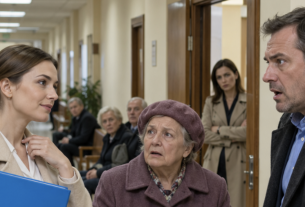
“Your husband’s relatives were expecting a table full of food, but I locked the house and left for a health resort.”
“Don’t forget to buy chicken, Mom likes it,” a voice came from the hallway, mixed with the scrape of a shoehorn and a dissatisfied grunt. “And make it with garlic, like last time. Just chop the garlic smaller, or she gets heartburn afterward.”
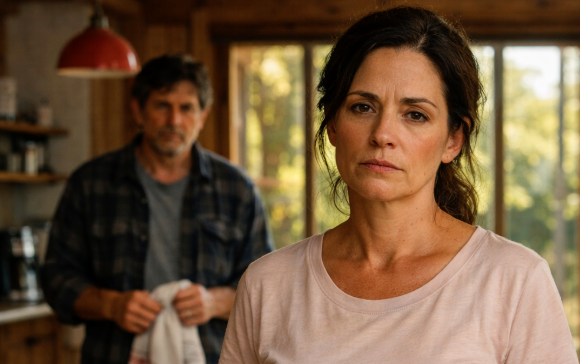
Anna stood at the kitchen sink with her hands in warm soapy water. A dirty frying pan lay at the bottom, and she had been scrubbing it for five minutes already, absently moving the sponge over the same circle again and again. A dull ache throbbed in her temples, and her lower back hurt as if a heavy weight had been tied to it.
“Vitya, what chicken?” she asked quietly without turning around. “We agreed that this weekend we’d just rest. We were going to go to the country house, get some fresh air. I wanted to plant the seedlings.”
Her husband appeared in the doorway. He had already put on his light windbreaker and was now jingling the car keys irritably.
“Anya, here you go again. Mom called last night while you were asleep. She said she, Sveta, and the kids are coming. They can’t breathe in the city, it’s so hot. They’re family, after all. How can I refuse them? What am I supposed to say, ‘Don’t come, my wife is planting seedlings’?”
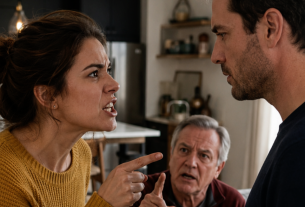
“There are five of them, Vitya,” Anna finally turned off the water and dried her hands with a kitchen towel. “Five. Plus the two of us. That makes seven people. They need to be fed, given drinks, beds made for them, and then I’ll have to do all the washing afterward. I work as an accountant five days a week, from eight to five. My quarterly report is coming up. I’m tired.”
Viktor sighed heavily and rolled his eyes. Anna hated that gesture more than anything in the world. It carried such condescending disregard, as if he were looking at a foolish child throwing a tantrum over nothing.
“Oh, don’t make it into a tragedy. What is there to cook? You’ll chop a few salads, roast some meat. Sveta will help, she’s a woman too.”
“The only thing Sveta helped with last time was drinking half a bottle of my expensive wine and falling asleep in the sun lounger while her boys trampled my strawberry beds,” Anna’s voice trembled, but she forced herself to keep speaking evenly. “Vitya, I really can’t spend the whole weekend standing at the stove. Let’s just order ready-made food. They deliver anything now, barbecue, pies, whatever. Continued in the comments.”
“Don’t forget to buy the chicken—Mom loves it,” his voice came from the hallway, accompanied by the scrape of a shoehorn and a dissatisfied grunt. “And make it with garlic, like last time. Just chop the garlic finer, or it gives her heartburn later.
Anna stood at the kitchen sink with her hands submerged in warm, soapy water. At the bottom lay a dirty frying pan she had been scrubbing for five minutes already, mechanically moving the sponge over the same circle again and again. A dull pain throbbed in her temples, and her lower back ached as if someone had tied a heavy weight to it.
“Vitya, what chicken?” she asked quietly without turning around. “We agreed that this weekend we’d just rest. Go out to the dacha, get some fresh air. I wanted to plant the seedlings.”
Her husband appeared in the doorway. He had already put on a light windbreaker and was now jingling the car keys irritably.
“Anya, here you go again. Mom called last night while you were asleep. She said she and Sveta are coming with the kids. They can’t breathe in the city with this heat. They’re family, after all—how can I refuse them? Should I say, ‘Don’t come, my wife is planting seedlings’?”
“There are five of them, Vitya,” Anna finally turned off the water and dried her hands with a kitchen towel. “Five. Plus the two of us. That makes seven people. They need to be fed, given drinks, have beds made for them, and then I have to wash everything after them. I work as an accountant five days a week, from eight to five. My quarterly report is coming up. I’m tired.”
Viktor let out a heavy sigh and rolled his eyes. Anna hated that gesture more than anything in the world. It carried such condescending disdain, as if an unreasonable child were standing in front of him, whining over nothing.
“Oh, don’t make a tragedy out of it. What’s there to cook? You’ll chop a few salads, roast some meat. Sveta will help—she’s a woman too.”
“Last time Sveta only helped by drinking half a bottle of my expensive wine and falling asleep in the lounge chair while her boys trampled my strawberry beds,” Anna’s voice trembled, but she forced herself to keep speaking evenly. “Vitya, I really can’t stand over the stove all weekend. Let’s just order food. They’ll deliver anything now—shashlik, pies, whatever.”
“Order food?” her husband protested sincerely. “So Mom can say her daughter-in-law has gotten completely lazy? No way. She’s expecting your signature honey cake. And potatoes with mushrooms. You know store-bought food makes her blood pressure spike—it’s all chemicals. That’s it, I’m off to work. I left the shopping list on the table. I’ll stop by in the evening and pick up the bags.”
The front door slammed. Anna remained standing in the middle of the kitchen. On the table really was a sheet of notebook paper covered in her husband’s sweeping handwriting. The list was long. Very long. Pork neck for shashlik, vegetables for grilling, a particular brand of smoked sausage, fresh herbs, fruit for Svetlana’s children, some special candies for her mother-in-law, juices, still mineral water.
Anna sank into a chair and covered her face with her hands. She was fifty-two years old. Most of her adult life she had tried to be good. A good wife, an ideal daughter-in-law, a hospitable hostess. The house she and Viktor had built in the countryside had originally been meant as their quiet little nest. A place where they could drink coffee on the veranda, listen to birds singing, read a book wrapped in a blanket. But very quickly, the dacha had turned into a free vacation base for her husband’s relatives. Her mother-in-law, Valentina Petrovna, considered it her duty to come every other weekend. Her husband’s sister, Svetlana, treated the country house as a perfect place to dump her two hyperactive sons so they could run wild outside while she sunbathed.
All day at work Anna couldn’t focus on the numbers. The shopping list kept spinning in her head, mixed with the rising panic of the coming weekend. At lunchtime her cell phone rang. Her sister-in-law’s name flashed on the screen.
“Anyuta, hi there!” Svetlana chirped into the phone. Her voice was bright and demanding. “Listen, Mom and I talked it over. Don’t buy boxed juice for my Ilyusha, okay? The doctor told him to cut down on sugar. Make compote from dried fruit. Just no prunes—he doesn’t like them. Get apples and dried apricots.”
“Sveta, I’m at work,” Anna answered dryly, pinning the phone between her shoulder and ear while continuing to type. “I don’t have time to make compote. I’ll already be running around the shops after work.”
“Oh, what’s there to make? You just throw it in a pot and let it boil. And one more thing, Anya. Mom asked for lightly salted red fish. But buy it at the market, from people you trust, because in supermarkets it’s always dried out. Okay, see you Saturday! We’ll get there around noon so we can sit down to lunch right away.”
The line went dead. Anna slowly put the phone down on the table. The computer screen blurred before her eyes. Some new, unfamiliar feeling was rising in her chest. It wasn’t even hurt. It was a cold, ringing fury.
After work she obediently went to the hypermarket. The shopping cart slowly but surely filled with groceries. Heavy packs of meat, bottles of water, bags of potatoes. When she paid at the register, the total on the terminal made her shrink inside. Almost her entire small bonus—the one she had planned to save for a new pair of autumn boots—had been left in that store.
As promised, Viktor came by to pick up the bags. He quickly loaded them into the trunk, kissed his wife on the cheek, and sped off to the dacha “to get the grill ready and mow the grass.” Anna followed later by train, because all the bags, the seedlings, and she herself simply would not have fit comfortably in the car.
The trip took an hour and a half. The stuffy carriage smelled of heated plastic and other people’s sweat. Anna stared out the window at the flashing trees, and suddenly a conversation with a coworker from a month earlier rose in her memory. Her colleague, Nina Sergeyevna, had returned from a sanatorium in the neighboring region. She had enthusiastically described the pine-scented air, massages, mineral baths, and the complete absence of any need to cook. “Anechka, it’s simply paradise,” Nina had said. “They feed you like royalty, it’s quiet, there’s a lake nearby. I got the voucher through the union, it cost next to nothing.”
At the time Anna had fallen in love with the idea. She had even gotten the phone number of that very sanatorium, Lesnye Dali—Forest Distance. She had booked herself a room for ten days and paid a deposit from her salary card. Viktor had only waved it off back then, saying, “Do whatever you want, just don’t drag me to doctors.” The trip was still a couple of weeks away. But now, looking at her reflection in the darkening train window, she suddenly realized: she would not survive until that vacation. She would simply collapse right there by the grill, with her mother-in-law demanding fattier fish in the background.
She arrived at the dacha at dusk. Viktor was sitting on the veranda with a bottle of beer, scrolling through something on his phone. The grocery bags stood abandoned in the hallway, not even unpacked.
“Vitya, why didn’t you put the meat in the fridge?” Anna dropped her bag onto the ottoman wearily. “It’ll spoil in the heat.”
“I just sat down!” her husband protested. “I was mowing the grass, I’m worn out. Put it away yourself—and marinate it while you’re at it, so we don’t waste time tomorrow.”
Anna silently went into the kitchen. She took out the heavy slabs of pork. The knife slid dully over the meat because Viktor had once again forgotten to sharpen it. She chopped onions, and tears streamed down her cheeks. Not because of the onions. Because of the realization that tomorrow would be sheer hell.
At eleven that night, when the meat had been marinated, the potatoes peeled and covered with water, and the cake layers for the honey cake were waiting their turn in the oven, Anna sat down on a stool. Her hands smelled of garlic and spices, and her back burned with pain.
She took out her phone. Found the number of the administrator at the Lesnye Dali sanatorium in her contacts. It was late, but there was always someone on duty there.
“Good evening,” Anna said quietly when a pleasant female voice answered. “This is Anna Nikolaevna. I have a reservation in two weeks. Could you tell me if you happen to have any free rooms right now? Starting tomorrow?”
“One moment, I’ll check the system,” the girl replied. Keys clicked in the background. “Yes, someone just canceled their arrival. A single standard room. You can come.”
“I’ll come. Tomorrow morning,” Anna said firmly and ended the call.
Her heart was pounding somewhere in her throat. She looked at the bowl of cake batter. At the huge pot of meat. At the mountain of dirty dishes in the sink. Then she stood up, wiped her hands, and went to the bedroom.
Viktor was asleep, arms spread out, snoring steadily. Anna took a small travel bag from the wardrobe. She moved methodically and very quietly. She packed a tracksuit, a couple of T-shirts, comfortable sneakers, a swimsuit for the water treatments, and a toiletry bag. She found her documents, health insurance card, and bank cards in the top drawer of the dresser.
Then she returned to the kitchen. She did not bake the cake layers. The batter went into the trash. She left the peeled potatoes in water—they wouldn’t go bad. She put the meat in the refrigerator. She did not wash the sink. She took a clean sheet of paper and a pen.
“Vitya. Mom wanted chicken, Svetlana wanted compote, and the boys need clean towels. All the groceries are in the fridge, the cake recipe is in the cookbook on the shelf. You already prepared the grill. I’ve gone to a sanatorium. I’ll be back in ten days. Don’t look for me—I’m turning off my phone. Have a nice weekend.”
She left the note on the kitchen table, weighing it down with the salt shaker.
In the morning she woke up at six. She waited until it was fully light outside. Called a taxi right to the gate of the dacha settlement. Viktor did not even stir when she put on her shoes in the hallway. Anna quietly turned the key in the lock, the mechanism clicking twice. She stepped out onto the porch. The morning air was fresh, smelling of dew and wet grass.
The taxi took her to the bus station. From there, a direct intercity bus left that passed right by the boarding house she needed. Only after sinking into the soft seat of the bus did Anna finally allow herself to exhale. She took out her phone, intending to turn it off, but did not have time. Her husband’s number flashed on the screen. It was just after ten in the morning. Apparently, he had woken up.
Anna pressed the answer button.
“Anya! What kind of stupid joke is this?!” Viktor’s voice was nearly shrieking. In the background came the sound of running water and some kind of crash. “What note? What sanatorium? Where are you even?”
“I’m on the bus, Vitya,” Anna answered calmly, surprising even herself. “I’m heading to the Lesnye Dali sanatorium. The voucher is paid for. I’ve gone on vacation.”
“Have you lost your mind?!” her husband shouted so loudly that the passenger next to Anna glanced at her in surprise. “Mom and Sveta are already on their way! They’re stuck at the crossing in traffic—they’ll be here in twenty minutes! Nothing is ready! Where’s the cake? Where are the salads? Why are the dishes dirty?!”
“Because I fell asleep yesterday,” she said evenly. “Vitya, you’re an adult man. Sveta is an adult woman. Your mother isn’t helpless either. The meat is in the fridge. The potatoes are there too. The vegetables are in the bags. Sharpen the knife yourself. You can all cook.”
“You’re humiliating me in front of my mother!” Viktor cried out desperately. “She was expecting a fully set table! We’re the hosts!”
“No, Vitya. You’re in your own home. At my dacha. And I’m tired of being the guest while serving all of you. That’s all—my battery is dying. Enjoy your meal.”
She did not wait for a reply. She simply turned the phone off completely. Took out the SIM card, put it in her wallet, and shoved the phone itself to the bottom of her bag. She wanted silence. Absolute silence.
The next days blended into one long, flowing stream of pleasure and peace for Anna. The sanatorium turned out to be exactly as Nina Sergeyevna had described. Pine forest surrounded the buildings on all sides, filling the air with a sharp resinous aroma. Meals were served in a spacious dining hall: steamed cutlets, vegetable casseroles, herbal teas—and no heavy mayonnaise salads. And most importantly, nobody asked her for seconds, requested the salt, or complained about heartburn.
In the mornings Anna went for neck and shoulder massages. The masseur’s large, strong hands kneaded her stone-like muscles, and with each session she felt an invisible burden slipping from her shoulders. Then came the circular shower, pearl baths, and long walks by the lake. She met women her own age. They sat on benches in the park, discussing grandchildren, books, and recipes for preserving vegetables for the winter. One evening, sitting on the balcony of her room and watching the sunset, Anna realized something astonishing: for the first time in many years, she felt no guilt. She truly did not care how Viktor was managing with the marinade or how many dishes they had broken.
She put the SIM card back into her phone only on the fifth day. She needed to check her work email. As soon as the phone caught signal, it exploded with dozens of notifications about missed calls and messages.
Viktor had written. At first angrily:
“Anya, this isn’t funny. Mom got offended and left in the evening.”
“Sveta threw a fit because the boys had nothing to eat except raw meat.”
“I don’t know how to turn on your oven! Where’s the instruction manual?!”
Then the tone of the messages began to change:
“Anya, I cleaned everything up. Please come back.”
“I’ve run out of clean shirts, and the washing machine keeps showing some error on the screen.”
“Anya, answer me. I feel awful without you.”
Her mother-in-law had written too:
“Anna, your behavior is outrageous. Viktor is beside himself. A grown woman, and you behave like a teenager. We came to you with all our heart, and you left us in front of a locked door.”
(At that, Anna smirked—the door had been open; what awaited them on the table was simply not pies, but raw groceries.)
Anna did not answer anyone. She muted the phone, checked her work email, and put it away again. Her vacation continued.
Ten days flew by unnoticed. She returned to the city on the same bus, but felt like a completely different person. Her back was straight, her eyes bright, and her cheeks carried a healthy flush.
The apartment greeted her with silence. Viktor was not there—apparently he had gone to work. The hallway smelled of unwashed laundry and delivered pizza. Anna went into the kitchen. A mountain of dishes towered in the sink, and empty cardboard boxes lay scattered across the table.
She did not clean anything. She simply made herself some green tea, took out the book she had brought from the sanatorium, and sat down in the armchair in the living room.
Viktor came back around seven in the evening. Hearing the noise in the hallway, Anna put the book down. Her husband entered the room and froze in the doorway. He looked rumpled, guilty, and somehow lost.
“Anya… you’re back,” he said quietly, shifting from one foot to the other.
“I’m back. Hello, Vitya.”
He stepped closer, trying to hug her, but Anna gently moved away.
“How was your отдых?” he asked, avoiding her eyes.
“Wonderful. The best vacation of my life. And how did your family weekend at the dacha go?”
Viktor sighed heavily and sat down on the edge of the sofa.
“It went badly, Anya. Terribly. While I was trying to light the grill, I got filthy all over. The meat was raw inside and burnt on the outside. Sveta wouldn’t help at all—said she’d ruin her manicure. She just kept ordering me around, saying I was doing everything wrong. Mom nagged that the table was empty and that you were an ungrateful wife. We all fought like crazy. They called a taxi Saturday evening and left. Then I spent half a day scrubbing grease off the frying pans. It was hell.”
Anna listened with a calm, attentive expression. There was not a trace of gloating on her face. Only acknowledgment of a fact.
“You see, Vitya. It turns out salads don’t chop themselves. Potatoes don’t peel themselves. And the house doesn’t keep itself clean.”
“I understand now, Anya. I really do,” he rubbed his face with his hands. “Forgive me. I got used to you carrying everything on your own, and I didn’t even notice how hard it was for you. Mom, of course, is furious. She said she won’t set foot in our house again until you apologize.”
“Wonderful,” Anna took a sip of her cooling tea. “That means we have many quiet, peaceful weekends ahead of us. Because I’m not going to apologize.”
She stood up from the chair and straightened the blanket.
“There are pizza boxes on the table. And the sink is full. Please take care of that. I’m going to have a bath with sea salt. I need to maintain the therapeutic effect after the treatments.”
Viktor did not say a word against it. He silently nodded, took off his jacket, and trudged to the kitchen. Soon the sound of running water and clinking plates came from there.
Anna lay in the warm water with her eyes closed. Life was getting better. She knew her mother-in-law and sister-in-law would be gossiping about her among the relatives for a long time. She knew there could still be clashes ahead. But the main thing had already been done—she had shown that her boundaries could no longer be crossed without consequences. The house she loved had once again become her fortress, not a free boarding house.
Their next trip to the dacha took place only a month later. They went alone, just the two of them. Anna planted the very tomato seedlings that a neighbor from her apartment building had saved from withering. Viktor, without being reminded, marinated the meat himself using a new recipe he had found online, and even made a light salad on his own.
That evening, sitting on the veranda and listening to the chirping of grasshoppers in the tall grass, Anna looked up at the starry sky. She didn’t need to rush anywhere, didn’t need to please anyone. She was simply here and now. And it was the best decision of her life.
If you enjoyed this true-to-life story, don’t forget to like, subscribe to the channel, and share in the comments what you would have done in the heroine’s place.”