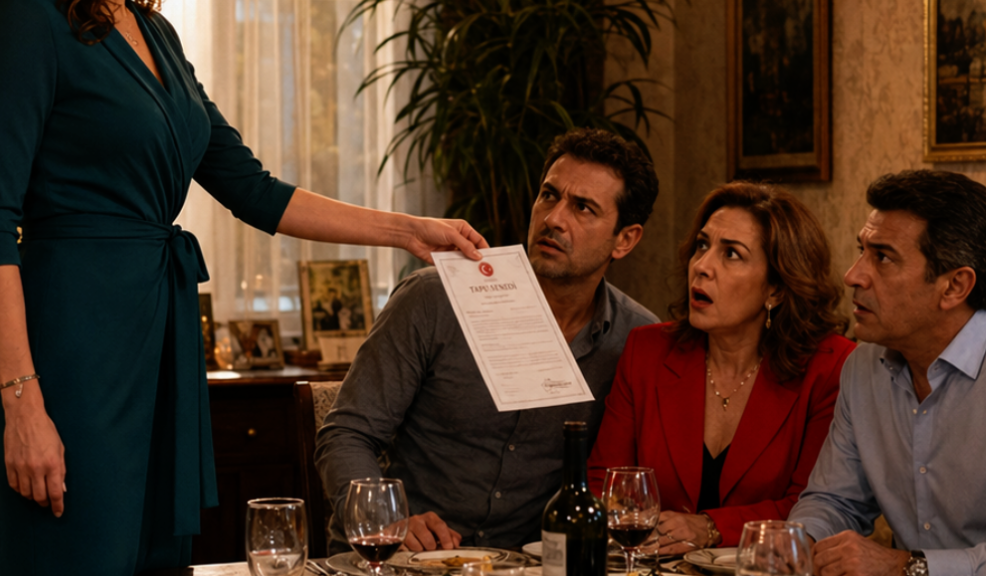
“Here, look at the list. It’s only five hundred and twenty thousand. I calculated everything,” Natalia said, placing a thick folder in front of Sergey.
The festive table was noisy. His mother-in-law, Valentina Pavlovna, was celebrating her anniversary, and relatives had come from all directions. The eldest daughter, Natalia, had arrived from Samara with her husband Vadim — for the first time in two years. The main toasts had already been made, the salad bowls on the table were nearly empty, and the atmosphere had become warm, relaxed, and homelike.
Sergey opened the folder, thinking his wife’s sister wanted to show him some kind of project or ask for business advice. But inside was a detailed list of expenses. Rent, equipment, purchase of goods, advertising — and the final amount made his vision darken slightly. More than five hundred thousand rubles.
“Natalia, what does this have to do with me?” he asked carefully.
“What do you mean? You’ll help, of course. For you, this isn’t such a large amount of money.”
The relatives around the table livened up and began discussing the future store as if the matter had already been decided long ago. Someone remembered Sergey’s vacation photos from resorts, someone pronounced the words “Moscow income” with respect in their voice. Sergey looked at his wife. Irina was sitting opposite him with an even, almost frozen expression. And suddenly he understood: all these people sincerely believed he was a wealthy man. All of them. Without exception. At that very second, he realized that his years-long game of pretending to live a beautiful life had led to consequences he had never expected.
Sergey worked as a purchasing manager at a small wholesale company. The job was stable, but without any great success — an average salary, quarterly bonuses that almost always went toward something urgent. Irina worked as an accountant at a property management company, handled other people’s balance sheets, and understood very well what a budget deficit meant.
They rented a two-room apartment on the outskirts of Moscow, paid off a loan for a used car, and saved small amounts for the down payment on a mortgage. They saved slowly. Every month, Irina entered the numbers into a spreadsheet and sighed.
“We’ll need another five years to save up for the down payment,” she sometimes said in the evening.
“Then we’ll save for five years,” Sergey replied, scrolling through his phone.
It was around that time, several years earlier, that he became interested in beautiful social media posts. At first, it all seemed harmless: he posted old pictures from their only trip to Turkey, added a couple of photos from work trips — Yekaterinburg, Krasnodar, and once, Minsk. He arranged everything nicely, added short captions without unnecessary details. The comments came pouring in on their own.
“Seryozha, are you flying somewhere again?” one acquaintance wrote.
“That’s what I call living!” someone else admired.
Sergey did not correct anyone. He simply liked the comments and smiled.
Natalia was especially impressed — Irina’s older sister, who lived with her husband and two children in a small town a thousand kilometers away from Moscow. She liked every post faithfully and once wrote to Irina: “You’re lucky with your husband. He’s a serious man, with money.”
Irina did not reply then. Valentina Pavlovna, meanwhile, was openly proud: at every opportunity, she told neighbors and distant relatives how well her younger daughter had settled down. A successful son-in-law, living in Moscow, traveling on business trips. They lived well and had no complaints.
Sergey knew about these conversations, but he took them lightly. It seemed as if all of it existed somewhere far away and had nothing to do with him.
Two weeks before the anniversary, Valentina Pavlovna called Irina and, as always, immediately got to the point.
“Natusya is coming with Vadik. She wants to talk to Seryozha about an important family matter. Tell him to be ready.”
“What matter, Mom?” Irina asked in surprise.
“Well, a business matter. She wants to open a store. Children’s clothing. She says she has already found a location. She wants to consult with a smart person.”
“I see,” Irina replied. “I’ll tell him.”
Irina fell silent. It was drizzling outside the window; she was sitting in the kitchen with a cup of tea and felt something unpleasant tightening inside her.
That evening, she told Sergey. He looked away from the television and shrugged.
“A store? Well, let her tell me about it. I work in purchasing, so I can suggest something about suppliers or logistics. I’ll help however I can.”
“Mom said she already has some calculations ready.”
“Good that she has them,” Sergey nodded. “That means she’s taken the matter seriously. We’ll see, maybe she’s come up with something worthwhile.”
Irina agreed. Of course. Her sister would simply come, there would be a family celebration, and they would talk about a business idea at the same time. It seemed like an ordinary thing. But for some reason, she still felt anxious inside.
Natalia and Vadim arrived on Friday evening, bringing a cake and a good mood. The table was crowded and cheerful: toasts, memories, children laughing in the next room. Vadim turned out to be talkative, asking about Moscow, about work, nodding respectfully.
When the plates were empty and the conversations had grown quieter, Natalia stood up, went into the hallway, and returned with a folder. She placed it in front of Sergey calmly, almost solemnly.
“I wanted to show you the calculations. We’ve thought everything through.”
Sergey decided that now she would tell him about the business idea — and he would give her a few tips about purchasing. He opened the folder. Inside were neatly printed sheets. The first was rent for a retail space in the city center, twenty square meters. The second was store equipment: shelves, clothing racks, mannequins, a fitting room. The third was a cash register, a card terminal, and a computer. The fourth was the first purchase of goods, children’s clothing from three suppliers. The fifth was the sign, window display design, and advertising in local social networks.
At the bottom of the last page, the final amount was printed in bold: five hundred and twenty thousand rubles.
Sergey slowly read the number once again.
“We only need start-up capital,” Natalia explained calmly. “After that, the store will pay for itself in six months. We calculated everything.”
“Seryozha, you will help, won’t you?” Valentina Pavlovna added from the other end of the table, as if they were talking about something completely obvious.
Vadim looked at Sergey with friendly confidence.
“For you, it’s not such a large amount, after all,” he said simply, without a shadow of doubt. “You go abroad on vacation every year.”
The table grew noisy again. Someone was already discussing what kind of clothing would be better to buy — Russian or Belarusian. Valentina Pavlovna began reasoning about the store’s location, someone else asked for details.
Sergey slowly closed the folder and looked at Irina. She sat straight, not moving. There was neither triumph nor reproach in her eyes — only a quiet understanding of what had just happened.
The relatives were absolutely sure of his prosperity. And he himself had created that certainty.
“Natalia, wait,” Sergey said, placing his hand on the folder. “Where did you even get the idea that I have an extra half a million?”
Natalia was slightly taken aback, but answered confidently:
“What do you mean, where? You’re constantly vacationing somewhere, restaurants, beach photos. Mom said you live well.”
“What restaurants?” Irina asked quietly, looking at her husband reproachfully.
Sergey felt Irina’s gaze on him — quiet, without anger, but somehow even heavier because of that. Because she was right. Natalia had not misunderstood on her own. He had created that picture himself — carefully, for years. A shot from a business-trip hotel with a view of the city at night. A photo of a business lunch in a decent place where he had gone once by chance. Other people’s beautiful locations without captions, which could easily be mistaken for his own travels.
Sergey took out his phone. Even he did not find those pictures immediately — he had to scroll far down, into an archive from five years ago. A Turkish beach, a swimming pool, a buffet. Their only trip in their entire married life, bought through early booking with a discount.
“Here are the photos from our vacation,” he said, showing the screen. “They are five years old. We haven’t been abroad since.”
The room became quiet.
“I don’t believe it,” Natalia said, but now with much less confidence.
Then Sergey opened his banking app. The savings account held money for their mortgage down payment — an amount they had been collecting for three years. Then he showed the loans section: the car, with twenty-two payments still left. Then he silently got up, took the rental agreement for their apartment from his jacket, and placed it on the table beside the folder.
Natalia looked at the papers. Vadim coughed. Valentina Pavlovna folded her hands in her lap.
“We have never had a spare five hundred thousand,” Sergey said simply. “And we are not going to have it in the near future.”
Natalia opened her mouth, then closed it. The money she had been counting on for several months had existed only in her head.
For several minutes, everyone was silent. Then Valentina Pavlovna said quietly:
“I thought everything was good with you. I mean… really good.”
“Mom, things are normal for us,” Irina said. “But normal doesn’t mean having half a million in reserve.”
Natalia straightened up and looked at Sergey with hurt in her eyes.
“But you posted all of that yourself. Trips, a beautiful life. So it was just a game?”
“Not a game,” Sergey replied tiredly. “Photos on the internet are just photos. They don’t necessarily mean there’s a fortune behind them.”
Vadim nodded, a little embarrassed, as if only now he had seen the situation from the other side.
Natalia sat with a straight back for a while longer, then slowly took the folder from the table and put it into her bag. The clasp clicked shut.
“Then we’ll think of something else,” she said at last, and there was no longer resentment in her voice — only exhaustion.
The conversation gradually shifted. Vadim remembered an acquaintance who had taken out a small loan for a business. Valentina Pavlovna suggested finding out about government support programs. Someone mentioned that they could start with a smaller investment.
The celebration was not completely ruined — it simply became a little different.
Natalia opened the store four months later. A small one, ten square meters, in a shopping center on the outskirts of her town. No expensive shelves and no professional advertising — simple racks, a modest sign, and the first batch of goods bought with family savings. Irina saw the photos in a messenger app and thought that perhaps it was even better this way: without debts, without other people’s money, without inflated expectations.
Meanwhile, Sergey almost stopped posting anything on social media. Not out of shame — the need for it had simply disappeared somewhere. He himself could not explain exactly why he had done it before.
One spring day, he did post a photo after all — a birch park near their home, ordinary and not glamorous at all. Irina saw it, smirked, and said:
“Be careful posting that. Someone might decide you bought the park.”
Sergey laughed — genuinely, without tension.
After that story about the list for five hundred thousand, no one wanted to live an invented life anymore. Their own life — ordinary as it was, with a rented apartment and a car loan — turned out to be perfectly enough.
“Here, look at the list. It’s only five hundred and twenty thousand. I calculated everything,” Natalia said, placing a thick folder in front of Sergey.
The festive table was noisy. His mother-in-law, Valentina Pavlovna, was celebrating her anniversary, and relatives had come from all directions. The eldest daughter, Natalia, had arrived from Samara with her husband Vadim — for the first time in two years. The main toasts had already been made, the salad bowls on the table were nearly empty, and the atmosphere had become warm, relaxed, and homelike.
Sergey opened the folder, thinking his wife’s sister wanted to show him some kind of project or ask for business advice. But inside was a detailed list of expenses. Rent, equipment, purchase of goods, advertising — and the final amount made his vision darken slightly. More than five hundred thousand rubles.
“Natalia, what does this have to do with me?” he asked carefully.
“What do you mean? You’ll help, of course. For you, this isn’t such a large amount of money.”
The relatives around the table livened up and began discussing the future store as if the matter had already been decided long ago. Someone remembered Sergey’s vacation photos from resorts, someone pronounced the words “Moscow income” with respect in their voice. Sergey looked at his wife. Irina was sitting opposite him with an even, almost frozen expression. And suddenly he understood: all these people sincerely believed he was a wealthy man. All of them. Without exception. At that very second, he realized that his years-long game of pretending to live a beautiful life had led to consequences he had never expected.
Sergey worked as a purchasing manager at a small wholesale company. The job was stable, but without any great success — an average salary, quarterly bonuses that almost always went toward something urgent. Irina worked as an accountant at a property management company, handled other people’s balance sheets, and understood very well what a budget deficit meant.
They rented a two-room apartment on the outskirts of Moscow, paid off a loan for a used car, and saved small amounts for the down payment on a mortgage. They saved slowly. Every month, Irina entered the numbers into a spreadsheet and sighed.
“We’ll need another five years to save up for the down payment,” she sometimes said in the evening.
“Then we’ll save for five years,” Sergey replied, scrolling through his phone.
It was around that time, several years earlier, that he became interested in beautiful social media posts. At first, it all seemed harmless: he posted old pictures from their only trip to Turkey, added a couple of photos from work trips — Yekaterinburg, Krasnodar, and once, Minsk. He arranged everything nicely, added short captions without unnecessary details. The comments came pouring in on their own.
“Seryozha, are you flying somewhere again?” one acquaintance wrote.
“That’s what I call living!” someone else admired.
Sergey did not correct anyone. He simply liked the comments and smiled.
Natalia was especially impressed — Irina’s older sister, who lived with her husband and two children in a small town a thousand kilometers away from Moscow. She liked every post faithfully and once wrote to Irina: “You’re lucky with your husband. He’s a serious man, with money.”
Irina did not reply then. Valentina Pavlovna, meanwhile, was openly proud: at every opportunity, she told neighbors and distant relatives how well her younger daughter had settled down. A successful son-in-law, living in Moscow, traveling on business trips. They lived well and had no complaints.
Sergey knew about these conversations, but he took them lightly. It seemed as if all of it existed somewhere far away and had nothing to do with him.
Two weeks before the anniversary, Valentina Pavlovna called Irina and, as always, immediately got to the point.
“Natusya is coming with Vadik. She wants to talk to Seryozha about an important family matter. Tell him to be ready.”
“What matter, Mom?” Irina asked in surprise.
“Well, a business matter. She wants to open a store. Children’s clothing. She says she has already found a location. She wants to consult with a smart person.”
“I see,” Irina replied. “I’ll tell him.”
Irina fell silent. It was drizzling outside the window; she was sitting in the kitchen with a cup of tea and felt something unpleasant tightening inside her.
That evening, she told Sergey. He looked away from the television and shrugged.
“A store? Well, let her tell me about it. I work in purchasing, so I can suggest something about suppliers or logistics. I’ll help however I can.”
“Mom said she already has some calculations ready.”
“Good that she has them,” Sergey nodded. “That means she’s taken the matter seriously. We’ll see, maybe she’s come up with something worthwhile.”
Irina agreed. Of course. Her sister would simply come, there would be a family celebration, and they would talk about a business idea at the same time. It seemed like an ordinary thing. But for some reason, she still felt anxious inside.
Natalia and Vadim arrived on Friday evening, bringing a cake and a good mood. The table was crowded and cheerful: toasts, memories, children laughing in the next room. Vadim turned out to be talkative, asking about Moscow, about work, nodding respectfully.
When the plates were empty and the conversations had grown quieter, Natalia stood up, went into the hallway, and returned with a folder. She placed it in front of Sergey calmly, almost solemnly.
“I wanted to show you the calculations. We’ve thought everything through.”
Sergey decided that now she would tell him about the business idea — and he would give her a few tips about purchasing. He opened the folder. Inside were neatly printed sheets. The first was rent for a retail space in the city center, twenty square meters. The second was store equipment: shelves, clothing racks, mannequins, a fitting room. The third was a cash register, a card terminal, and a computer. The fourth was the first purchase of goods, children’s clothing from three suppliers. The fifth was the sign, window display design, and advertising in local social networks.
At the bottom of the last page, the final amount was printed in bold: five hundred and twenty thousand rubles.
Sergey slowly read the number once again.
“We only need start-up capital,” Natalia explained calmly. “After that, the store will pay for itself in six months. We calculated everything.”
“Seryozha, you will help, won’t you?” Valentina Pavlovna added from the other end of the table, as if they were talking about something completely obvious.
Vadim looked at Sergey with friendly confidence.
“For you, it’s not such a large amount, after all,” he said simply, without a shadow of doubt. “You go abroad on vacation every year.”
The table grew noisy again. Someone was already discussing what kind of clothing would be better to buy — Russian or Belarusian. Valentina Pavlovna began reasoning about the store’s location, someone else asked for details.
Sergey slowly closed the folder and looked at Irina. She sat straight, not moving. There was neither triumph nor reproach in her eyes — only a quiet understanding of what had just happened.
The relatives were absolutely sure of his prosperity. And he himself had created that certainty.
“Natalia, wait,” Sergey said, placing his hand on the folder. “Where did you even get the idea that I have an extra half a million?”
Natalia was slightly taken aback, but answered confidently:
“What do you mean, where? You’re constantly vacationing somewhere, restaurants, beach photos. Mom said you live well.”
“What restaurants?” Irina asked quietly, looking at her husband reproachfully.
Sergey felt Irina’s gaze on him — quiet, without anger, but somehow even heavier because of that. Because she was right. Natalia had not misunderstood on her own. He had created that picture himself — carefully, for years. A shot from a business-trip hotel with a view of the city at night. A photo of a business lunch in a decent place where he had gone once by chance. Other people’s beautiful locations without captions, which could easily be mistaken for his own travels.
Sergey took out his phone. Even he did not find those pictures immediately — he had to scroll far down, into an archive from five years ago. A Turkish beach, a swimming pool, a buffet. Their only trip in their entire married life, bought through early booking with a discount.
“Here are the photos from our vacation,” he said, showing the screen. “They are five years old. We haven’t been abroad since.”
The room became quiet.
“I don’t believe it,” Natalia said, but now with much less confidence.
Then Sergey opened his banking app. The savings account held money for their mortgage down payment — an amount they had been collecting for three years. Then he showed the loans section: the car, with twenty-two payments still left. Then he silently got up, took the rental agreement for their apartment from his jacket, and placed it on the table beside the folder.
Natalia looked at the papers. Vadim coughed. Valentina Pavlovna folded her hands in her lap.
“We have never had a spare five hundred thousand,” Sergey said simply. “And we are not going to have it in the near future.”
Natalia opened her mouth, then closed it. The money she had been counting on for several months had existed only in her head.
For several minutes, everyone was silent. Then Valentina Pavlovna said quietly:
“I thought everything was good with you. I mean… really good.”
“Mom, things are normal for us,” Irina said. “But normal doesn’t mean having half a million in reserve.”
Natalia straightened up and looked at Sergey with hurt in her eyes.
“But you posted all of that yourself. Trips, a beautiful life. So it was just a game?”
“Not a game,” Sergey replied tiredly. “Photos on the internet are just photos. They don’t necessarily mean there’s a fortune behind them.”
Vadim nodded, a little embarrassed, as if only now he had seen the situation from the other side.
Natalia sat with a straight back for a while longer, then slowly took the folder from the table and put it into her bag. The clasp clicked shut.
“Then we’ll think of something else,” she said at last, and there was no longer resentment in her voice — only exhaustion.
The conversation gradually shifted. Vadim remembered an acquaintance who had taken out a small loan for a business. Valentina Pavlovna suggested finding out about government support programs. Someone mentioned that they could start with a smaller investment.
The celebration was not completely ruined — it simply became a little different.
Natalia opened the store four months later. A small one, ten square meters, in a shopping center on the outskirts of her town. No expensive shelves and no professional advertising — simple racks, a modest sign, and the first batch of goods bought with family savings. Irina saw the photos in a messenger app and thought that perhaps it was even better this way: without debts, without other people’s money, without inflated expectations.
Meanwhile, Sergey almost stopped posting anything on social media. Not out of shame — the need for it had simply disappeared somewhere. He himself could not explain exactly why he had done it before.
One spring day, he did post a photo after all — a birch park near their home, ordinary and not glamorous at all. Irina saw it, smirked, and said:
“Be careful posting that. Someone might decide you bought the park.”
Sergey laughed — genuinely, without tension.
After that story about the list for five hundred thousand, no one wanted to live an invented life anymore. Their own life — ordinary as it was, with a rented apartment and a car loan — turned out to be perfectly enough.