I found out about my mother’s death on Monday morning. The neighbor, Aunt Zina, called me; her voice was trembling. She said they had found Mom in the kitchen. Her heart. Everything had happened quickly; the ambulance only confirmed the death.
I sat on the sofa with the phone in my hand and couldn’t cry.
Oleg was at work. I called him myself and said just one word:
“Mom.”
He snapped:
“We’ll talk tonight.”
And hung up.
I organized the funeral alone.
My younger sister, Sveta, arrived only on the third day, wearing black glasses and bringing her husband, Vitya, with her. She didn’t hug me. The first thing she asked from the doorway was:
“Have you had the apartment appraised yet?”
I said I wasn’t thinking about that now.
Sveta snorted and went outside to smoke with Vitya.
At the memorial meal, they sat separately and whispered about something. I poured compote into glasses and felt people’s eyes on me.
Aunt Zina came up, took me by the elbow, and whispered:
“Daughter, your mother didn’t die just like that. Three days before her death, she went to a notary. I took her there myself in a taxi.”
My hands began to shake.
I asked:
“Why?”
Aunt Zina shrugged.
“I don’t know. But she signed something there. Afterward, she said you would find out everything when the time came.”
A week later, a letter from the notary arrived.
I opened the envelope in the kitchen while Oleg was out. My mother had left a will.
Everything — the apartment on Lenin Street, the dacha in the Beryozka gardening cooperative, and a bank deposit of four hundred and twenty thousand rubles — was left to me.
There was nothing for Sveta in the will. Not even the porcelain tea set Mom had promised her back when she got married.
I reread the paper three times. Mom’s signature was clear, and the date was two days before her death.
So Aunt Zina hadn’t been lying.
I hid the letter in the drawer with my underwear. I decided to wait until the grief settled a little, and then talk to Sveta.
But I didn’t have to wait.
Two days later, Oleg came home from work earlier than usual. I was sitting in the kitchen, sorting through Mom’s photographs. He threw his keys onto the shelf, kicked off his boots, and came up behind me. He put his hands on my shoulders.
I thought he wanted to comfort me.
But then he spoke.
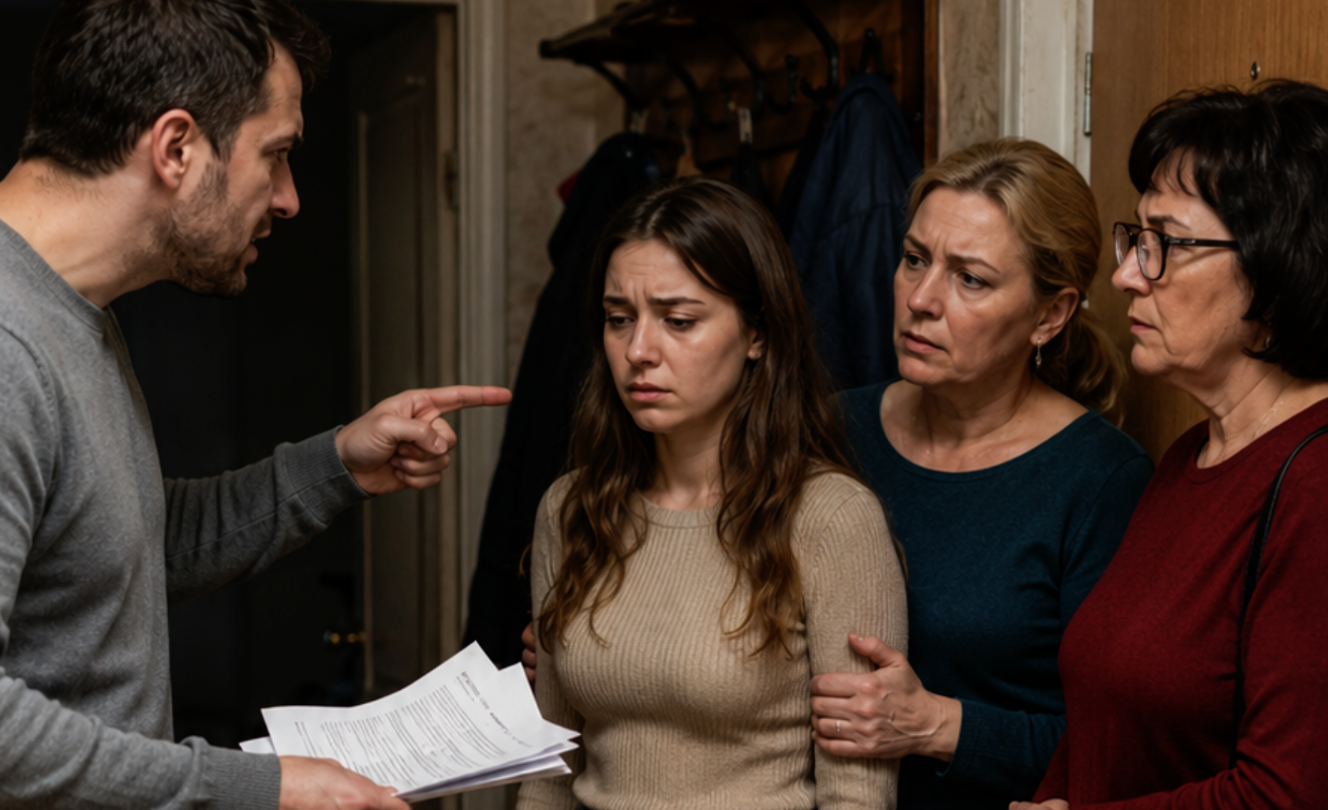
“Irka, I know about the inheritance.”
I turned around.
He was smiling. Not the kind of smile people give when they comfort you. The kind of smile people wear when they look at a winning lottery ticket.
“How do you know?”
“Sveta called. She said she’d been cheated. But you and I are adults. Let’s think about what to do.”
I didn’t have time to answer. He sat down across from me, took my hand, and began counting on his fingers.
“First. You have the car loan. That’s five hundred thousand. We’ll pay it off. Second. My mother has a mortgage. She’s paying it alone; she has no strength left. That’s another million and a half. Third. We’ll buy Svetka a new car. Her old one is completely wrecked. And there’ll still be enough left for renovating our bathroom.”
I looked at him and didn’t recognize him.
We had lived together for eight years. We had two children.
And in that moment, I saw him for the first time.
“Oleg, what are you saying? My mother just died. I haven’t decided anything yet.”
He let go of my hand. The smile slipped from his face.
“What’s there to decide? Money doesn’t smell.”
“This isn’t your money. And it isn’t Svetka’s. It’s mine.”
He stood up. Walked around the kitchen. Stopped by the refrigerator.
“Ira, you’re married. Everything you receive is shared. I’ll pay off the loans, and we’ll finally live properly. What, do you want your sister driving around in that old wreck? She’s a mother. She has children to drive around.”
“Sveta hasn’t worked a day in her life. She lives on benefits and on Vitya’s money. And she wrecked the car herself when she got behind the wheel drunk. Why should I buy her a new one?”
Oleg turned red. He always turned red when he was angry.
“You’re greedy. I didn’t know you were like that. Fine, we won’t buy her a new one. We’ll buy her a used one. And we’re doing the bathroom renovation together, so that’s ours.”
I stood up from the table. The photographs scattered across the floor.
“Listen to me carefully. I’m not making any decisions yet. I need to go to the notary and accept the inheritance. That will take six months. And during all that time, you won’t get a single ruble.”
Oleg came right up to me. He smelled of cigarettes and cheap cologne.
“You’ll regret this.”
“Is that a threat?”
“It’s a promise. Your mother never liked me. Now I see why. She raised someone just like herself.”
He left the kitchen and slammed the door so hard that plaster crumbled from the wall.
I was left alone.
I sat down on the floor among Mom’s photographs and cried.
For the first time in a week.
I cried for a long time, until my throat hurt.
About an hour later, my phone rang. Sveta.
I didn’t answer. She called again. And again.
Then a message came:
“You think you’re smarter than everyone? You won’t get away with this. Mom wasn’t in her right mind when she signed it. I’ll contest it. I’ll hire a lawyer. And you’ll be left with nothing. You know me. I won’t back down.”
I read it and suddenly grew calm.
The anger passed. Only emptiness remained.
I looked at Mom’s photograph. She was sitting on a bench by the entrance and smiling. In her arms, she was holding my eldest, Pashka. He was six months old then.
“Mom, why did you do this?” I asked aloud. “You knew what would start.”
The photograph was silent.
The front door slammed in the hallway. Oleg had left.
I heard his car start and drive out of the courtyard.
I got up. Put the photographs into a shoebox. Took the will from the drawer and hid it in my purse.
I decided that the very next day, I would go to the notary. Let her explain what I should do.
I didn’t sleep that night. I stared at the ceiling and listened to my youngest, Seryozhka, snoring behind the wall. Pashka was asleep on a folding bed nearby. I stroked his head and thought: for them, I won’t give up a single kopeck. For them, I’ll endure everything.
In the morning, at breakfast, Oleg behaved as if nothing had happened. He kissed me on the cheek. Poured coffee. Said:
“Don’t be angry. I lost my temper. I don’t even know what came over me. Let’s decide everything calmly. Svetka is a fool; don’t listen to her. You’re the main heir. You decide.”
I looked at him.
I asked:
“And did you also ‘lose your temper’ about your mother’s loan?”
He hesitated.
“Well, Mom is Mom. She’s old. If we don’t help her, who will?”
“You already help her every month from our salary. I’m not against that. But my mother’s money will go to my children. And nothing else.”
Oleg set his cup aside.
“Fine. We’ll talk in six months, when you receive the inheritance.”
He stood up, kissed the top of my head, and went to get dressed.
I didn’t believe a single word he said.
And I was right.
Because that evening, a surprise was waiting for me — one I could not have imagined even in my worst nightmare.
I remembered that evening for the rest of my life.
Oleg had gone to work the second shift. The children were at my mother-in-law’s. I was alone and decided to sort through Mom’s things. I had arranged with Aunt Zina that we would go to Mom’s apartment the next day.
But the plans changed at seven in the evening.
The doorbell rang.
I opened the door and saw Sveta.
With her stood Vitya and some other man in a cheap jacket, holding a brown briefcase.
Sveta didn’t say hello. She pushed past me with her shoulder and walked into the hallway.
“Come in, since you’re here,” she said, waving to the men. “We’ll talk here.”
I was stunned.
I asked:
“Who do you think you are, welcoming me into my own home?”
Sveta took off her glasses. Her eyes were red, but not from tears. I knew that red-eyed look of hers. It appeared after two shots.
“Your home? And Mom’s apartment is yours too? Took everything for yourself, did you? Don’t worry, the lawyer will explain everything to you now.”
The man in the jacket stepped forward. He took a paper from his briefcase and handed it to me.
“I am Sergey Viktorovich. I represent your sister’s interests. Here is the document. Please read it.”
I took the paper.
It was a copy of a lawsuit filed with the court.
Sveta was demanding that I be declared an unworthy heir.
The claim stated that I had not helped our mother, had not visited her, had not given her money for medicine, and when our mother fell ill, I had abandoned her to die alone.
I raised my eyes to Sveta.
“Are you out of your mind? I transferred Mom five thousand every month. I went to see her every weekend. You were the one who never showed up!”
Sveta crossed her arms over her chest.
“Prove it. No receipts? No transfers? Then you didn’t help.”
Vitya stood behind her, smiling. He always smiled when Sveta fought with someone. Silent, nasty, with his thin little beard.
I asked the lawyer:
“Is this even legal? I have Mom’s will. Notarized.”
Sergey Viktorovich spread his hands.
“A will can be contested if there is evidence that the testator did not understand her actions. Your mother was elderly. She was ill. Perhaps someone influenced her.”
“Who influenced her? Me?”
“Not necessarily you. But the circumstances raise doubts.”
I looked at Sveta. She was smiling.
I asked:
“Have you lost your conscience completely? We buried Mom two weeks ago, and you’ve already arranged a lawsuit.”
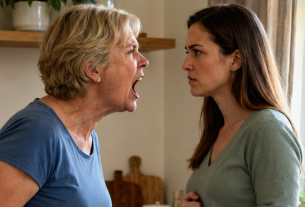
“What was I supposed to wait for? You want to take everything for yourself. And I’m her daughter too. Just like you. Why did you get the apartment and I didn’t? Because you’re older? That’s unfair.”
“I didn’t decide this. Mom did. That means she had reasons.”
Sveta turned pale.
“What reasons? Did you gossip to her about something? Did you brainwash her?”
“Mom saw for herself how you treated her. You came once every six months, and only for money. And when I suggested that we share taking care of her, you said you had your own children and you weren’t a nanny.”
Vitya stopped smiling. He stepped toward me.
“Listen, Irina, don’t make this worse. Sveta is suffering. She loved her mother. We’re just poor; we don’t have money for long court cases. Let’s settle this peacefully. Give her half of the apartment and half of the deposit, and we’ll withdraw the claim.”
“That’s blackmail.”
“That is an offer,” Sergey Viktorovich said. “A pre-trial settlement. Cheaper than court. Trust my experience.”
I looked at all three faces.
Sveta — angry.
Vitya — sly.
The lawyer — indifferent.
Strangers in my home.
I said:
“Leave. All of you.”
Sveta didn’t move.
“I’m not leaving until you sign. Here’s the paper. A waiver of part of the inheritance in my favor.”
She pulled a folded sheet from her purse.
I didn’t take it.
I went to the front door and opened it.
“Out.”
Vitya took Sveta by the arm.
“Let’s go. Not now.”
Sveta pulled away.
“No, now! Do you hear me, Irka? You’re a rag. You’re under your husband’s thumb. He’ll use your money to pay off his mommy’s debts, and you’ll be left empty-handed. But I’ll live in Mom’s apartment. I deserve it. I’m the youngest. Mom always said the apartment was mine.”
I shouted:
“Out! Now!”
Sveta threw the paper at my feet and left. Vitya followed her.
Sergey Viktorovich held out a business card.
“If you decide to settle, call me.”
I took the card and tore it in half. Then I threw the pieces into his briefcase.
“I’ll leave the court the same way.”
The lawyer smirked and left.
I locked the door with both locks.
I leaned my back against the doorframe and slid down to the floor. My legs wouldn’t hold me.
I sat there and looked at the paper Sveta had thrown down.
I picked it up.
It was a settlement agreement. It stated that I voluntarily gave up two-thirds of the apartment and the entire deposit in favor of Svetlana. In exchange, she would withdraw the lawsuit.
If I had signed it, Mom would have been left with nothing.
Only dead Mom wouldn’t have been able to object.
An hour later, Oleg came home.
I told him everything. He sat beside me and hugged me.
“I told you, Svetka is a fool. Don’t think about it. The court will sort it out.”
I looked at him.
I asked:
“Are you really on my side?”
“Of course, my love. You’re my wife. We’re one family.”
He kissed my forehead.
I wanted to believe him.
But something inside me twitched.
He was too gentle. Too quiet.
Only two days had passed since that argument in the kitchen, and he had already calmed down.
I knew Oleg.
He didn’t calm down that quickly.
He lay low.
That night, I woke up because he wasn’t beside me.
I got up and went into the hallway. The kitchen light wasn’t on. But the screen of his phone was glowing.
Oleg was sitting in the bathroom, speaking quietly.
“Yes, I understand everything. No, she doesn’t suspect anything. Svet, the main thing is to drag it out. Let her accept the inheritance first, and then I’ll transfer everything to myself. Yes, through a marriage contract. She’ll sign it. I know how.”
I froze.
My heart began pounding somewhere in my throat.
Oleg was talking to Sveta.
My enemy.
My sister, who had filed a lawsuit against me.
Oleg continued:
“No, you don’t understand. If she now refuses the inheritance in your favor, it’ll be notarized. And I’ll get nothing. But if she accepts it first, and then I arrange everything through a marriage contract, I’ll get half. And she’ll give you the other half herself. I’ll make sure she wants to.”
He laughed. Quietly, chokingly.
I had never heard him laugh like that before.
I went back to the bedroom. Lay down. Closed my eyes.
Oleg came out of the bathroom five minutes later. Lay down beside me. A minute later, he began to snore.
I didn’t sleep until morning.
I stared at the ceiling and thought.
I thought about how the home I lived in had become foreign.
The husband I slept beside had become an enemy.
The sister I had grown up with had become a traitor.
In the morning, I got up first. I got the children ready for kindergarten and school. Oleg was still asleep.
I took his phone.
It had no password. It had always had no password because he never thought I would look.
I opened his chat with Sveta.
I read everything.
There were messages from the past week.
They discussed me. Planned how to get the money out of me.
Sveta suggested hiring someone to steal the will from my purse. Oleg replied that it was risky; it was better to wait until I received the inheritance.
Sveta wrote:
“What if she doesn’t sign the marriage contract?”
Oleg replied:
“She will. I’ll say it’s for security. She’s trusting.”
Sveta sent a thumbs-up emoji.
I put the phone back in its place.
I took screenshots on my own phone.
I washed my face. Got dressed. Woke the children.
When Oleg woke up, I was standing in the kitchen frying eggs. He yawned, came up behind me, and hugged me.
“How did you sleep, bunny?”
“Good,” I said. “I didn’t even wake up once.”
I lied calmly.
So calmly that I surprised myself.
So I knew how to do it too.
So I could also play this game.
Only I would play by my own rules.
Oleg sat down at the table. I placed a plate in front of him.
“Oleg, let’s talk about the inheritance tonight. I’ve decided you’re right. We’re a family. There’s nothing to divide.”
He raised his eyes. Joy flashed in them. Animal-like, impatient joy.
“Of course, sweetheart. We’ll decide everything. Just don’t worry. I’ll never leave you.”
“I know,” I said. “You’re the best husband.”
I smiled at him.
He smiled at me.
We ate eggs and made plans.
Only our plans were different.
He thought he was taking.
I was thinking that I would not give anything up.
That evening, when the children had fallen asleep, I took out the papers that had come from the notary. I read them again.
There was a clause stating that property received by one spouse through inheritance is not jointly acquired marital property and is not subject to division in a divorce.
I knew that.
I had memorized it.
Oleg didn’t know.
He thought that since we were married, everything was fifty-fifty.
He was wrong.
I hid the papers again. Lay down beside my husband. He hugged me in his sleep and pulled me close.
I didn’t move away.
Let him sleep peacefully.
Tomorrow he would wake up and still not know what was waiting for him.
But I would know.
And that knowledge warmed me better than any blanket.
Six months flew by like a single day.
I played the role of an obedient wife. Oleg played the role of a loving husband.
We smiled at each other over breakfast, watched television in the evenings, took care of the children.
No one would have said there was a war between us.
I pretended I had forgotten about the inheritance.
Oleg pretended he had forgotten about his plans.
But every night, when he fell asleep, I took out my phone and reread the screenshots of his correspondence with Sveta.
They had not stopped communicating.
Every week there were new messages.
Sveta rushed Oleg.
Oleg asked her to wait.
I read and waited.
Waited for my hour.
A month before I was due to receive the inheritance, I went to the notary alone. I told Oleg I was going to see a friend.
He didn’t check.
The notary’s name was Elena Pavlovna. She was a woman of about fifty, with sharp eyes and a calm voice.
She remembered my mother.
She said my mother had come to see her twice. The first time, a month before her death. The second time, two days before.
She came alone, without anyone else. She was sober, rational, and understood what she was signing.
I asked:
“Did she say why she wasn’t leaving anything to my sister?”
Elena Pavlovna took off her glasses.
“Your mother said, word for word: ‘My younger daughter will see only evil in money. She’ll spend everything on her alcoholic husband. The elder one will preserve it for the grandchildren.’ That is recorded in the protocol. You may read it.”
I began to cry.
For the first time in several months.
Not from grief.
From relief.
Mom knew.
She had foreseen everything.
Elena Pavlovna handed me the papers.
“In a month, you will enter into the inheritance. Come with your passport and the death certificate. Everything is simple. But I must warn you: your sister has filed a lawsuit. It will not stop the process, but it may create difficulties.”
I nodded.
“I know. I’m ready.”
I left the notary and sat in the car.
Then I called a lawyer.
Not the one who had come with Sveta, but another one.
A woman.
Her name was Vera Andreyevna. She worked in the city center and specialized in inheritance disputes.
I found her through acquaintances.
She charged me fifteen thousand for a consultation.
I paid without looking.
Vera Andreyevna was old, gray-haired, and terrifying in an argument.
I told her everything.
About the will. About Sveta’s claim. About Oleg’s correspondence. About the marriage contract he wanted to force on me.
She listened silently, nodded, and took notes.
Then she said:
“You have a strong case. But you need to gather evidence. Neighbors. Medical certificates about your mother’s condition. Screenshots of the correspondence. And most importantly — witnesses.”
“There are witnesses,” I said. “Aunt Zina. She saw Mom go to the notary. And she knows who visited Mom and who didn’t.”
“Excellent. Bring her to court.”
We met two more times.
Vera Andreyevna prepared a counterclaim: to have Sveta recognized as an unworthy heir.
She had not helped our mother. She had not visited. Had not called. And after her death, she filed a false claim.
Vera Andreyevna said the court could remove Sveta from inheritance entirely. Even from the compulsory share owed to disabled children.
Sveta was healthy. She worked as a saleswoman when she felt like it. But for the last two years, she had not worked at all. She lived off Vitya’s odd jobs.
I asked:
“What about my husband? Can he take my money through a marriage contract?”
Vera Andreyevna smirked.
“No. An inheritance is not jointly acquired property. Article 36 of the Family Code. Even if he persuades you to sign a marriage contract, he will not be able to claim the apartment or deposit you received by inheritance. But I don’t advise you to sign anything.”
I wasn’t planning to.
Two weeks before the inheritance was finalized, everything collapsed.
Oleg came home drunk.
Not for the first time, but this time he was angry.
I was sitting in the kitchen, checking Pashka’s homework. Oleg came in, threw his keys on the floor, and asked:
“Did you go to the notary?”
My insides went cold.
“What?”
“I asked, did you go to the notary? Neighbor Aunt Zina told me she saw you in that neighborhood.”
“I went to see a friend,” I said. “In the same area.”
Oleg laughed. Not kindly.
“You’re lying. I called your friend. She said you never came.”
I froze.
Pashka raised his head and looked at his father.
“Dad, why are you shouting?”
“Go to your room, son,” I said.
Pashka left.
Oleg closed the kitchen door.
“I know everything. You hired a lawyer. You’re planning to divorce me. You want to leave me with nothing.”
“I want to keep what belongs to me.”
Oleg slammed his fist on the table. A cup jumped and fell. It shattered.
“You are my wife! Everything you have is mine! I fed you for eight years! I worked! I put up with your mother!”
“You didn’t put up with anything. You lived in my apartment. You didn’t pay utilities. You didn’t pay for anything at all except your car.”
“And the children? Whose children are they?”
“Ours. And I’m the one carrying them alone. You see them two hours a day.”
Oleg came up to me.
He stood so close I could smell the alcohol on him.
“You’ll regret this. You won’t get a single kopeck. I’ll grind you into dust.”
“Are you threatening me?”
“I’m warning you.”
He left. Slammed the door so hard that the mirror in the hallway fell.
I heard him get dressed and leave. The car started and drove away.
I went to Pashka’s room. He was sitting on the bed, hugging his knees.
“Mom, is Dad angry?” he asked.
“He is, sweetheart. But don’t be afraid. I’ll handle everything.”
“Will he leave us?”
“I don’t know, darling. But if he does, we’ll manage. We’re strong.”
Pashka nodded.
I hugged him.
I didn’t believe my own words.
Strong?
I felt weak.
But there was no choice.
Three days later, a court summons arrived.
Sveta had officially filed the lawsuit.
The hearing was scheduled for the fifth, in two weeks.
That same day, I received the certificate of inheritance rights.
The apartment.
The dacha.
The deposit.
All mine.
Officially.
I put the papers in a bank safety deposit box. I left the key with Vera Andreyevna.
I didn’t keep anything at home.
Oleg could find it and destroy it.
I no longer trusted him.
He returned two days later.
Sober.
Quiet.
He brought groceries. Fixed the faucet in the kitchen.
I watched and didn’t understand.
Was this a game?
Or had he really come to his senses?
That evening, he sat across from me and said:
“Ir, let’s make peace. I’m a fool. I got drunk and said awful things. Forgive me.”
“You threatened me.”
“I lost my temper. Stress. Work, you, this inheritance. My nerves gave out.”
He took my hand.
I didn’t pull away.
I asked:
“And Sveta? Are you still communicating with her?”
Oleg hesitated for a second.
“No, of course not. She called herself; I didn’t answer.”
He was lying.
I knew he was lying.
I had seen the screenshots.
That morning, he had written to her:
“Soon everything will happen. She has already accepted the inheritance. Now only one small thing remains.”
I smiled.
“Fine. Let’s make peace.”
We hugged.
I felt his hands on my back.
Warm.
Reliable.
Treacherous.
The next day, Oleg said he wanted to talk about the future.
He took a contract out of his briefcase.
“Ir, let’s make a marriage contract. Just in case. So everything is fair between us. Yours is yours, mine is mine.”
“Why? Everything is already fair.”
“Well, you never know. What if we divorce? I don’t want that, of course. But if something happens, there’ll be no hard feelings.”
I took the contract.
I read it.
He wanted to take half of the apartment I had inherited. And half of the deposit. And the dacha.
In exchange for giving up alimony.
He had written that I would not demand money from him for the children.
In return, he would leave me the car.
The car we had bought on credit and still hadn’t paid off.
I looked at him.
“Oleg, are you serious?”
“Of course. It’s a good contract. A lawyer drafted it.”
“Which lawyer?”
“Well, an acquaintance.”
“The one who came with Sveta? Sergey Viktorovich?”
Oleg turned pale.
“How do you…”
“I know everything, Oleg. About you and Sveta. About the messages. About your plans. About the marriage contract you wanted to push through once I received the inheritance.”
I took out my phone. Opened the screenshots. Put them in front of him.
Oleg looked at the screen.
He was silent.
For a long time.
Then he asked:
“Were you spying on me?”
“You left your phone without a password. You gave yourself away.”
He stood up. Pushed back the chair.
“That changes nothing. You’re still my wife. I have a right to half.”
“You don’t. Inheritance is not divided in a divorce. I’ve already consulted a lawyer.”
Oleg laughed.
But the laugh was nervous.
“You think you’re smarter than everyone? You won’t get away with this. I’ll hire the best lawyer. I’ll prove we bought the apartment together.”
“What apartment? This was Mom’s apartment. It belonged to her ten years before our wedding.”
“And the renovation? I did renovation there. I invested money.”
“You wallpapered one room. You bought paint with my money. I have the receipts.”
Oleg fell silent.
Then he said quietly:
“So it’s war.”
“It already began. You just didn’t notice when you lost.”
I stood up.
Took the contract and tore it in half.
Then again.
And again.
I threw the pieces into the trash.
“Get out of my apartment.”
“This isn’t your apartment. It’s our apartment. We rent it while married.”
“But this one is my apartment.” I took the certificate of inheritance from my purse. “My name is written here. And only mine. If you don’t leave voluntarily, I’ll call the police.”
Oleg clenched his fists.
I wasn’t afraid.
I looked him straight in the eyes and didn’t look away.
“You’ll come crawling back to me on your knees,” he said.
“Wait for it.”
Oleg left.
He packed his things in ten minutes.
Before leaving, he looked into the children’s room. Pashka was asleep. So was Seryozhka.
Oleg stood there for a moment, then closed the door.
He didn’t say goodbye.
Didn’t kiss them.
He left like a stranger.
I was left alone.
In a rented apartment that felt foreign.
With my inheritance lying in a bank safety deposit box.
With two children sleeping, unaware that their father had betrayed their mother.
I sat in the kitchen.
Turned on the kettle.
Brewed tea.
Drank it.
I didn’t cry.
The tears were gone.
Only quiet, cold determination remained.
Tomorrow was court.
Tomorrow I would see Sveta.
And her lawyer.
And the husband who had become my enemy.
Tomorrow everything would be decided.
I looked at the clock.
It was three in the morning.
There were fourteen hours left until court.
I closed my eyes and waited for morning.
The hearing began at ten in the morning.
I arrived an hour early.
Vera Andreyevna was already waiting for me at the entrance.
She wore a strict suit, held a folder of documents, and had a calm face.
She asked:
“Are you ready?”
“I’m ready.”
“Remember: don’t shout, don’t interrupt, answer only the judge’s questions and mine. Sveta will provoke you. Don’t give in.”
I nodded.
We entered the courtroom.
It was a small room with wooden benches, a portrait of the president, and the coat of arms.
In the corner, the secretary sat sorting through papers.
Five minutes later, the judge came in.
A woman of about forty, with a tired face and attentive eyes.
She introduced herself as Tatyana Sergeyevna.
She opened the hearing.
A minute later, Sveta, Vitya, and Sergey Viktorovich entered.
Sveta wore a black dress and glasses again. She didn’t look at me.
She sat on the opposite bench.
Vitya sat beside her and put his hand on her shoulder.
Oleg wasn’t there.
I didn’t know whether he would come.
Vera Andreyevna said he hadn’t been summoned because the claim was from Sveta against me.
But he could come as a witness.
He didn’t.
The judge opened the session.
“Plaintiff Svetlana Igorevna?”
“Present.”
“Defendant Irina Igorevna?”
“Present.”
“Witnesses?”
Aunt Zina sat on the bench behind us. She had come alone, wearing her best dress and carrying a string bag.
“Witness Zinaida Petrovna is here,” Aunt Zina said loudly, although no one had asked her yet.
The judge smiled faintly at the corners of her lips.
“Good. Let us proceed.”
Sergey Viktorovich stood up and began speaking.
Long, smooth, beautifully.
He called me “a person interested in sole acquisition of the inheritance.” He said I had “exerted psychological pressure on an elderly mother.” That I had “abused the trust and health condition of the testator.” That Mom “did not understand her actions when she signed the will.”
I listened and couldn’t believe my ears.
Was he talking about me?
Me, the one who transferred Mom money every month?
Me, who took her to the doctor?
Me, who replaced the windows in her apartment?
Then Sveta was given the floor.
She stood, took off her glasses, and looked at the judge.
She said in a pitiful voice:
“Tatyana Sergeyevna, I am her daughter. I loved her. But my sister always hated me. She wanted Mom to die quickly so she could get the apartment. I saw how she treated Mom. She shouted at her. She didn’t give her money. I helped Mom with my own money.”
The judge asked:
“Do you work, Svetlana Igorevna?”
Sveta hesitated.
“I’m not working right now. But I worked before. And I always gave Mom half my salary.”
The judge looked at her.
Then at me.
“Do you have evidence, Irina Igorevna?”
Vera Andreyevna stood up.
Her voice was calm, like a schoolteacher’s.
“Your Honor, we have bank statements showing transfers from Irina Igorevna to her mother. Every month, without interruption, for three years. Five thousand rubles. Sometimes more.”
She took out the papers.
“We also have the testimony of a witness. Zinaida Petrovna, the deceased’s neighbor, is ready to testify.”
Aunt Zina stood.
She straightened up.
She spoke loudly, so loudly that the windowpanes seemed to tremble:
“I lived next door to their mother for thirty years. I remember Irina since childhood. She always helped. With money, with groceries, around the house. And Sveta came once a year, and even then drunk. Brought her men around. Her mother was afraid of her. I heard her myself say: ‘Sveta will put me in the grave if she gets the apartment.’ That’s how it was.”
Sveta jumped up.
“You’re lying, old woman! You’re just on Irka’s side!”
The judge struck the gavel.
“Witness, sit down. Plaintiff, stop shouting. I am warning you of your responsibility.”
Sveta sat down.
Vitya whispered something in her ear.
Sergey Viktorovich tried to save the situation.
He asked Aunt Zina:
“Zinaida Petrovna, you were not related to the deceased, were you?”
“We were friends. For forty years.”
“So you are not impartial?”
“I am fair. And I’m telling the truth. And the truth is that Svetka is a piece of trash. Forgive the expression, Tatyana Sergeyevna.”
The judge did not reply.
She asked me to tell my version.
I stood up.
My hands were shaking. I folded them over my stomach so no one would see.
“Mom left the will not because I pressured her. She left it because Sveta abandoned her. I cared for her. I visited. I bought medicine. Sveta came only to ask for money. When Mom became ill the last time, I called Sveta. I said, let’s hire a caregiver, let’s split the cost. Sveta answered: ‘She’s your mother. You take care of her.’ May I continue?”
I looked at the judge.
The judge nodded.
“After Mom died, Sveta did not come to the funeral on the first day. She came only for the memorial meal. From the doorway, she asked about the apartment. And when she found out I was the heir, she filed a lawsuit. She hired a lawyer who came to my home and threatened me. And then she entered into a conspiracy with my husband. He told her about my plans. Here is the evidence.”
I placed printed screenshots of the correspondence on the table.
The judge took them and looked.
“Irina Igorevna, were these messages obtained legally?”
“My husband left his phone without a password. I simply read them.”
“This may not be fully accepted by the court,” the judge said. “But I will attach them as additional evidence.”
Sergey Viktorovich jumped up.
“Your Honor! This is a violation of the secrecy of correspondence! It is illegal!”
Vera Andreyevna replied calmly:
“Spouses have access to each other’s personal property unless otherwise provided by a marriage contract. There is no marriage contract between the parties.”
The judge raised her head.
“The objection is overruled. Continue.”
The hearing lasted two hours.
Two more neighbors were questioned.
One confirmed Aunt Zina’s words.
The other said she had seen Sveta running out of Mom’s entrance and shouting into her phone:
“Let her die already, I’ll wait for her inheritance.”
Sveta cried. Shouted that everyone was lying.
Vitya held her hand.
I looked at her and felt no pity.
Only exhaustion.
The judge announced a one-hour recess.
Vera Andreyevna led me into the corridor.
“Everything is fine. They will lose.”
“What if they don’t?”
“There is no ‘if.’ We have four witnesses, bank statements, and the will. They have only emotions.”
An hour later, the judge returned.
She said the decision would be announced in three days.
But before that, she asked whether the parties had any final words.
Sveta stood up. Sobbing.
“I don’t know why everyone is against me. I am her daughter. I want Mom’s memory to live. And she,” Sveta pointed at me, “she’ll sell the apartment and buy herself a fur coat. I knew Mom. She would never have wanted that.”
The judge looked at me.
“Your final word, Irina Igorevna.”
I stood.
I was silent for a long time.
Then I said:
“Mom wanted her grandchildren to live well. She told me that herself. And I will do what she wanted. I will not sell the apartment. I will move there with the children. I will rent out the dacha to pay for their clubs and activities. I will put the deposit toward their education. Mom was not rich. But what she left behind will go according to her will. Not according to mine. And not according to Sveta’s. According to Mom’s.”
The judge nodded.
“The hearing is closed. The decision will be announced in three days.”
We left the courtroom.
Sveta and Vitya drove away immediately, without looking at me.
Sergey Viktorovich walked past and said quietly:
“You are strong, but cruel.”
I did not answer.
Three days later, Vera Andreyevna and I returned to court.
Sveta was not there.
Sergey Viktorovich came instead of her. He sat on the bench and flipped through papers.
Oleg wasn’t there either.
The judge began reading the decision.
I listened, holding my breath.
“The claims of Svetlana Igorevna against Irina Igorevna to recognize her as an unworthy heir and to contest the will are denied in full. The will is recognized as valid. The deceased’s property passes to Irina Igorevna in accordance with the will. The counterclaim of Irina Igorevna to recognize Svetlana Igorevna as an unworthy heir is partially granted. Due to the absence of assistance to the testator and abuse of rights, Svetlana Igorevna has no right to a compulsory share of the inheritance.”
I exhaled.
Vera Andreyevna squeezed my hand.
“Congratulations. You won.”
Sergey Viktorovich stood up and left.
Without looking back.
I left the courthouse.
The sun was shining brightly outside. The snow was melting.
It was cold, but I didn’t feel the cold.
I got into the car and drove home.
The children were waiting for me at home.
Pashka was playing with a construction set. Seryozhka was watching cartoons.
My mother-in-law was sitting in the kitchen.
She looked at me sternly and asked:
“Well? Did you finish him off?”
“Finish off whom?” I asked.
“My son. He’s sleeping at friends’ places now. He said you threw him out into the street.”
“He left on his own. After trying to steal my inheritance.”
“Aren’t you exaggerating?”
I sat down across from my mother-in-law.
I spoke slowly, so every word would imprint itself:
“Your son conspired with my sister to leave me without money. He wanted me to sign a marriage contract under which he would take half of the inheritance. And pay nothing for the children. I am not exaggerating. I have evidence.”
My mother-in-law was silent for a while.
Then she sighed.
“He was always greedy. I thought he would grow out of it.”
“He didn’t.”
“And now?”
“Divorce. And alimony. Let him pay through the court. I don’t trust him anymore.”
My mother-in-law gathered her things and left.
I stayed with the children.
That evening, a message came from Oleg.
He wrote:
“You won. Congratulations. I’ll file for divorce. Take everything for yourself. I don’t care.”
I did not reply.
A month later, we divorced.
Oleg did not come to court. He sent a statement saying he agreed to the divorce and to alimony in the amount of one quarter of his salary.
The judge approved it.
I became free.
I sold the dacha.
Not because I wanted the money.
Because I couldn’t go there. Too many memories.
With the money I received, I renovated Mom’s apartment. I moved there with the children.
The three of us lived in two rooms. Small, old, but ours.
Sveta never called again.
I heard that she and Vitya divorced six months later. He found someone else, younger.
Sveta was left alone, without work, without money. She rented a room in a dormitory.
I did not rejoice.
But I did not pity her either.
Everyone gets what they deserve.
A year passed.
I was sitting in the kitchen of Mom’s apartment.
Pashka was doing his homework at the table. Seryozhka was drawing on the floor.
Sunlight streamed through the window.
I looked at Mom’s photograph.
It hung on the wall, just as before.
In that photograph, Mom was holding Pashka in her arms and smiling.
“Mom, you were right,” I said quietly. “I preserved it for the grandchildren.”
The photograph was silent.
But I knew she heard me.
The doorbell rang.
I opened it.
Aunt Zina stood on the threshold with pastries.
“Irka, hello. I brought a treat. Baked them myself.”
“Come in, Aunt Zina. Thank you. For everything.”
She came in. Took off her coat. Looked at Mom’s photograph.
“She was a good woman. May she rest in peace. And you did well. You didn’t give up.”
“I didn’t give up.”
We drank tea with pastries.
The children laughed.
Aunt Zina told me the news.
I listened and thought about how strangely life is arranged.
A sister became a stranger.
A husband became an enemy.
And a neighbor became closer than anyone.
That evening, when the children had fallen asleep, I took out my phone.
I deleted the chats with Sveta and Oleg.
I set a new password on my phone, one no one knew.
And I went to sleep.
For the first time in a year and a half, I slept peacefully.
I didn’t dream of courts. I didn’t dream of shouting. I didn’t dream of betrayals.
I dreamed of Mom.
She was sitting on the bench by the entrance and smiling.
Beside her sat little Pashka.
And Seryozhka.
And me.
All together.
Like before.
When no one was dividing an inheritance, filing lawsuits, or betraying anyone.
In the morning, I woke up.
Got up.
Woke the children.
Got them ready for kindergarten and school.
Went to work.
Ordinary life.
Without scandals.
Without courts.
Without betrayals.
I looked at myself in the hallway mirror and saw a different person.
Not the Irina who had sat on the floor among Mom’s photographs and cried.
A new one.
Strong.
Free.
The one who had won.
Not only the court.
But herself.
That same day, I received a letter from the notary.
A document confirming the closure of the inheritance case.
Everything was over.
I put the letter into the box with Mom’s photographs.
Closed the lid.
Put it away in the closet.
The story was over.
My story.
With a bad beginning and a good ending.
Not a fairy-tale ending, but a real one.
A life ending.
The kind where victory does not always come quickly.
Sometimes you have to wait six months.
Sometimes you have to go to court.
Sometimes you have to lose loved ones to understand who is truly close to you.
I lost my husband.
I lost my sister.
But I found myself.
And that is worth more than any apartment.
More than any dacha.
More than all the money in the world.